-
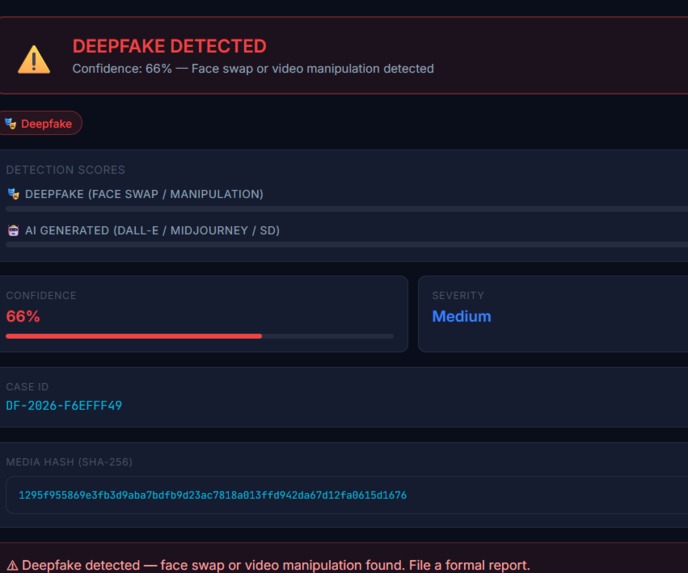
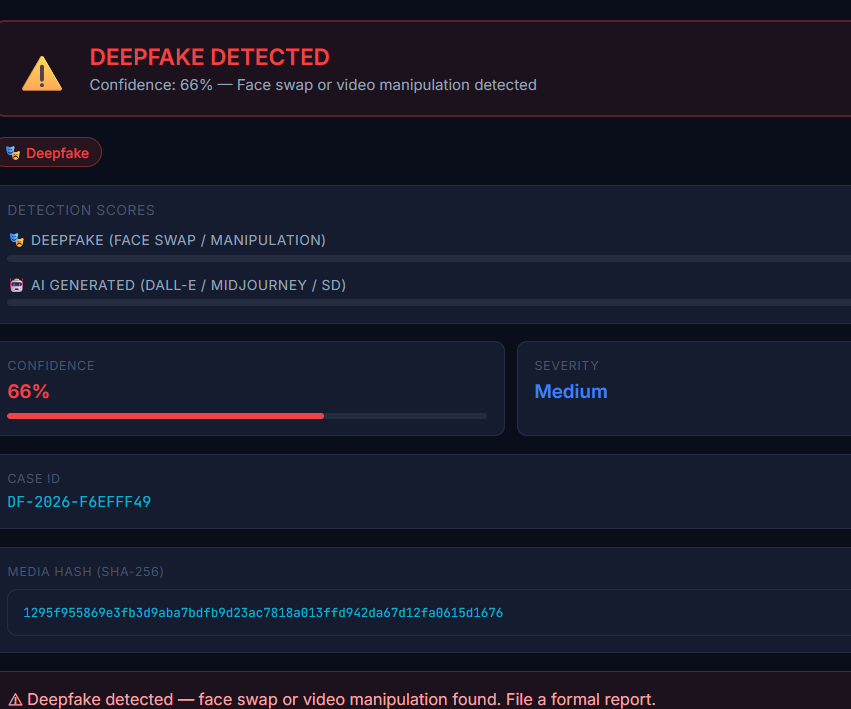
Detect Media → “DeepShield Detection — Upload media, uncover deepfakes and AI‑generated content instantly.”
-
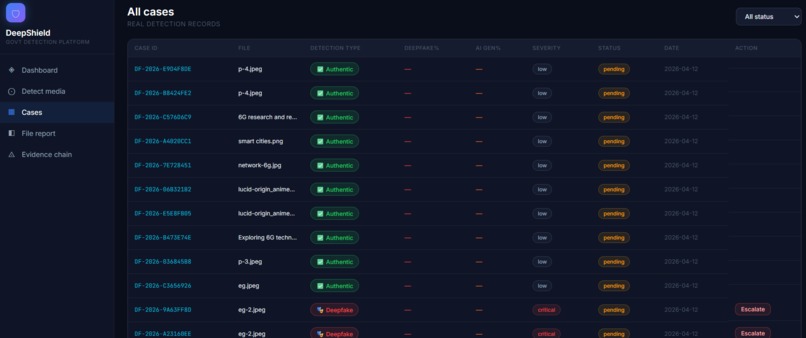
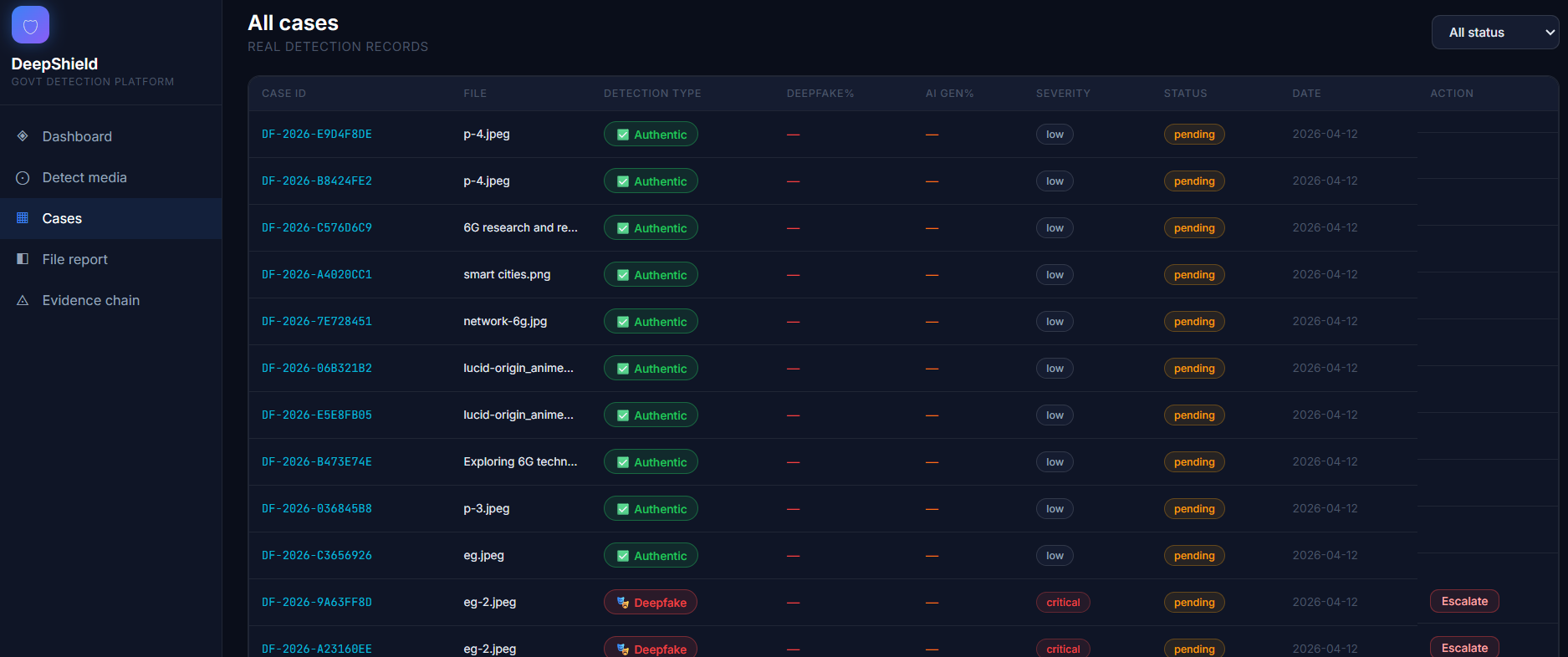
Cases → “DeepShield Cases — Authenticity logs and escalated deepfake alerts tracked transparently.”
-
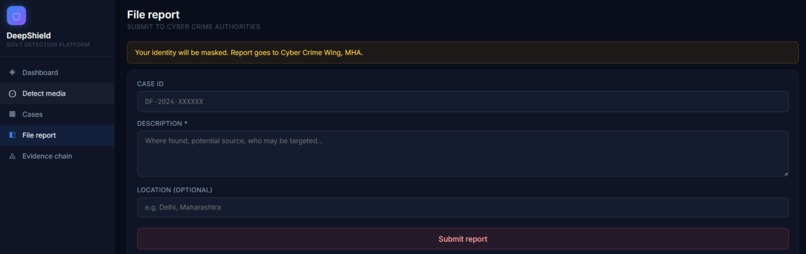
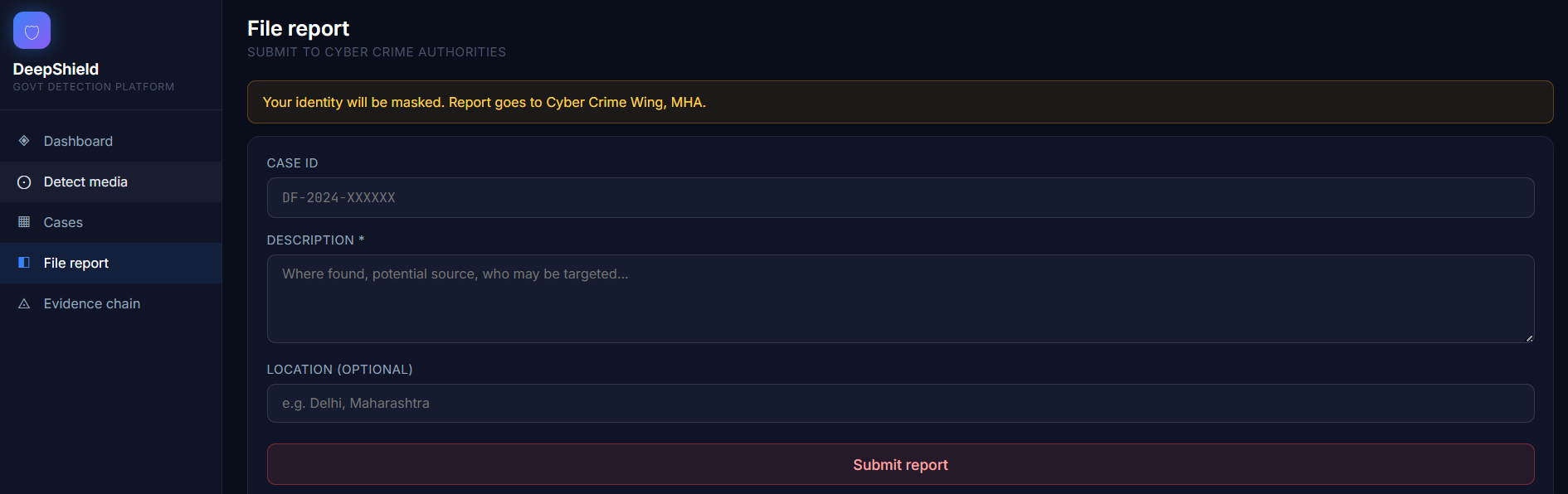
File Report → “DeepShield Reporting — Secure, masked submissions to cyber crime authorities.”
-
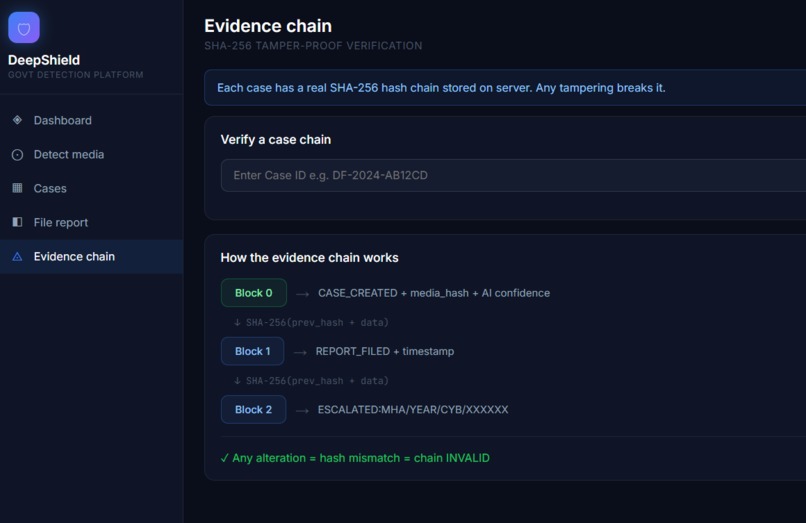
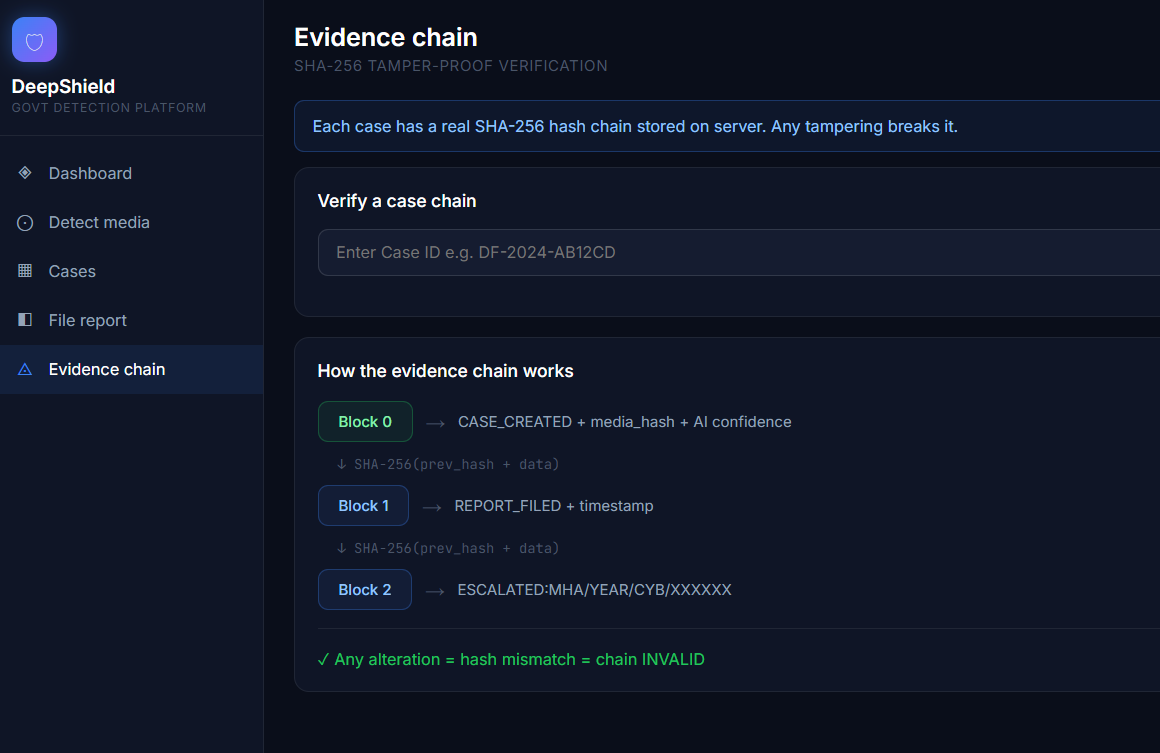
Evidence Chain → “DeepShield Evidence — Tamper‑proof SHA‑256 chain ensuring legal admissibility.”
-
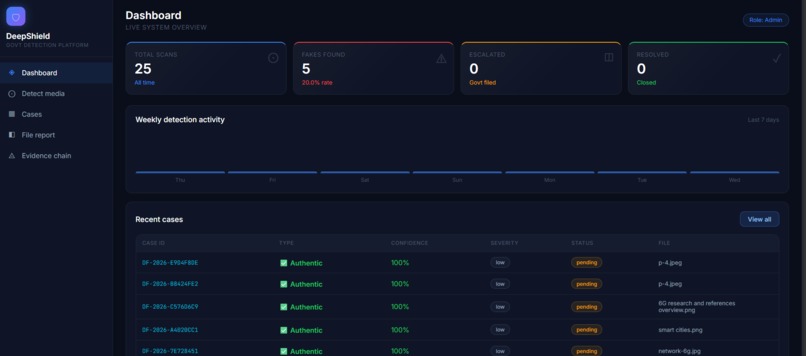
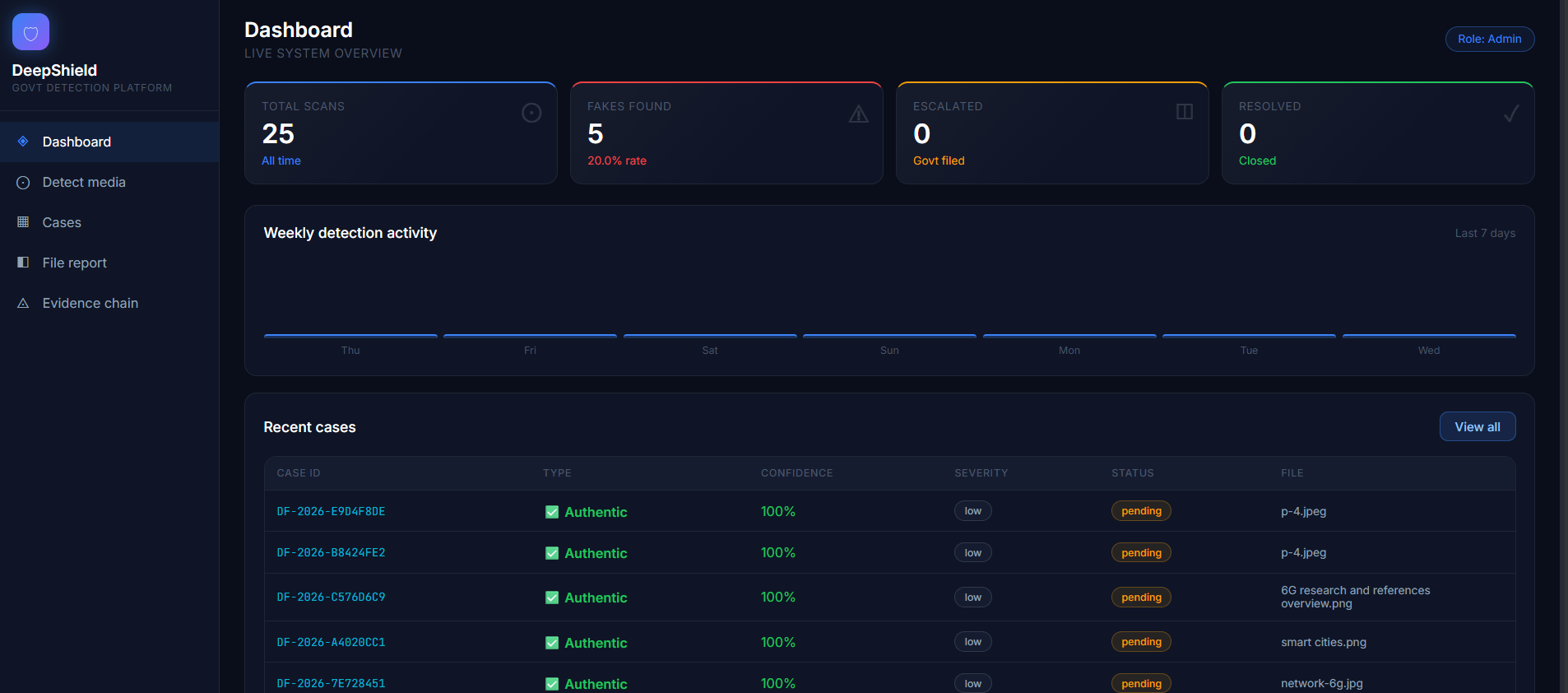
Dashboard → “DeepShield Dashboard — Real‑time detection metrics and trust at a glance.”
✨ Inspiration
The rise of deepfakes and AI-generated media is eroding public trust in digital content. Governments, journalists, and citizens often lack reliable tools to verify authenticity. This inspired me to build DeepShield — a platform that combines detection, case management, reporting, and tamper-proof evidence chains to restore digital trust.
🛠️ How I Built It
- Backend: Node.js with Express for handling uploads and API calls.
- Detection Engine: Initially integrated Sightengine APIs for quick prototyping.
- Dashboard & Case Management: JSON-based storage (
cases.json) with live metrics and case tracking. - Reporting Module: Secure submission to cyber crime authorities with masked identity.
- Evidence Chain: Implemented SHA-256 hash chaining to ensure tamper-proof verification:
Any alteration → hash mismatch → chain invalid.
📚 What I Learned
- How to integrate external APIs (Sightengine, and exploring Gemini).
- Importance of modular design: detection engine can be swapped without breaking the workflow.
- Basics of cryptographic hashing for evidence verification.
- How to frame technical work into a social impact narrative for hackathons.
⚔️ Challenges
- API Migration: Sightengine was easy to plug in, but moving to Gemini requires new endpoints and response parsing.
- Contributor Limits: GitHub repo permissions slowed deployment testing.
- Risk Management: Needed to avoid breaking the working prototype, so I experimented by copying the project folder before changes.
- Transparency vs Complexity: Balancing beginner-friendly design with advanced detection logic.
🌍 Impact
DeepShield is more than a prototype — it’s a step toward AI for Social Good. By making detection transparent and evidence legally admissible, it empowers governments, institutions, and citizens to fight misinformation and protect democracy.
Built With
- css3
- html5
- javascript
- sightengineapi


Log in or sign up for Devpost to join the conversation.