-
-
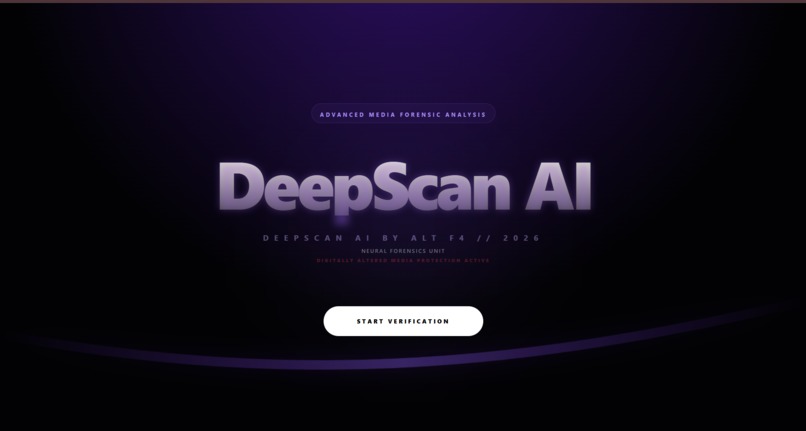
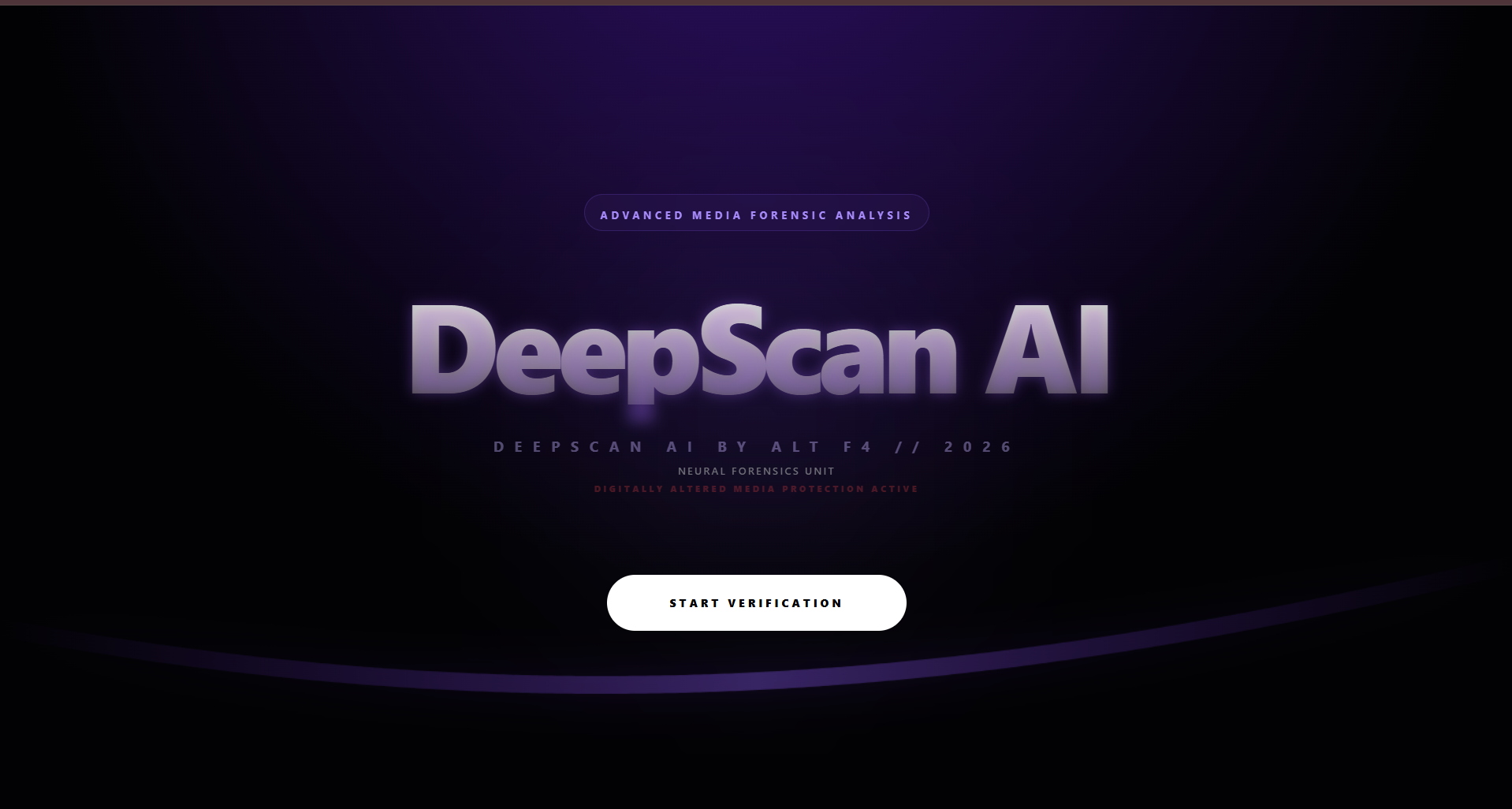
main page
-
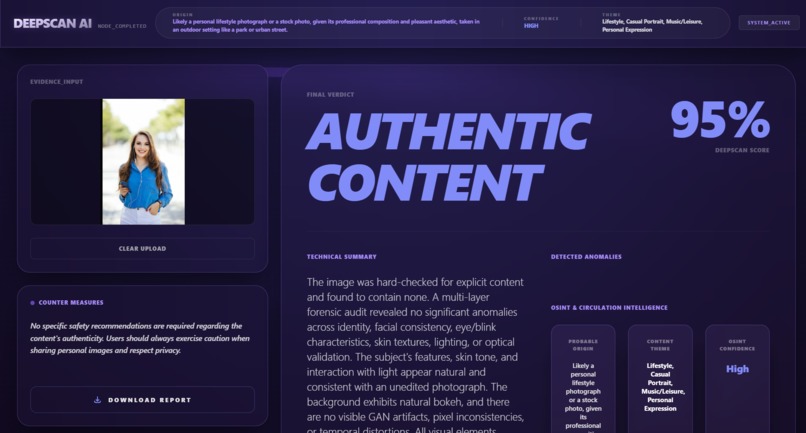
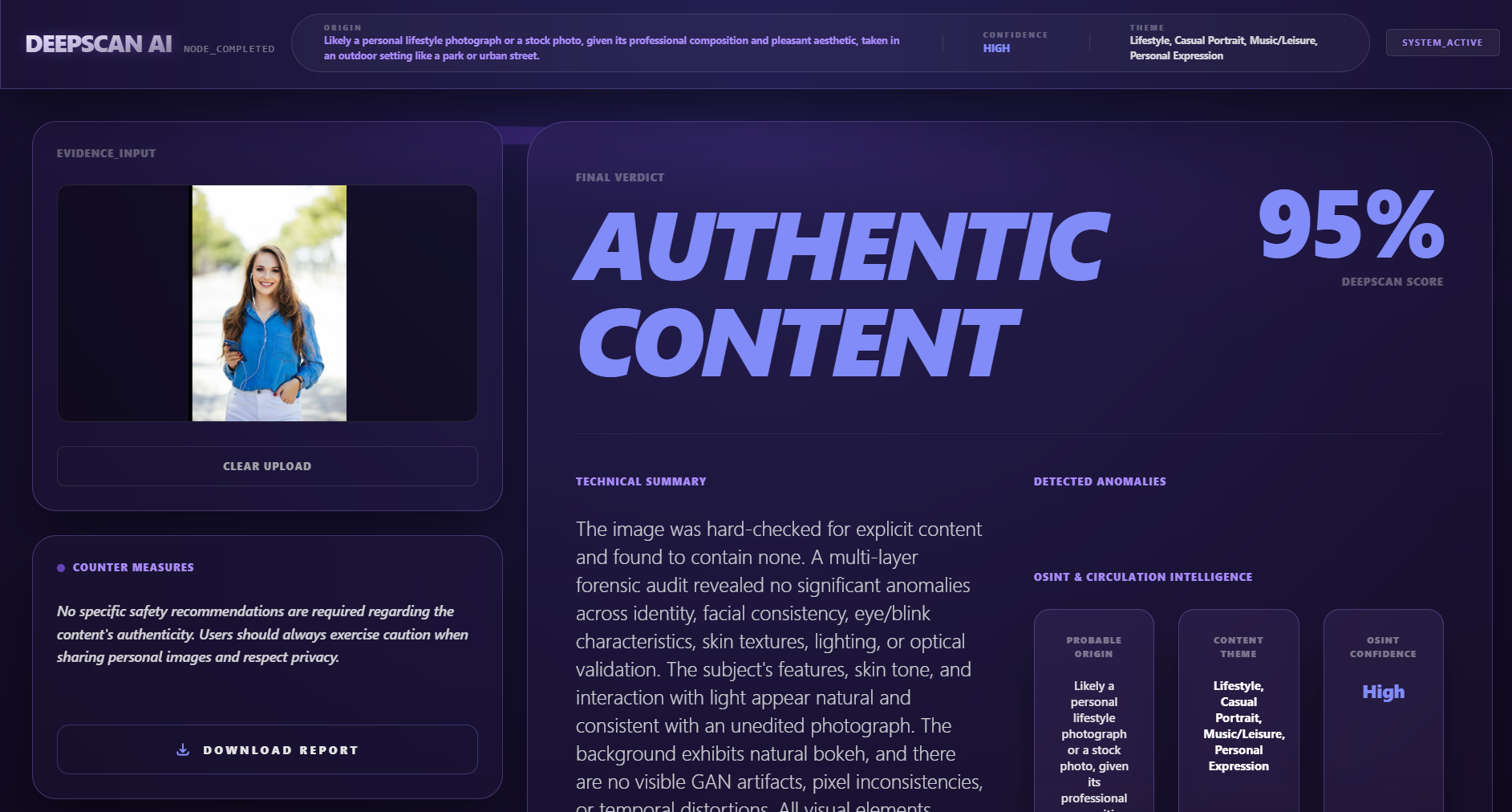
authentic image scan
-
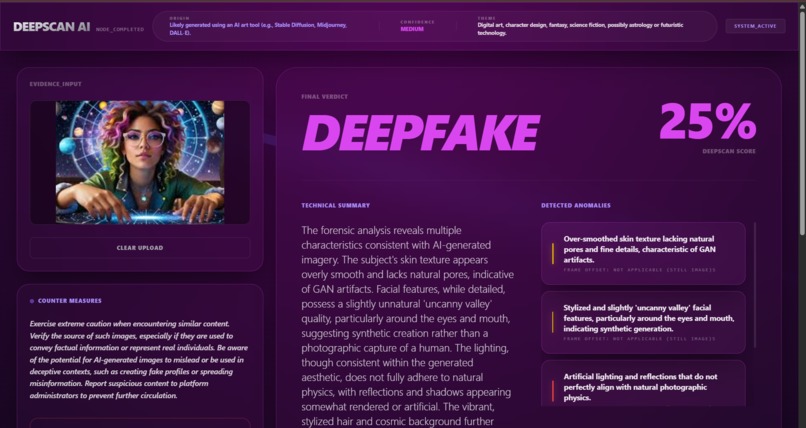
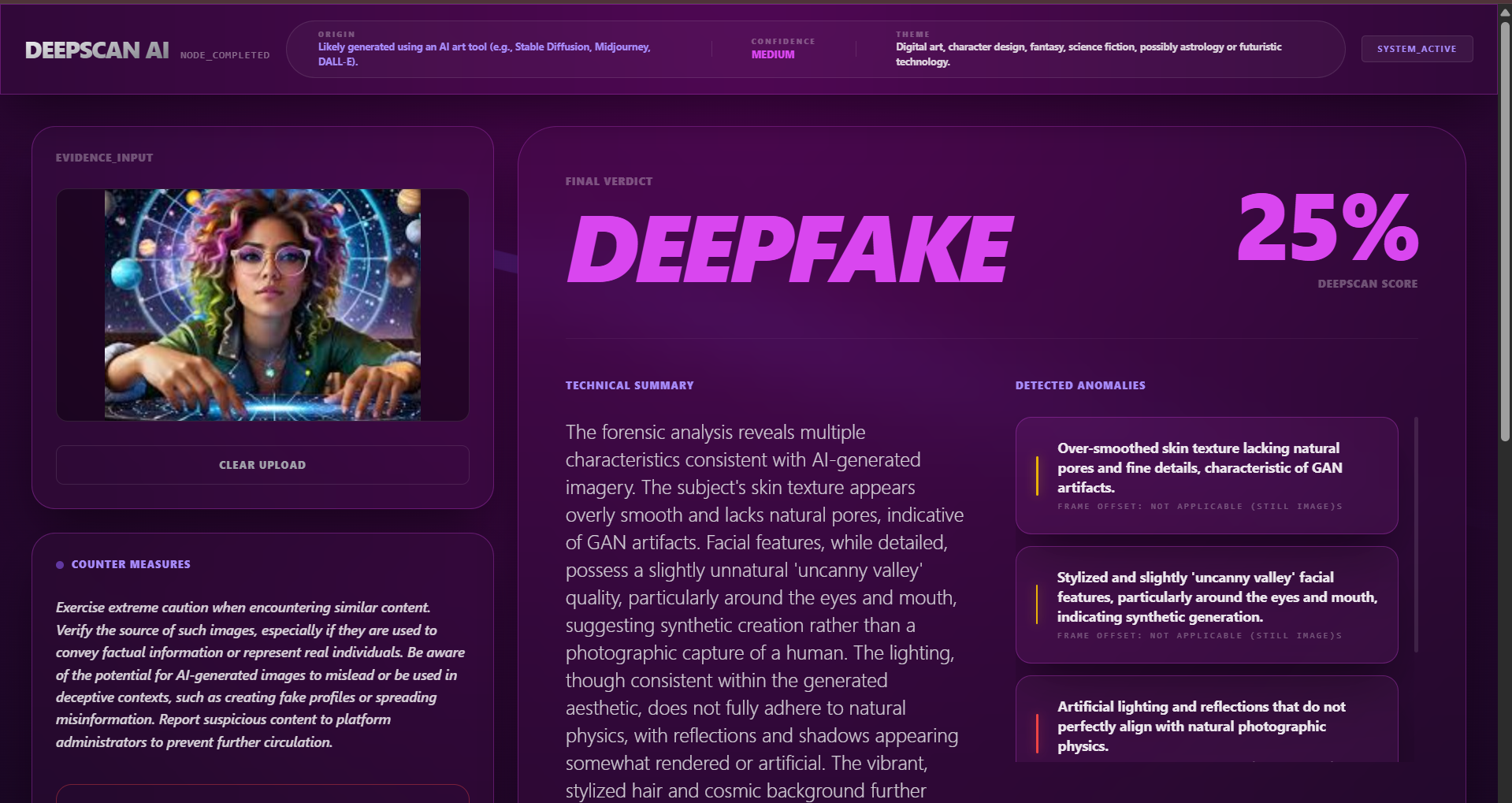
deepfake image detected
Inspiration
The rapid rise of generative AI has made it easier than ever to create highly realistic fake images and videos. Deepfakes are increasingly being used for misinformation, scams, identity manipulation, and harmful digital content. This inspired us to build DeepScan AI, a system that helps detect manipulated media and improve trust in digital information. Our goal was to create a tool that can analyze media content and help users verify whether it is authentic or artificially generated.
What it does
DeepScan AI is an AI-powered deepfake detection platform that analyzes images and videos to determine whether they have been manipulated. Users can upload media through a web interface, and the system performs forensic analysis to detect patterns associated with deepfake generation. The platform then returns a result with a label (Deepfake or Authentic) along with a confidence score indicating the likelihood of manipulation.
How we built it
DeepScan AI was developed using a combination of modern web technologies and AI-based analysis techniques.
- Frontend: HTML, CSS, JavaScript, and Vite for building a fast and responsive interface.
- Backend: Node.js and Express.js for handling API requests and media processing.
- AI Analysis: Media analysis pipeline integrated with AI tools to examine image patterns and detect deepfake artifacts.
- API Integration: The backend processes uploaded media files and returns detection results to the frontend interface.
Challenges we ran into
One of the main challenges was designing a reliable way to analyze media files efficiently while maintaining performance. Handling image and video data required careful optimization to ensure smooth uploads and processing. Another challenge was ensuring that the detection results are meaningful and presented in a clear way to users through the interface.
Accomplishments that we're proud of
We successfully built a working system that can analyze uploaded media and provide authenticity insights. Creating an end-to-end pipeline—from uploading files to returning AI-based analysis results—was a major milestone. We are also proud of building a clean and user-friendly interface that makes deepfake detection accessible to anyone.
What we learned
Through this project we gained experience in building full-stack AI-powered applications. We learned how to integrate AI analysis into a web platform, manage media file handling, and design APIs that connect frontend interfaces with backend processing systems. We also developed a deeper understanding of the challenges involved in detecting manipulated digital media.
What's next for DeepScan AI
Future improvements will focus on making DeepScan AI more powerful and scalable.
- Improve deepfake detection accuracy
- Add advanced video frame analysis
- Train and integrate custom machine learning models
- Develop a browser extension for detecting deepfakes on social media
- Implement real-time media verification tools
- Expand support for larger datasets and faster processing


Log in or sign up for Devpost to join the conversation.