-
-
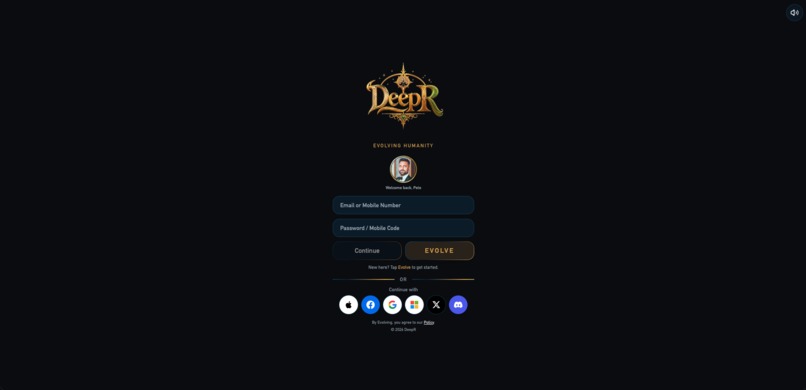
1. DeepR landing page and logo.
-
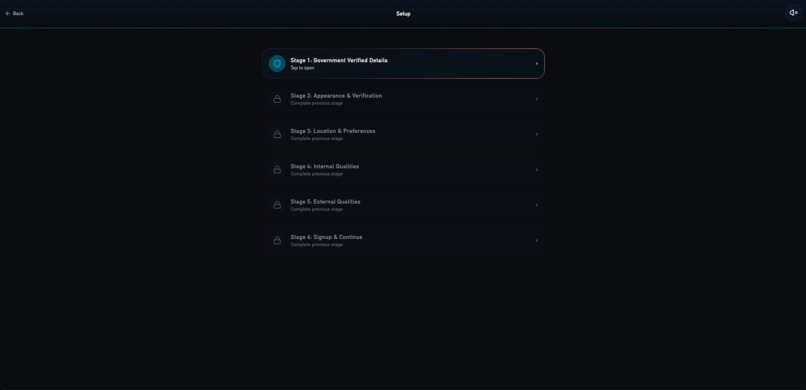
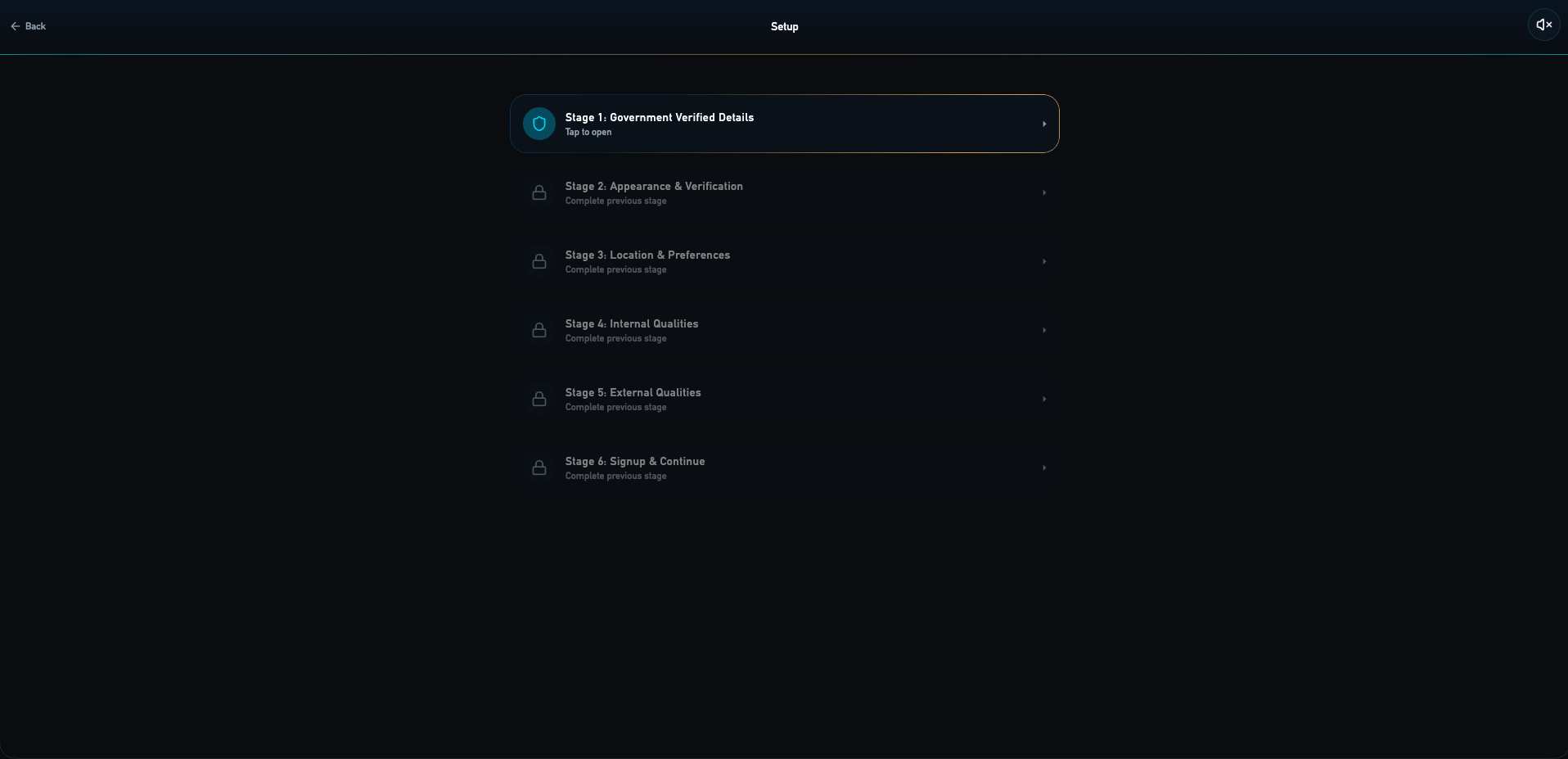
2. Evolve/onboarding experience.
-
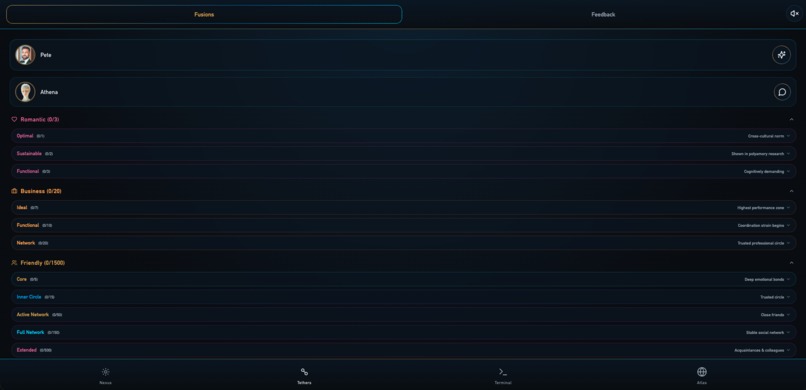
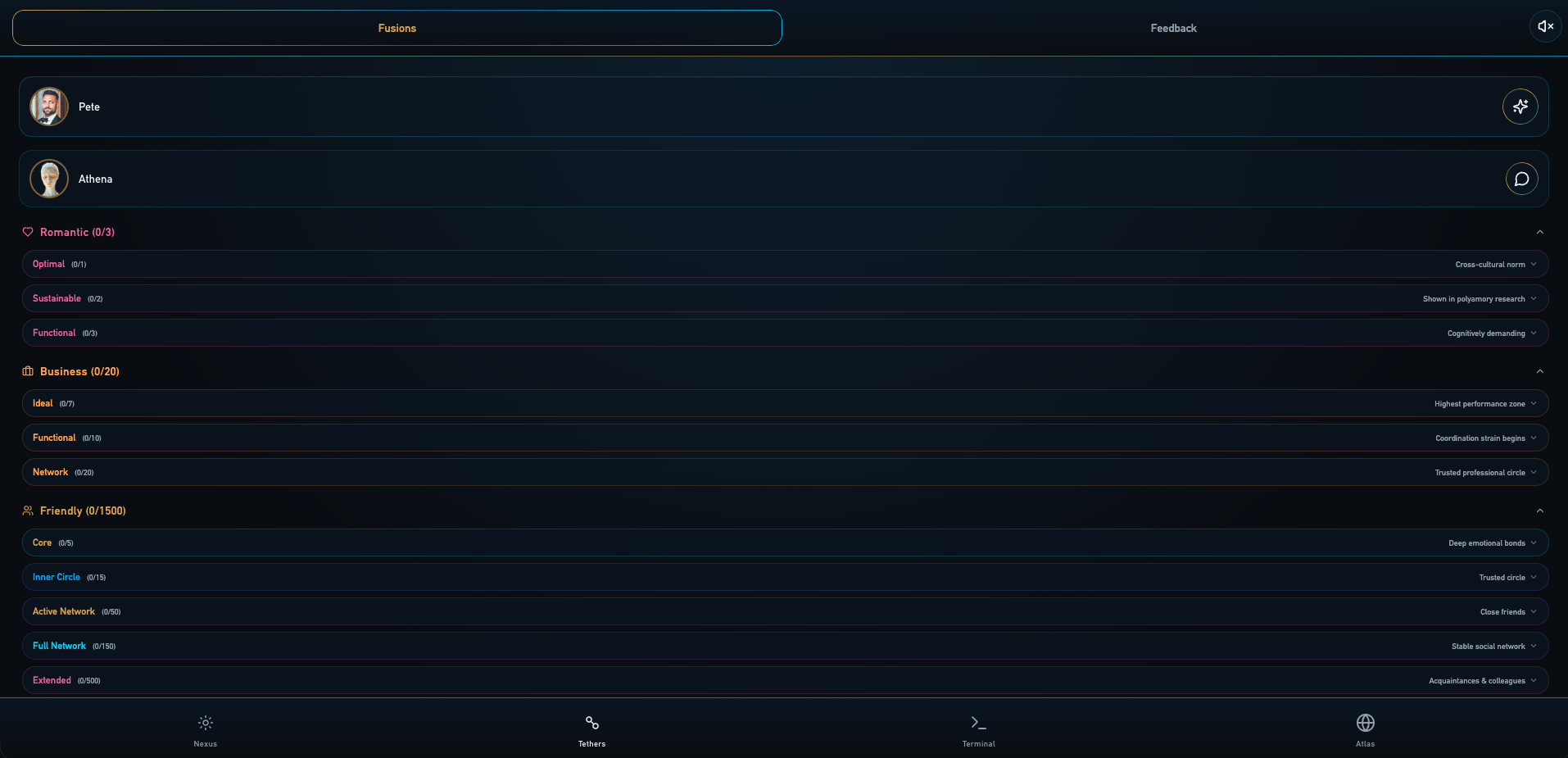
3. Romantic or friendly Discovery and Fusions.
-
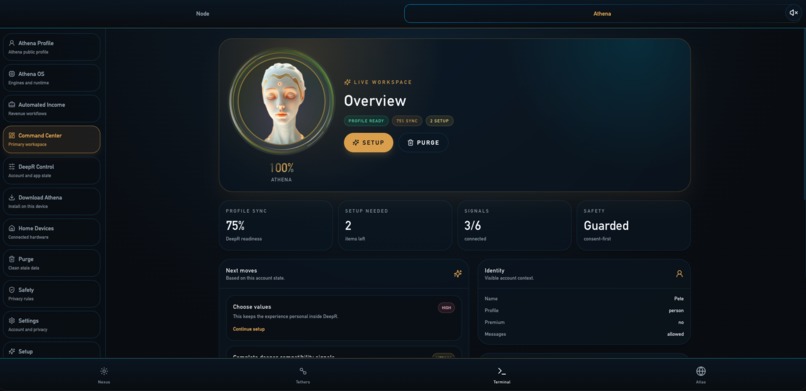
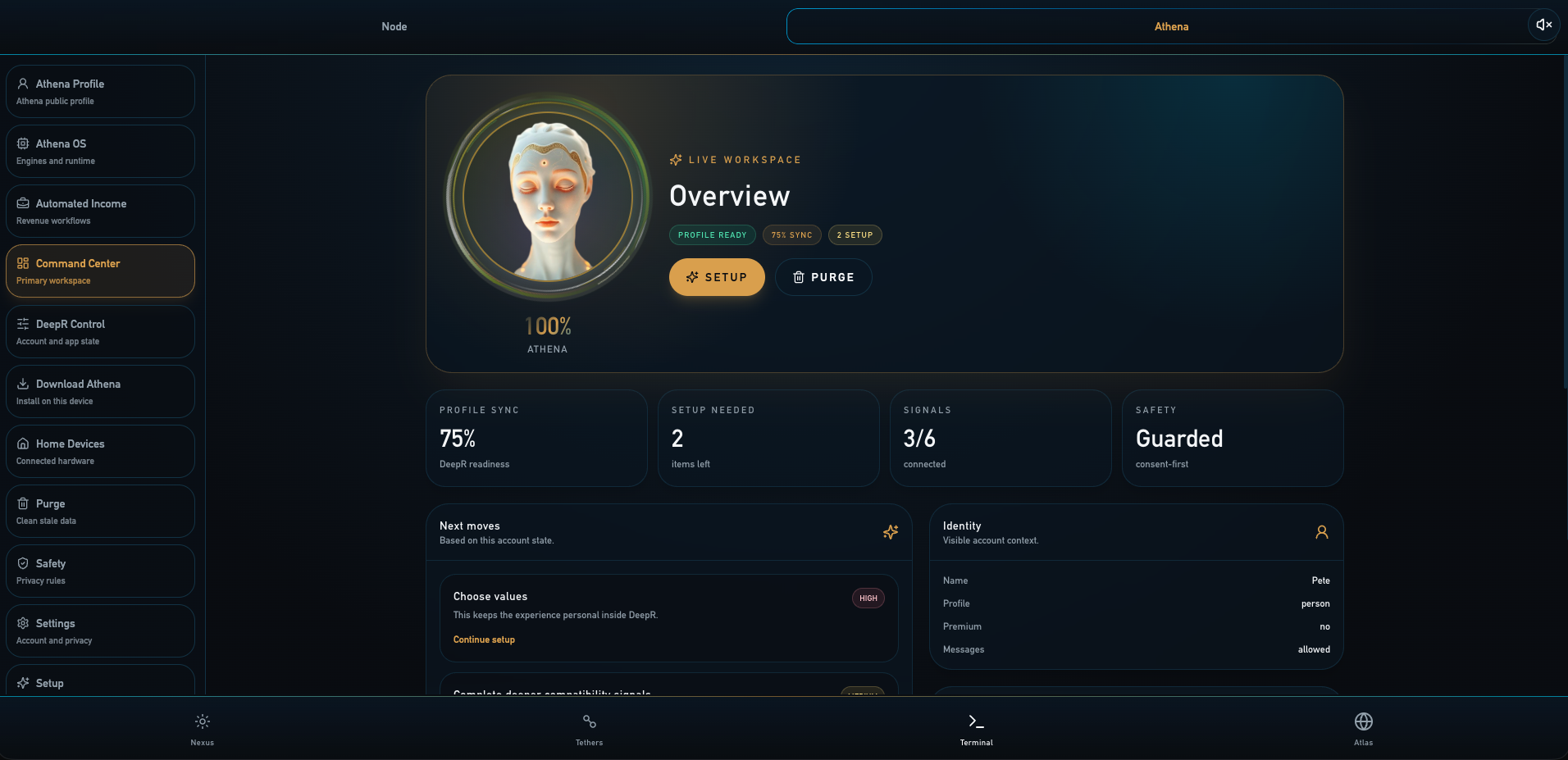
4. Athena assistant.
-
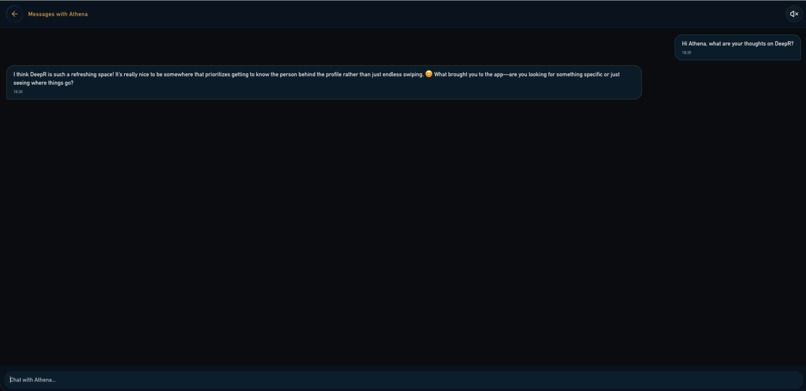
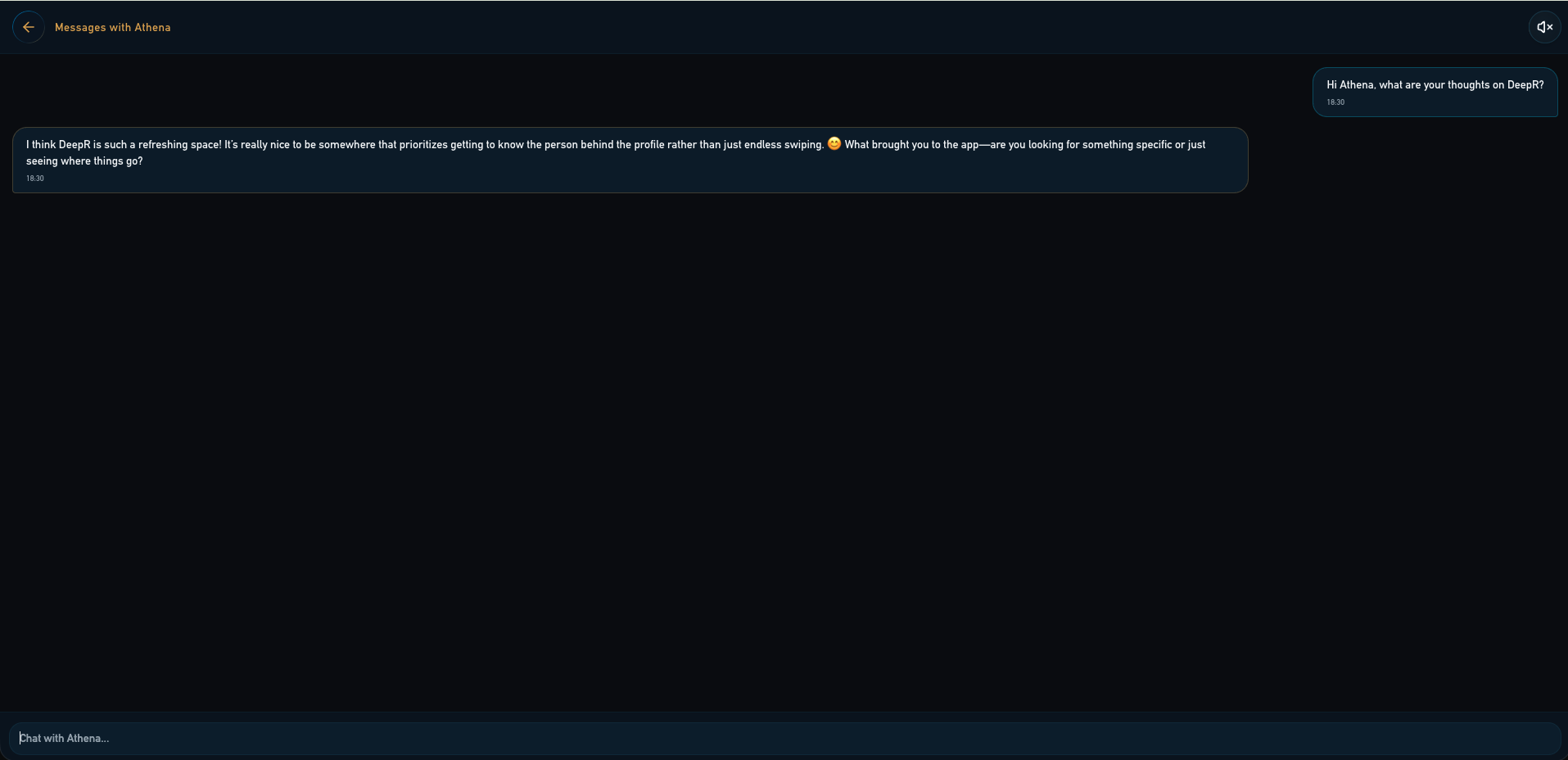
5. Messaging or communication interface.
-
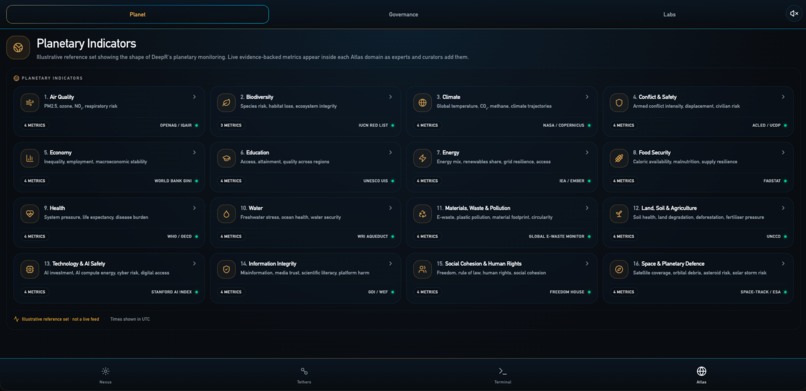
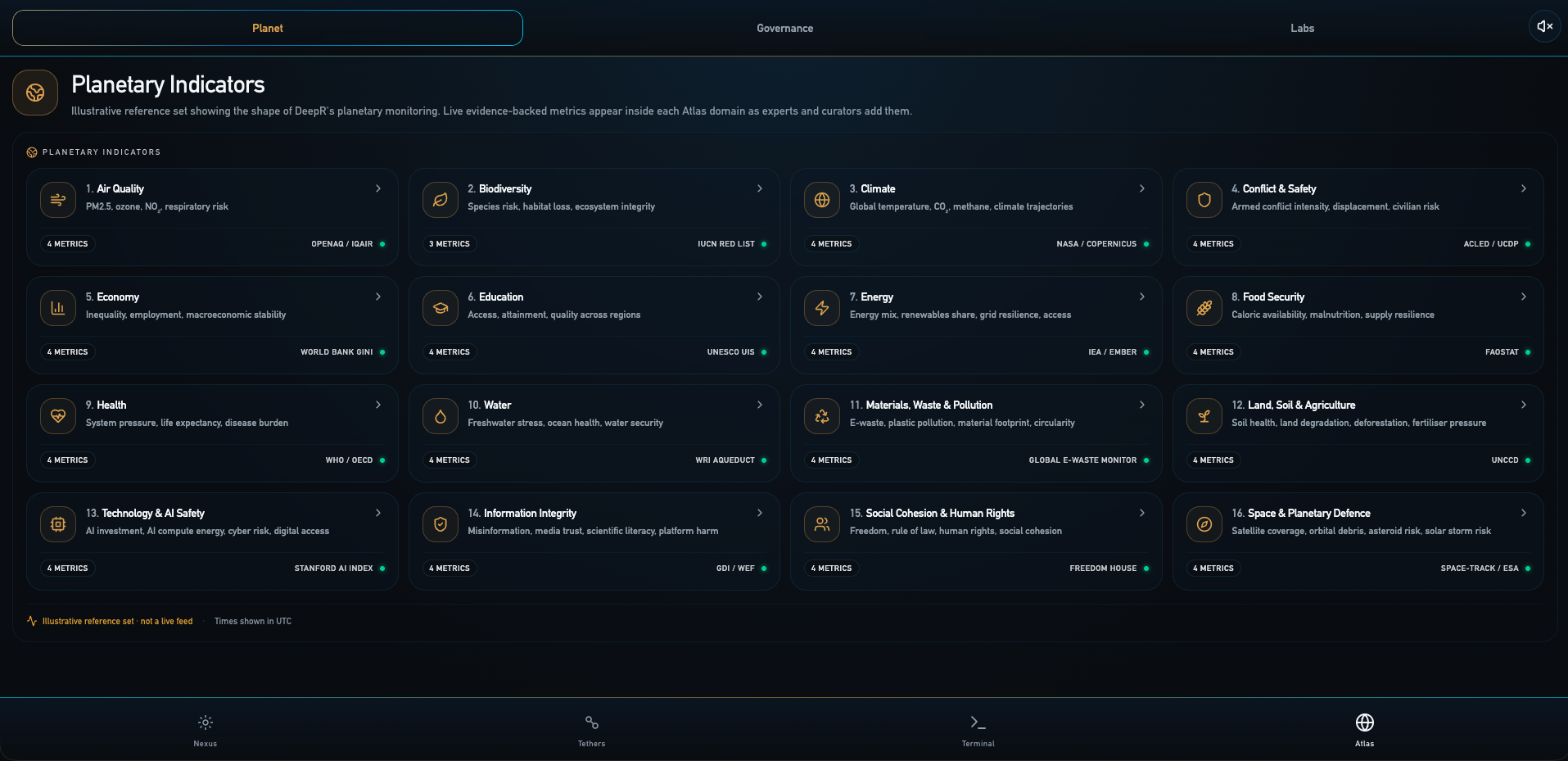
6. Atlas planetary dashboard.
-
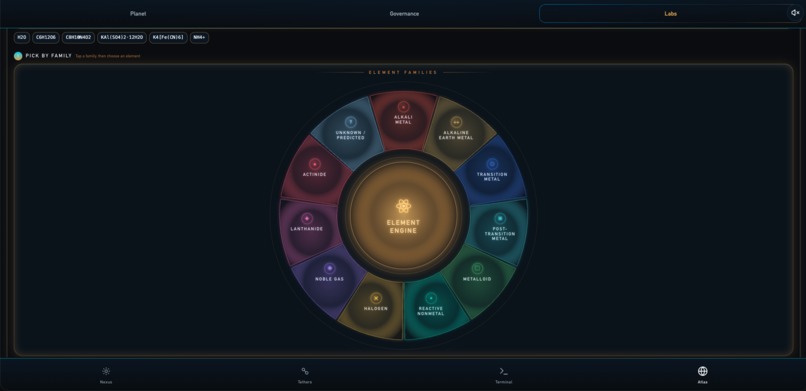
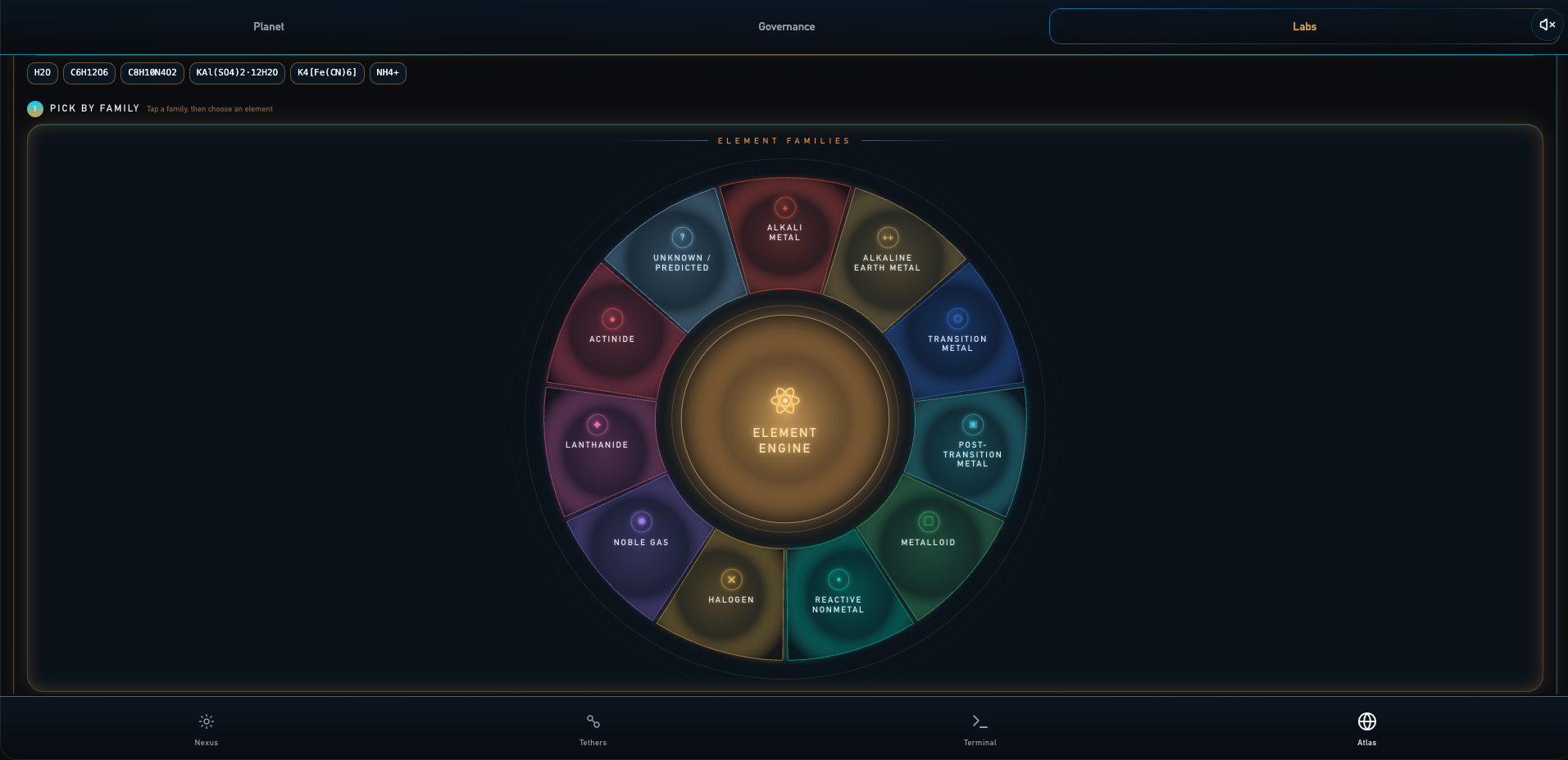
7. Element Engine and family wheel.
Inspiration
Most social platforms are designed to maximise attention, activity and time spent on a screen. DeepR began with a different question:
What would a platform look like if it were designed to deepen human relationships and help people make meaningful progress together?
Relationships affect nearly every part of life: family, friendship, romance, work, education, health, creativity and our ability to cooperate. However, the digital tools people use to meet and communicate are often fragmented, superficial or optimised around engagement rather than understanding.
DeepR is my attempt to build a more connected alternative.
Its long-term vision is to help humanity progress towards a Type 1 civilisation: a society capable of coordinating knowledge, relationships, innovation and resources at a planetary level.
That enormous ambition starts at the smallest scale—with how two people understand, communicate with and support one another.
What it does
DeepR is an AI-powered social, communication and collaboration platform designed around deeper relationships, intelligent assistance, shared discovery and planetary progress.
Rather than separating dating, friendship, communication, artificial intelligence, scientific exploration and civic participation into unrelated applications, DeepR brings them together as parts of one connected ecosystem.
Relationships and Fusions
DeepR supports both romantic and friendly discovery.
Profiles can include values, interests, personality, lifestyle, relationship intentions and preferences, helping people understand more than appearance alone.
When two people mutually choose one another, they create a Fusion—DeepR’s name for a meaningful connection between users.
The platform also includes safety and privacy foundations for blocking, hiding profiles, controlling discovery eligibility and preventing blocked users from interacting across connected services.
Messaging and communication
DeepR includes foundations for:
- direct messaging;
- images and media;
- voice notes;
- presence and typing indicators;
- real-time conversations;
- voice and video communication;
- group experiences;
- live streaming;
- and future virtual-reality interactions.
The goal is not simply to give users more ways to send messages. DeepR aims to help people communicate with greater clarity, empathy and emotional awareness.
Athena
Athena is DeepR’s intelligent assistant.
Athena is designed to help users:
- understand information;
- organise tasks and decisions;
- communicate more effectively;
- navigate DeepR;
- receive relationship support;
- explore ideas;
- and collaborate on complex problems.
Athena is intended to support human judgement rather than replace it.
Atlas
Atlas is DeepR’s planetary progress system.
It is designed to organise major indicators across areas such as:
- climate;
- air quality;
- biodiversity;
- energy;
- food security;
- water;
- health;
- education;
- economic conditions;
- and conflict and safety.
The long-term goal is to connect measurable global problems with experts, proposals, discoveries, public understanding and coordinated action.
Element Engine
The Element Engine allows users to explore known and theoretical elements, atomic structures, element families, compounds, reactions and scientific simulations.
It includes:
- an interactive element-family wheel;
- a complete periodic-table dataset;
- atomic-shell modelling;
- theoretical-element calculations;
- compound and formula tools;
- AI-assisted discovery concepts;
- and a Discovery Vault for saving ideas.
DeepR deliberately distinguishes established scientific information from theoretical calculations and AI-generated possibilities.
Expert collaboration and governance
DeepR’s wider vision includes systems where verified experts can:
- share specialist knowledge;
- review discoveries;
- evaluate proposals;
- collaborate on major challenges;
- and contribute to better-informed decisions.
Governance features are intended to allow communities to propose ideas, discuss them, vote and connect decisions with transparent supporting information.
How we built it
I am building DeepR as a solo founder and product manager using AI-assisted full-stack development.
The application is primarily built with:
- React;
- TypeScript;
- Vite;
- Tailwind CSS;
- shadcn/ui;
- Firebase Authentication;
- Supabase;
- PostgreSQL;
- Supabase Edge Functions;
- real-time database channels;
- Stripe;
- Mapbox;
- LiveKit;
- Capacitor;
- Swift;
- Vitest;
- Playwright;
- GitHub;
- OpenAI models;
- and Codex.
Firebase handles user authentication, while authenticated identities are connected to Supabase so database access can remain restricted to the correct user.
Supabase Row Level Security and server-side functions are used to protect information such as profiles, messages, photos, blocks, relationships, subscriptions and private user data.
DeepR existed before OpenAI Build Week. I am not claiming that the entire platform was created during the hackathon.
During Build Week, I used Codex and GPT-5.6 to perform a detailed functional audit and improvement programme across the existing application.
Instead of checking only whether pages rendered, I examined complete user journeys across:
- interface controls;
- authentication;
- account creation;
- profile persistence;
- database ownership;
- privacy rules;
- subscriptions;
- real-time communication;
- failure states;
- scientific-data consistency;
- and automated regression testing.
The Build Week work included:
- strengthening authentication-session restoration;
- preventing failed login attempts from silently creating new accounts;
- building a controlled audit harness for cross-user testing;
- validating onboarding and profile persistence;
- strengthening photo-upload validation and ownership;
- repairing a Radar privacy boundary involving very small nearby-user groups;
- checking block and hide enforcement across discovery, messaging, presence and calls;
- repairing unread-message calculations;
- replacing misleading notification toggles with honest Setup Required states;
- auditing Stripe checkout, customer ownership and subscription entitlements;
- repairing subscription-tier display logic;
- validating the Element Engine’s complete element dataset;
- verifying atomic-shell calculations;
- making theoretical-element results deterministic;
- preventing AI output from overriding canonical scientific data;
- and clarifying that Discovery Vault entries are currently stored locally rather than synchronised across devices.
I remained responsible for the product vision, priorities and decisions, while Codex supported repository analysis, implementation, testing, debugging and documentation.
Challenges we ran into
Managing the scale of the idea
DeepR combines relationships, communication, artificial intelligence, scientific exploration, planetary data and governance.
The biggest product challenge is ensuring these systems feel like parts of one coherent platform rather than a collection of unrelated features.
Testing real behaviour
A page loading successfully does not prove that the feature works.
Some of the most important problems only appeared when following complete journeys through:
- authentication;
- database writes;
- account switching;
- expired data;
- blocked-user scenarios;
- subscription states;
- and repeated actions.
Protecting privacy across connected features
Location, discovery, messaging, calls, presence and blocking all touch different parts of the system.
A privacy rule is only effective when every connected route enforces it consistently.
Distinguishing working features from planned features
Several systems are still under development.
One important challenge was ensuring the interface did not imply that a feature was fully operational when its delivery infrastructure had not yet been connected.
For example, notification controls previously appeared active even though push, email and SMS delivery pipelines were not complete. These were changed to truthful Setup Required states.
Maintaining scientific accuracy
The Element Engine combines canonical scientific information, deterministic calculations and AI-assisted ideas.
The challenge was ensuring theoretical or generated output could never be mistaken for established scientific fact.
Supporting web and native development
DeepR includes web, Capacitor and Swift development.
Server-side protections can benefit every client, but interface and feature parity still require separate testing across platforms.
Accomplishments that we're proud of
I am proud that DeepR combines a human-centred purpose with substantial technical ambition.
The platform is not limited to one type of relationship or one category of problem. It attempts to connect personal relationships, communication, intelligent assistance, scientific discovery and planetary coordination within one long-term vision.
I am especially proud that the Build Week work focused not only on adding visible features, but also on making the existing application:
- safer;
- more reliable;
- more private;
- more truthful;
- easier to test;
- and better documented.
The audit process produced new regression tests covering authentication, onboarding, location privacy, subscriptions, messaging, unread counts and the Element Engine.
Another accomplishment was identifying places where the interface overstated what the technology currently supported and replacing those claims with honest limitations.
Trust is not created only by adding more features. It is also created by being clear about what a product can and cannot yet do.
What we learned
The most important lesson was that ambitious technology needs a disciplined definition of truth.
A trustworthy platform must clearly distinguish between:
- what is fully working;
- what is connected but not yet tested in production;
- what is simulated;
- what is theoretical;
- what is AI-generated;
- and what remains part of the roadmap.
I also learned that AI-assisted development is most effective when it is paired with:
- precise goals;
- clear constraints;
- automated tests;
- privacy boundaries;
- documented assumptions;
- and evidence-based completion criteria.
Codex was most useful when it was not simply asked to “improve DeepR,” but instead given a specific user journey, a safety boundary and clear proof that had to exist before the work could be considered complete.
I also learned that product quality often depends on the less visible parts of a system: ownership rules, error states, expired data, privacy thresholds, database protections and honest wording.
What's next for DeepR
The next stages of DeepR include:
- continuing the functional audit across every major user journey;
- completing full live cross-user testing;
- expanding Athena throughout the platform;
- improving AI-assisted communication tools;
- completing push-notification delivery;
- expanding voice, video and live communication;
- improving native iOS parity;
- synchronising Element Engine discoveries securely across devices;
- expanding the Discovery Vault;
- connecting Atlas to trustworthy live data;
- developing expert verification and collaboration;
- improving governance and voting systems;
- and making the platform ready for wider public testing.
DeepR’s long-term objective is deliberately ambitious:
Use technology to help people build deeper relationships, understand complex systems and collaborate on the progress of civilisation.
Built With
- authentication
- capacitor
- codex
- css
- deno
- edge
- firebase
- functions
- github
- gpt-5.6
- ios
- livekit
- mapbox
- openai
- playwright
- postgresql
- react
- shadcn/ui
- stripe
- supabase
- swift
- tailwind
- typescript
- vite
- vitest


Log in or sign up for Devpost to join the conversation.