-
-
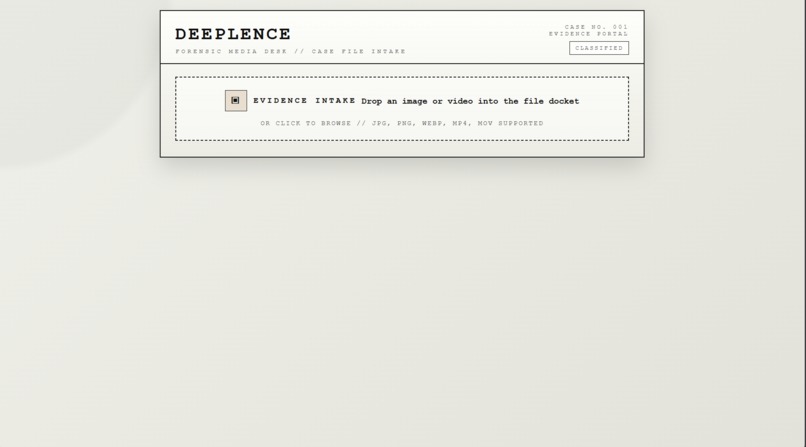
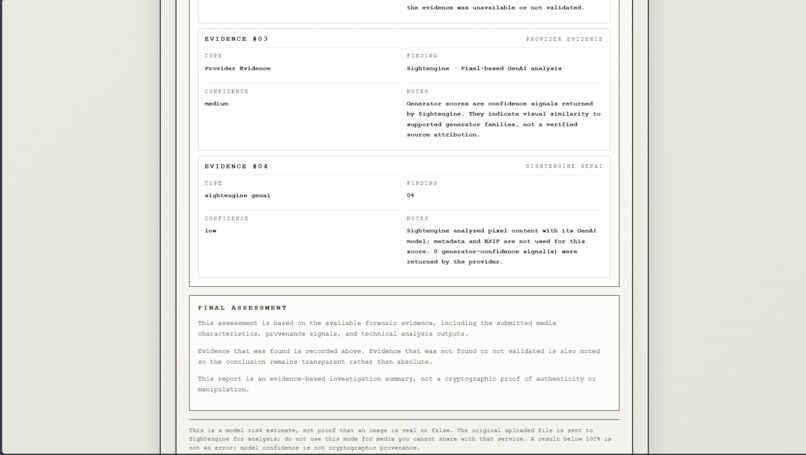
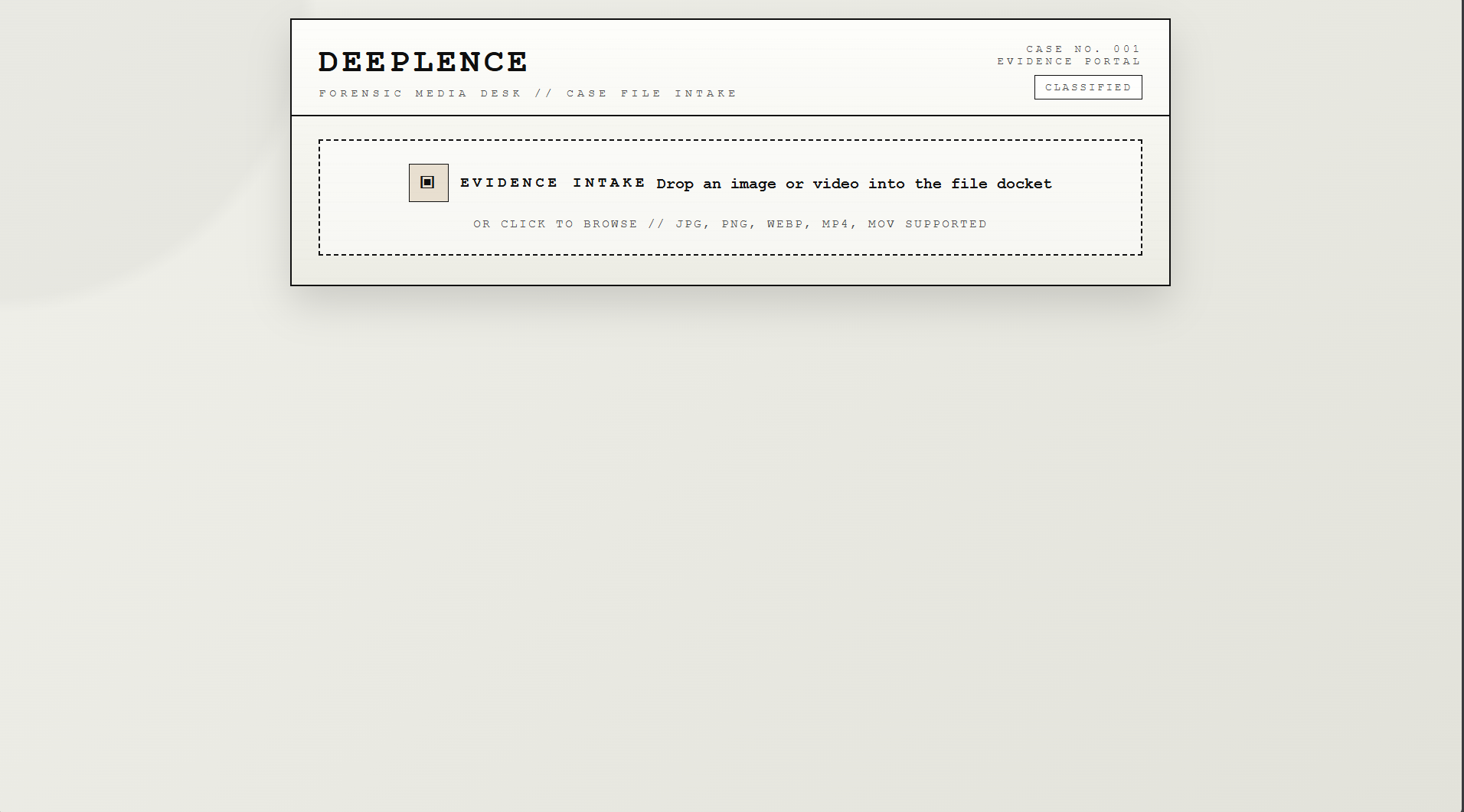
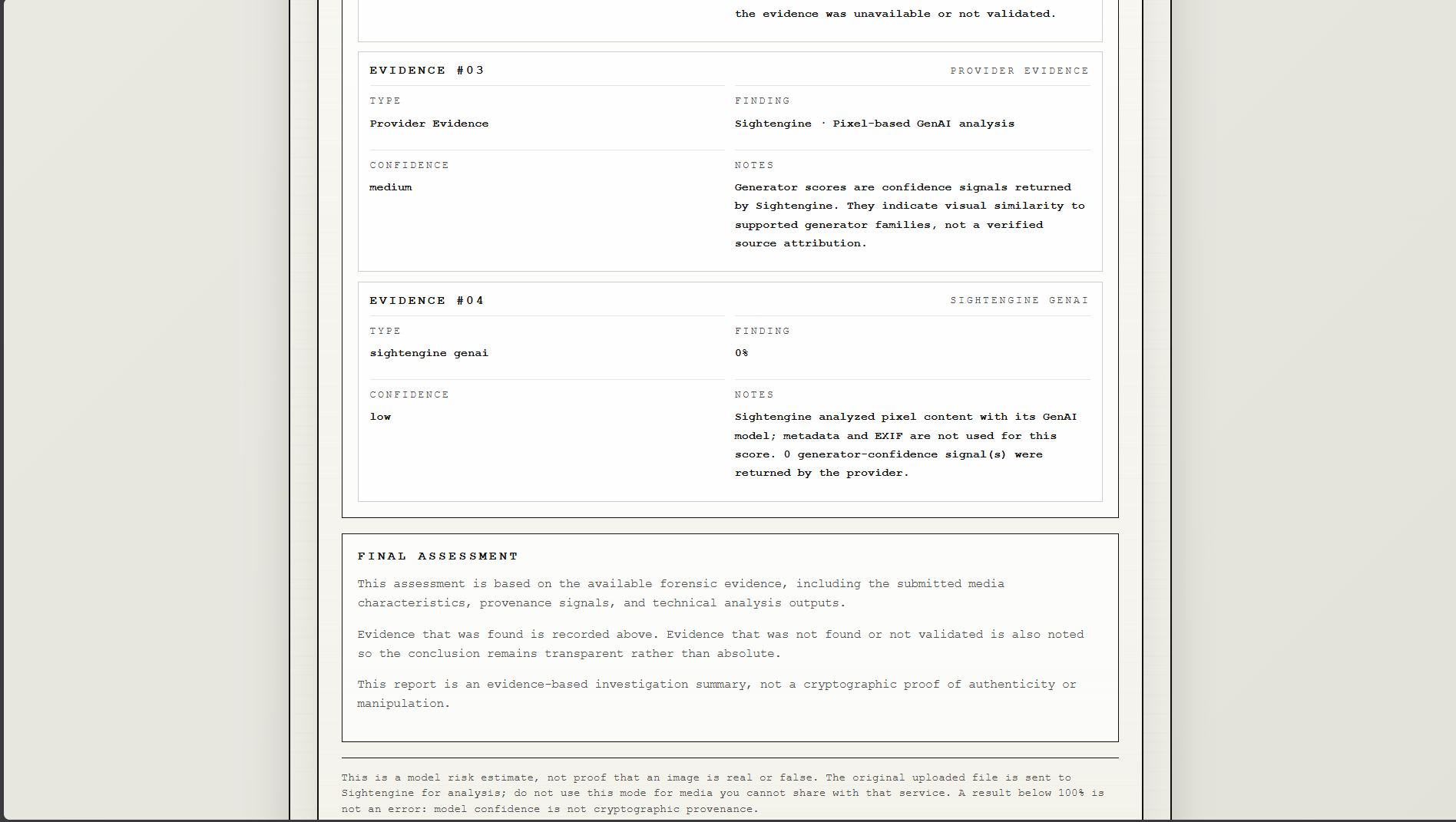
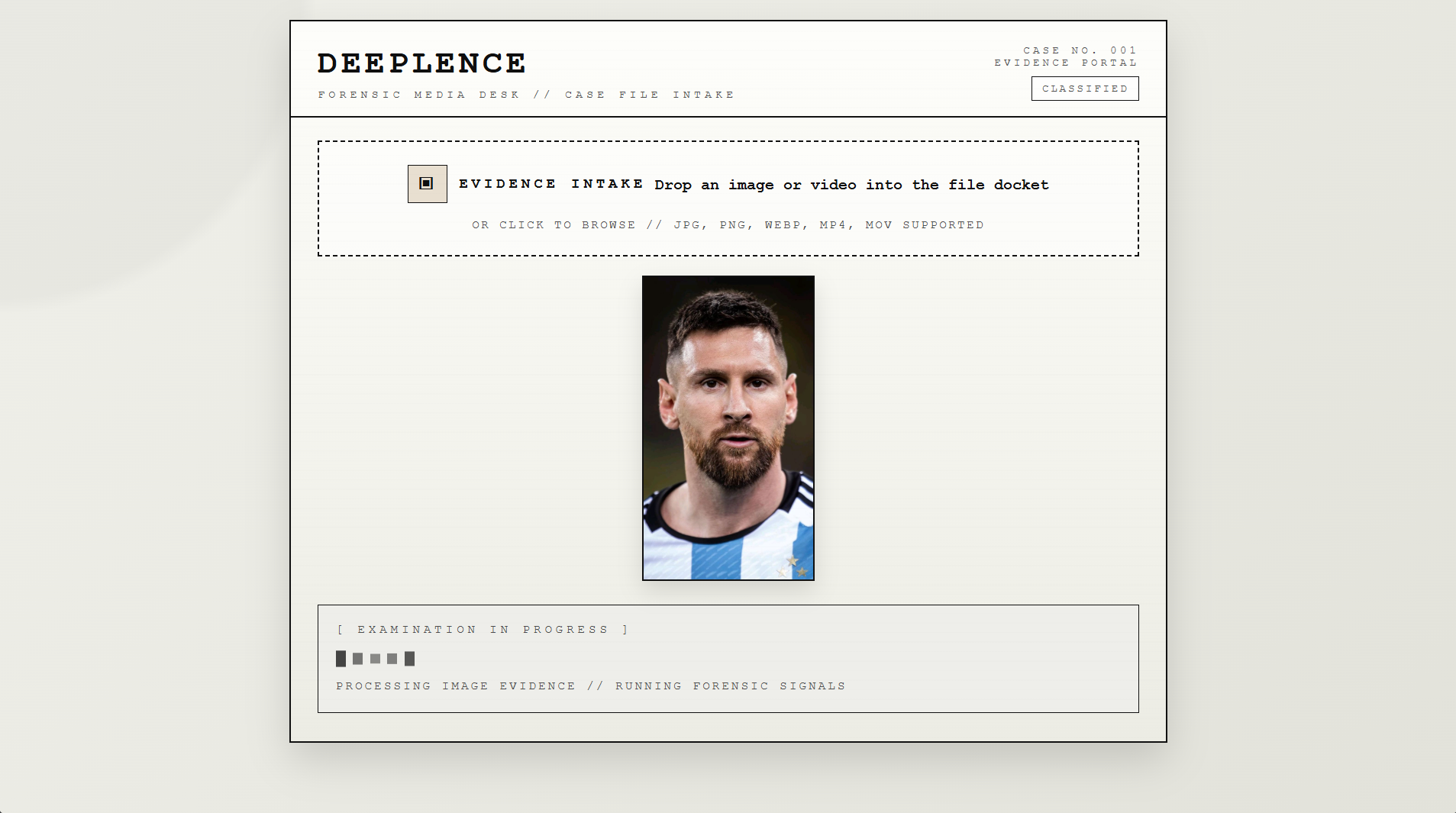
you upload an image
-
-
-
-
-
-
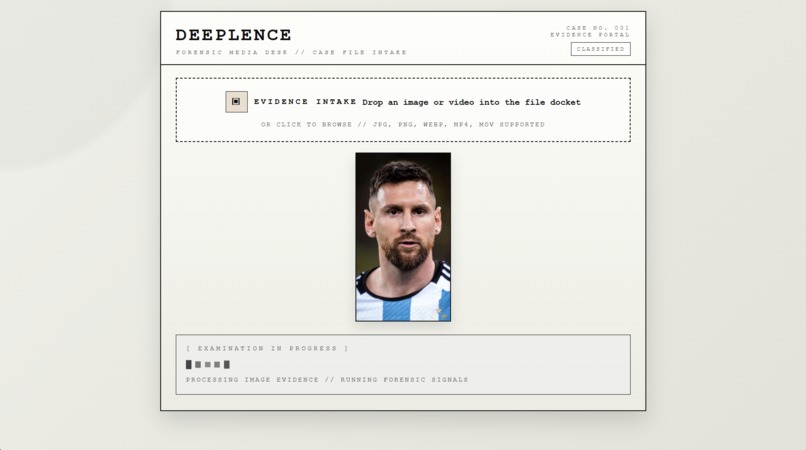
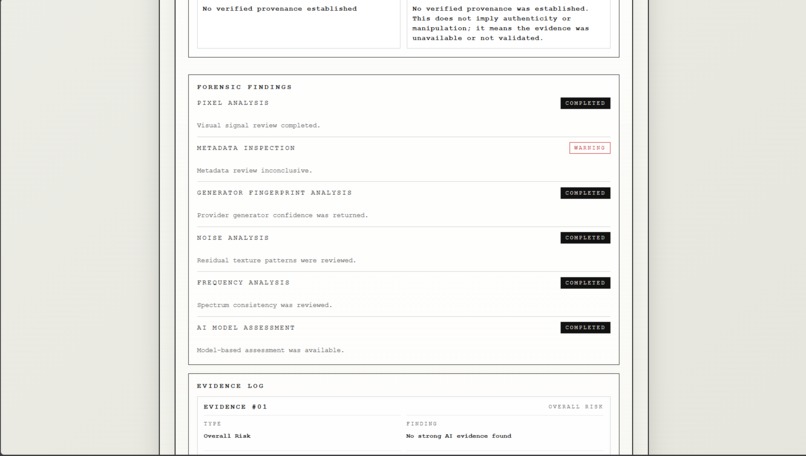
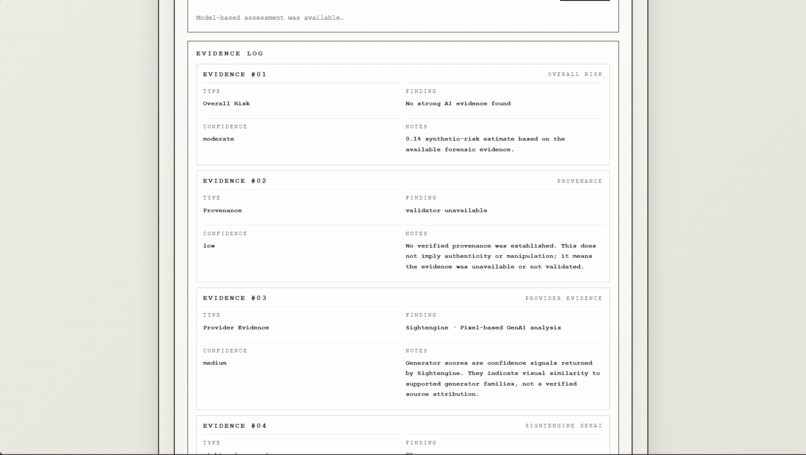
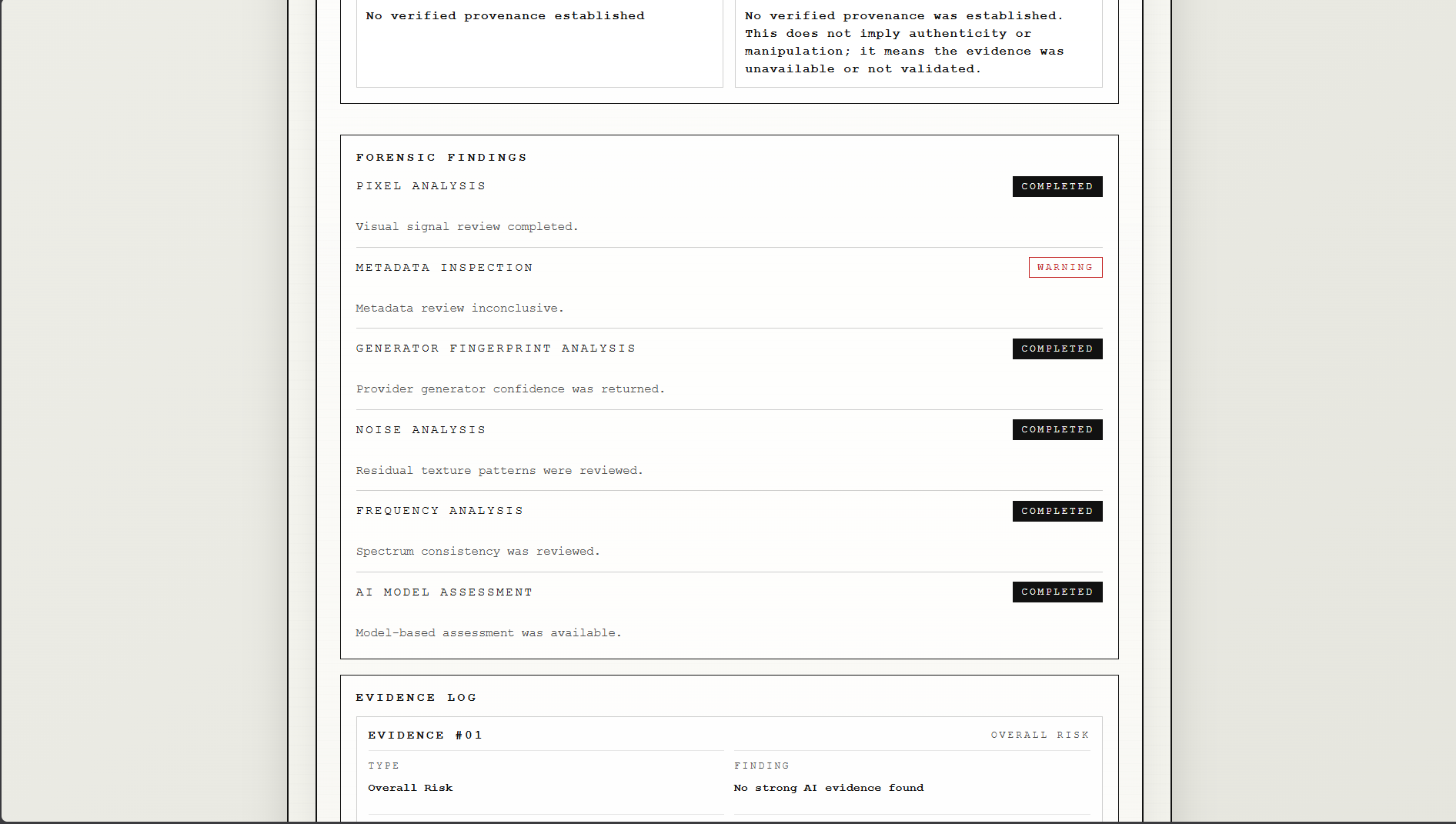
it analysess
-
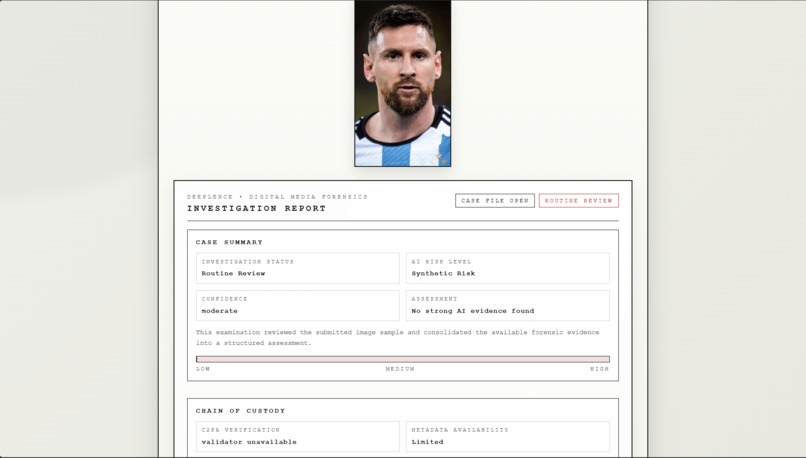
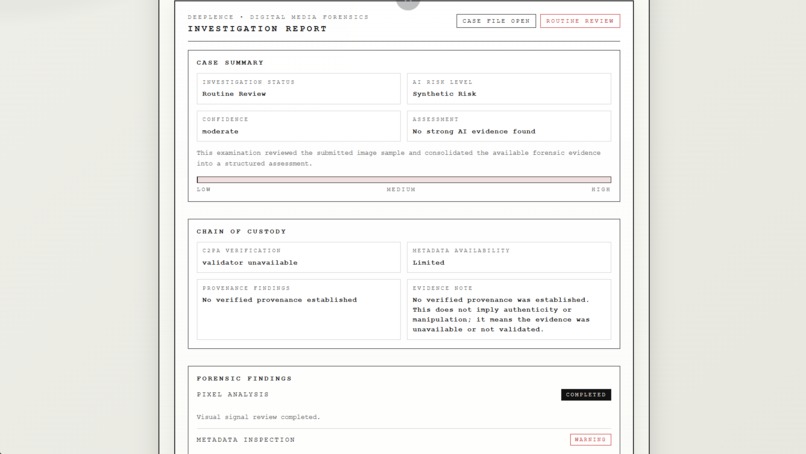
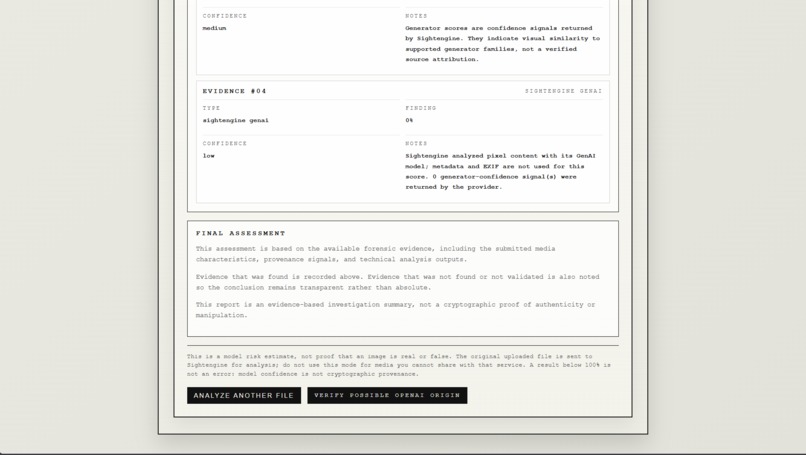
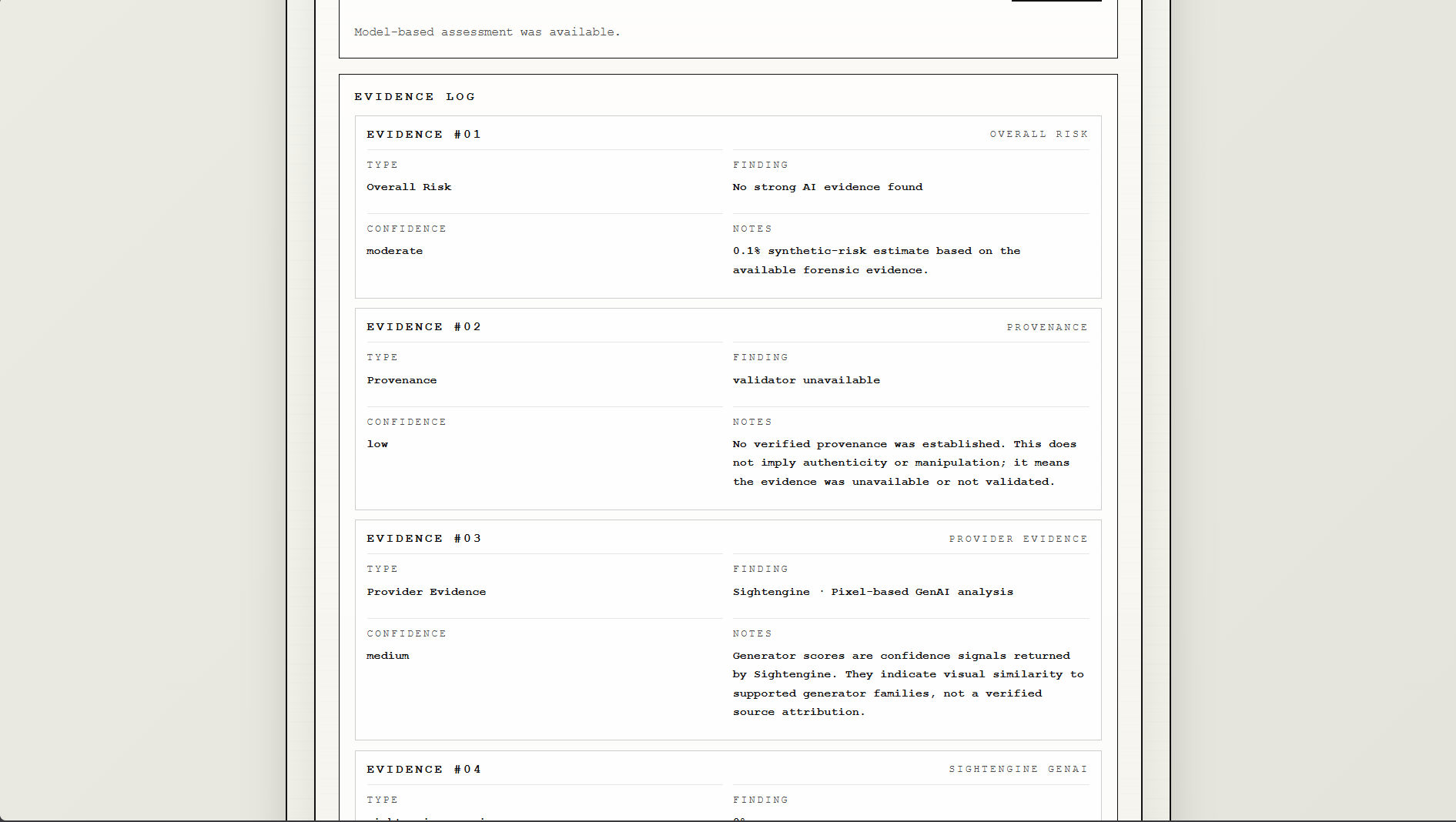
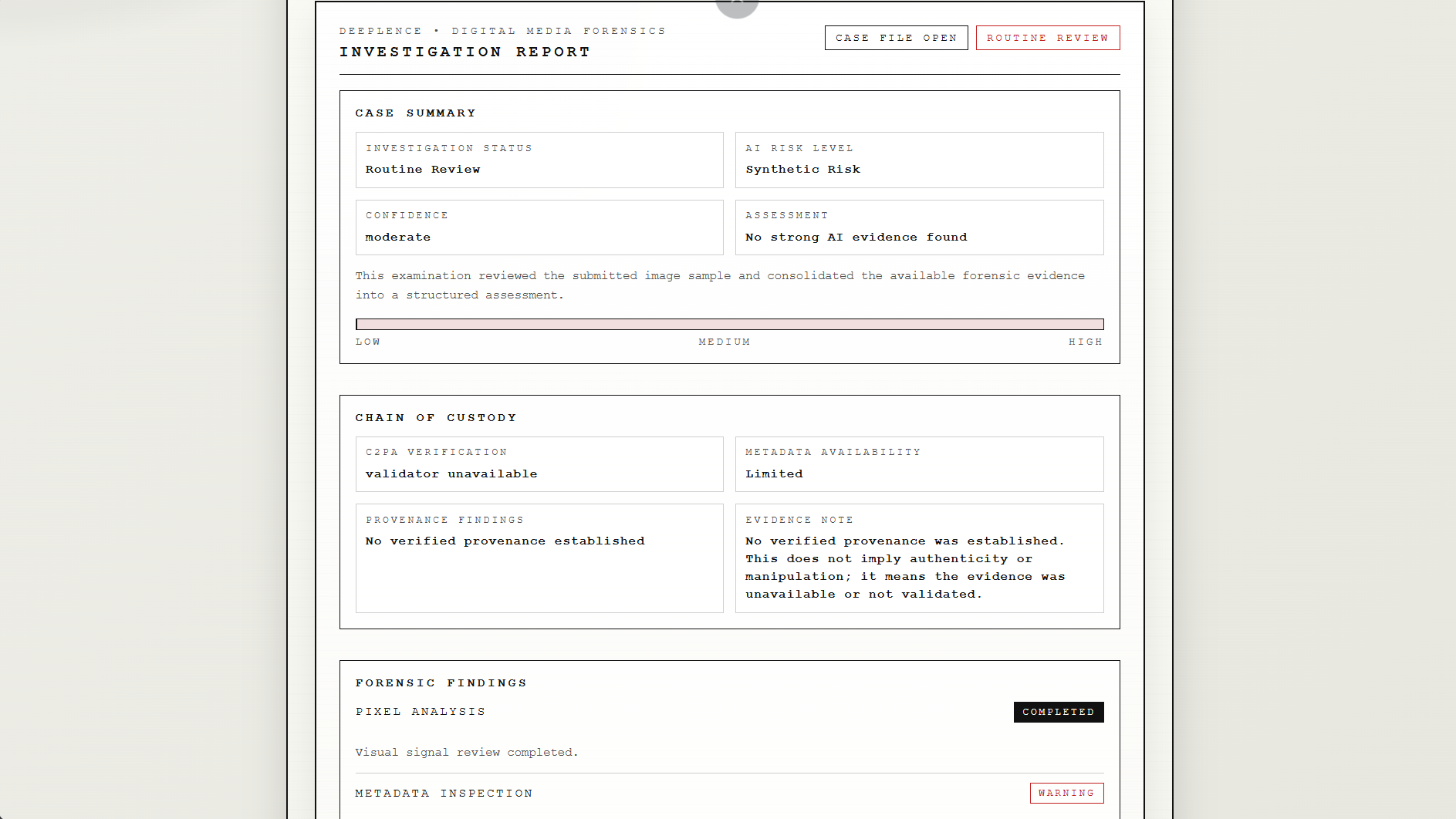
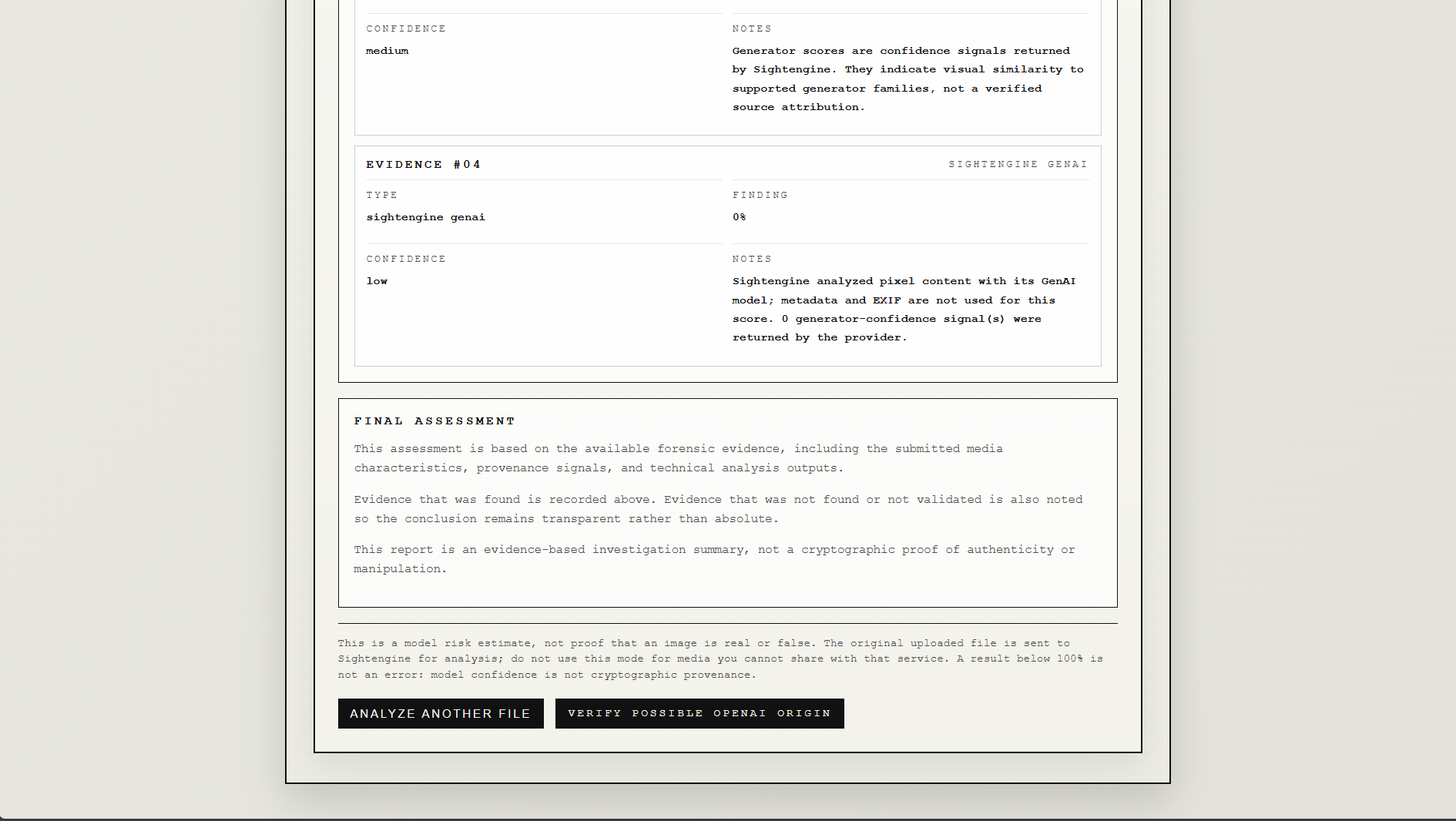
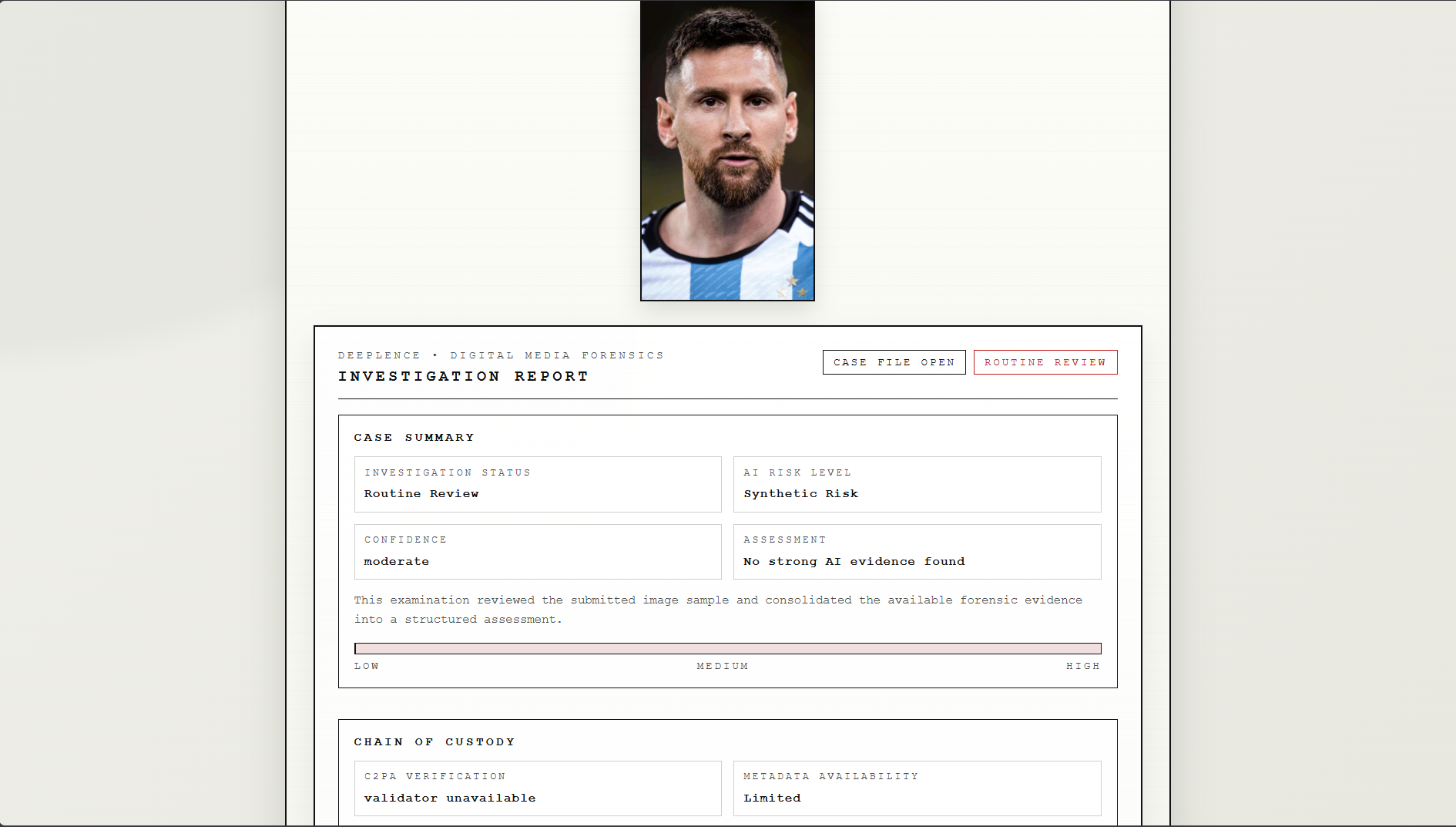
and gives you a report
Inspiration
In 2026, AI-generated images and videos have become more realistic than ever. While generative AI has unlocked incredible creative possibilities, it has also made it increasingly difficult to distinguish authentic media from synthetic content. Deepfakes, identity theft, misinformation, impersonation scams, and fabricated evidence are becoming more common across social media and the web.
I wanted to build something that goes beyond simply saying "this is AI-generated."
What evidence supports this conclusion?
That idea became DeepLence—an AI-powered digital media forensics platform that helps people investigate suspicious images and videos using transparent, explainable forensic evidence.
What it does
DeepLence investigates suspicious digital media using multiple forensic techniques rather than relying on a single AI prediction.
Users upload an image or video, and DeepLence performs an investigation that may include:
- AI-generated media risk assessment
- Metadata inspection
- C2PA Content Credentials (provenance) verification
- Error Level Analysis (ELA)
- Frequency-domain (FFT) analysis
- Noise residual analysis
- Generator fingerprint analysis
- Multi-model AI evaluation
- Temporal consistency analysis for videos
Instead of returning only a confidence score, DeepLence combines these signals into an explainable forensic report that helps users understand the evidence behind every assessment.
How I built it
DeepLence was built using FastAPI, Python, OpenCV, NumPy, and Pillow for the backend and forensic processing pipeline.
For AI analysis, I integrated Sightengine's GenAI API alongside open-source computer vision models to strengthen detection capabilities. Multiple forensic signals are fused into a single explainable report instead of relying on one model.
A significant part of the engineering process was supported by OpenAI GPT-5.6 and OpenAI Codex.
GPT-5.6 acted as an engineering collaborator by helping me:
- Design the overall system architecture.
- Plan the forensic investigation workflow.
- Recommend suitable Hugging Face models and AI approaches.
- Design the evidence-fusion pipeline.
- Review architectural decisions.
- Debug backend logic.
- Improve documentation and development workflow.
OpenAI Codex accelerated development by assisting with implementation, debugging, refactoring, and testing while I made all final engineering and product decisions.
Challenges I ran into
One of the biggest challenges was balancing detection accuracy with explainability.
Another challenge was responsibly handling uncertainty. Missing metadata or missing provenance information should not automatically be treated as evidence that media is authentic or AI-generated. Building a system that communicates uncertainty honestly was just as important as improving detection performance.
Integrating multiple forensic techniques and AI models into a single investigation pipeline also required careful architectural planning.
Accomplishments that I'm proud of
I'm proud that DeepLence is more than a traditional AI detector.
Instead of relying on one prediction, it combines multiple forensic techniques into an explainable investigation that helps users understand the reasoning behind every result.
I'm also proud of creating a modular architecture that allows additional forensic techniques and AI models to be integrated as the platform evolves.
Finally, I'm proud of how GPT-5.6 and OpenAI Codex became valuable engineering partners throughout development, helping me design, build, and refine the system.
What I learned
Building DeepLence reinforced an important lesson:
Trustworthy AI isn't just about making predictions—it is about providing evidence that people can understand.
I also learned that combining complementary forensic techniques creates a more transparent and reliable investigation than relying on a single AI model.
Working with GPT-5.6 and Codex showed me how AI can accelerate software development while still leaving the developer responsible for product vision, engineering decisions, and implementation.
What's next for DeepLence
This project is only the beginning.
My roadmap includes:
- Browser extension for one-click media verification.
- Batch analysis for investigators and journalists.
- Downloadable forensic investigation reports.
- Additional AI detection and forensic models.
- Expanded provenance support.
- Improved visualization of forensic evidence.
As synthetic media continues to evolve, my goal is for DeepLence to become a trusted platform for transparent, evidence-based digital media investigations.
Built With
- ai
- codex
- computer
- fastapi
- gpt-5.6
- machine-learning
- numpy
- openai
- opencv
- pillow
- python
- vision


Log in or sign up for Devpost to join the conversation.