-
-

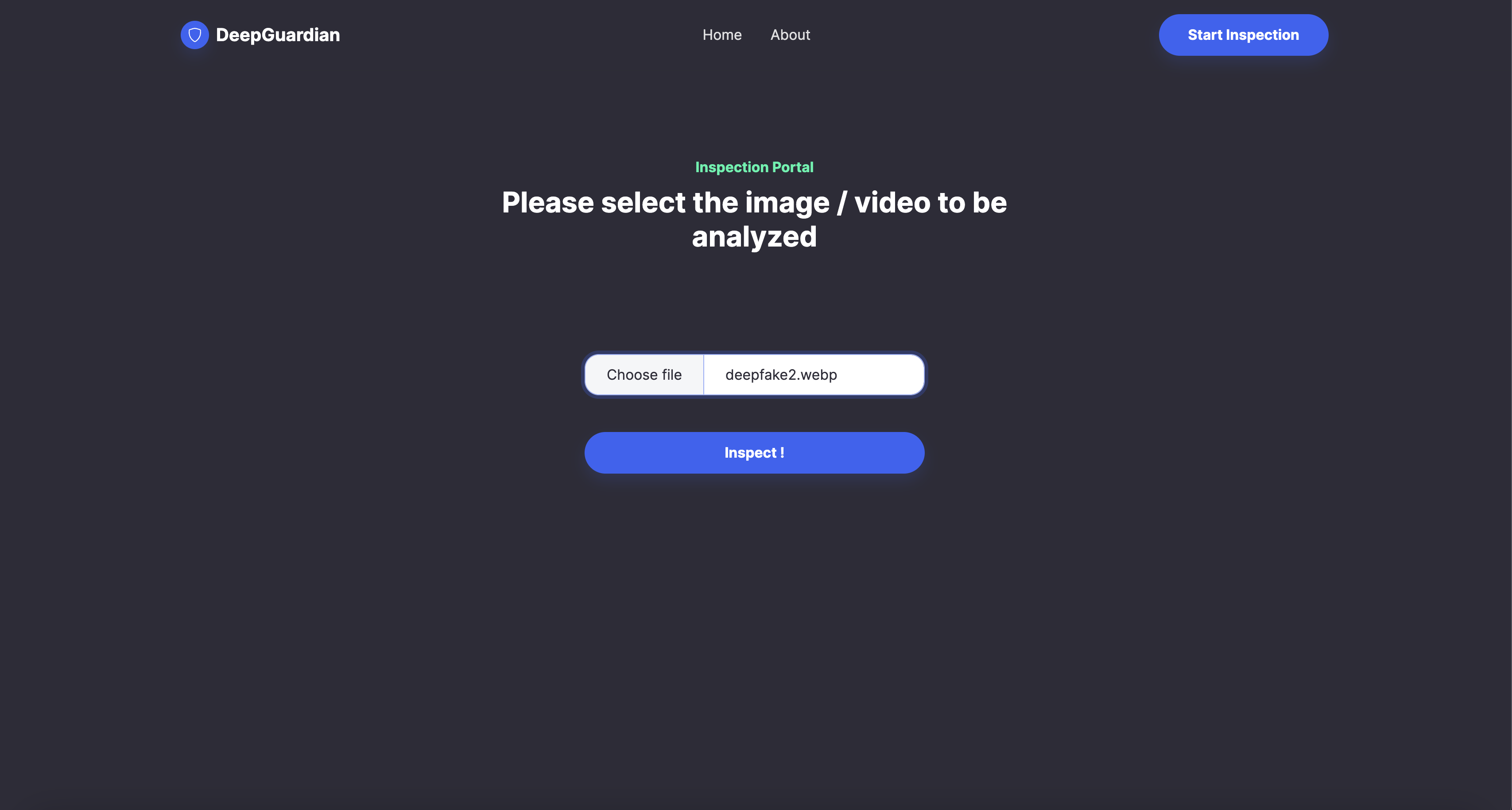
Landing page
-
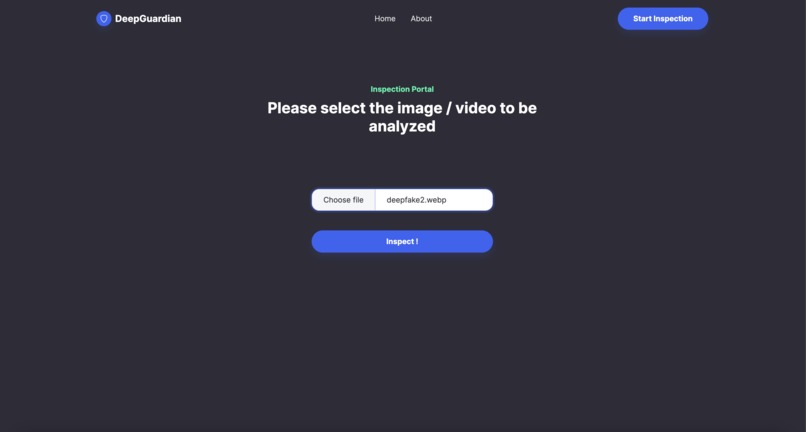
Inspection form
-
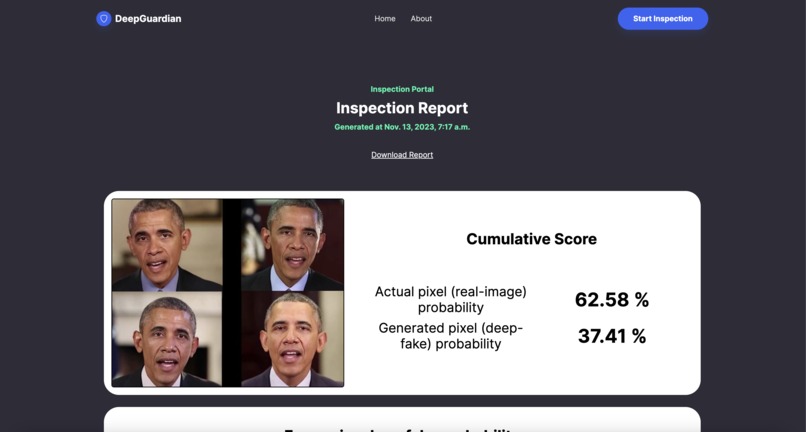
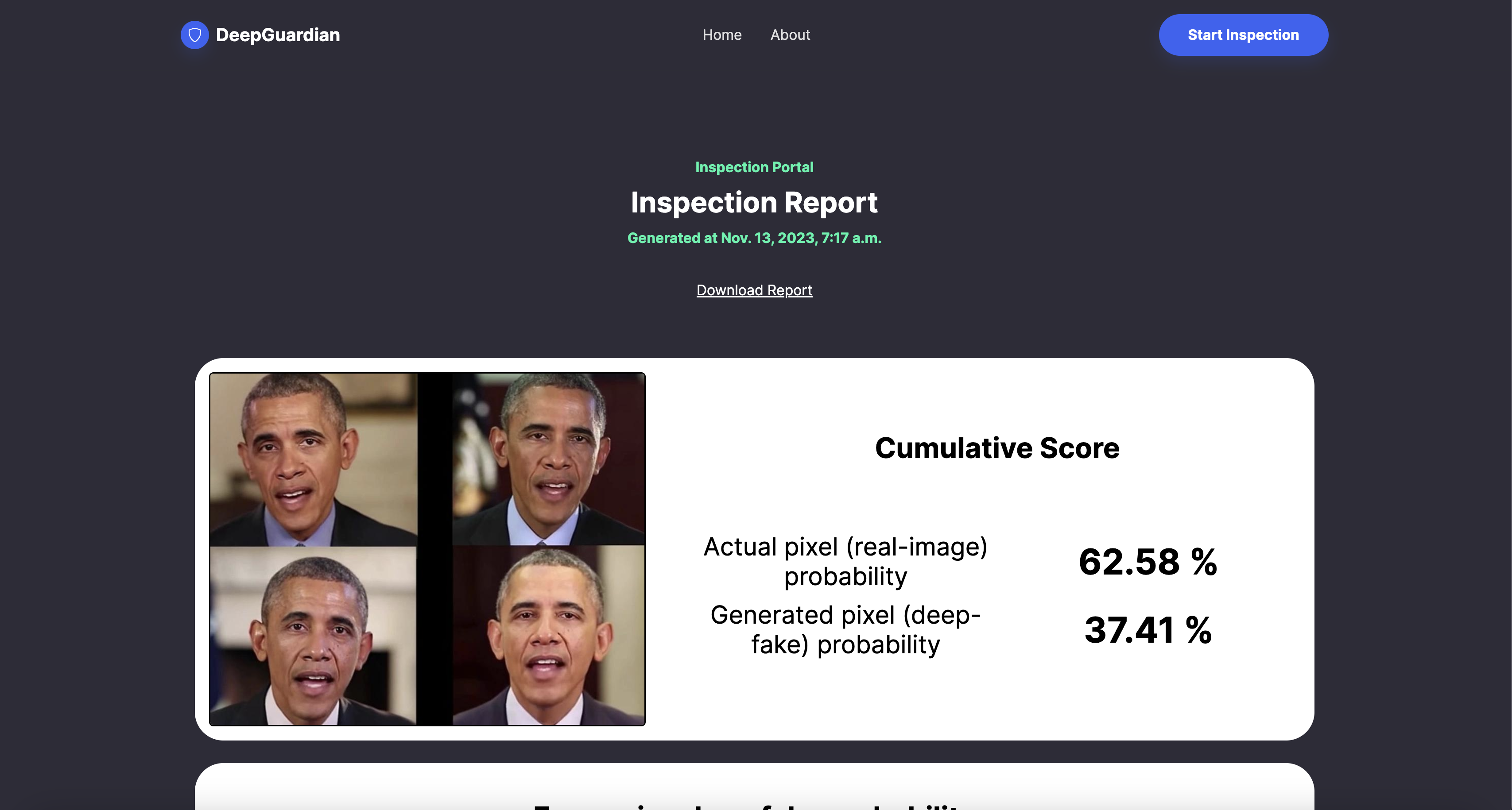
Inspection Report - Page 1
-
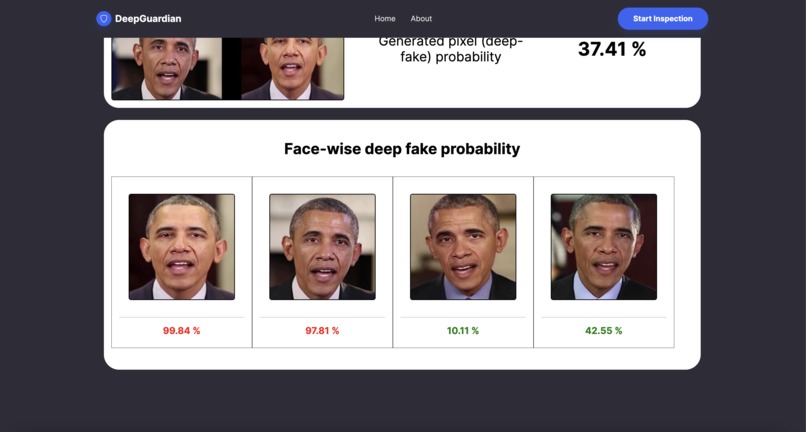
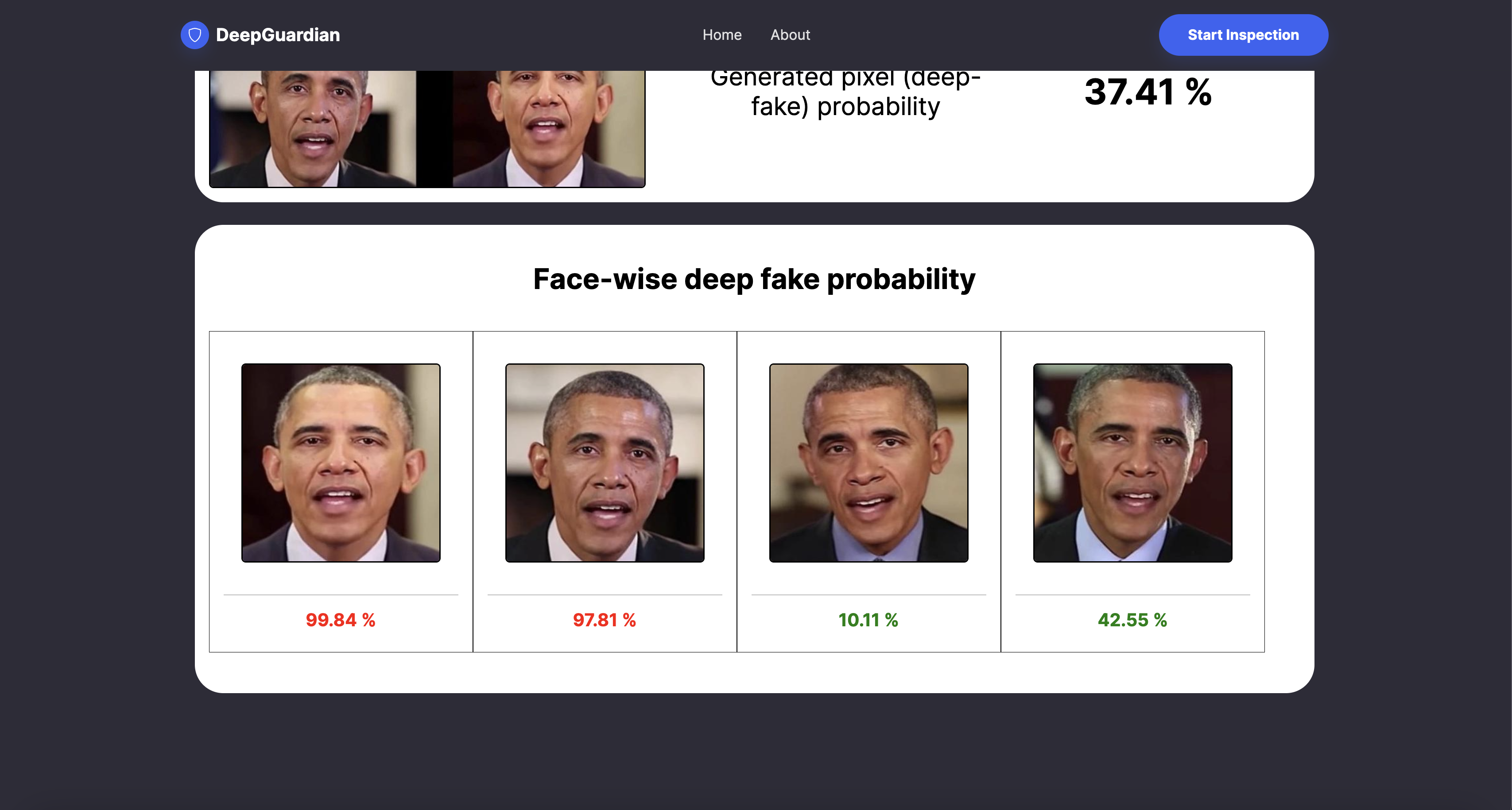
Inspection Report - Page 2
-
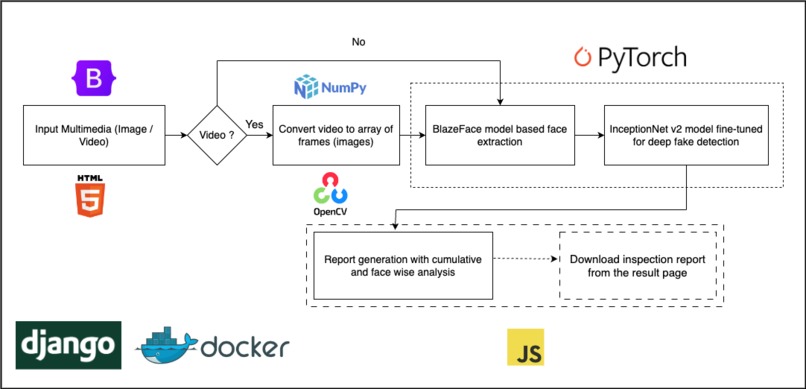
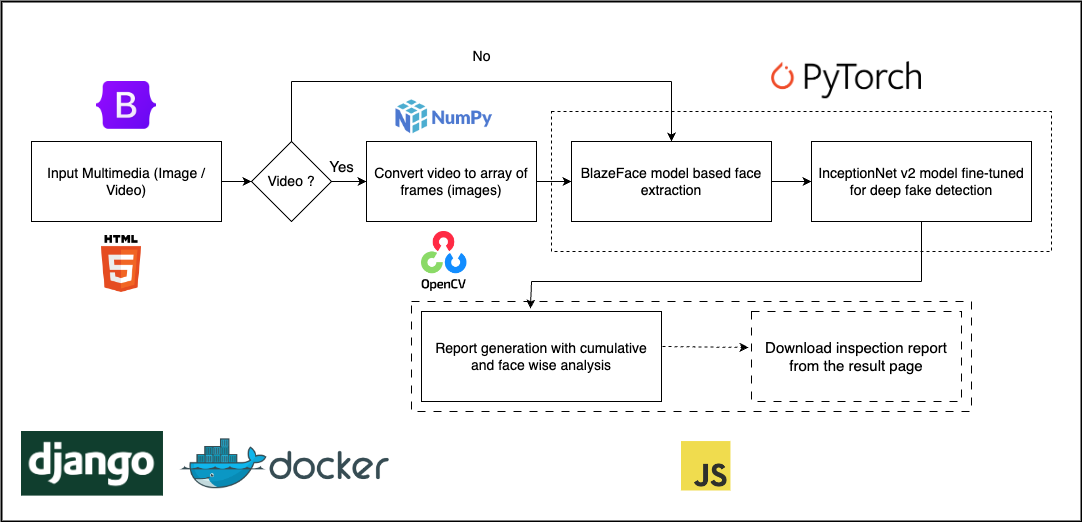
Project Architecture

Inspiration
Deepfakes pose a significant risk because they use advanced artificial intelligence to create highly convincing forged videos and audio recordings that are often indistinguishable from genuine content. These tampered with media can be used maliciously to disseminate false information, manipulate public opinion, and deceive individuals. Political instability, reputational harm, and a loss of trust in digital media are all possible outcomes. As deepfake technology advances, the challenges of detecting and mitigating these deceptive creations become more complex, raising concerns about the possibility of widespread misinformation and its impact on various aspects of society such as politics, business, and personal relationships.
What it does
DeepGuardian helps the user to inspect the probability score of an image or video being a deep fake. It also extracts the faces from the image / video and computes the probability score for each face using a deep convolutional neural network (DCNN) based model. The inspection results are provided in the form of a report which can be downloaded if the user wishes to do so. DeepGuardian uses state of the art AI algorithms for face extraction and deep fake detection fine-tuned to run on even low-mid level CPUs.
How we built it
Challenges we ran into
- Integrating Blaze Face and Inception Net v2 together through a pipeline was a difficult task and we had to consider the type of input (image / video) while doing so.
- Data storage strategy was also a tricky part as we do not wish to hold any of the user's data on our servers. The multimedia entity should be cleared once the user is done with their session. A functional cleanup was implemented to tackle this problem.
- Understanding and learning OpenShift took some time as we never had any prior experience in public cloud based deployments, especially, in a very customizable environment like OpenShift where there are so many features and concepts to explore and understand. Now once we understood the platform, it seems like a very user-friendly, go-to place for deployment of our applications. It is very adaptable and compatible with many tech stacks through import strategy prediction.
Accomplishments that we're proud of
- Any user with or without ample knowledge about deep fakes or machine learning models can now easily get their deepfake inspection report just with a couple of clicks.
- The user interface is sufficient and comprehendible for users with no prior experience in using cloud native applications and machine learning inference sites.
- The response time is by far the best one when compared to the deep fake analysis services out on the market. The capability of performing real-time analysis for images and also for videos is the major breakthrough of this project.
What we learned
- Openshift
- Machine learning pipeline design
- Computer Vision for face extraction and analysis algorithms.
What's next for DeepGuardian
- Extend the functionality of the application to send the reports over emails for larger videos which might take longer time process real-time.
- Add video annotation functionality to annotate on the faces with the confidence during the playback.


Log in or sign up for Devpost to join the conversation.