-
-

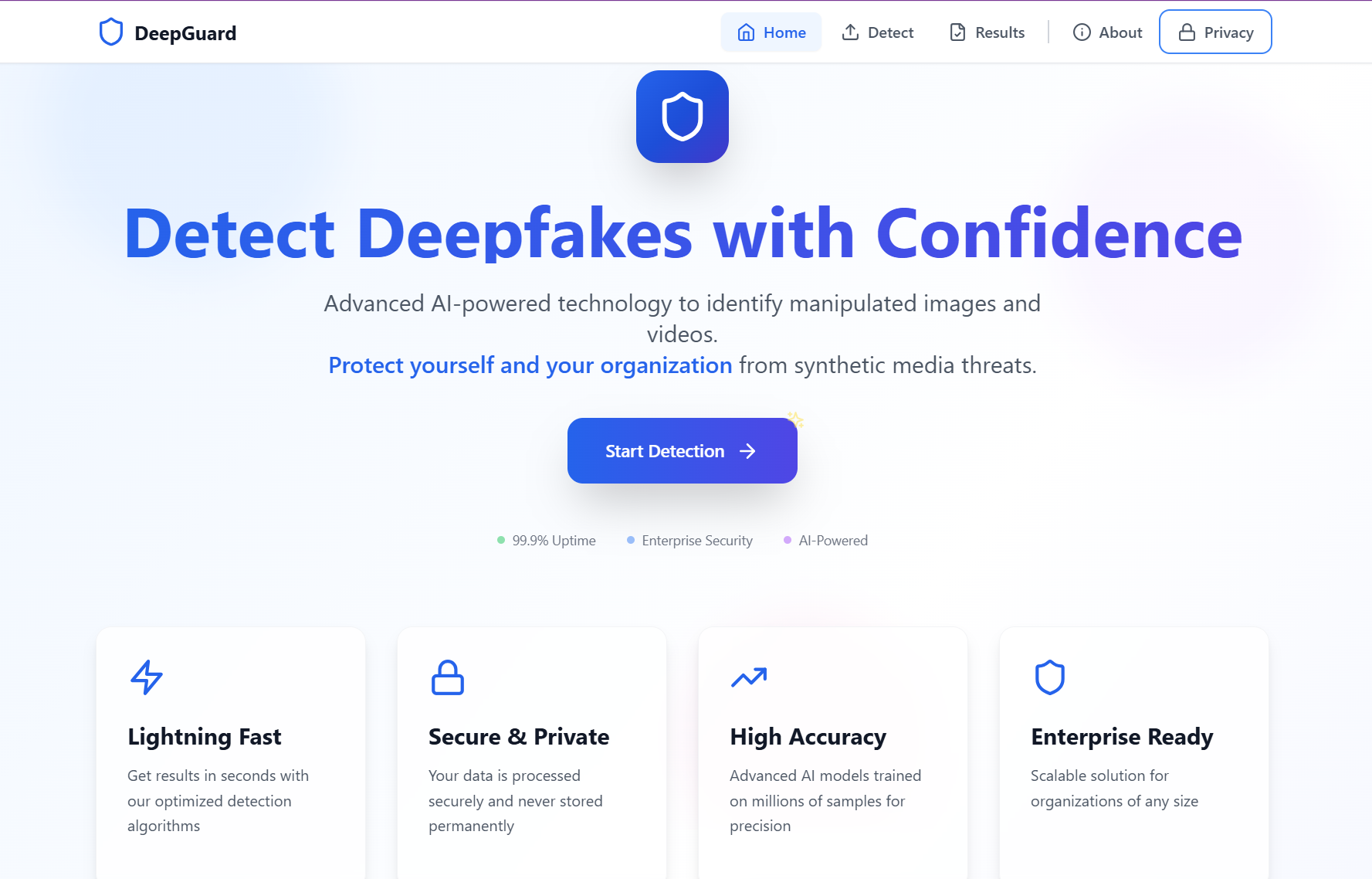
The home page of the web app.
What Inspired Me
The rapid spread of deepfake images and videos—used for scams, misinformation, and even political manipulation—deeply inspired me to build a tool that restores trust in digital content. I wanted something that anyone, regardless of technical background, could use to check and understand what’s real, right when they need it.
What I Learned
AI can be democratized: Building user-friendly interfaces over advanced AI APIs makes deep tech accessible to all. Integration matters: Connecting multiple services—frontend, backend, cloud, and AI—requires clear architecture and real-time debugging. User experience is key: Reliable feedback, explainable AI, and seamless sharing make tech truly usable. Math and AI: Using models to analyse image artifacts, patterns, and inconsistencies, relating everything back to real-world statistical probabilities (e.g., the likelihood P that an image is fake, based on detected features).
How I Built My Project
Designed the frontend using React and TailwindCSS for a snappy, modern look. Architected the backend in Node.js/TypeScript, connecting to secure APIs for detection and explanation. Chose Supabase for efficient result storage and cloud flexibility. Integrated OpenRouter’s DeepSeek model to deliver natural language explanations and chat (fusing AI for both technical and conversational tasks). Used Vercel and Render for global, free hosting, enabling public access instantly. Implemented features like downloadable reports, link sharing, and robust error handling for a complete experience.
Challenges I Faced
API limits and costs: Most AI image/video analysis APIs are not free—finding reliable, fast, totally zero-cost endpoints took research and experimentation. Video analysis: Free tiers don’t support video deepfake detection—clear messaging and graceful fallback were needed. Frontend/backend deployment integration: Ensuring communication between hosted frontend and backend (deployed on different platforms). Consistent results: Making sure explanations matched detection verdicts every time, and handling network errors gracefully.
What's next for DeepGuard
Add deepfake video analysis (when API/free-tier options become available), bulk/batch detection for investigators, user accounts plus personal detection history, advanced reporting tools for journalists, developer-friendly APIs, and global partnerships to make deepfake detection an everyday public resource.
Built With
- deepseek/qwen3-8b
- express.js
- node.js
- openrouter
- react
- reality-defender-api
- render
- supabase
- tailwindcss
- typescript
- vercel
- vite


Log in or sign up for Devpost to join the conversation.