-
-
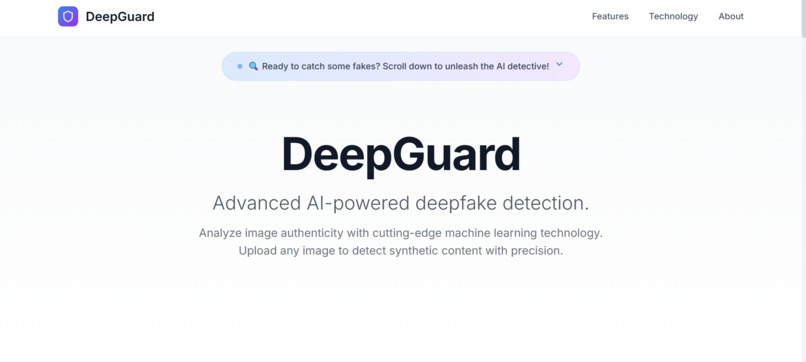
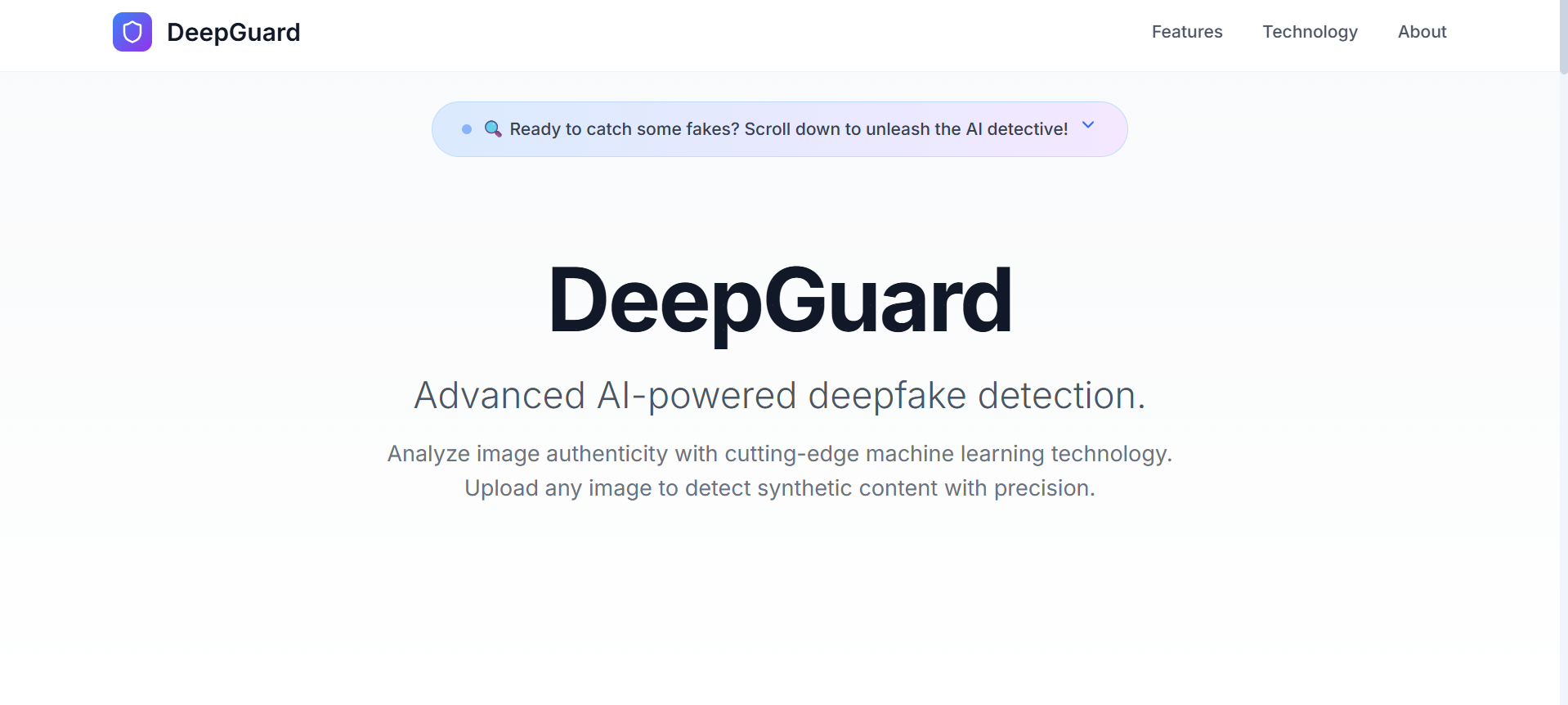
This is the home interface of the model
-
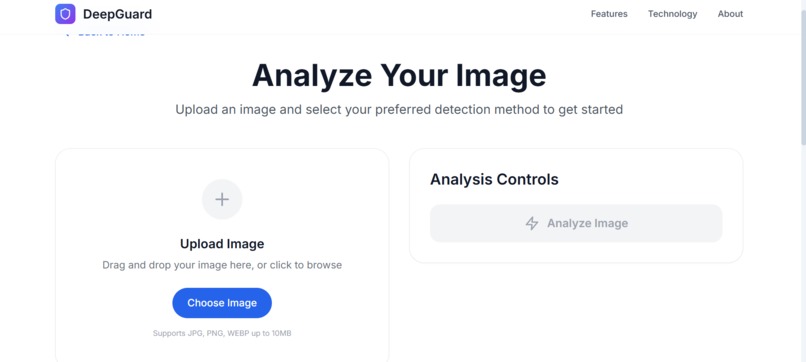
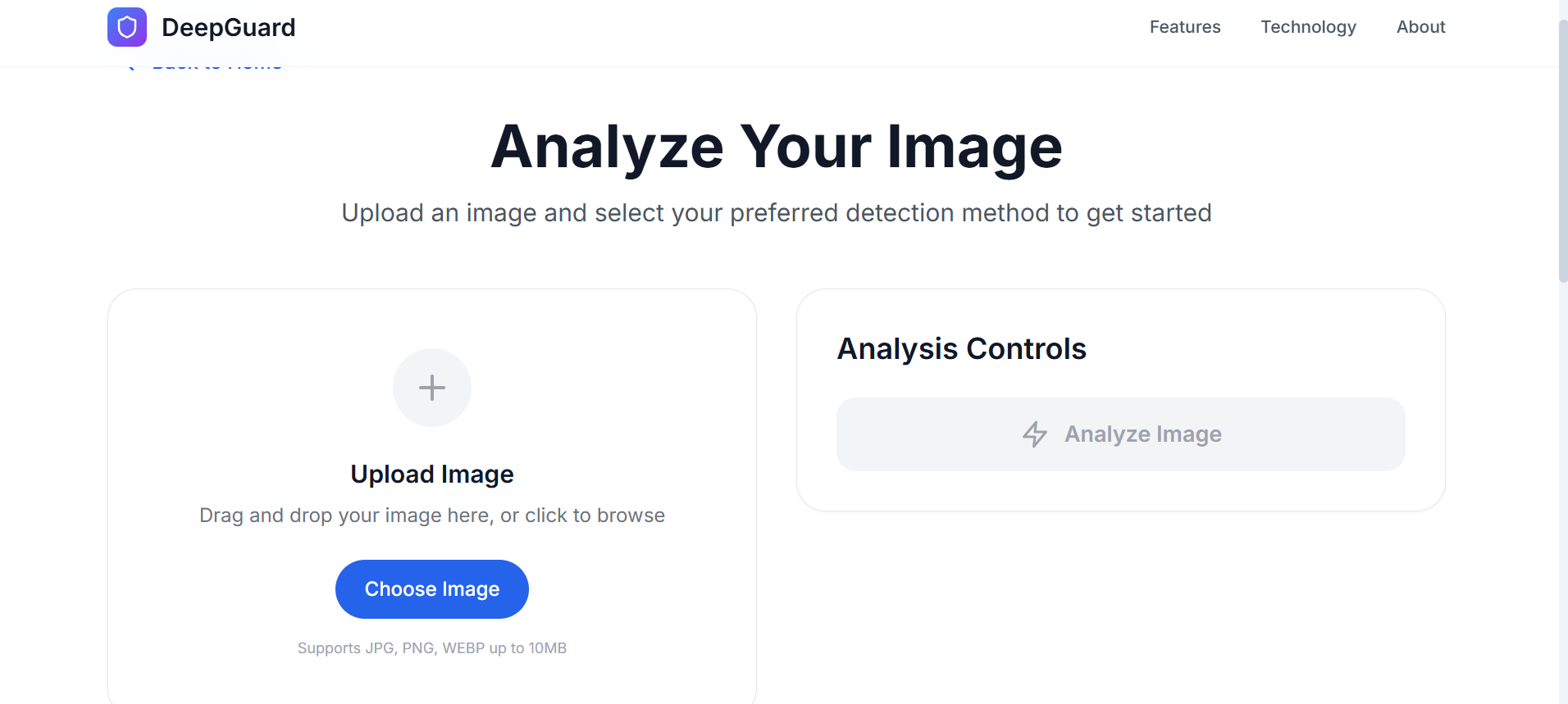
Testing page of our AI model
-
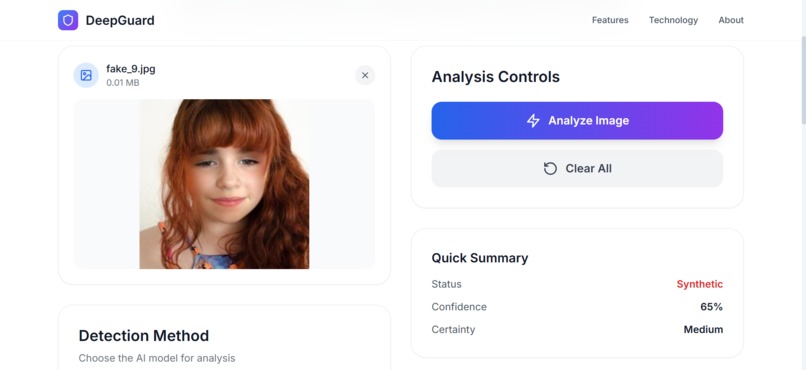
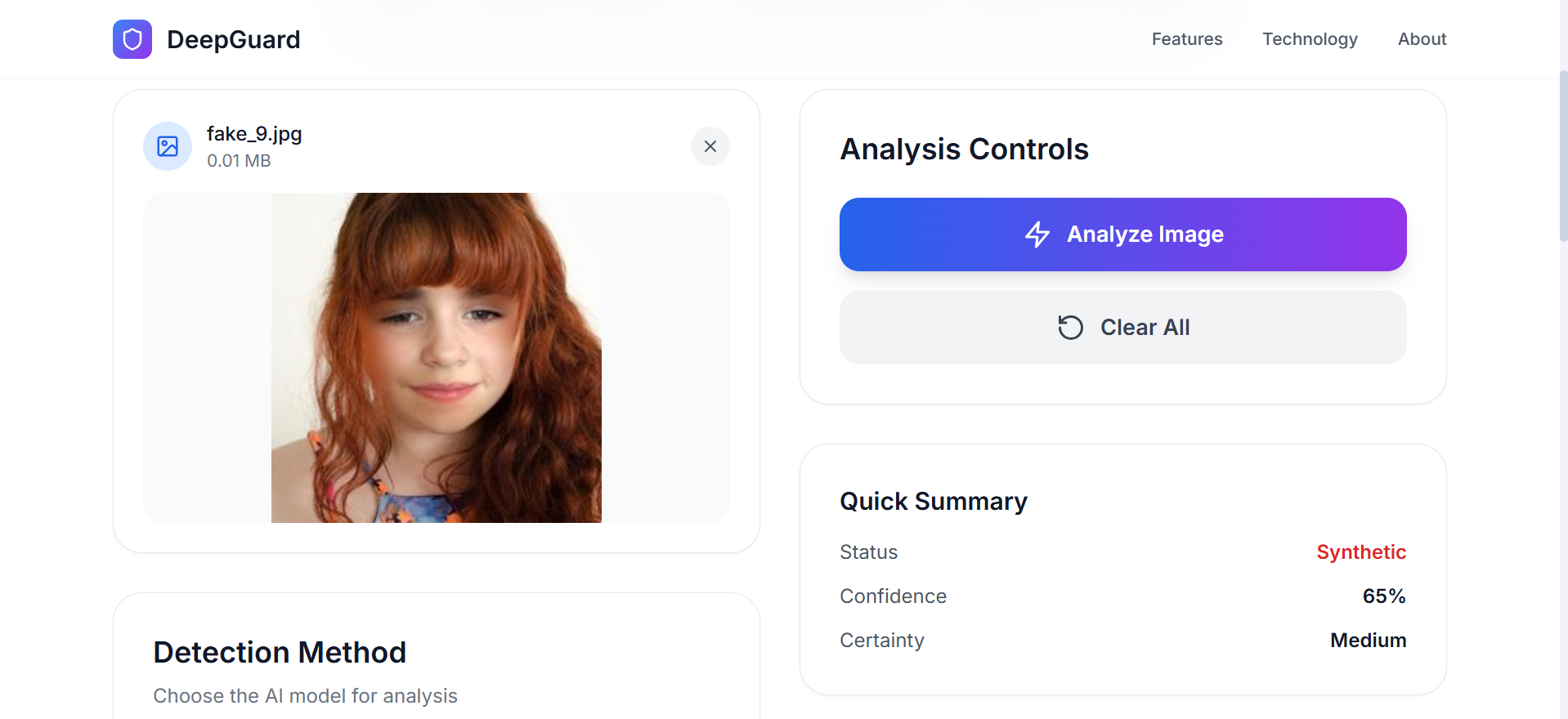
User can upload the image and test whether its real or fake
-
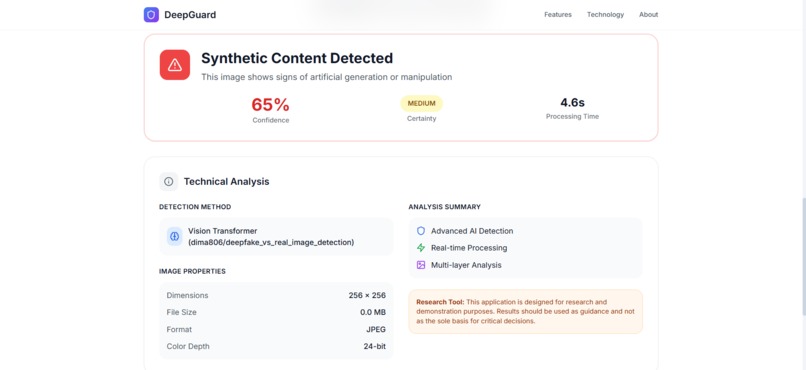
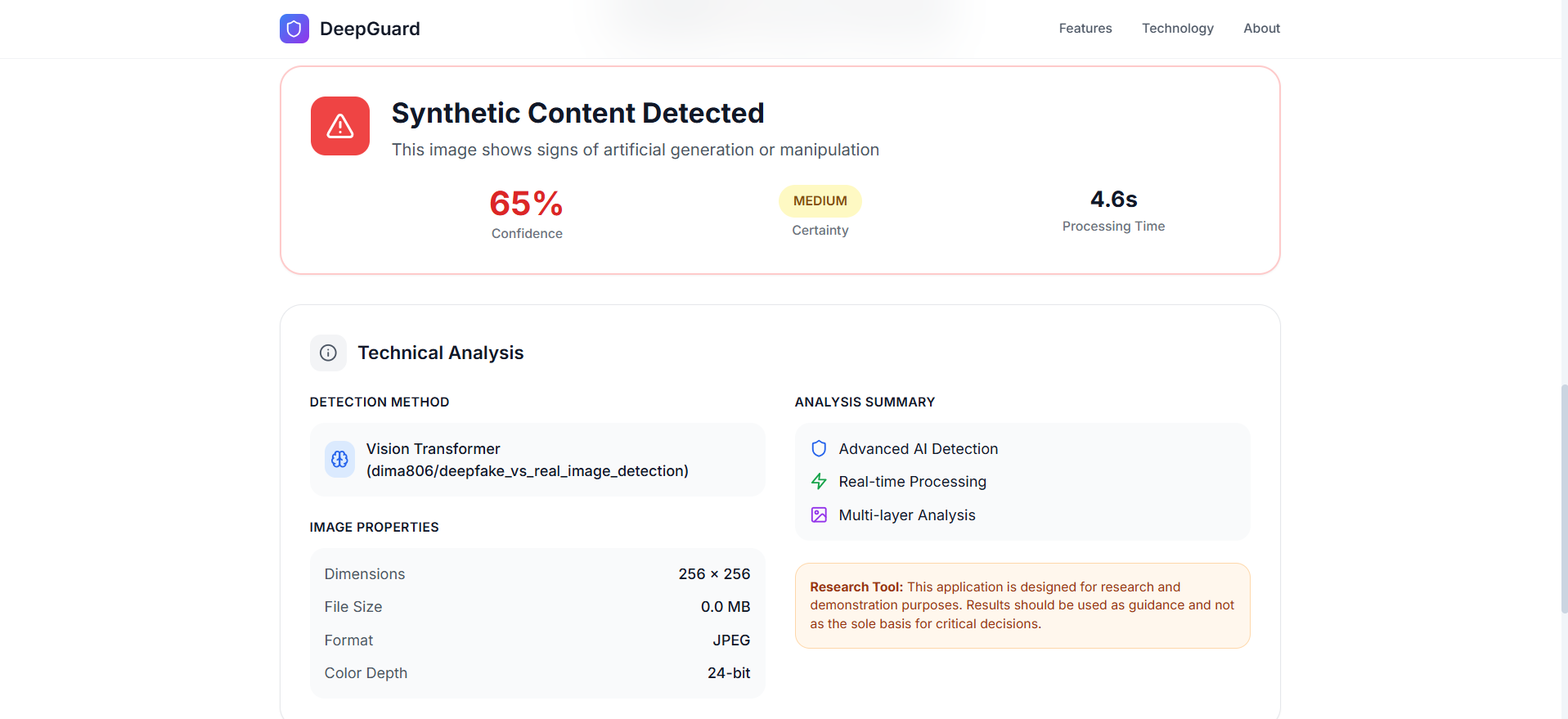
Report on whether the image is real or fake and confidence score for assurance , included a technical analysis of the image.
Inspiration
You know that feeling when you see something online and think, "Is this real, or did a squirrel with a supercomputer make it?" That's basically our inspiration! Deepfakes are running wild, blurring the lines between reality and... well, digital wizardry. We just thought, "Someone's gotta bring some truth back to the internet, and why not us?"
What it does
DeepGuard is your digital lie detector for images. Upload a pic, and our AI detective gets to work. Within seconds, it tells you if you're looking at the real deal or a cleverly disguised fake. Think of it as your personal BS filter for photos – no more second-guessing!
How we built it
We basically wrangled a super-smart Vision Transformer AI model (from the legendary Hugging Face, no less!) and taught it to sniff out deepfakes. We piped in all the images, made sure they were dressed nicely for the AI (technical term: "pre-processing"), and then built a sleek interface so you don't need a Ph.D. in AI to figure out if that celebrity selfie is actually a celebrity selfie. It was a bit like teaching a robot to be a discerning art critic, but for pixels.
Challenges we ran into
Getting our AI to tell the difference between a slightly blurry photo and a full-blown deepfake was like teaching a cat to fetch – tricky, but rewarding when it finally works! We also had to translate "AI-speak" (think complex confidence scores) into plain English so you'd know if something was "probably real" or "definitely forged by a digital mastermind." Plus, making it fast enough so you don't grow a beard waiting for results was its own mini-quest.
Accomplishments that we're proud of
We're incredibly chuffed that we got a powerful, state-of-the-art AI to actually do its job and spot those sneaky deepfakes. It's like we gave the internet its glasses back! Building a tool that’s not just technically awesome but also super easy for anyone to use is a huge win for us. And hey, building something genuinely useful to fight digital mischief, all within a hackathon's crazy timeline? That's definitely something to high-five about.
What we learned
We discovered that AI models, while brilliant, need clear instructions (and perfectly formatted images). We also learned that simplifying complex tech for users is half the battle – nobody wants to read a manual to check a photo. Most importantly, we realized that even under hackathon pressure, a good team can turn a complex problem into a cool, functional solution.
What's next for DeepGuard
Well, now that we've mastered image deepfakes, we're eyeing videos and even audio deepfakes next. Because why stop at static pictures when there's a whole world of moving, talking fakes out there? We're also planning to make DeepGuard even smoother and possibly integrate it directly into your browser or favorite apps. Our mission: to make sure you can always trust your eyes... and ears!


Log in or sign up for Devpost to join the conversation.