-
-
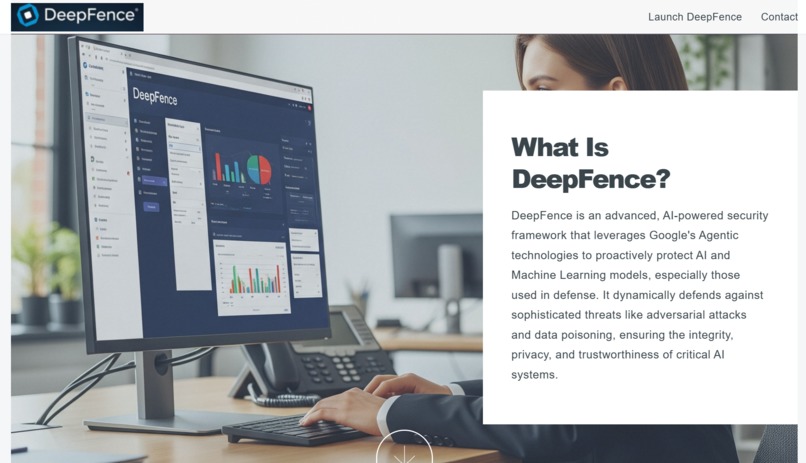
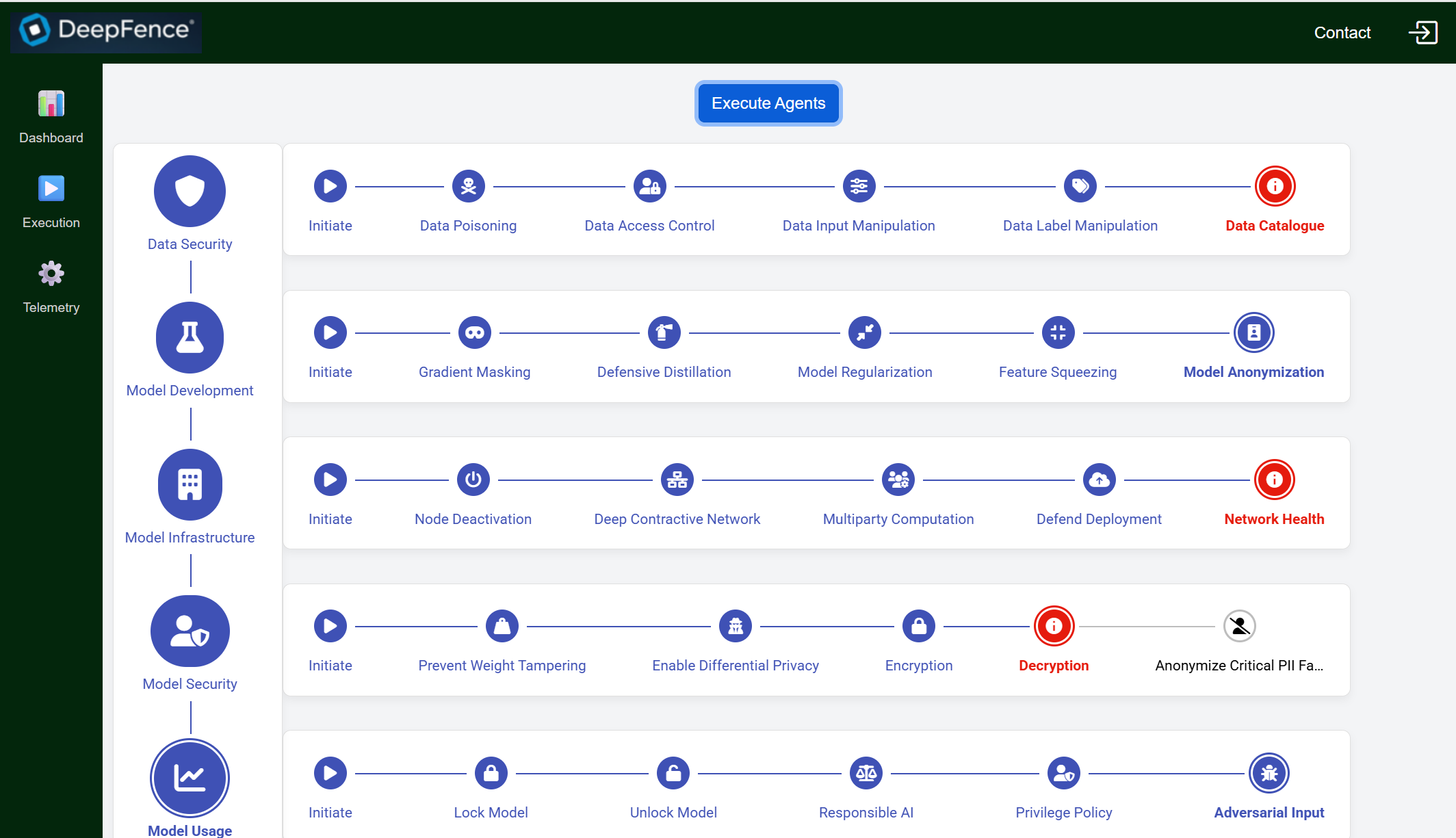
Landing
-
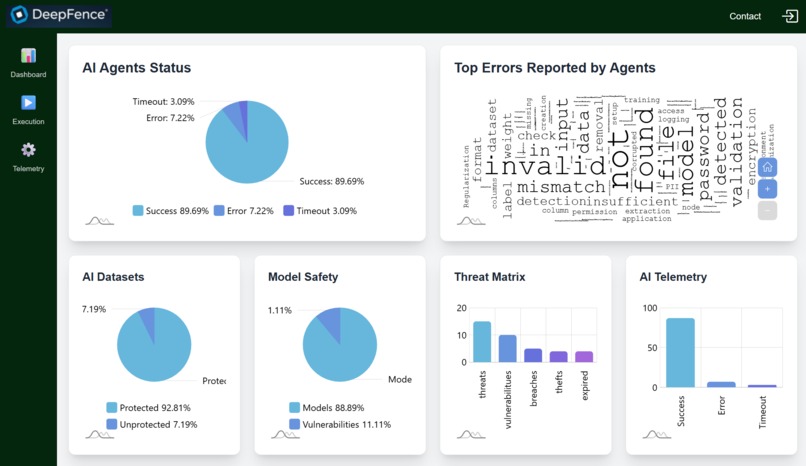
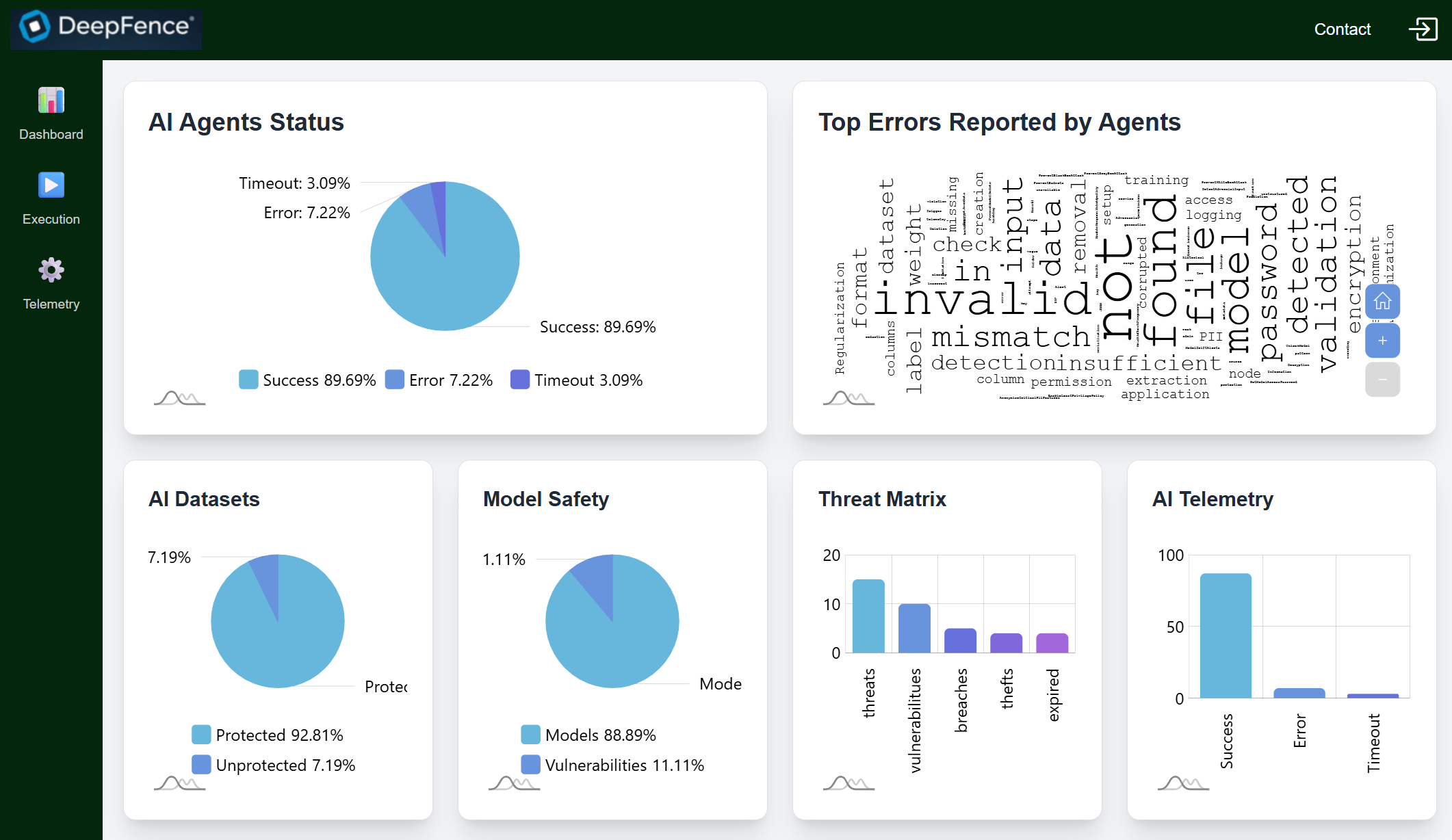
Agent Dashboard
-
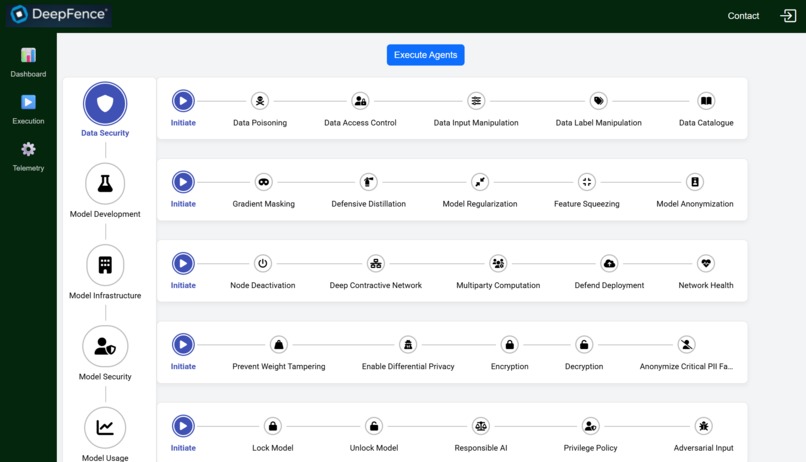
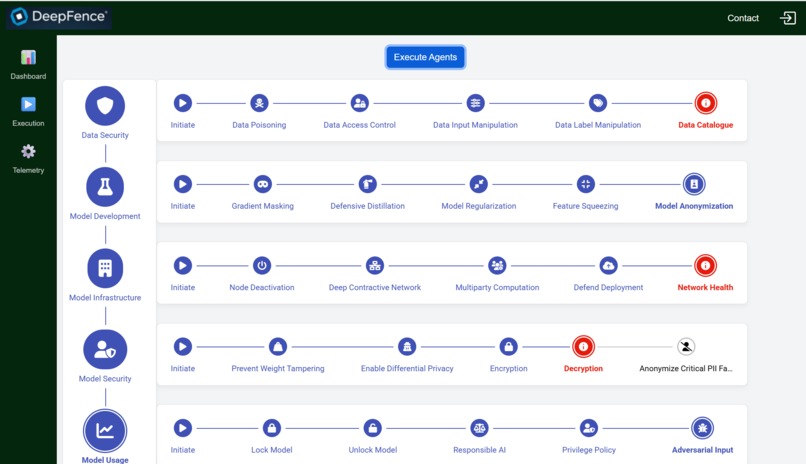
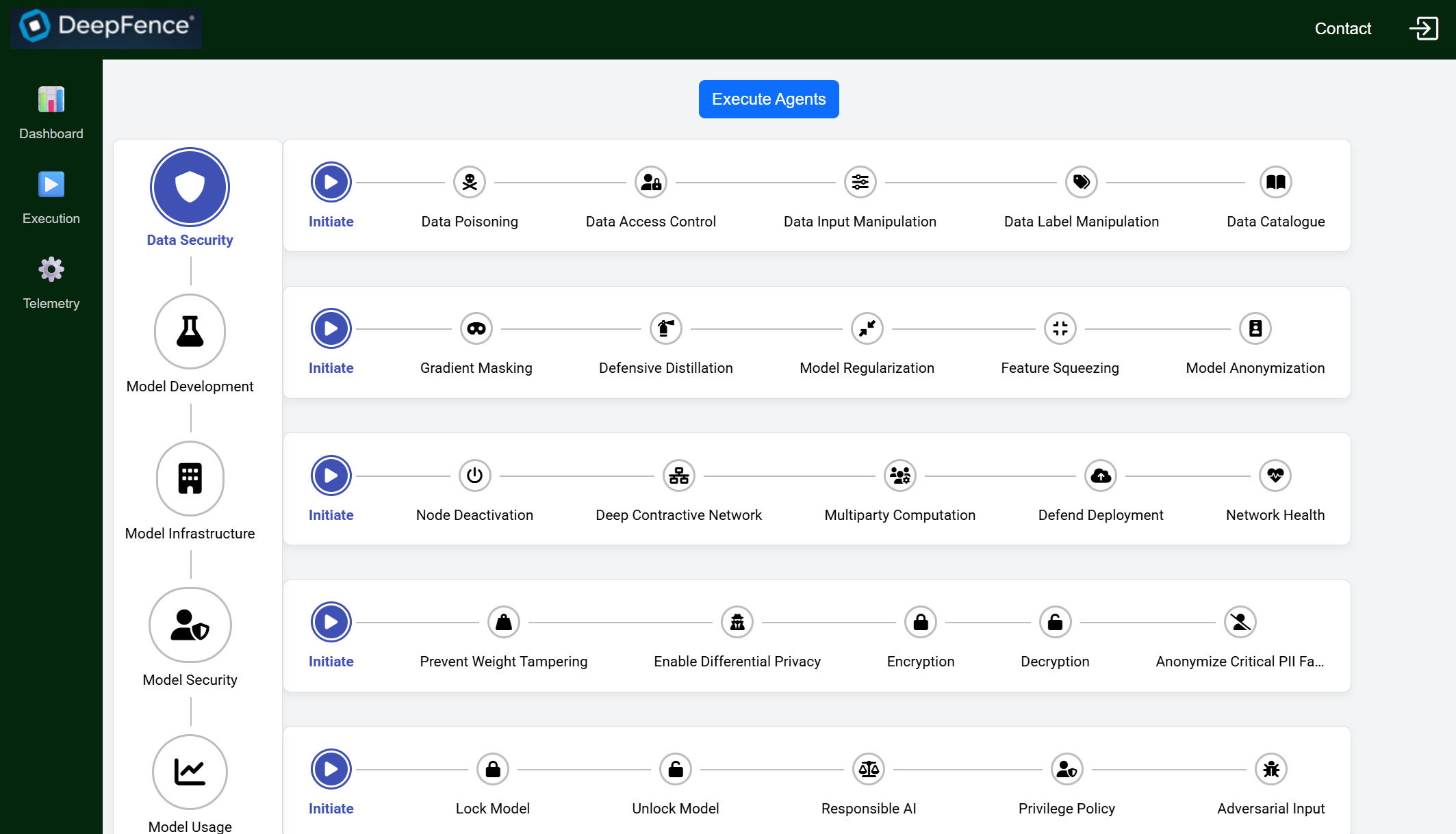
Agent Execution
-
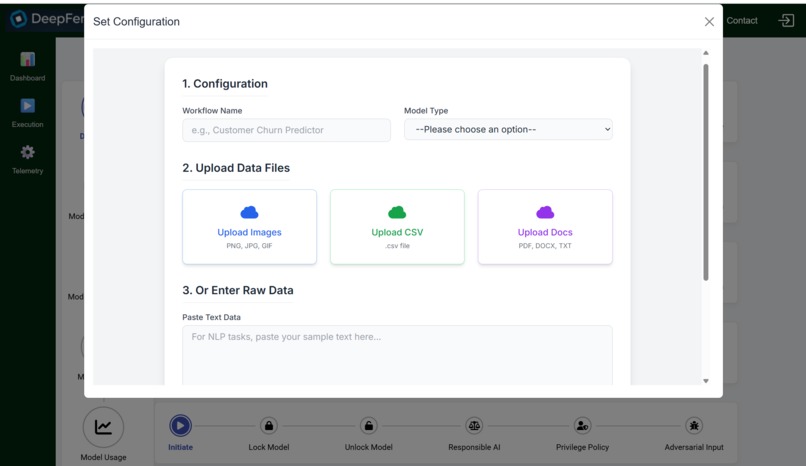
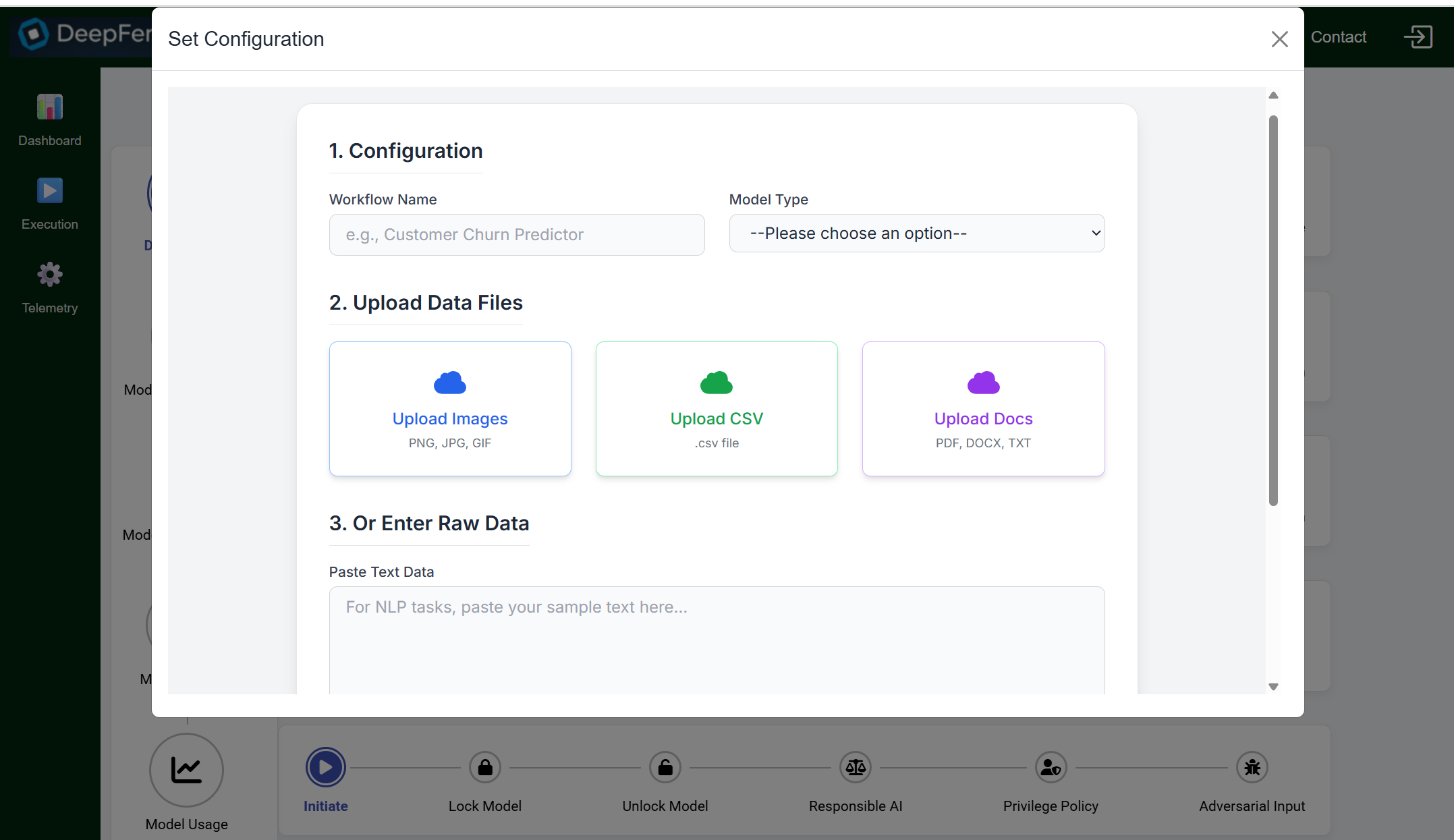
Dataset Configuration
-
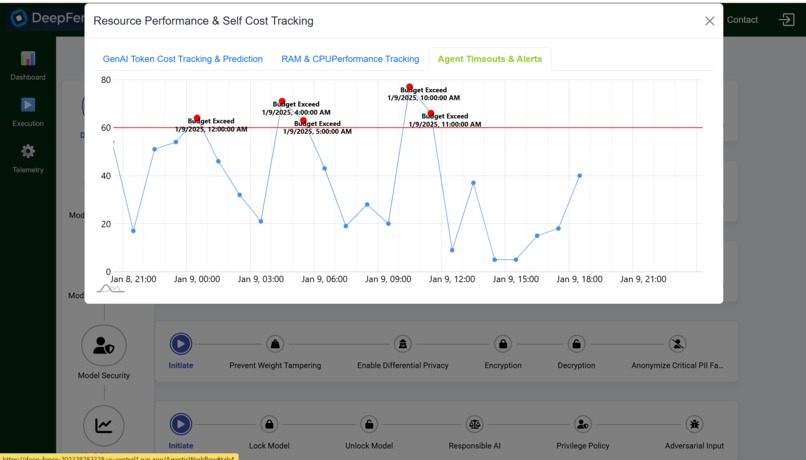
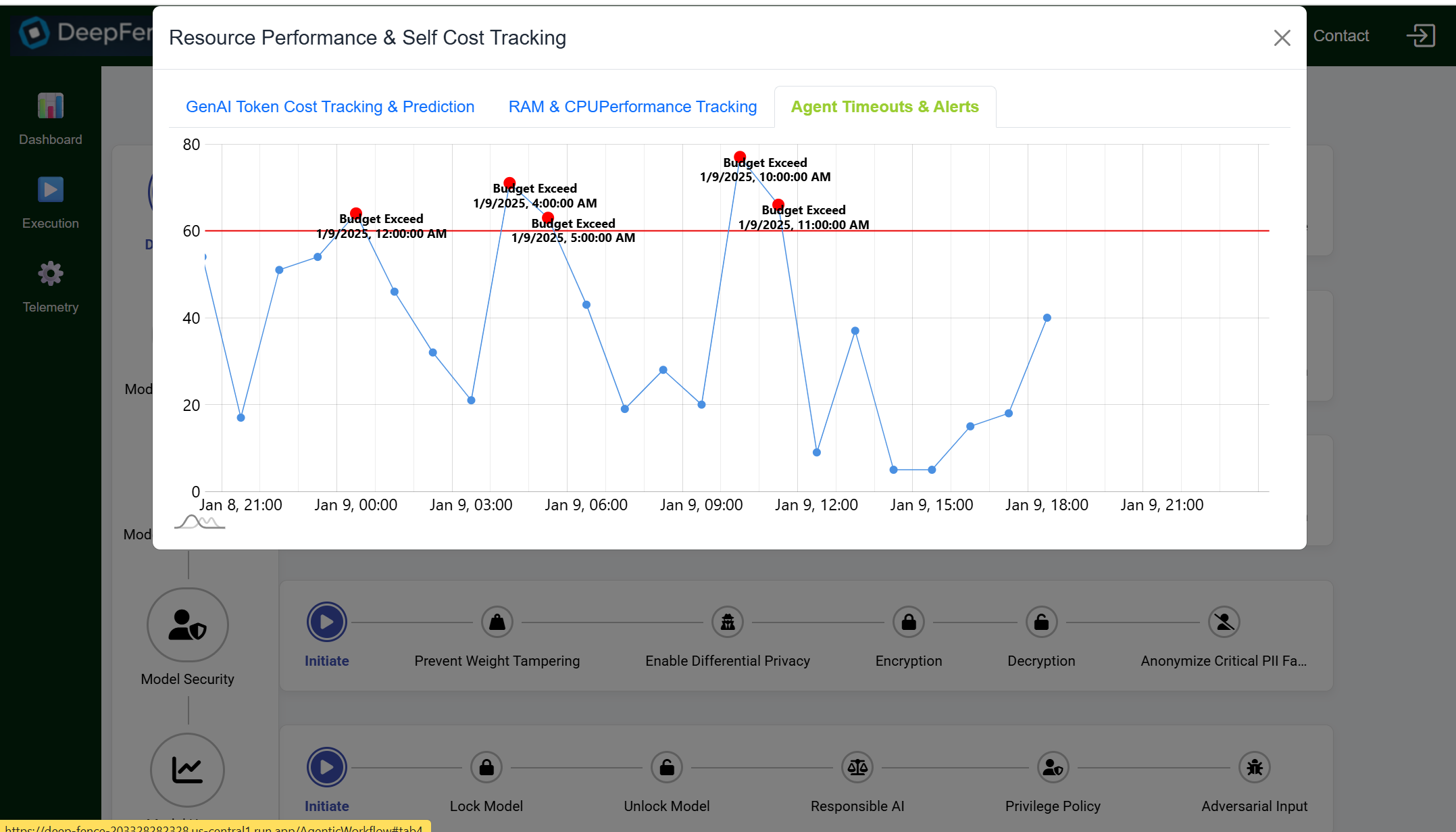
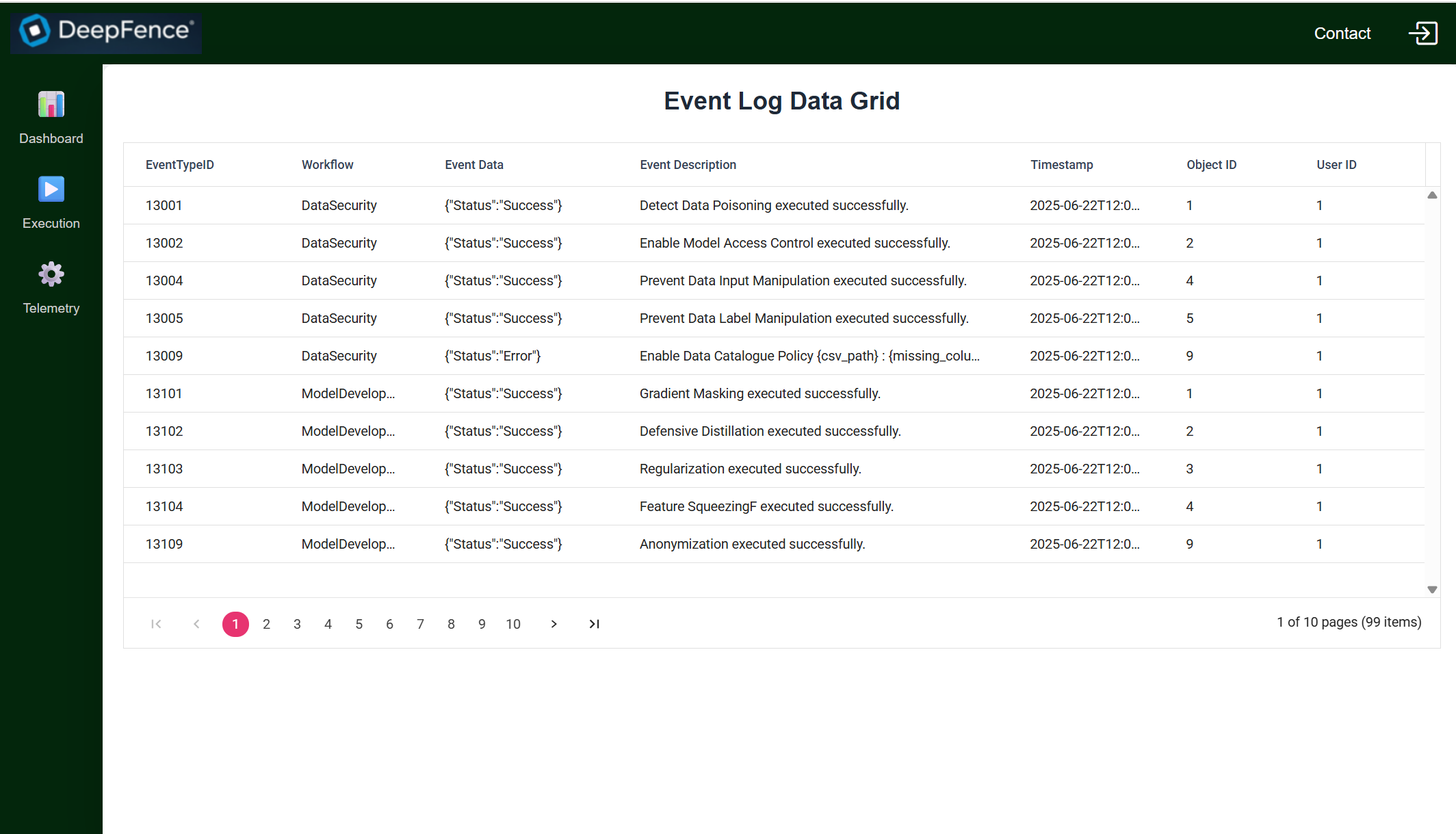
Agent Tracking
-
-
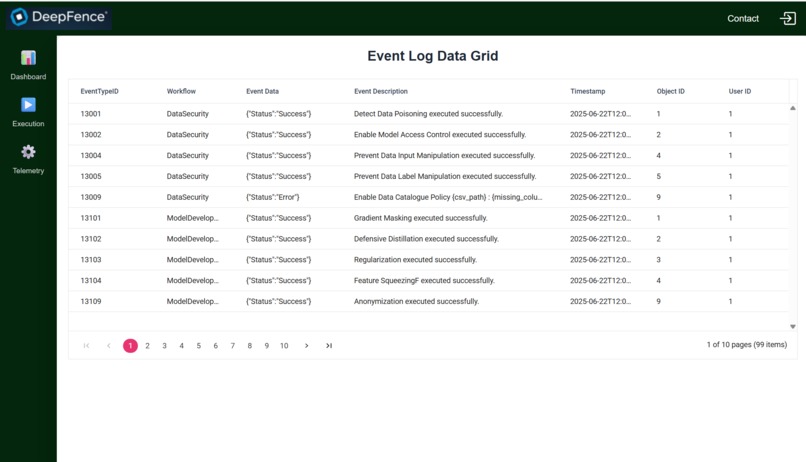
Agent Telemetry
-
-
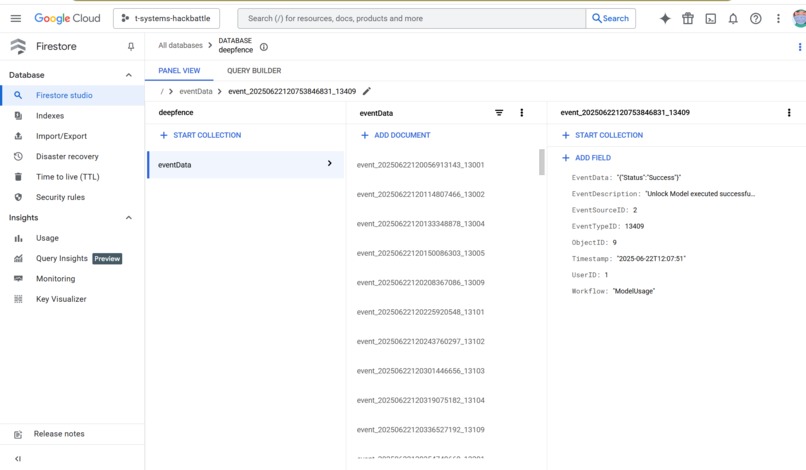
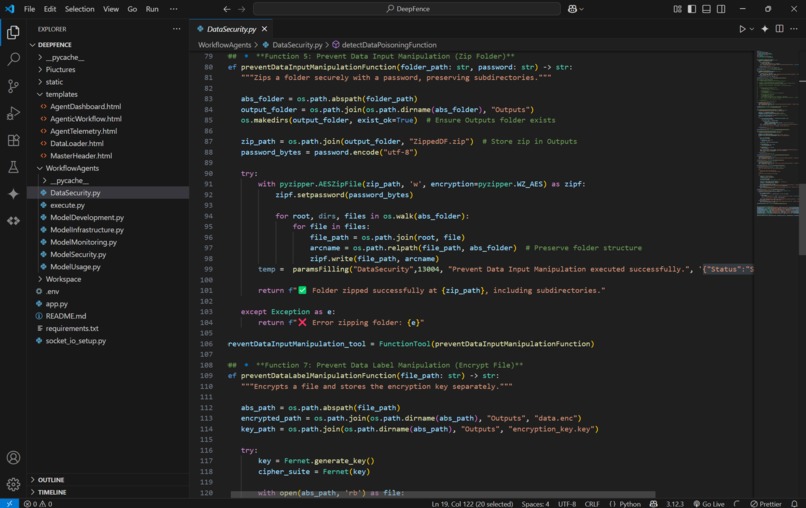
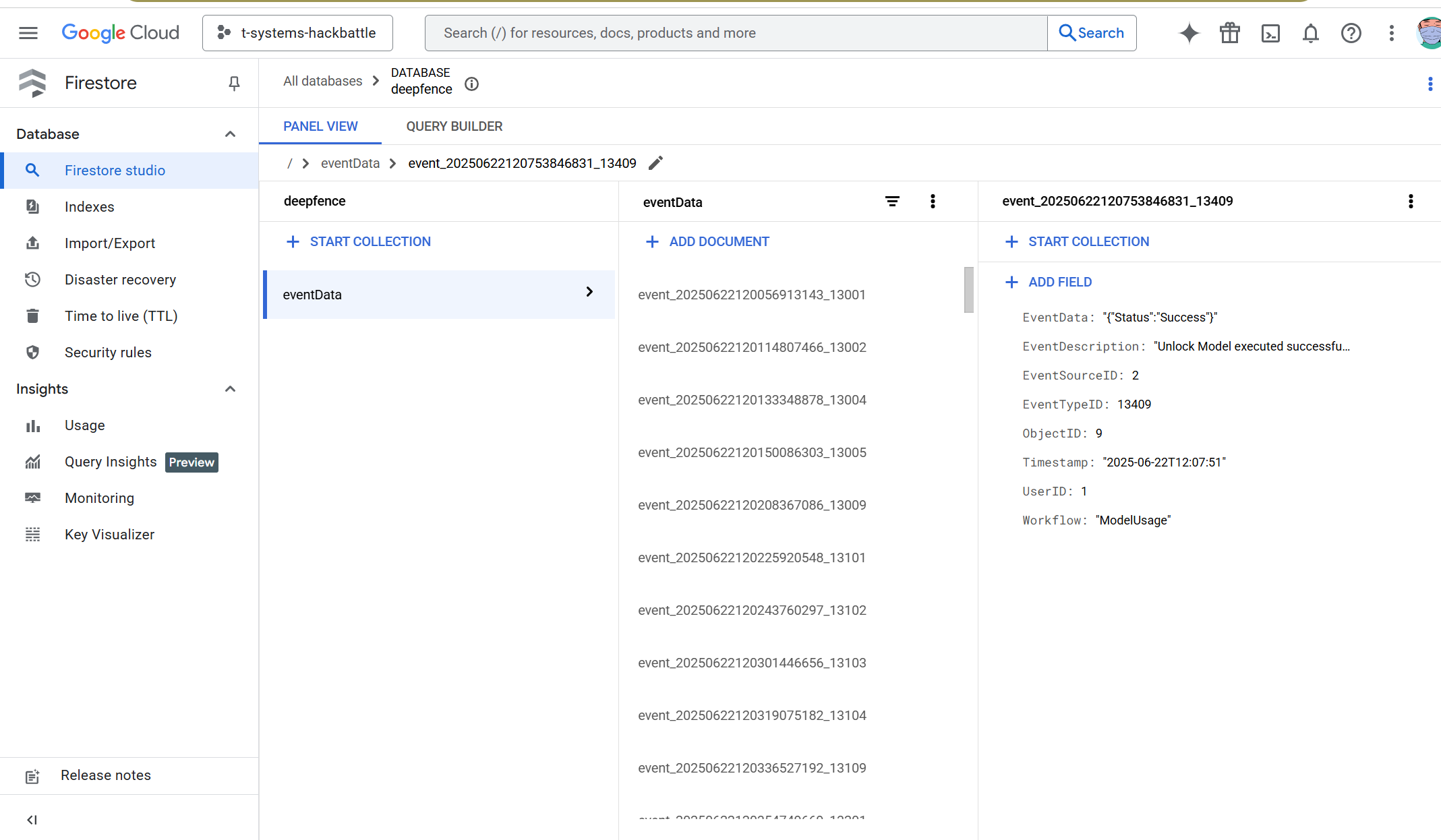
Event logs in Firestore
-
DeepFence
-
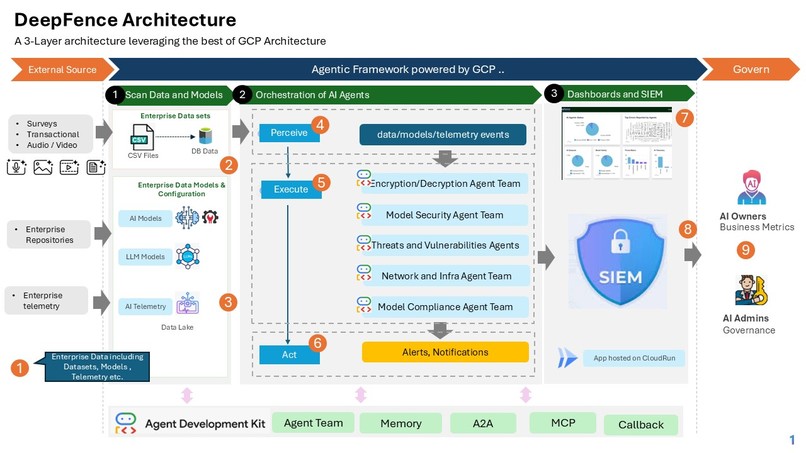
Deepfence Architecture
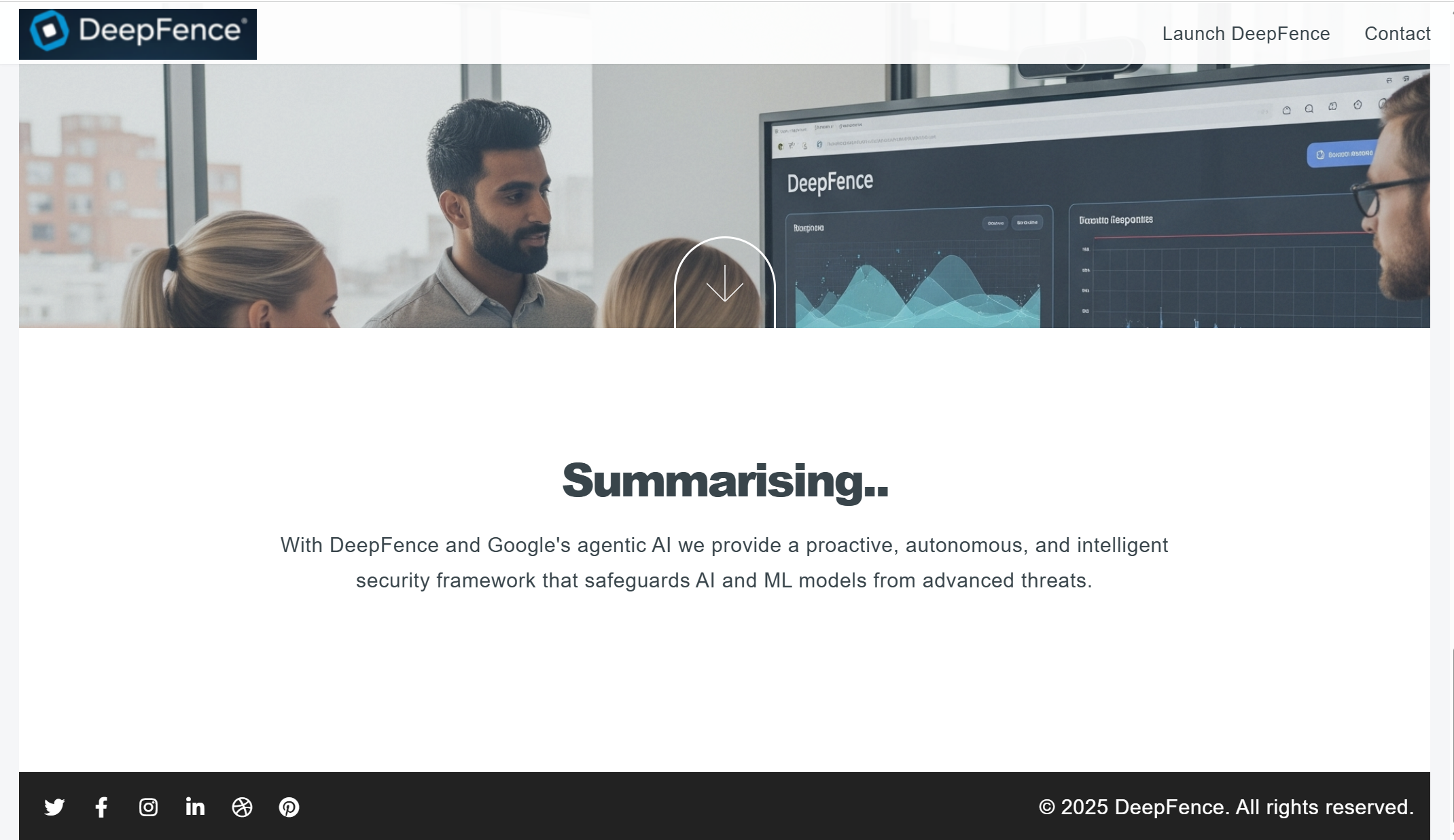
💡 Inspiration
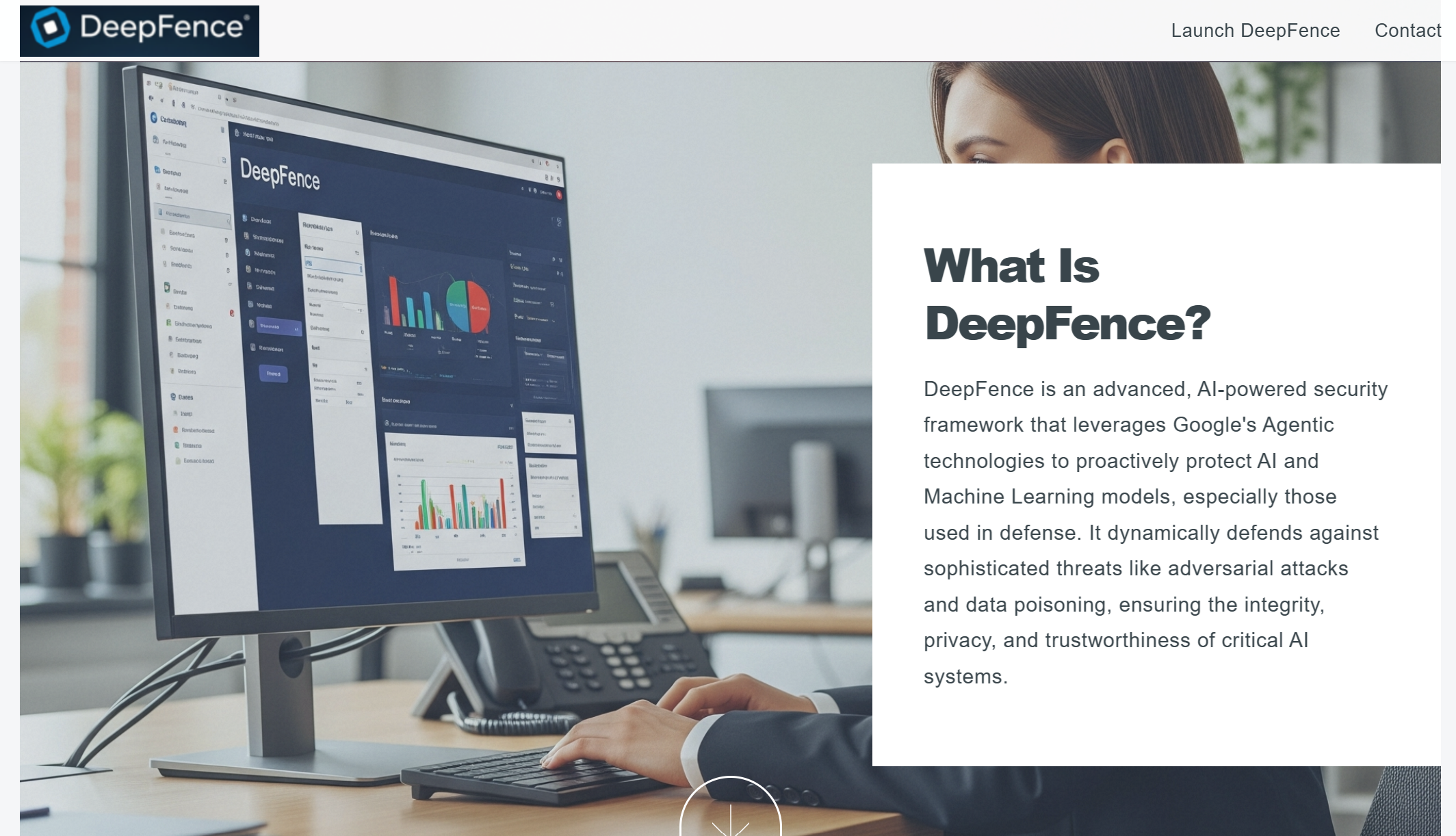
In the high-stakes realm of defense, the pervasive adoption of AI and Machine Learning (ML) models—for tasks ranging from sophisticated image recognition for target identification to complex path prediction for autonomous vehicles—introduces an entirely new dimension of security challenges. The inspiration for DeepFence arises directly from the critical limitations of existing, more traditional programmatic security approaches when confronted with the dynamic, opaque, and deeply data-dependent nature of modern AI.
🚀 Technical Inspiration
The defense sector serves as a crucible for AI development, pushing the boundaries of what these technologies can achieve. However, this also exposes them to unique and severe threats:
- ⚔️ Adaptive and Intelligent Adversaries: Unlike traditional cyber threats that often target known vulnerabilities, adversaries in the AI domain are becoming increasingly sophisticated. They employ adversarial attacks, subtly altering data inputs to trick AI models into making dangerous misclassifications (e.g., a friendly tank appearing as an enemy, or an attack drone misidentifying a civilian target). They can also use data poisoning to inject malicious data into training sets, subtly corrupting the model's future decisions, which could lead to systemic biases or vulnerabilities in critical defense systems over time. Traditional signature-based or rule-based security, designed for static threats, is inherently outmaneuvered by these adaptive, AI-driven attacks.
- 🔒 The "Black Box" Problem in Mission-Critical Systems: Many advanced AI models, particularly deep neural networks, are inherently opaque. Their complex internal workings make it nearly impossible for human operators to understand why a particular decision was made ("black box" problem). In military applications, where decisions can have life-or-death consequences, the inability to explain, audit, or even debug an AI's rationale is a profound limitation. This hinders trust, complicates post-incident analysis, and makes it difficult to identify and rectify biases or errors that could lead to unintended collateral damage or operational failures.
- ⚙️ High-Stakes, Complex Workflows and Automation: Defense operations involve intricate, multi-layered workflows—from intelligence gathering and analysis to logistics and command-and-control. As these workflows increasingly integrate AI-driven automation, the complexity skyrockets. A failure in one AI component can cascade through the entire system. Traditional programmatic approaches, relying on rigid, pre-defined rules, struggle to manage this complexity, adapt to real-time changes, or secure the vast interconnectedness of these systems against intelligent manipulation.
- ⛓️ Vulnerable AI/ML Supply Chain: The development of AI models for defense is a complex supply chain involving data acquisition, third-party libraries, open-source components, specialized hardware, and various development tools. Each link in this chain presents a potential vulnerability. An adversary could compromise training data sources, inject malicious code into a widely used ML library, or even tamper with the hardware where models are deployed. Securing this distributed and dynamic supply chain with traditional perimeter defenses or static code analysis is woefully inadequate, leaving critical defense IP and operational capabilities exposed to theft, sabotage, or intellectual property leakage.
⚠️ Limitations in Developing Complex Workflows
Traditional programming is fundamentally ill-suited to securing and managing the unique characteristics of modern AI in defense:
- ⛔ Rigidity vs. Dynamic Threats: Traditional code is static. Once deployed, it typically requires manual updates and re-deployment to address new threats. This is a severe limitation against fast-evolving adversarial AI attacks, where countermeasures need to be developed and deployed in real-time. The pace of human-driven updates cannot match the speed of AI-driven attacks.
- 🔍 Inability to Introspect Opaque Models: Traditional programming cannot "look inside" a complex neural network to understand its learned representations or detect subtle changes indicative of a compromise. It lacks the inherent capability to monitor for concept drift, identify adversarial perturbations within complex data, or provide the explainability needed for high-assurance defense applications.
- 🔨 Manual Scaling and Orchestration Overhead: Building and securing complex AI workflows (e.g., a network of AI agents collaborating on a mission) with traditional code involves immense manual effort for integration, orchestration, and security policy enforcement. This leads to brittle, hard-to-maintain systems that are prone to errors and difficult to scale or adapt.
- 🛡️ Reactive Security Paradigm: Most traditional cybersecurity tools are reactive, relying on signatures of known malware or anomaly detection based on pre-defined thresholds. They are designed to detect breaches after they occur, not to proactively defend against novel, AI-driven manipulation or to self-heal.
- 💾 Data-Dependency Security Gaps: ML models are inherently data-dependent. While traditional methods secure data at rest (e.g., encryption) or in transit (e.g., secure protocols), they struggle to protect the integrity of the data as it is actively used to train, retrain, and infer with AI models. Furthermore, the knowledge embedded within a trained model itself becomes a valuable asset that's hard to protect from theft using conventional means....
.DeepFence's technical inspiration directly addresses these shortcomings. By leveraging Google's Agentic frameworks, it shifts from a static, reactive, and human-intensive security paradigm to one that is dynamic, autonomous, proactive, and intrinsically tied to the AI's own intelligence, providing the robust and adaptive defense required for secure AI deployment in critical defense operations.
❓ What it does
🛡️ DeepFence: A Solution Built on Google Agentic Frameworks
DeepFence offers an effective solution to these challenges by leveraging Google's agentic frameworks. It is a three-layered security framework designed to work across all five layers of AI models, encompassing traditional models (Classification, Regression), Deep Neural Networks (CNNs), and modern customized LLM models. DeepFence deploys 25 agents utilizing various techniques such as:
Some of the major functionalities include :
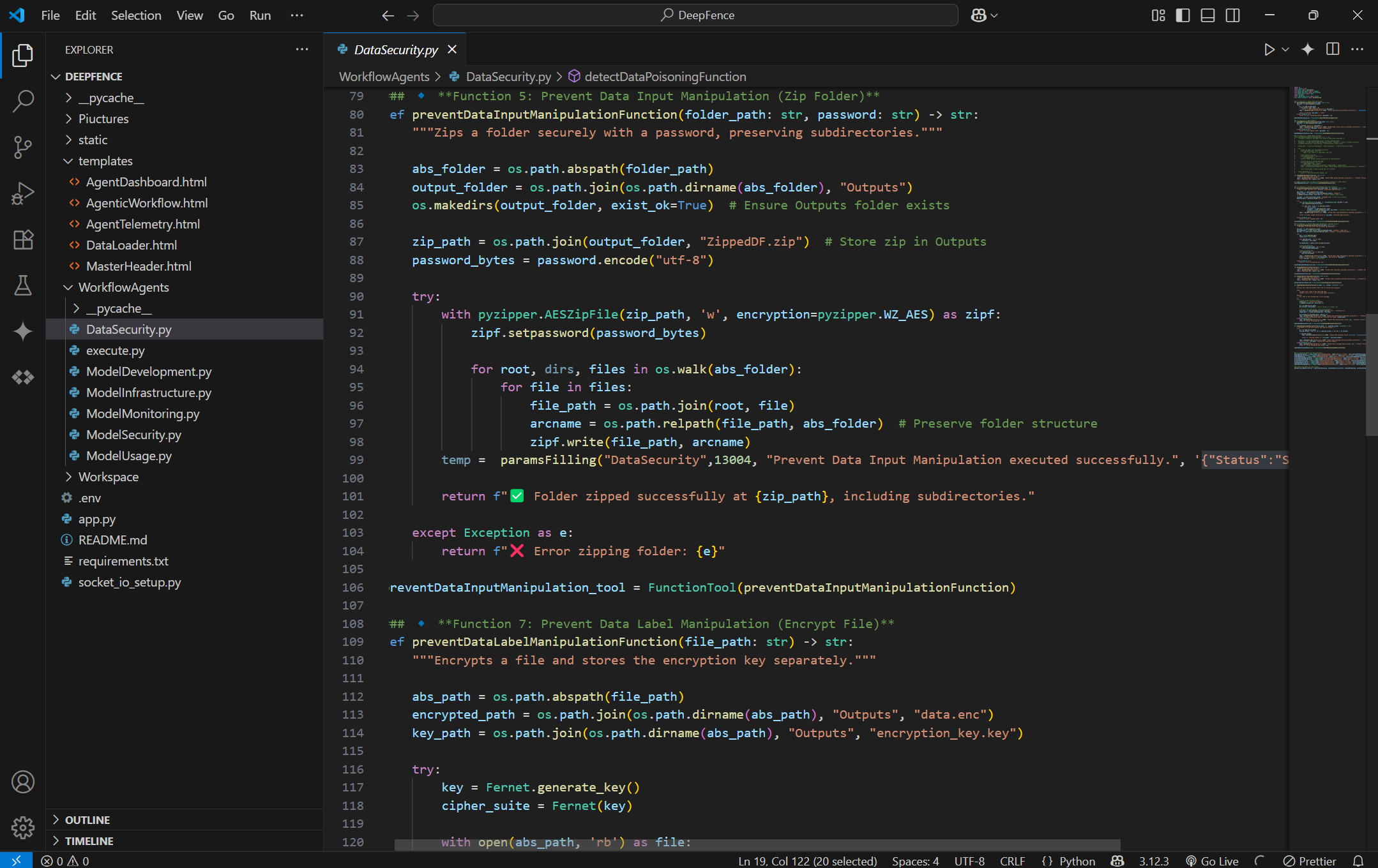
- 📁 Encrypted Zipped Storage: For all data leveraged in developing the models, ensuring data privacy and integrity.
- 🔑 Password Protection: Of models, adding a layer of access control.
- 🚨 Alerting on Unauthorized Usage: Proactively identifying and flagging suspicious model access.
🤖 How Google's Agentic Frameworks helps !
Google's agentic frameworks provide the foundational capabilities for DeepFence's intelligent defense system:
- 🤖 Autonomous Threat Response: DeepFence agents, empowered by these frameworks proactively hunt threats and neutralize attacks in real-time, reducing response times and mitigating damage.
- 👥 Multi-Agent Collaboration: The frameworks enable specialized AI agents to coordinate their defense efforts. This allowed for a comprehensive and layered security approach, where different agents handle specific aspects of threat detection and response.
- 🔁 Continuous Adaptation: Agentic frameworks allowed DeepFence to dynamically learn and adapt against evolving AI threats. This ensures that the defense system remains effective against new and sophisticated attack vectors.
- 📦 Secure Supply Chain Integration: Google's frameworks support end-to-end vulnerability management across the complex ML development supply chain. DeepFence leverages this to secure the entire lifecycle, from data ingestion to model deployment.
By combining DeepFence's specialized security agents with the inherent capabilities of Google's agentic frameworks, the solution aims to provide dynamic, scalable, and robust defense against the evolving landscape of AI threats in the defense sector.
🛠️ How we built it
This is a comprehensive technical implementation for a web application using Python/Flask, Syncfusion, GCP Cloud Run, Gemini API, and Firebase.
📐 1. Architecture Overview
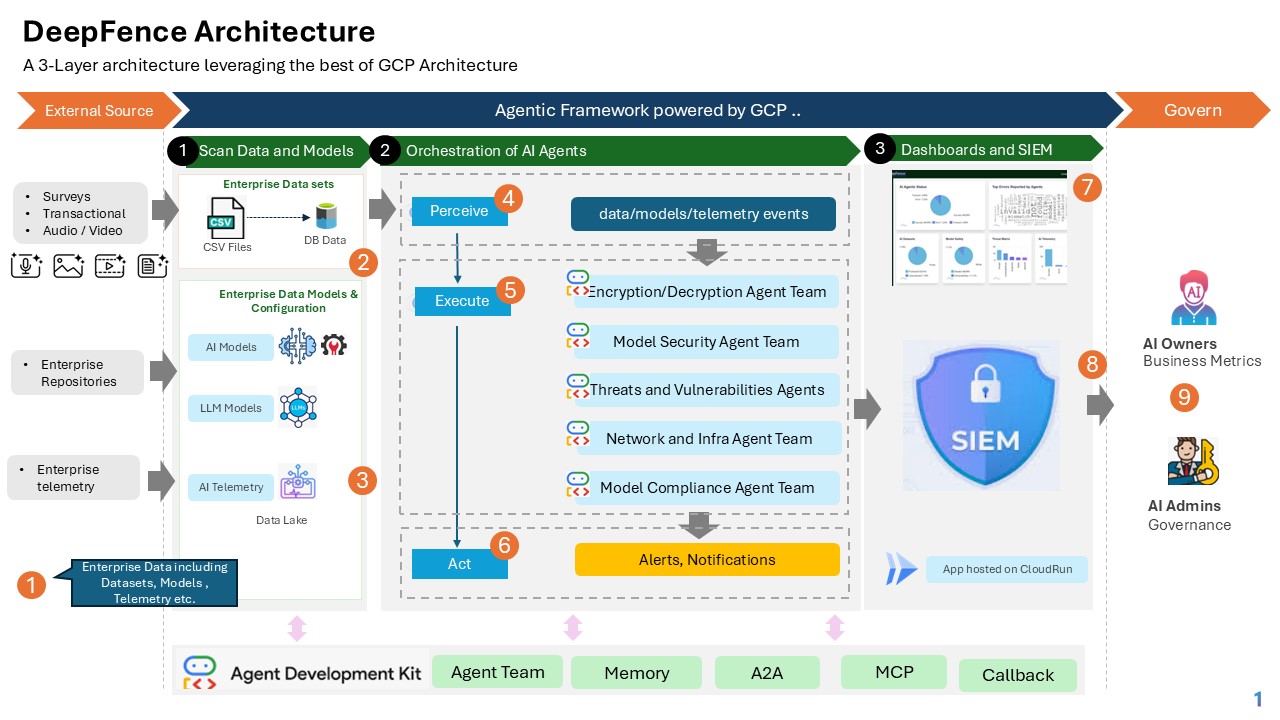
DeepFence implementation follows a robust 3-tier architecture, with a clear separation of concerns:

DeepFence is a three-layered security framework and works across all five layers of AI models including traditional models like Classification, Regression , Deep Neural network models like CNNs and also modern customized LLM models. Deepfence has 25 agents deplloying various technuqies like encrypted zipped storage for all data leveraged in developing the the models, password protection of models, alerting on unauthorized usage of models etc,
Google's agentic frameworks empowered ML model protection through five key features: Autonomous Threat Response for real-time attack neutralization; Multi-Agent Collaboration allowing specialized AI agents to coordinate defense; Continuous Adaptation enabling dynamic learning against evolving threats; Enhanced Explainability (XAI) providing transparent decision-making for audits; and Secure Supply Chain Integration for end-to-end vulnerability management.
Let us understand all the layers in detail:
- 💻 Frontend: HTML, CSS, and JavaScript utilizing Syncfusion JavaScript controls for rich UI components.
- ⚙️ Backend (Flask API - Middleware):
- Handles API requests from the frontend.
- Acts as a middleware layer, orchestrating interactions between the frontend, Gemini API, and Firebase.
- Performs business logic, data validation, and potentially authentication/authorization.
- 🔎 Google Agent Development Kit:
- Leveraged for developing 25+ agents with orchestration and logging and model security/network functions to ensure protection.
- Accessed securely via the Flask backend to avoid exposing API keys on the client-side.
- 💾 Database (Firebase Firestore):
- NoSQL document database for flexible and scalable data storage.
- Used to store application and telemetry data (e.g., user profiles, settings, structured search results, content).
- ☁️ Deployment (GCP Cloud Run):
- Serverless platform for deploying the Flask backend as a containerized service.
- Provides automatic scaling, load balancing, and integrated logging/monitoring.
- 🗄️ Static Asset Hosting (Firebase Hosting or Cloud Storage + CDN):
- For serving HTML, CSS, JavaScript, and other static files. Firebase Hosting is an excellent choice for its CDN and seamless integration with Firebase.
- 🔒 Security:
- API Keys: Leveraged Google Secret Manager for storing sensitive keys in GCP.
- Firebase Security Rules: We defimed strict rules to control who can read/write what data. Do not leave them wide open (
allow read, write;). - CORS: While
Flask-CORSis enabled for all origins in the example, in our production environment, we restricted it to your frontend's domain. - Authentication/Authorization:We implemented user authentication (e.g., Firebase Authentication) and authorize actions on the backend.
- 🐛 Error Handling: We implemented robust error handling on both frontend and backend for a better user experience and easier debugging.
- 📈 Scalability: Cloud Run automatically scales based on demand, which is a major benefit. for our application. Firestore is also highly scalable.
- 📊 Logging and Monitoring: Cloud Run integrates with Google Cloud Logging and Monitoring. We used
print()statements in Flask, and they appear in Cloud Logging. - ⏳ Gemini API Quotas and Usage: We are aware of Gemini API usage limits and costs. We implemented client-side and server-side rate limiting as necessary.
- 🔁 CI/CD: We automated the deployment pipeline using Google Cloud Build, GitHub Actions, or other CI/CD tools to trigger deployments to Cloud Run and Firebase Hosting on code commits.
⚠️ Challenges we ran into
Here are the top 10 technical challenges when working with Google Agentic Frameworks, presented as bullet points:
- 🔀 Complexity in Agent Workflow Design and Orchestration: Designing efficient communication protocols, managing multi-directional interactions between parent and child agents, and orchestrating complex, multi-step workflows are significantly challenging, often leading to "loop detected" errors and requiring sophisticated system design.
- 📉 Scalability and Performance Bottlenecks: As multi-agent systems grew, managing the exponential increase in inter-agent communication and coordinating numerous agents introduced significant latency and resource demands. Ensuring the system remains efficient and coordinated at scale is a critical hurdle.
- 🐛 Error Propagation and Debugging Complexity: Errors in one agent or at one step of a multi-step process can cascade throughout the system, leading to widespread inefficiencies or failures. Diagnosing, isolating, and debugging issues in these dynamic, interconnected workflows is far more difficult than in traditional software.
- 💭 Maintaining Context and Memory Management: LLMs are inherently stateless. Designing robust mechanisms for both short-term (session) and long-term memory for agents, and effectively managing and retrieving relevant context without overwhelming the LLM's context window or incurring excessive costs, is a significant technical challenge.
- 🧰 Tool Integration and Management: Designing, developing, and managing the "tools" or "function calling" capabilities that agents use to interact with external systems can be intricate. This includes handling diverse APIs, ensuring secure execution, and managing tool versioning.
- 💸 Cost Optimization for LLM Inference and Tool Usage: Agentic systems can make numerous LLM calls and tool invocations, leading to potentially high operational costs. Optimizing prompt engineering, caching strategies, and efficient tool usage to manage these costs effectively is crucial.
- ❓ Handling Ambiguity and Hallucinations: While agentic frameworks aim to improve reliability, LLMs can still generate inaccurate or nonsensical information (hallucinations). Designing agents to detect and mitigate these instances, or to seek human clarification when uncertain, remains a significant technical challenge.
🏆 Accomplishments that we're proud of
Here are the top accomplishments we are proud of in implementing a cool tool like DeepFence,
- 🚀 Pioneering a New Era of Autonomous AI Security: We have moved beyond traditional, reactive security to establish a proactive, intelligent, and self-defending paradigm for critical ML models in defense. DeepFence, powered by agentic frameworks, anticipates, detects, and neutralizes threats autonomously, fundamentally redefining AI security in a high-stakes environment.
- 🛡️ Achieving Unprecedented Resilience Against Adversarial Attacks: DeepFence demonstrates a measurable and critical success in protecting defense-specific ML models (e.g., image detection, path prediction) from sophisticated adversarial attacks. This directly prevents dangerous misclassifications and operational failures, ensuring the reliability of AI in national security applications.
- 🔐 Ensuring End-to-End Data Integrity and Model Intellectual Property Protection: By implementing robust techniques like encrypted storage, password protection, and continuous agent-based monitoring, DeepFence guarantees the integrity and privacy of sensitive training data and secures proprietary models from theft. This is crucial for maintaining a competitive technological edge and operational secrecy.
- ✅ Successfully Operationalizing Cutting-Edge Google Agentic Frameworks in a Demanding Domain: You've not just built a concept, but a functional, deployed, and effective solution in the highly demanding defense sector. This achievement proves the practical viability and immense potential of agentic AI to solve real-world, mission-critical security challenges, setting a precedent for future innovations.
💡 What we learned
Here are the major learnings in implementing an application like DeepFence, presented as bullet points:
- 🔁 Mastering Agentic Workflow Orchestration: Deep dive into designing complex, autonomous agent interactions, defining agent goals, managing communication flow (parent-child, peer-to-peer), and overcoming challenges like infinite loops.
- 💭 Effective Context and Memory Management for LLMs: Learned critical techniques for providing statefulness to stateless LLMs, including RAG for long-term memory, optimizing context window usage, and intelligent retrieval of relevant information for multi-turn conversations.
- 🔒 Prioritizing Security by Design in Cloud-Native Apps: Gained proficiency in implementing robust security measures from inception, encompassing secure API key management (Secret Manager), strict Firebase Security Rules, proper CORS, and comprehensive input validation for defense-grade applications.
- 🐳 Proficiency in Containerization and Serverless Deployment (GCP Cloud Run): Acquired practical expertise in Dockerizing Flask applications for production, optimizing container performance on Cloud Run (cold starts, concurrency), and managing service accounts for secure access.
- 🛰️ Seamless Inter-Service Communication and Integration: Understood best practices for securely connecting Flask with Firebase Firestore and Gemini API, including proper authentication (Application Default Credentials), handling API rate limits, and implementing robust error handling and retries.
- 💻 Bridging Frontend (Syncfusion) and Backend (Flask) Effectively: Learned to manage data serialization/deserialization (JSON) and API calls from a rich JavaScript UI to a Python backend, understanding the specific integration patterns of UI component libraries like Syncfusion.
- 🧠 Advanced AI-Specific Challenges and Prompt Engineering: Developed skills in crafting effective prompts for the Gemini API, understanding model limitations, and exploring iterative refinement, potentially including techniques like few-shot learning for domain-specific knowledge.
- 🔍 Embracing Observability for Complex AI Systems: Realized the critical importance of comprehensive logging, monitoring, and tracing for autonomous agents to diagnose issues, track decisions, tool calls, and LLM interactions effectively.
- 🔁 Adopting Iterative Development and Robust Risk Management: Learned the necessity of an agile approach, frequent testing, and quick feedback loops to navigate the inherent complexities and uncertainties of building cutting-edge agentic AI solutions.
🔮 What's next for DeepFence - Protect your AI Investment
DeepFence, with its foundation in Google Agentic Frameworks and its focus on defense, is already pushing boundaries. To envision its "top futuristic features," we needed to think about integrating emerging AI research, advanced security paradigms, and sophisticated autonomous capabilities.... Here are the top futuristic features we can implement for DeepFence:
- 🤖 Self-Evolving Adversarial Attack Countermeasures (Adaptive Defense Agents):
- Concept: Instead of just reacting to known attack patterns, dedicated DeepFence agents continuously analyze new adversarial attack techniques (e.g., from honeypots, red team exercises, or external threat intelligence). They then autonomously generate and test new, optimized adversarial training samples or model hardening techniques to proactively update the defense mechanisms of deployed ML models.
- Why futuristic: This moves beyond reactive or even current proactive defenses to a truly adaptive and self-improving security system that learns and evolves alongside the attacker.
👥 Federated Learning for Collaborative Threat Intelligence without Data Sharing:
- Concept: Implement federated learning capabilities within DeepFence. Multiple defense entities could collaboratively train a shared threat detection model (e.g., for detecting novel adversarial patterns) without ever exposing their raw, sensitive data. DeepFence agents would manage the secure aggregation of model updates.
- Why futuristic: Addresses critical privacy and data sovereignty concerns in defense, enabling powerful collaborative threat intelligence that wouldn't otherwise be possible due to strict data sharing restrictions.
🔮 Predictive AI Vulnerability Forecasting (Pre-emptive Hardening Agents):
- Concept: DeepFence agents would analyze various factors (e.g., model architecture, training data characteristics, known vulnerabilities in similar models, emerging research papers on new attack vectors) to predict potential vulnerabilities in specific ML models before they are exploited. These agents would then trigger automated hardening recommendations or even self-patching mechanisms.
- Why futuristic: Shifts security from a detection/reaction model to a truly predictive and pre-emptive one, allowing defense systems to anticipate and neutralize threats before they even materialize.
🎛️ Dynamic, Context-Aware Policy Enforcement Agents (Adaptive Governance):
- Concept: Agents that dynamically adjust security policies (e.g., access controls, data flow restrictions, model update frequencies) in real-time based on the evolving threat landscape, the criticality of the data/model, and the current operational context. This moves beyond static security policies to highly adaptive, intelligent governance.
- Why futuristic: Allows for flexible yet secure operations, adapting to new threats or mission requirements without manual policy overhauls, while maintaining compliance.
These features would position DeepFence as a true vanguard in the realm of AI security for defense, enabling unprecedented levels of autonomy, resilience, and trustworthiness.


Log in or sign up for Devpost to join the conversation.