


Inspiration
Deepfakes have rapidly evolved, making it increasingly difficult to trust digital images and videos. This inspired me to build a system that can analyze media, expose subtle manipulations, and present results clearly to users. Kiroween’s theme of building something “wicked” in dark mode also motivated me to combine machine learning, visualization, and modern AI tooling into a single intuitive web application.
What it does
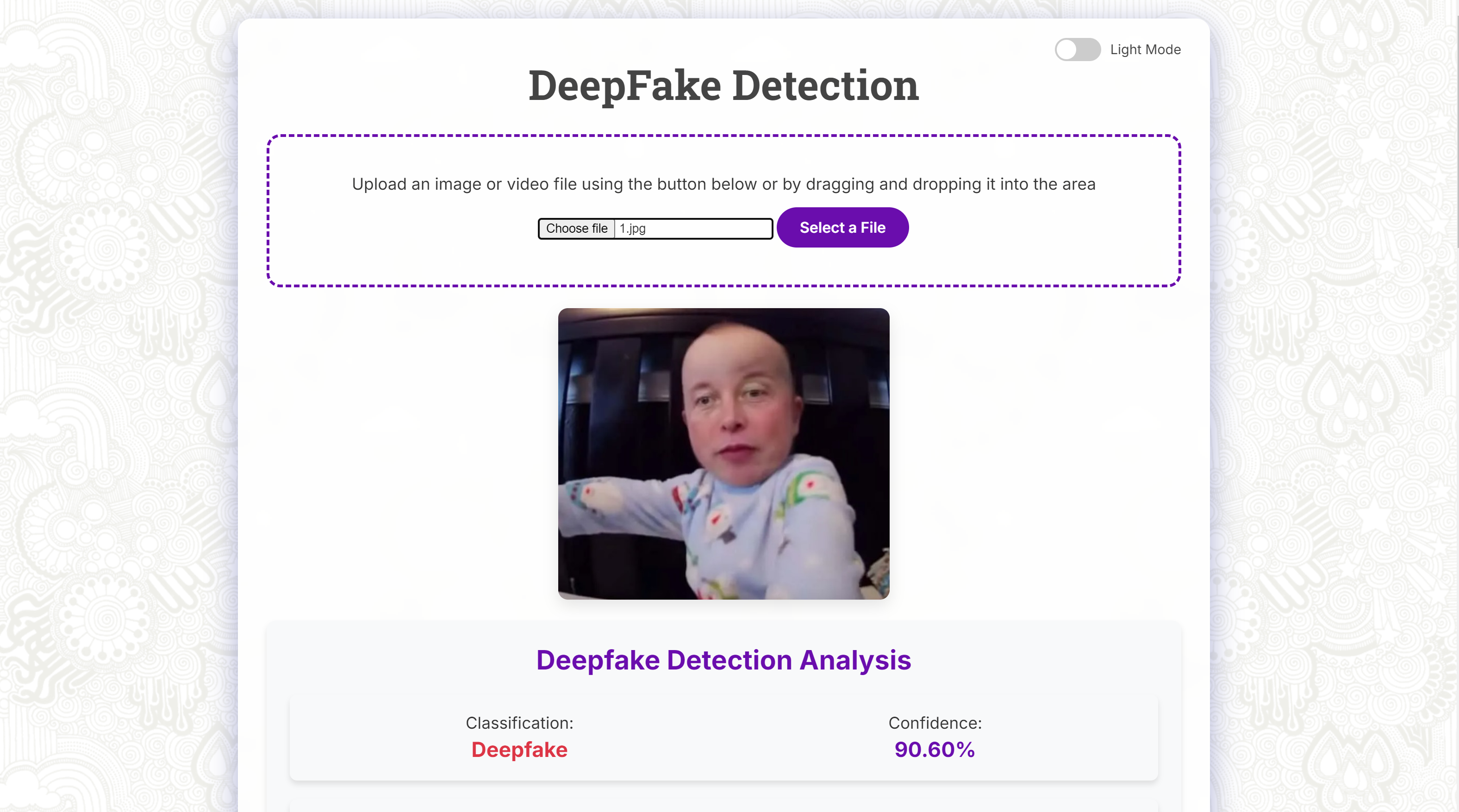
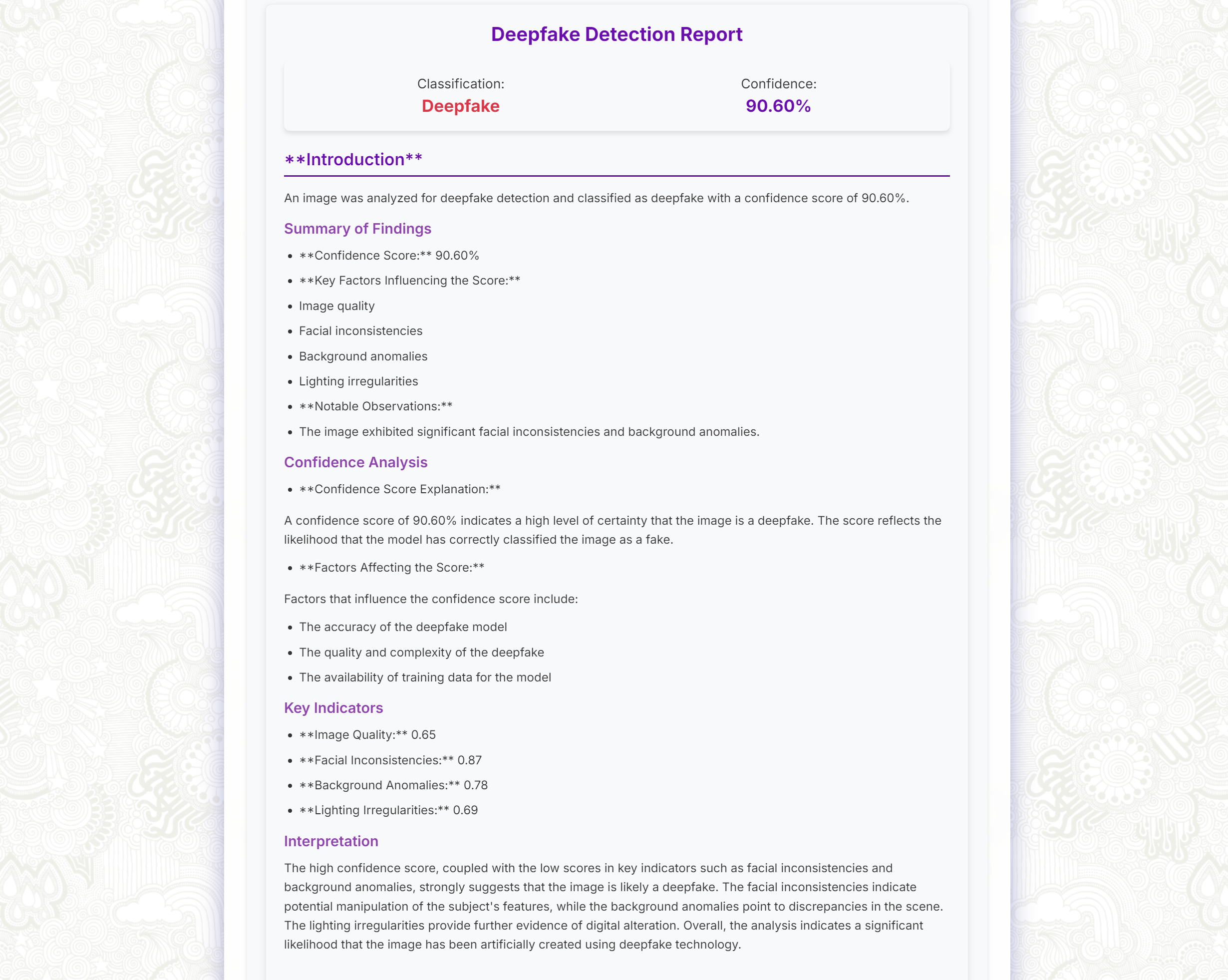
DeepFakeDetectX is a web-based application that allows users to upload images or videos and receive an authenticity assessment. It uses an ensemble of deep learning models to evaluate whether the media is genuine or manipulated. The system produces:
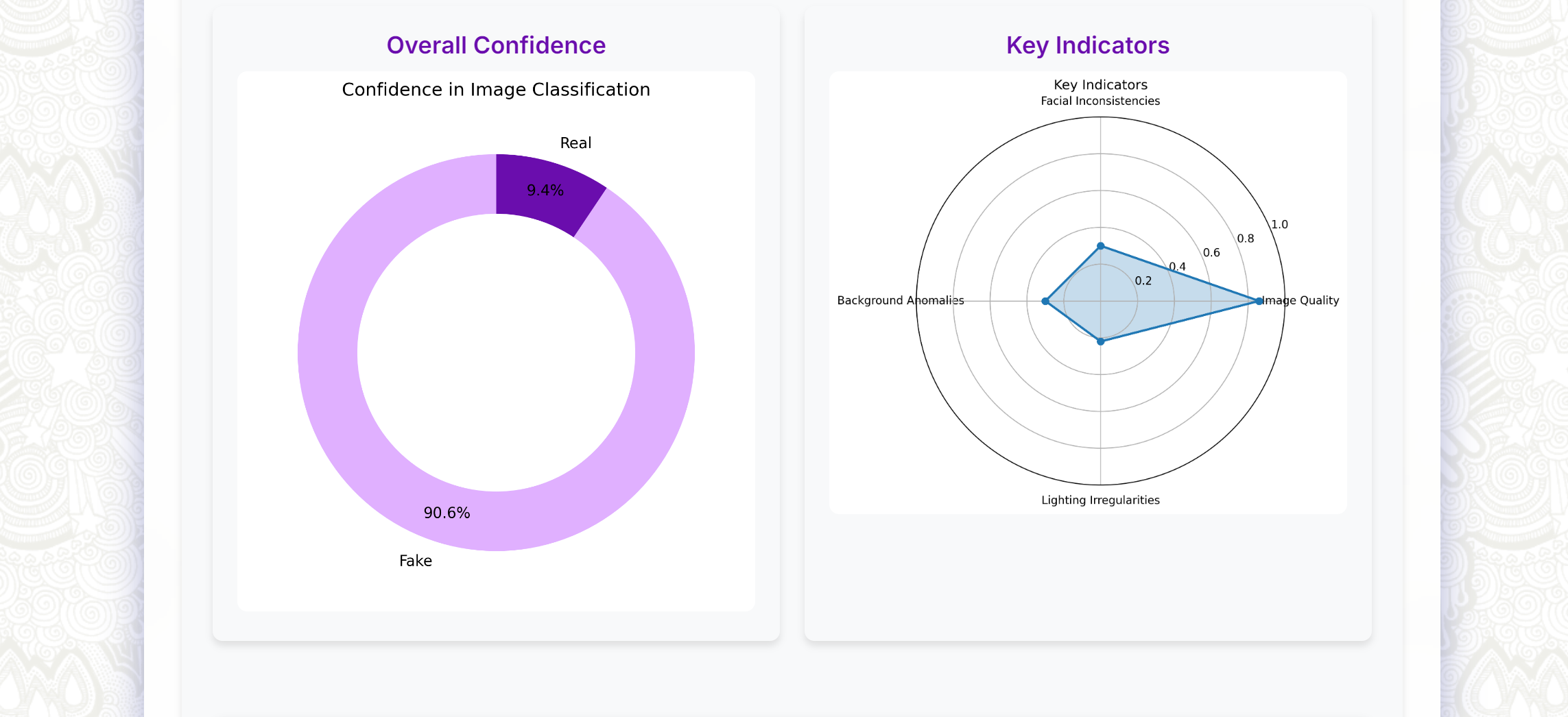
- A deepfake confidence score
- Donut and bar chart visualizations
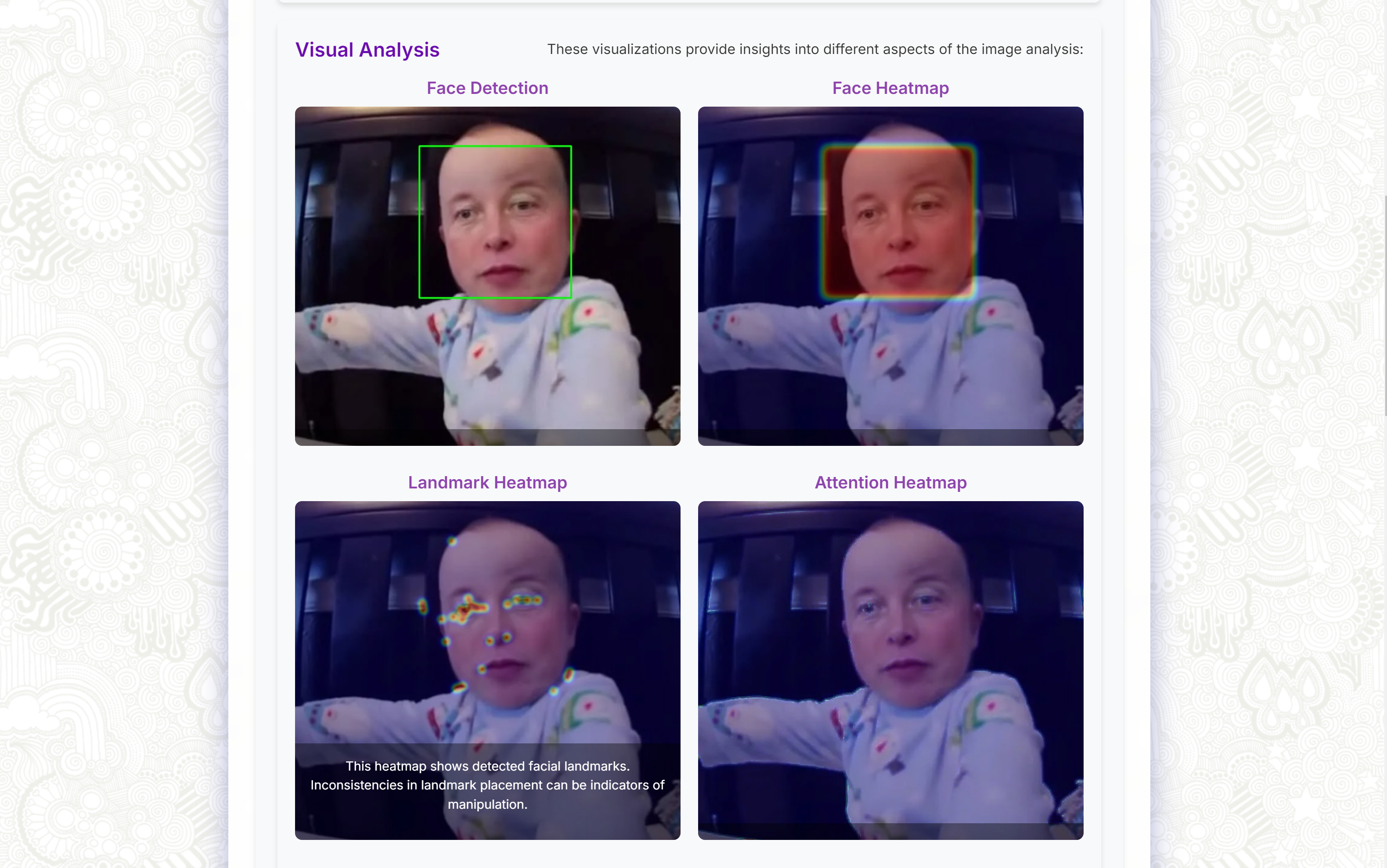
- A detailed analysis explaining the reasoning
- Optional AI-generated reports for clearer interpretation
The goal is to make deepfake detection accessible, visual, and easy to understand.
How we built it
The application integrates a Flask backend, an interactive frontend, and an ensemble of EfficientNet-B7 models for strong detection performance.
Detection Formula
The core anomaly scoring mechanism compares extracted feature vectors:
\[ \text{score} = \frac{1}{n} \sum_{i=1}^{n} \left| f_i^{\text{real}} - f_i^{\text{test}} \right| \]
A sample is marked as a deepfake if:
$$ \text{score} > \tau $$
where \( \tau \) is a threshold tuned through experimentation.
Components Involved
- Backend: Flask for routing, file processing, and model inference
- Models: EfficientNet-B7 ensemble using PyTorch and
timm - Visualization: Plotly and Matplotlib for dynamic charts
- Frontend: HTML, CSS, JavaScript with drag-and-drop upload
- AI-Generated Analysis: Gemini API for natural-language reports
This combination creates a smooth end-to-end deepfake detection pipeline.
Challenges we ran into
- Handling large model weights without slowing down inference
- Reducing false positives in challenging lighting conditions
- Processing videos frame-by-frame efficiently
- Integrating multiple charts without overwhelming the UI
- Managing GPU/CPU limitations during development
- Ensuring AI-generated reports remain consistent and accurate
These challenges helped us refine the model ensemble and optimize the overall workflow.
Accomplishments that we're proud of
- Built a fully functional deepfake detection application
- Integrated deep learning, visualization, and web technologies seamlessly
- Achieved stable detection using an EfficientNet-B7 ensemble
- Created polished visual outputs for better user understanding
- Added AI-generated explanation reports using Gemini
- Designed a responsive dark/light mode interface
What we learned
- How ensemble models improve robustness in deepfake detection
- The importance of proper preprocessing for model accuracy
- How to visualize ML results in an intuitive, user-friendly way
- How to integrate backend ML inference with a modern frontend
- How threshold tuning and feature comparison affect detection outcomes
- How to use AI APIs to enhance user explanation and clarity
This project strengthened both deep learning and full-stack engineering skills.
What's next for DeepFakeDetectX
- Introduce real-time deepfake detection for video streams
- Add audio deepfake and lip-sync detection
- Build explainability features such as heatmaps and Grad-CAM
- Develop a Chrome extension for instant media authentication
- Deploy a cloud-based version with a public API
- Expand the dataset for improved model generalization
- Optimize inference for mobile and low-resource devices
DeepFakeDetectX aims to evolve into an accessible, reliable, and comprehensive tool for digital media verification.


Log in or sign up for Devpost to join the conversation.