-
-
-
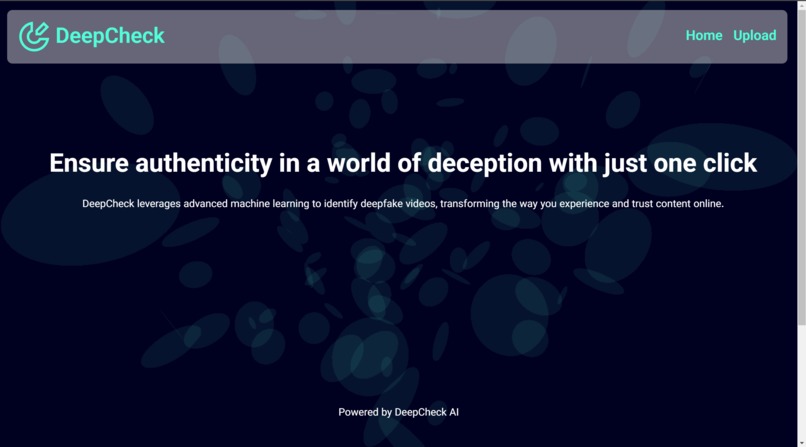
Home Page
-
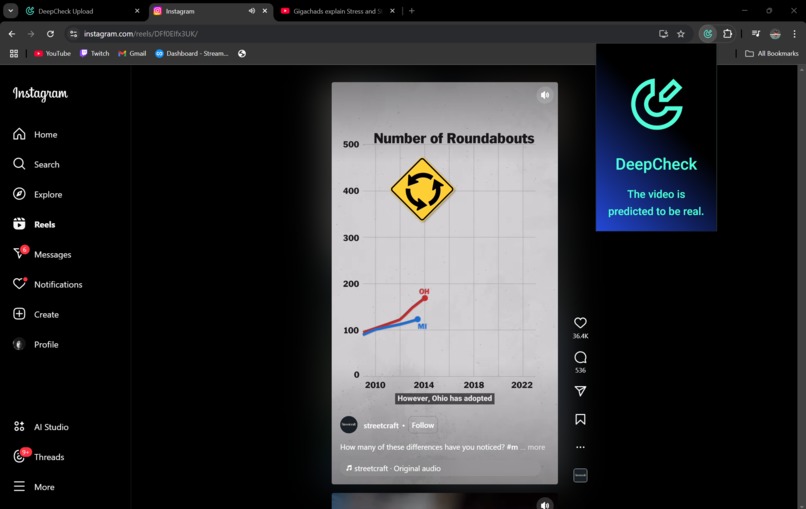
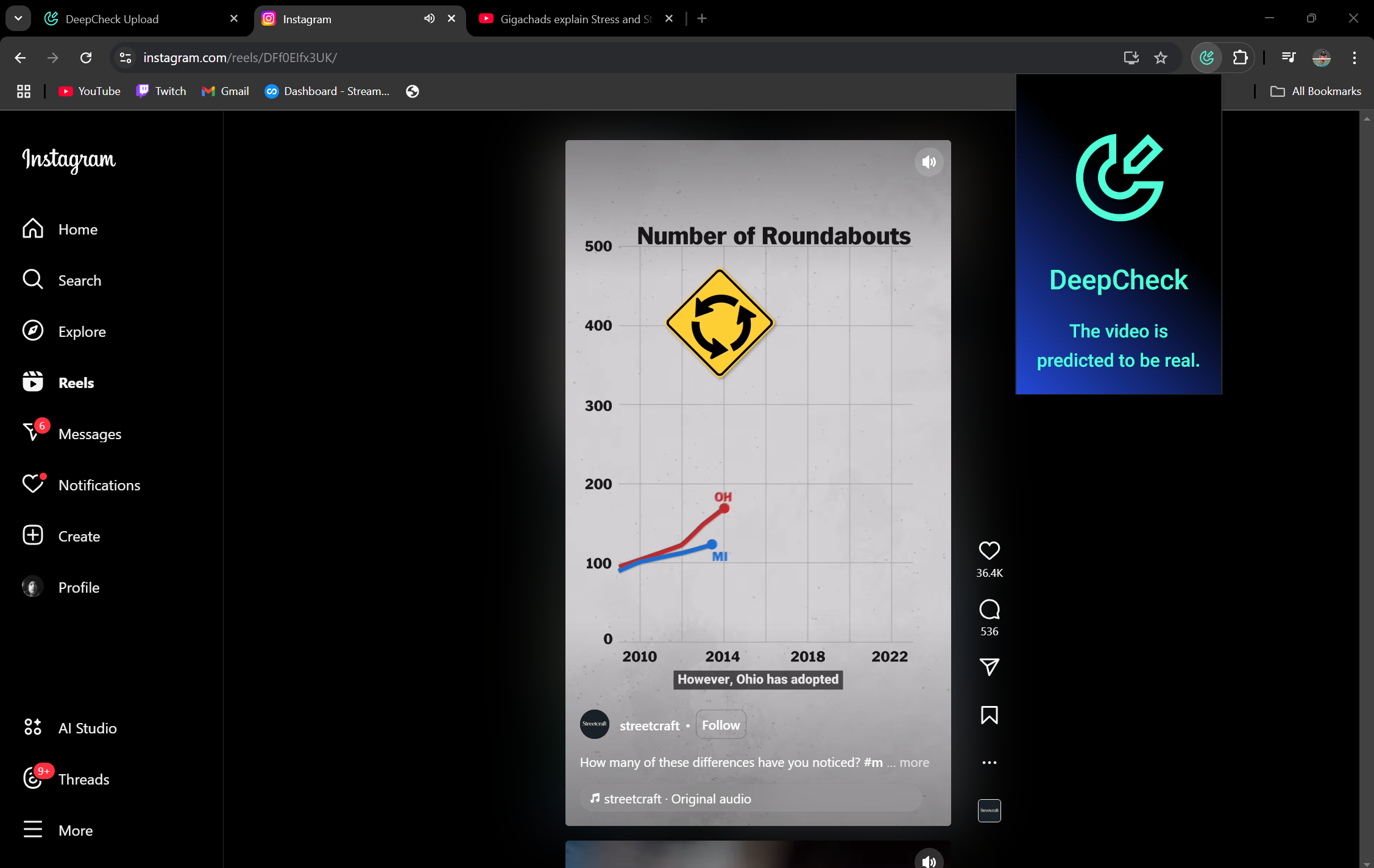
Chrome Extension (Instagram Reels)
-
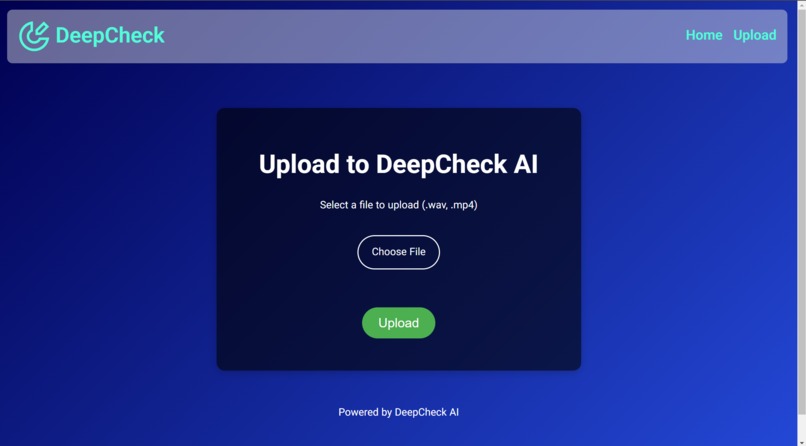
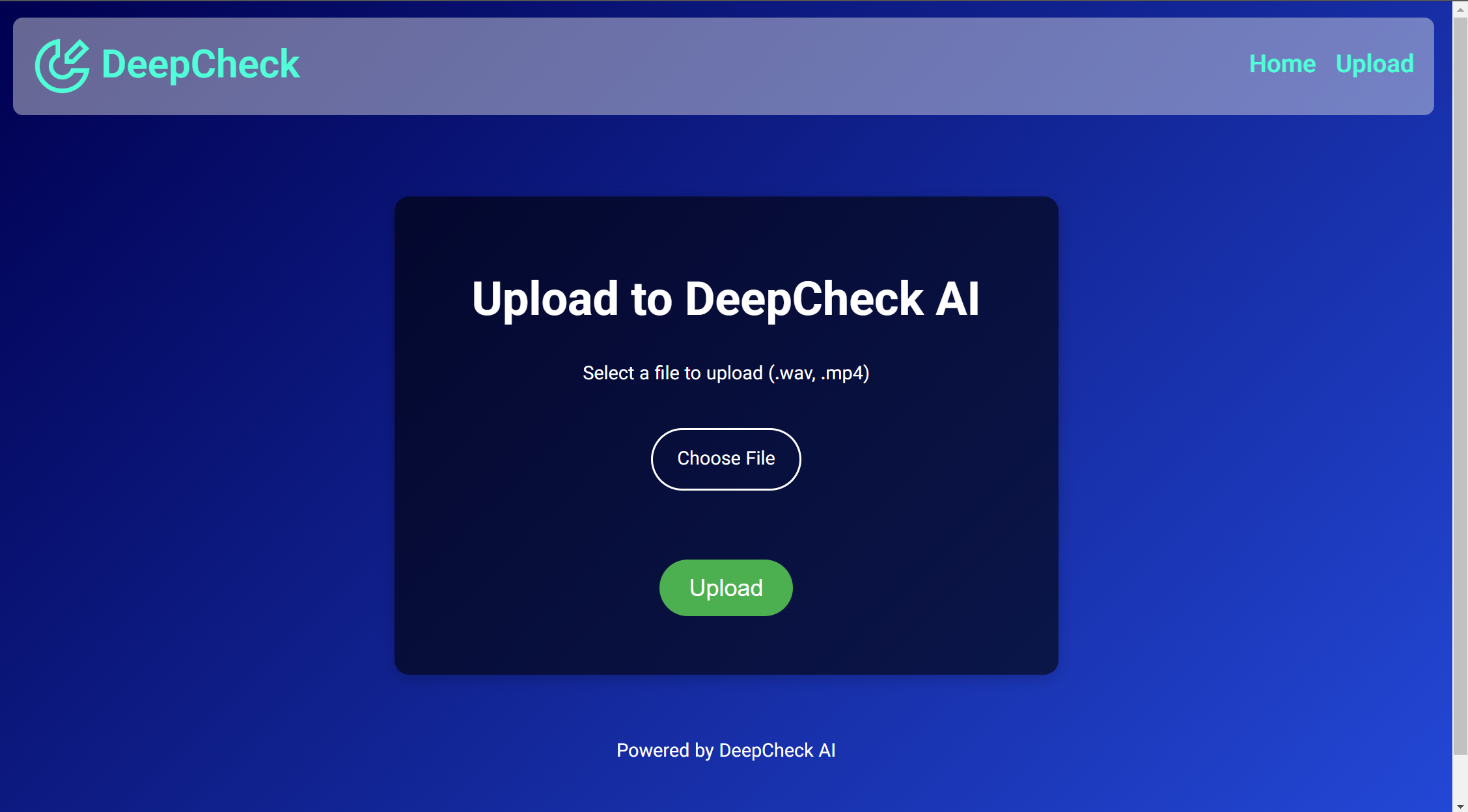
Upload Page
-
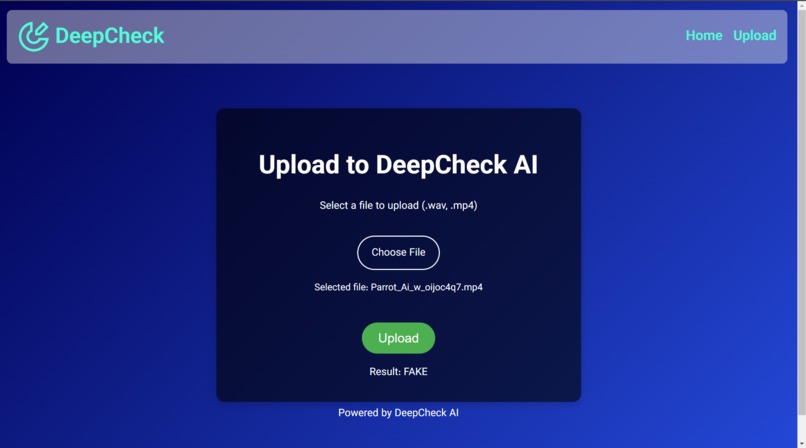
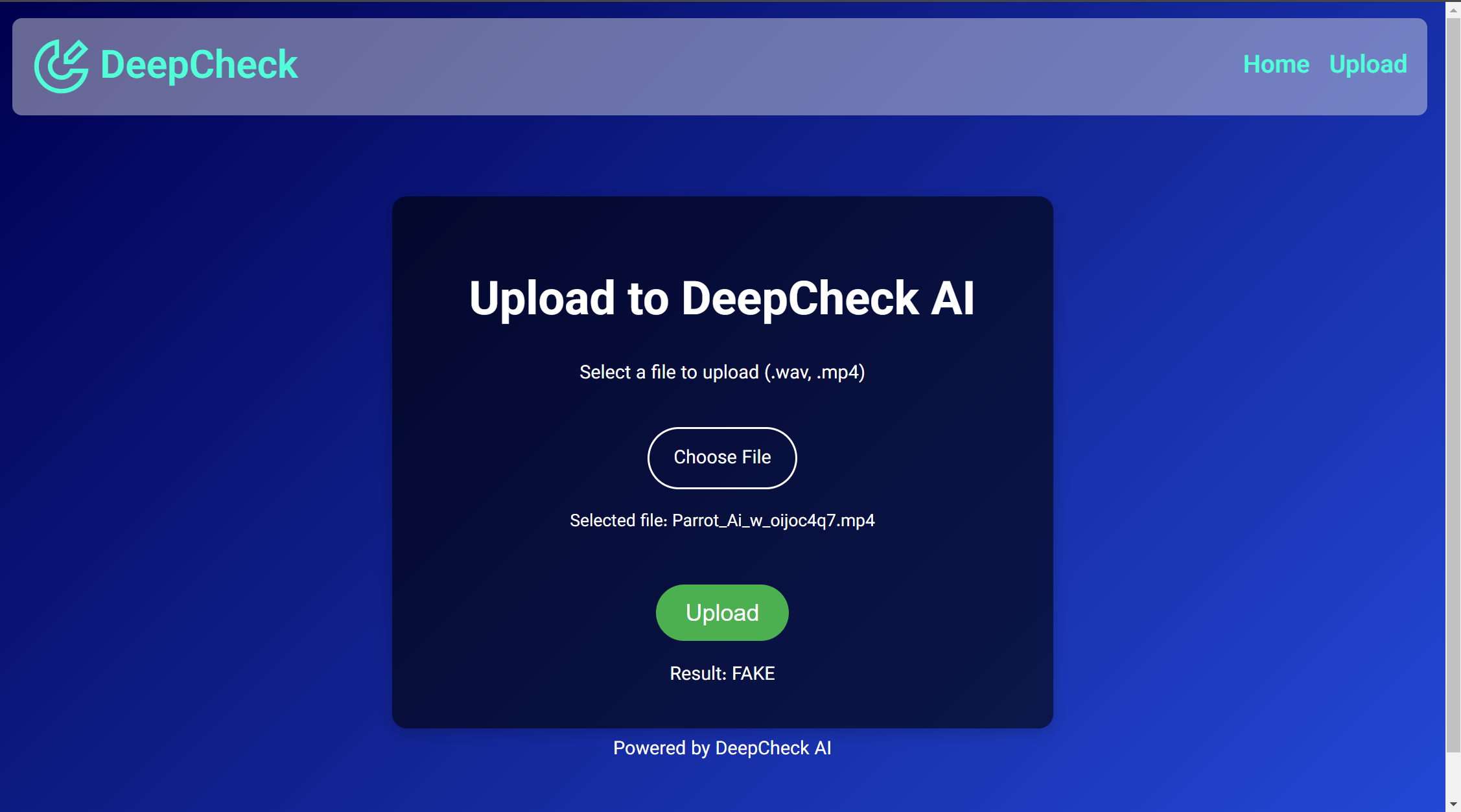
Upload Page (with result of analysis)
-
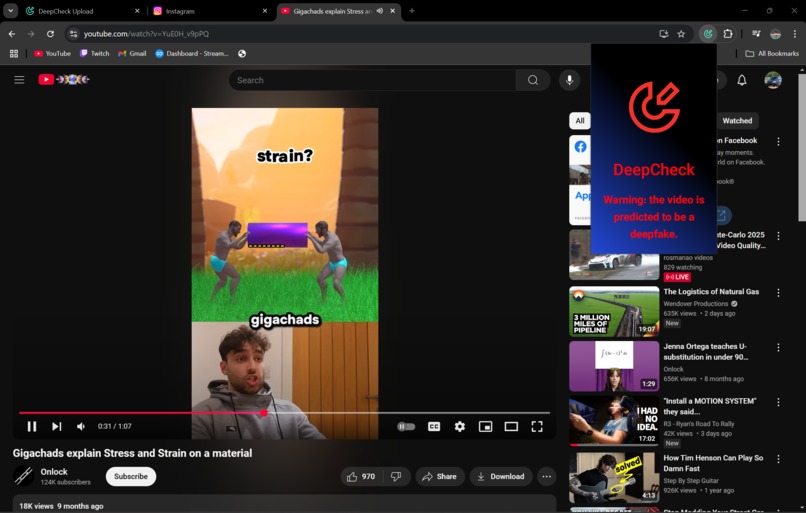
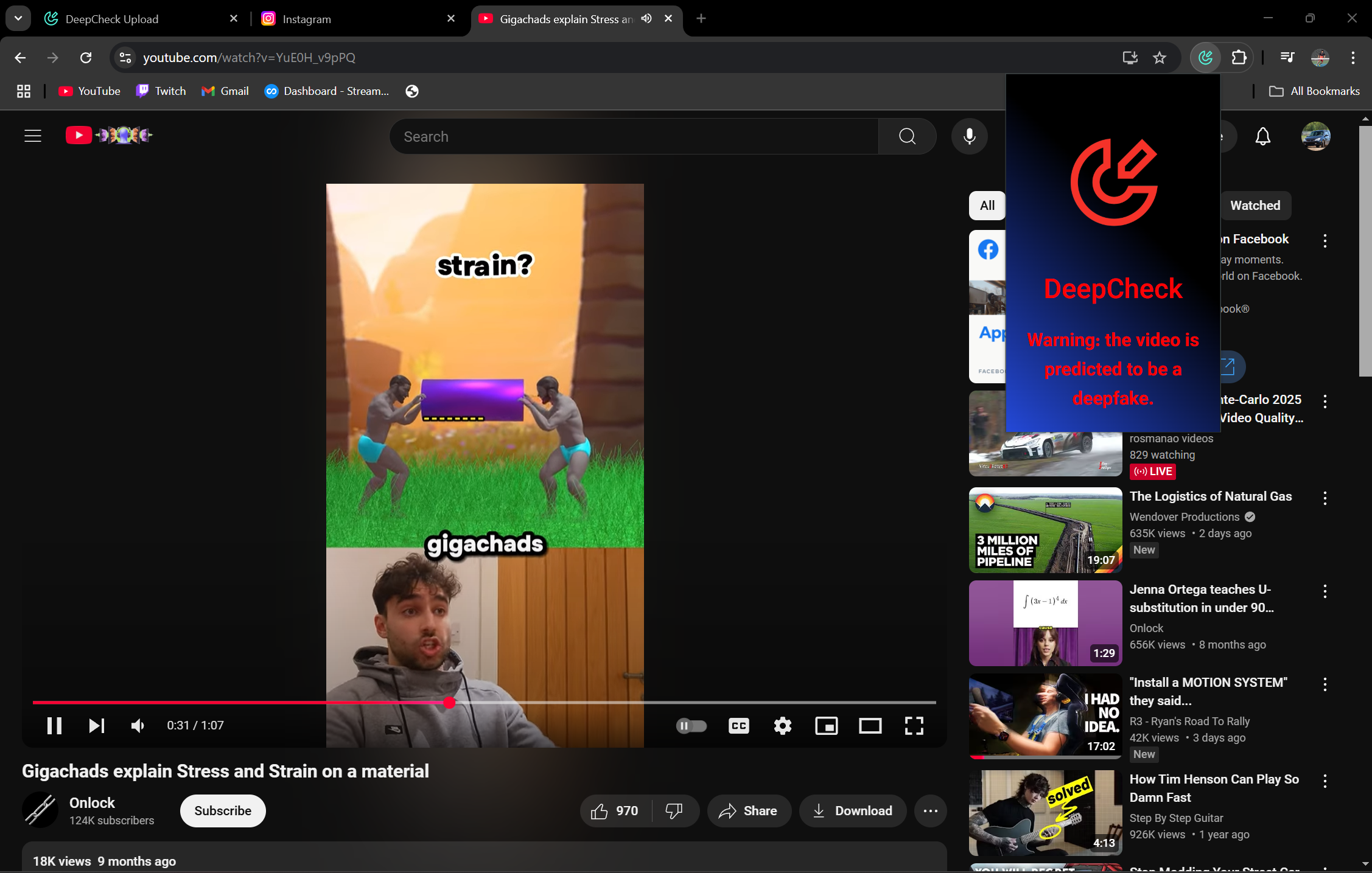
Chrome Extension (YouTube)

Inspiration
The rise of Deep Fake highlighted the double edged sword nature of technology. While it pushed boundaries and ideas of what we thought was possible, it also marked a new age of misinformation. Throughout our feed, deep fakes were doing an increasingly better job of impersonating celebrities and plaguing the internet with false information. We were disheartened to see how easily the public could be manipulated and we decided to do something about it. That's why we created DeepCheck—a simple, one-click solution to help users verify the authenticity of videos and stop the spread of digital deception.
What it does
DeepCheck helps users to identify a DeepFake from “real” content with the tap of a button using either our Chrome extension for short form content (Youtube Shorts / Instagram Reels) or a Website that allows users to upload .WAV or .MP4. Within seconds, you’ll have our verdict!
How we built it
Data Collection Fetched a curated dataset using Kaggle API
Classification Model (Python): Adopted SVM model and used supervised training to achieve a 99.4% accuracy
Frontend: For the frontend, we used html, css, and JS to create the UI and communicate with the backend.
Backend (Website): We used express.js to work the backend server and manage functionality of the website, and we used it to execute the python scripts that ran the AI model.
Backend (Chrome Extension): We used python flask to run the backend for the chrome extension, and communicated through its API using HTTP requests.
Challenges We ran into
Confidence Interval: We aimed to incorporate the decision function feature provided by the TensorFlow library's SVM model. However, the idea of displaying a confidence percentage emerged late in the development process, making it challenging to integrate into an application that was already 90% complete.
Adapting to using a chrome extension was a fairly large adjustment, as it required the use of flask APIs for the programs to effectively communicate, whereas the website had code to run it off the node backend more easily.
Accomplishments that we are proud of
We achieved a model with an incredibly high and consistent accuracy that takes in an audio file and outputs a verdict: Fake or Not. Also, we created an intuitive and visually appealing front-end.
What we learned
This was our first project training an AI model, so we learned a lot about the various training techniques and models that were most suited to our use case. Additionally, the majority of the team only had limited experience in the front-end so we had an invaluable experience learning how to connect the two.
What's next for DeepCheck
Expanding Platform Support: While DeepCheck currently focuses on Instagram Reels and YouTube, we plan to extend its functionality to other social media platforms like TikTok and Facebook, especially for mobile devices.
Real-Time Detection: We aim to integrate real-time deepfake detection for live videos and streams, enabling users to verify content as they consume it.
Confidence Interval Integration: We will refine the model to include a confidence percentage for each detection, providing users with a clearer understanding of the likelihood that a video is a deepfake.
Enhanced Model Accuracy: While our current SVM model achieves 99.4% accuracy, we plan to explore more advanced machine learning techniques. Experimenting with larger and more complex datasets and models is our next step.
User Education and Awareness: We plan to create educational resources and tutorials to help users understand the dangers of deepfakes and how to use DeepCheck effectively.
2 GitHub Links: https://github.com/chisouwu/DeepCheckWebsite https://github.com/chisouwu/DeepCheckExtension


Log in or sign up for Devpost to join the conversation.