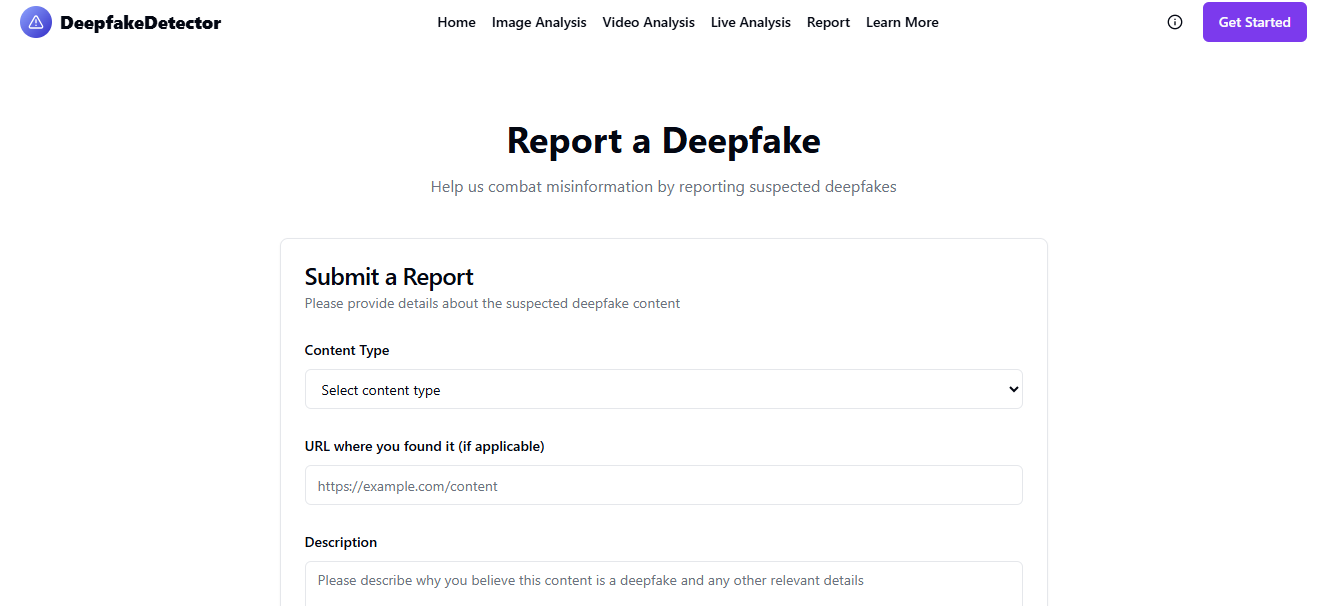
What is Deepfake Detector?
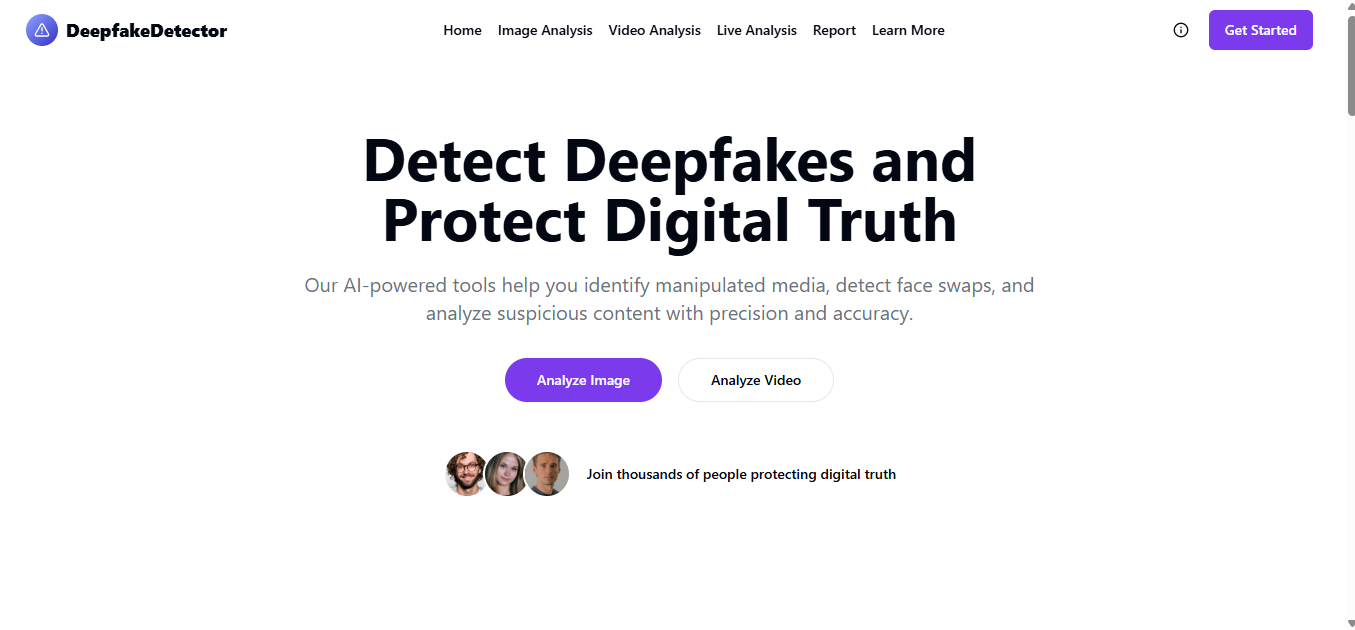
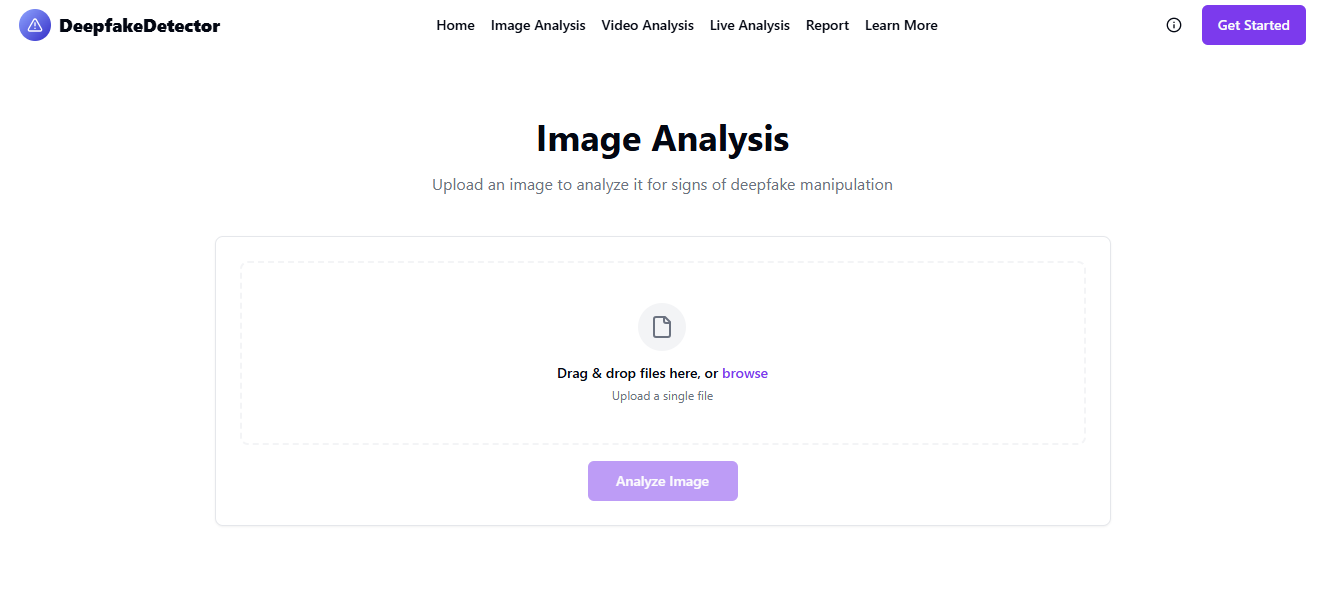
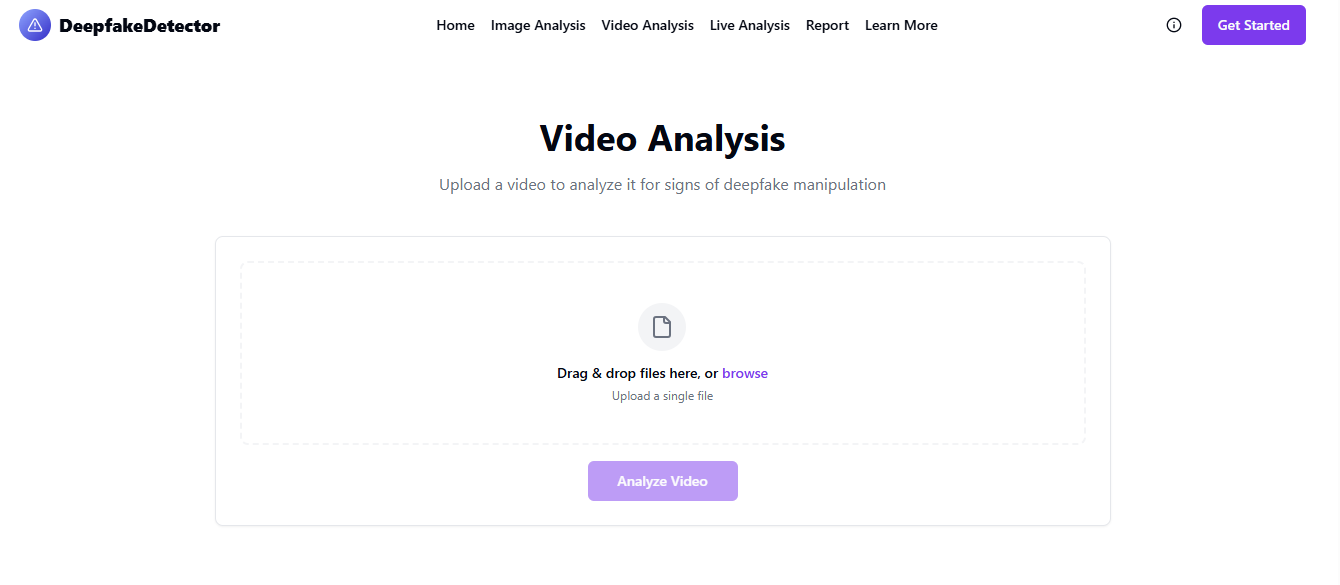
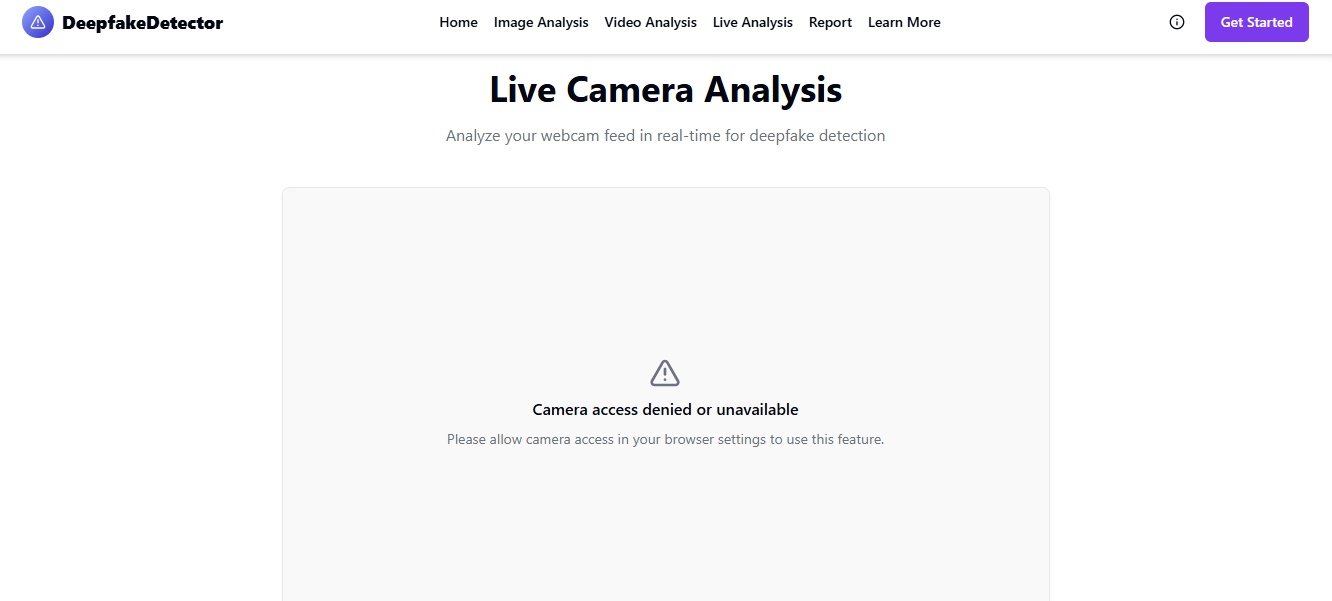
Deepfake Detector is an AI-powered web application designed to identify and analyze manipulated media content, particularly deepfakes. Deepfakes are synthetic media where a person's likeness is replaced with someone else's using advanced artificial intelligence techniques. The application offers various analysis tools for images, videos, and live camera feeds to detect signs of manipulation and help users differentiate between authentic and artificially generated content.
How It Works
The Deepfake Detector uses a multi-layered approach to analyze media:
Visual Analysis: Examines pixel-level inconsistencies, facial features, lighting patterns, and other visual artifacts commonly found in manipulated media.
Audio Analysis: For videos, it analyzes audio tracks for unnatural pauses, tone shifts, and synchronization issues with lip movements.
Metadata Analysis: Inspects file metadata for signs of editing, unusual compression artifacts, or inconsistent data.
Verification Systems: Uses external verification methods like reverse image search, blockchain verification, and network propagation analysis to cross-reference content authenticity.
Machine Learning Models: Leverages advanced AI models (particularly the Gemini API) to detect patterns that human eyes might miss.
Key Features
Multiple Detection Methods: 15+ specialized detection techniques including GAN fingerprinting, eye blink analysis, and lip-sync analysis Configurable Detection Settings: Users can enable/disable and prioritize different detection features Adjustable Sensitivity: Fine-tune detection thresholds for different types of analysis Comprehensive Reports: Detailed analysis results with confidence scores and exportable PDF reports Support for Multiple Formats: Analysis of images, videos, and live webcam feeds Verification Systems: External validation through reverse image search, blockchain records, and crowdsourced reports Educational Resources: Information about deepfakes, detection methods, and protection strategies
Technologies Used
Frontend: React, TypeScript, Vite UI Framework: Tailwind CSS, shadcn/ui component library State Management: React Context API, React Hooks Routing: React Router PDF Generation: PDF report generation capabilities Drag and Drop: Customizable feature ordering with drag-and-drop functionality API Integration: Connection to external AI services (Gemini API) Visualization: Data visualization for analysis results Notifications: Toast notifications for user feedback
Impact and Uses
The Deepfake Detector addresses growing concerns about media manipulation in several fields:
Journalism: Helps verify the authenticity of news imagery and video Social Media: Provides tools for users to check suspicious viral content Legal Evidence: Assists in determining if media evidence has been tampered with Personal Security: Helps individuals identify when their likeness may have been used without consent Educational: Raises awareness about deepfake technology and detection methods
Inspiration
The project was inspired by the rising prevalence of synthetic media and the increasing difficulty in distinguishing between real and manipulated content. As deepfake technology becomes more accessible and sophisticated, there's a growing need for tools that can help verify media authenticity and maintain trust in digital content.
Challenges
Keeping Pace with Deepfake Technology: Deepfake creation methods evolve rapidly, requiring continuous updates to detection techniques False Positives/Negatives: Balancing sensitivity to avoid both missing manipulated content and incorrectly flagging authentic media Processing Efficiency: Implementing complex analysis methods without excessive processing times User Experience: Making advanced technical analysis accessible to non-technical users Privacy Concerns: Handling user uploads securely without compromising privacy
Accomplishments
Comprehensive Detection Suite: Successfully implemented a wide range of detection techniques in one application User-Friendly Interface: Created an intuitive interface for complex technical operations Customizable Analysis: Developed a flexible system where users can adjust settings based on their needs Educational Component: Integrated educational resources to help users understand deepfake technology Verification Integration: Connected multiple external verification systems into a unified analysis platform
Lessons Learned
AI Limitations: Understanding both the capabilities and limitations of current AI in detecting manipulated media UX Importance: The critical role of user experience design in making complex technology accessible Technical Integration: How to combine multiple detection techniques for more robust analysis Ethical Considerations: Navigating the ethical implications of deepfake detection technology Performance Optimization: Techniques for optimizing resource-intensive analysis operations in web applications
Future Directions
Improved Detection Methods: Continuous integration of new detection techniques as they develop Mobile Applications: Expanding to native mobile platforms for on-the-go analysis API Services: Offering API endpoints for third-party integration of detection capabilities Collaborative Verification: Enhanced crowdsourcing features for improved detection Real-time Analysis: Better support for live streaming and real-time video analysis The Deepfake Detector represents an important tool in the growing field of digital media verification, combining cutting-edge AI technology with practical user-focused design to address the challenges of synthetic media in our digital landscape.
Built With
- ap
- component
- gemini
- hooks
- library
- react
- react-context-api
- router
- shadcn/ui
- tailwind-css
- typescript
- vite

Log in or sign up for Devpost to join the conversation.