-
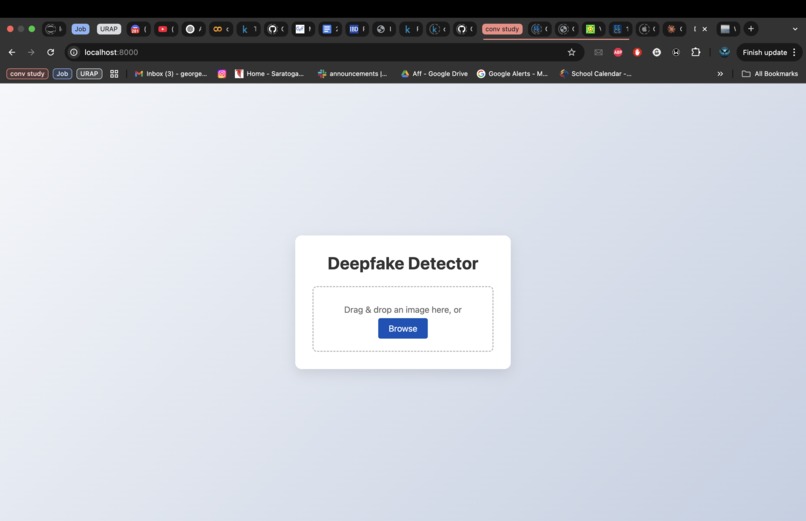
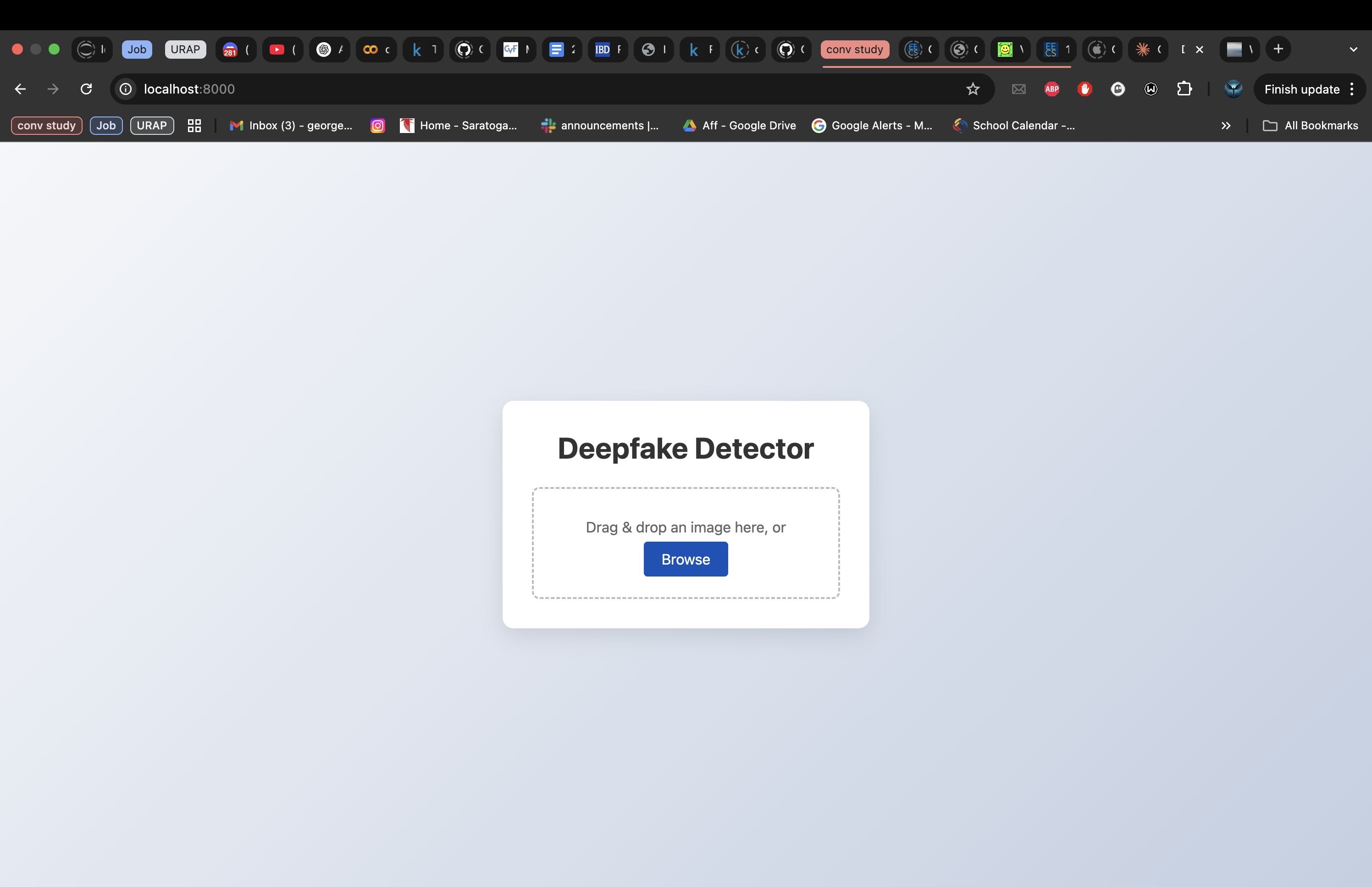
website ui
With so many AI‐generated “faces” flooding the web, it has become more urgent than ever to know what's real and what's not. I wanted something simple and accessible: drag any headshot of a face instantly know if it’s “real” or “fake.”
What It Does:
Trains on 10 K real vs. 10 K AI‐generated faces from stable diffusion
Uses a truncated VGG-16 backbone + squeeze‐and‐excite attention + a tiny MLP head
Delivers a continuous “realness” score (0–1) via both a web UI and JSON API
Validates at 97.8 % accuracy on 24 K held-out test samples!
How I Built It:
Data: sampled 10 K/class for fast prototyping, intend on full 120 K/class for final runs
Model: froze the backbone, trained for 3 epochs, then unfroze and fine-tuned with staged OneCycleLR (per-layer LRs)
UI: FastAPI + Jinja2 + vanilla JS drag-&-drop → preview + confidence bar
Challenges & Wins
LR tuning took several tweaks to avoid “accuracy dips” when unfreezing
Lots of GPU and training issues that were overcome
Proud to have an end-to-end demo—drag an image, get a verdict—ready in under a minute!
What We Learned
The magic of per-group learning rates and OneCycleLR’s knobs
Integrating PyTorch into a FastAPI service (HTML + JSON)
What’s Next
Full test-set evaluation & ROC curve
Visuals and heatmaps
Dockerize for one-click deployment
Extend to video (frame-by-frame deepfake detection)
Threshold‐tuning UI so you can choose high‐precision vs. high‐recall

Log in or sign up for Devpost to join the conversation.