-
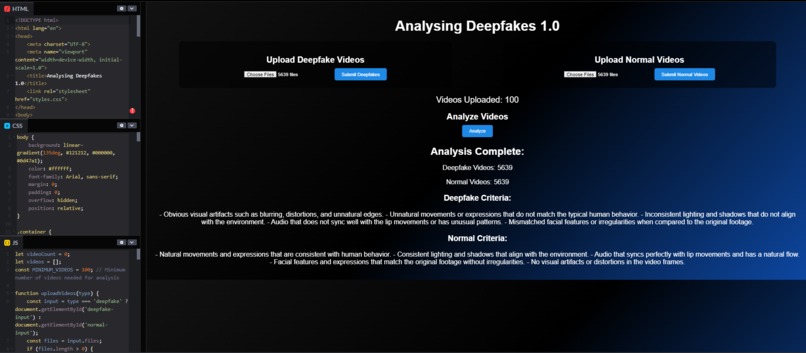
WEBSITE LOOK
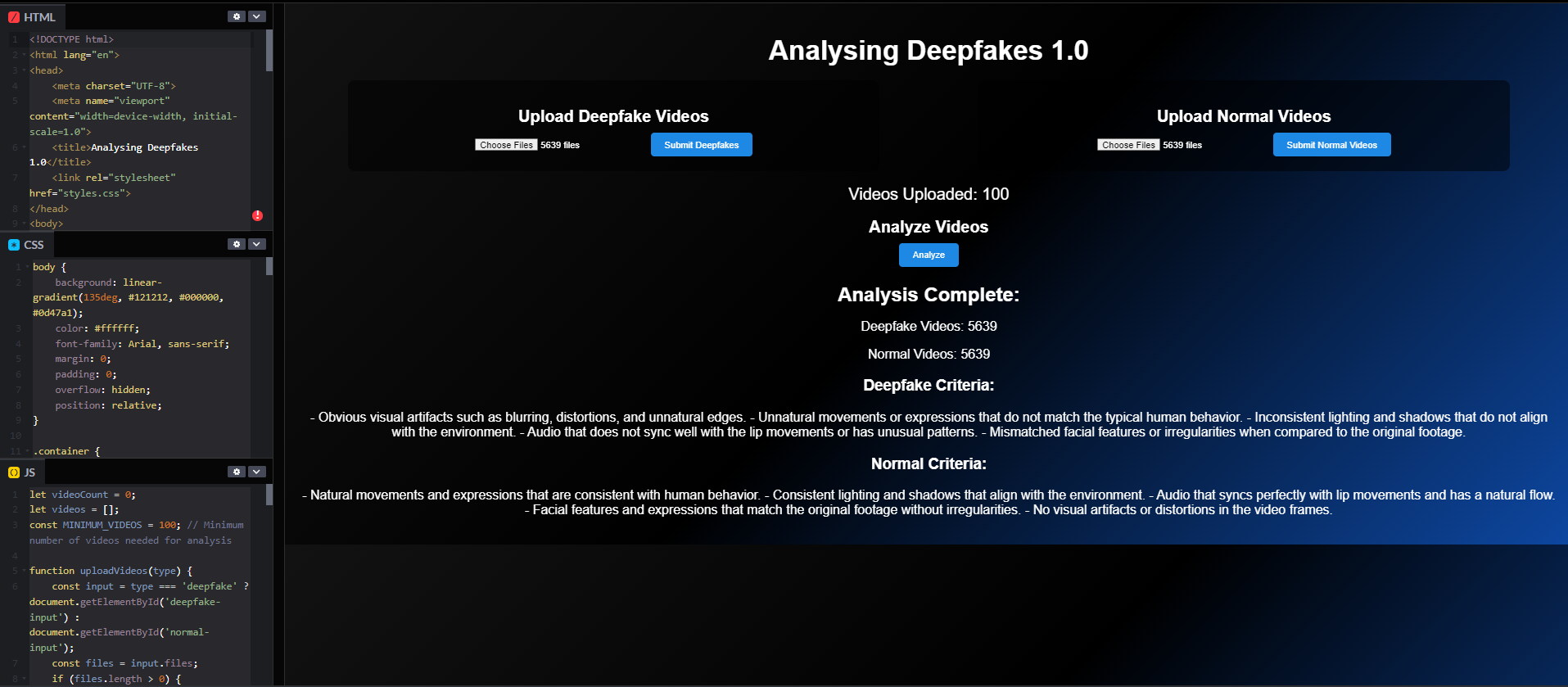
Inspiration
The rise of deepfake technology presents both creative opportunities and significant risks. The ability to manipulate video content raises questions about the integrity of digital media and the potential for misuse. This duality inspired an in-depth analysis to better understand and detect deepfakes.
What it does
This study analyzes over a thousand videos from Kaggle datasets to identify reliable detection criteria for deepfakes. It focuses on visual artifacts, unnatural movements, inconsistent lighting, audio-visual mismatches, and facial irregularities, aiming to enhance detection techniques to mitigate the risks posed by deepfakes.
How we built it
A comprehensive dataset was curated from Kaggle, consisting of both genuine and deepfake videos. The detection framework involved developing a user-friendly website using HTML, CSS, and JavaScript, where users can analyze videos based on identified criteria.
Challenges we ran into
he main challenges included ensuring the accuracy of detection algorithms and addressing the rapidly evolving nature of deepfake technology. Additionally, gathering a sufficiently diverse dataset to cover various manipulation techniques proved to be a logistical hurdle.
Accomplishments that we're proud of
The successful analysis of over 1,000 videos led to the identification of key indicators for deepfake detection. The development of a detection website provides a practical tool for users to assess video authenticity, contributing to the broader fight against misinformation.
What we learned
The study underscored the importance of a multifaceted approach to deepfake detection, combining visual and auditory analysis. We learned that even subtle discrepancies in video content can serve as strong indicators of manipulation.
What's next for deepfake anaylsis
Future work will focus on refining detection algorithms to improve accuracy and reduce false positives. Additionally, expanding the dataset to include newer deepfake techniques will be crucial. Exploring machine learning advancements could also enhance automated detection capabilities, paving the way for more robust solutions to counter deepfake threats.


Log in or sign up for Devpost to join the conversation.