Inspiration
In today's world, the mental health crisis is on the rise, and finding a therapist has become increasingly difficult due to factors like the economy, accessibility, and finding the right fit. We believe everyone should have the opportunity to overcome their mental health challenges and have meaningful companions to rely on. Through the EVI (Empathic Voice Interface) model on Vercel, individuals are provided a safe space to express themselves without fear. Our mission is to empower people to openly share their thoughts and navigate through their mental health challenges, all for free, with just a click.
What it does
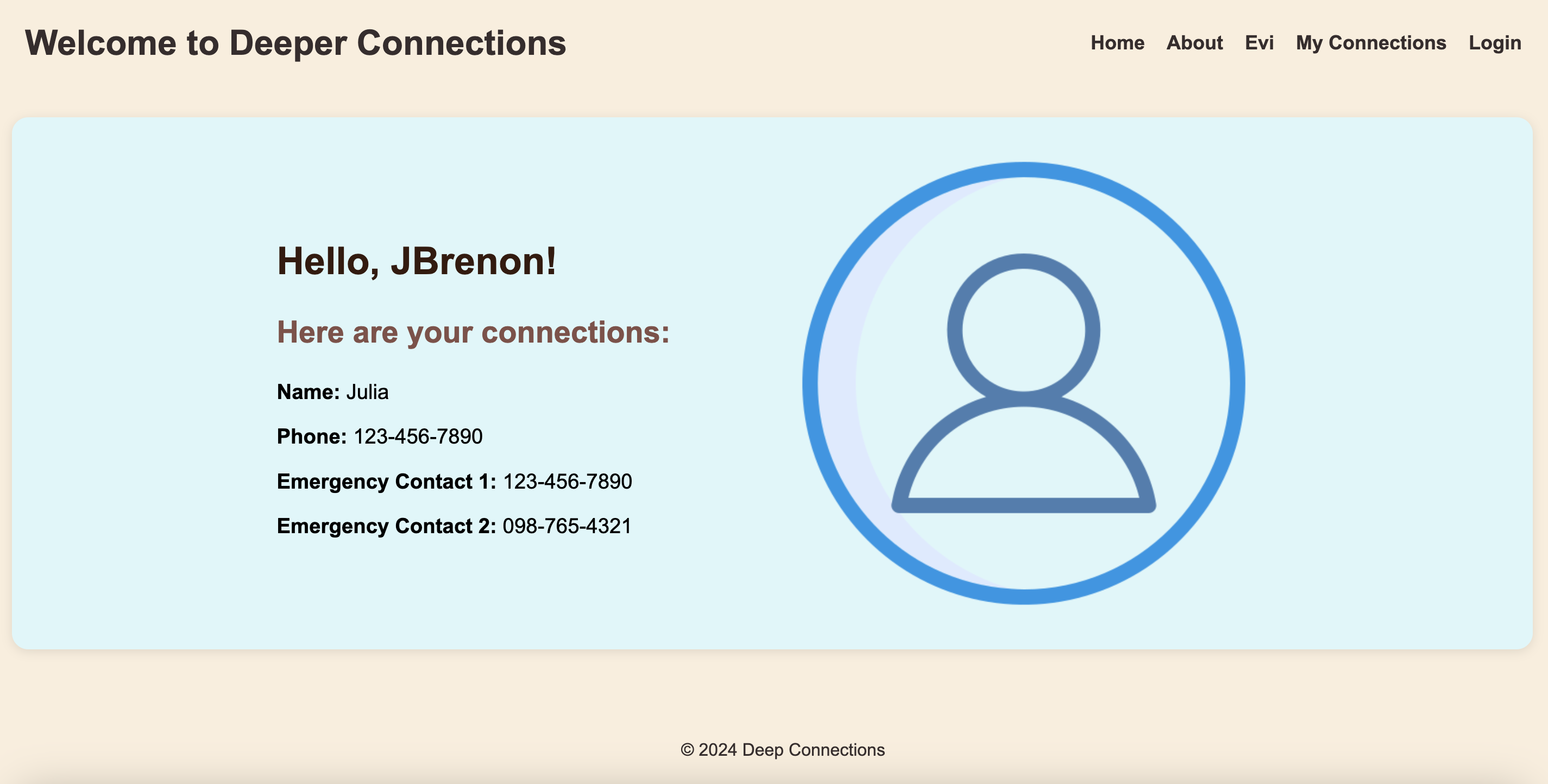
Our project is a comprehensive mental health support system that includes our AI-powered therapy bot, user authentication, and personalized user profiles. By training Hume.ai's Empathic Voice Interface (EVI) with in-context learning and integrating the model into Vercel, we enable users to have meaningful conversations with the AI and work through their mental health challenges, getting advice, companionship, and more. Additionally, users can sign up or log in to create a profile that includes their personal information and emergency contacts, and our system ensures that all interactions are securely managed within the platform.
How we built it
We gathered real-life therapist conversations. From there, we integrated a GPT 4-mini Hume AI model, training it with various real-world examples of therapist conversations with patients, understanding how they are feeling based on their tone and the way they are talking (sentiment analysis) and being able to provide them with the necessary advice they are looking for. We also altered the temperature to give them more specific responses to their particular questions but also allowed them to express themselves openly. For the front end, we first attempted to use React Native and Javascript before finally deciding to do HTML/CSS and Javascript to create a responsive and user-friendly website. After that, we needed database integration for the user authentication in which we attempted to use MongoDB, but we decided to utilize API localStorage. This setup allowed us to keep the front end lightweight while efficiently managing data from the backend database.
Challenges we ran into
We encountered significant challenges connecting the front and back end, particularly establishing smooth communication between the two, which was more difficult than anticipated. While inputting our Hume AI into an HTML file, the HTML file was not able to capture the voice feature of Hume AI. To fix this, we deployed the model into a vercel app and implemented a link to the app in the HTML file. On the front-end side, we struggled with setting up a database for user authentication. Initially, we used MongoDB, but after facing connection issues, we had to explore alternative database solutions such as the API localStorage.
What we learned & Accomplishments that we're proud of
During this project, we gained hands-on experience tackling the mental health crisis and integrating AI tools into existing systems. We learned the importance of adaptability, especially when transitioning from MongoDB to other database solutions for user authentication. Additionally, we improved our skills in debugging, API development, and managing the interaction between the front end and back end.
We’re proud of our resilience in the face of technical hurdles, git overwrites, and our ability to pivot when necessary. Despite these challenges, we successfully delivered a working solution, which is a major accomplishment for our team.
What's next for Deeper Connections
In the future, to enhance the AI model's functionality, we can implement a system to flag trigger words during conversations with users. This feature would integrate with the emergency contact information from the "My Connections" page, adding an extra layer of protection as we tackle mental health crises.

Log in or sign up for Devpost to join the conversation.