Inspiration
Millions of people struggle with food allergies, often finding it difficult to determine what they can safely consume. Mislabeled ingredients, hidden allergens, and cross-reactivity risks make everyday food choices a challenge. We wanted to create a smart, AI-powered solution that simplifies allergen detection, making food safety more accessible and personalized.
What it does
AllergyCompass is an intelligent allergen detection and management system that helps users identify potential allergens in food. It: Scan ingredient lists to detect allergens, even under alternative names
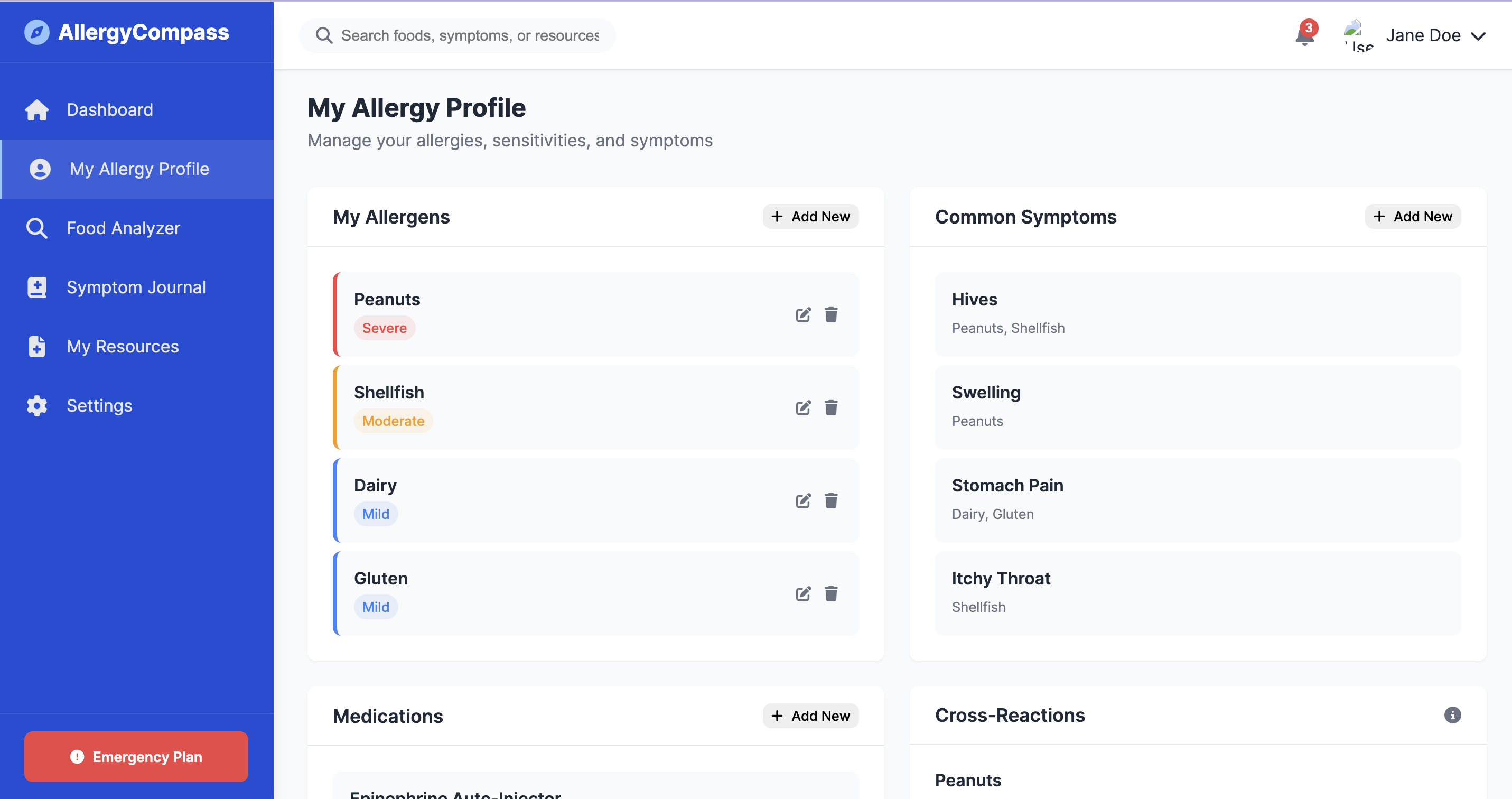
Analyzes cross-reactivity patterns to predict potential allergic responses
Provides personalized food recommendations based on user profiles
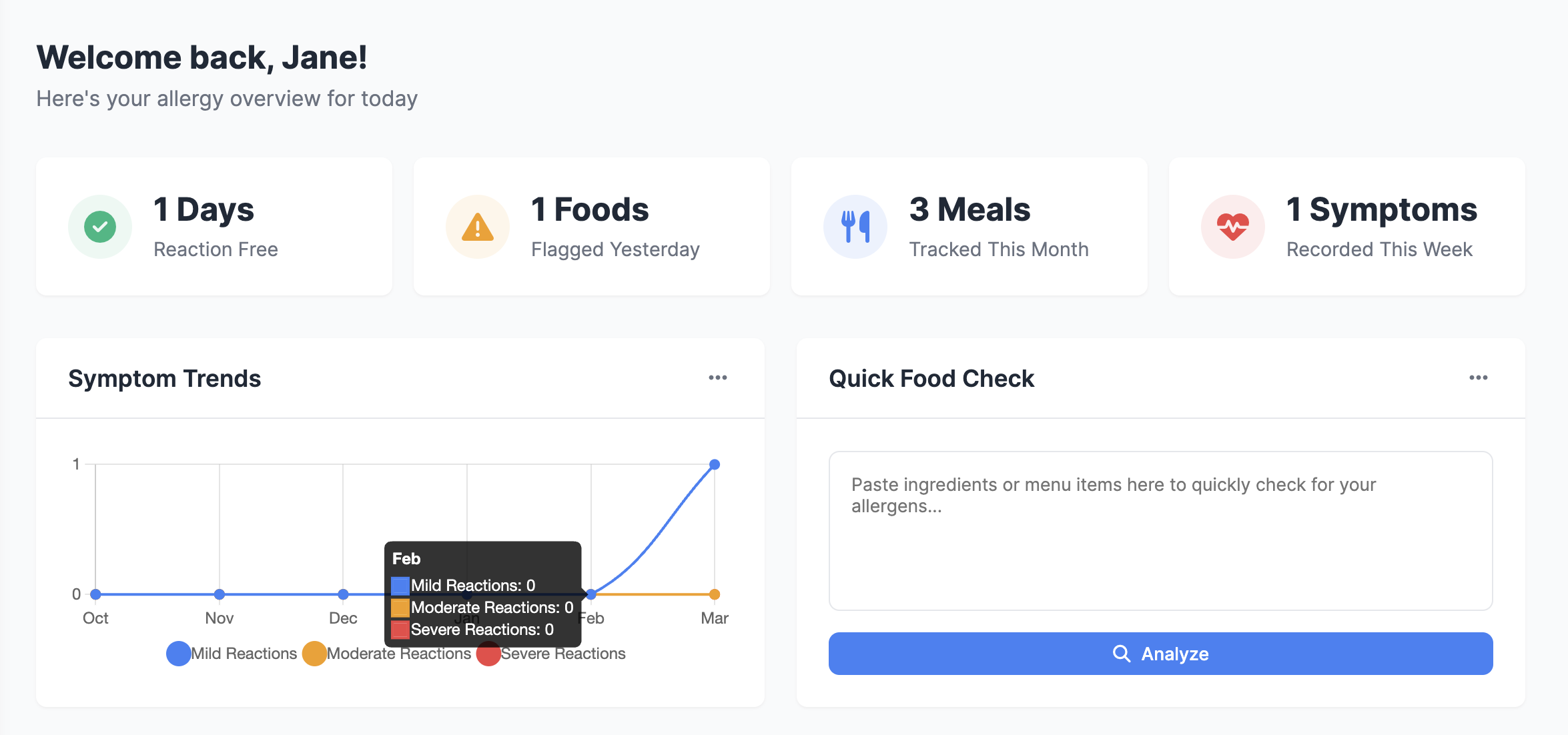
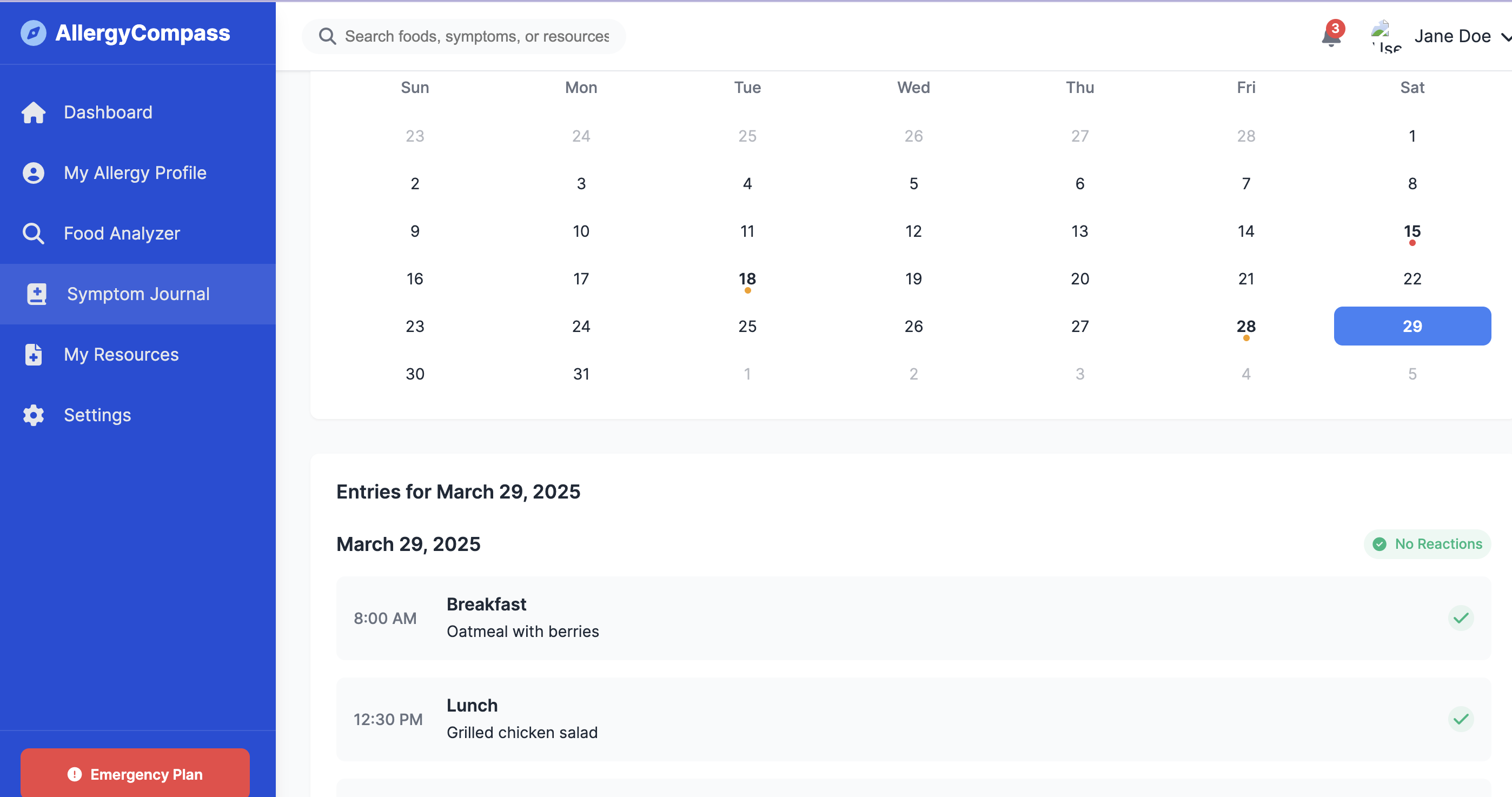
Tracks symptoms and correlates them with ingredients for better management
How we built it
We used a modular AI-driven approach to develop AllergyCompass:
Frontend: Built with HTML5, CSS3, and JavaScript (ES6+) for a smooth user experience
APIs: Integrated OpenAI GPT API for intelligent allergen analysis, Open Food Facts API for ingredient data, and Edamam API for nutritional insights
Data Visualization: Implemented Chart.js to track allergen exposure and symptom patterns
Offline Capability: Used local storage to allow users to access their allergen history without an internet connection
Challenges we ran into
Extracting allergens from complex ingredient lists with alternative names
Ensuring real-time performance while analyzing ingredient data using APIs
Mapping cross-reactivity patterns based on available research and AI predictions
Creating a user-friendly dashboard that effectively visualizes allergen exposure and symptom trends
Accomplishments that we're proud of
Successfully developed an AI-powered allergen detection system that provides personalized recommendations
Implemented real-time symptom tracking and analysis, helping users make more informed dietary choices
Built a fully functional prototype with API integrations and an interactive dashboard within the hackathon timeframe
What we learned
Gained a deeper understanding of food allergen science and the importance of cross-reactivity detection
Improved our skills in natural language processing (NLP) to analyze ingredient lists effectively
Learned how to optimize API performance for real-time food data retrieval
Enhanced our ability to build user-centric applications that prioritize accessibility and safety
What's next for DeepCure
Mobile App Development: Expanding to Android and iOS for better accessibility
Barcode Scanner Integration: Allowing users to scan packaged food and instantly check for allergens
Community Database: Enabling users to contribute food reviews and allergy-safe recommendations
Expanded AI Features: Improving symptom correlation with machine learning for proactive allergy risk prediction


Log in or sign up for Devpost to join the conversation.