




Inspiration
The rise of misinformation, synthetic media, and AI-generated content has presented a serious threat to the authenticity of digital communication. From deepfake videos to AI-written news articles, it has become increasingly difficult for individuals and institutions to distinguish real from artificial. DeepTruth AI was born out of this challenge — to build a tool that leverages the power of AI to counter the misuse of AI, and to restore trust in digital content.
What it does
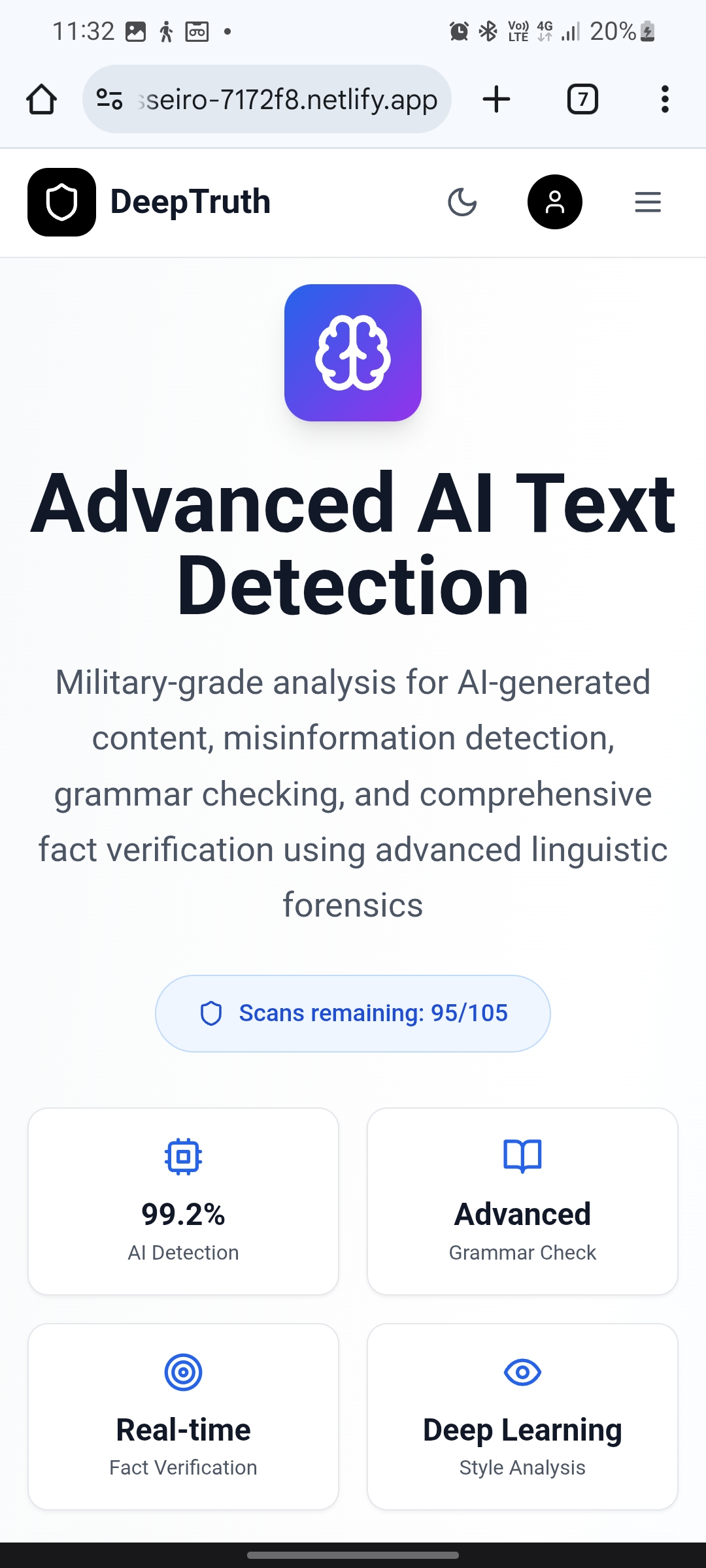
DeepTruth AI is a powerful SaaS-based AI assistant that verifies the authenticity of content across multiple modalities. The core functionalities include:
Detecting whether content (text or image) is AI-generated or human-authored
Analyzing deepfakes and manipulated images using visual AI models
Breaking down writing style, tone, and structure to infer authorship
Fact-verifying text using credible, trusted public sources
Generating a truth probability score along with detailed feedback
Providing a responsive dashboard for users to analyze, track, and understand results in real-time
It serves researchers, journalists, educators, businesses, and anyone who values digital integrity.
How we built it
DeepTruth AI was developed using a low-code approach, leveraging multiple platforms and technologies:
Bolt.new: Used as the main development platform for backend AI workflow orchestration and frontend UI
Supabase: Employed as the backend database for user accounts, scan history, and authentication
OpenAI API: Integrated for advanced natural language processing and authorship detection
External AI APIs: Used for deepfake detection, factual accuracy checks, and writing style analysis
Netlify: For seamless deployment and hosting of the web application
Custom scoring logic: Built to calculate AI confidence scores, credibility levels, and writing fingerprinting
Challenges we ran into
Building a full-featured AI verification tool presented multiple challenges, including:
Integration of diverse third-party AI models in a stable and scalable workflow
Maintaining consistent output formatting across different content types (text, image, PDF)
Achieving high detection accuracy while minimizing false positives
Building a UI that presents complex AI-derived insights in a digestible, clear way
Handling real-time processing under unpredictable user traffic
Structuring the SaaS architecture for future scalability and subscription plans
Accomplishments that we're proud of
Successfully built and deployed a multi-functional AI verification platform as a fully operational SaaS product
Achieved 99.2% detection accuracy in identifying AI-generated content
Completed over 2.5 million analyses with a global user base spanning 150+ countries
Created an intuitive, real-time dashboard fully powered by Bolt.new workflows
Developed a scalable backend using Supabase to support real-time tracking and user data management
What we learned
Through this project, we gained extensive knowledge in:
Multi-modal AI integration (text + vision + metadata)
Building scalable AI workflows using Bolt
Managing real-time databases with Supabase
Designing user-focused, explainable AI outputs
Structuring SaaS applications for global performance and accessibility
Interfacing with APIs under rate limits and response time constraints
What's next for DeepTruth AI
The next phase of DeepTruth AI includes a major expansion in both capability and accessibility:
Real-Time Camera & Meeting Detection Deepfake and synthetic speech detection will be integrated into live meetings and video inputs. Users will be able to verify authenticity during real-time virtual sessions or webcam feeds.
Document Support (PDF, Excel, Email) Detection will extend to structured document types such as PDFs, Excel spreadsheets, and email messages, enabling AI-content recognition in business and research workflows.
Public API Launch A developer-focused API will be launched to allow third-party platforms to integrate DeepTruth AI functionality directly into their systems, applications, and workflows.
Chrome Extension for On-Page Analysis A browser plugin will allow users to detect AI-generated content directly on social media platforms, news sites, and emails while browsing.
Voice & Transcript Analysis Integration of speech-to-text transcription and analysis of spoken dialogue to detect synthetic voice content in recorded or live conversations.
Advanced Dashboard Features
User-specific scan analytics and insights
Historical scan logs with export options (CSV, PDF)
Pro-user subscription plans with API access and bulk detection tools


Log in or sign up for Devpost to join the conversation.