-
-
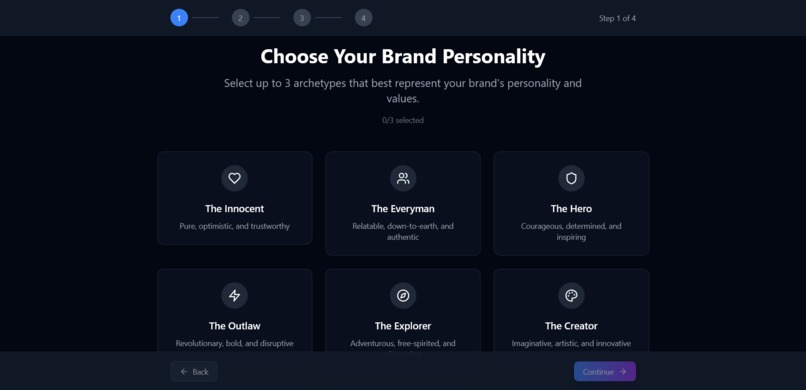
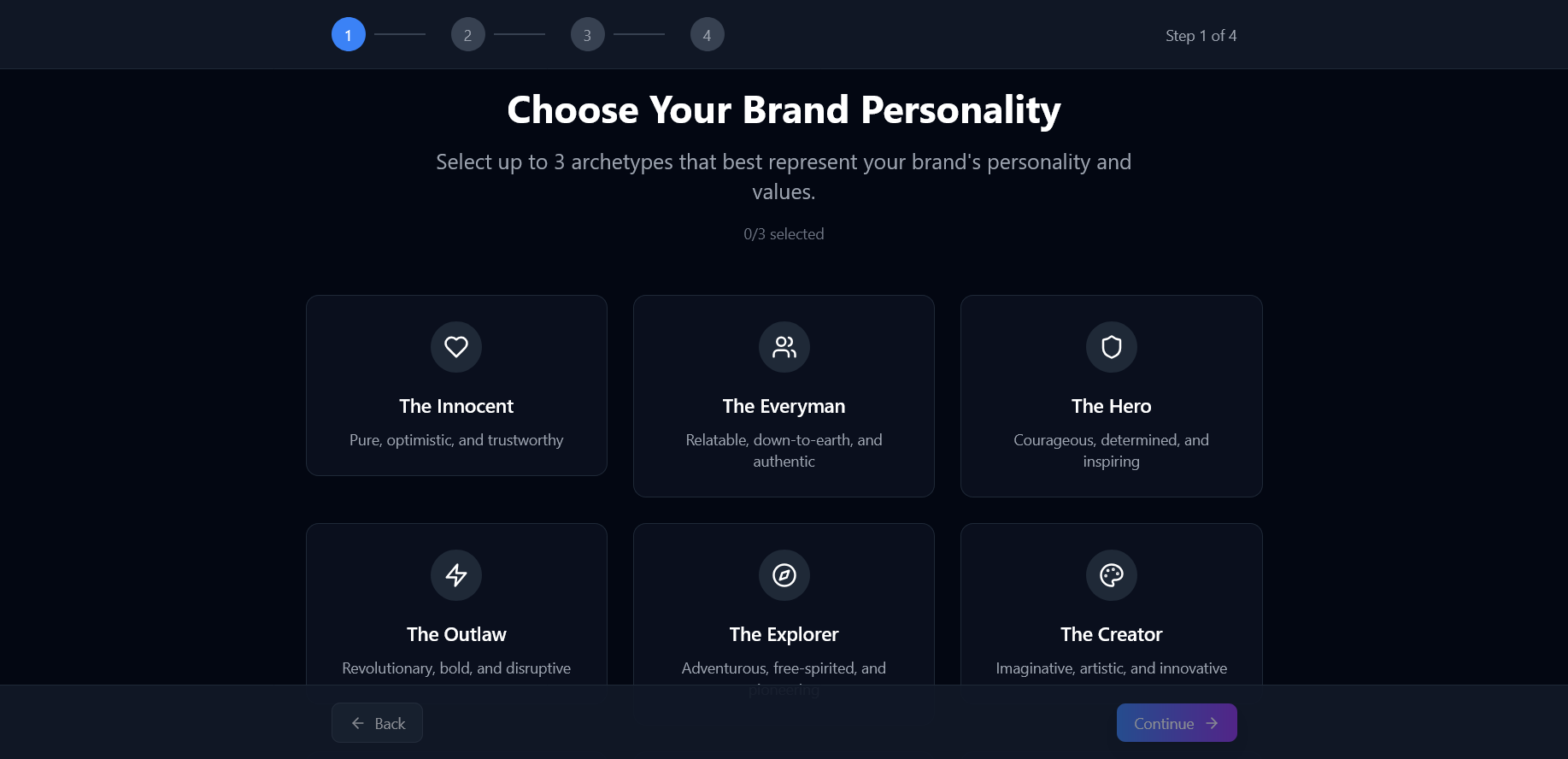
1. Select your brand personality
-
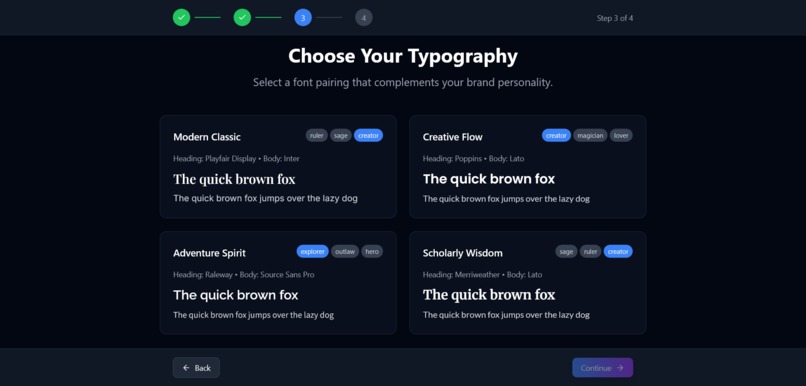
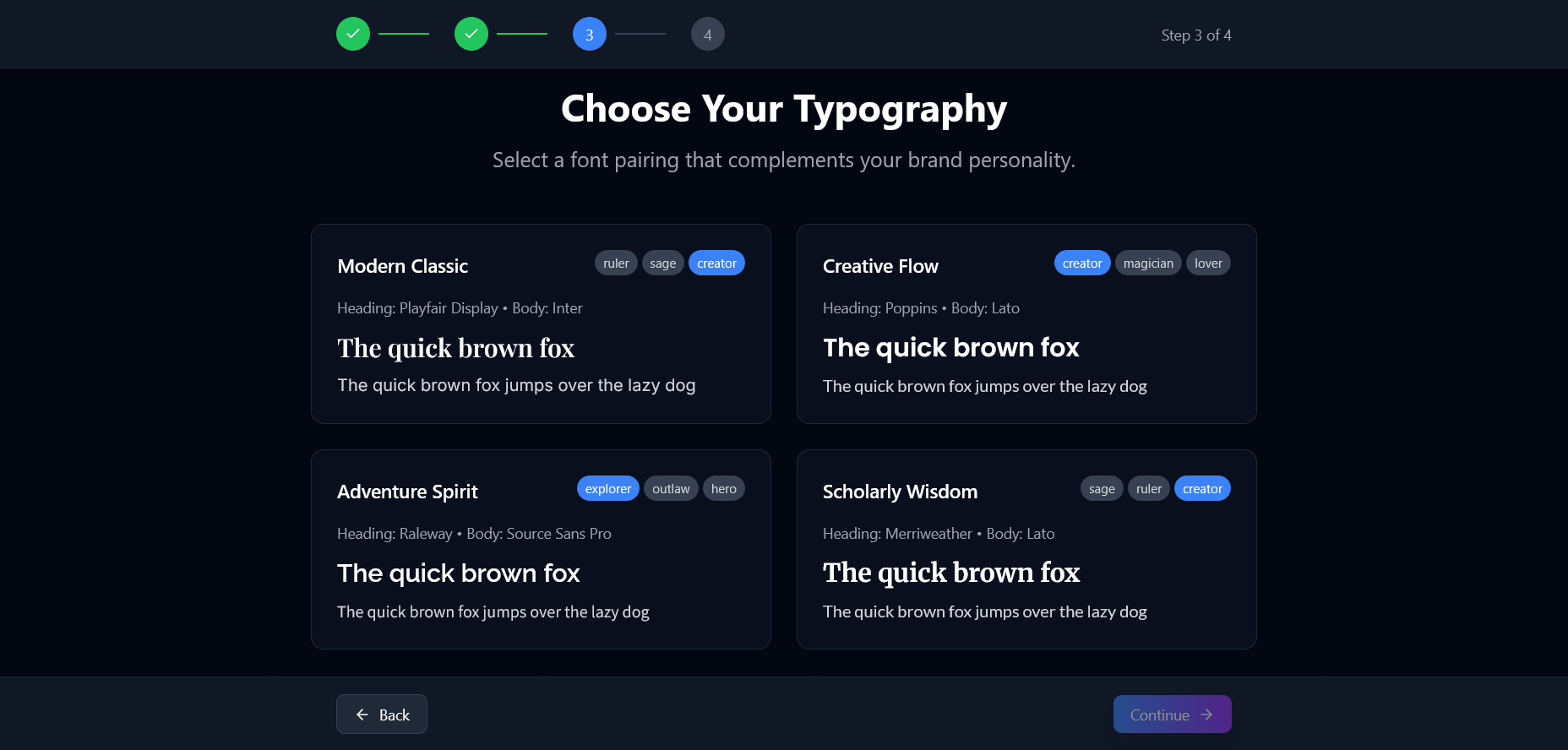
3. Explore curated typography pairings
-
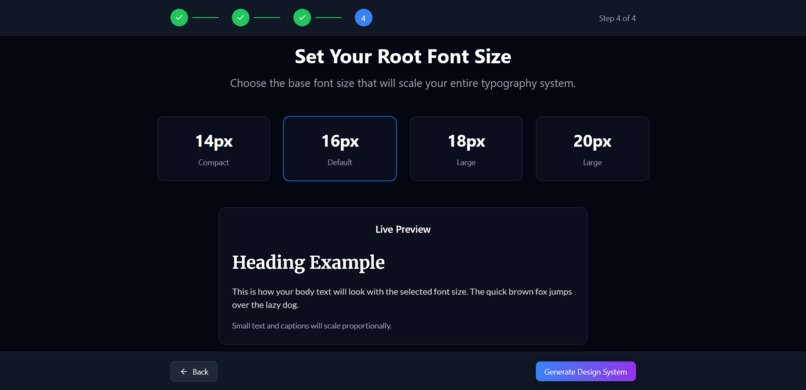
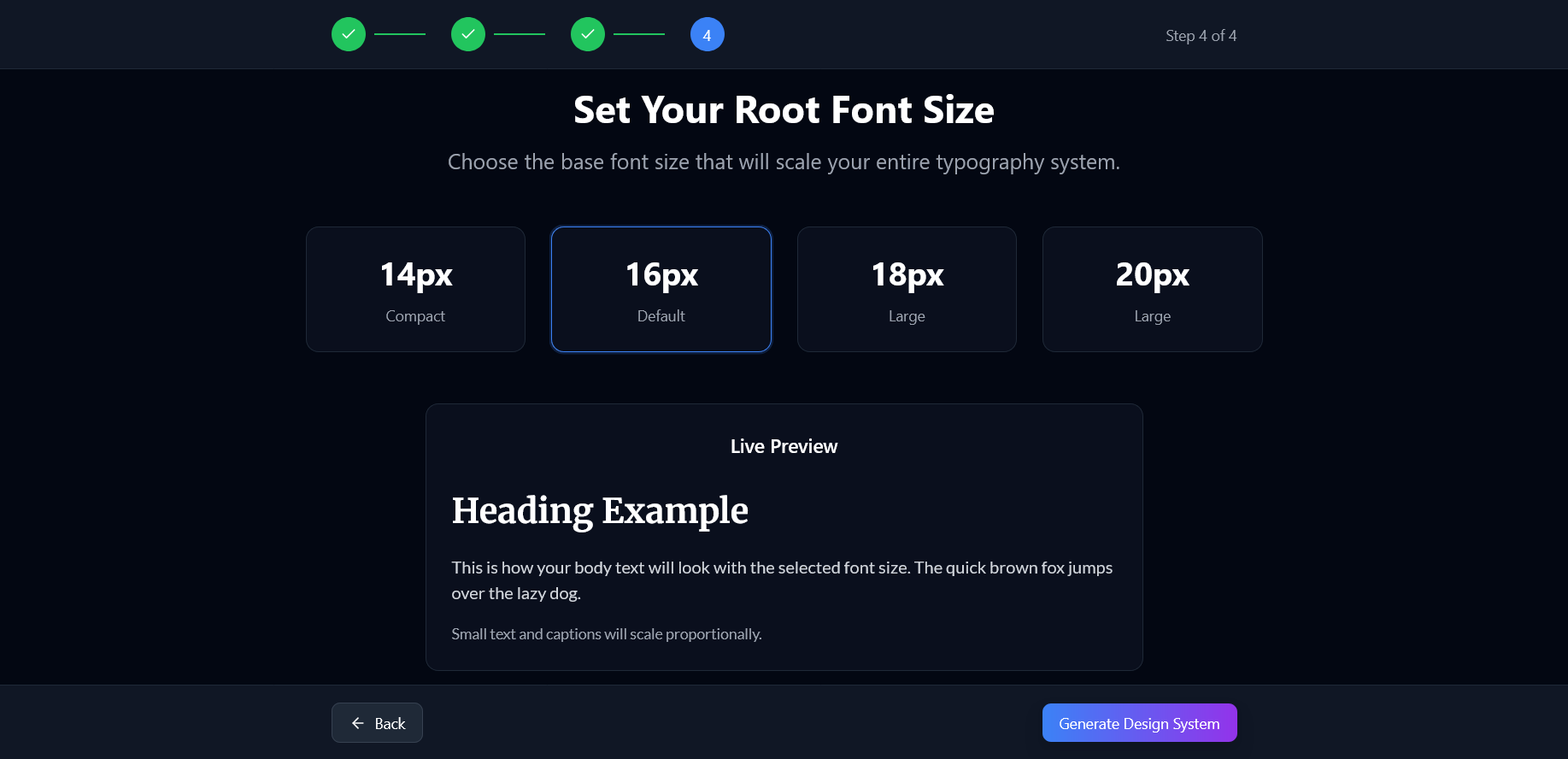
4. Assign mathematical building blocks in one click
-
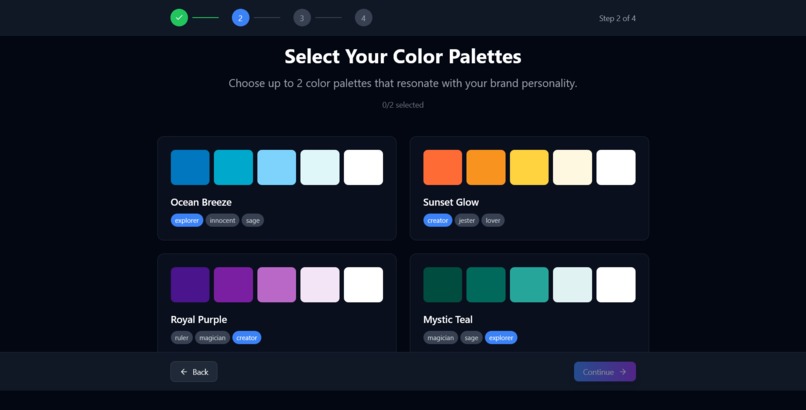
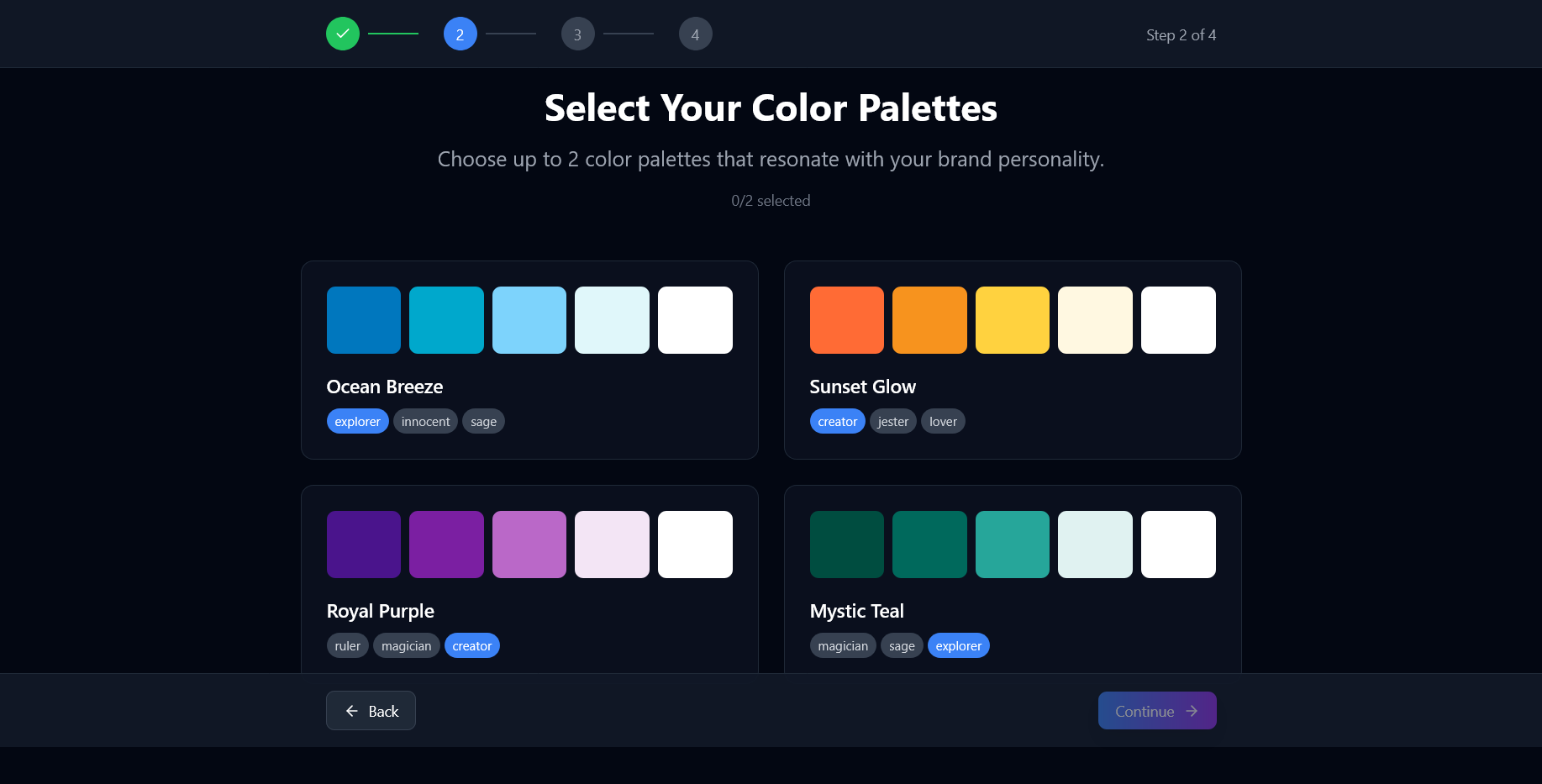
2. Choose brand-aligned color palettes
-
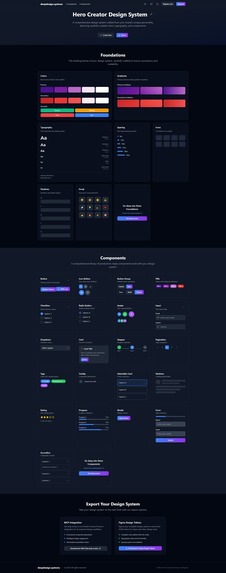
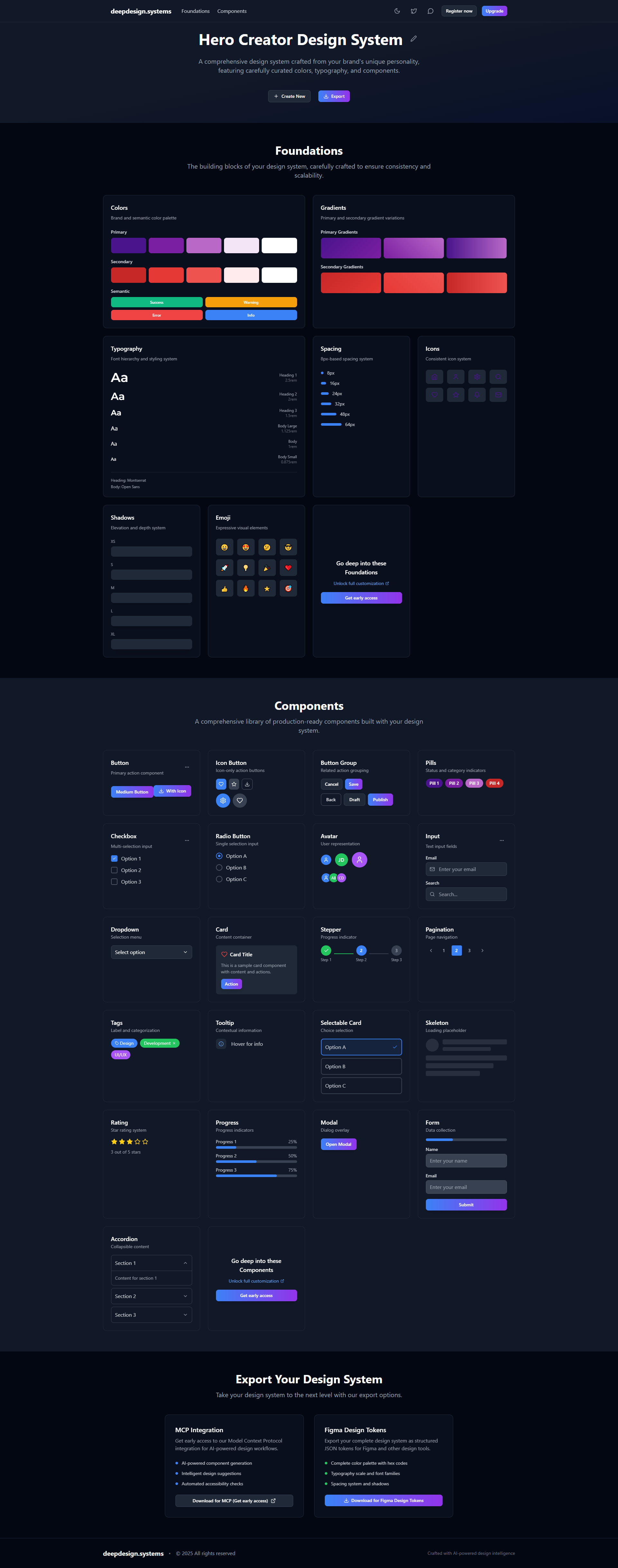
5. Review and export foundations and components in minutes
DeepDesign.systems - Project Story
🎯 Inspiration
The inspiration for DeepDesign.systems came from a simple yet profound challenge: what if we could build an entire design system in minutes, not months?
As designers and developers, we've witnessed countless teams struggle with the same recurring nightmare: spending weeks or even months creating design systems from scratch, only to face endless stakeholder backlash, exhausting maintenance cycles, inconsistency issues, and accessibility roadblocks. We've seen talented designers burn out from the repetitive work of defining color palettes, typography scales, component variants and crossplatform support instead of focusing on innovation and user experience.
The possibility of a One-Shot App with Bolt's Hackathon sparked a revolutionary idea: combine the power of Brand archetypes with AI-driven automation to solve this $2 billion industry problem. We realized that most design system creation follows predictable patterns based on brand personality and guidelines - so why not teach a machine to understand these psychological foundations and generate production-ready systems instantly?
Designers want to design. Our "aha moment" came when we discovered that design teams spend 40% of their time on design system maintenance, stakeholder alignment and documentation, rather than creative problem-solving. That's when we knew we had to build something that would give designers their time back.
🚀 What it does
DeepDesign.systems is the world's first Brand-driven AI-powered design system generator that creates production-ready component libraries in under 5 minutes through a guided 4-step process:
Core Functionality
- 🧠 Psychology-Driven Onboarding: Users select up to 3 Jung brand archetypes (The Creator, Hero, Sage, etc.) that define their brand personality
- 🎨 Smart Color Generation: AI generates 4 accessible, dark-mode-ready color palettes based on selected archetypes
- 📐 Systematic Foundation: Users choose root font size, and the system mathematically generates cohesive spacing, typography, and border systems
- ⚡ Instant Library Creation: Generates 20+ production-ready components (buttons, inputs, cards, navigation, modals) styled according to brand archetypes
- 🔍 Built-in Validation: Automatic accessibility scanning with WCAG compliance checking and recommendations
- 📤 Dual Export: Seamless export to both Figma design tokens JSON and React/Tailwind CSS code packages
AI-Powered Premium Features
- 💬 Natural Language Editing: Premium users can say "make the buttons more playful" or "add a pricing card component" and watch it happen instantly
- 🎯 Context-Aware Suggestions: AI analyzes design systems and provides intelligent recommendations for improvements
- 🔄 Brand Consistency Checking: Ensures all new additions align with established archetype personality and design principles
- 📤 Dual Export: Feed your design system to AI Agents via MCP.
Tiered Storage System
- Free: 1 design system (local storage)
- Registered: 3 design systems (cloud sync) + basic foundation/component editing
- Premium: Unlimited systems + AI assistant + automatic documentation + advanced features
🛠 How we built it
Technical Architecture
We built DeepDesign.systems as a React application leveraging modern web technologies:
- Frontend Framework: React 18 with hooks (useState, useEffect, useContext) for complex state management
- Styling System: Tailwind CSS with custom CSS variables for dynamic theming
- Export Engine: Custom algorithms generating both Figma-compatible JSON and production-ready React/CSS code
- Color Science: Chroma-js library for intelligent palette generation and accessibility validation
Design System Architecture
The core innovation lies in our systematic approach to design token generation:
- 🎯 Brand Archetypes as the real foundation: Enabling more expressive and brand-aligned design systems
- 🎨 Semantic Color Structure: Surface, content, border, and status colors with automatic light/dark mode variants
- 📏 Mathematical Spacing: Root font size-based calculations creating Tailwind-compatible spacing scales
- ✍️ Typography Hierarchy: Production-ready type scales with optimized weights, letter spacing, and line heights
- 🔲 Border Integration: Cohesive radius and width systems that connect mathematically with spacing tokens
Psychology-to-Design Mapping
Our tool translates Jung's archetypes into design decisions:
- The Hero → Bold primary colors, strong contrasts, sharp edges
- The Creator → Vibrant creative palettes, playful animations, rounded corners
- The Sage → Intellectual blues, clean typography, minimal aesthetic
- The Innocent → Soft pastels, gentle curves, friendly interfaces
One-Shot Prompt Engineering
The entire system was built with a single prompt in Bolt, demonstrating the power of this tool to:
- Generatecomplex user flows without iteration
- Design systematic relationships between all components
- Implement AI assistance workflows from the start
- Create production-ready exports without refinement
💪 Challenges I ran into
1. One-Shot Complexity Management
The biggest challenge was architecting a comprehensive design system generator that would work perfectly from a single prompt. We had to:
- Pre-plan every user interaction without the ability to iterate
- Design systematic relationships between colors, typography, spacing, and components
- Anticipate edge cases for accessibility, responsiveness, and cross-platform compatibility
2. Cross-Platform Export Complexity
Creating exports that work identically in both Figma and code environments requires more efforts in:
- Token standardization: Ensuring color values, spacing, and typography render consistently
- Component structure mapping: Translating React component hierarchies to Figma design patterns
- File organization: Creating logical folder structures that designers and developers both understand
- Documentation generation: Auto-creating usage guides and implementation instructions
3. Accessibility-First Design Generation
Building accessibility compliance into the automated generation process meant:
- WCAG algorithm implementation: Programmatic contrast ratio calculations and validation
- Semantic color systems: Ensuring status colors work for color-blind users
- Typography accessibility: Maintaining readable font sizes and spacing across all generated scales
- Interactive element sizing: Guaranteeing touch targets meet minimum accessibility requirements
4. Psychology-to-Design Translation
Converting abstract brand archetypes into concrete design decisions required extensive research into:
- Color psychology: Understanding how different hues affect user perception and behavior
- Typography personality: Matching font weights and styles to brand characteristics
- Component styling: Translating personality traits into border radius, spacing, and animation choices
- User experience patterns: Ensuring archetype-driven designs still follow UX best practices
🏆 Accomplishments that we're proud of
🎯 Revolutionary One-Shot Architecture
We successfully created a design system generator that works perfectly from a single comprehensive prompt in Bolt.
🧠 Psychology-Driven Innovation
We're the first platform to combine Jung's brand archetypes with automated design system generation, creating a unique market position that bridges brand strategy with technical implementation.
⚡ Production-Ready Quality
Our generated design systems aren't prototypes - they're production-ready libraries with:
- WCAG AA/AAA accessibility compliance
- Mathematical consistency across all design tokens
- Professional component quality rivaling hand-crafted systems
📚 What we learned
🎯 One-Shot Development
The One-Shot in the practice taught us invaluable lessons about comprehensive system architecture:
- Detailed planning is crucial when you can't iterate
- Feature prioritization becomes critical with limited scope
🧠 Designing with AI, a return to the basics
Integrating brand psychology with automated design generation revealed:
- Color psychology has measurable impacts on user behavior and brand perception
- Typography personality can be systematically mapped to brand archetypes
- User research becomes even more important when building automation tools
💼 Product Strategy Insights
Building a realistic SaaS product taught us:
- Freemium models need careful balance between free value and upgrade incentives
- User progression through tiers requires thoughtful feature gating
- AI features command premium pricing when they provide clear value
🔮 What's next for DeepDesign.System (hypotheses)
Provide the most value with competitive pricing tiers:
🚀 Immediate Roadmap
- Refinement: Not being able to iterate as the challenge was to one-prompt the app, we would continue to refine UX/UI with user feedback, outputs, and monetization features.
- Context-Aware Component Testing: Launch the most requested feature for testing components in real-world contexts and layouts
- Advanced AI Editing: Expand natural language capabilities to include layout modification, animation suggestions, and responsive behavior editing
🌍 Platform Expansion
- Design Tool Integrations: Direct plugins for advanced Figma workflows
- Code Framework Support: Expand beyond React/Tailwind to include other frameworks
- API Platform: Allow developers to integrate DeepDesign generation into their own tools and workflows
- Collaboration Features: Multi-user design system editing with real-time sync, commenting, and version control
🧠 AI Evolution
- Brand Evolution Tracking: Automated design system updates as brands mature and evolve their personality
- Cross-Platform Consistency: AI ensuring design systems work identically across web, mobile, and desktop applications
- Accessibility Intelligence: Advanced AI that proactively suggests accessibility improvements and monitors compliance
💼 Enterprise Features
- Design System Governance: Advanced permissions, approval workflows, and compliance tracking for large organizations
- Multi-Brand Management: Tools for managing multiple brand design systems within a single organization
- Integration Ecosystem: Seamless connections with design ops tools, CI/CD pipelines, and development workflows
- Custom AI Training: Enterprise customers can train AI assistants on their specific brand guidelines and design principles
🌟 Vision: The Future of Design Systems
Our ultimate goal is to make DeepDesign.systems the definitive platform where:
- Every brand can have a professional design system, regardless of budget or team size
- Design teams spend 90% of their time on creative problem-solving rather than system maintenance
- AI assistance makes design system creation and management feel effortless and intuitive
- Cross-platform consistency becomes automatic rather than a constant struggle
- Beyond screens: encompassing animations, haptic, voice, AR/VR design systems.
DeepDesign.systems isn't just a tool - it's the foundation for a future where beautiful, accessible, consistent design is available to everyone.
Built With
- bolt
- chroma-js
- react
- tailwind


Log in or sign up for Devpost to join the conversation.