-
-
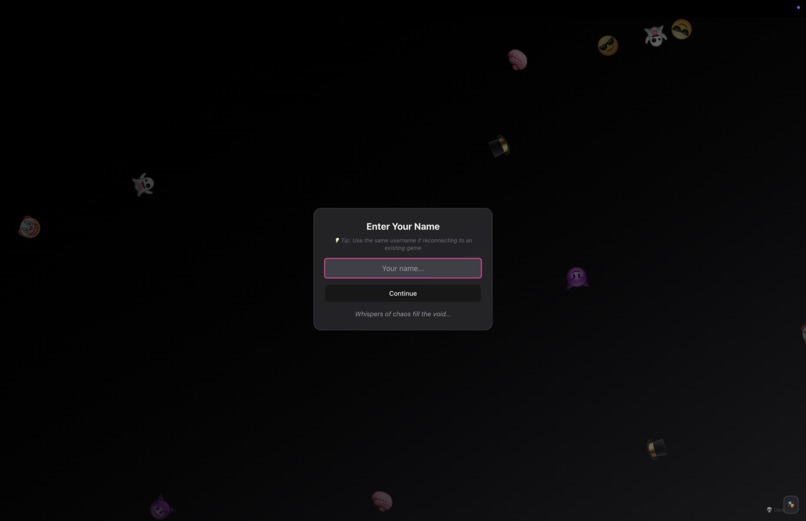
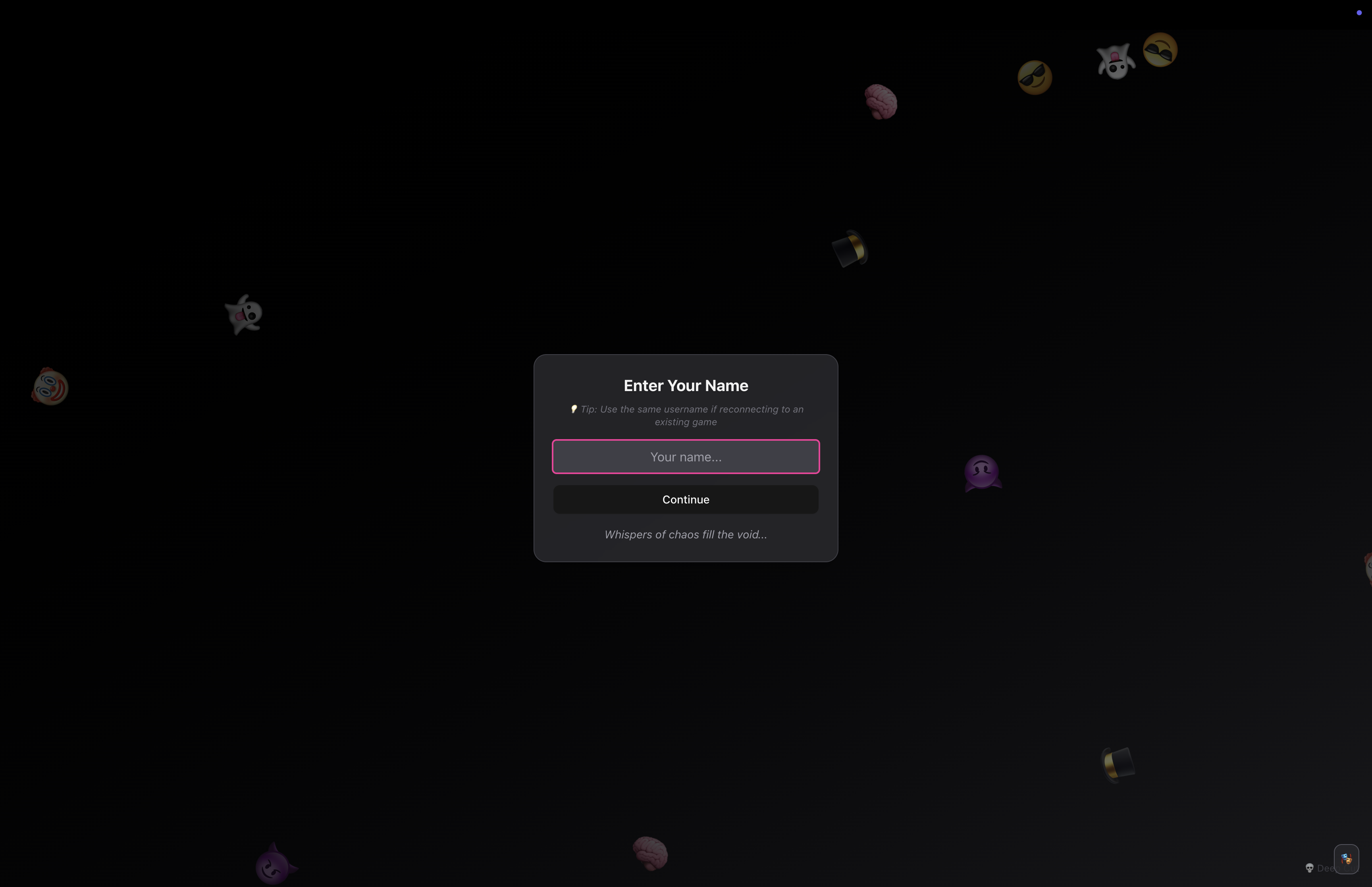
Player Name
-
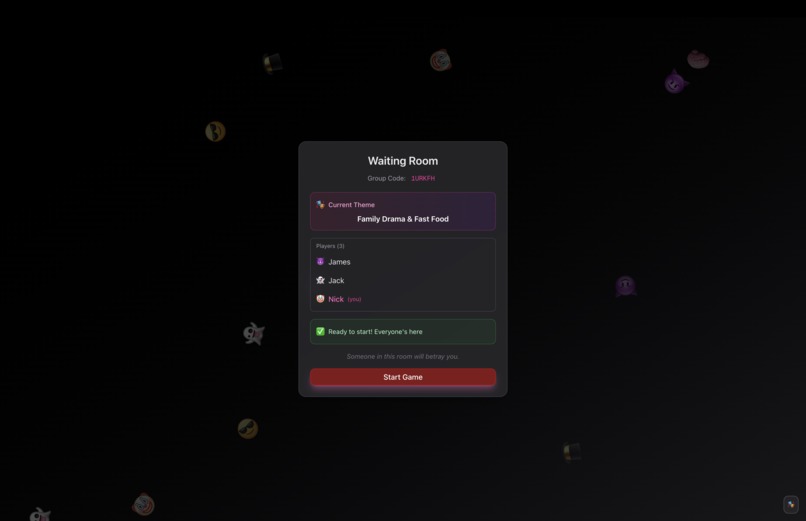
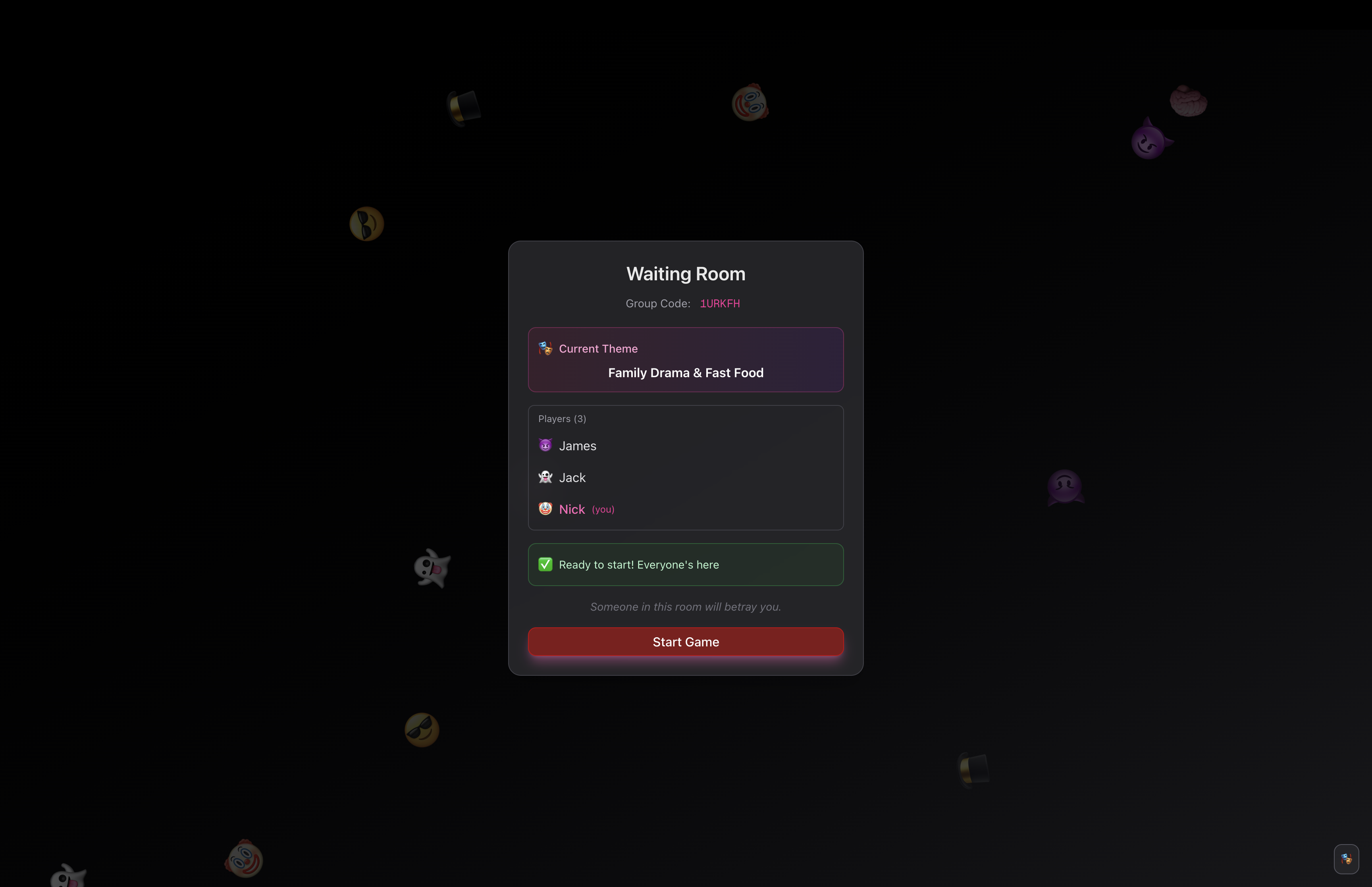
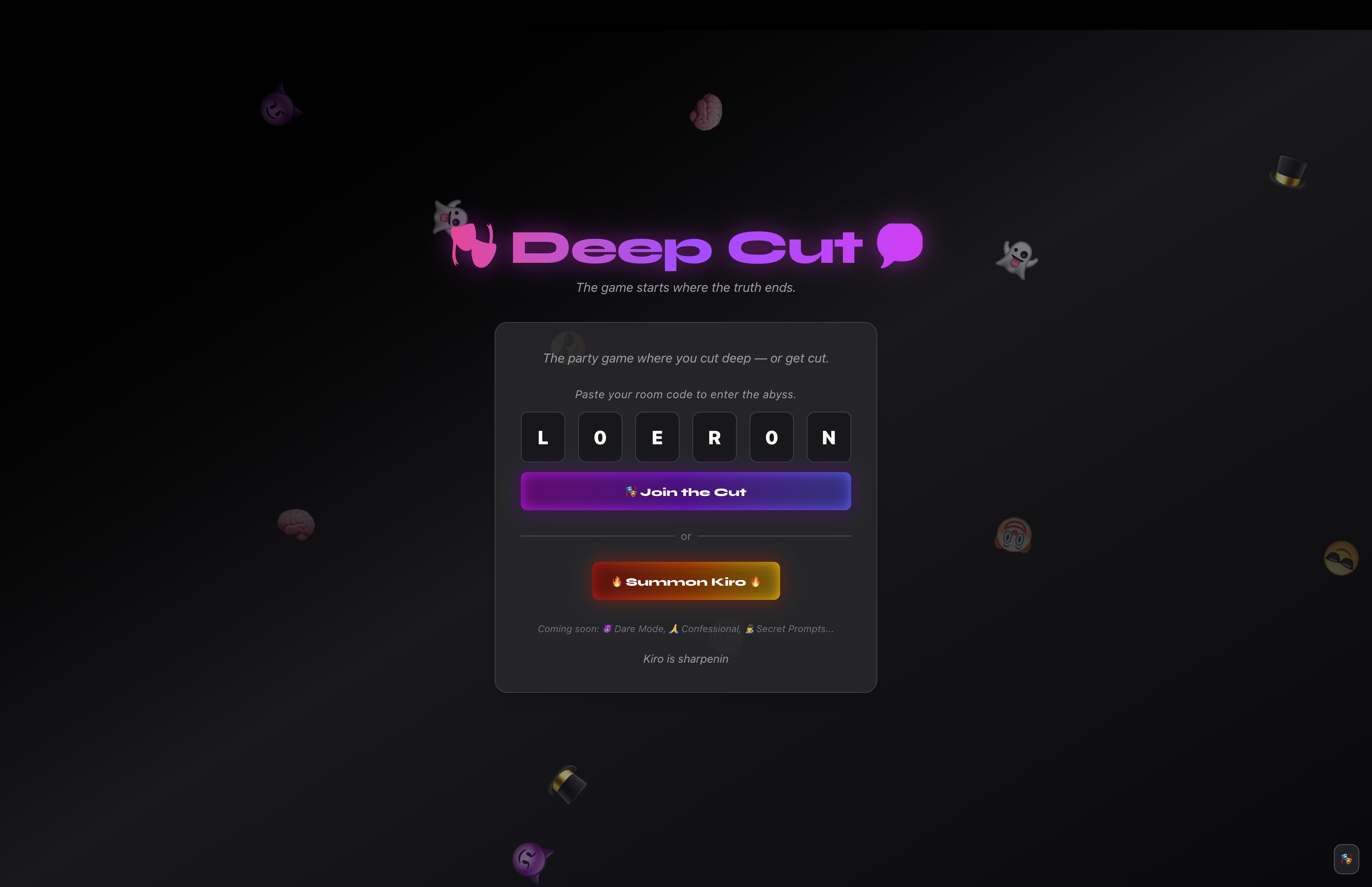
Lobby Screen
-
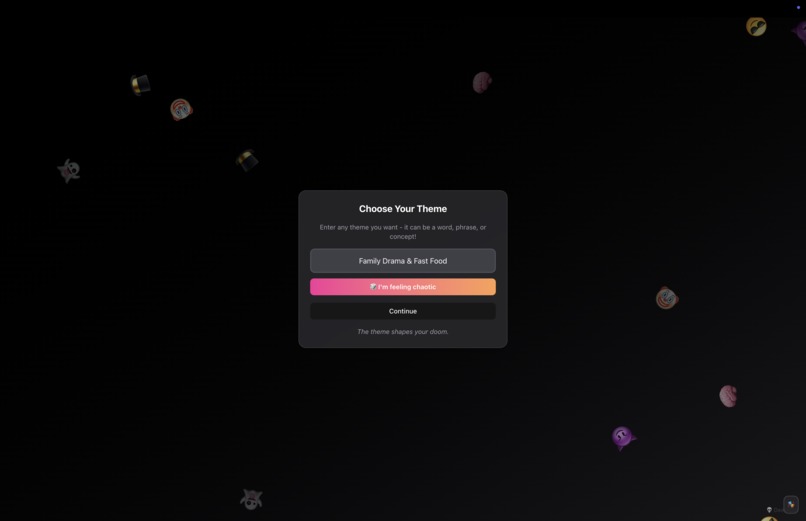
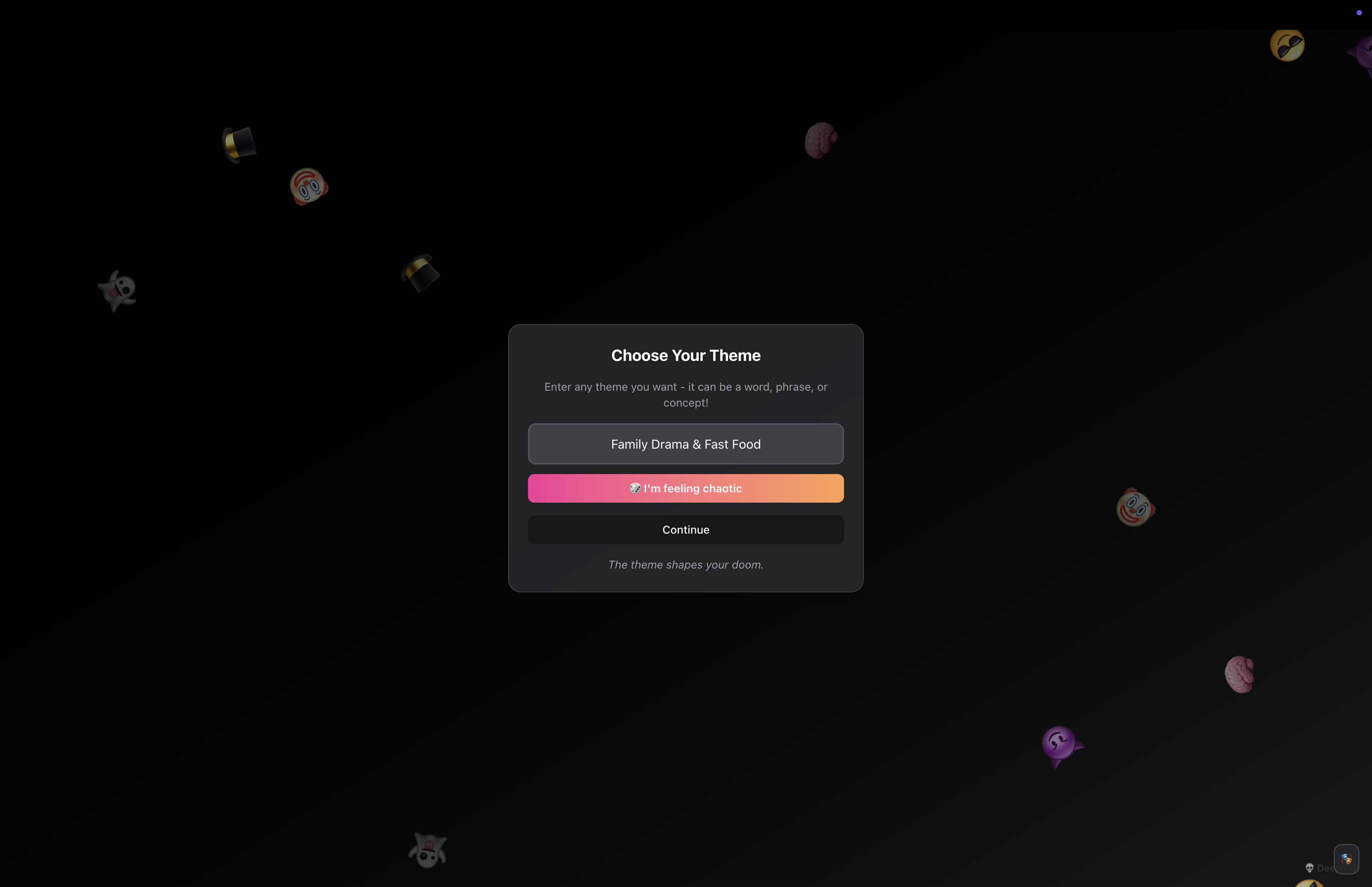
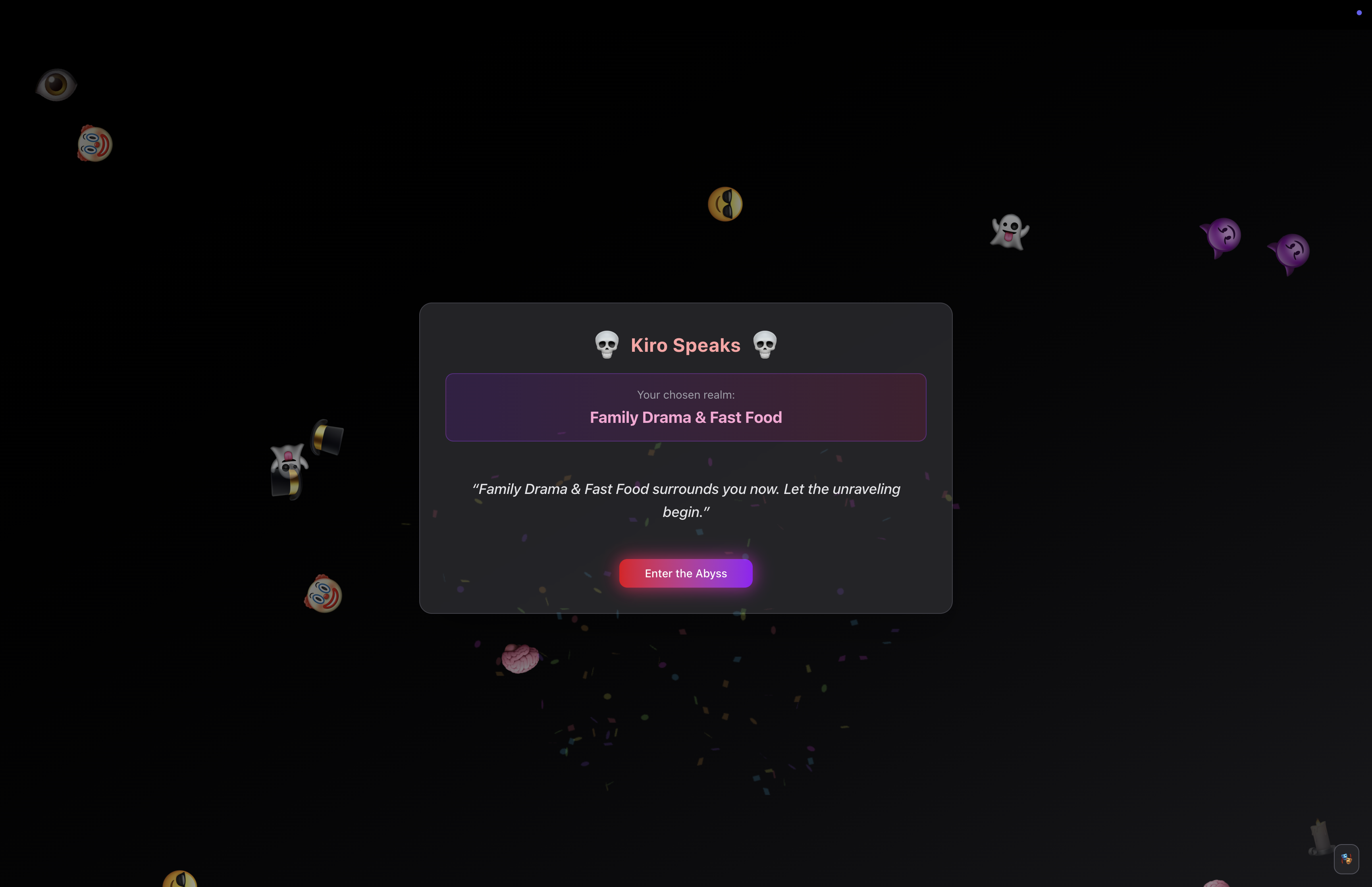
Theme Randomizer
-
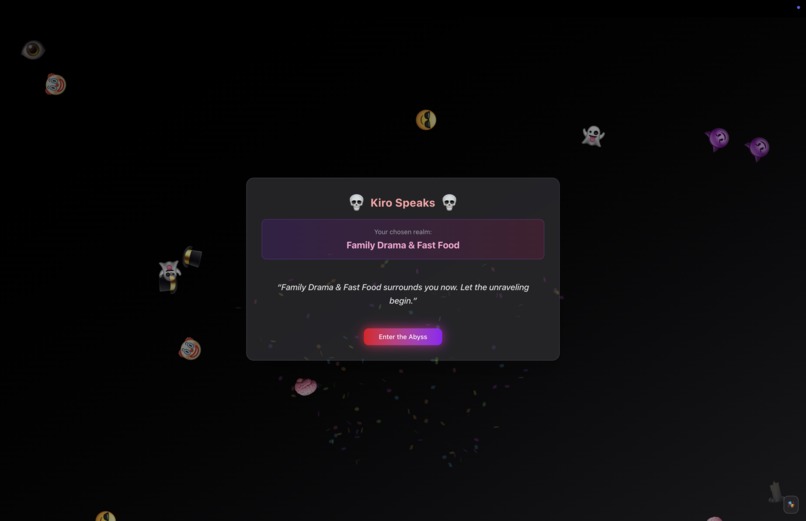
Theme Selection
-
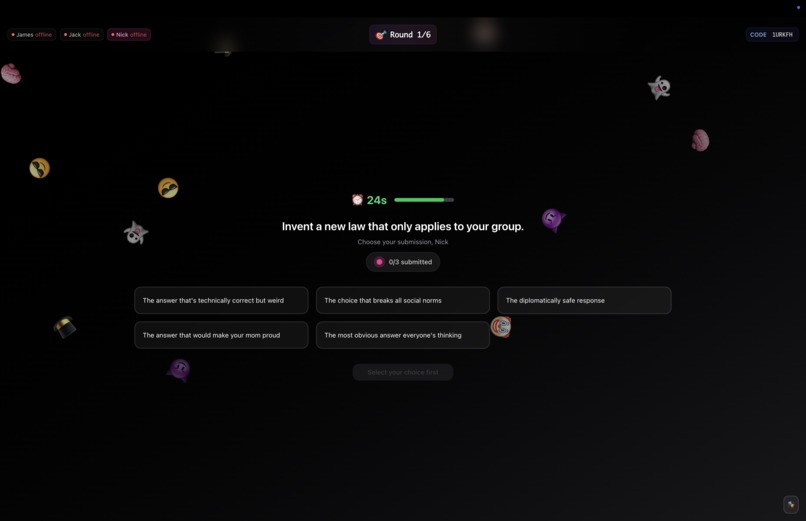
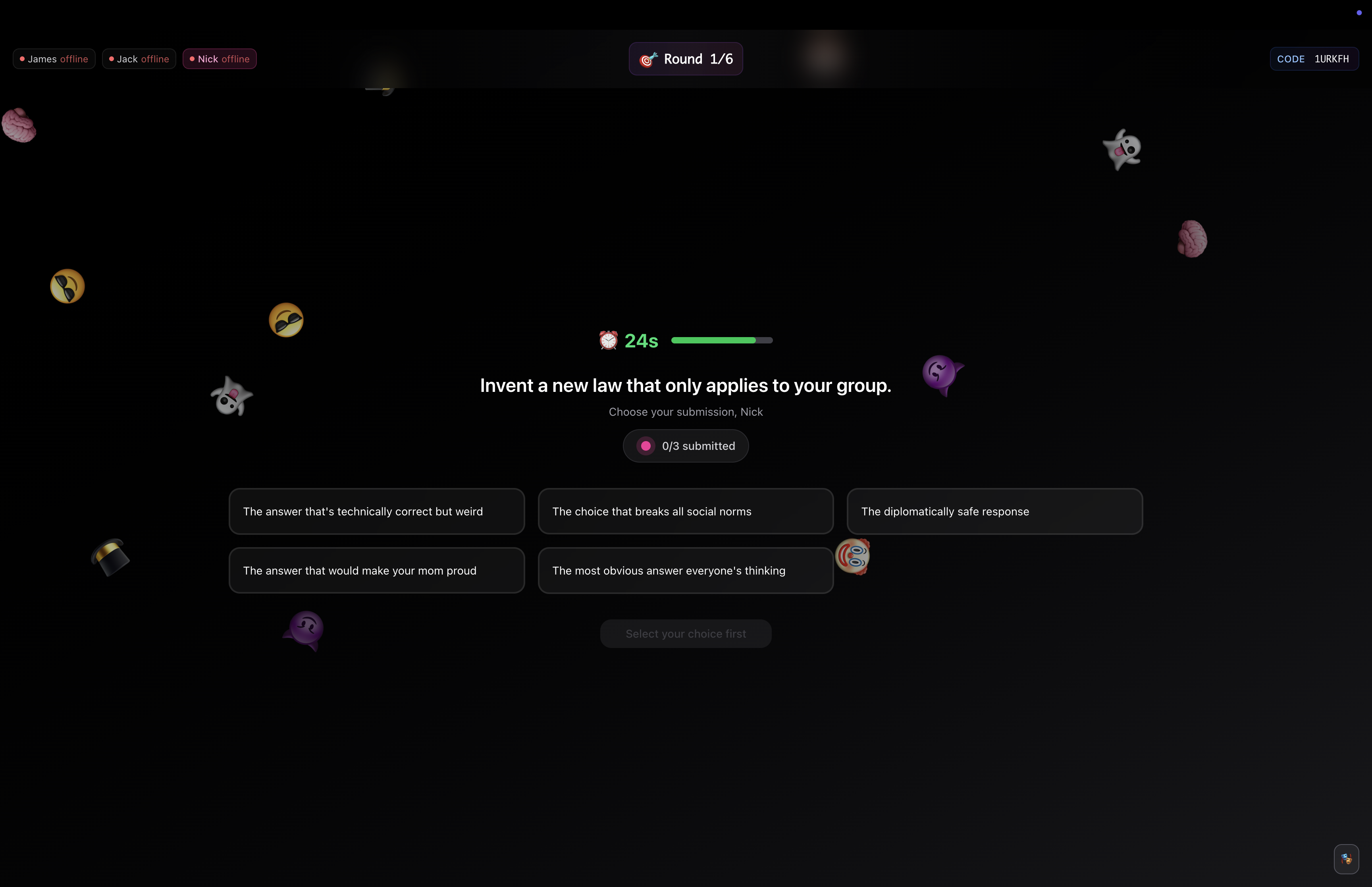
Gameplay Screen
-
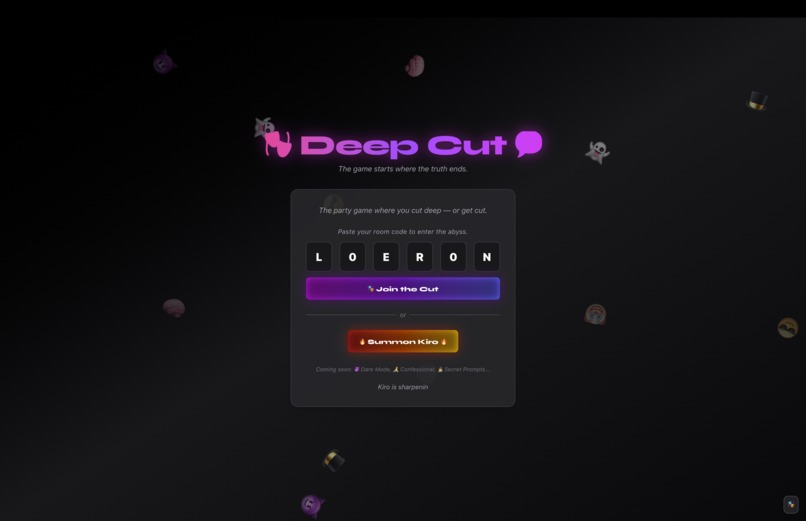
Welcome Screen
Inspiration
Games like Cards Against Humanity are fun but quickly get stale. I wanted to build a party game that could evolve, surprise, and even unsettle — something weird, thematic, and chaotic. Kiro gave me the spark to move fast and experiment with form, tone, and flow in ways that would've been tedious alone.
What it does
Deep Cut is a multiplayer card game where players enter absurd themed realms (like “Daddy Issues & Deli Meats”) and battle it out through rounds of judgment-based prompts. Every session is chaotic, strange, and personalized — the game invites players to vote, bluff, and joke their way through rounds of creative destruction.
🔮 Themes and card decks are dynamically generated using Gemini AI, giving each game a fresh, surreal vibe.
How we built it
I used Next.js, React, TailwindCSS, shadcn/ui, and framer-motion for the polished front-end. Game logic, player state, round timers, and voting were structured and scaffolded using Kiro’s spec-to-code flow. I used Kiro’s natural language steering to prototype onboarding flows, room codes, disconnection handling, and more.
Gemini AI was used to:
- Generate all card decks based on the selected theme
- Power the random theme generator (“I’m feeling chaotic”)
- Shape the tone and weirdness of the prompts dynamically
Supabase handled the backend and database — including room codes, player states, and persistent game sessions. The entire app was deployed on Vercel for fast iteration and production-ready hosting.
Challenges we ran into
- Tuning the real-time multiplayer logic for clean resets and reconnections without a full backend
- Creating game state that feels "alive" using only local and peer logic
- Making the UI dynamic, weird, and fun — while still readable and accessible
- Pacing development quickly while balancing exploration with polish
Accomplishments that we're proud of
- Built a complete multiplayer experience from scratch — theme selection, voting, judgment, and scoring
- Created a surreal and fun UX with immersive visuals and transitions
- Used Kiro to turn natural language into robust code quickly
- Wrote all copy and micro-interactions to feel cohesive, eerie, and tongue-in-cheek
What we learned
- Kiro is incredibly effective for scaffolded dev work — especially when switching between UI, state, and logic
- Working solo doesn't have to be slow when paired with an AI dev partner
- Weird, specific games are more fun than generic ones
- Good tone and voice design can elevate a simple game mechanic
What's next for Deep Cut
I want to add:
- Dare Mode with physical dares or confessions
- Theme Voting and community-submitted prompts
- Realtime multiplayer backend using WebSockets or PartyKit
- Mobile responsiveness and animations on touch
- Better moderation tools for public play

Log in or sign up for Devpost to join the conversation.