Inspiration
As researcher myself usually the initial literature survey and synthesis process takes months at least 3 months to properly find papers, synthesis and analyze gaps and form problem statements.
What it does
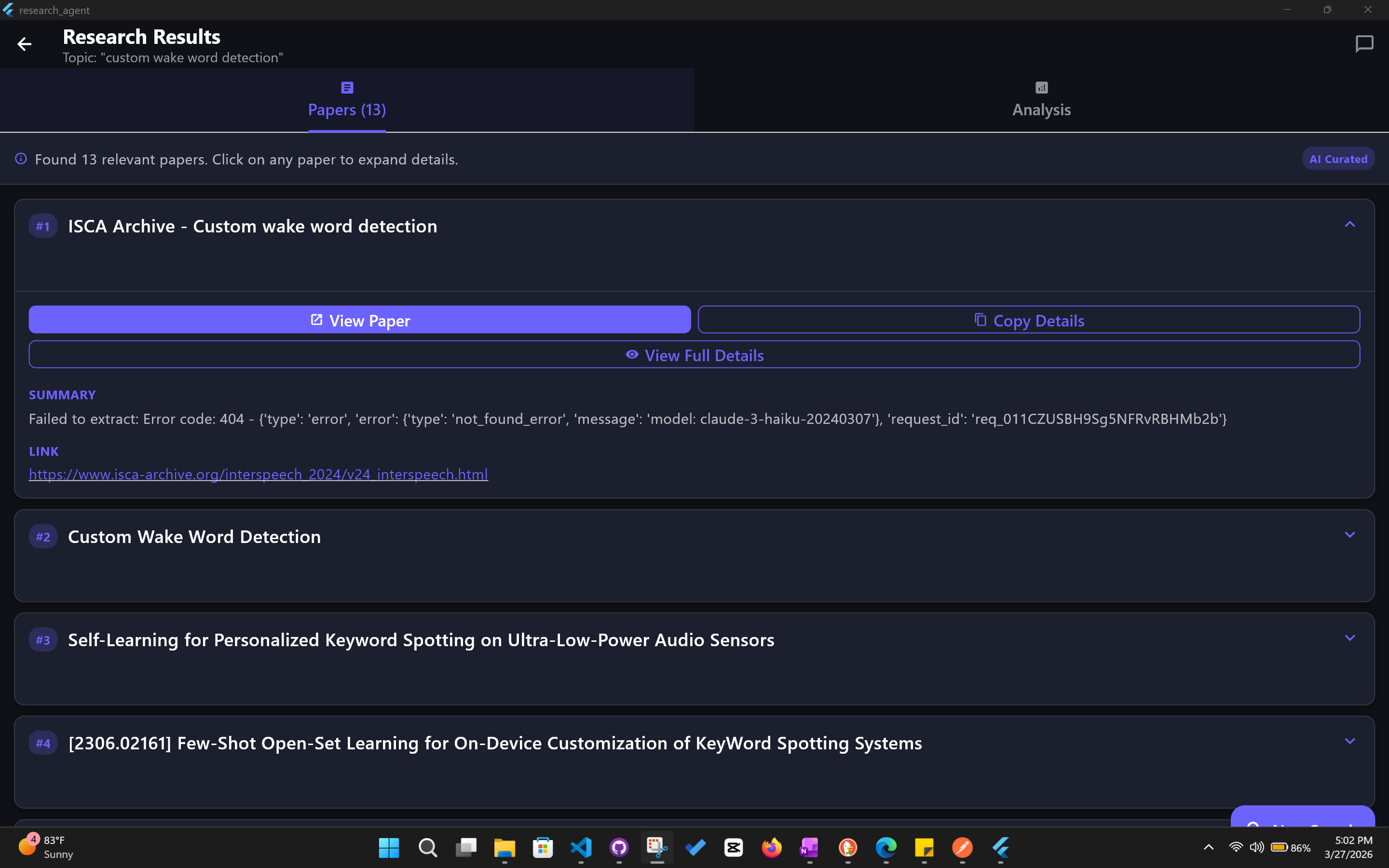
Deep academic research agent turns a research topic into a full literature review and gap analysis in minutes using a multi-agent AI pipeline and gives you detailed clickable papers with proper research summary and synthesis identified. For each paper it outputs the following:
- Header info — Paper number, year published, relevance match percentage, full title, author names, and journal or conference source. A clickable "Open paper" button that links directly to the source.
- Summary — A 2-3 sentence plain English explanation of what the paper is about and what problem it is solving.
- Results — The key findings and outcomes the paper presents — what they measured, what improved, and by how much.
- Novelty — What is new about this paper specifically — what it introduces that did not exist before in the literature.
- Model Architectures — The AI or ML architectures used in the paper, for example transformer, BERT, CNN, or marked as not applicable for non-ML papers.
- Datasets — The datasets the research was conducted on, so you can see if work is being validated on the same benchmarks repeatedly.
- Author Affiliations — The institutions or universities the authors belong to.
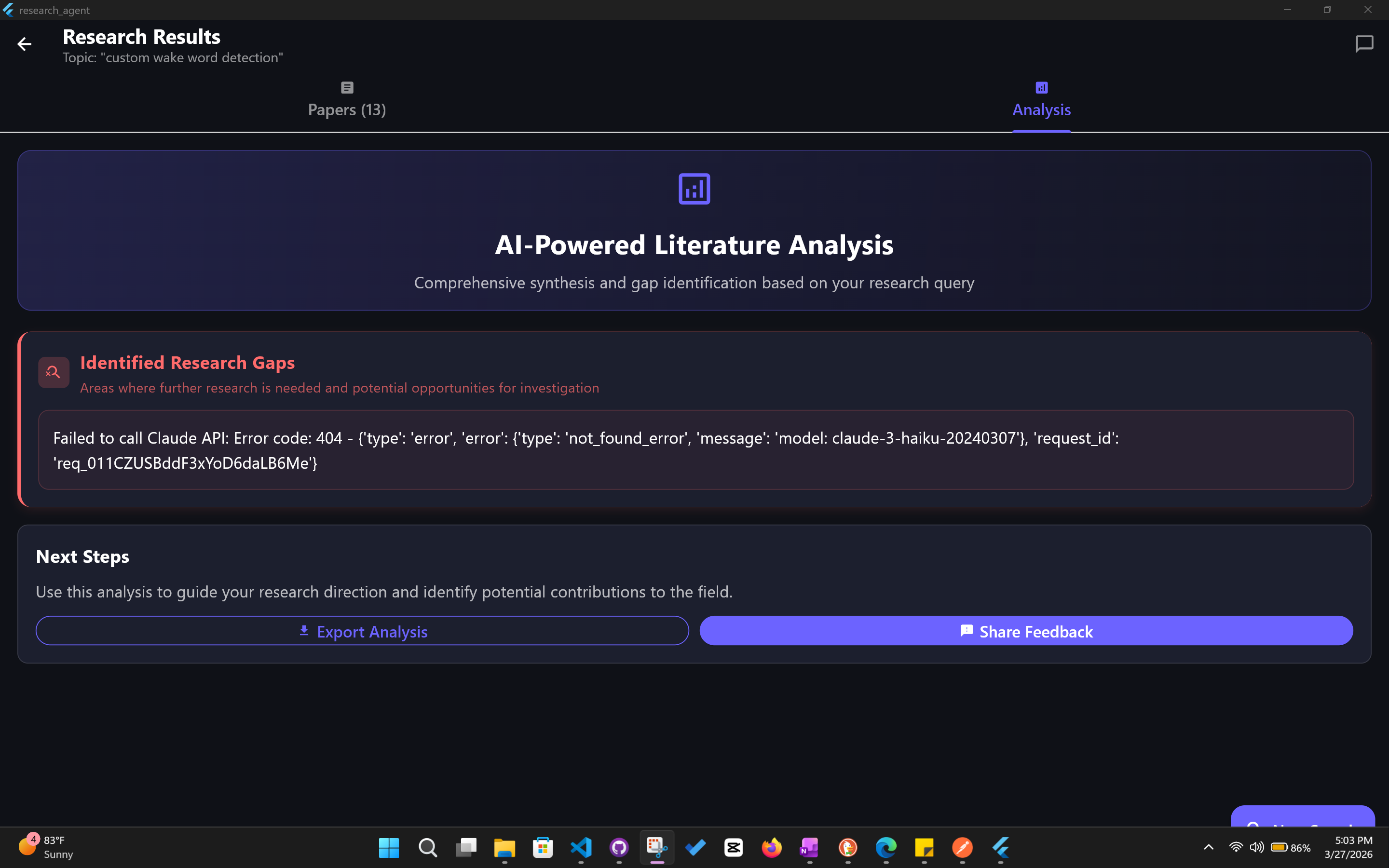
Finally it also provides a research summary, and literature synthesis for all the papers.
How we built it
I designed a multi-agent pipeline where each agent has a single responsibility. The backend is built on FastAPI in Python, with separate agents for search, extraction, and synthesis. I used the You.com Research API to fetch relevant academic papers based on a topic and year range. Each paper is then processed in parallel by a Claude-powered extraction agent that pulls out the summary, key results, novelty, model architectures, and datasets — all in one structured prompt per paper. A final synthesis agent reads across all papers and produces a literature gap analysis and a narrative synthesis paragraph. The frontend is built in Flutter with a clean two-tab interface — one for browsing papers and one for the literature analysis.
Challenges I ran into
Honestly, time was the biggest challenge. I had a clear vision for nine specialized agents and a full-featured UI, and we had to make fast decisions about what to cut and what to ship. I prioritized ruthlessly — getting the full pipeline working end to end over adding every feature we had designed. Within that constraint, the technical challenges were getting Claude to return clean structured JSON reliably across parallel calls, and connecting the Flutter frontend to the FastAPI backend with the right CORS configuration and matching data shapes. I couldn't manage time to test all the details on the paper card widgets and some still have api errors.
Accomplishments that we're proud of
That I shipped a working end-to-end pipeline under serious time pressure. The backend API runs, You.com search returns real papers, Claude extracts meaningful structured insights per paper, and the Flutter UI presents it all cleanly. Most importantly — it actually works as a tool. A user can enter a research topic and walk away with a structured analysis of dozens of papers and a literature gap report they can use. That's a real research workflow compressed into minutes, and we built it in a few hours.
What we learned
This was my first attempt at submitting my hackathon project on time and I learnt so much on doing it on time and am happy about it. I learned that a well-staged build plan is worth the time it takes to write. Because I planned the project in independent stages from the start, we always had something working and submittable — we were never in a situation where everything was half-done. I also learned that the extraction prompt is the heart of the system — investing in a clear, structured prompt for Claude paid off more than anything else we did technically. And I learned that literature gap analysis is the feature users will care about most — it's the insight that no search engine gives you.
What's next for Deep academic research agent
The features we designed but didn't get to build are the immediate roadmap. Citation mapping to connect papers to each other, full PDF ingestion so agents can read actual paper content rather than just metadata, and a session history so researchers can save and revisit past queries. Longer term we see this becoming a full research workspace — where a student or analyst can run queries, compare literature gaps across topics, and export a ready-to-submit literature review. We also want to add voice interaction using Bland AI so researchers can navigate their results hands-free.

Log in or sign up for Devpost to join the conversation.