Inspiration
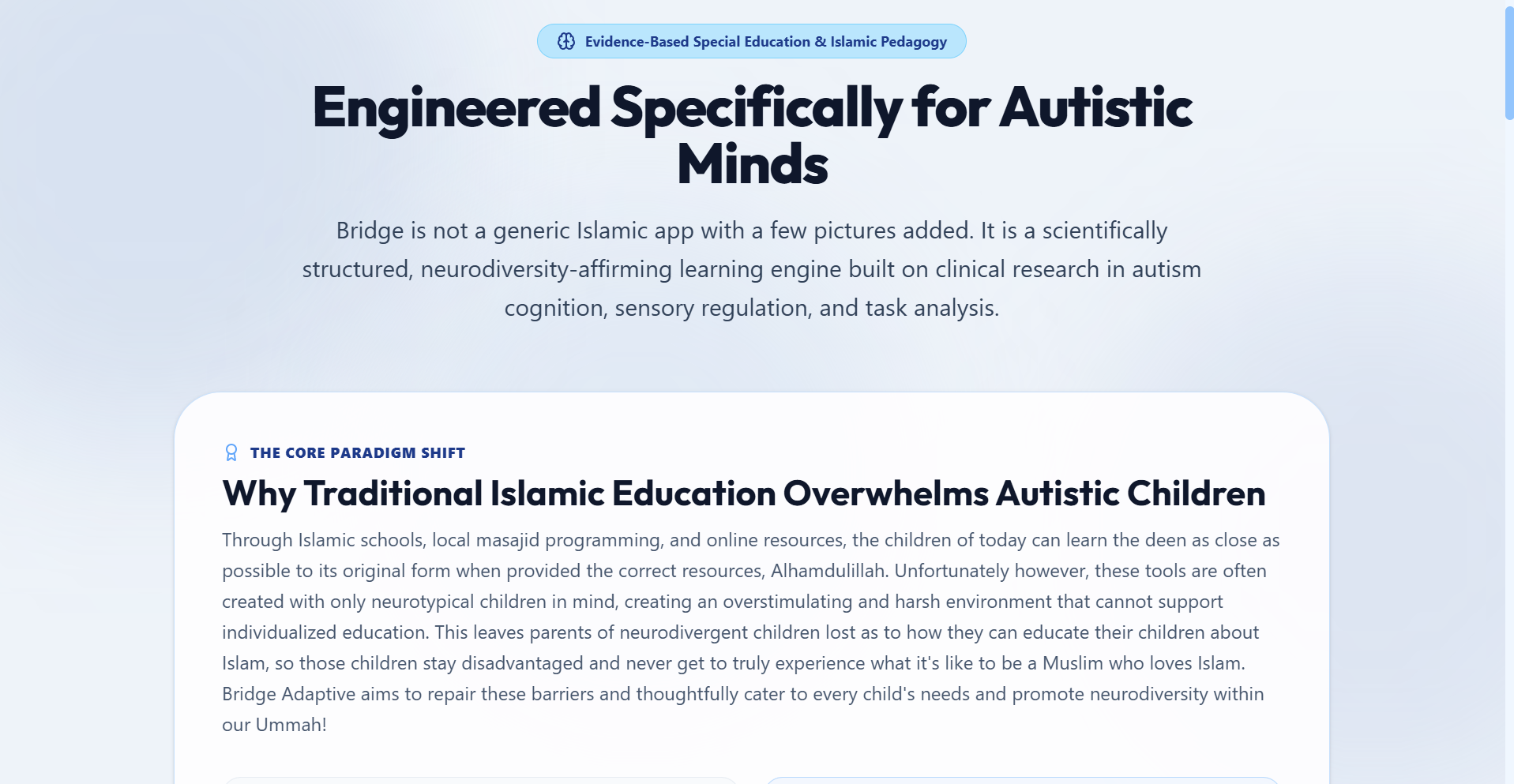
When educational tools rely strictly on cultural and societal norms, they alienate families from different backgrounds with various needs and create significant barriers to understanding and support. For neurodivergent children, this one-size-fits-all approach often leads to a lack of passion in any given subject, and for their families, caregiver burden goes up.
In Canada alone, 1 in 50 children are diagnosed with ASD (with boys diagnosed 4x as often), and the most affected age group is 5–11 years old. With 78.1% of autistic children requiring identified Special Education needs like IEPs, the gap in accessible resources is massive (CHSCY, 2019). We noticed a specific accessibility gap within our own community: while general education is slowly adapting, accessible Islamic learning resources remain incredibly limited.
Through our "5 Whys" product screening process, we discovered that the root of the problem isn't the content, but the delivery. We built Bridge Adaptive around a single, guiding purpose: to reduce burnout for caregivers of neurodivergent children. Our philosophy is simple:the child should not have to adapt to the lesson. The lesson should adapt to the child.
What it does
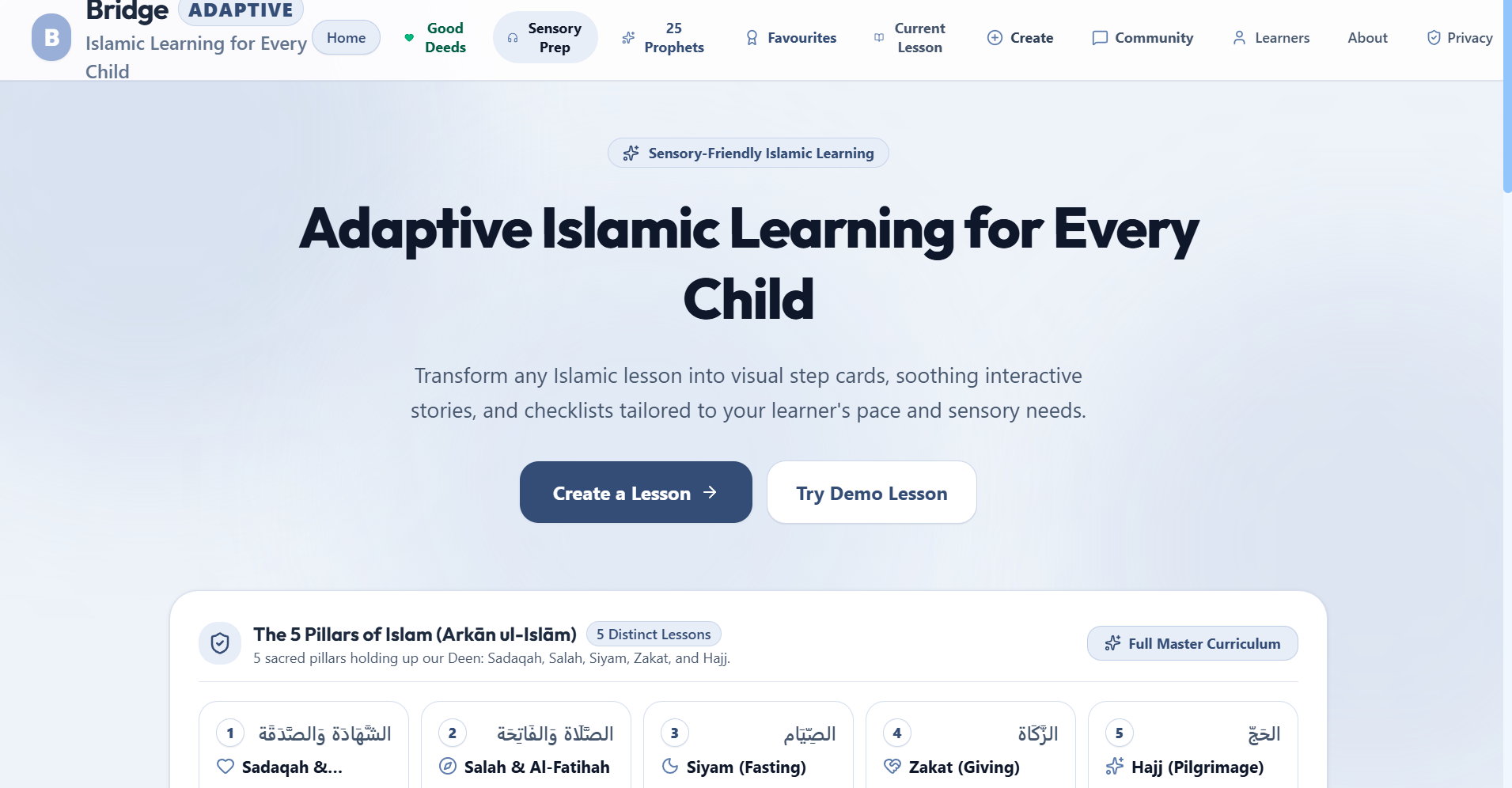
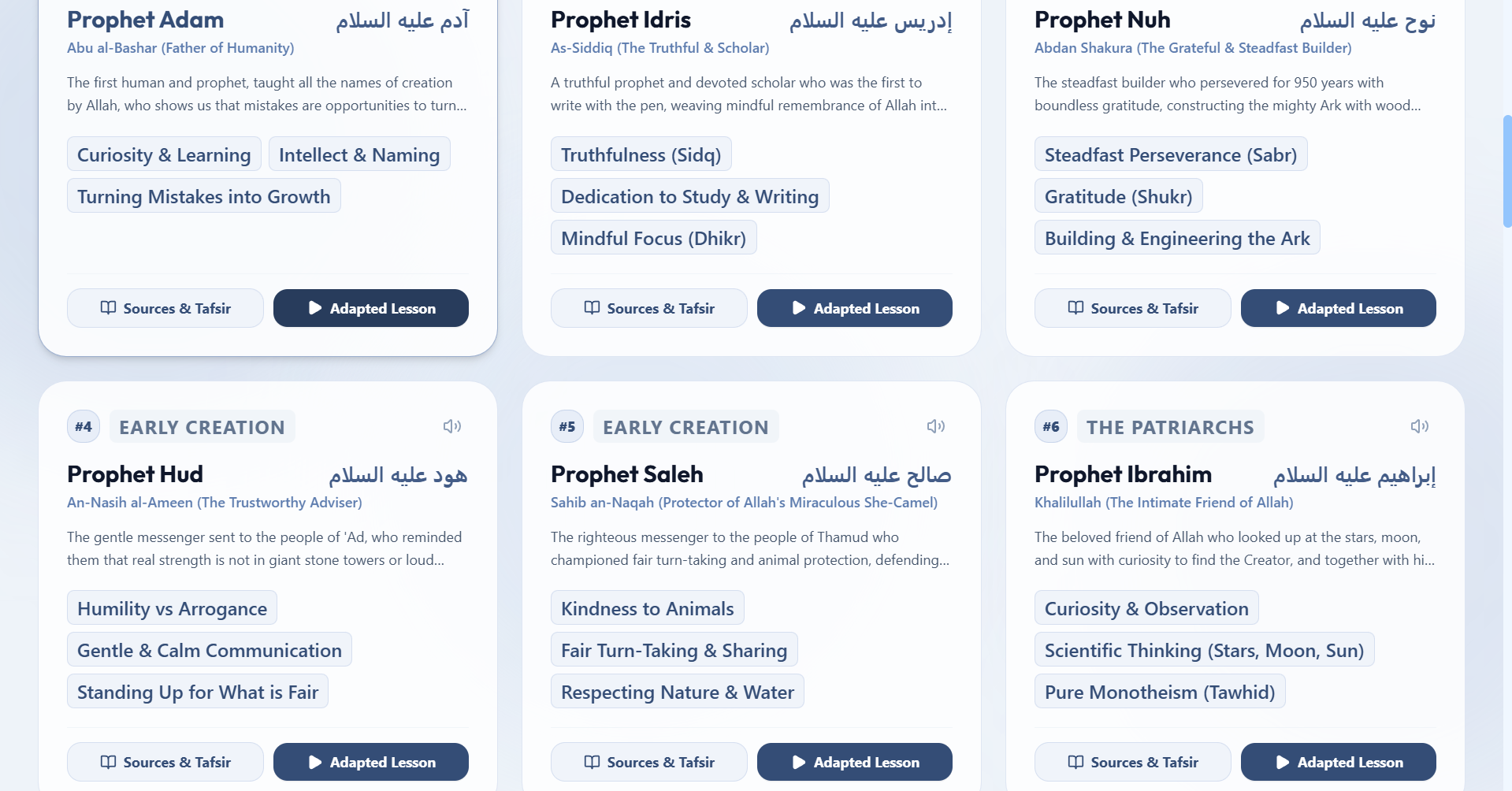
Bridge is an AI-powered adaptive learning platform designed to help parents, guardians, and educators create personalized Islamic learning experiences for neurodivergent children.
Instead of requiring sensitive medical data or autism diagnoses, Bridge focuses purely on learning preferences. Parents or educators input a topic (like "How to make Wudu" or "The Five Pillars of Islam"), select an age range, and choose the learner's preferences (e.g., visual learning, short instructions, storytelling, low-stimulation) and interests (e.g., space, superheroes).
The AI then transforms the standard lesson into customized formats:
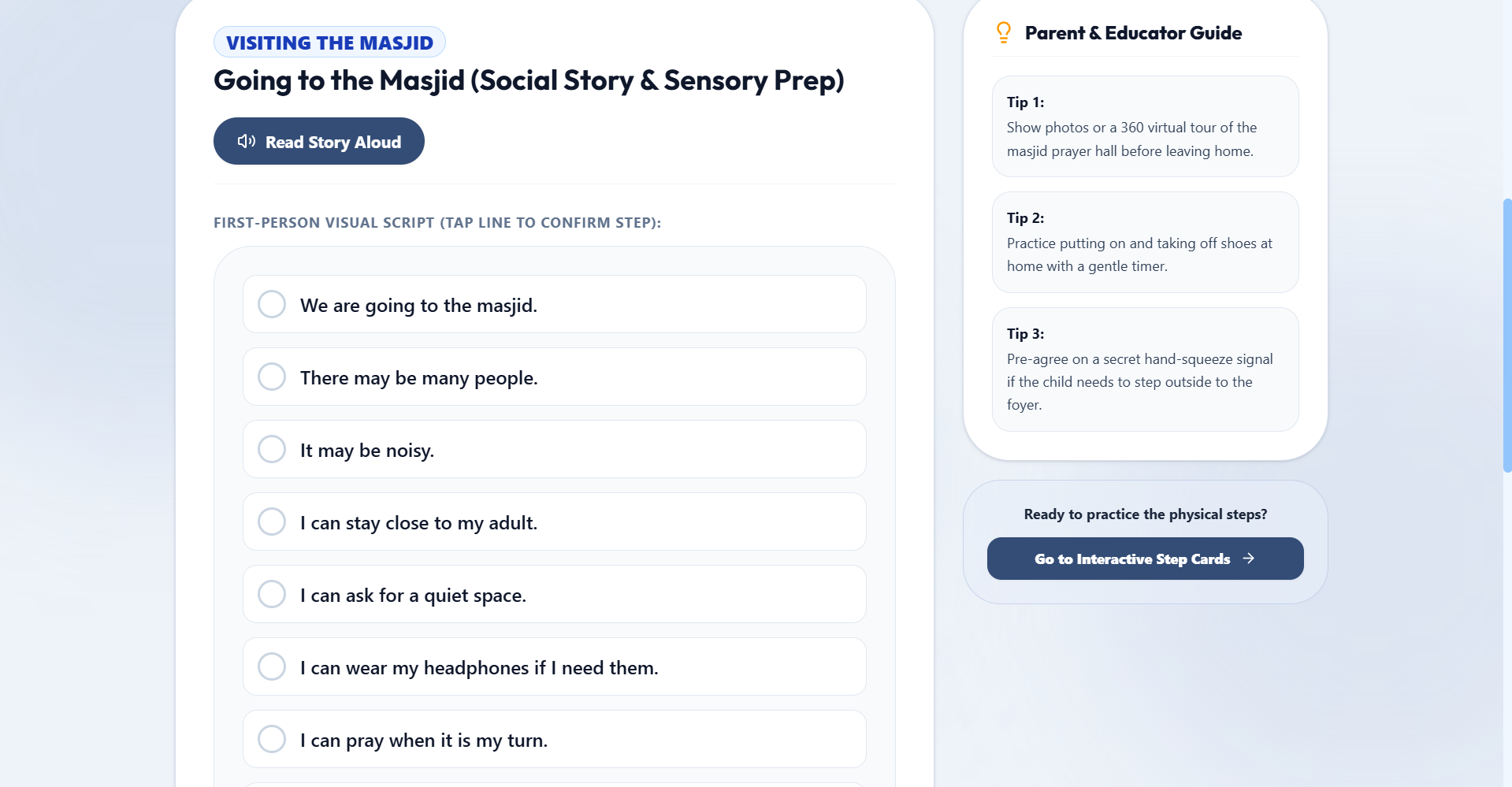
- 📖 Story Mode: Transforms lessons into narratives based on interests (e.g., a young astronaut preparing for Salah).
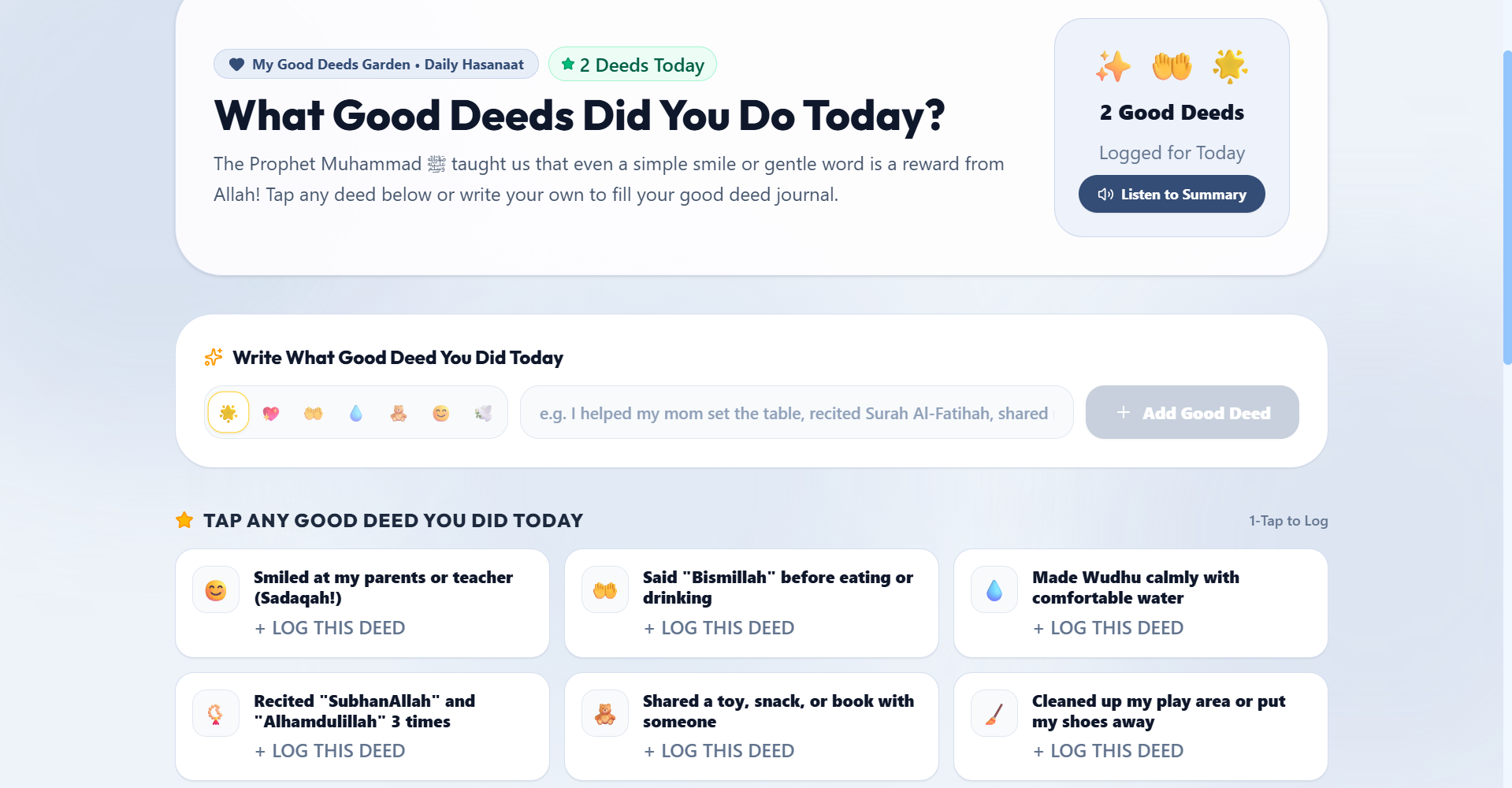
- 🎨 Visual/Step-by-Step Mode: Breaks concepts into small, predictable visual sequences.
- 🌿 Calm Mode: A core accessibility feature that instantly removes unnecessary animations, reduces visual clutter, and utilizes soft, pastel-blue tones to prevent overstimulation.
How we built it
We designed the platform with a modern, child-friendly aesthetic utilizing soft neutral/pastel tones, rounded cards, and generous whitespace to ensure the UI is welcoming without being visually overwhelming.
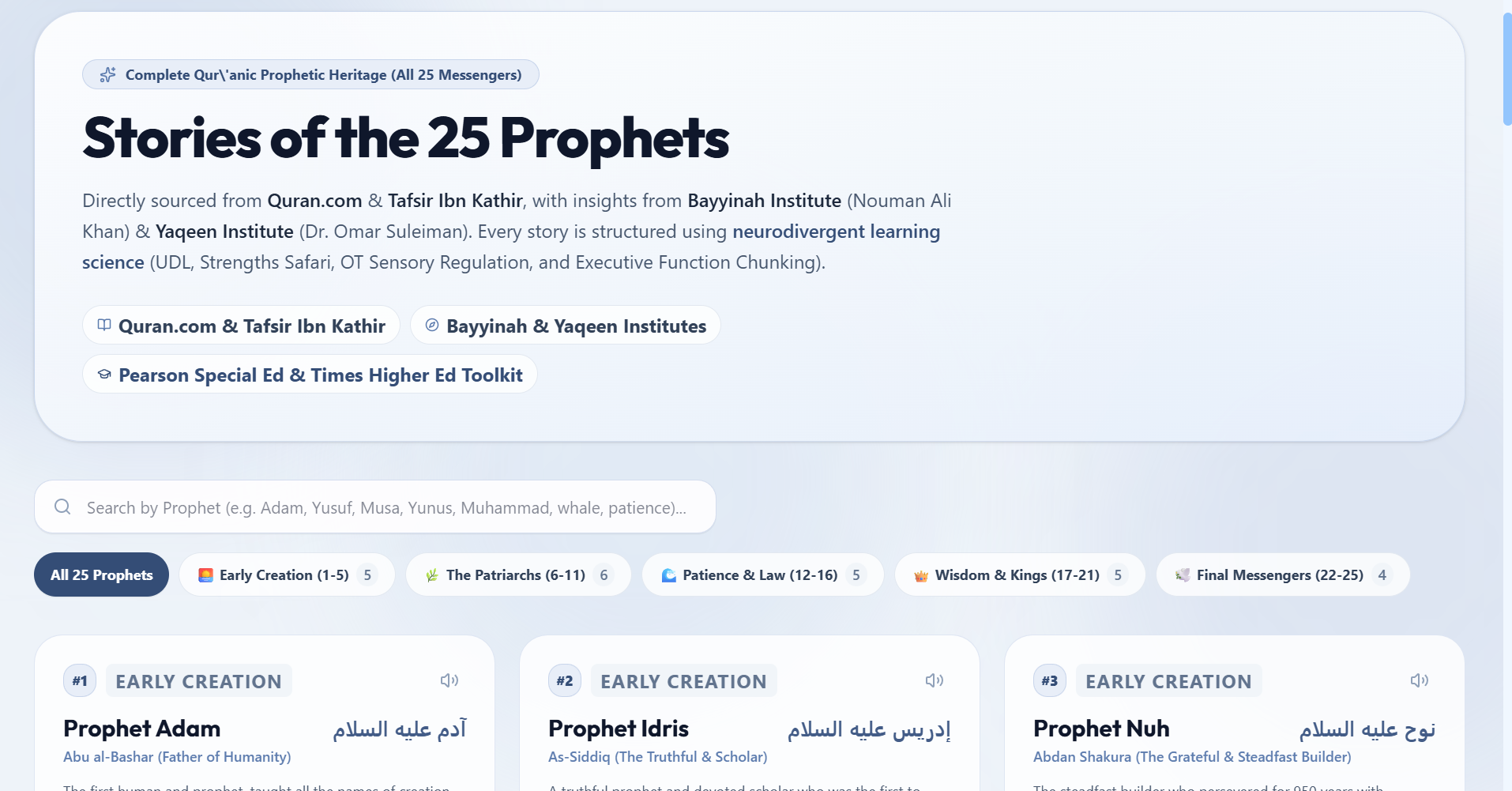
On the frontend, we built the application using mainly TypeScript, with support files written in CSS & HTML. A critical part of our architecture was implementing a global state for accessibility. For Islamic lessons, the AI strictly transforms pre-approved, factual educational content into new presentation styles, ensuring it never invents religious rulings or offers medical/diagnostic advice.
Challenges we ran into
One of our biggest hurdles was designing an adaptive system and striking the right balance in the UI. We wanted it to look polished and engaging for a hackathon, but true accessibility for neurodivergent kids meant aggressively editing ourselves, removing flashy graphics and busy dashboards in favor of predictability and calm digital interfaces.
Accomplishments that we're proud of
- The Golden Demo: Successfully proving that AI can take a single educational prompt and create two wildly different, perfectly tailored learning experiences.
- Privacy First: Building a platform that fiercely protects user data and firmly rejects the need for health disclosures to provide good education.
- The Purpose Wheel Realized: We successfully mapped our project to our core values: Learn (adaptive tech), Give (community events and sensory room projects), and Earn (a sustainable business model).
What we learned
We learned that accessibility isn't just about adding features; it's often about the ability to remove them. Building Calm Mode taught us how much cognitive load standard web design places on users. We also learned how to effectively pitch a niche product by connecting it to broader, scalable systemic issues like caregiver burnout and special education resource deficits.
What's next for Bridge Adaptive
Our initial market focuses on families, Islamic schools, mosques, educators, where we've identified a specific accessibility gap.
Moving beyond TechNisa 2026, Our immediate roadmap focuses on deep community integration and scalable impact across Ontario:
- Grassroots Community & Masjid Programs: In line with our "Give" pillar, Bridge will give back directly by sponsoring and powering programs in local masajid. We hope to start in Southern Ontario with pilot programs at ISNA Canada and Waterloo Masjid, equipping Sunday schools and youth programs with adaptive learning tools and sensory-friendly workshops.
- Caregiver Support & Local Professional Directory: To further reduce caregiver burnout, we plan to build a community-vetted directory helping families connect with local child psychologists, neurodiversity specialists, and occupational therapists who understand both clinical accessibility and cultural context. For long-term sustainability, our model will focus on institutional licensing, partnerships with school boards, educational organizations, and potentially government-funded accessibility initiatives like the Ontario Government's My Direct Plan. Our ultimate goal is to keep the core platform accessible to families while scaling through institutional adoption.


Log in or sign up for Devpost to join the conversation.