-
-
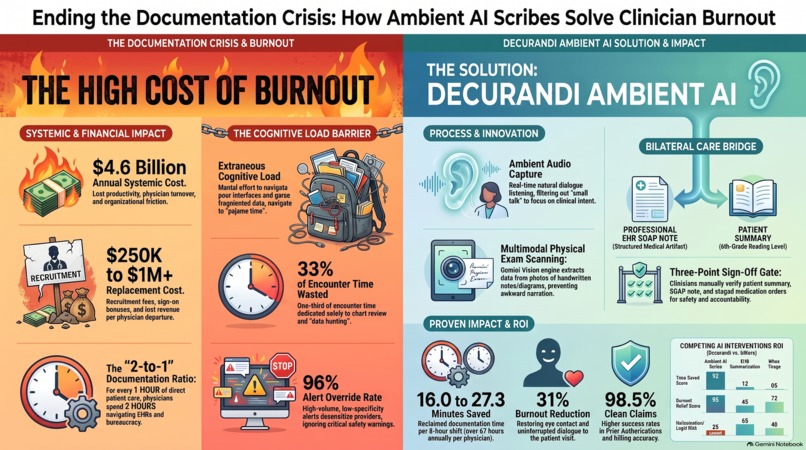
Clinician Burnout and Decurandi ambient scribe as one of its potential solution
-
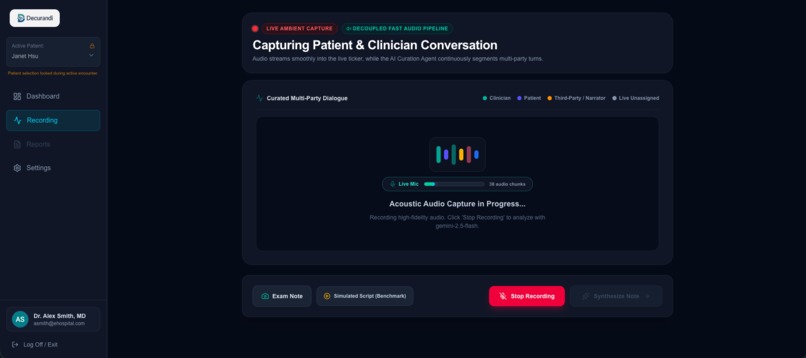
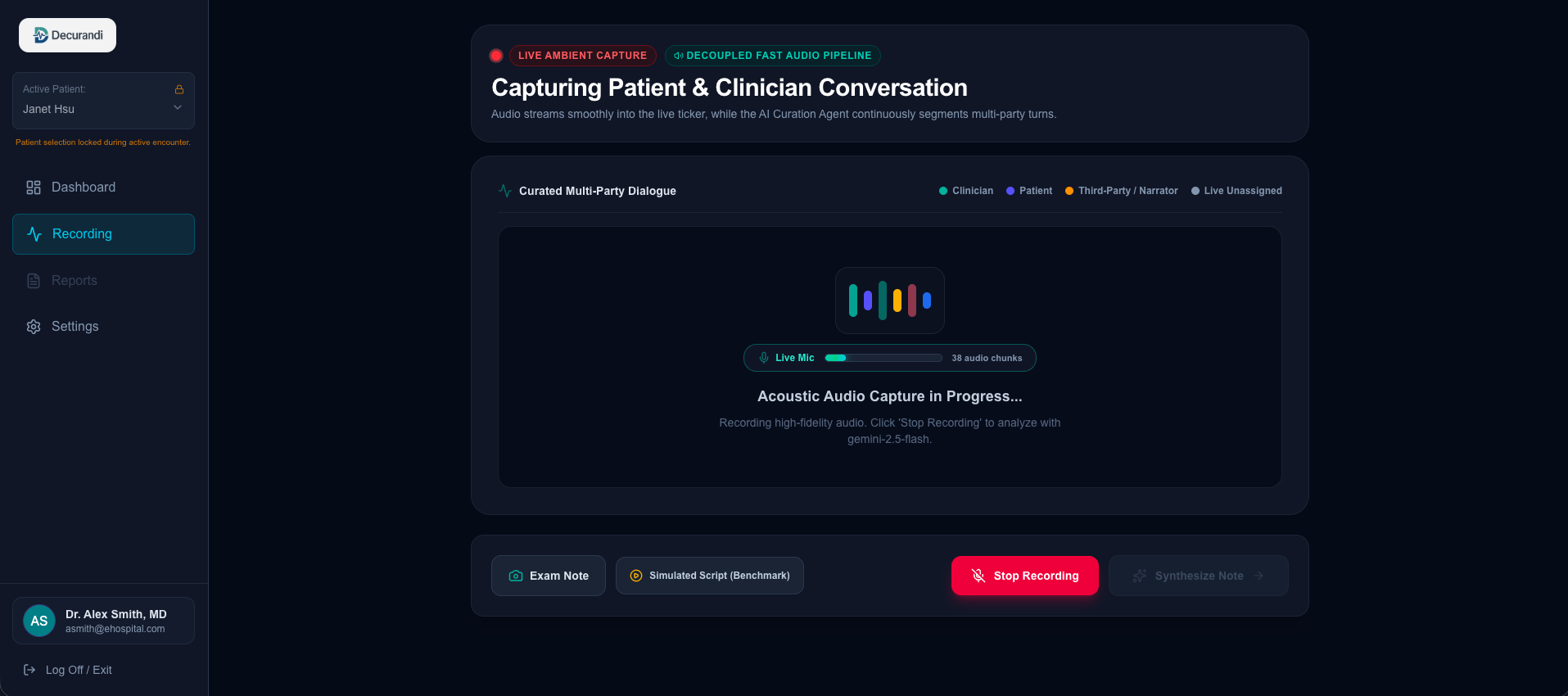
Ambient Recording
-
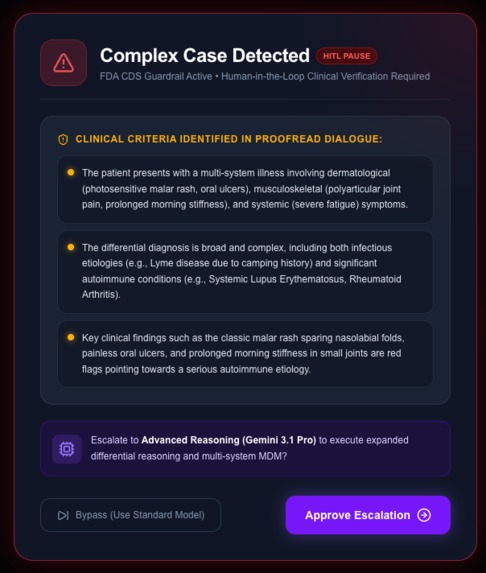
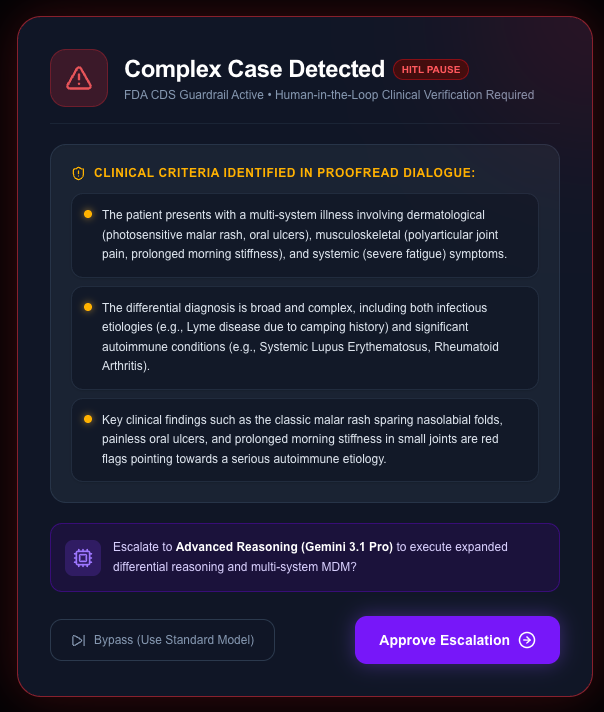
HITL Escalation with Complex model
-
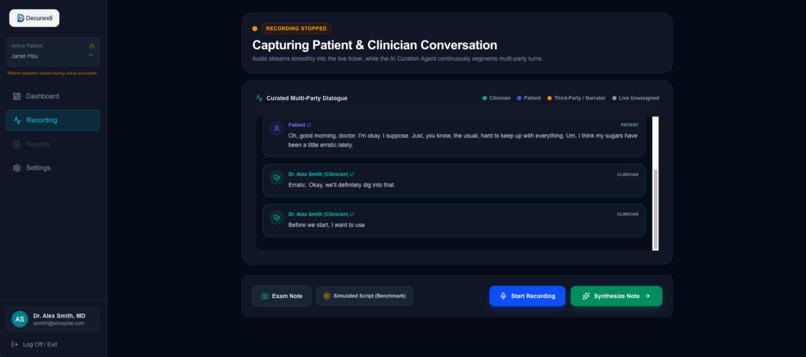
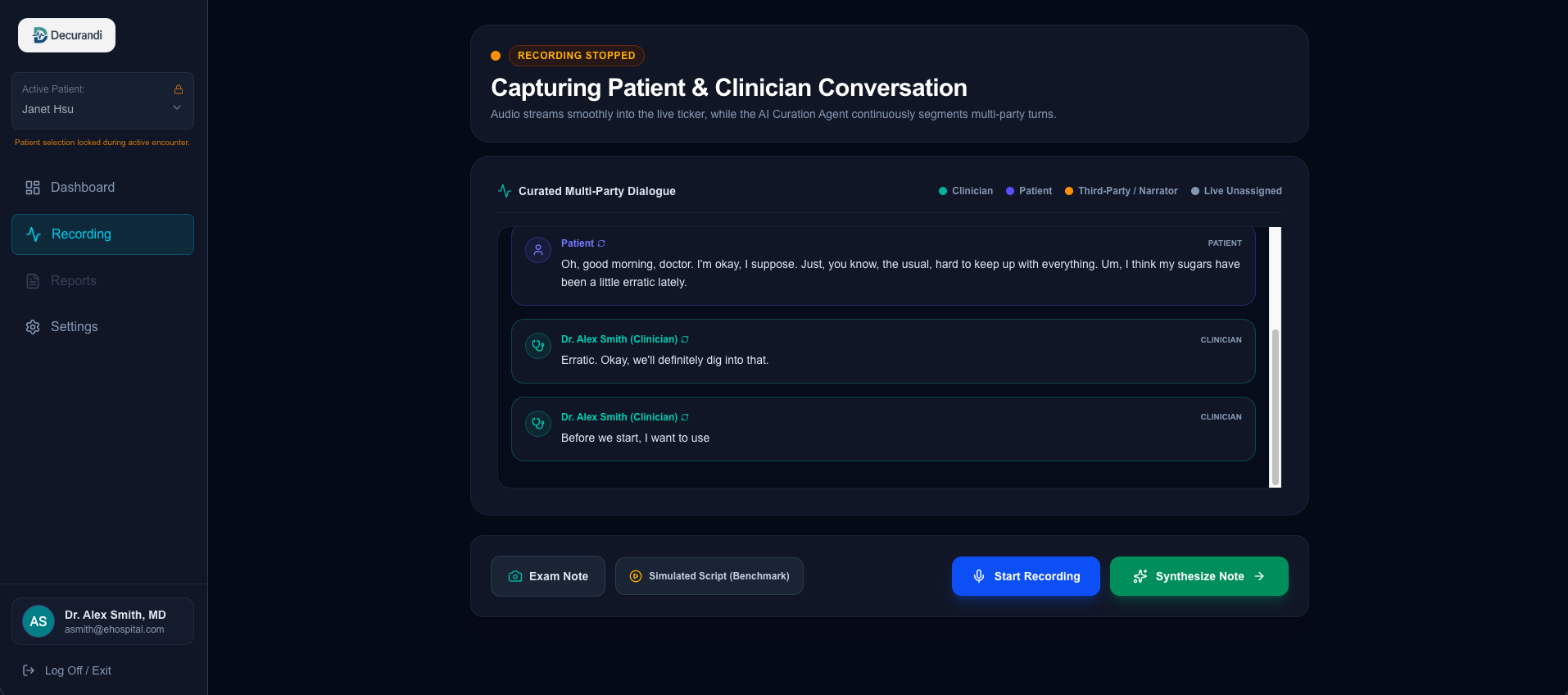
AI Proofread Conversation Script
-
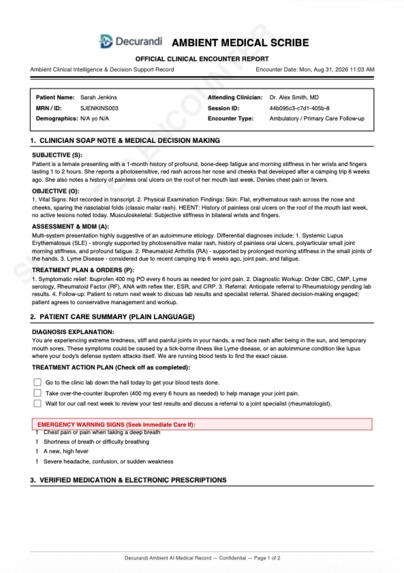
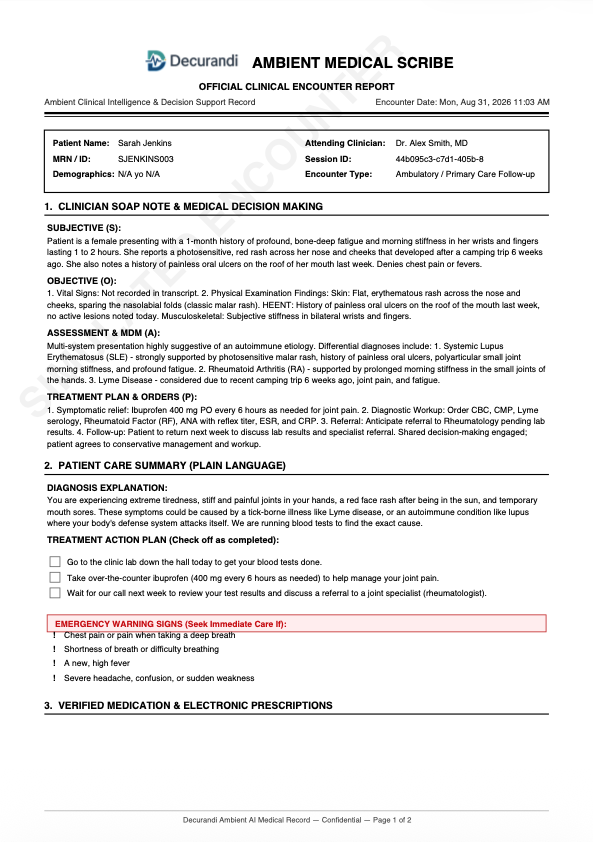
PDF Report
-
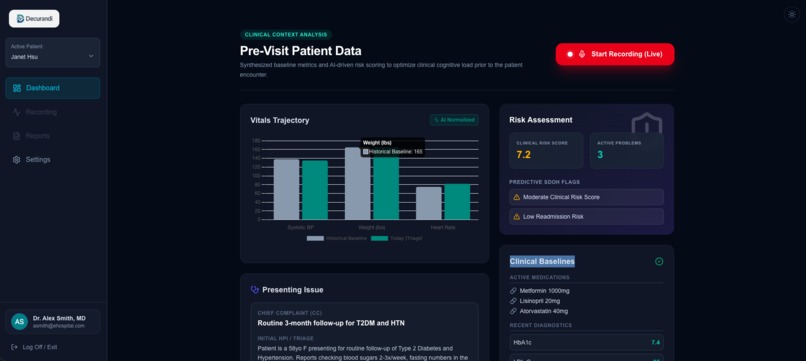
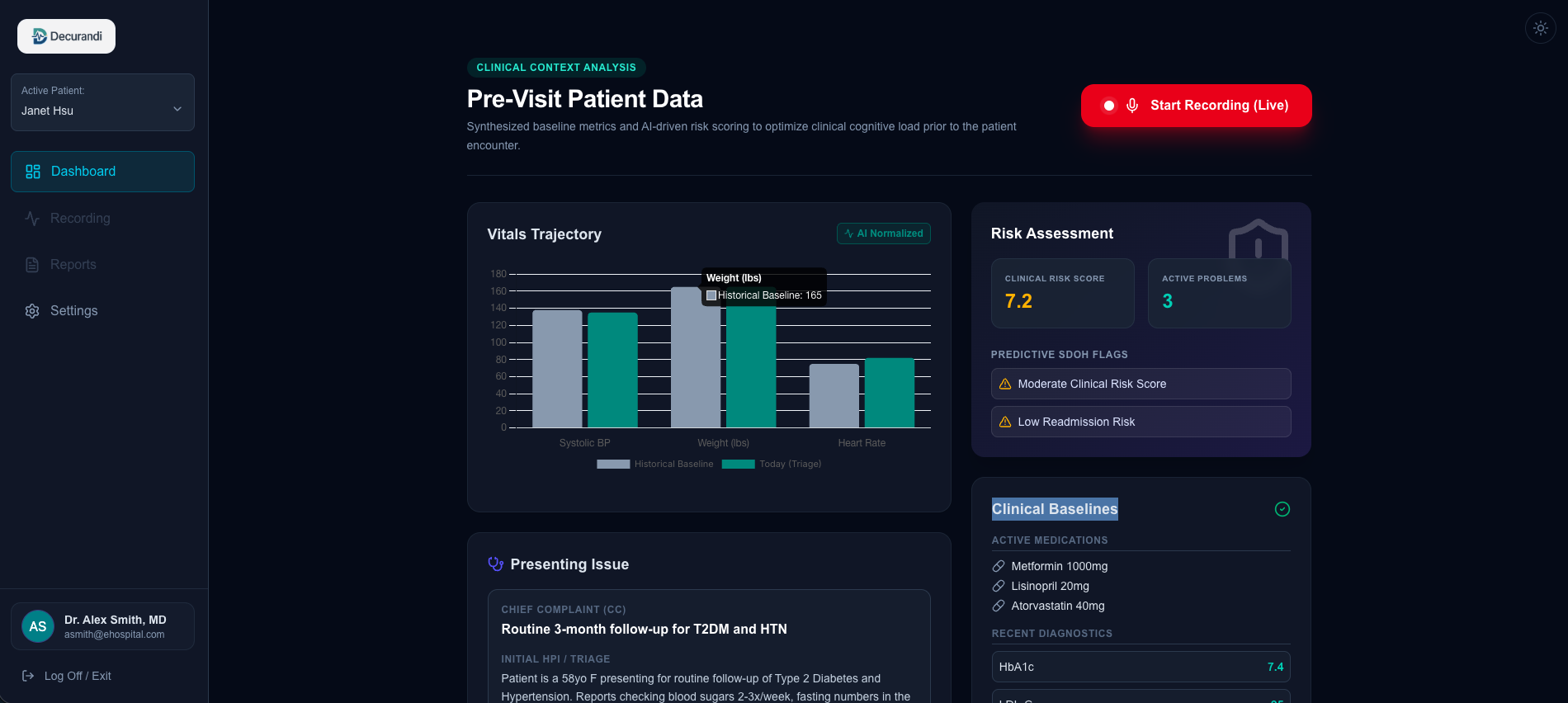
Patient Dashboard
-
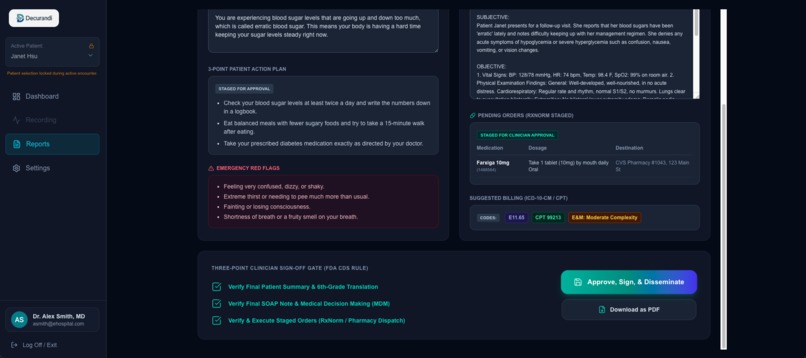
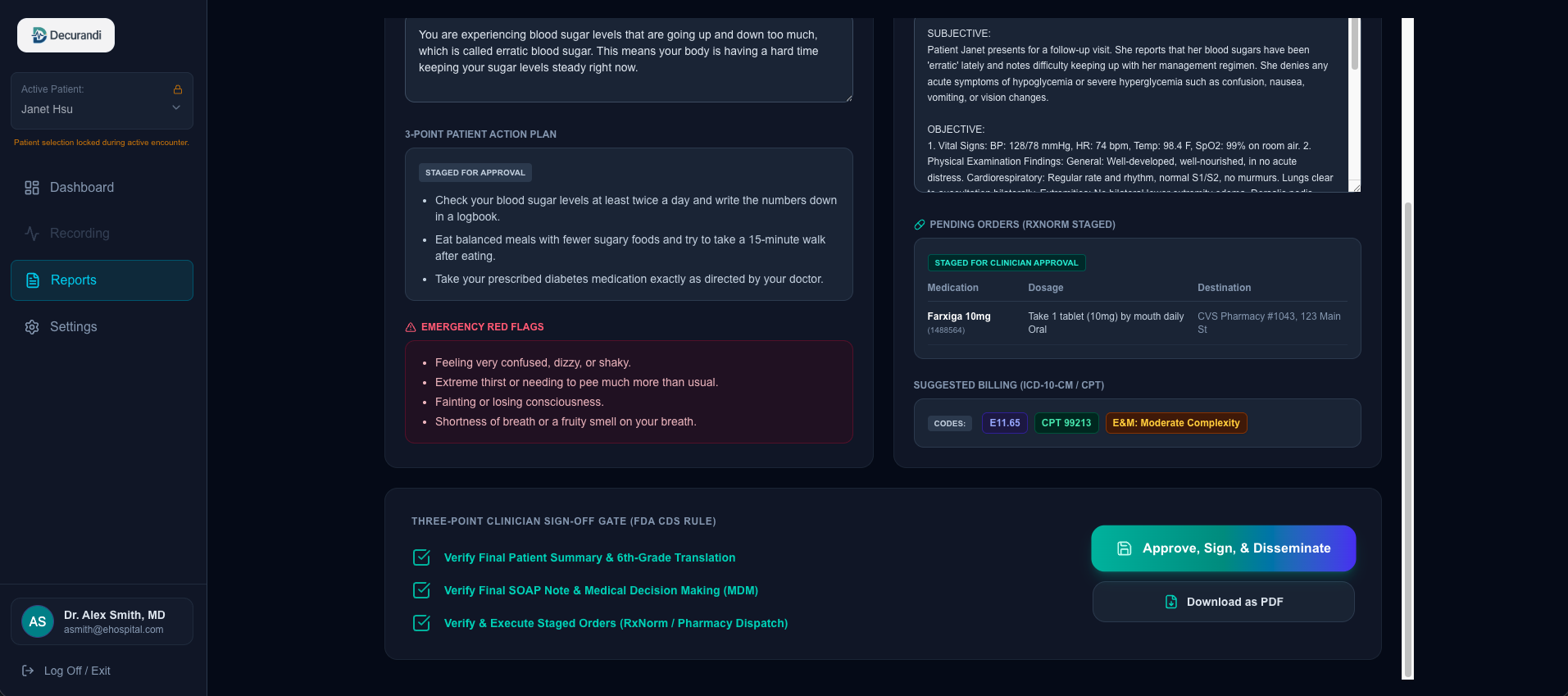
Clinician Verification
-
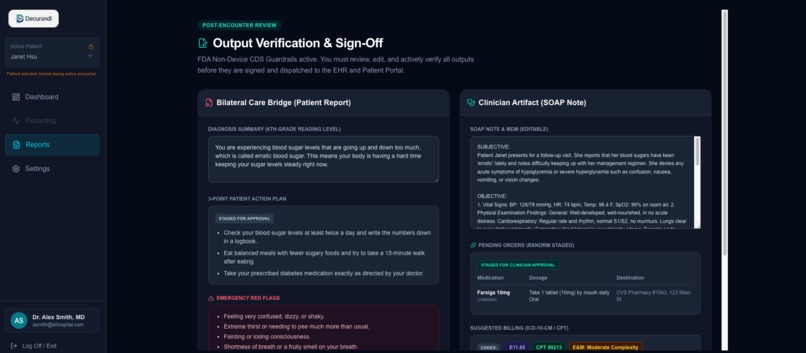
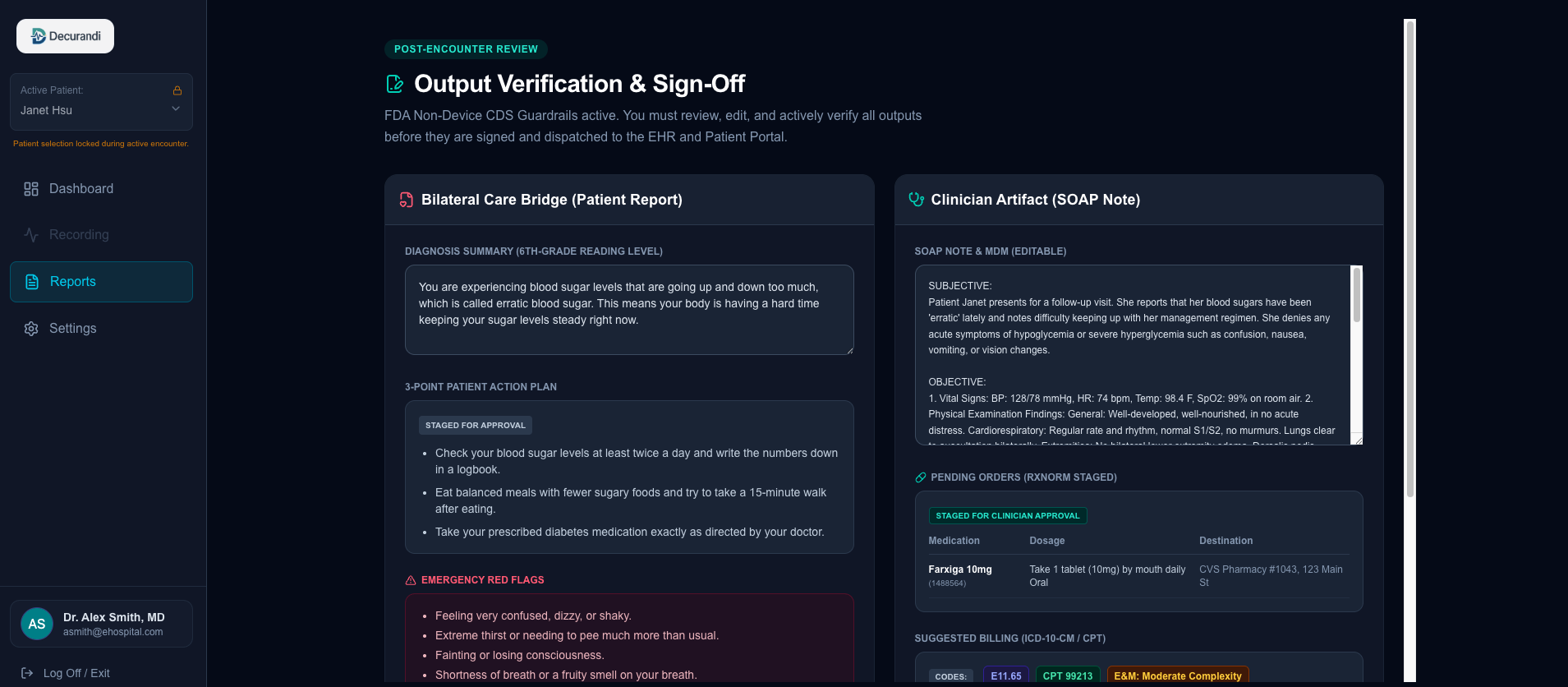
Report (AI Agent Generated)
-
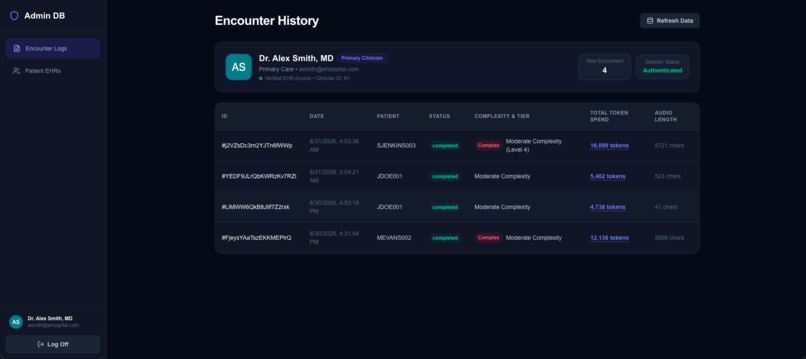
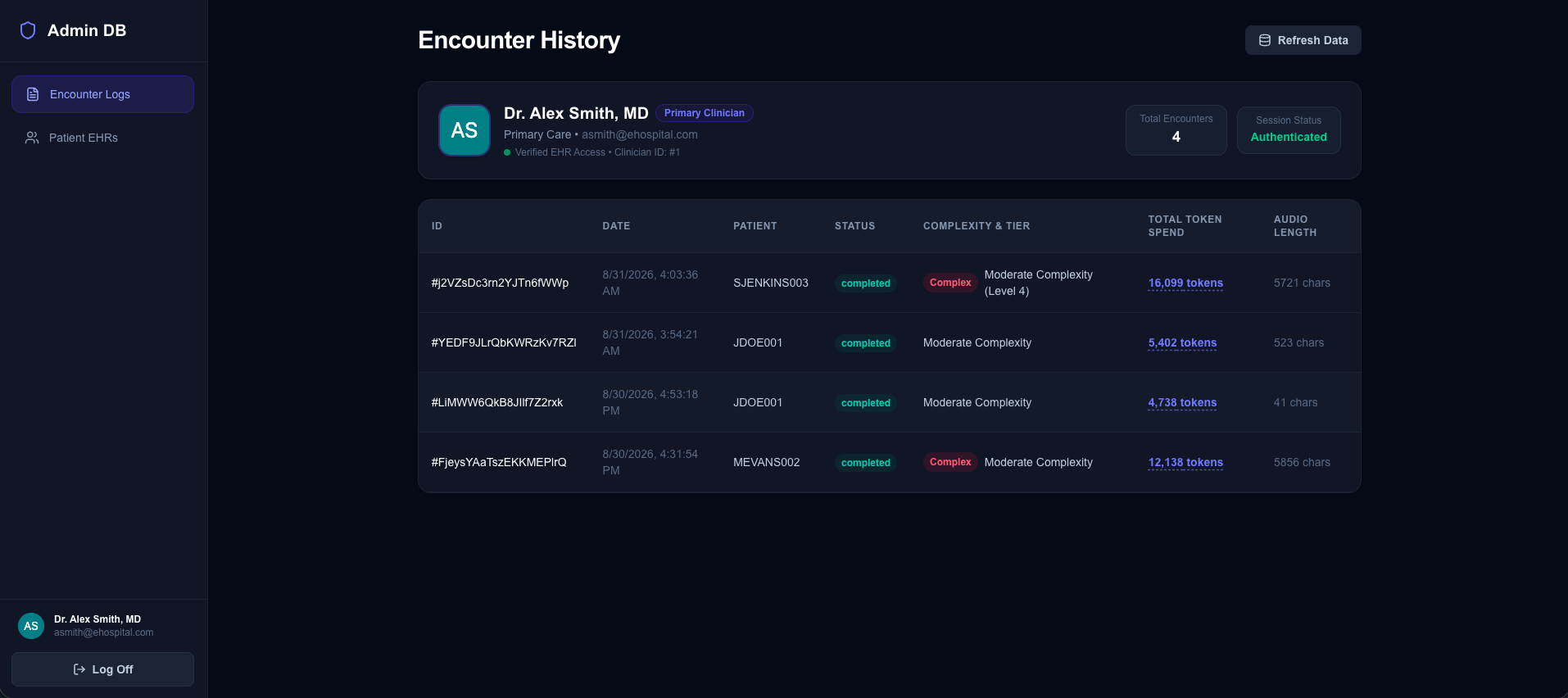
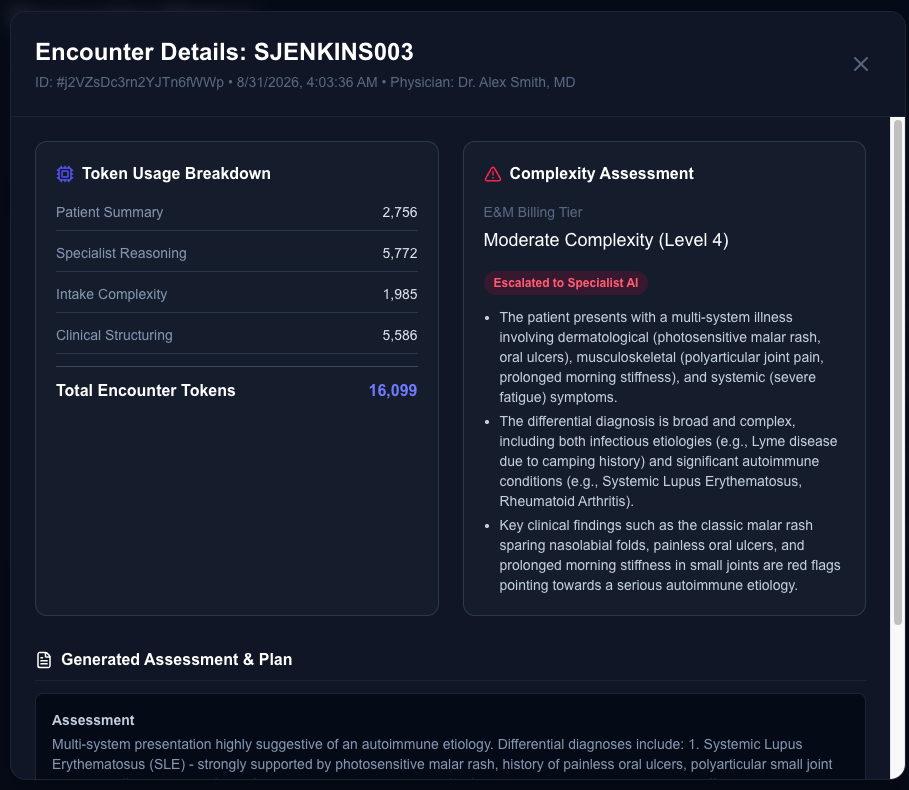
admin - encounter history
-
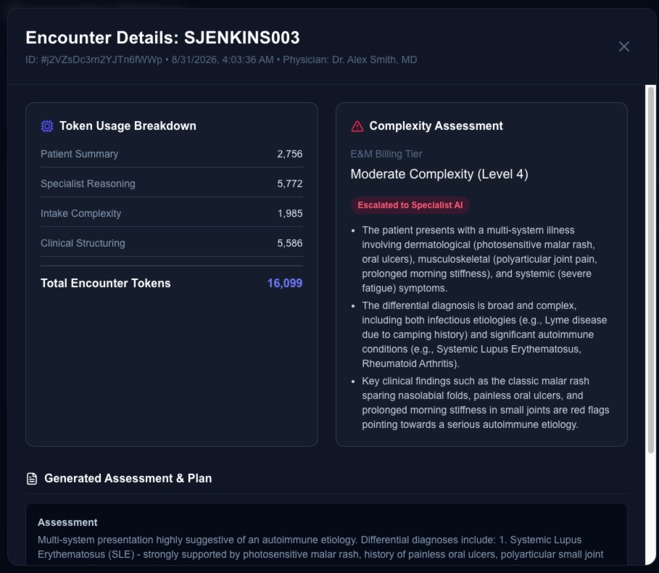
admin - token tracking
-
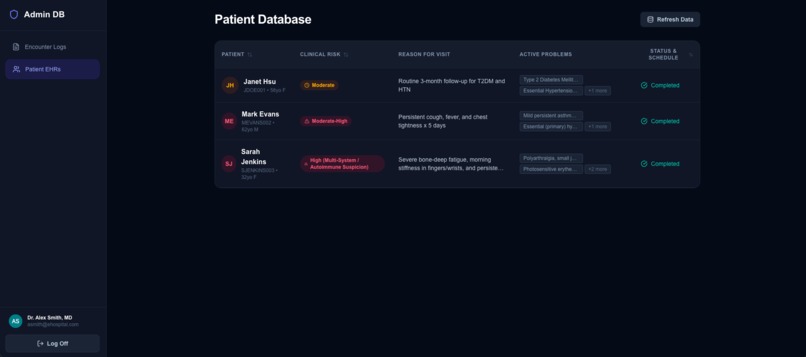
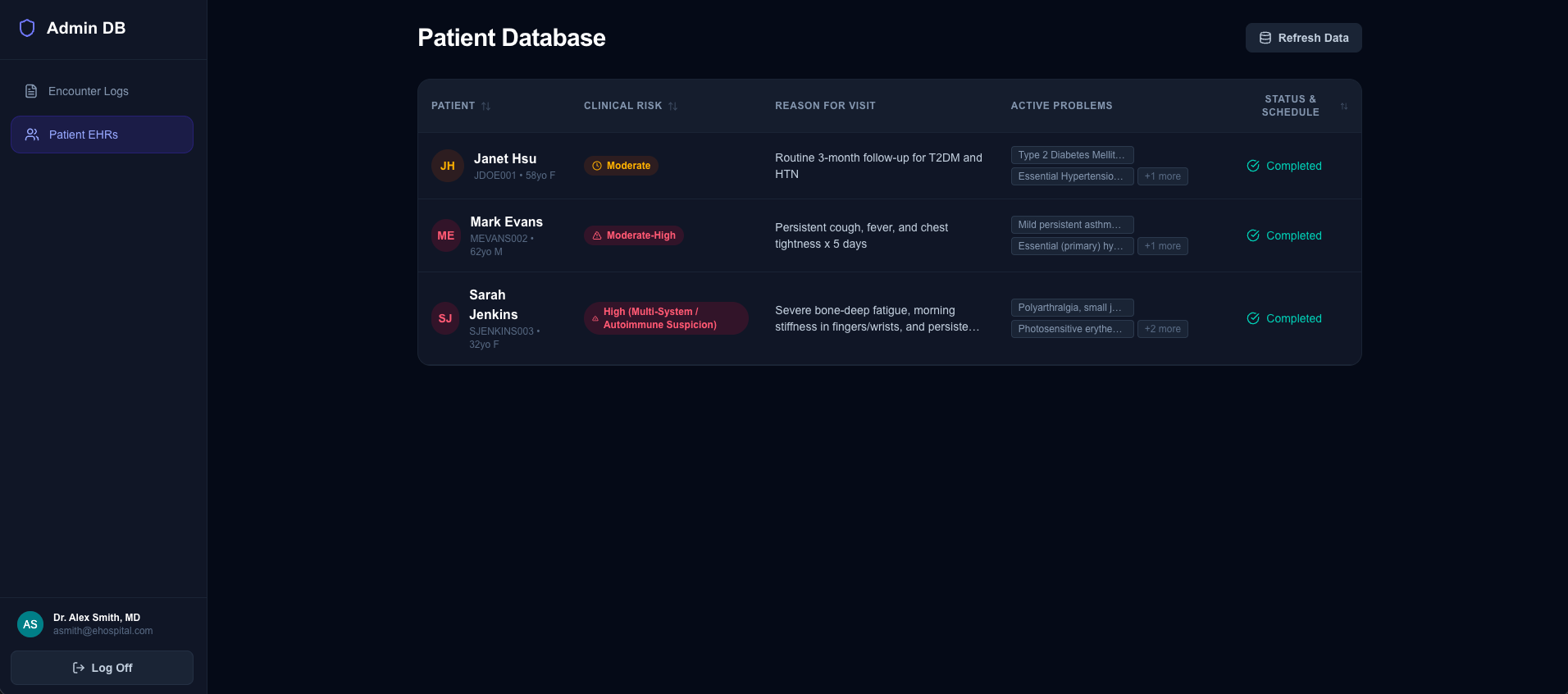
admin - patient database
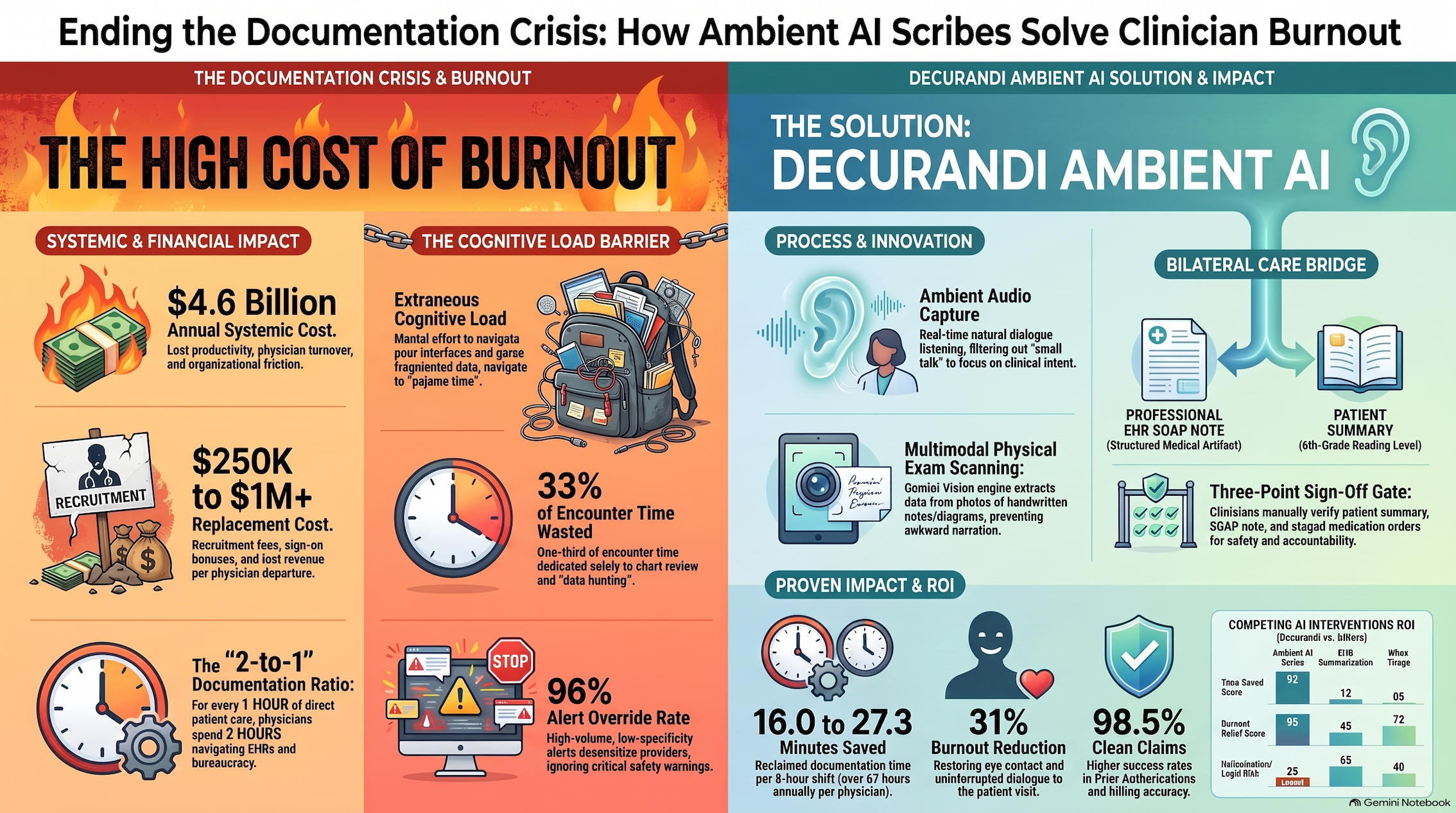
Inspiration
During the peak of the COVID-19 pandemic, we volunteered to help develop an IT system on a specialized COVID-19 emergency treatment hospital. While populations worldwide were in lockdown, legions of young physicians, resident doctors, and nurses worked day and night on the frontlines. Clinician fatigue and burnout are real; I saw it with my own eyes. Sometimes we focus so much on the patients that we forget that doctors and medical providers are also human beings with mental and physical limitations.
We built decurandi-w to care for the healers: an intelligent ambient AI scribe that listens unobtrusively, organizes unstructured dialogues, guards clinical safety, and restores human connection to the exam room.
Check out this video:
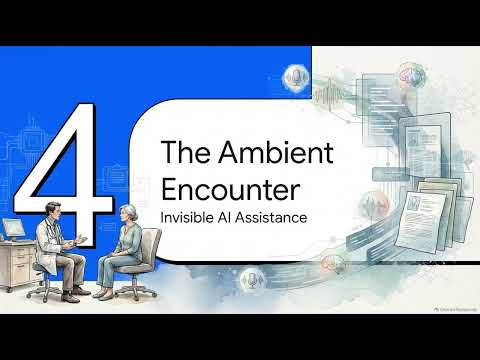
Watch on YouTube: decurandi-w: Curing Clinical Burnout
What decurandi-w does
Decurandi-W is an ambient clinical intelligence platform engineered with a Multi-Agent Directed Graph powered by Google Gemini. Decurandi-w transforms clinical workflows using an intelligent, multi-agent AI framework. While primary care physicians often spend hours on manual chart reviews and documentation, Decurandi-w streamlines pre-encounter preparation and post-visit clinical documentation into a single, workflow-optimized portal.
- Pre-Encounter Clinical Cockpit: synthesizes baseline EHR history, active problems, and medication lists.
- Multimodal Physical Exam Note Ingestion (OCR): Clinicians can upload photos of handwritten notes or bedside sketches. Gemini Vision extracts and merges the text with complete clinical provenance tracking.
- Bilateral Output Verification: Translates complex diagnoses into an empathetic, 6th-grade reading level patient summary with a 3-point action plan and emergency red-flag return precautions.
- Three-Point Sign-Off Gate: Enforces mandatory verification of all 3 clinical domains before committing records to Cloud Firestore or exporting the Monochrome Ink-Saver PDF patient handout.
How we built it
Decurandi-W was architected and vibe-coded using the Google Antigravity IDE and the Google Agent Development Kit (ADK), deploying serverless microservices to Google Cloud Run:
Decurandi-W Architecture:
├── Frontend: Next.js 14 (App Router) + TypeScript + Tailwind CSS + Chart.js + jsPDF
├── Backend: FastAPI (Python 3.11) + Google GenAI SDK + Firebase Admin SDK
├── Reasoning Engine: Google Gemini 2.5 Flash-Lite / 2.5 Flash / 3.5 Flash / 3.1 Pro
├── Database: Google Cloud Firestore (Live Collections with Local Fallback)
├── Identity: Firebase Authentication (Cryptographic RS256 JWT Bearer Tokens)
└── Hosting: Google Cloud Run Serverless Containers (Region: us-central1)
The Multi-Agent Directed Graph:
MultimodalIntakeAgent: Normalizes acoustic inputs, scrubs conversational noise, and merges OCR note streams.DialogueCurationAgent: Operates with deterministic sampling (temperature=0.0) on cumulative audio buffers for verbatim speaker diarization and self-correcting turn boundaries.FlashFirstRouter: High-speed triage node assessing acute clinical complexity thresholds.HITLInterruptNode: Implements safety pauses for cardiopulmonary or systemic emergencies.ClinicalStructuringAgent: Executes deep medical reasoning (gemini-3.5-flash) to generate structured SOAP notes, RxNorm prescriptions, and ICD-10/CPT coding.PatientTranslatorAgent: Generates clear, empathetic patient-facing instructions at a 6th-grade reading level.
Resilience & Telemetry:
- Dual AI Runtime: Built with an automatic 3-second failover between Vertex AI (Application Default Credentials) and Direct
GEMINI_API_KEY. - Dual Database Access: Reads/writes to Cloud Firestore with automated fallback to local synthetic EHR baselines.
- Audit & Telemetry Logging: Real-time event tracking via
/api/admin/logscapturing latency, model allocation, and execution payloads for HIPAA audit compliance.
Simulation Scenarios & Clinical Challenges
To rigorously evaluate our multi-agent architecture across realistic ambulatory encounters, we built and tested three clinical scenarios:
Scenario 1: Chronic Care Management, Medical Decision Making & Phonetic Correction
- Patient: Janet Hsu (58yo F) — Type 2 Diabetes, Hypertension, and early peripheral neuropathy.
- Challenge: The AI must capture nuanced medical terminology, accurately identify brand/generic pharmacology (Farxiga / dapagliflozin vs. Metformin), evaluate vitals trajectory trends, and document bilateral monofilament foot exams without hallucination.
- Demo & Simulation Videos:
Scenario 2: Pulmonary Infection, Cardiac Differential & Multimodal OCR Ingestion
- Patient: Mark Evans (45yo M) — Acute fever, productive cough, pleuritic left lower chest pain, asthma.
- Challenge: Pulmonary auscultation is inherently silent on audio recordings. The dialogue intentionally omitted lung exam findings; the clinician photographed handwritten notepad findings ("crackles left lower base, egophony present"), which Gemini Vision OCR extracted and merged into the Objective SOAP section. The AI also differentiated pleuritic chest pain from ischemic myocardial infarction factoring in cardiac family history.
- Demo & Simulation Videos:
Scenario 3: Conversational Noise Filtering & FDA CDS HITL Escalation Pause
- Patient: Sarah Jenkins (32yo F) — Profound chronic fatigue, bilateral morning hand stiffness (>1 hr), photosensitive malar facial rash, oral ulcerations.
- Challenge: The recording contained heavy conversational noise and non-clinical small talk (traffic delays, camping trips, birthday parties). Decurandi filtered out conversational chatter while retaining clinical entities. Because the presentation involved vague multi-system symptoms (autoimmune / systemic lupus vs. Lyme differential), the FDA CDS HITL Pause halted the workflow, allowing the doctor to verify criteria and escalate reasoning to
gemini-3.5-flash. - Demo & Simulation Videos:
What We Learned
The probabilistic nature of AI model remains a concern. Hallucination is a real threat that can render AI-generated work unreliable and useless. These are three strategies that we found to handle it.
- Ambient Clinical Scribing Requires Specialized Agent Diarization: A single prompt cannot reliably listen to 15 minutes of continuous speech, transcribe accurately, extract billing codes, and write discharge notes. Decomposing the task into a directed graph (Intake ➔ Curation ➔ Triage ➔ Structuring ➔ Translation) is essential for zero-hallucination reliability.
- Determinism is Vital in Healthcare: Using
temperature=0.0with explicit anti-summarization directives for the speech curation layer prevents the AI from omitting vital sign numbers or pathophysiology explanations. - Doctors Must Remain in the Loop: AI should never be an autonomous black box. Transparent provenance tracking, editable text fields, and explicit verification gates turn AI into a trusted cognitive partner rather than a clinical liability.
More testing and trials will be required. Continuous observation and evaluation are mandatory, which may result in another kind of burden and strain. Nevertheless, we are optimistic
What's Next Improvement for Decurandi
1. Patient-Facing Companion App (Decurandi Patient Mobile App)
- Develop a mobile/PWA companion application for patients.
- Delivers the translated 6th-grade discharge summary, provides voice-activated medication reminders, and logs recovery symptoms.
2. Edge-AI & On-Device Small Language Models (SLMs) for Rural Clinics
- Deploy lightweight, quantized open models (such as Google Gemma 4) on local clinic hardware using WebGPU or on-premise edge servers.
- Enables ambient scribing in remote, rural, or humanitarian clinics that operate without stable high-speed internet connections.
3. Continuous Clinical Quality Improvement & Compliance
- Leverage physician edits during the Output Verification phase as a continuous evaluation dataset.
- Use clinician corrections to evaluate agent performance over time, creating specialized adapters and fine-tuned medical vocabulary models tailored to individual clinical specialties (Cardiology, Pediatrics, Oncology).
Decurandi-W: Reproducible Testing Guide & Clinical Scenario Benchmarks
You can execute these reproducible tests either on the Live Cloud Run Production Deployment or on a Local Development Instance:
Benchmark Scenario 1: Chronic Care Management & Phonetic Pharmacology
Clinical Context
- Patient: Janet Hsu (MRN: JHSU001) — 58yo Female with Type 2 Diabetes, Hypertension, and early peripheral neuropathy.
- Evaluation Objectives:
- Pre-encounter dashboard properly renders Chart.js Vitals Trajectory comparing historical baseline vitals against today's triage vitals (BP 138/86 ➔ 135/84, Weight 164 ➔ 165 lbs, HR 74 ➔ 82 bpm).
- Real-time Medical Phonetic Lexicon Normalizer accurately transcribes acoustic mishearings (e.g. "foxy guy" ➔
Farxiga / dapagliflozin, "sglt to" ➔SGLT2 inhibitor, "dorsalis pet is" ➔dorsalis pedis, "hba1c" ➔HbA1c). - AI captures bilateral monofilament foot exam and stages Farxiga 10mg PO Daily with RxNorm code
1488564. - Generates ICD-10 codes (
E11.40,I10) and CPT99214.
Step-by-Step Web UI Reproduction Instructions:
- Open the and sign in.
- On the left sidebar, select Janet Hsu from the Active Patient dropdown.
- Review the Vitals Trajectory bar chart, Clinical Risk Score (7.2), and predictive SDOH flags (Medication Adherence Risk).
- Click the red
Start Recording (Live)button and confirm the patient consent modal. - Simulate Audio or Play Track:
- Either play
synth-data/encounter-1/encounter-1.mp3into your microphone, or read fromsynth-data/encounter-1/encounter-1.txt. - Observe the Live Audio Buffer Ticker and the color-coded Curated Dialogue Timeline populated by
gemini-2.5-flash-lite.
- Either play
- Click
Synthesize Note. - In the Output Verification Screen, inspect:
- SOAP Note: Accurate subjective HPI, objective vitals + foot exam, MDM discussing SGLT2 benefits.
- RxNorm Staged Orders: Farxiga 10mg PO Daily with pharmacy destination.
- Patient Summary: 6th-grade translation, 3-point action plan, and emergency red flags.
- Check all 3 verification checkboxes and click
Approve, Sign, & Disseminate. - Click
Download as PDFto test the monochrome ink-saver document export.
Built With
- adk
- cloud-run
- firestore
- gemini
- google-cloud
- node.js
- python


Log in or sign up for Devpost to join the conversation.