-
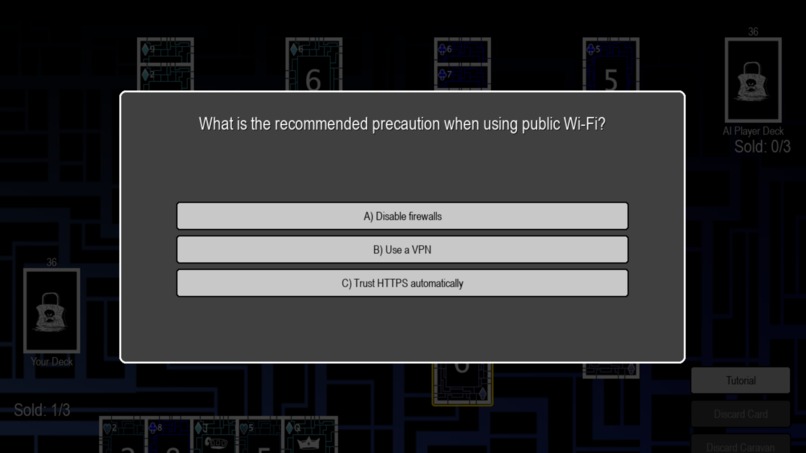
Sample question
-
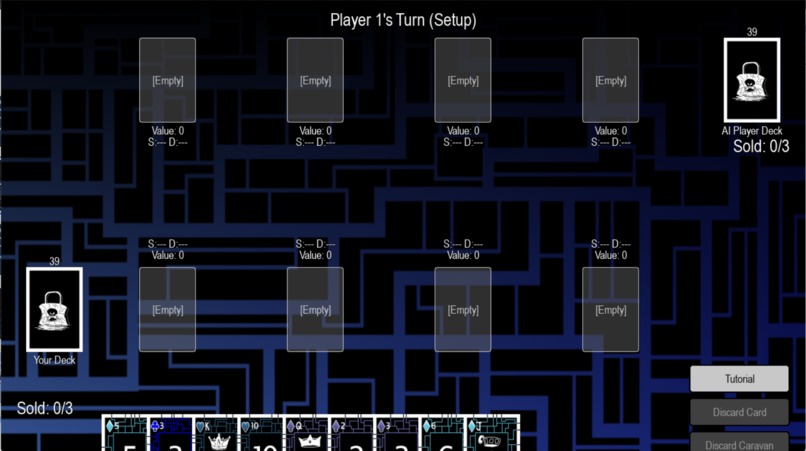
Standard setup phase
Inspiration
People in the United States are not sufficiently digital literate to protect themselves from attackers. In 2023, the Internet Crime Complaint Center received 880,418 cyberattack complaints, which was an 11% increase from 2022 (Internet Crime Complaint Center, 2024). A survey by Pew Research Center polled 5,101 randomly selected U.S. internet users to test digital literacy. The survey found that only 48% of users correctly identified multi-factor authentication, and 13% of users understood VPNs, signifying poor digital literacy (Sidoti & Vogels, 2023). Poor digital literacy leaves users vulnerable to cybercrime and weak password habits (Shillair et al., 2022).
What it does
Our game blends important cybersecurity knowledge with a fun and interactive game.
How we built it
Using python 3.13.7 and pygames, along with painstakingly hand drawn graphics, we developed Decrypt and Defend.
Challenges we ran into
As it turns out, multiple people with different skills and levels of coding experience leads to a mess of code, but through perseverance we managed to work together and get it done.
Accomplishments that we're proud of
Using our attempted project from last year as a baseline for what not to do, we were able to actually fulfill our goal of making a fun and engaging while still informative game.
What we learned
We gained further experience in python and pygames and we learned a bit more of command line.
What's next for Decrypt and Defend
We plan to keep making updates and continue to fix bugs and try to add quality of life.

Log in or sign up for Devpost to join the conversation.