-
-
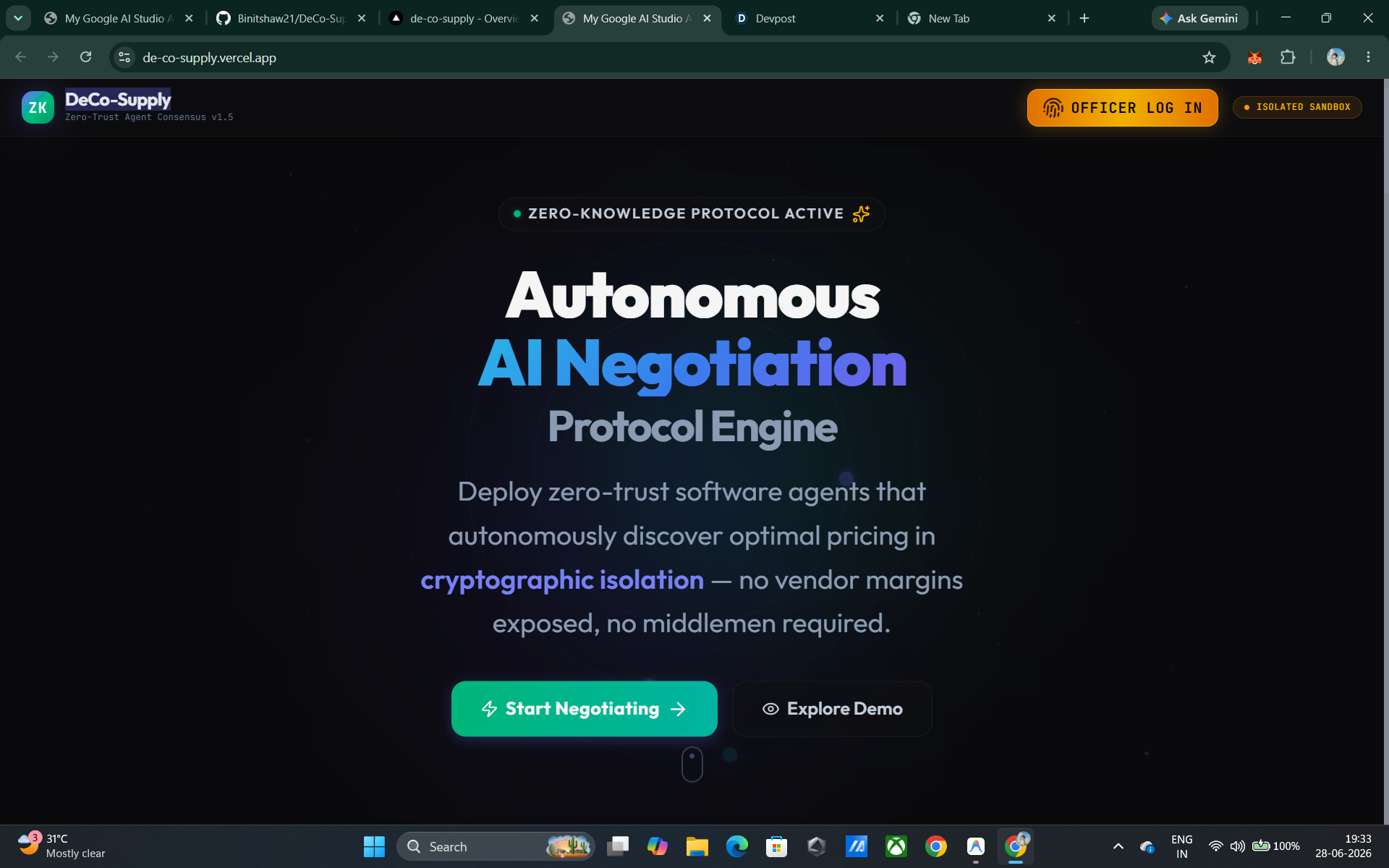
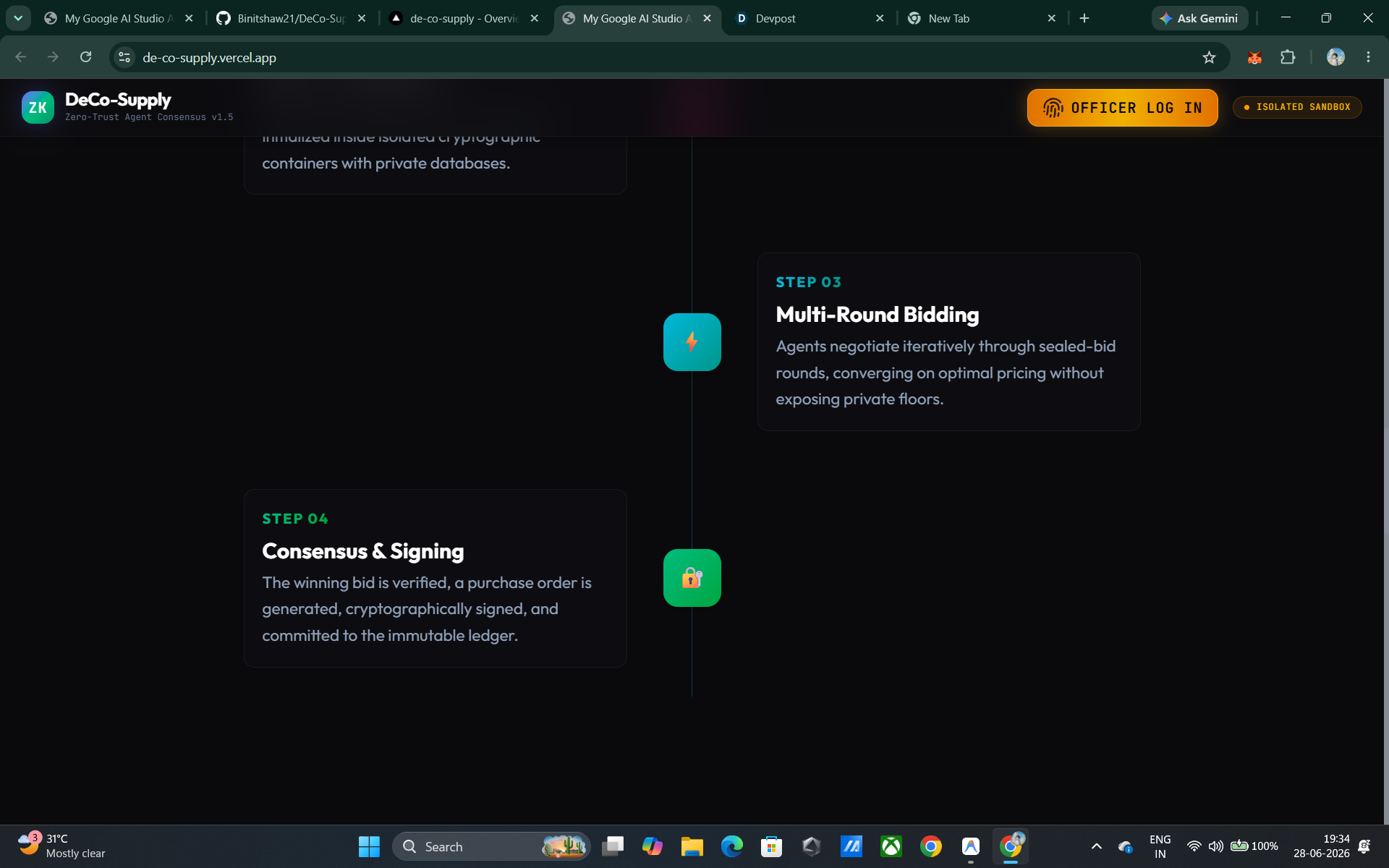
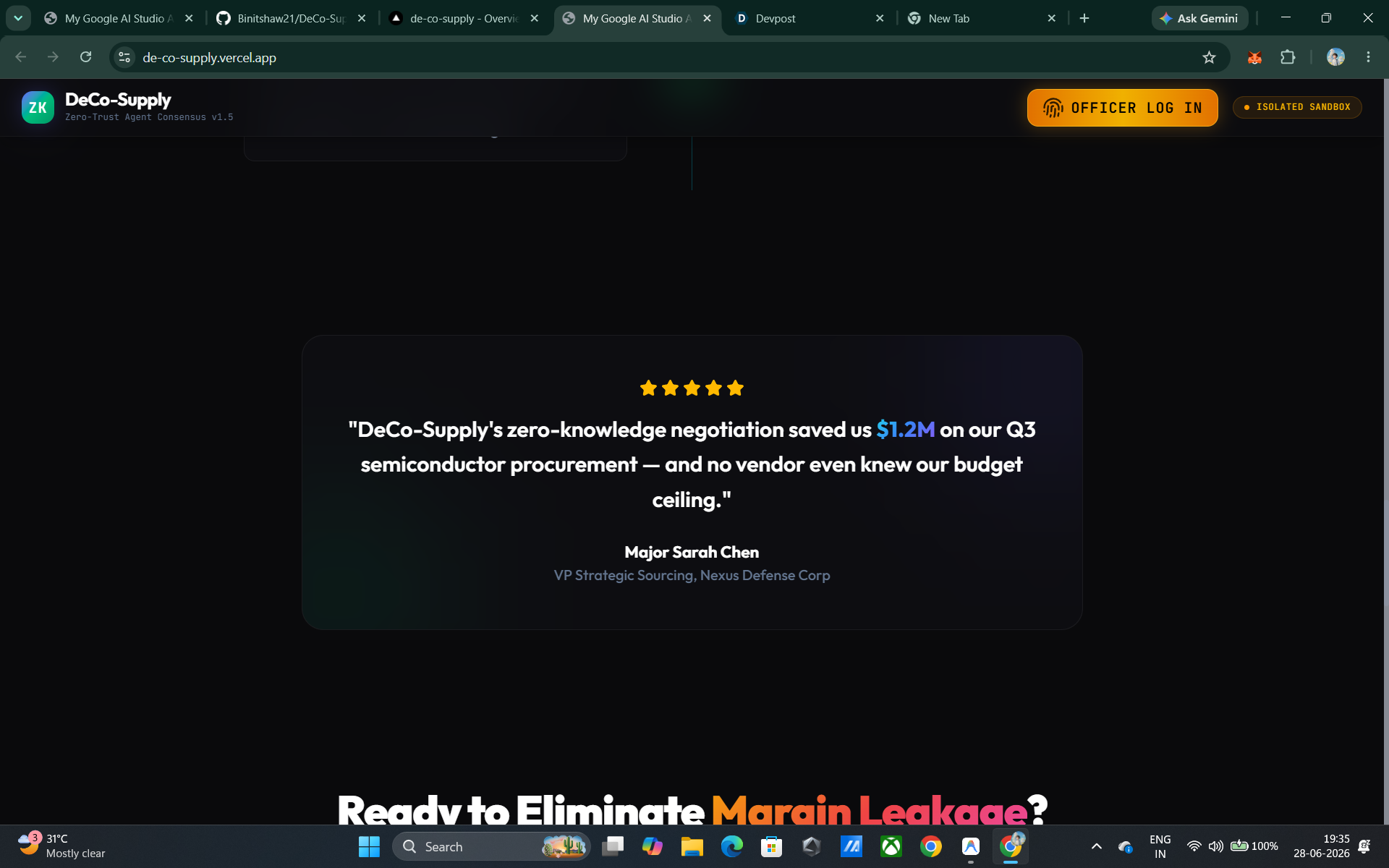
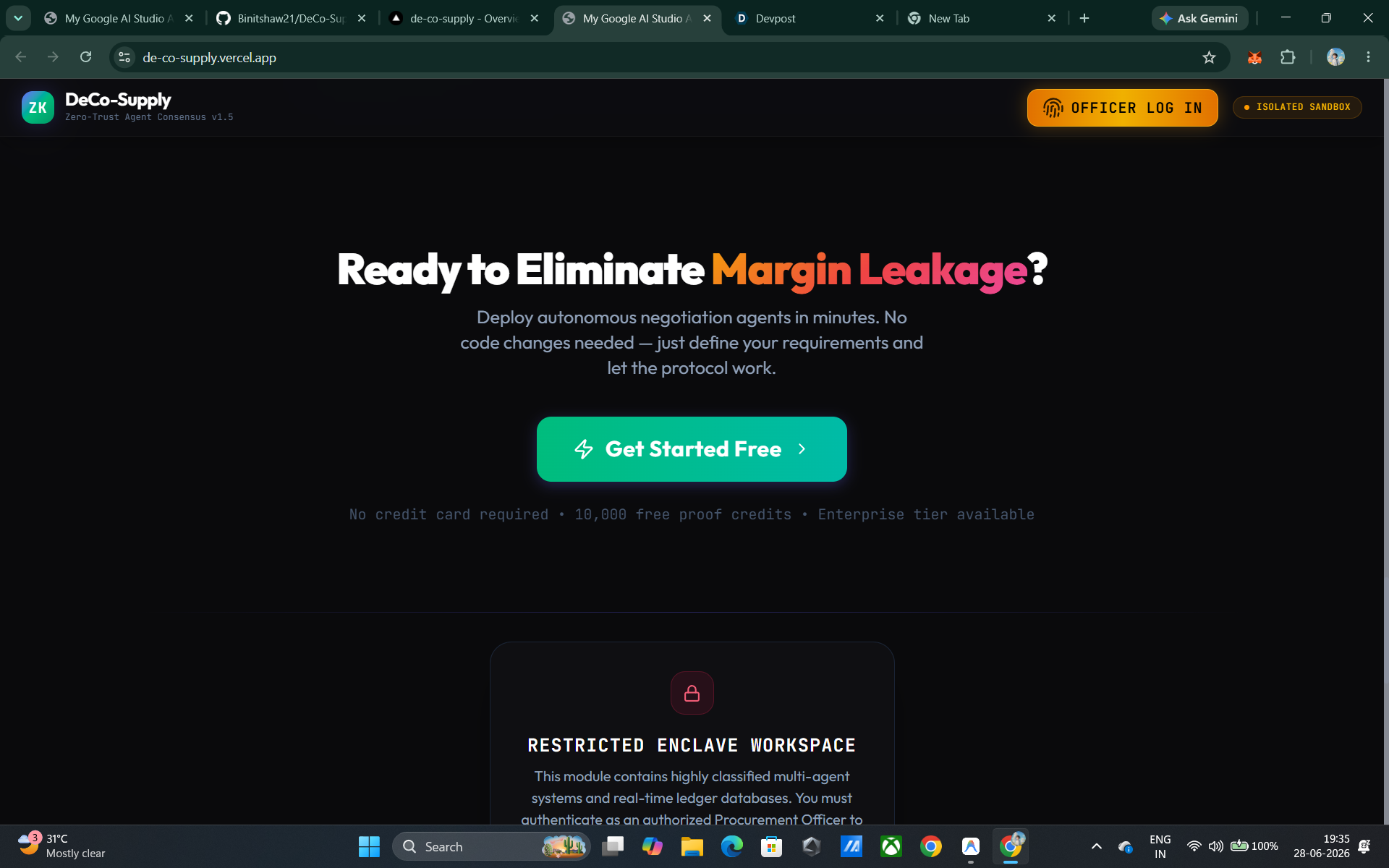
landing page
-
landing page
-
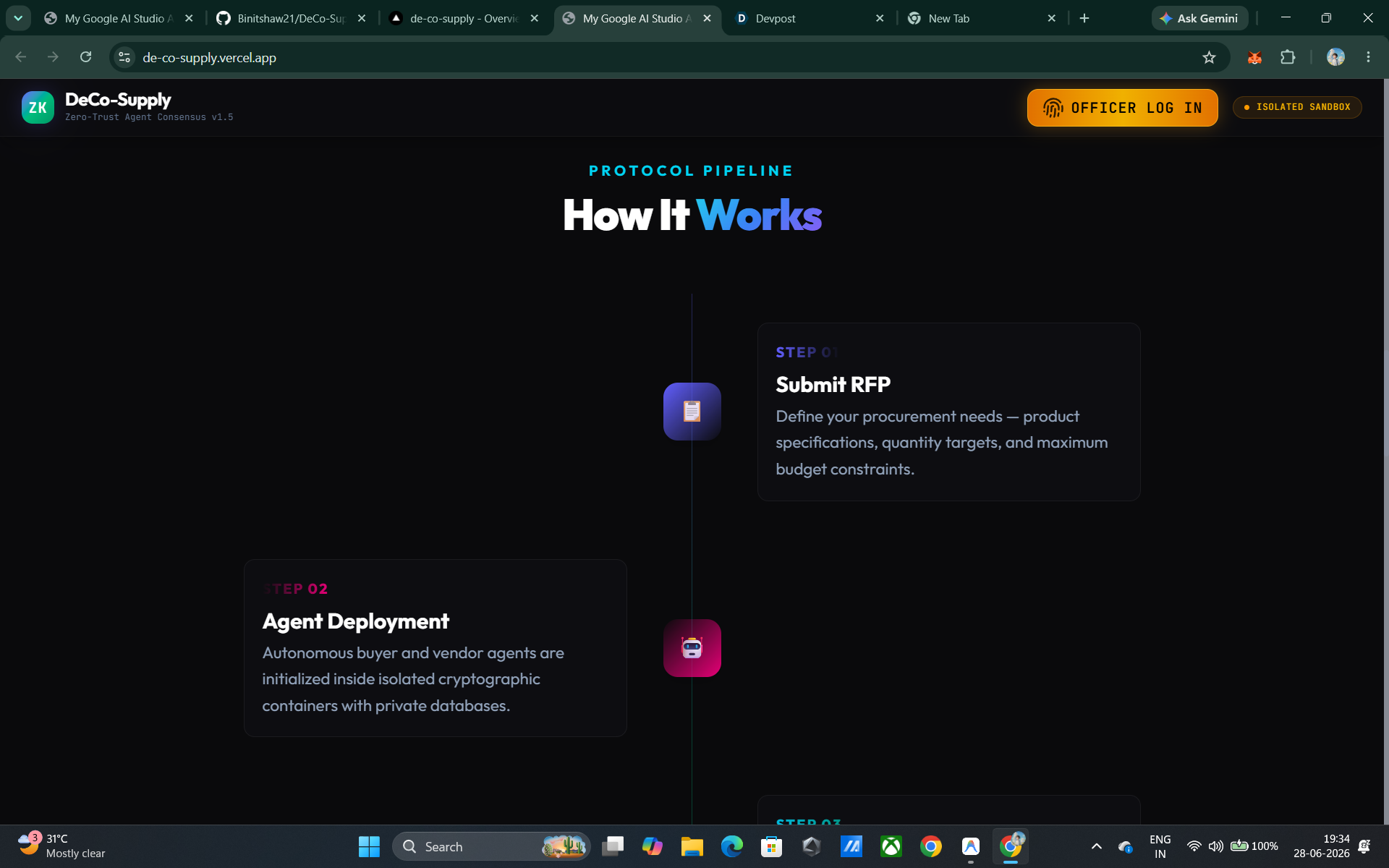
landing page
-
landing page
-
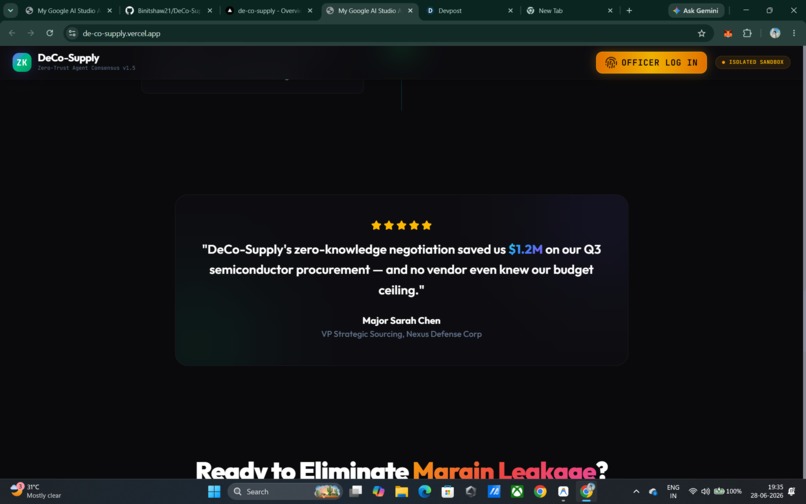
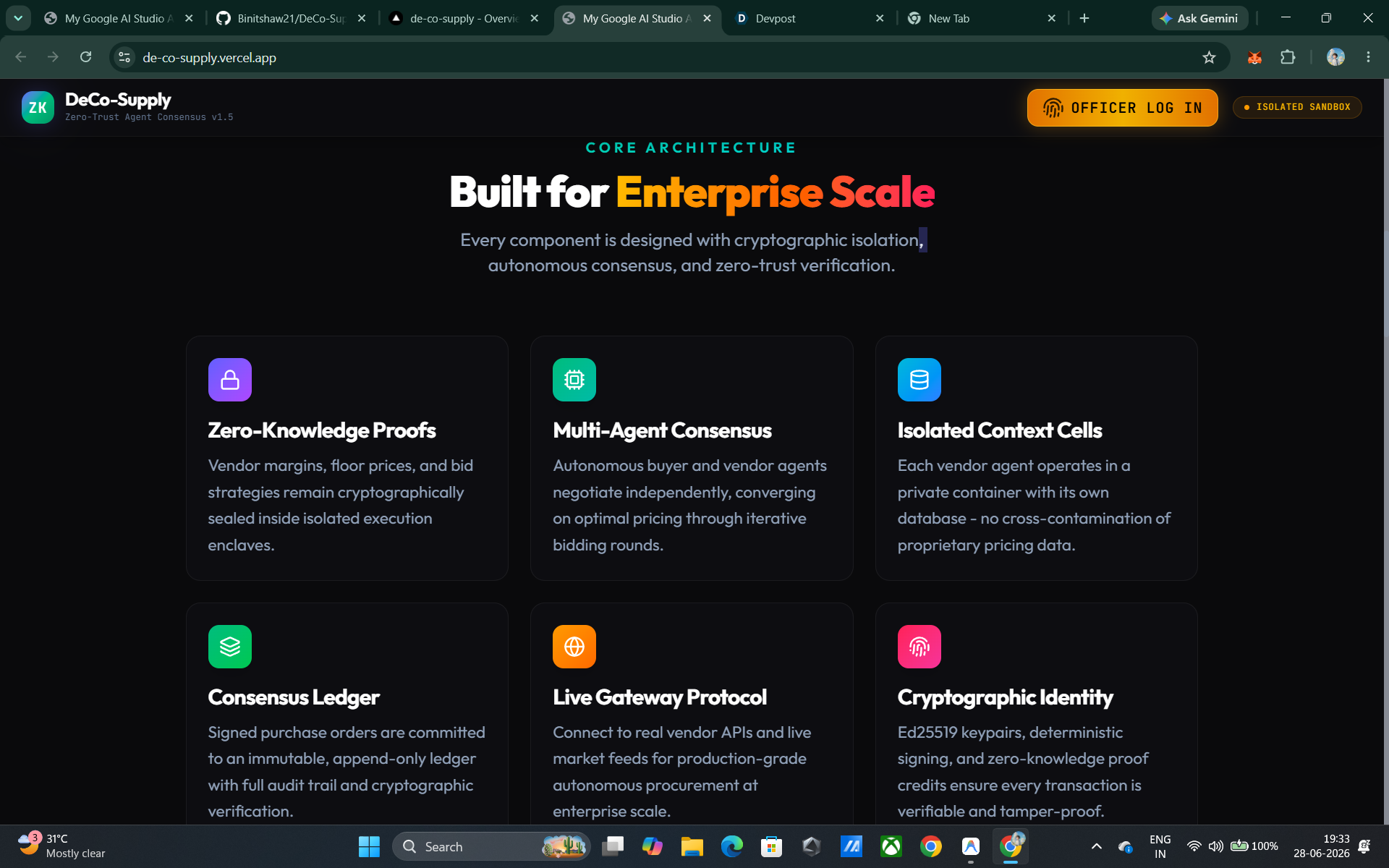
landing page
-
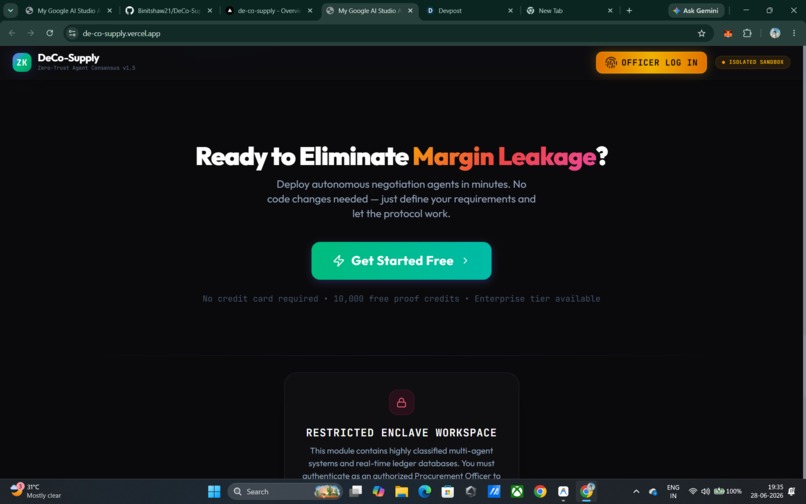
landing page
-
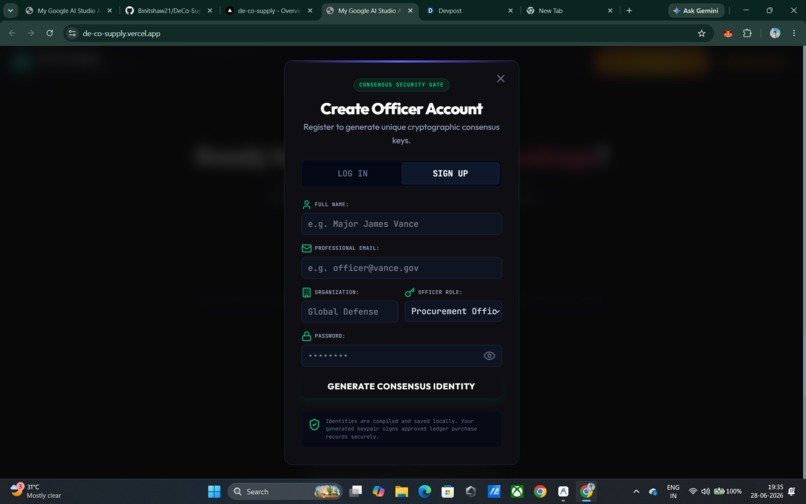
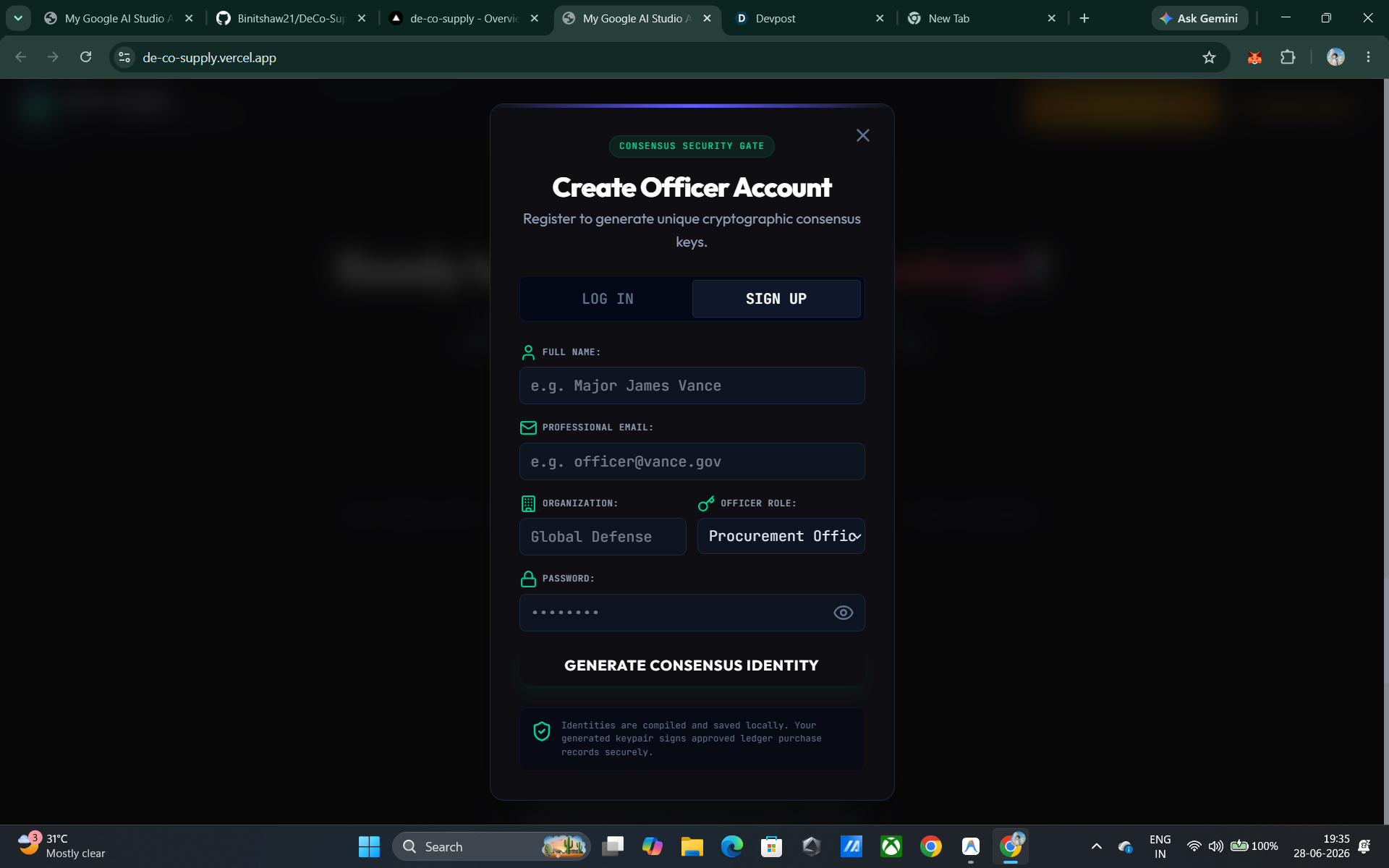
login page
-
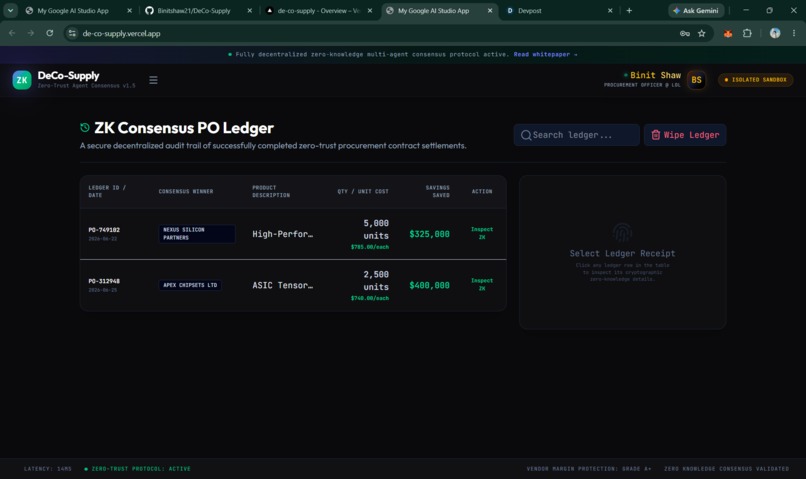
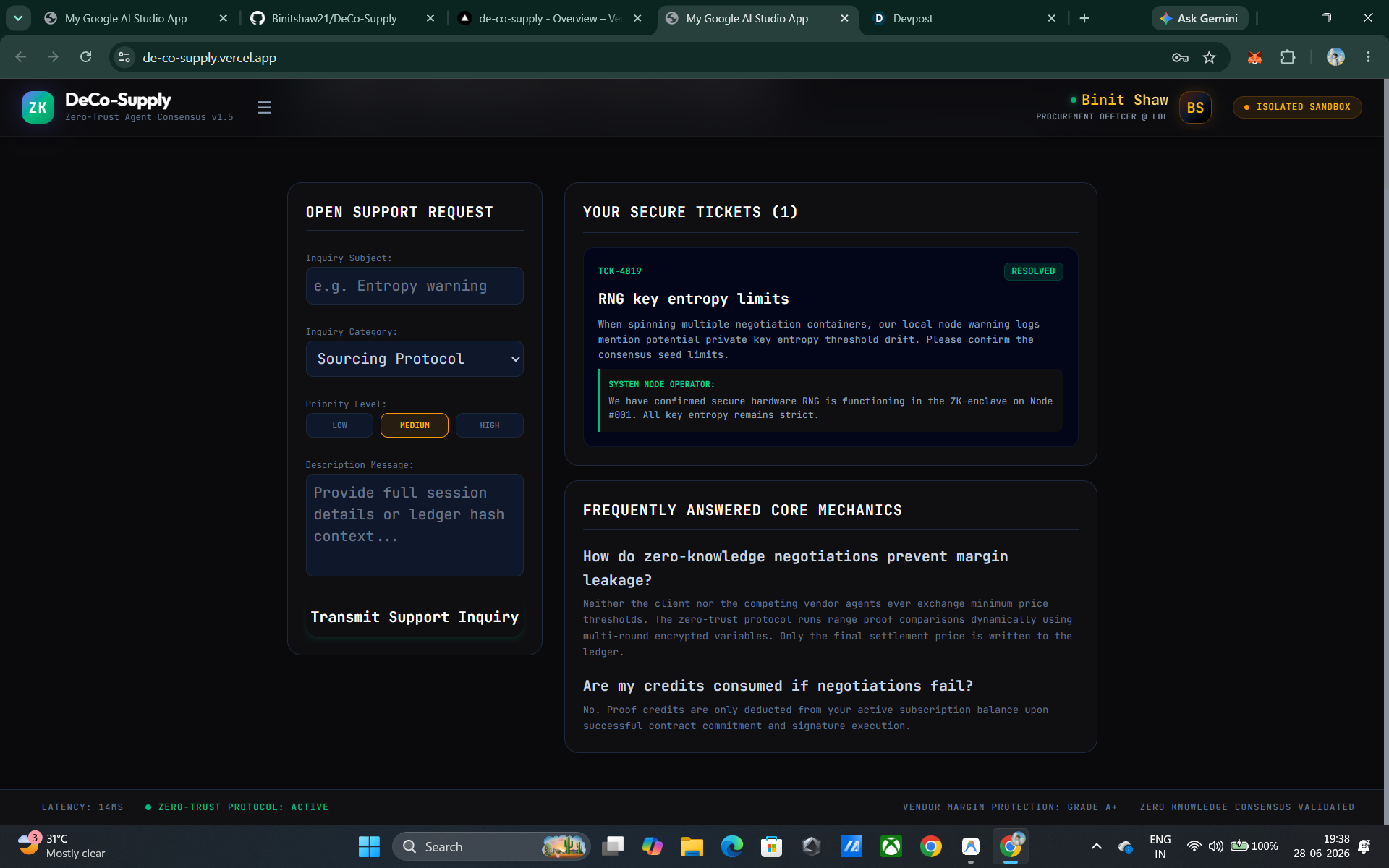
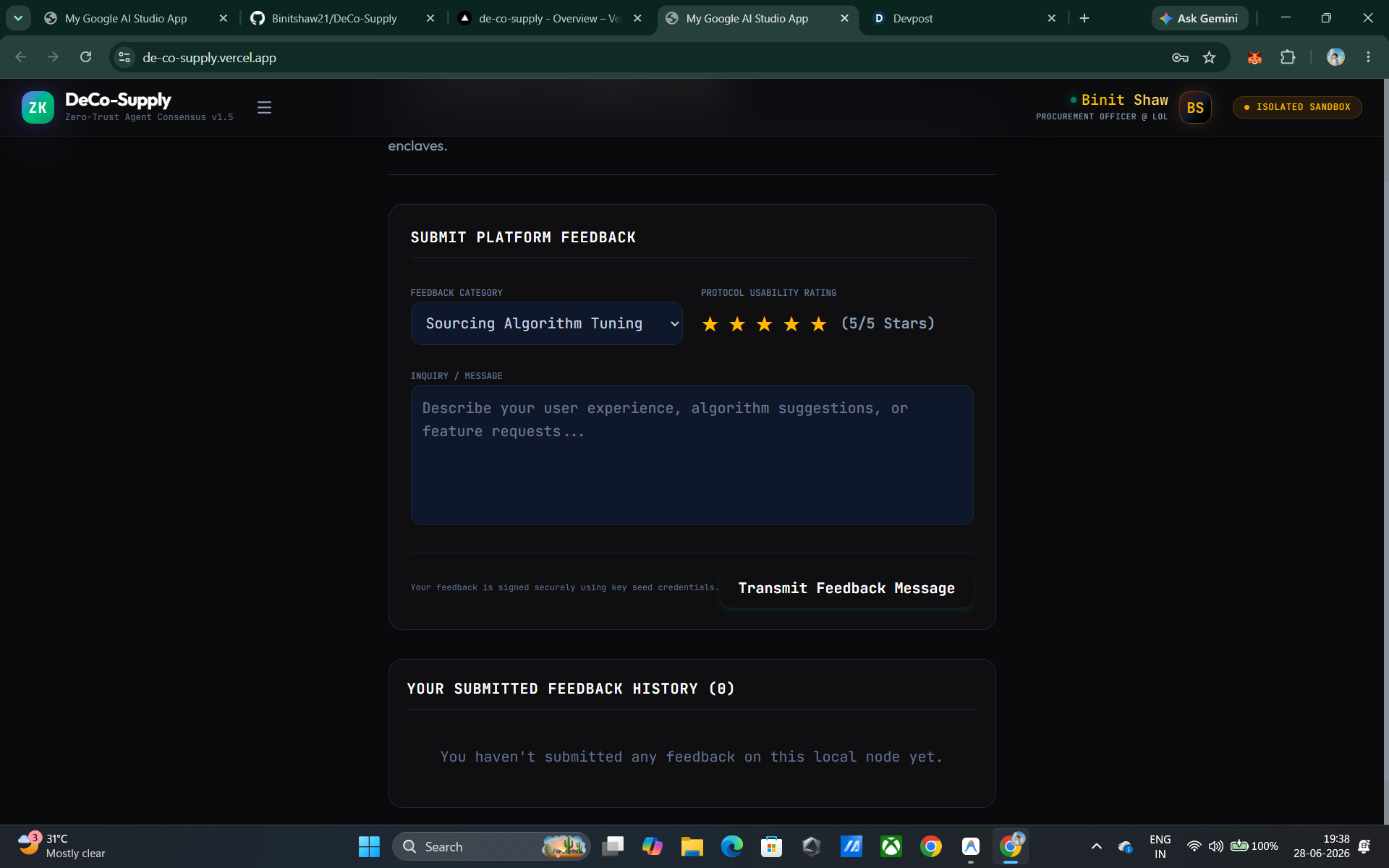
user pannel
-
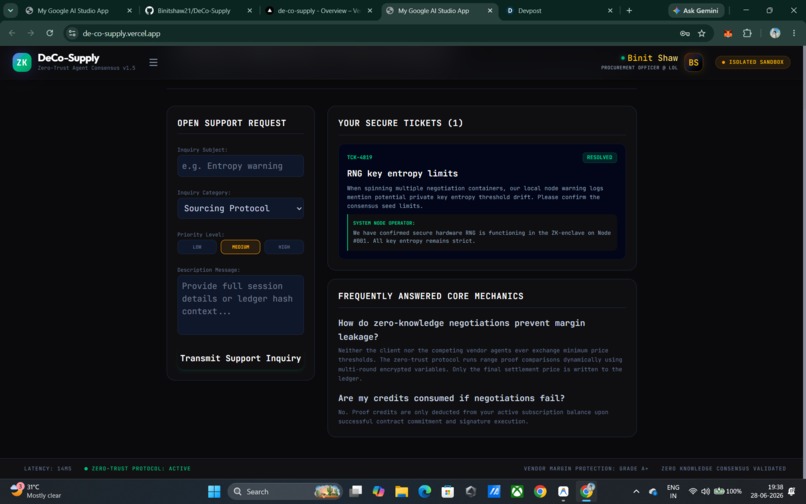
user pannel
-
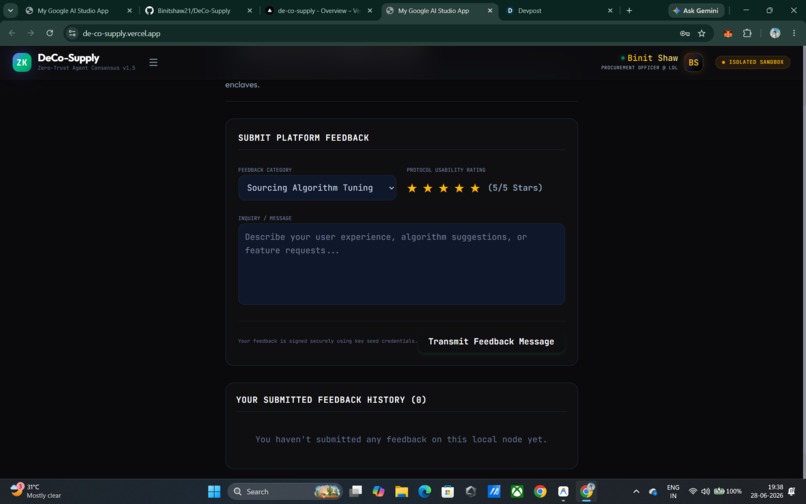
user pannel
-
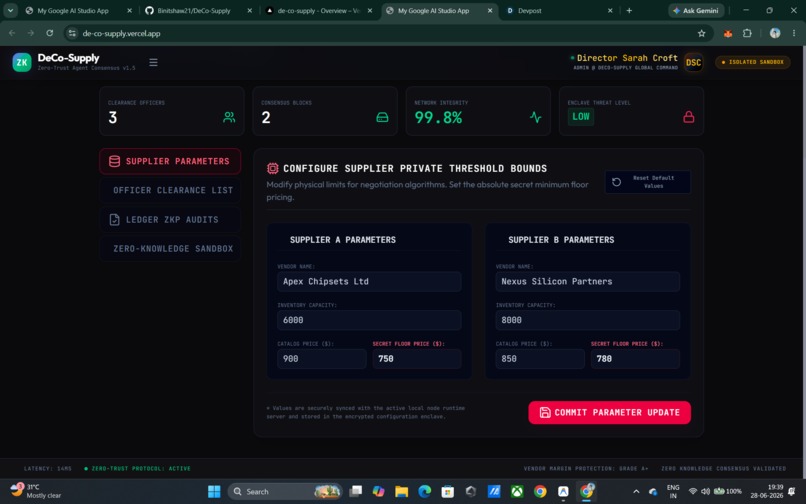
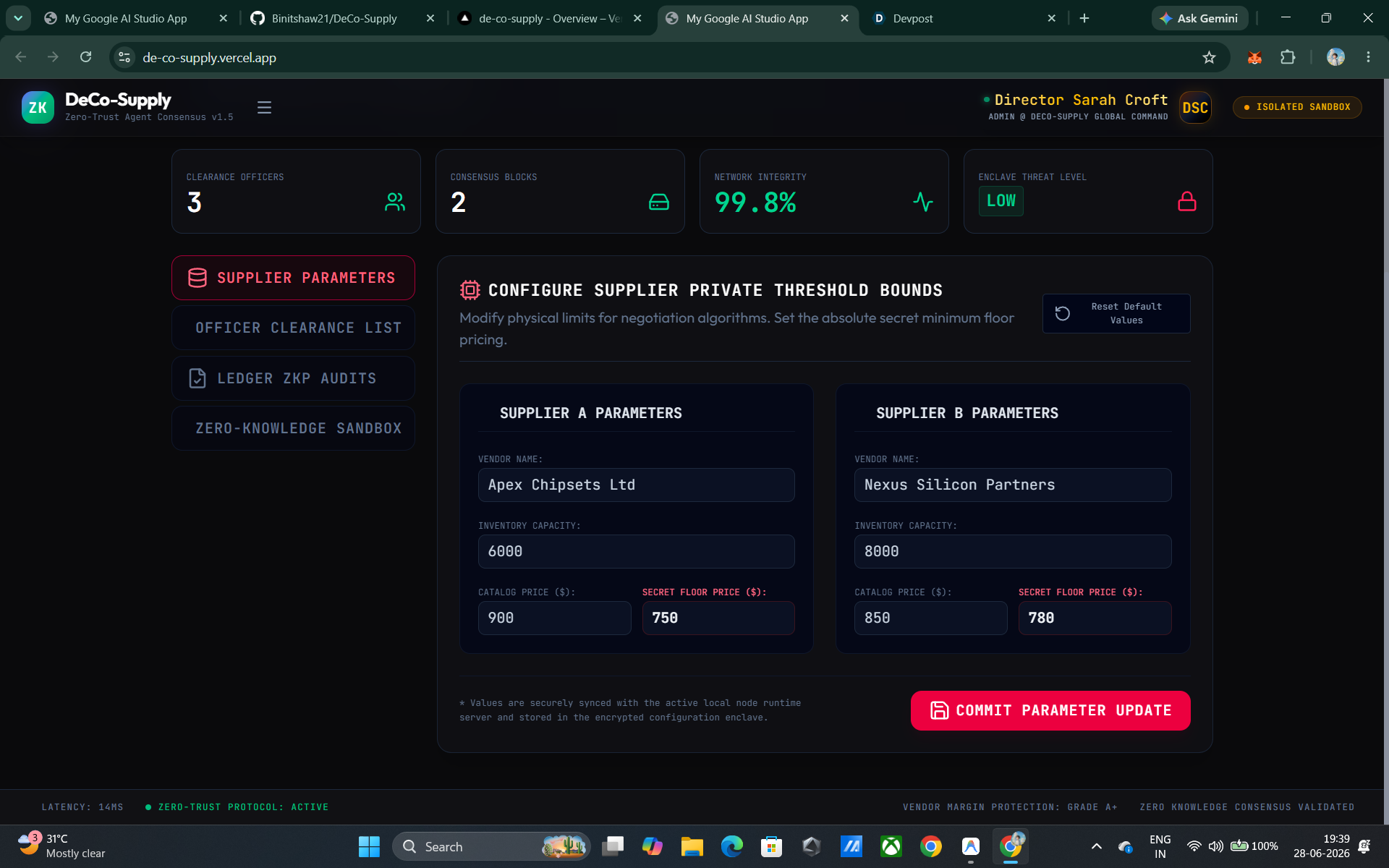
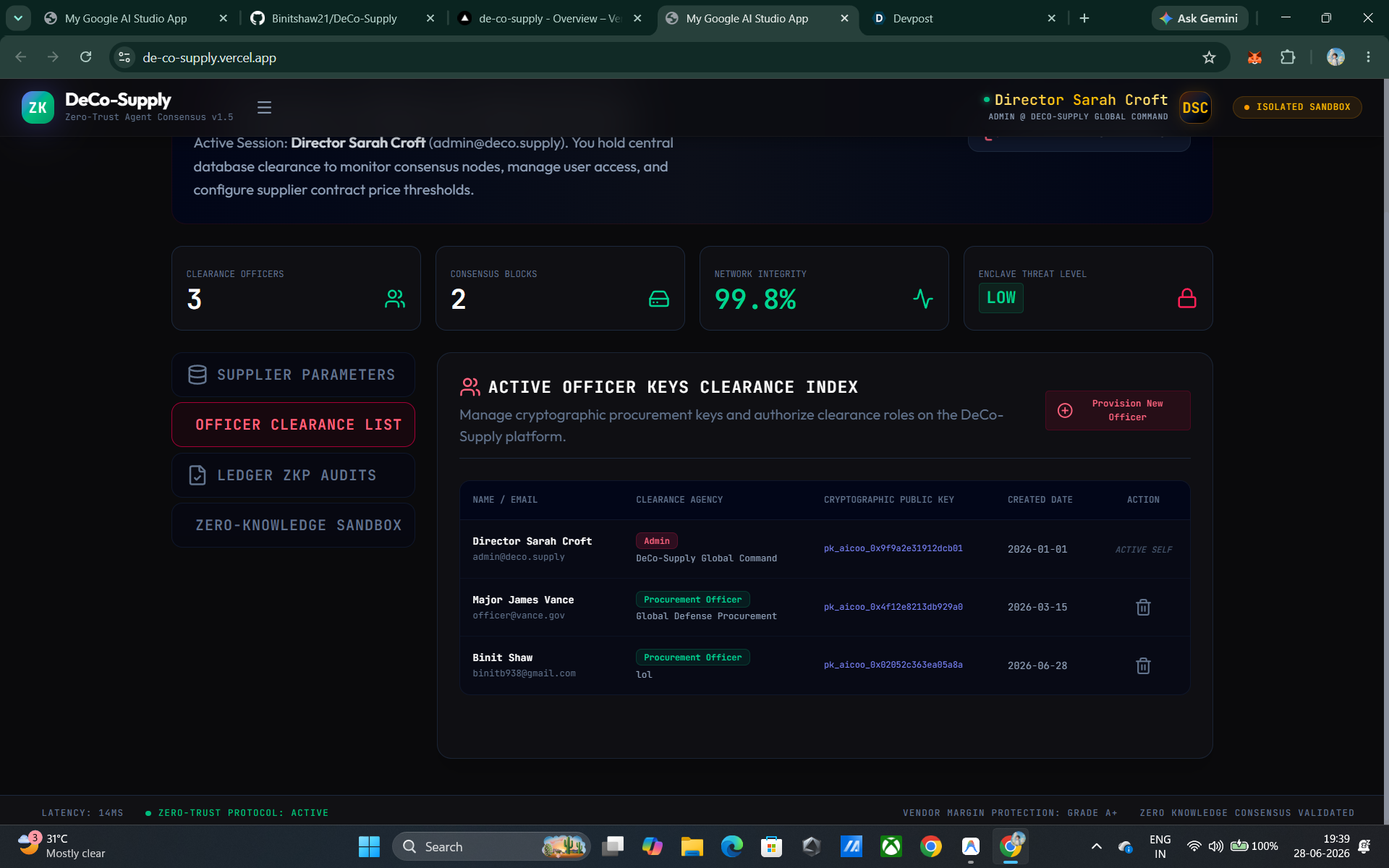
admin pannel
-
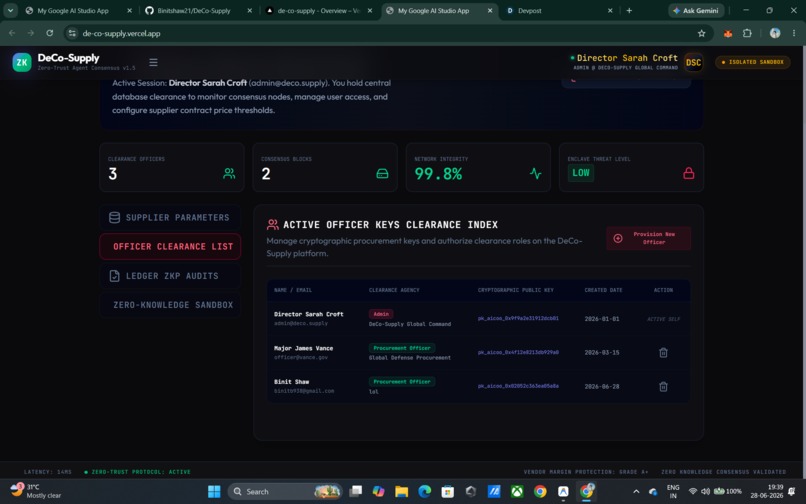
admin pannel
-
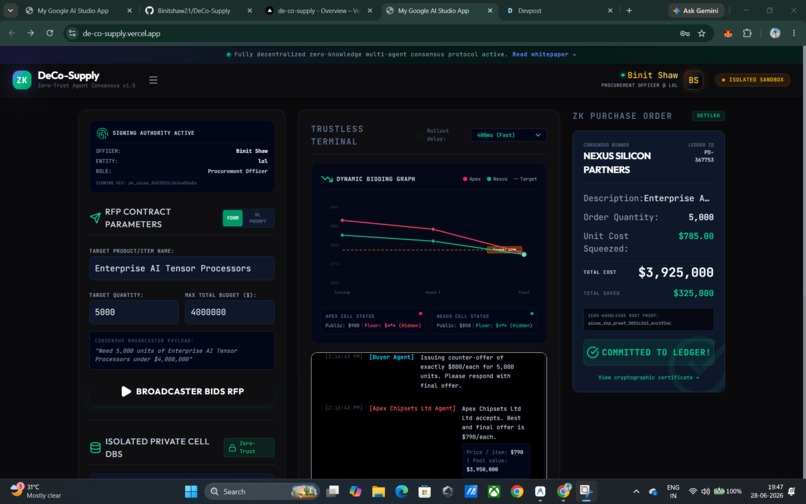
admin pannel
Inspiration
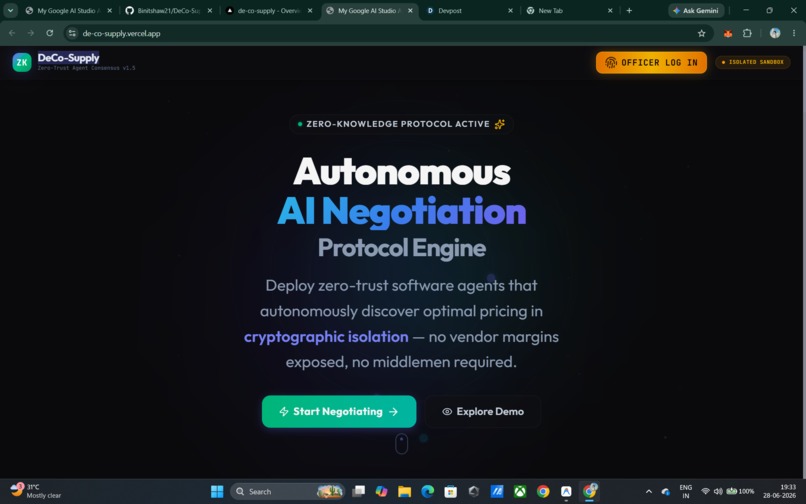
Enterprise procurement is fundamentally broken. B2B negotiations are traditionally slow, opaque, and inherently distrustful. Vendors want to protect their profit margins, while buyers want to minimize costs. We realized that if we could leverage AI to automate this negotiation, we could save companies millions of dollars and thousands of hours. However, no vendor would ever hand over their private pricing limits to a centralized AI.
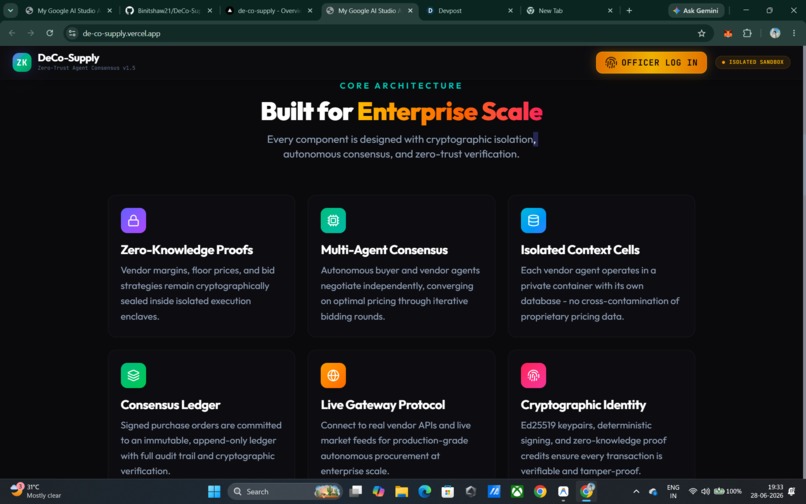
This inspired DeCo-Supply: a platform where autonomous AI agents negotiate on behalf of buyers and vendors, but utilize cryptographic isolation (Zero-Knowledge concepts) so that floor prices and bid strategies remain cryptographically sealed.
What it does
DeCo-Supply is an AI-powered decentralized procurement network.
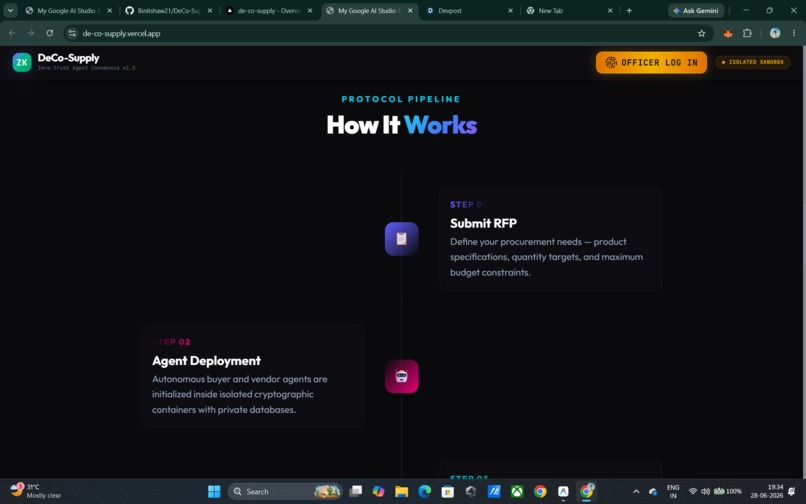
- The Request: A buyer issues an RFP (e.g., "I need 5,000 AI GPUs under $4M").
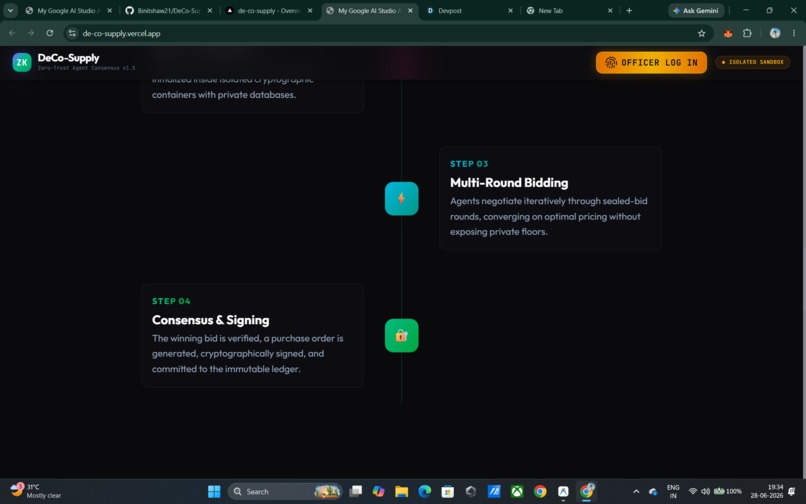
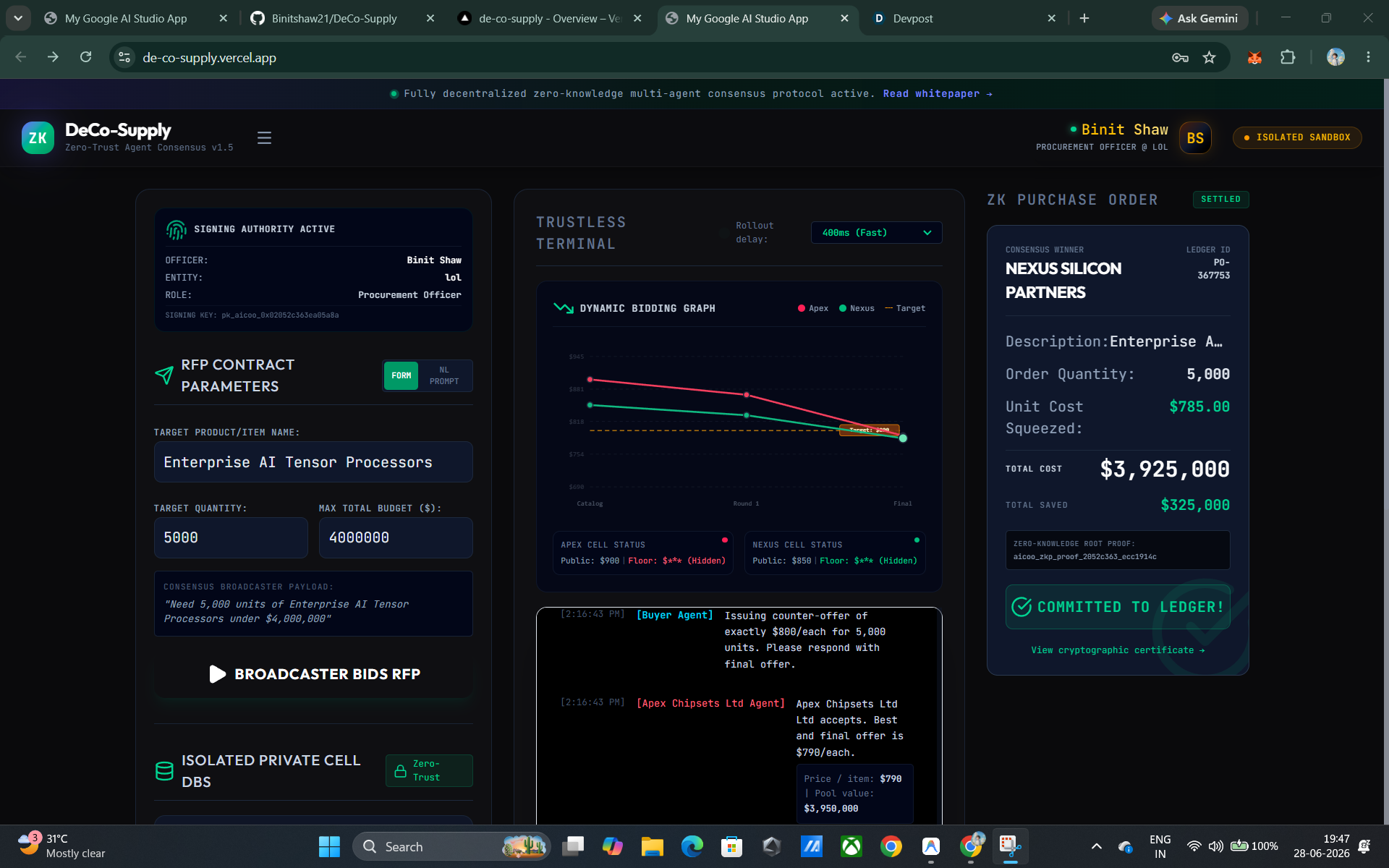
- The Multi-Agent Consensus: The platform spawns isolated AI Vendor Agents. Each vendor agent has a "private context cell" containing their secret inventory and minimum floor prices. The Buyer Agent and Vendor Agents negotiate dynamically in real-time, issuing counter-offers until a mutually beneficial clearing price is reached.
- Zero-Trust Verification: Because of the cryptographic isolation, the Buyer Agent never learns the Vendors' absolute bottom lines—it only sees the mathematical bids.
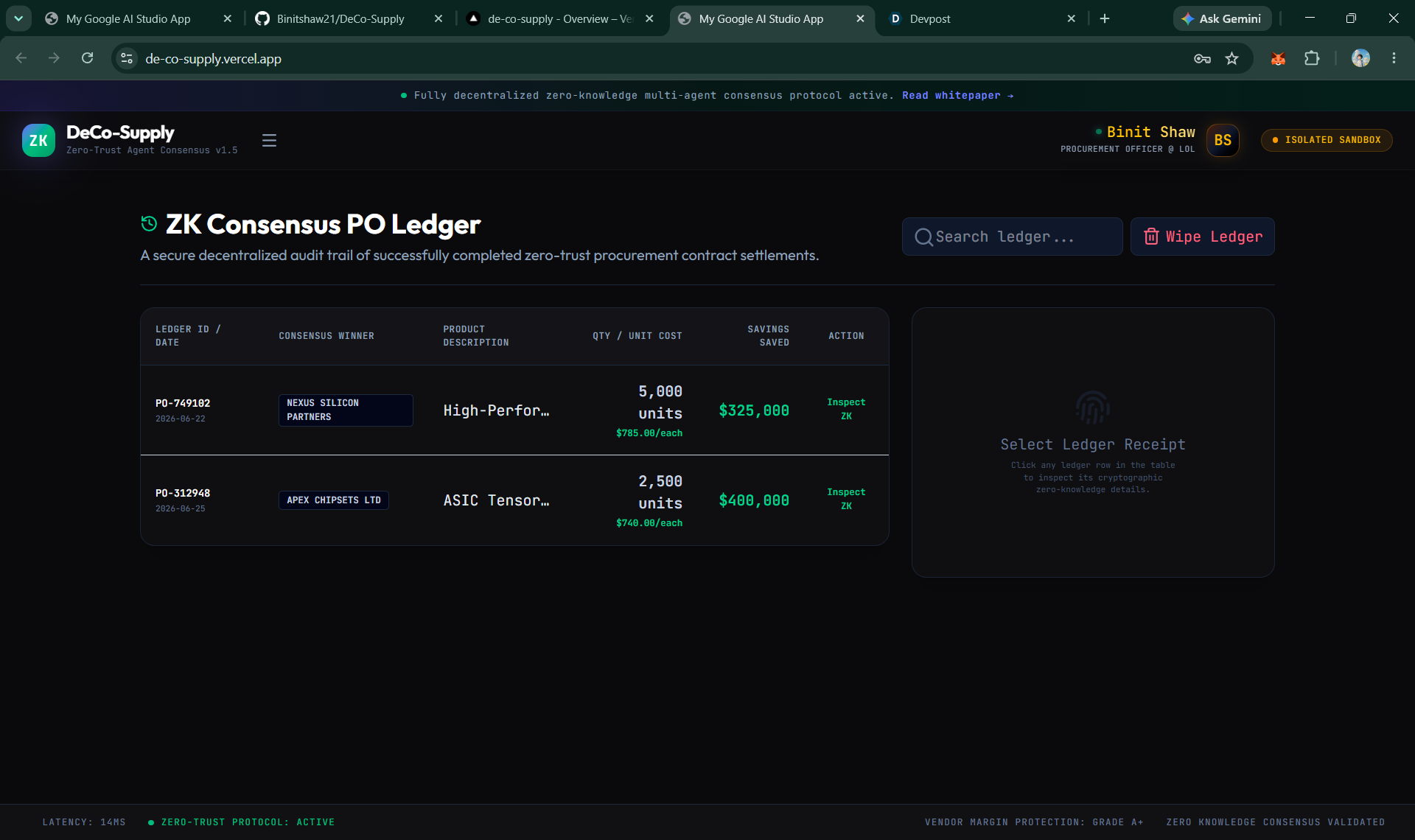
- Finalization: Once an agreement is reached, the system generates a cryptographically hashed Purchase Order (PO) and instantly facilitates the B2B transaction through our Razorpay integration.
How we built it
We engineered a modern, cloud-native architecture built for enterprise scale:
- Frontend: We built a visually stunning, highly responsive UI using React, Vite, and TailwindCSS. We focused heavily on premium aesthetics, utilizing glassmorphism and dynamic gradients.
- Backend: The core multi-agent negotiation engine runs on Vercel Serverless Functions (Node.js/Express), allowing the negotiation loops to execute instantly at the edge.
- Database: We migrated from a local SQLite prototype to a globally distributed Vercel Postgres database to persistently and securely log Razorpay payment histories and invoices.
- Payments: We integrated the Razorpay API to handle the financial execution of the generated Purchase Orders.
Challenges we ran into
Our biggest technical hurdle was architectural migration. We initially built the prototype as a monolithic Node.js/Express application using a local SQLite database. However, when we moved to deploy for global scalability, we had to entirely refactor the backend into stateless Serverless Functions. We had to resolve complex routing configurations (vercel.json) and transition our data layer from local disk storage to cloud-based Vercel Postgres, all while ensuring the Razorpay webhook signatures could still be verified securely in a serverless environment.
Additionally, designing the heuristic logic for the "private context cells" required careful tuning to ensure vendor agents didn't accidentally leak their parameters during aggressive counter-offers.
Accomplishments that we're proud of
- Sub-second Consensus: Successfully engineering a multi-agent negotiation loop that reaches complex mathematical consensus in milliseconds.
- Cloud-Native Scale: Successfully migrating a local monolith into a fully serverless architecture backed by a Postgres cloud database.
- Enterprise UI/UX: Designing a platform that doesn't just work under the hood, but feels like a premium, state-of-the-art enterprise software suite.
What we learned
We learned a massive amount about Serverless edge routing and the intricacies of migrating local databases to cloud-native Postgres environments. We also gained deep insights into Game Theory and how to mathematically structure AI agent prompts so that they negotiate aggressively but fairly, without hallucinating impossible price points.
What's next for DeCo-Supply
Currently, our cryptographic isolation is handled via secure server-side memory encapsulation. The next major step is to move the Zero-Knowledge Proofs (ZKPs) entirely on-chain. We plan to integrate true zk-SNARKs via Ethereum or Polygon so that vendor floor prices can be mathematically verified on a public ledger without ever exposing the raw data.
We also plan to expand the negotiation engine beyond hardware (GPUs) to support complex, multi-variable supply chain logistics like shipping timelines, raw material quality metrics, and international tariffs.
Built With
- accoapi
- express.js
- lucide
- motion
- node.js
- postgresql
- razorapi
- react
- tailwindcss
- typescript
- vercel
- vite

Log in or sign up for Devpost to join the conversation.