Inspiration
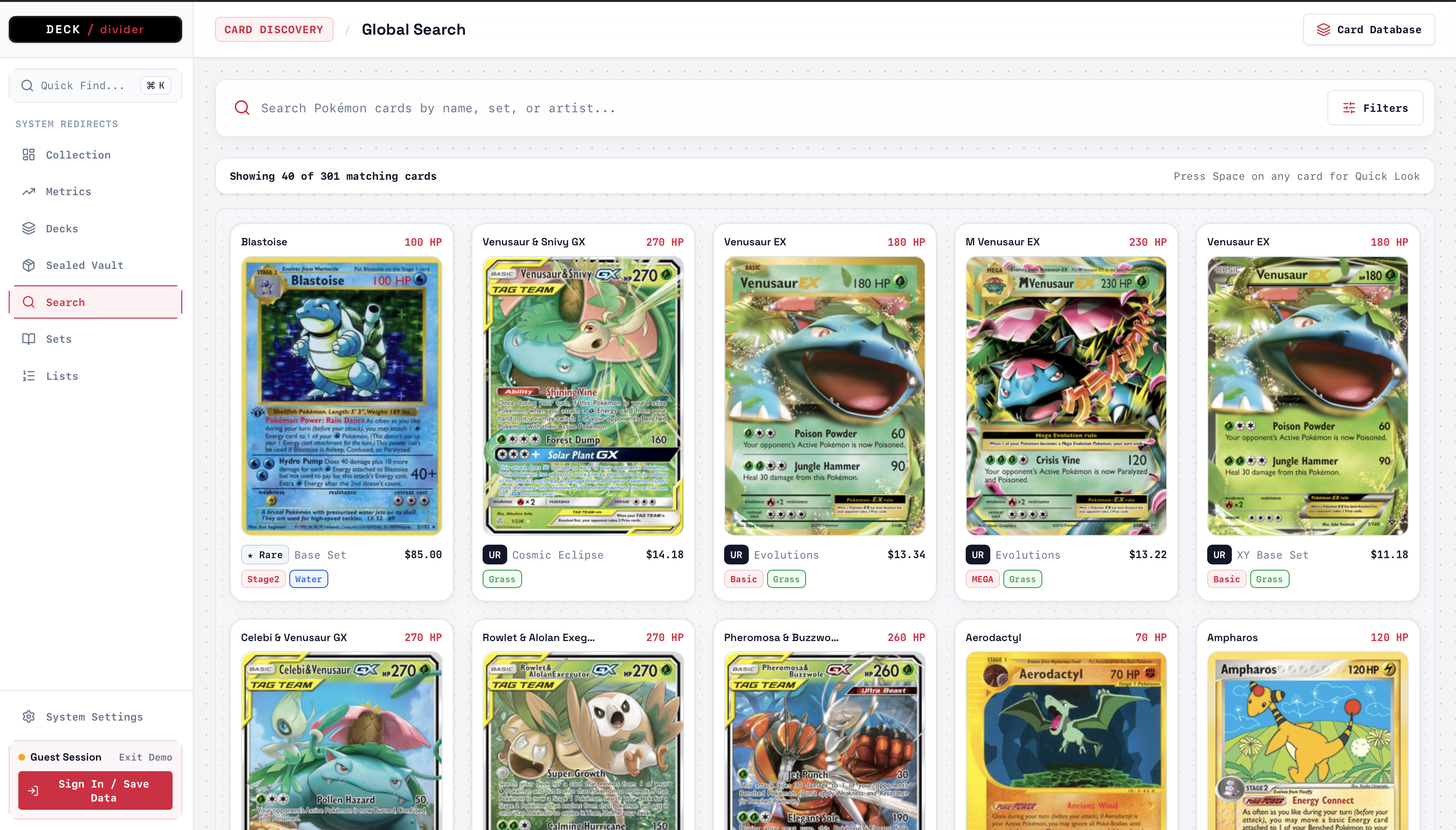
DECK / divider was inspired by the idea that managing a Pokémon Trading Card Game (TCG) collection should be just as enjoyable as collecting and playing. Pokémon TCG enthusiasts often need to switch between different tools to track their cards, check market prices, complete sets, manage graded cards, and build decks. I wanted to bring these experiences together in one place.
The goal was to create a practical, user-friendly platform that helps collectors understand their collections and gives players the tools to organize and build their decks more efficiently.
What it does
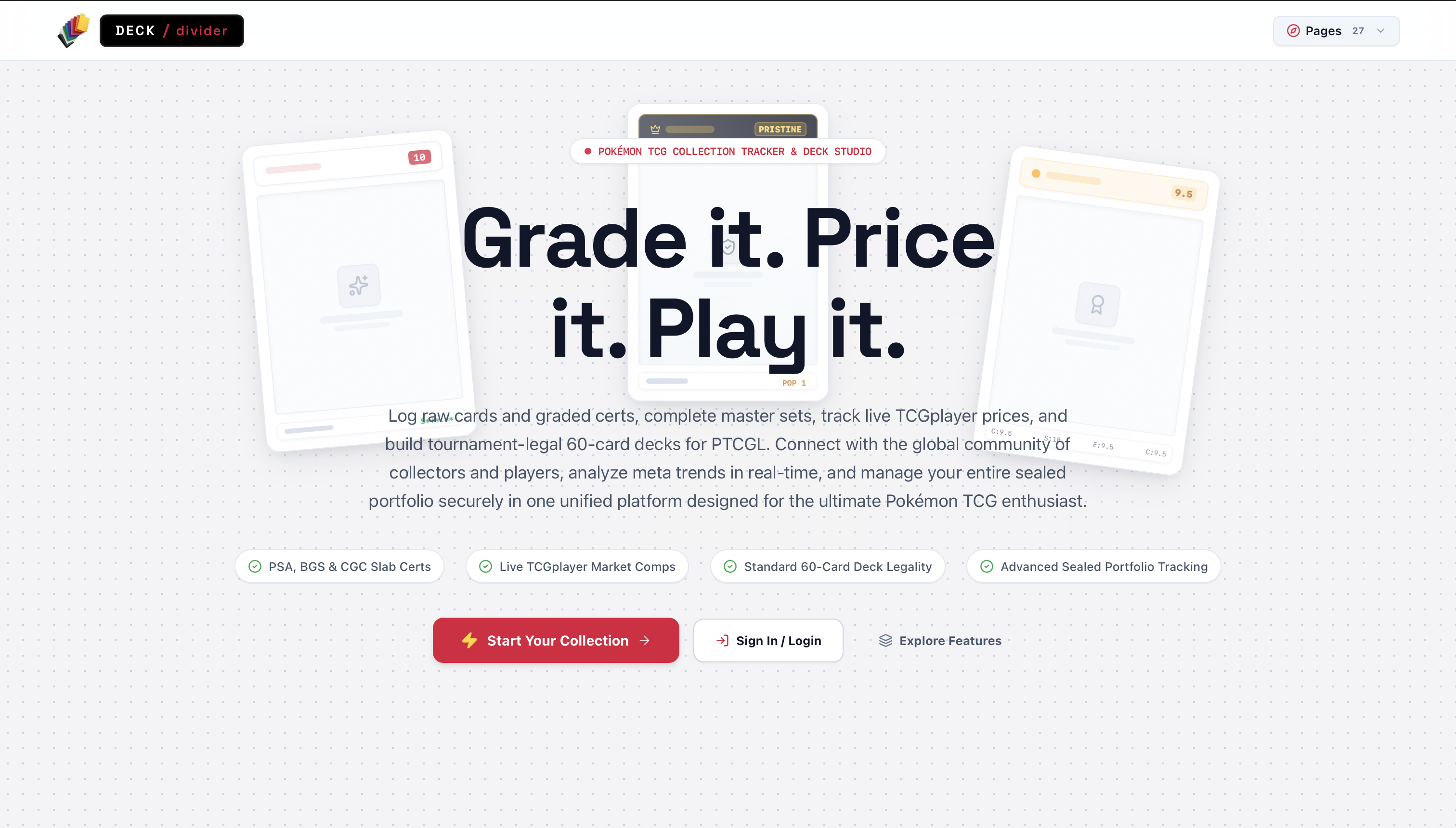
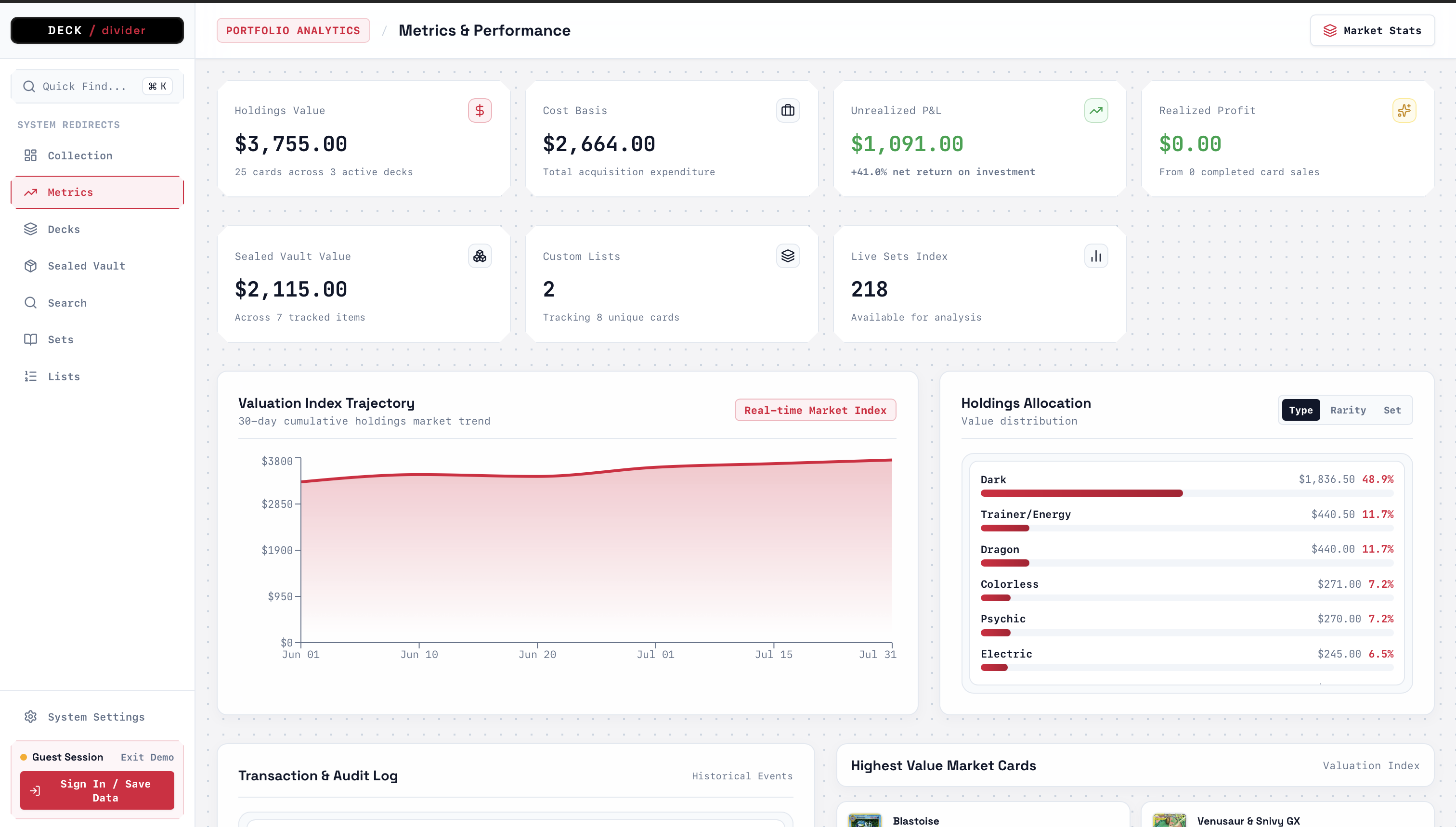
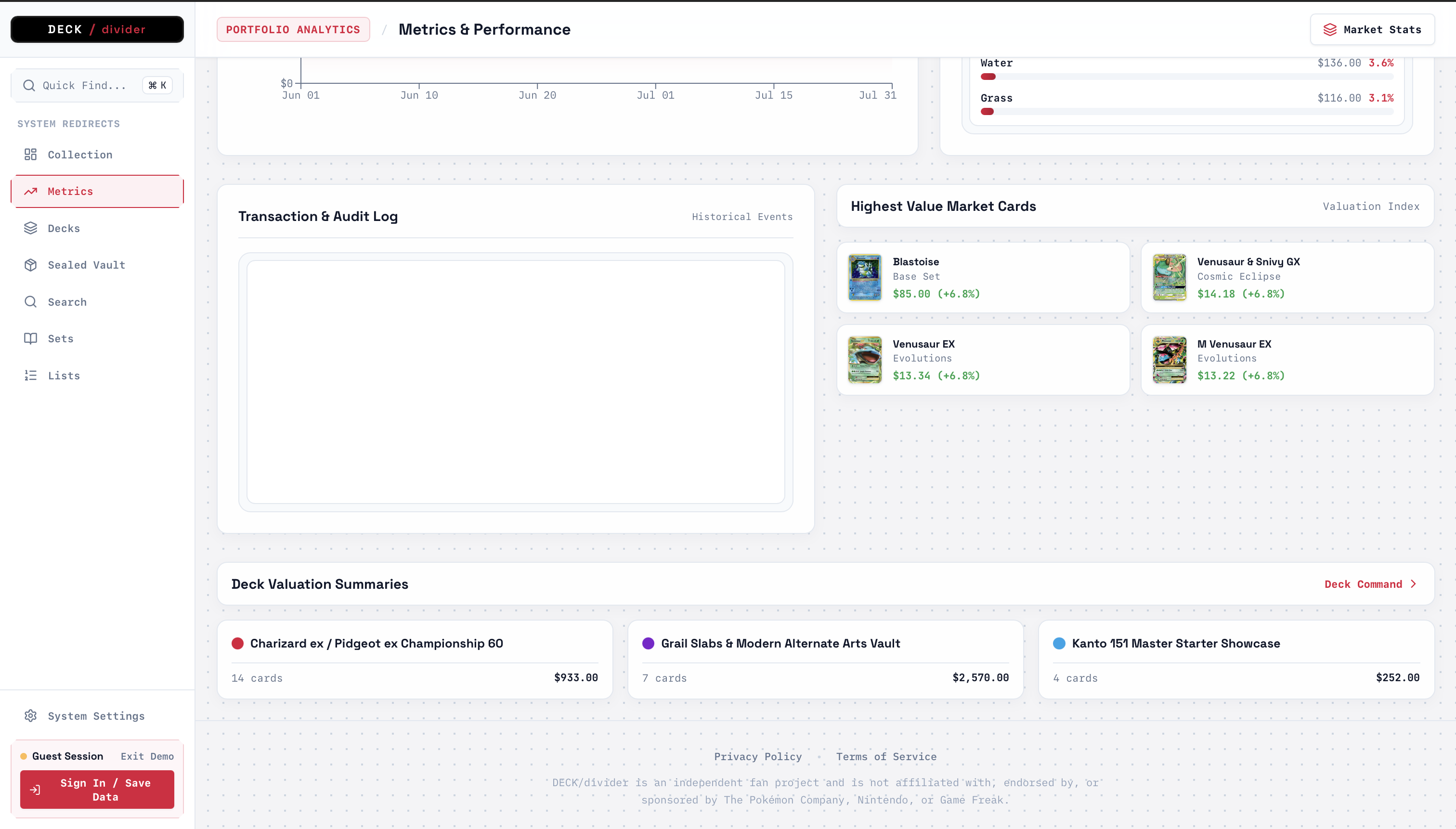
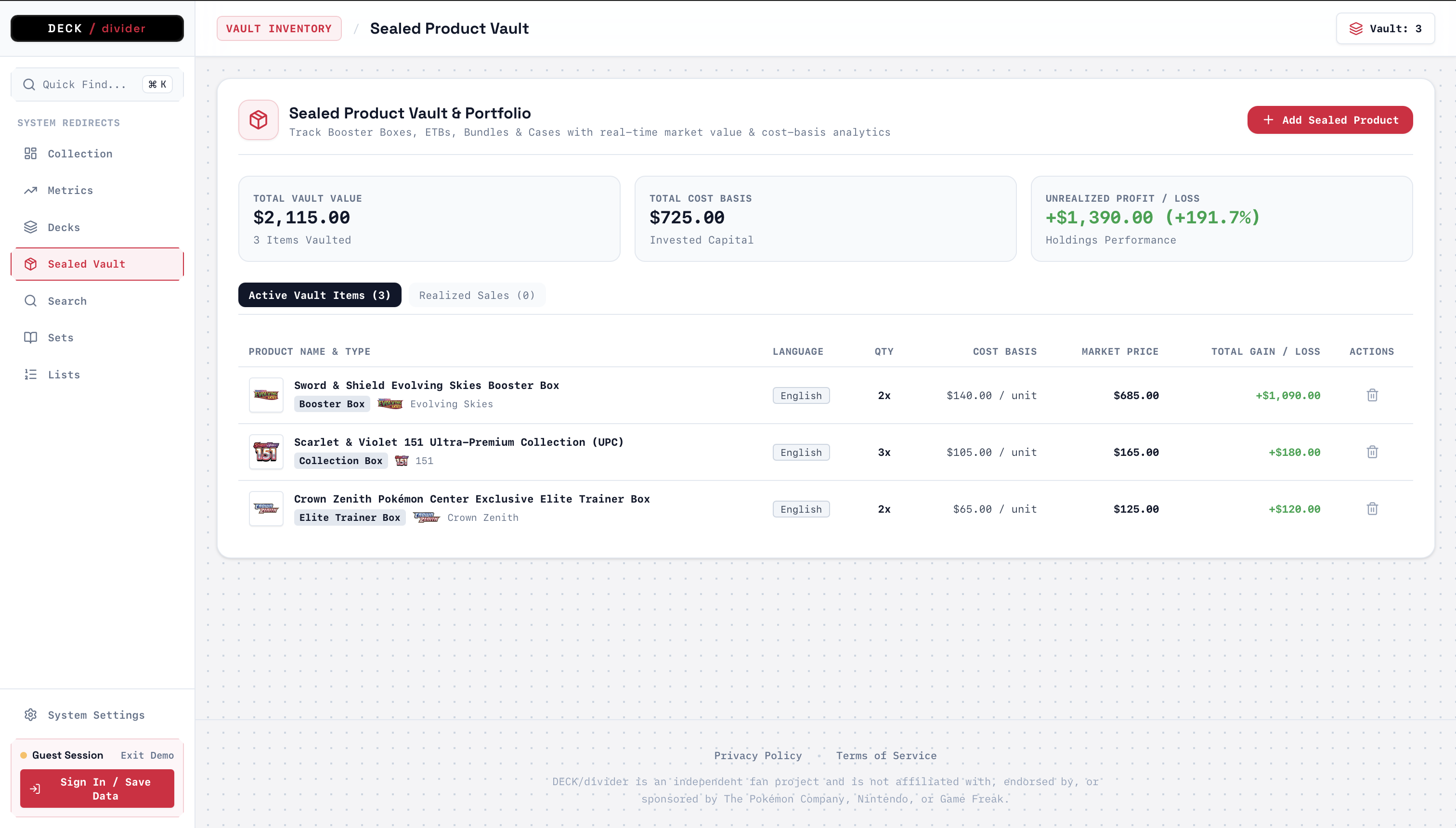
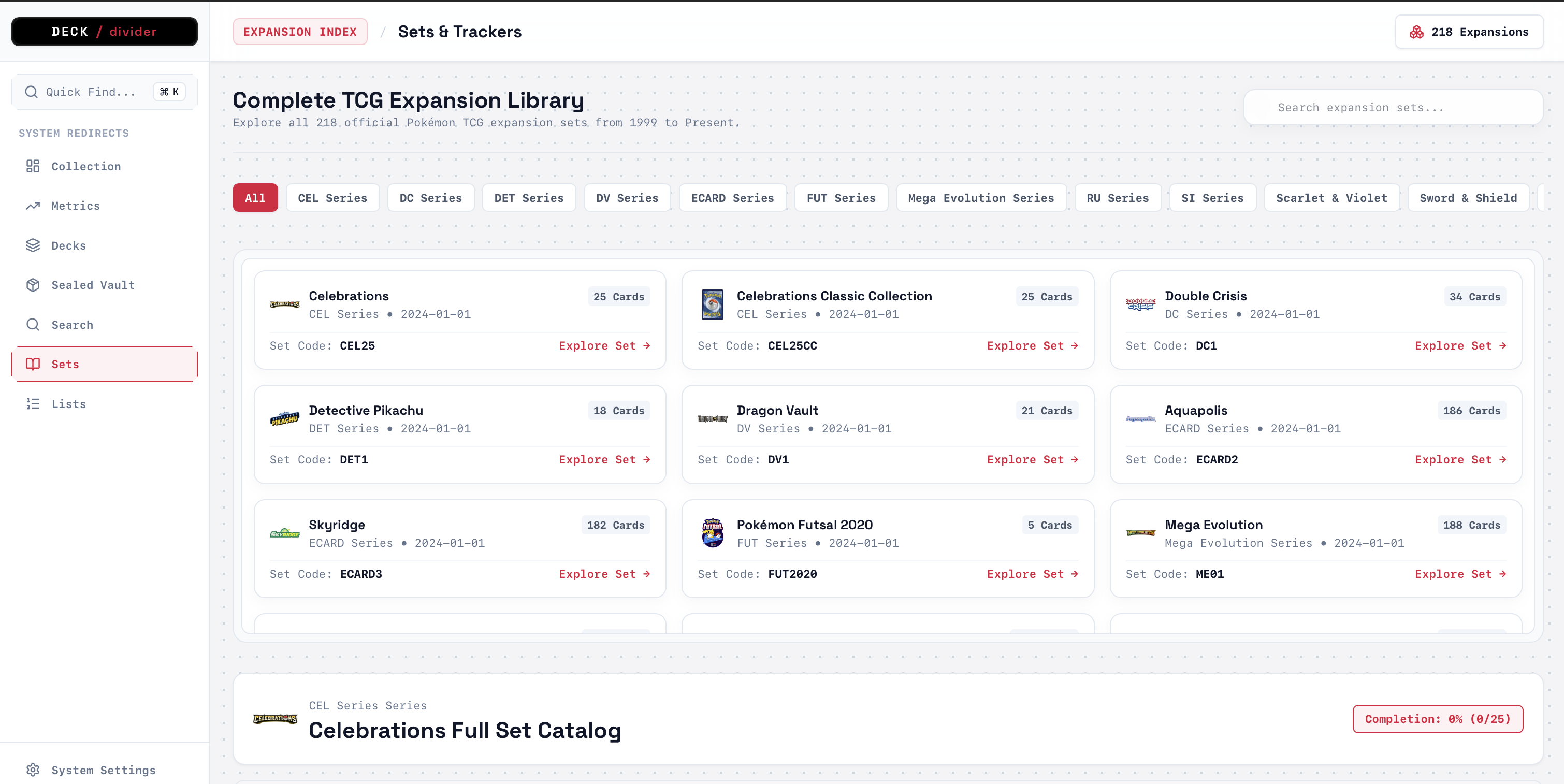
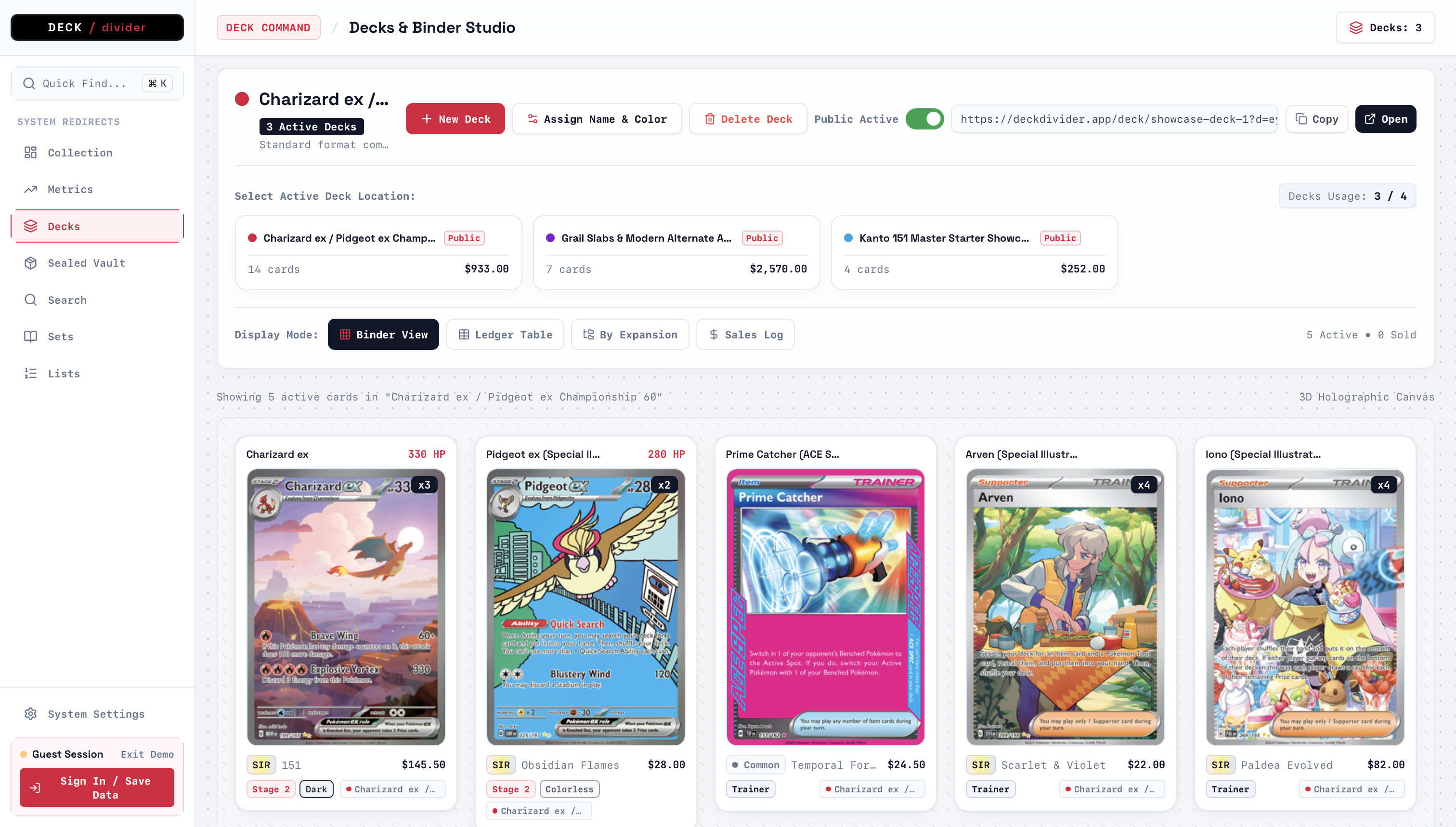
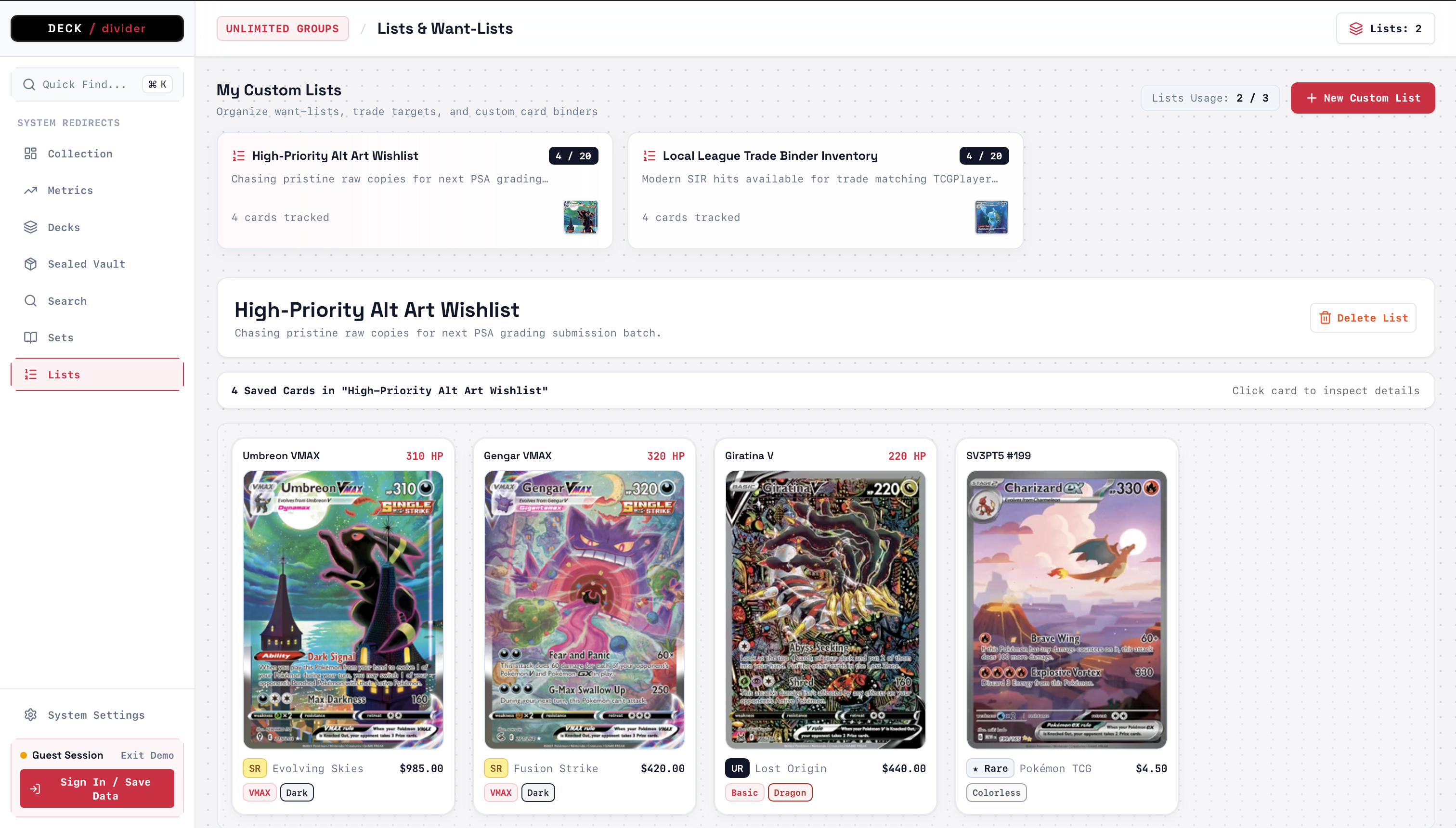
DECK / divider is an all-in-one platform for Pokémon TCG collectors and players. It brings together several essential tools:
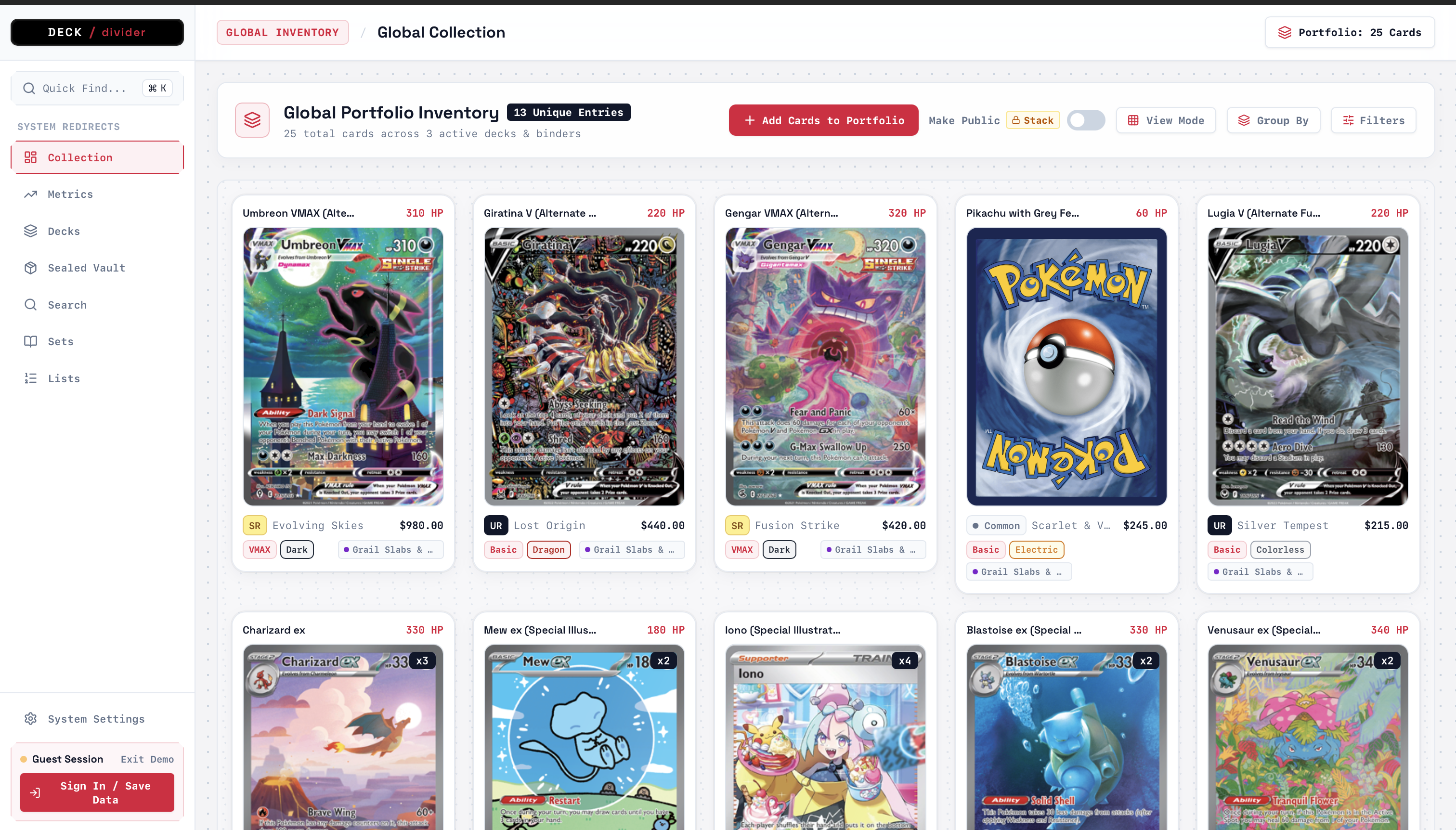
Collection management: Organize cards and keep track of the cards you own.
Market price tracking: View card pricing information to better understand the value of your collection.
Deckbuilding: Create, organize, and manage Pokémon TCG decks.
Graded card tracking: Keep records of graded cards in your collection.
Set completion: Track progress toward completing card sets.
Data portability: Export collection data to make it easier to back up and manage your information.
By combining these features, DECK / divider aims to reduce the need for multiple disconnected tools and provide a more cohesive experience for the Pokémon TCG community.
How we built it
I built DECK / divider with a focus on performance, maintainability, and usability.
The frontend uses React, TypeScript, Vite, and Tailwind CSS to create a responsive and modern application. For data storage, I used IndexedDB to support local data persistence and Firebase Firestore for cloud-based synchronization.
I designed the application around the different workflows of collectors and players, with an emphasis on organizing card data, simplifying collection management, and making deckbuilding more accessible. I also considered data portability and performance so the platform could remain practical as users' collections grow.
Challenges we ran into
One of the biggest challenges was bringing multiple features together without making the application feel overwhelming. Collection management, market pricing, graded cards, set tracking, and deckbuilding each have different requirements, and making them work together cohesively required careful planning.
Another challenge was handling card data accurately. Different printings, variants, and conditions can affect how a card should be represented and valued. Market prices also change over time, making it important to consider data freshness and reliability.
Performance and data management presented additional challenges. The application needed to provide a smooth experience while handling potentially large collections, preserving user data, and supporting synchronization. Balancing these requirements with a straightforward interface was an important part of the development process.
Accomplishments that we're proud of
I'm proud of turning the idea of a unified Pokémon TCG toolkit into DECK / divider: a platform designed to serve both collectors and players rather than focusing on just one part of the hobby.
Bringing collection management, price information, graded-card tracking, set completion, and deckbuilding into one experience is a meaningful step toward making the hobby easier to organize.
I'm also proud of prioritizing practical considerations such as local data persistence, cloud synchronization, and data export. These features reflect the broader goal of building a tool that users can rely on as their collections and needs evolve.
What we learned
Building DECK / divider reinforced that creating a useful product involves much more than implementing features. Data quality, performance, usability, and user trust are just as important as the functionality itself.
I learned to think more carefully about the differences between collectors and competitive players, the complexity of representing trading cards accurately, and the challenges of working with information that changes over time.
The project also strengthened my understanding of modern frontend development, browser-based storage, cloud synchronization, and the importance of designing an application around real user workflows.
What's next for DECK / divider
The next step for DECK / divider is to keep improving the experience for both collectors and players.
Potential areas of development include improving price-data freshness and transparency, refining deck validation and format legality, expanding collection insights, and making synchronization and data portability more robust.
I also want to continue refining the interface based on user feedback and ensure the application remains responsive and dependable as collections grow.
The long-term vision is simple: DECK / divider should be the place where Pokémon TCG players and collectors can organize their cards, understand their collections, and spend less time managing data and more time enjoying the game.
Built With
- cloudflare
- ebay
- express.js
- firebase
- node.js
- paypal
- pokemontcg
- react
- tcgdex
- tcgplayer

Log in or sign up for Devpost to join the conversation.