-
-

Decisions Diary: living decisions, not wishes.
-
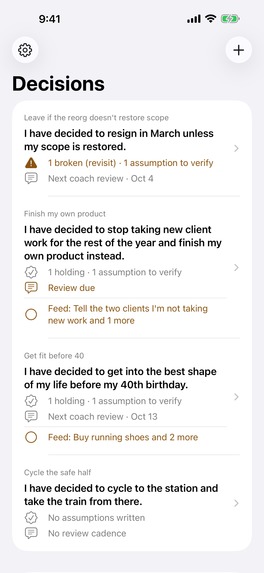
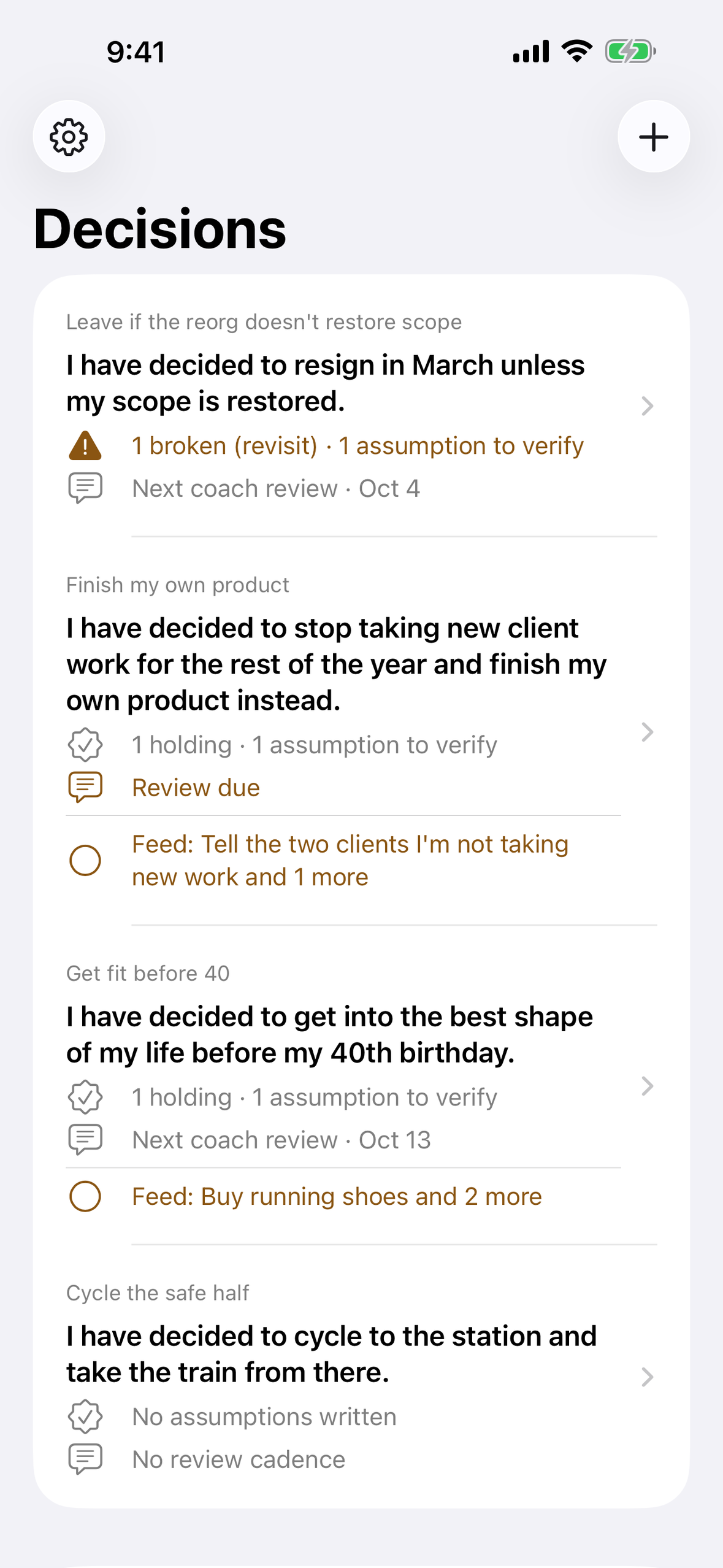
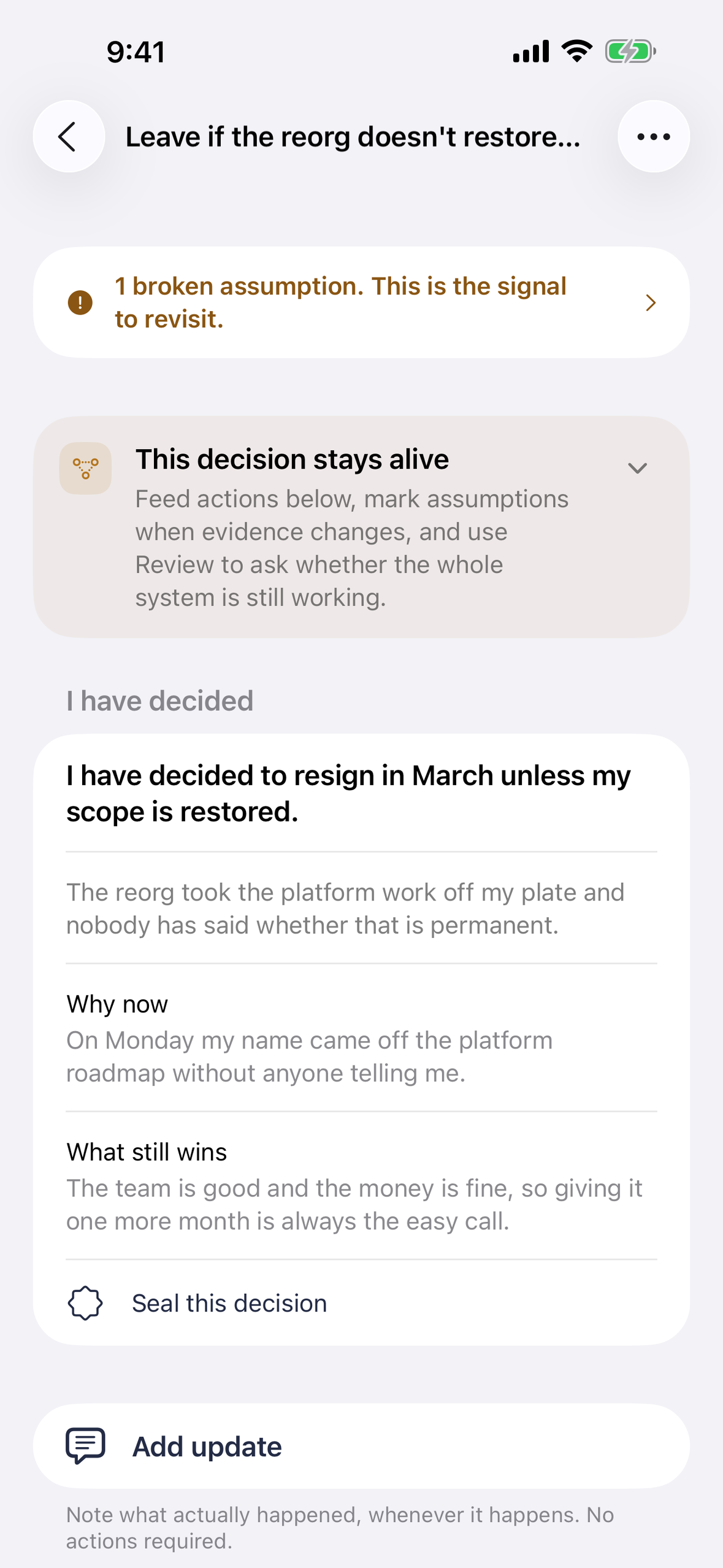
Every decision, with what needs attention next.
-
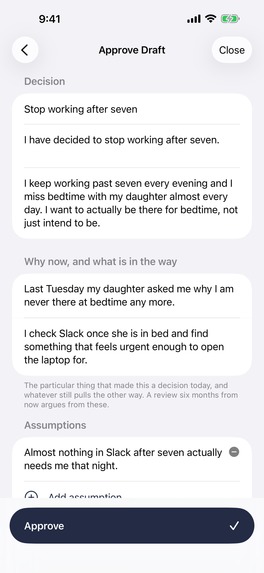
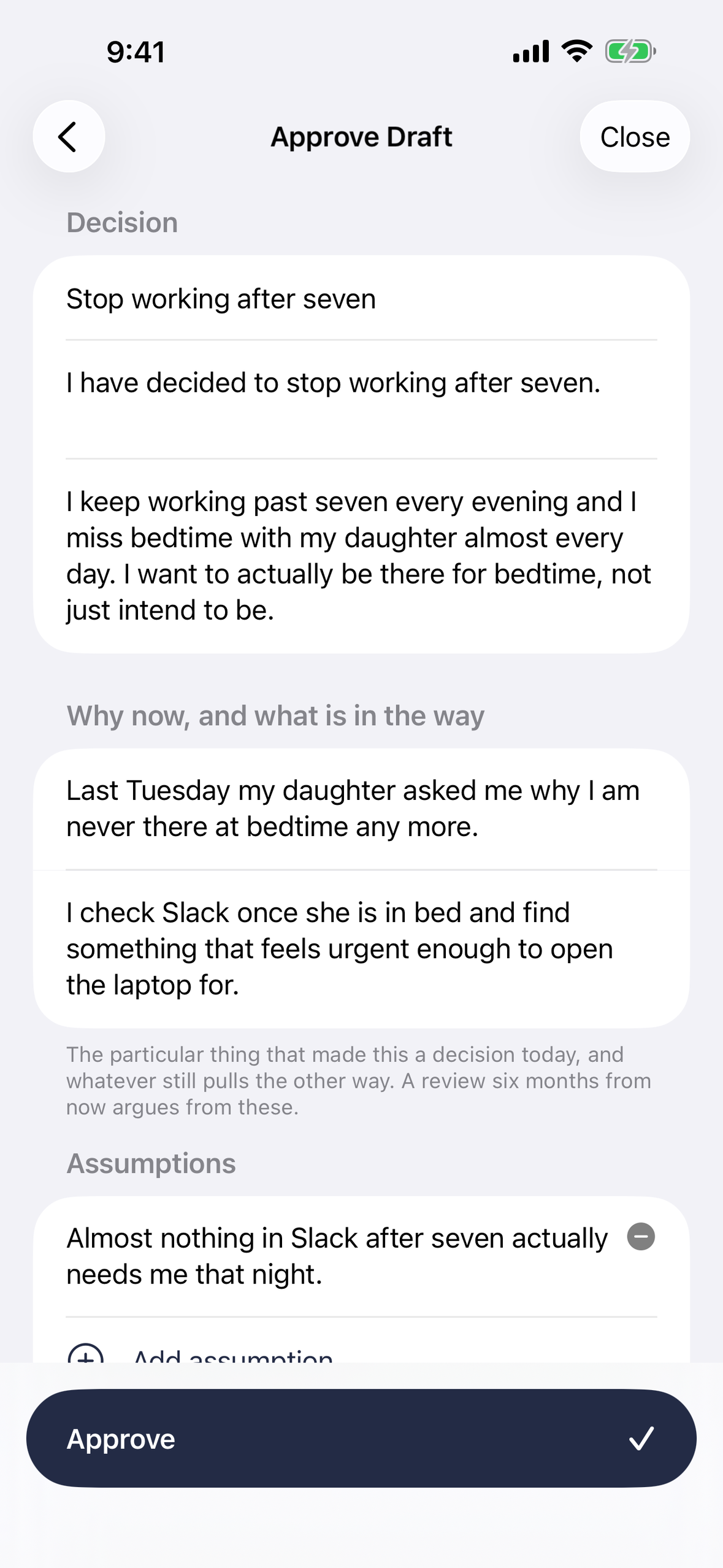
The system it drafted from one messy paragraph.
-
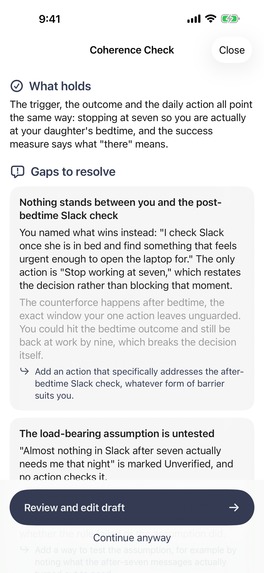
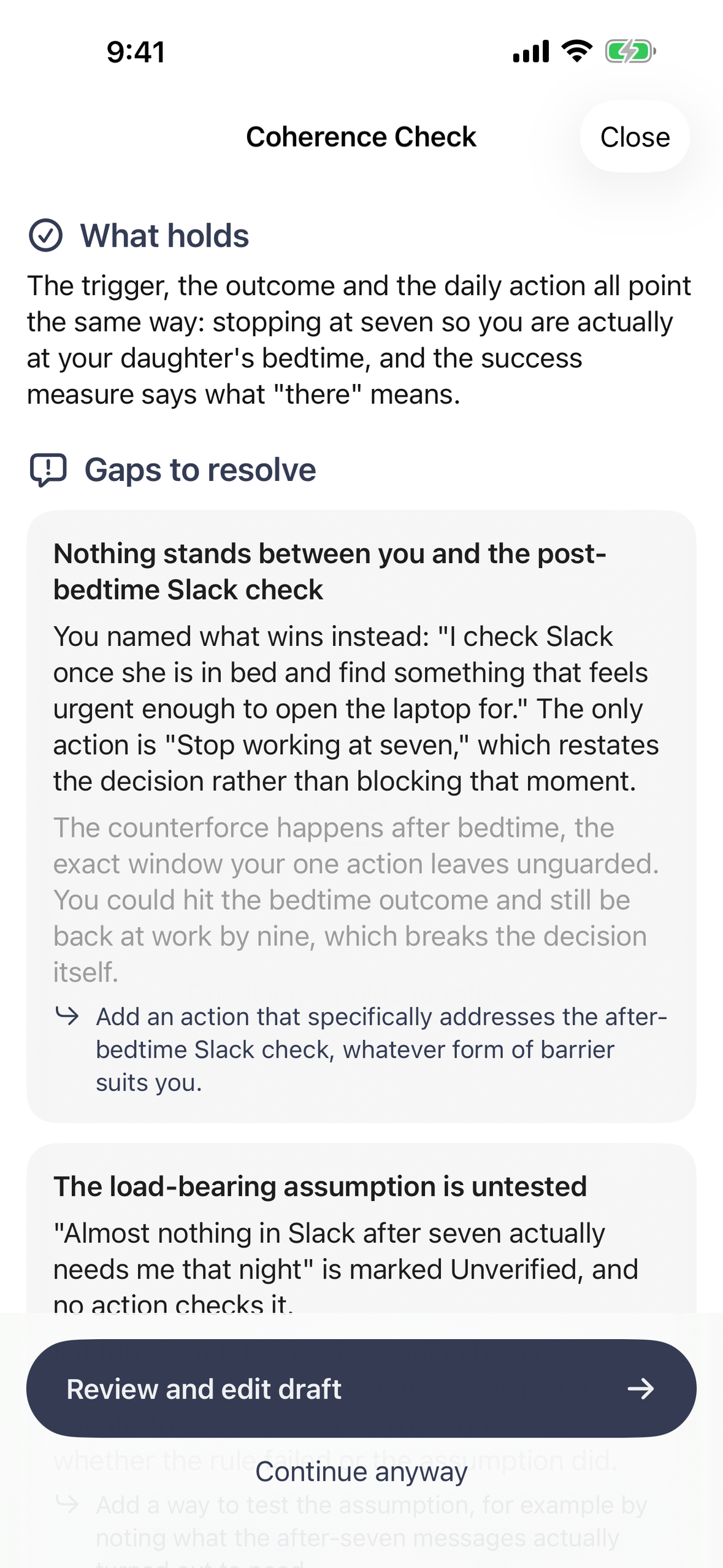
The check finds the gap, in your own words.
-
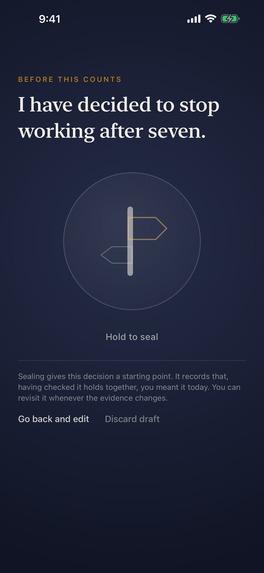
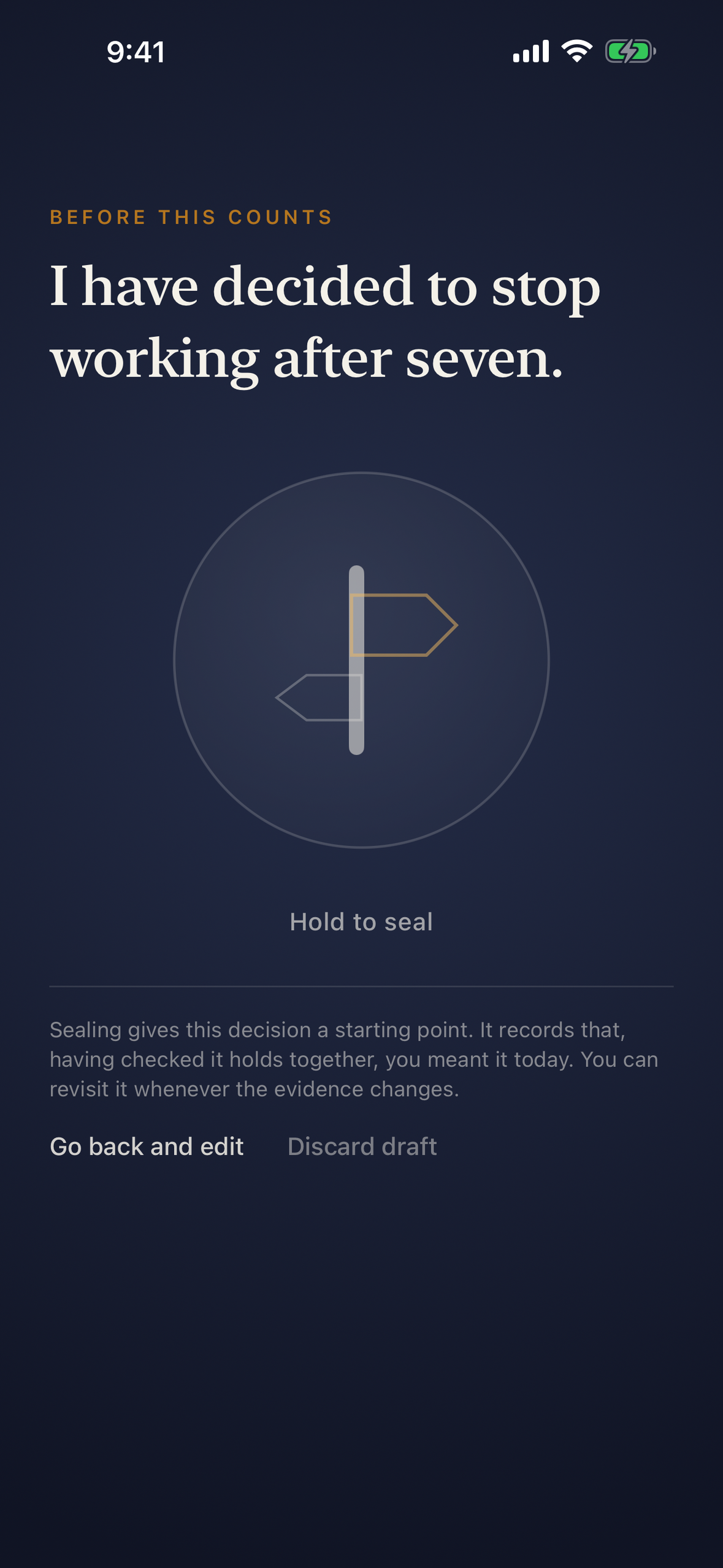
Hold to seal. Until then, nothing is recorded.
-
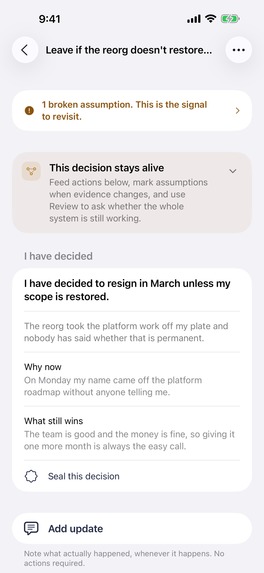
A belief that broke, and the day it broke.
-
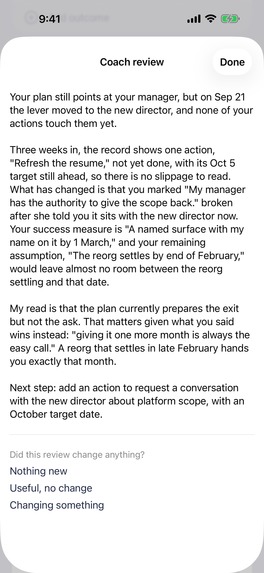
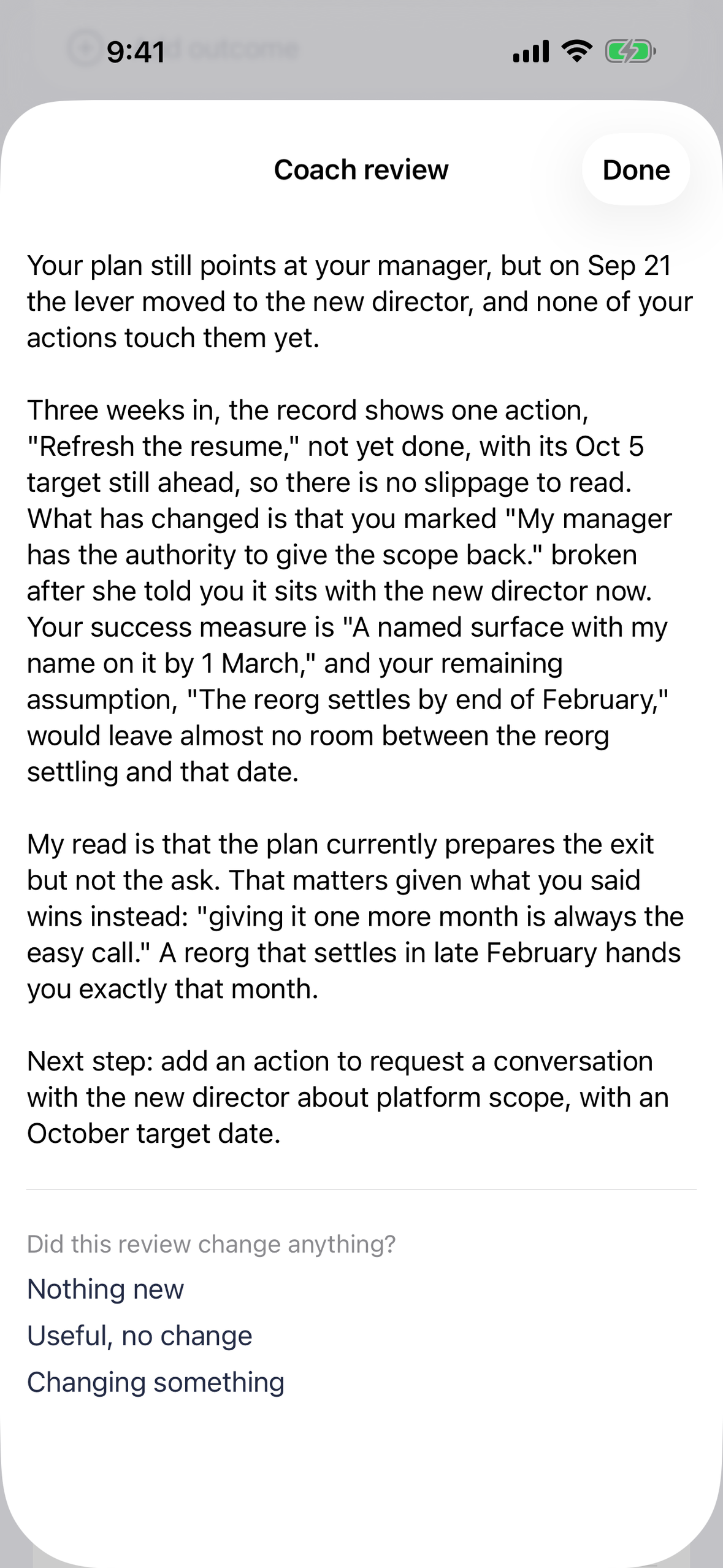
A review that cites your record, not your mood.

Inspiration
I have followed Shipaton since it started. I always wanted to take part, but I never followed through. This year I decided to, not only to compete, but to put myself on the App Store. To commit, I made my Apple Developer account for the first time. Then came the question of what to build.
A few years ago my brother talked about a problem on teams. When a new person joins, nobody can tell them why things were decided the way they were. Only what was decided.
I thought our own lives work the same way. After a big decision, you are the new person on your own team. You forget why you chose, so you drift, and you never learn from it.
Last year I read two books, Scott Adams on why systems beat goals, and Donella Meadows' Thinking in Systems. They took me back to that discussion, but I still did nothing with the idea.
Then Shipaton became my "why now". So I built the idea itself, and I built it the way the app asks you to. A clear reason to start, an honest look at what always stopped me, and a system where a win means the app is on the App Store.
What it does
A decision with no system around it is just a wish. Every New Year we make resolutions, and they last a week. Decisions Diary turns wishes into living decisions. It helps you build a system around each decision. It drafts the actions, writes down the assumptions you are betting on so you can mark them broken later, finds the gaps in your plan, and reviews your progress.
You start by talking it through. One messy paragraph, spoken or typed, no form. It asks why this became a decision now, and what keeps stopping you. It pins down the outcome you want, because without an outcome you are busy, but you don't know why.
Before you start, it checks the plan against your own words, like the friend you talk a big decision through with. When life changes, it goes on the decision's own timeline. Reviews cite what you did, what you skipped, and what changed, and then you choose to continue, revise, or stop.
They say hindsight is 20/20. It isn't, unless you wrote down what you knew at the time. Decisions Diary gives you that record, so looking back teaches you something.
It is for people who make decisions that matter, and want to know months later why they made them and whether they worked.
It makes money with a subscription through RevenueCat, weekly or annual, with a 7-day free trial for eligible accounts. The first decision includes limited free AI drafting and checking. Pro unlocks more decisions, editing, revisits and AI reviews. Reading and exporting your record stay free. There are no ads, no account, and no tracking.
I am entering it for the RevenueCat Design Award.
How we built it
It is a native iPhone app in Swift and SwiftUI, with the data kept on the phone in SwiftData. There is no account and no sync. Dictation runs on the device, so the audio never leaves the phone.
The AI is Claude, called through a small Cloudflare Worker. The Worker keeps the prompts, checks App Attest, and stores no decision text. RevenueCat runs the subscription and the paywall.
Challenges we ran into
As I started building it, it started turning into a habit tracker. You came in, ticked some boxes, and never looked at the decisions themselves. That was not what I wanted to build, but it was going there. So midway we threw the old thing away and rebuilt it around the decision and its system. That is where it is today.
The other challenge was to not make it another AI chat app. It is a manual app. The AI holds your hand only at the critical places, when you draft a decision, when it checks the plan before you start, and when it reviews your progress. The rest is yours.
Accomplishments that we're proud of
How the UI and UX turned out. I think it captures what making a decision really is. You say it the messy way, you face what stops you, you commit with a hold instead of a submit button, and you come back to it when life changes.
The AI is there at the critical points, but you don't have to use it. You can fill in the form yourself and use the app without it.
And it is live on the App Store. That was the win my system asked for.
What we learned
It is okay to spend more time getting the real idea to come through in what you build, instead of just building something. The first version worked. It was just not the idea.
What's next for Decisions Diary
Keep improving the UX. Make the manual way, without AI, work even better. And Android and the web, if people want them.
Built With
- anthropic-api
- cloudflare
- revenuecat
- storekit
- swift
- swiftdata
- swiftui
- typescript

Log in or sign up for Devpost to join the conversation.