-
-
-
-
-
-
-
-
-
n8n
-
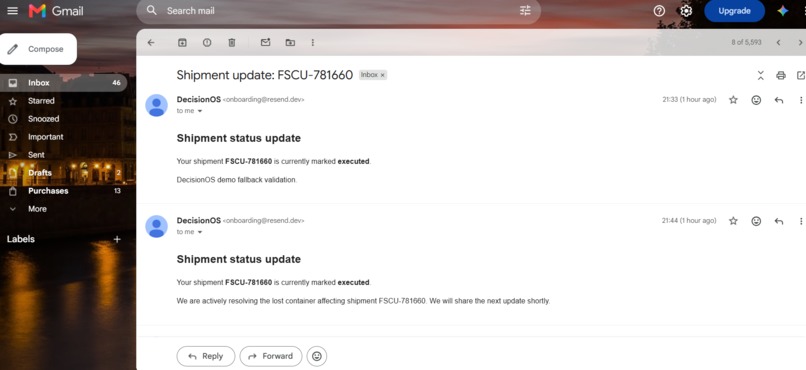
emails
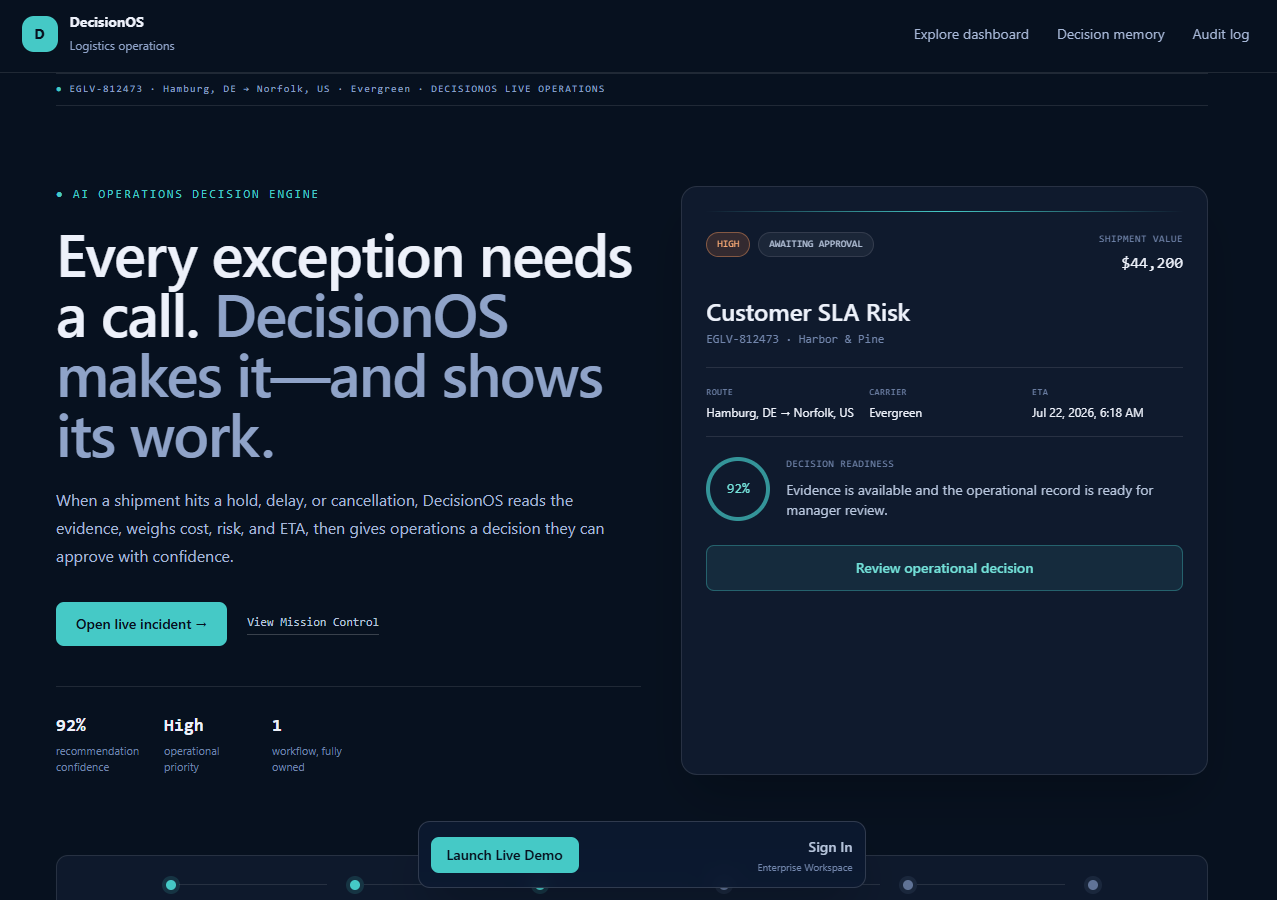
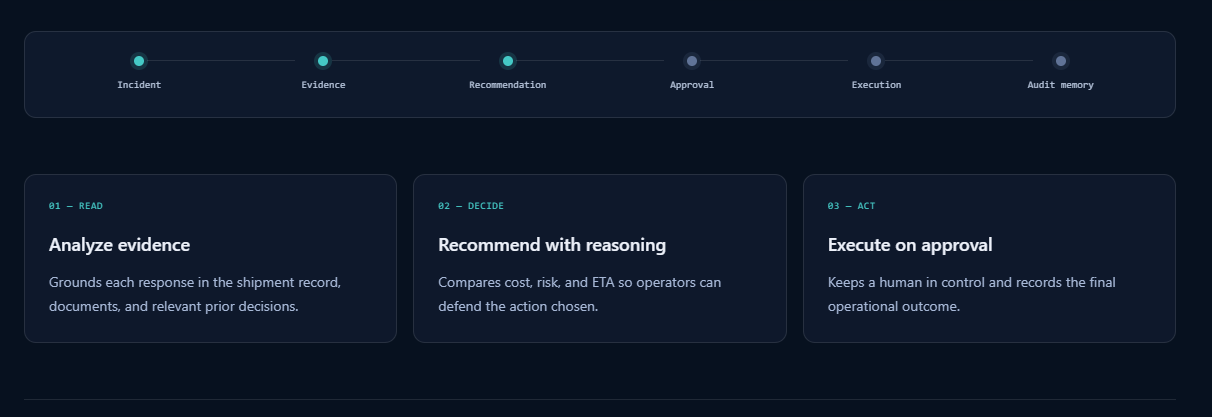
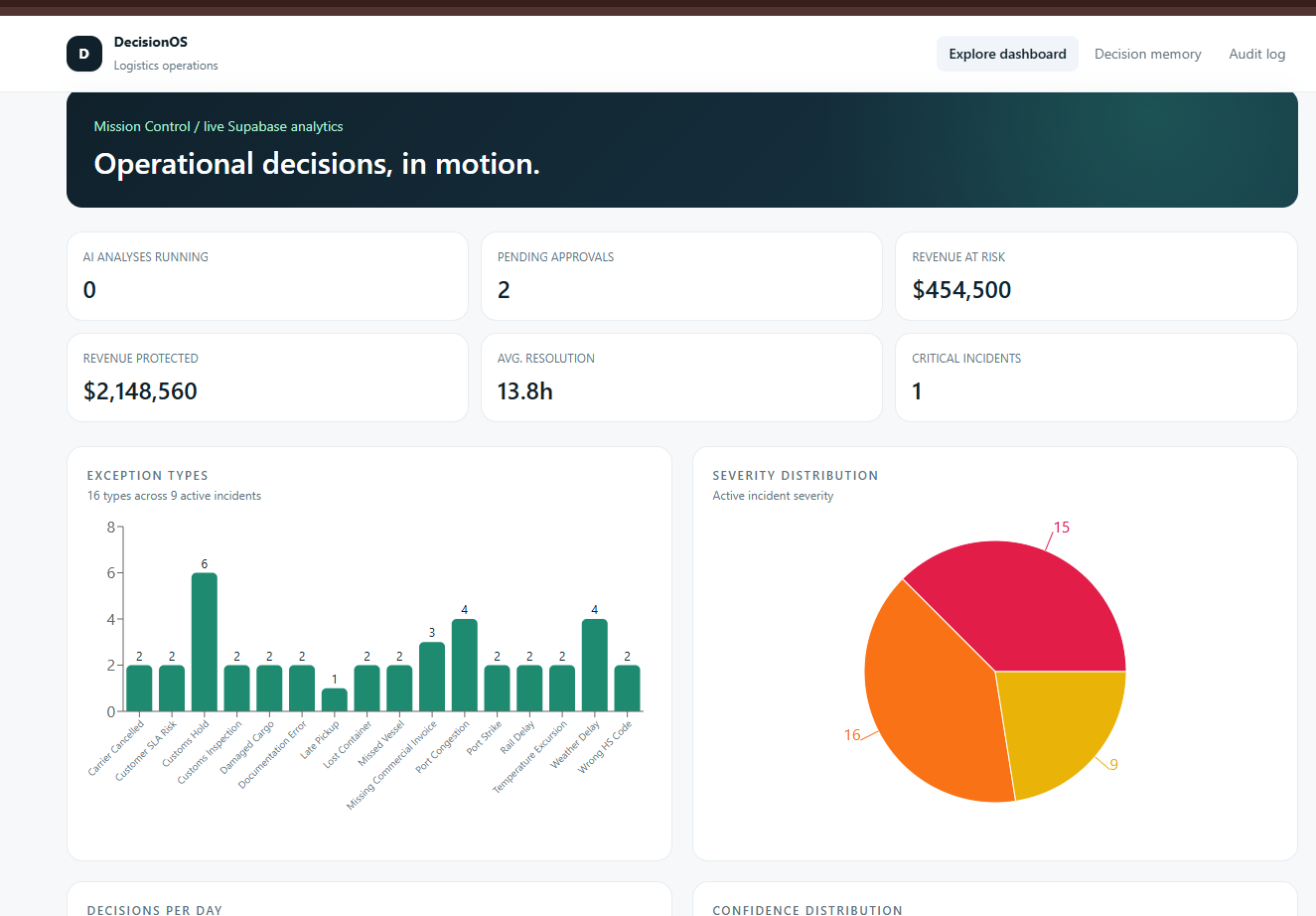
🚚 DecisionOS — AI Operations Decision Engine for Logistics
Inspiration
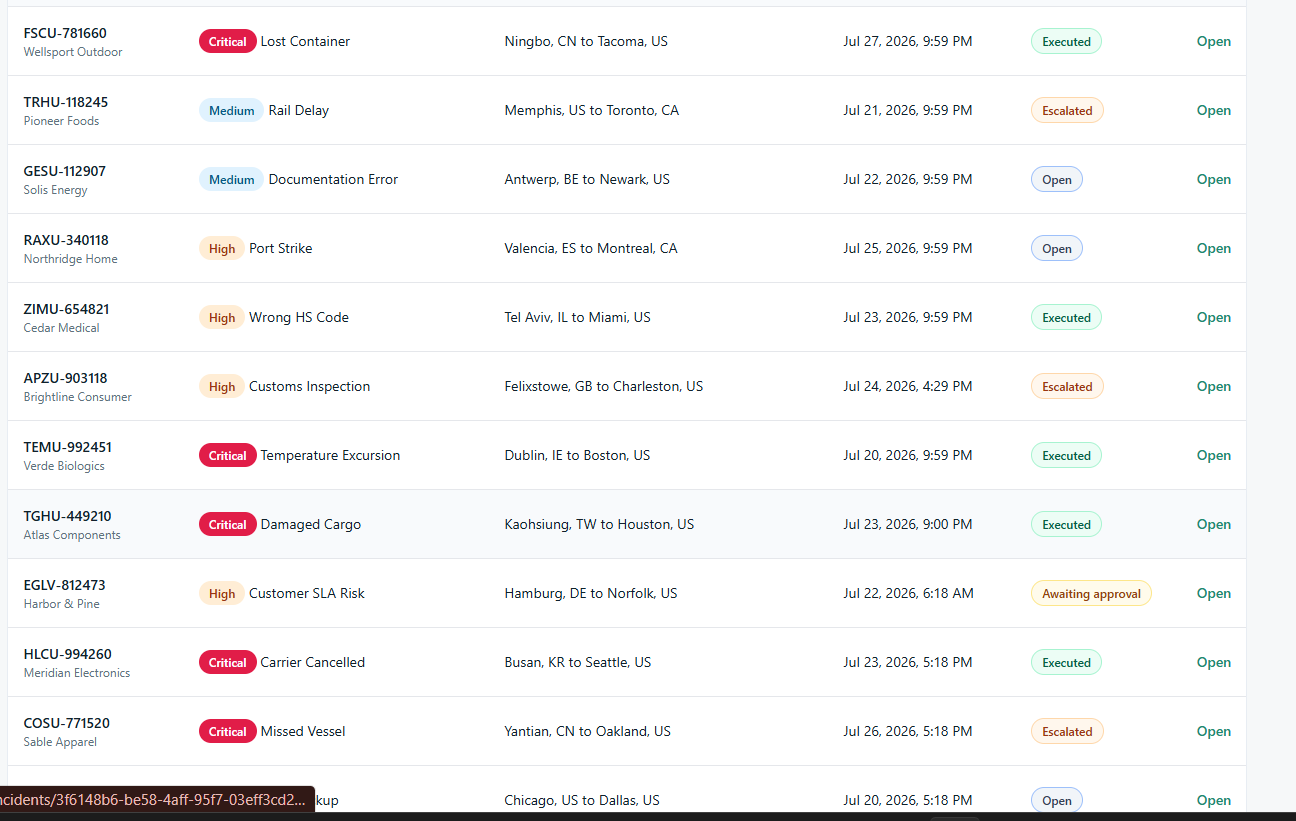
Modern logistics platforms are excellent at telling operations teams what happened, but they rarely help answer the most important question: what should we do next?
When disruptions such as customs holds, weather delays, carrier cancellations, or port congestion occur, operations managers must quickly analyze multiple systems, estimate financial impact, compare recovery strategies, notify customers, and document every decision. This process is often manual, inconsistent, and heavily dependent on individual experience.
I wanted to build an AI-powered decision intelligence platform that doesn't replace human decision-makers but augments them with explainable recommendations, historical decision memory, and enterprise-ready automation. My goal was to reduce decision time while improving consistency, transparency, and operational confidence.
What it does
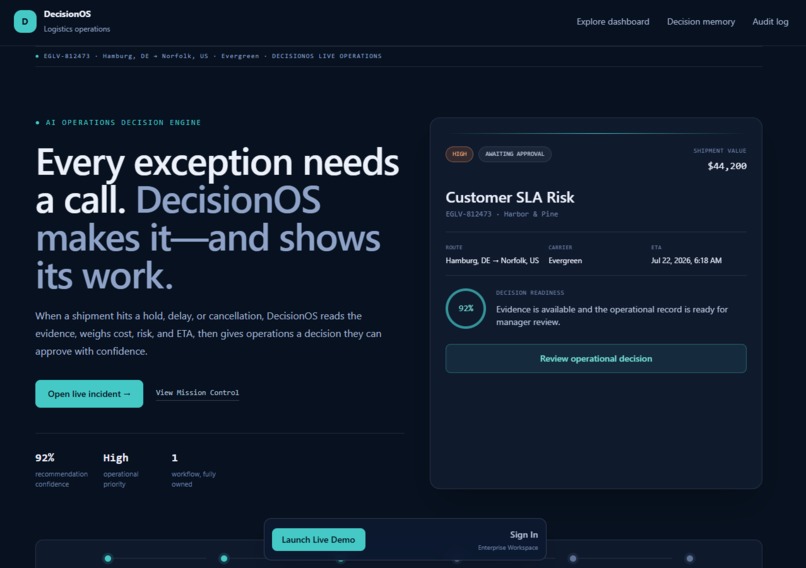
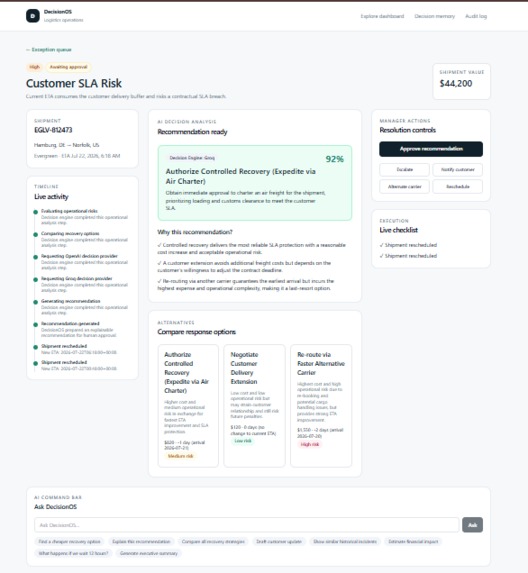
DecisionOS is an AI Operations Decision Engine for logistics.
For every operational incident, it:
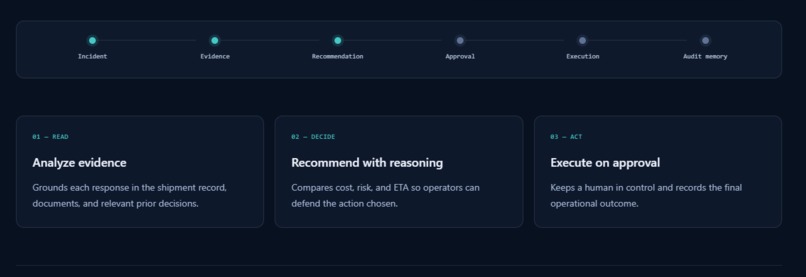
- Analyzes shipment context and operational evidence
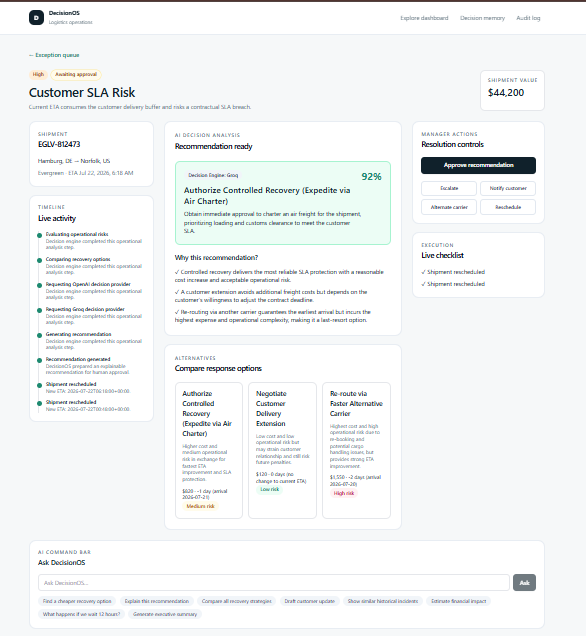
- Generates AI-powered recovery recommendations
- Explains the reasoning behind every recommendation
- Compares alternative recovery strategies
- Estimates operational risk and cost
- Allows managers to approve or override recommendations
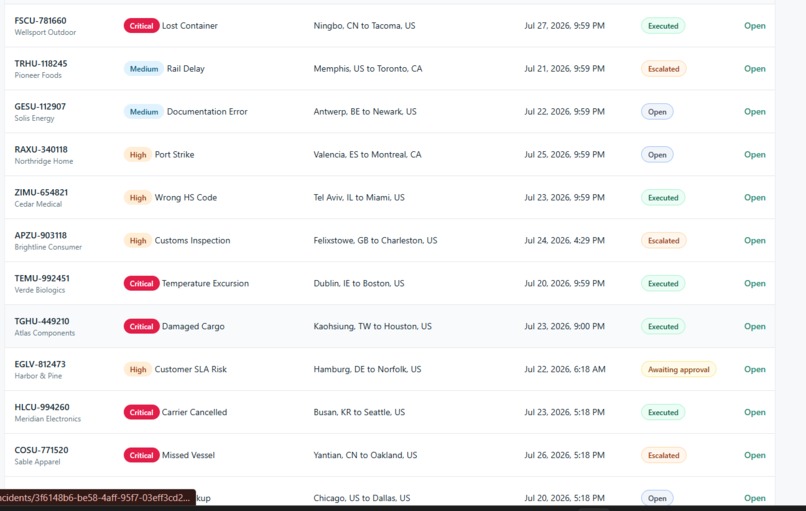
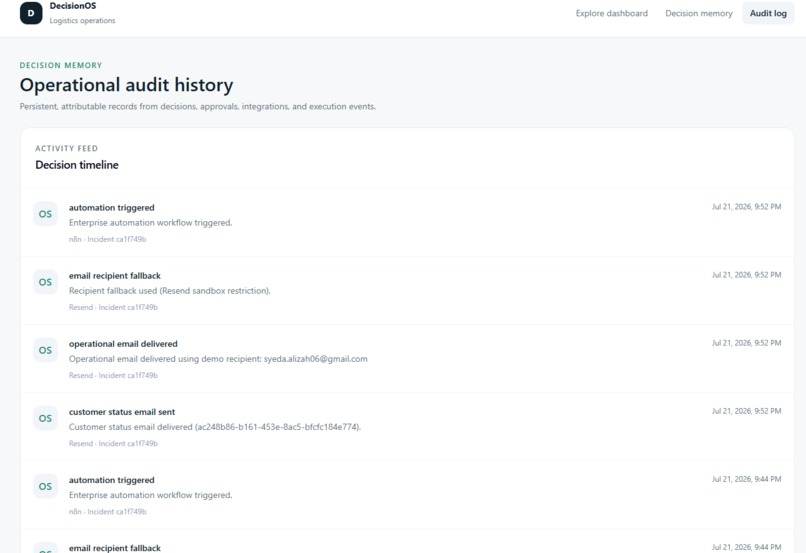
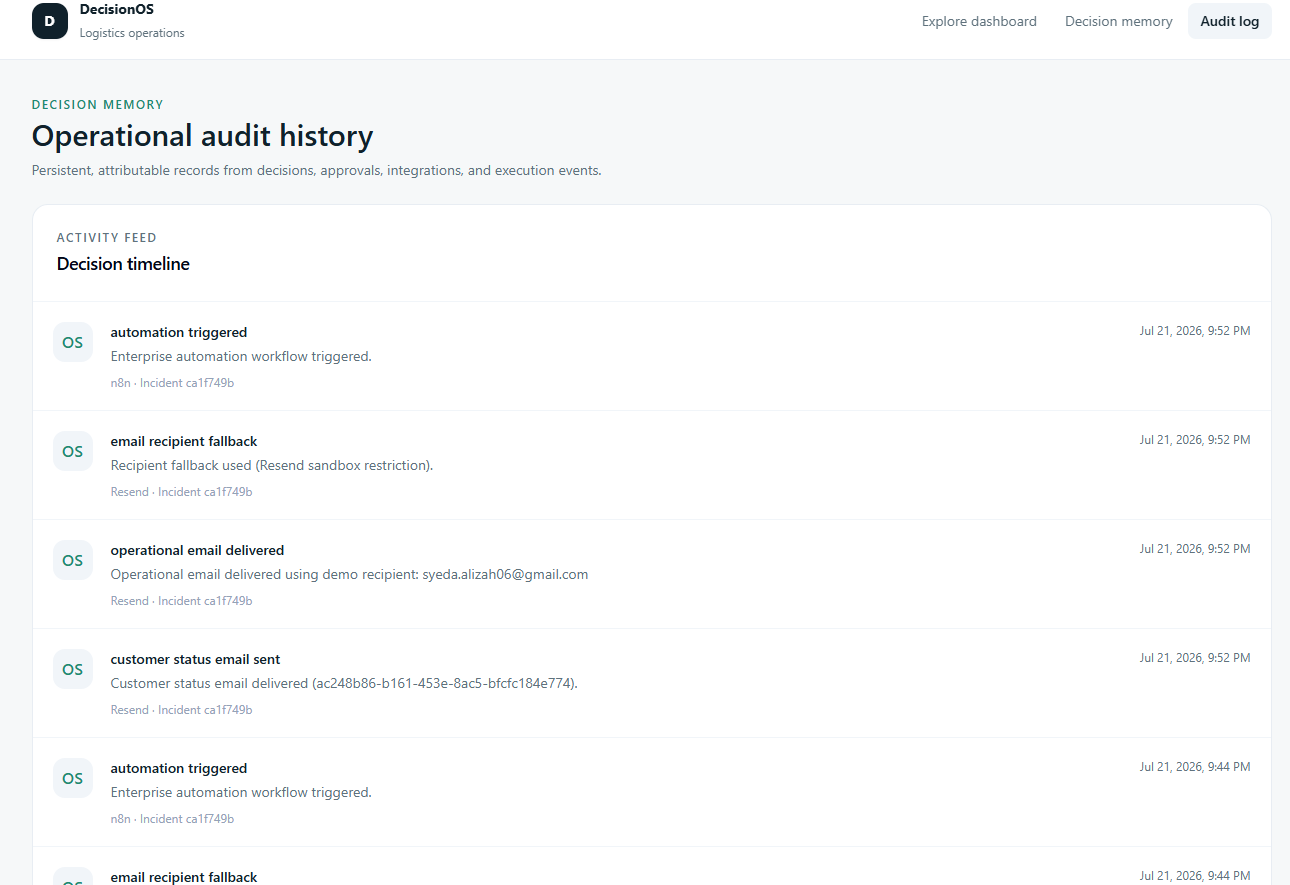
- Maintains a complete audit trail
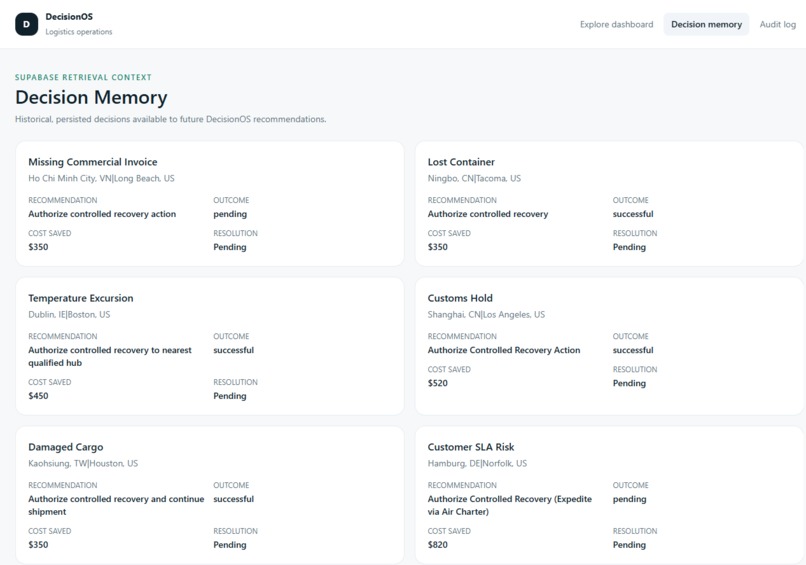
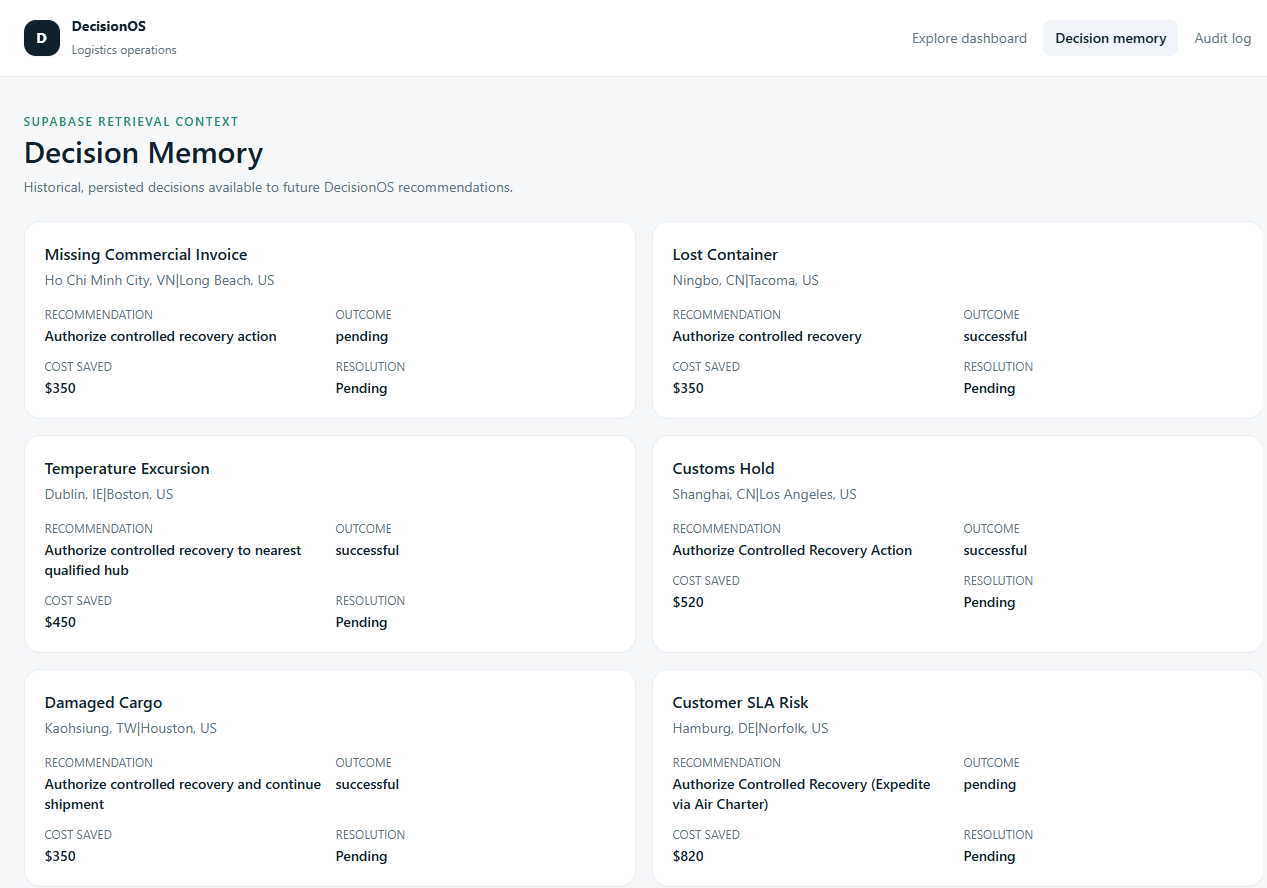
- Stores historical decision memory for future reference
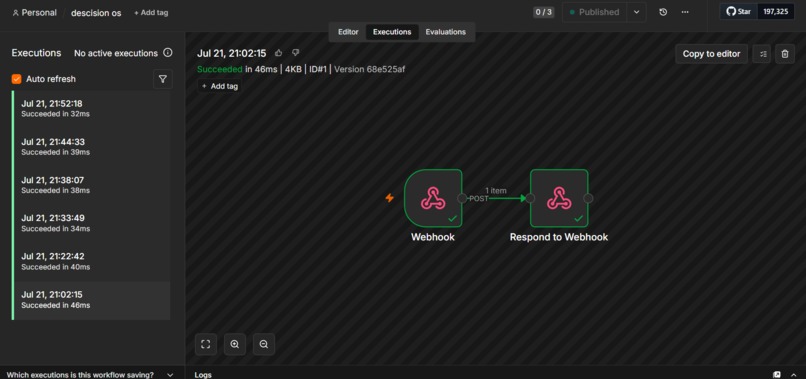
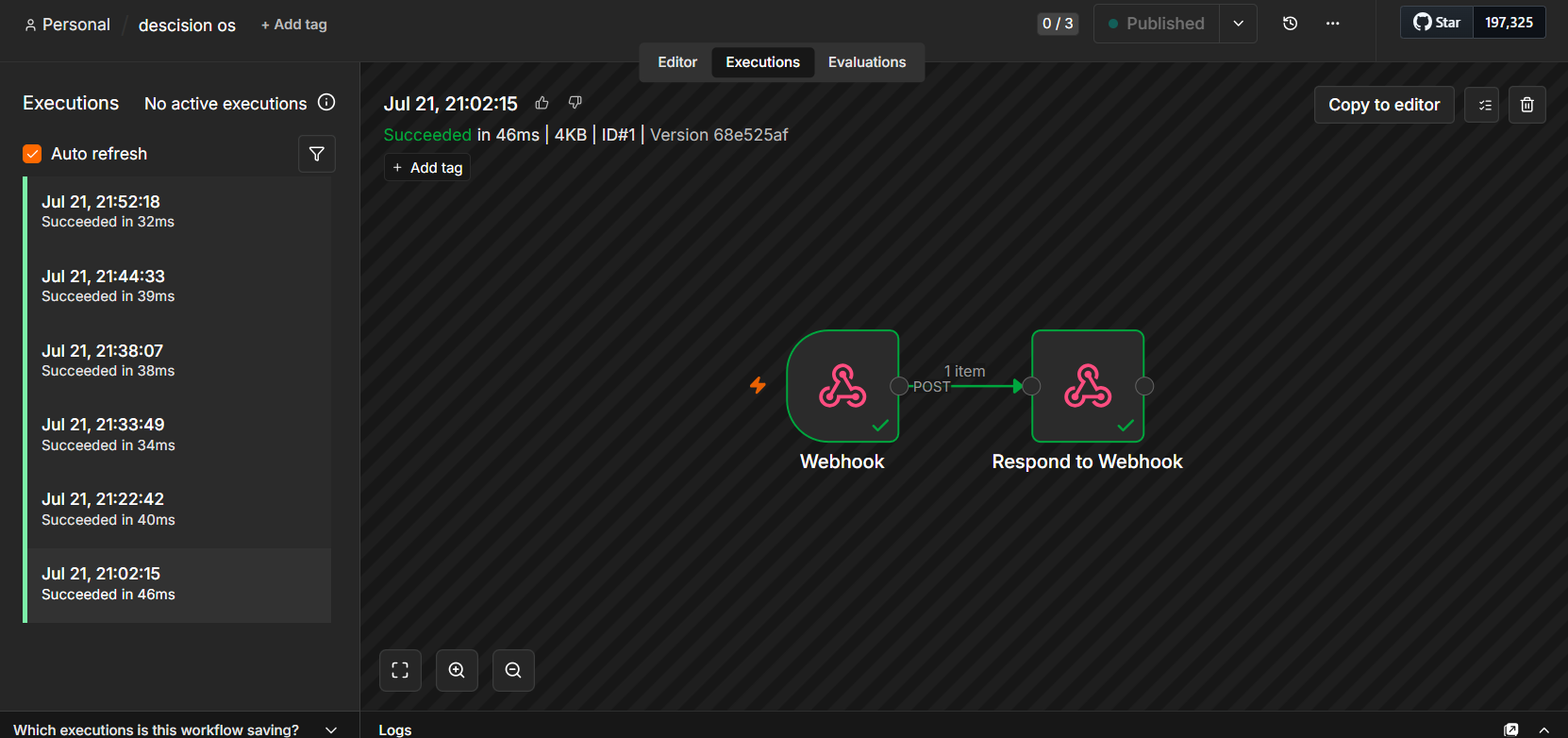
- Automatically triggers enterprise workflows through n8n after approval
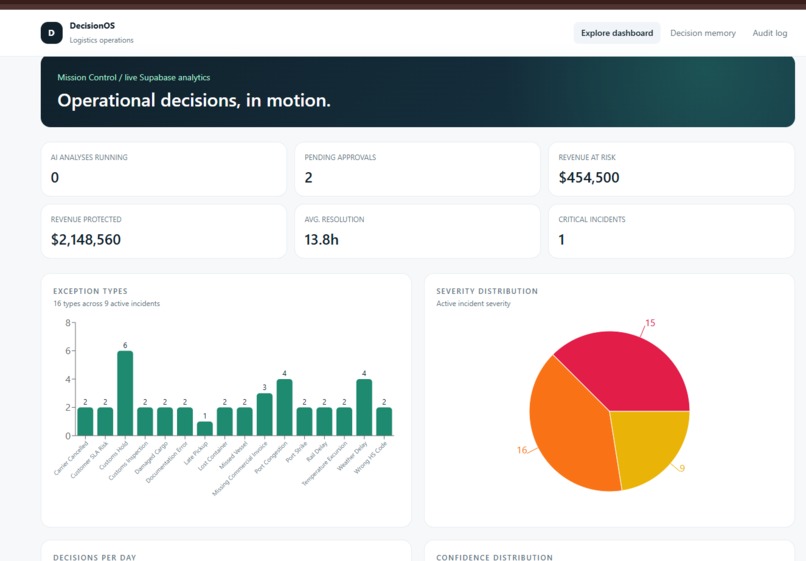
Unlike traditional transportation management systems, DecisionOS focuses on operational decision-making rather than simple shipment tracking.
How I built it
DecisionOS consists of a modern full-stack architecture:
- Frontend: React, TypeScript, Vite, Tailwind CSS
- Backend: FastAPI with asynchronous Python APIs
- AI: OpenAI GPT as the primary reasoning engine with Groq as an automatic fallback
- Database: Supabase for incidents, timelines, audit logs, and decision memory
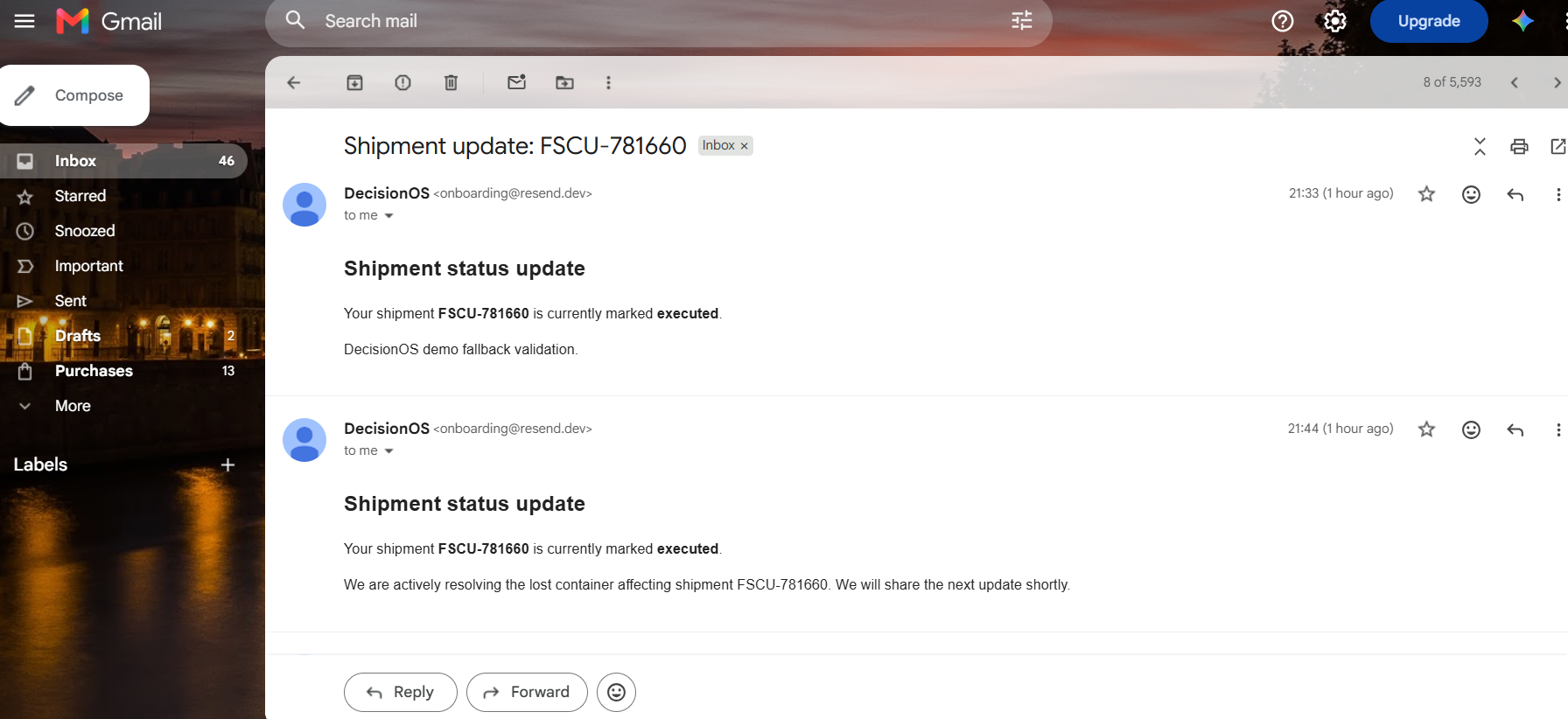
- Notifications: Resend Email API
- Automation: n8n webhooks for enterprise workflow integration
OpenAI GPT powers the decision engine by analyzing operational incidents, generating recovery recommendations, comparing alternative strategies, estimating operational risk, and providing explainable reasoning.
Throughout development, I used OpenAI GPT-5.6 to refine the overall system architecture, AI reasoning workflows, prompt engineering, feature planning, and technical documentation. I used OpenAI Codex extensively as my engineering assistant for implementing FastAPI endpoints, integrating Supabase and Resend, building asynchronous n8n automation, debugging issues, refactoring code, and accelerating development while keeping full control over design decisions.
Challenges I ran into
One of the biggest challenges was designing an AI workflow that remained transparent and trustworthy for operational teams. Instead of returning only a recommendation, the system needed to explain its reasoning, provide confidence scores, compare alternative recovery strategies, and maintain complete auditability.
Another challenge was integrating multiple services—including OpenAI, Groq, Supabase, Resend, and n8n—while ensuring that enterprise automation remained optional and never blocked critical operational decisions.
Building asynchronous backend workflows, coordinating multiple cloud services, and integrating live automation through webhooks required careful iteration, debugging, and testing.
Accomplishments that I'm proud of
- Built a complete AI-powered logistics decision engine instead of a traditional shipment tracking dashboard.
- Integrated OpenAI GPT to generate explainable operational recommendations with confidence scores and alternative recovery strategies.
- Implemented Decision Memory to make historical operational decisions searchable and reusable.
- Built a complete audit trail covering AI recommendations, approvals, notifications, timeline updates, and operational actions.
- Successfully integrated enterprise automation using n8n webhooks.
- Added automated operational notifications through the Resend Email API.
- Designed a scalable architecture that combines AI reasoning, human approval, enterprise automation, and operational transparency.
What I learned
This project reinforced that successful enterprise AI is not only about generating intelligent responses—it must also provide transparency, explainability, and meaningful human oversight.
I also gained valuable experience integrating multiple AI models, cloud services, databases, automation platforms, and asynchronous backend workflows into a cohesive production-style application while balancing usability, reliability, and operational safety.
Working with OpenAI GPT-5.6 and OpenAI Codex also demonstrated how AI can accelerate both product design and software development without replacing thoughtful engineering decisions.
What's next for DecisionOS
The roadmap for DecisionOS includes:
- Retrieval-Augmented Generation (RAG) over historical logistics decisions
- Multi-agent AI collaboration for complex operational planning
- Predictive disruption detection before incidents occur
- Native integrations with leading TMS and ERP platforms
- Real-time collaboration for operations teams
- Advanced analytics and operational performance insights
- Expanded enterprise workflow integrations through n8n and additional business systems
The long-term vision is for DecisionOS to become an AI operating layer that helps logistics organizations make faster, more consistent, explainable, and auditable operational decisions while keeping humans firmly in control of every critical business decision.
Built With
- codex
- fastapi
- gpt-5.6
- groq
- logistics
- n8n
- openai
- python
- react
- resend
- supabase
- tailwind
- typescript
- vite

Log in or sign up for Devpost to join the conversation.