-
-
-
DecisionOS
Introduction
DecisionOS was inspired by a common problem in modern teams: Decisions are often made from scattered signals, unclear rules, and fragmented context. Teams today may have lot of data, dashboards, alerts, and reports, but still struggle to understand why a decision should be made and what action should follow.
The idea behind DecisionOS is to show how complex signals can be transformed into clear, explainable, and traceable decisions by using our tool.
What it does?
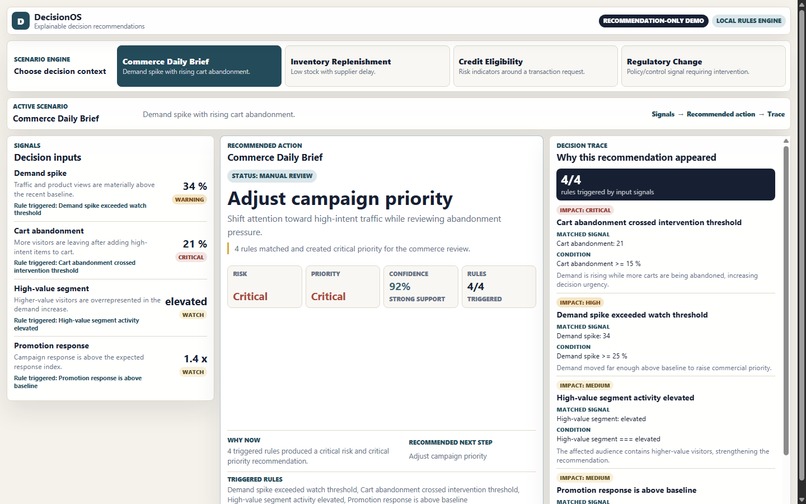
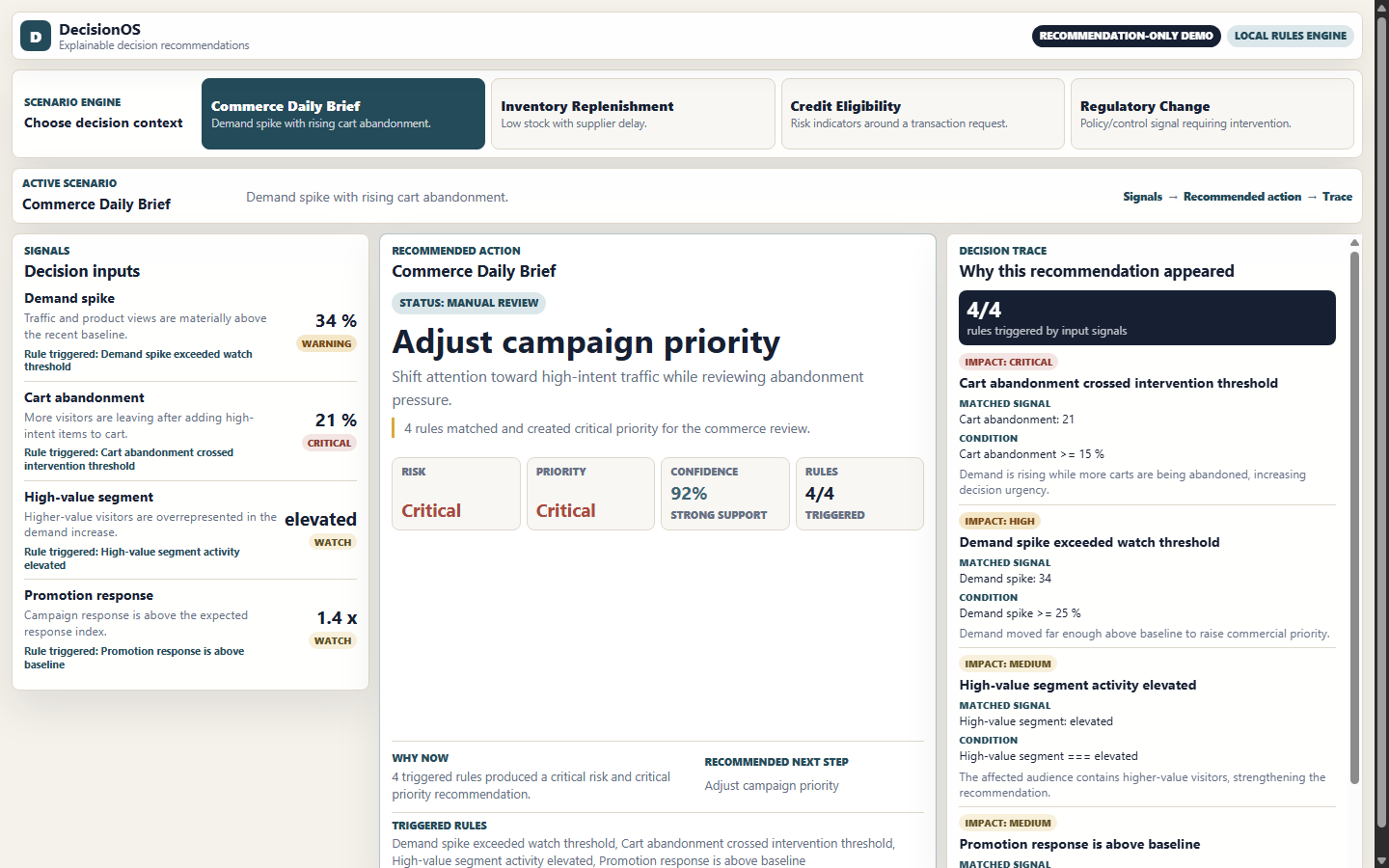
DecisionOS is a scenario-based decision engine demo that shows how scattered signals can become clear, explainable actions. It uses mock business and operational data in our software, it runs that data through local rules, and recommends next steps based on input data, and then shows the reasoning trace behind each recommendation in the process.
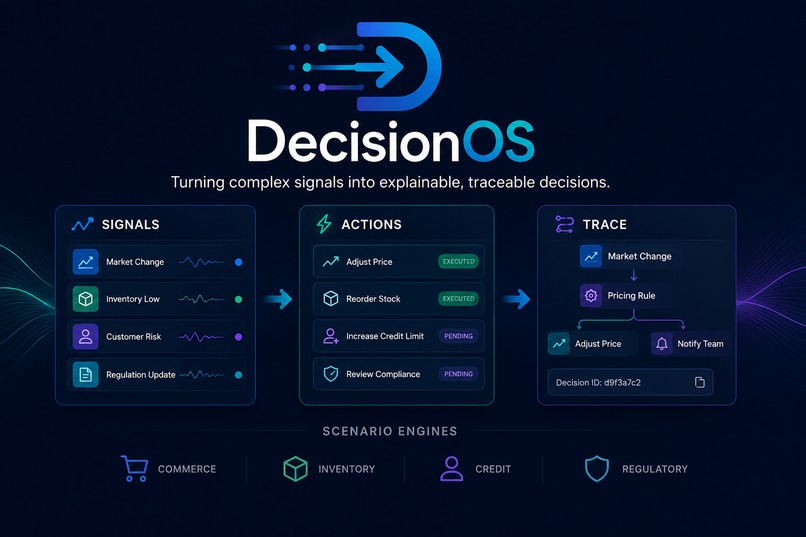
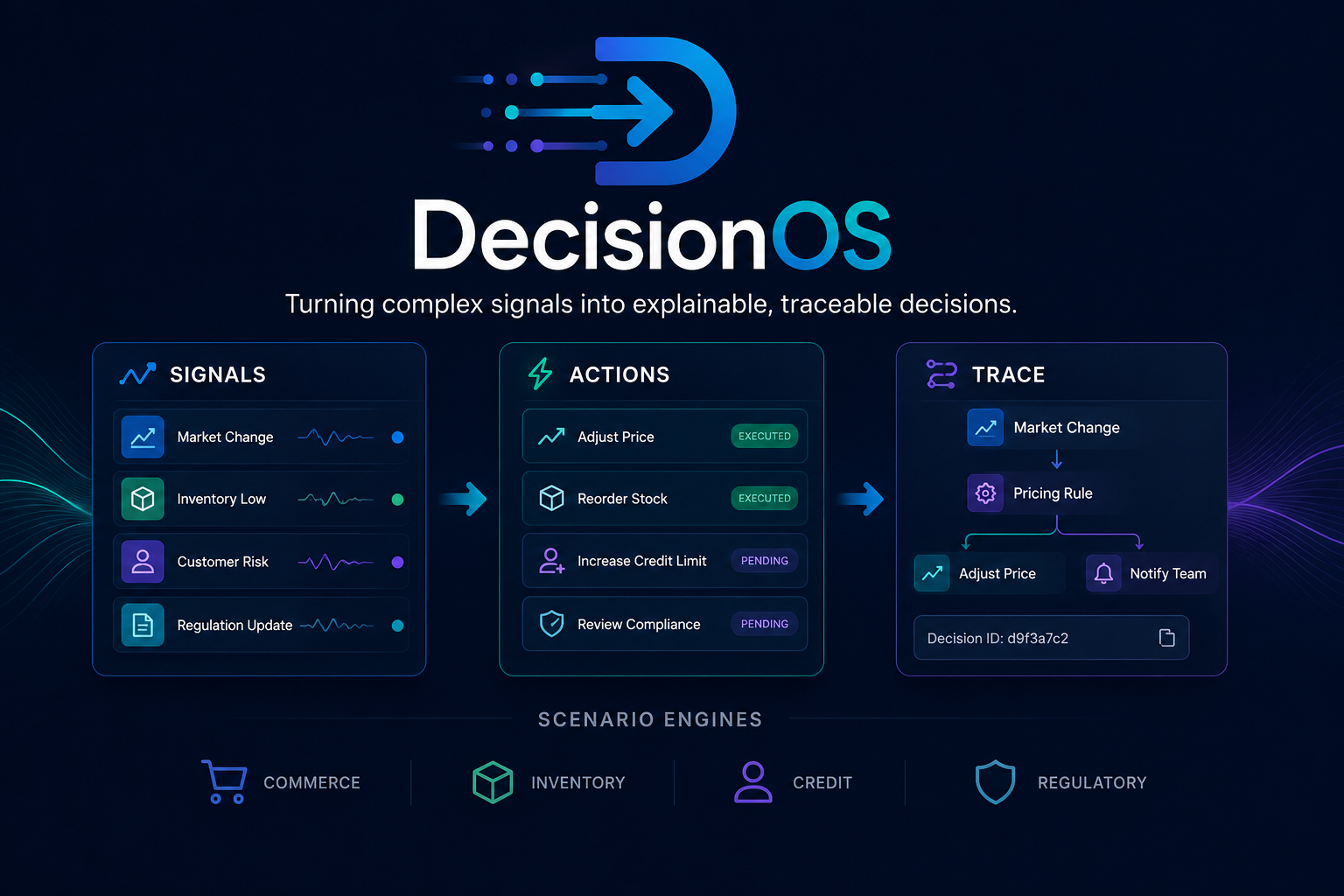
The demo focuses on three core views:
- Signals - The input context and conditions.
- Actions - Recommended next steps.
- Trace -The explanation chain behind the decision.
DecisionOS currently demonstrates multiple scenarios, including Commerce, Inventory, Credit, and Regulatory operations. But more can be added.
How we built it?
DecisionOS was built as a lightweight frontend demo using React, TypeScript, and Vite. The project uses local mock data and a local rules engine to keep the demo simple, fast, and fully self-contained.
A key part of the build process was defining clear requirements and a simple frontend architecture before continuing implementation. Early iterations showed that an AI-assisted development workflow can move very fast, but it also needs precise direction to avoid unclear scope, inconsistent layouts, and unnecessary complexity. Thats why we went back to redo it the right way with demands
We used the requirements and architecture work to define what the demo should show, which scenarios should exist, how Signals, Actions, and Trace should connect, and what should intentionally stay out of scope.
There is no backend, database, authentication, or external API integration in this version. That was intentional. The goal was to focus on the decision experience itself: how signals become actions, and how those actions can be explained.
Challenges we had
The main challenge was keeping the demo focused. Decision systems can quickly become too broad, especially when working with multiple scenarios and many possible signals.
Another challenge was designing the interface so it feels useful and explainable without becoming a generic dashboard. The project needed to show not only the final recommendation, but also the reasoning path behind it.
What we learned
We learned that explainability works best when it is built into the workflow. DecisionOS lets the user follow the path from signals, to recommended actions, to the reasoning trace behind the recommendation. That makes the result easier to understand, trust, and act on. But also the whole process from step 1 and forward make the user understand what is happening.
We also learned that even a small local demo can communicate a larger product idea if the scope is clear and the user journey is focused.
What's next
Next steps for DecisionOS would be to improve the scenario models, refine the visual design, add stronger traceability between signals and actions, and make the decision engine more flexible.
Future versions could also explore an AI assistant layer that helps users understand the decision context faster and prepare data for decison and readability. Instead of replacing the decision process, AI could summarize key signals, explain trade-offs, highlight missing information, suggest follow-up questions, and help teams compare possible actions before they decide what to do.
DecisionOS could also grow toward real integrations, configurable rules, team workflows, and decision history, but the current version stays intentionally focused on demonstrating the core idea: Turning complex signals into explainable, traceable decisions as whole in the process.
Built With
- ai-assisted
- codex
- decision-engine
- explainable-ai
- frontend
- local-rules-engine
- mock-data
- openai-build-week
- react
- traceability
- typescript
- ui/ux
- vite


Log in or sign up for Devpost to join the conversation.