-
-

Mary, 72 — 24 hours on a trolley due to delayed decisions.
-
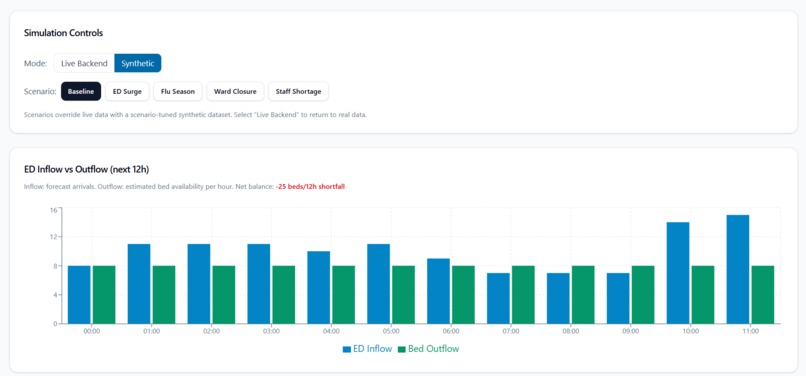
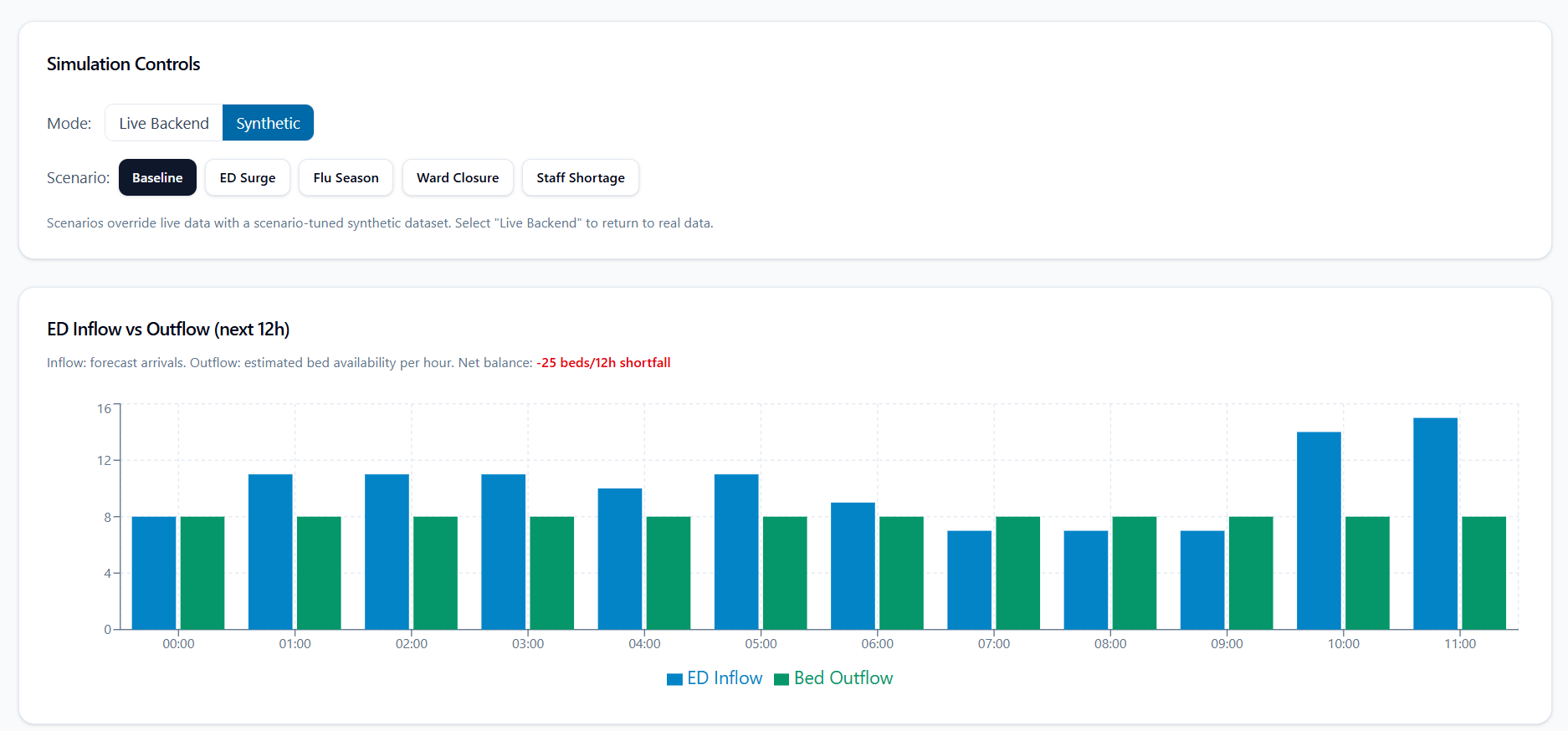
Baseline: Synthetic, privacy‑first hospital state.
-
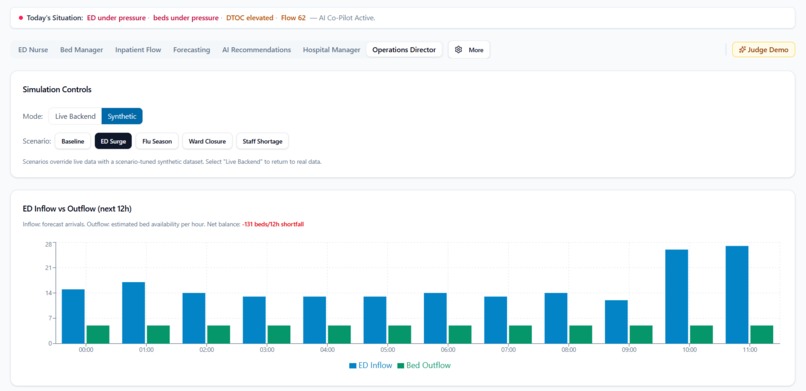
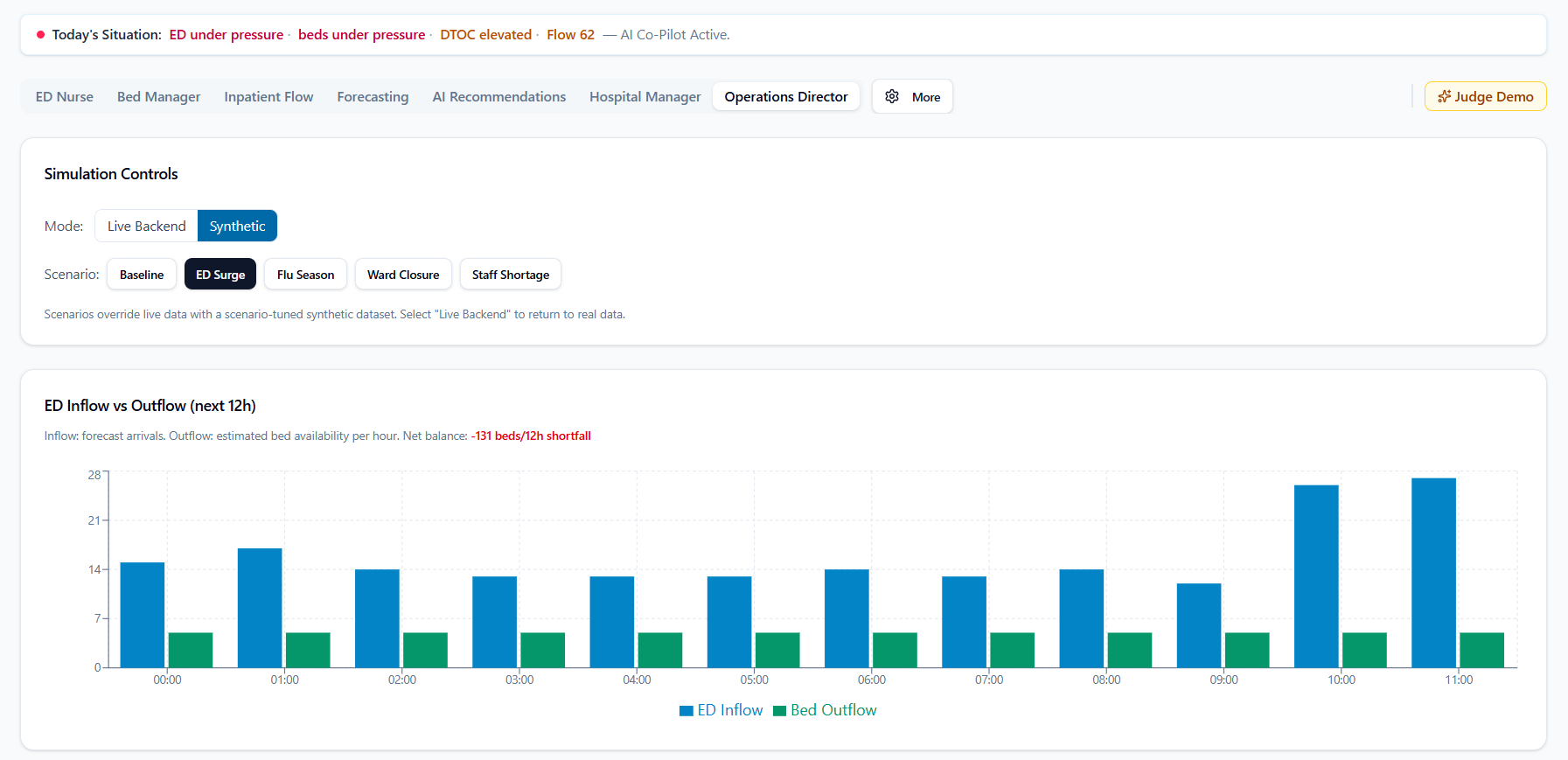
Pressure Scenario: Synthetic operational stress test.
-
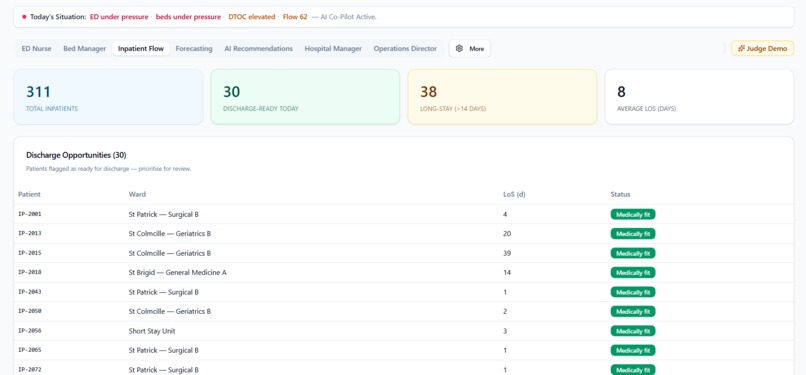
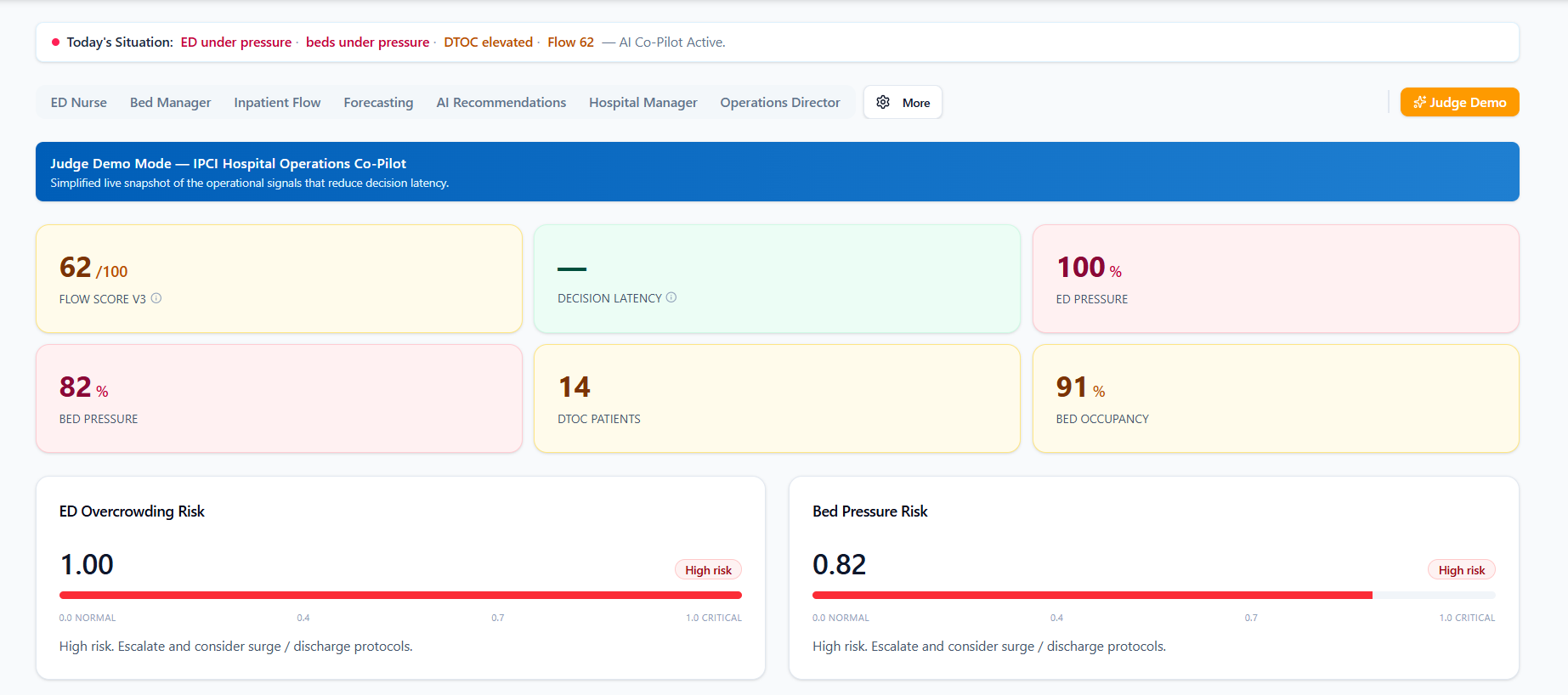
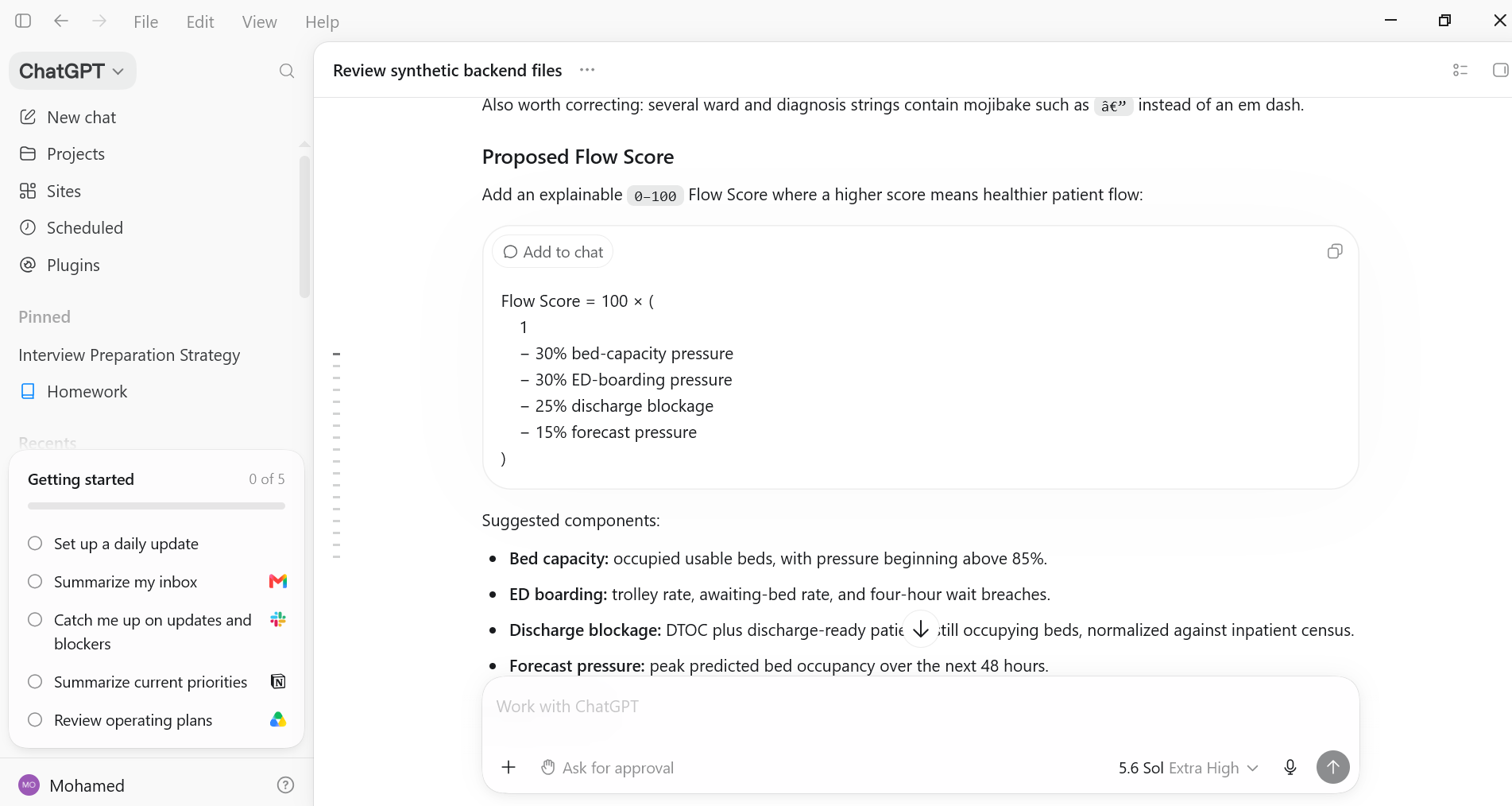
Flow Score: Real‑time operational pulse of the hospital.
-
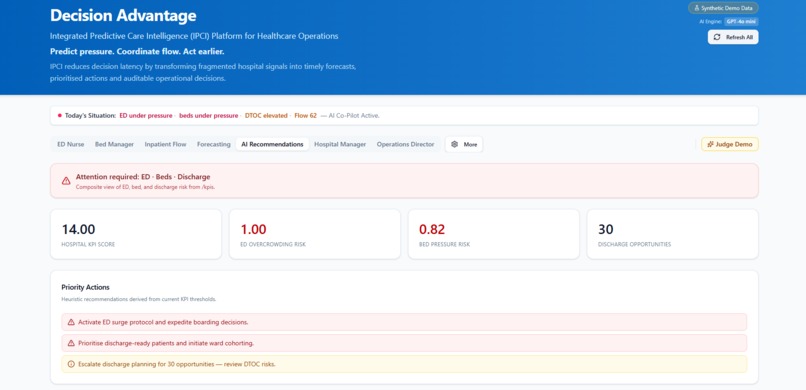
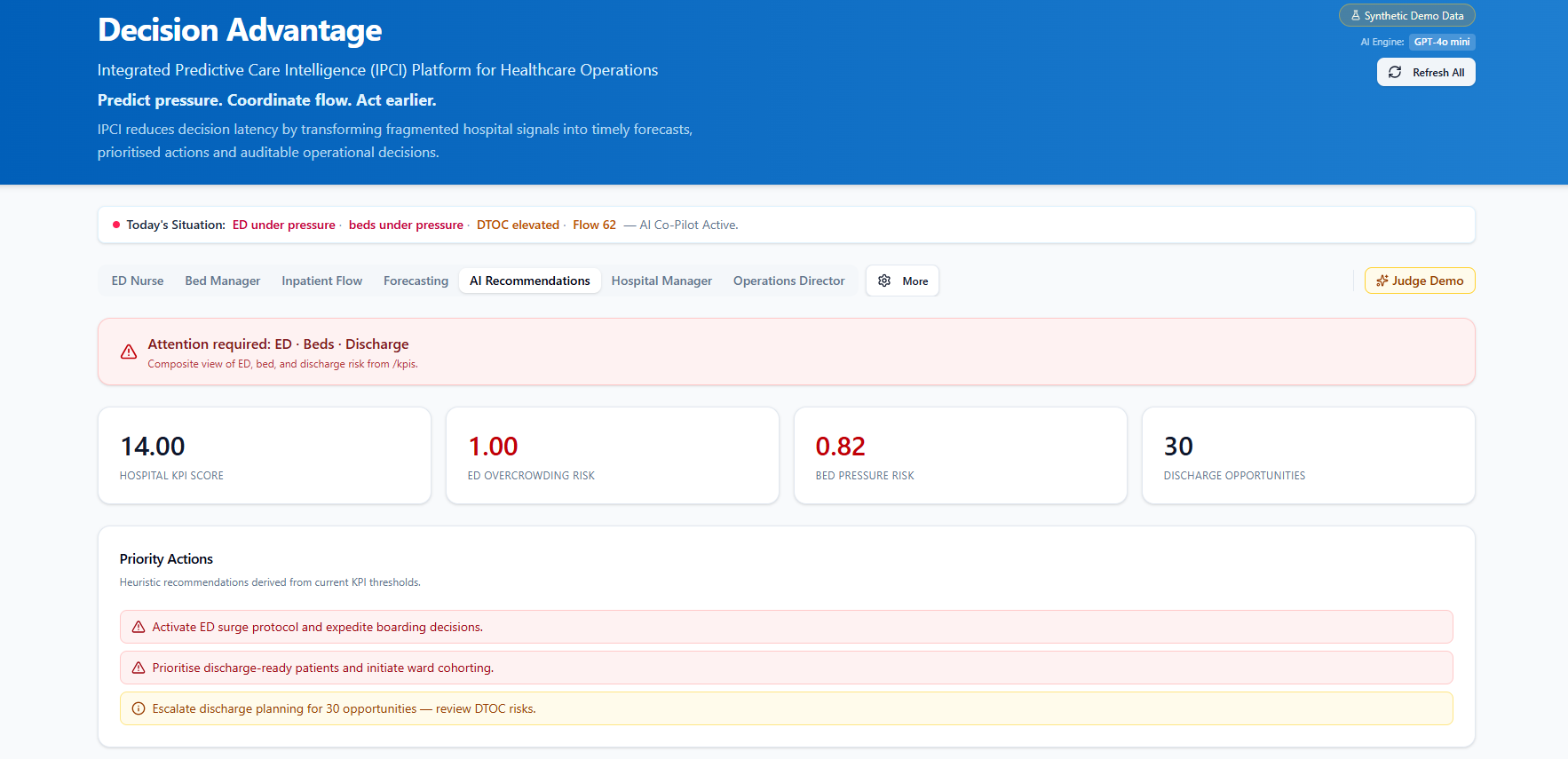
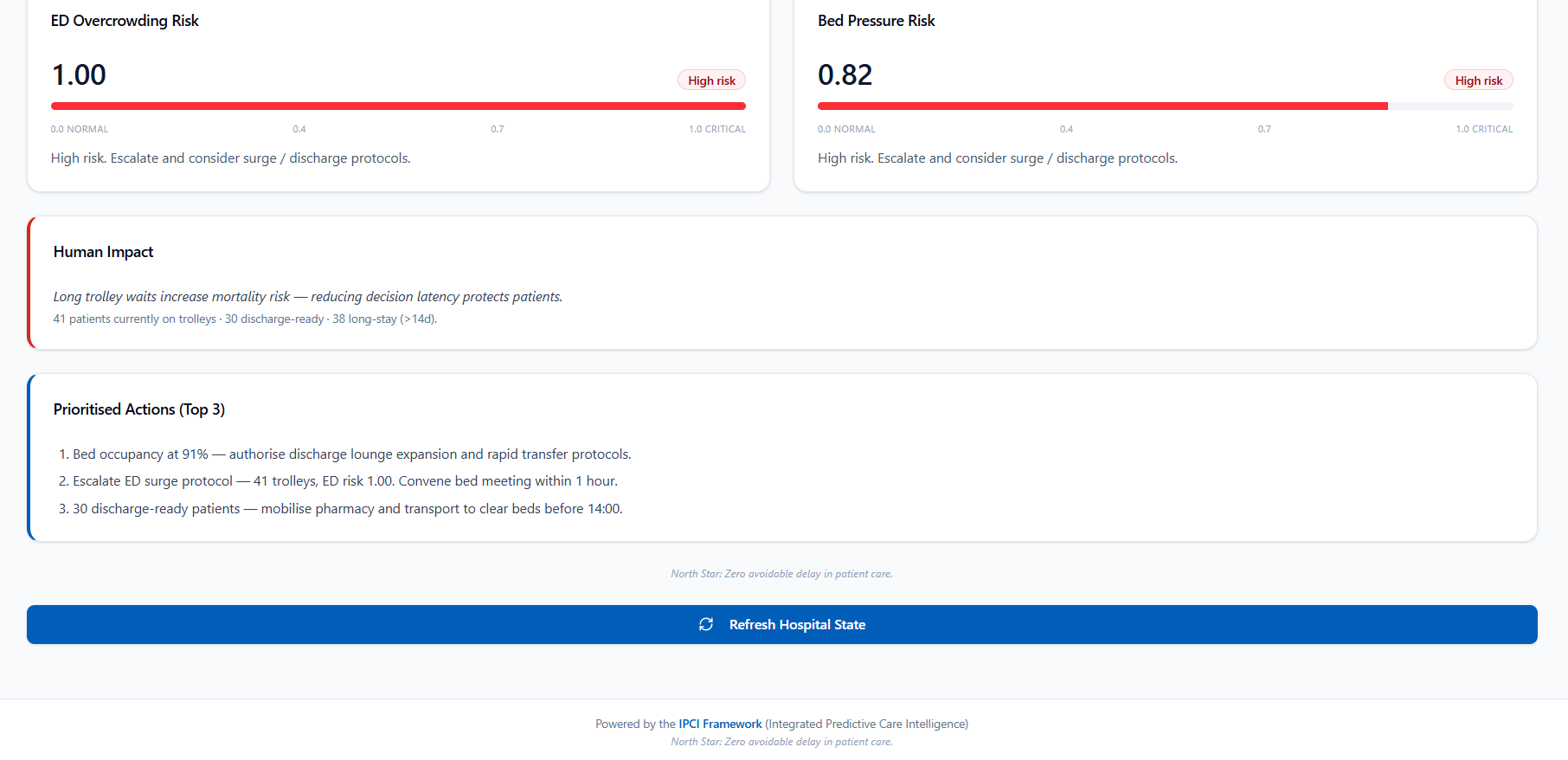
AI Recommendations: Deterministic operational actions.
-
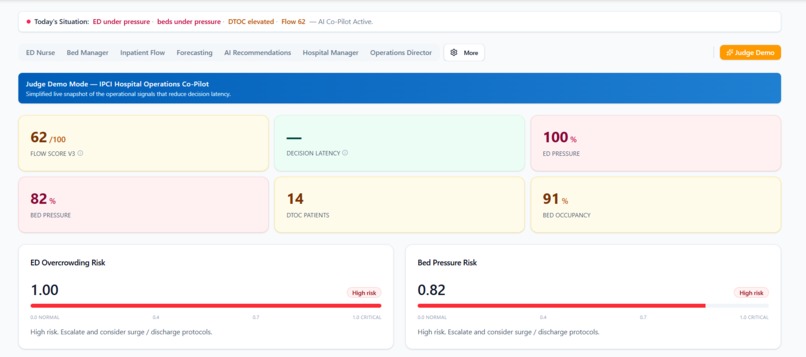
Judge Mode: One headline, five risks, three actions.
-
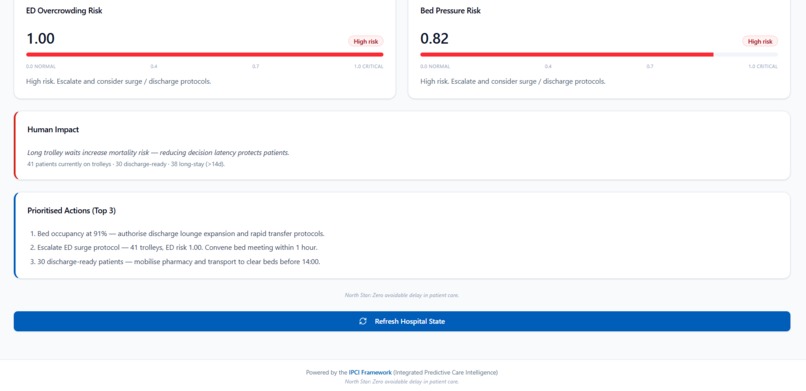
Human Impact: Quantifies the effect of delays on patients.
-
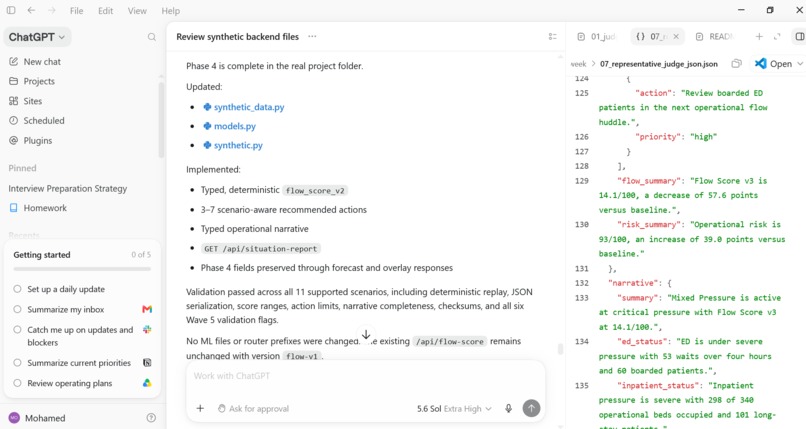
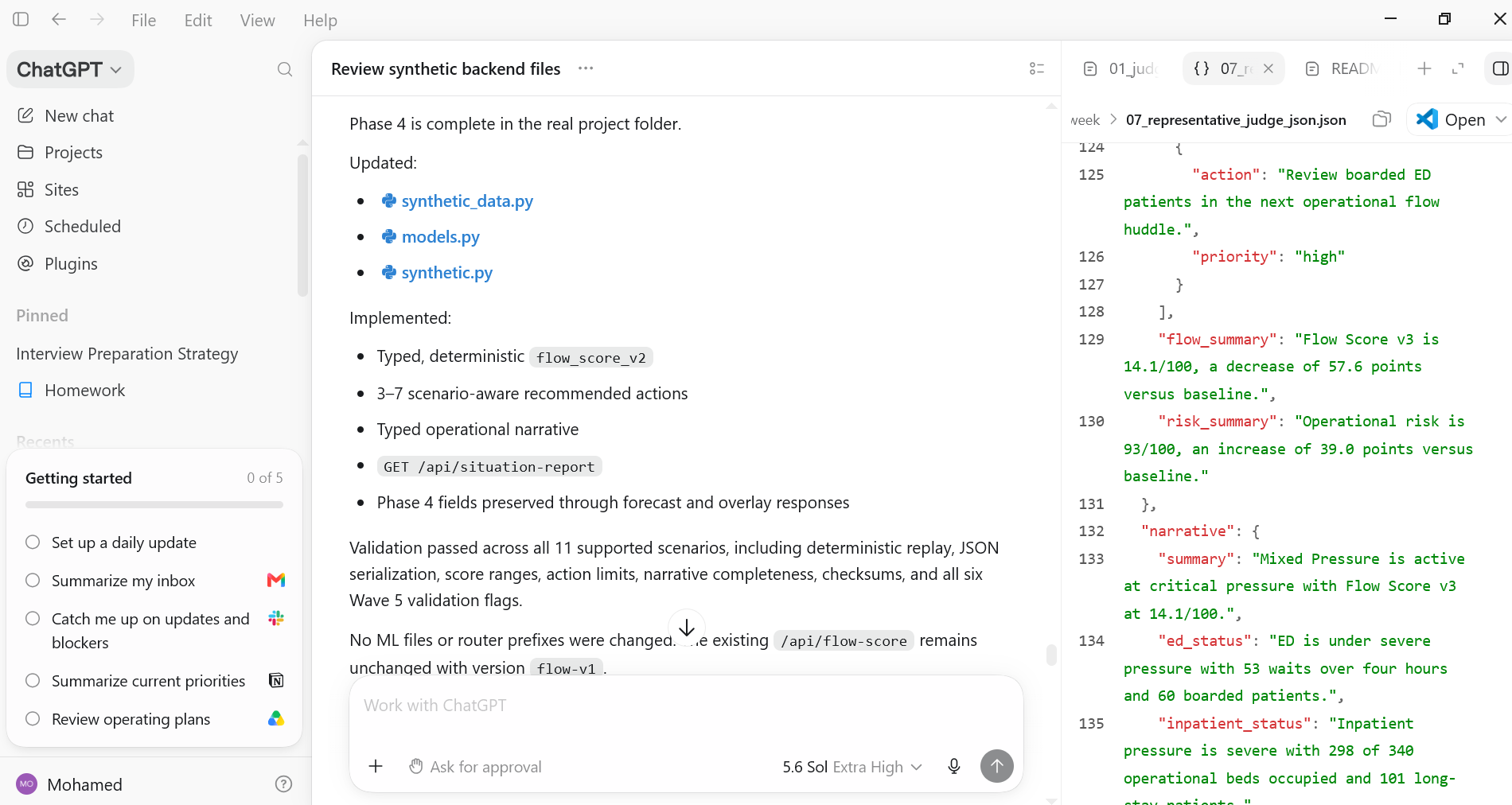
Codex + GPT‑5.6 powering reasoning and flow scoring.
-
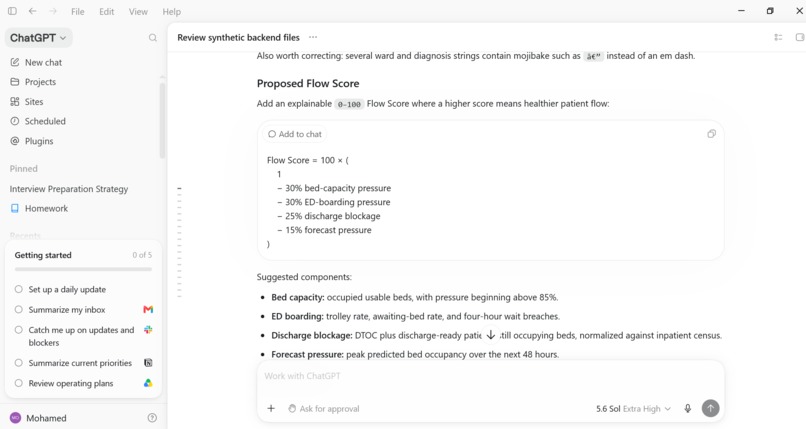
ChatGPT‑5.6 powering reasoning and flow scoring
-
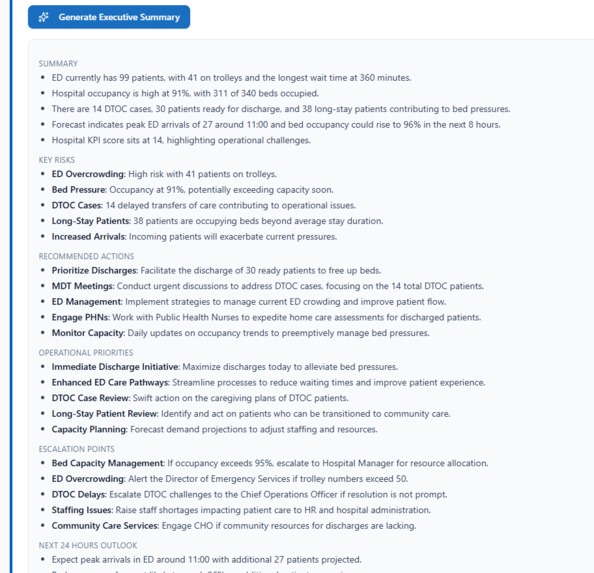
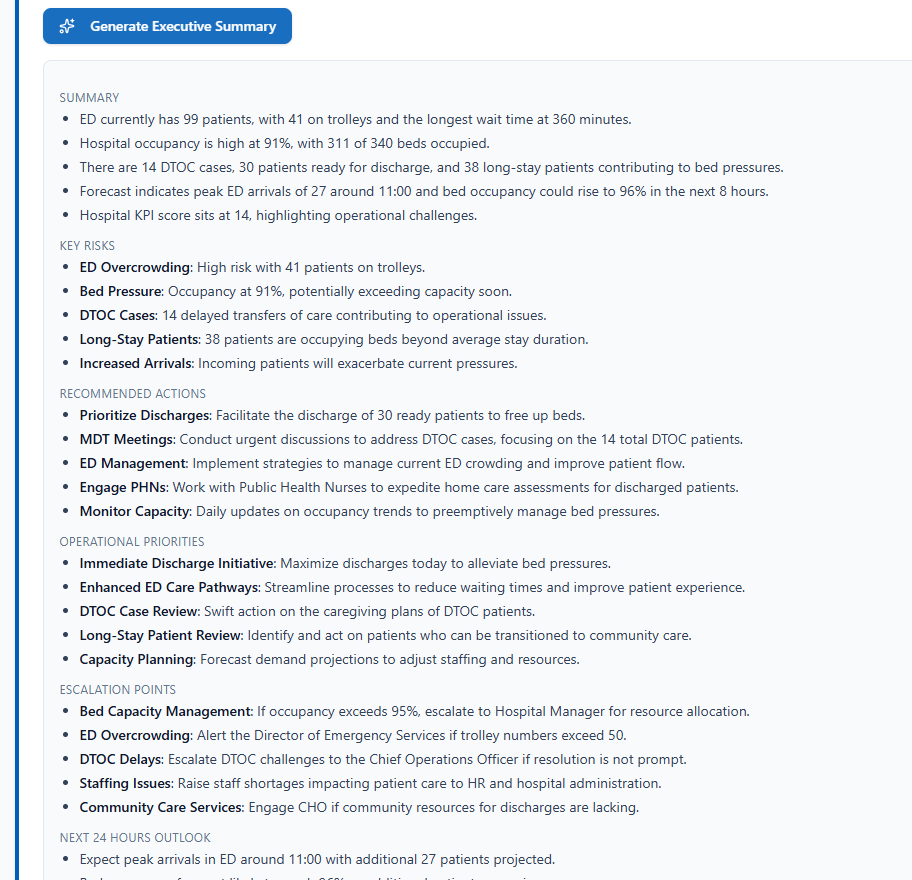
Executive Summary: High‑level operational snapshot for leadership.
-
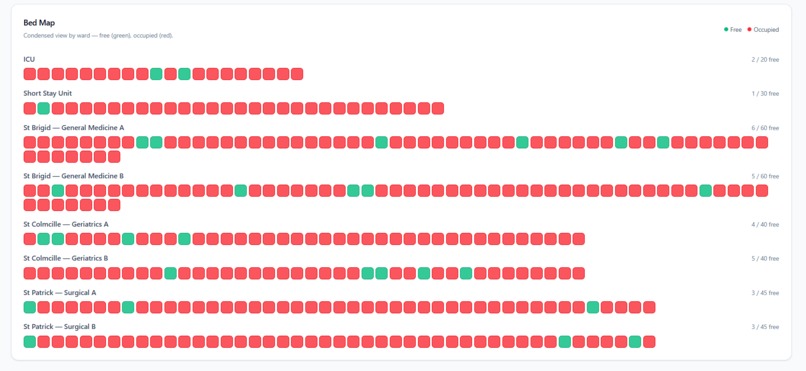
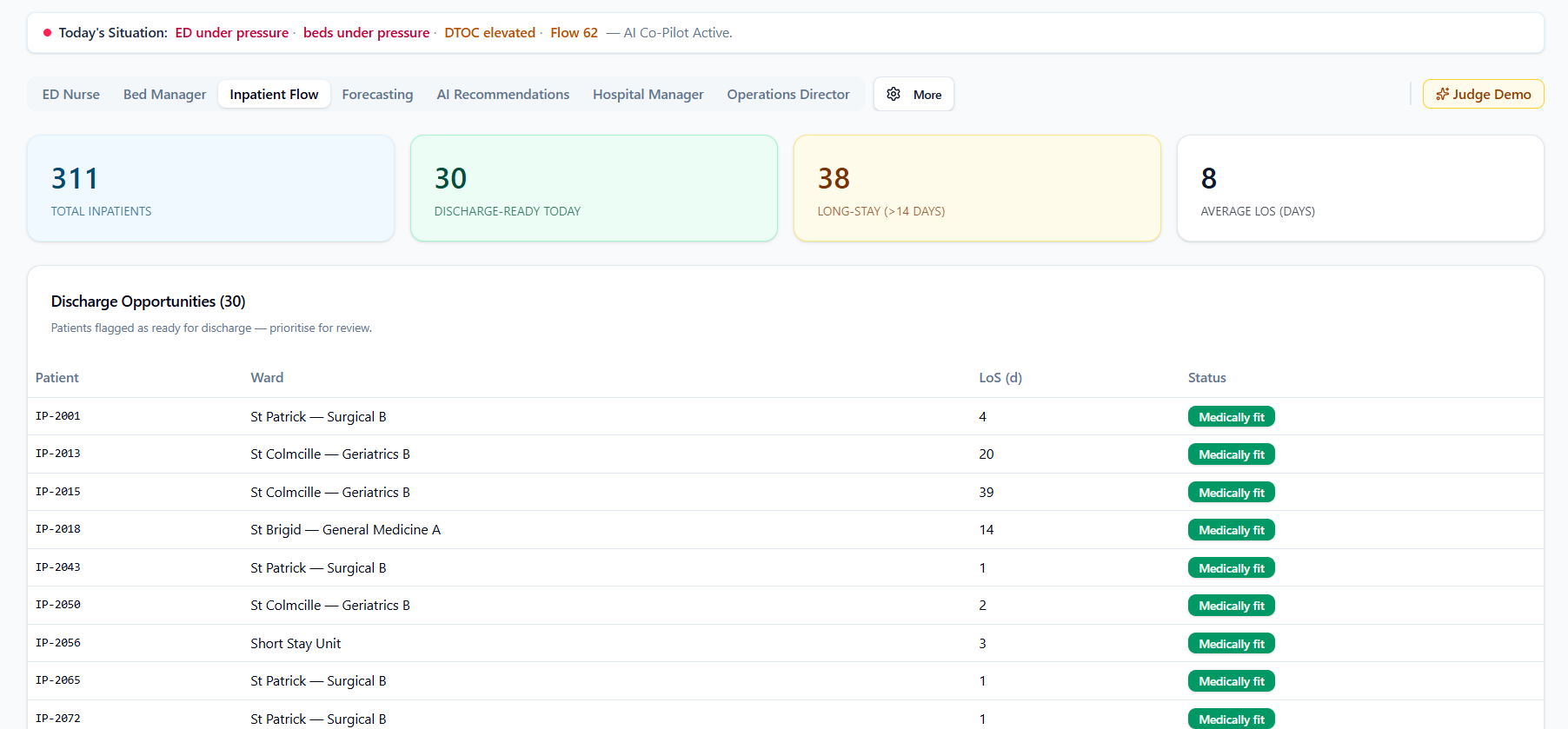
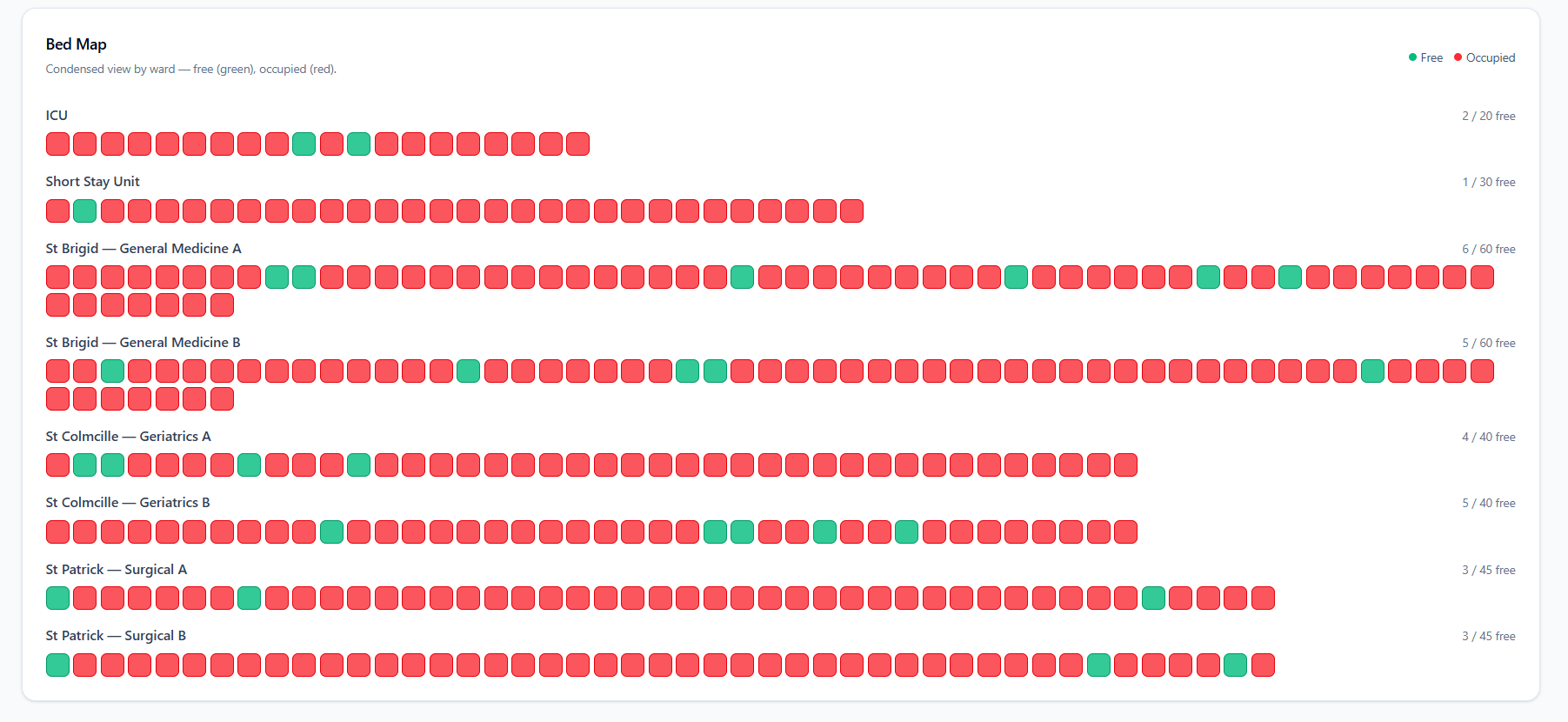
Bed Status: Real‑time bed availability and occupancy signals.

Inspiration — The Decision Latency Problem
Hospitals don’t fail because they lack data — they fail because decisions arrive too late.
Across Europe, North America, and globally, overcrowding, long waits, and corridor care continue to rise despite record investment. The underlying issue is decision latency: delayed action on predictable operational pressure across the Emergency Department (ED), bed occupancy, Delayed Transfers of Care (DTOC), discharge flow, and staffing.
Periods of disruption expose structural weaknesses:
- fragmented systems
- inconsistent data quality
- manual workflows
- slow coordination
- unclear ownership
- delayed discharge decisions
We built this project to solve that problem — by transforming operational signals into timely, accountable action.
What We Built — Decision Advantage: IPCI Operations Intelligence Co‑Pilot
We built the first governance‑first AI operations intelligence platform designed to reduce decision latency, predict pressure, explain risk, quantify human impact, and turn hospital‑wide signals into prioritised actions in seconds.
IPCI Explained (Integrated Predictive Care Intelligence)
IPCI is a four‑layer decision architecture that links data → predictive insight → decision support → governance.
It ensures that insight is not just generated, but translated into timely, accountable action.
IPCI Layer 1 — Federated Data (Operational Signals Only)
Minimum Viable Interoperability & Data Sovereignty
The federated data layer is built using Minimum Viable Interoperability (MVI) — meaning the co‑pilot connects only to essential operational signals rather than requiring full EHR integration or centralised data pooling. This ensures hospitals retain complete data sovereignty, and no Protected Health Information (PHI) ever leaves the source systems.
Instead of extracting patient‑level data, the platform consumes non‑identifiable operational indicators such as ED arrivals, bed occupancy, DTOC counts, discharge readiness, and staffing pressure. This privacy‑first approach aligns with:
- GDPR
- EU AI Act
By combining MVI with deterministic synthetic hospitals, the co‑pilot enables safe, reproducible modelling of pressure scenarios — winter surges, flu waves, staffing shortages, DTOC escalation — without ever touching PHI or breaching data‑sovereignty boundaries.
This is what makes IPCI deployable across diverse hospital systems while remaining compliant, trustworthy, and governance‑first.
IPCI Layer 2 — Predictive Insight
- deterministic synthetic hospital engine
- scenario engine (winter, flu, staffing, DTOC, mixed pressure)
- Flow Score v3
- operational risk engine
- human‑impact engine
IPCI Layer 3 — Decision Support
- prioritised actions engine
- Judge Mode
- Judge Briefing v2
- Situation Report
- baseline‑vs‑scenario overlay
- delta engine
IPCI Layer 4 — Governance & Trust
- typed Pydantic contracts
- reproducible synthetic states
- privacy‑first design
- Sol forecasting handoff
- GPT‑powered operational reasoning
This is not a dashboard.
This is not a chatbot.
This is not a forecasting tool.
It is an operations intelligence co‑pilot built on a decision‑led architecture.
How We Built It — Codex + GPT
Codex powered:
- deterministic synthetic hospitals
- scenario modelling
- Flow Score v3
- risk and human‑impact engines
- prioritised actions
- overlay + delta logic
- typed contracts
- Judge Mode + Judge Briefing v2
- Situation Report
- Sol forecasting router
GPT powered:
- operational reasoning
- scenario interpretation
- judge‑ready explanations
- executive summaries
- narrative clarity
Together, they create a reproducible, privacy‑first operational intelligence engine.
Challenges
- Designing deterministic synthetic hospitals that behave like real systems
- Creating reproducible scenario logic under pressure conditions
- Building Flow Score v3 as a unified operational pulse
- Quantifying human impact in a meaningful, responsible way
- Ensuring privacy‑first design without PHI
- Embedding governance into every layer
- Reducing decision latency across the care pathway
- Producing judge‑ready briefings that are clear, actionable, and trustworthy
What We Learned
- Decision latency is measurable and actionable
- Flow Score v3 provides a powerful operational pulse
- Synthetic hospitals unlock safe, reproducible intelligence
- Scenario comparison is essential for proactive decision‑making
- Human impact must be visible, not abstract
- Governance‑first design is critical for trust and adoption
- Decision‑led analytics is the future of hospital operations

Log in or sign up for Devpost to join the conversation.