-
-
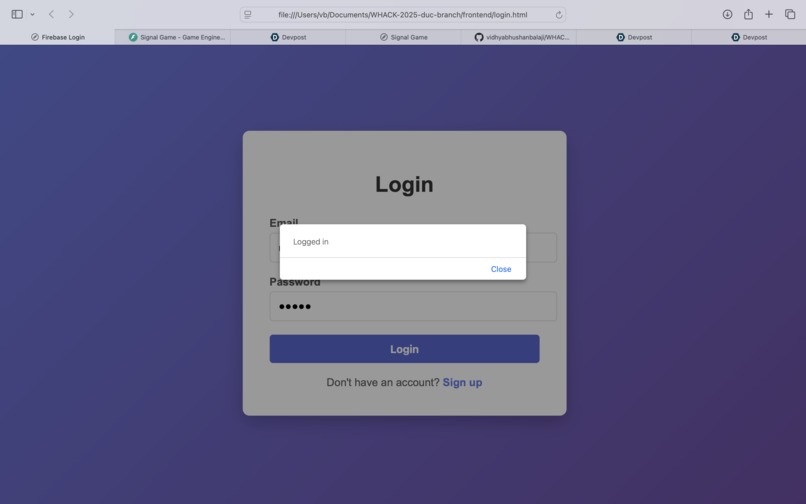
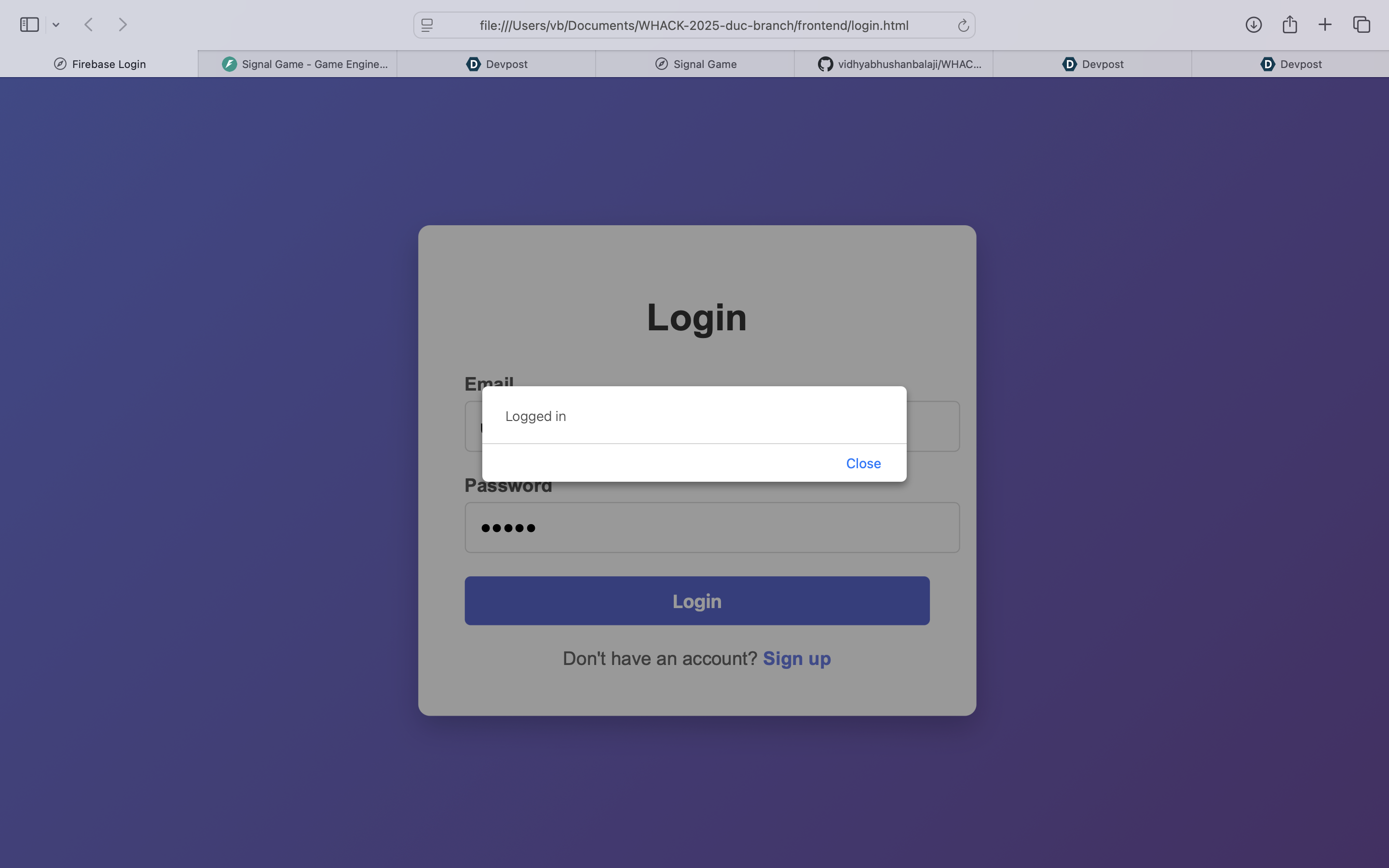
Login Succesful
-
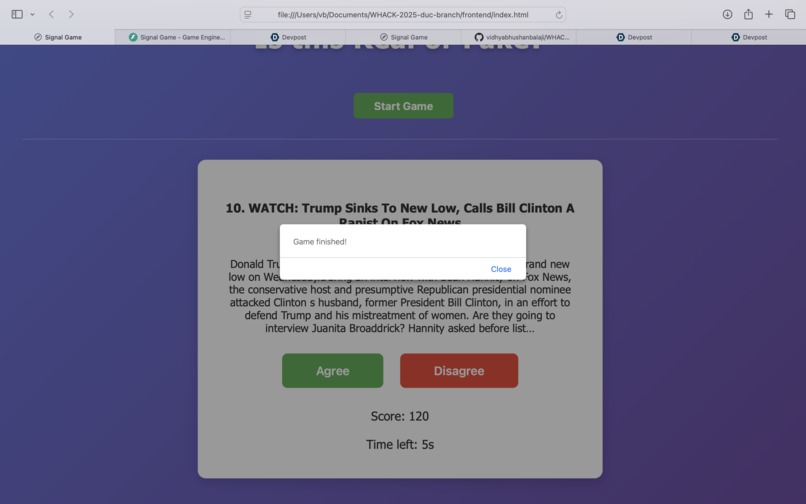
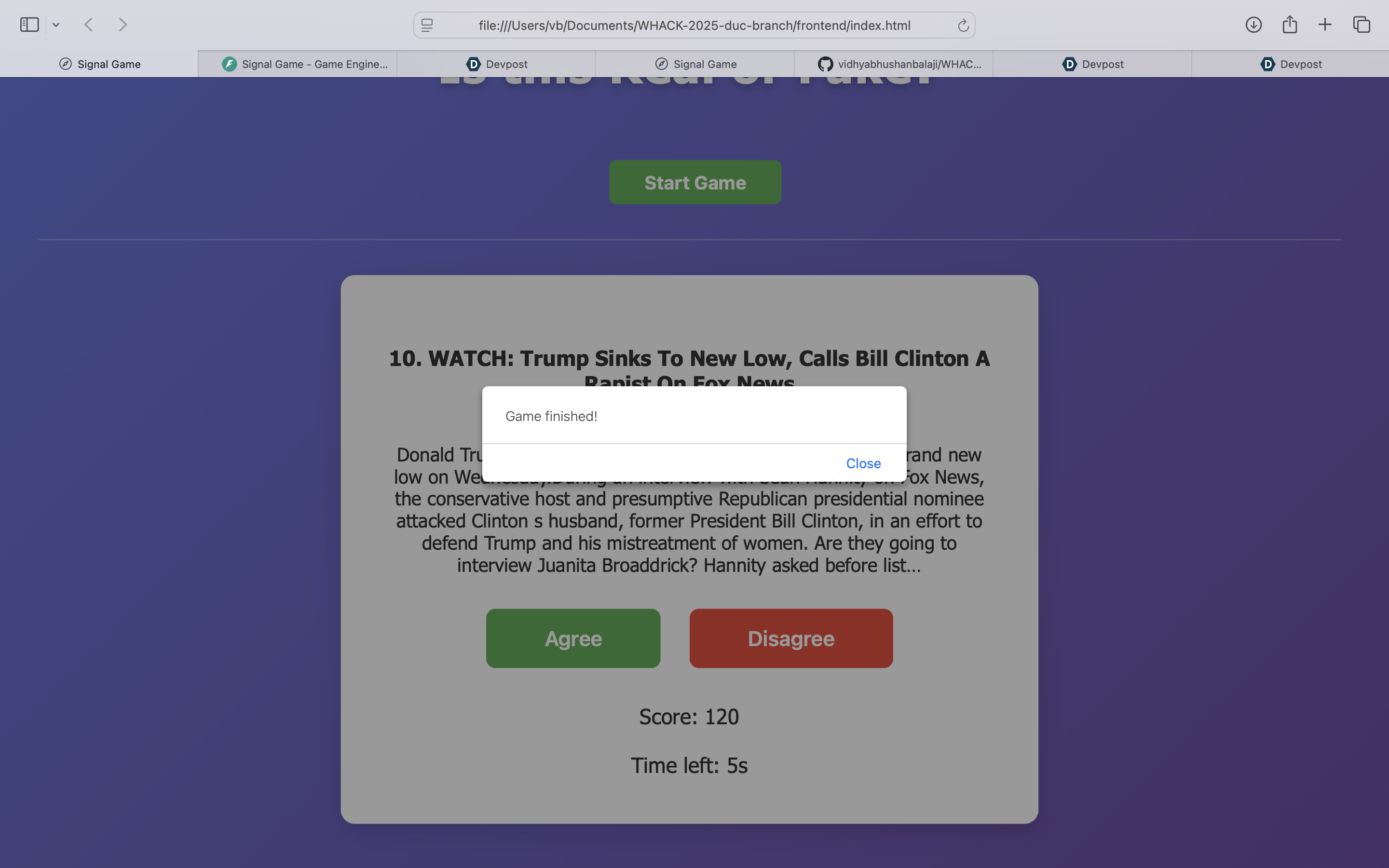
End of Questions
-
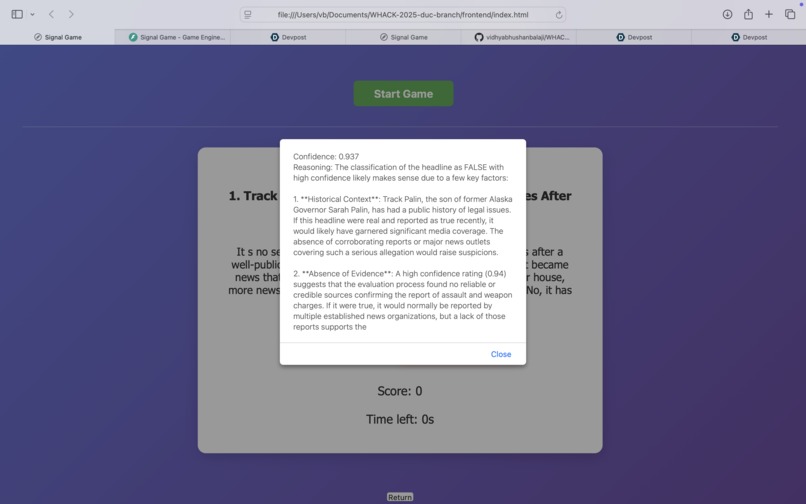
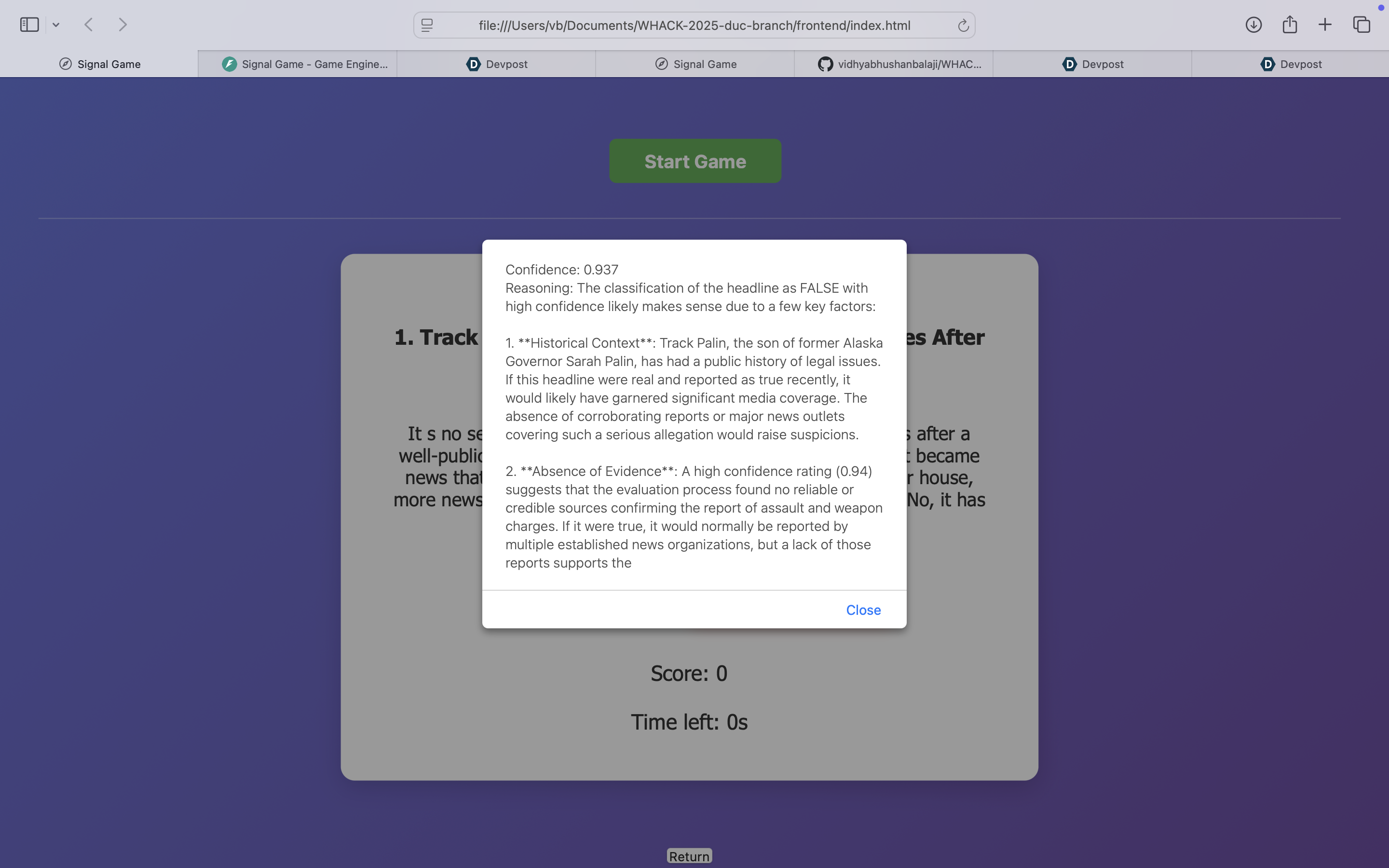
Question Feedback
-
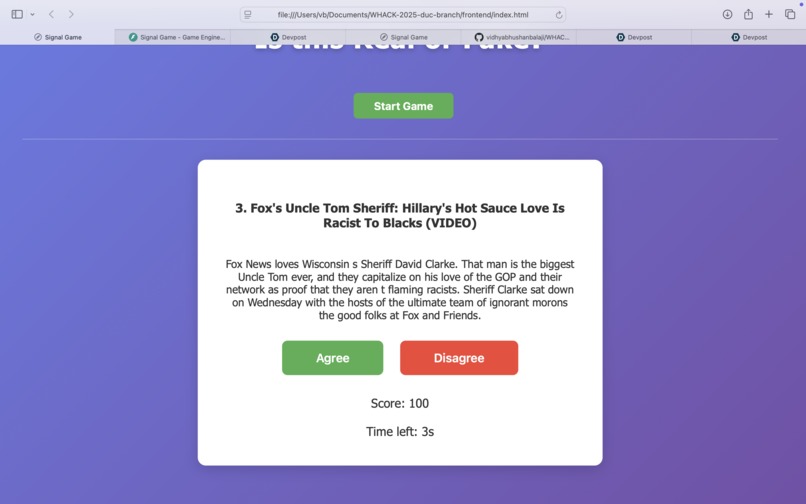
Another Example Question
-
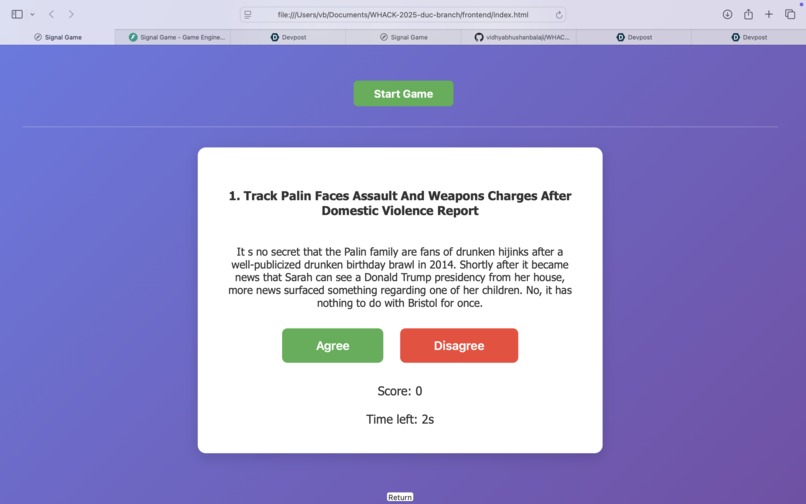
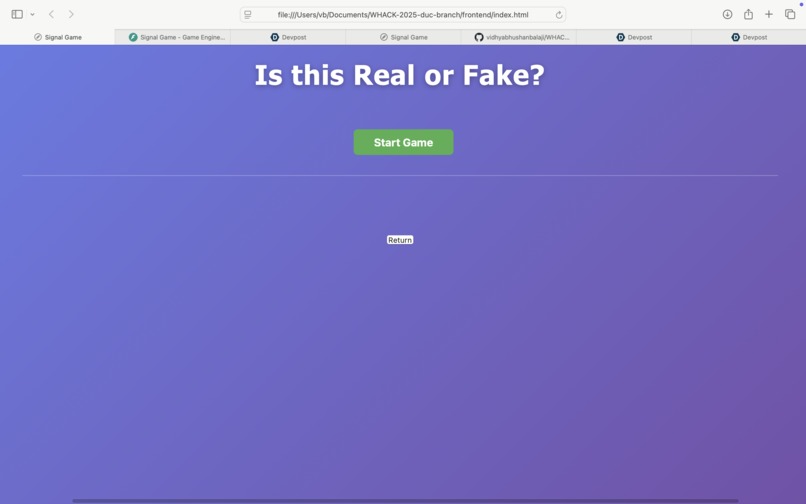
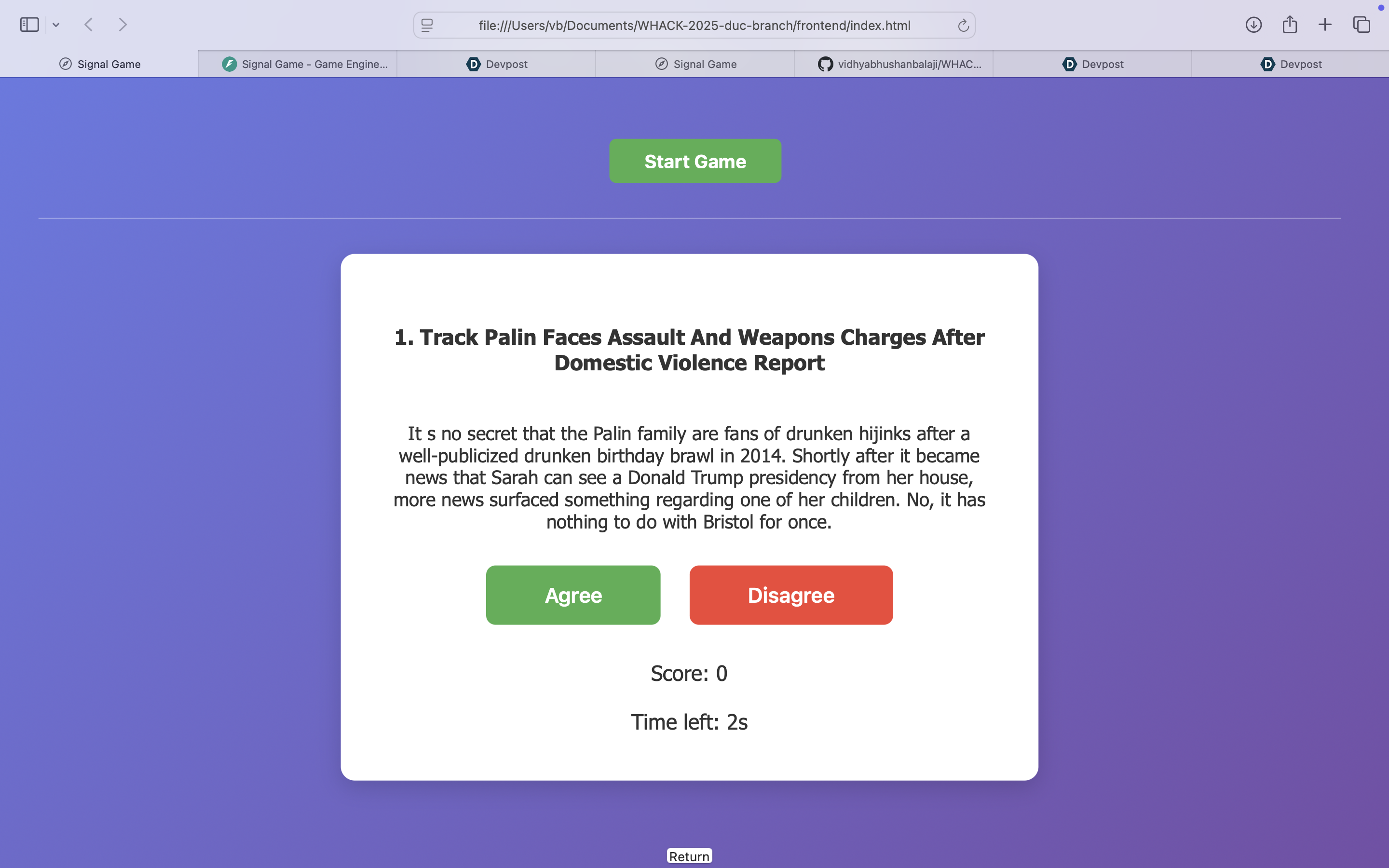
Example Question
-
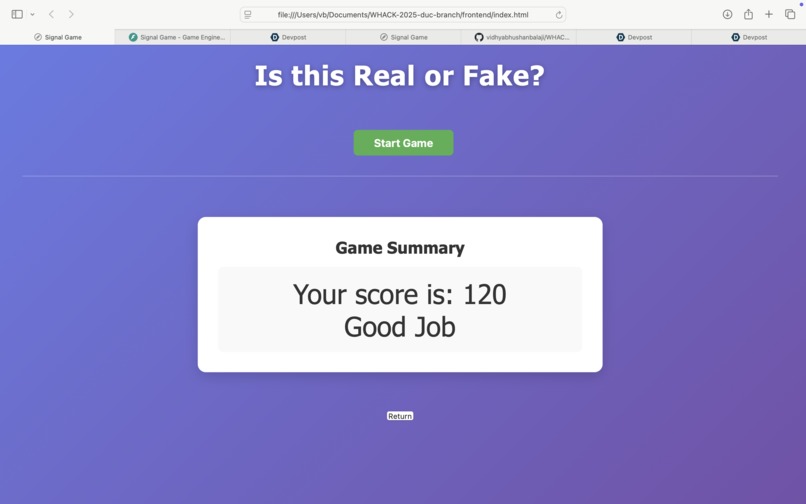
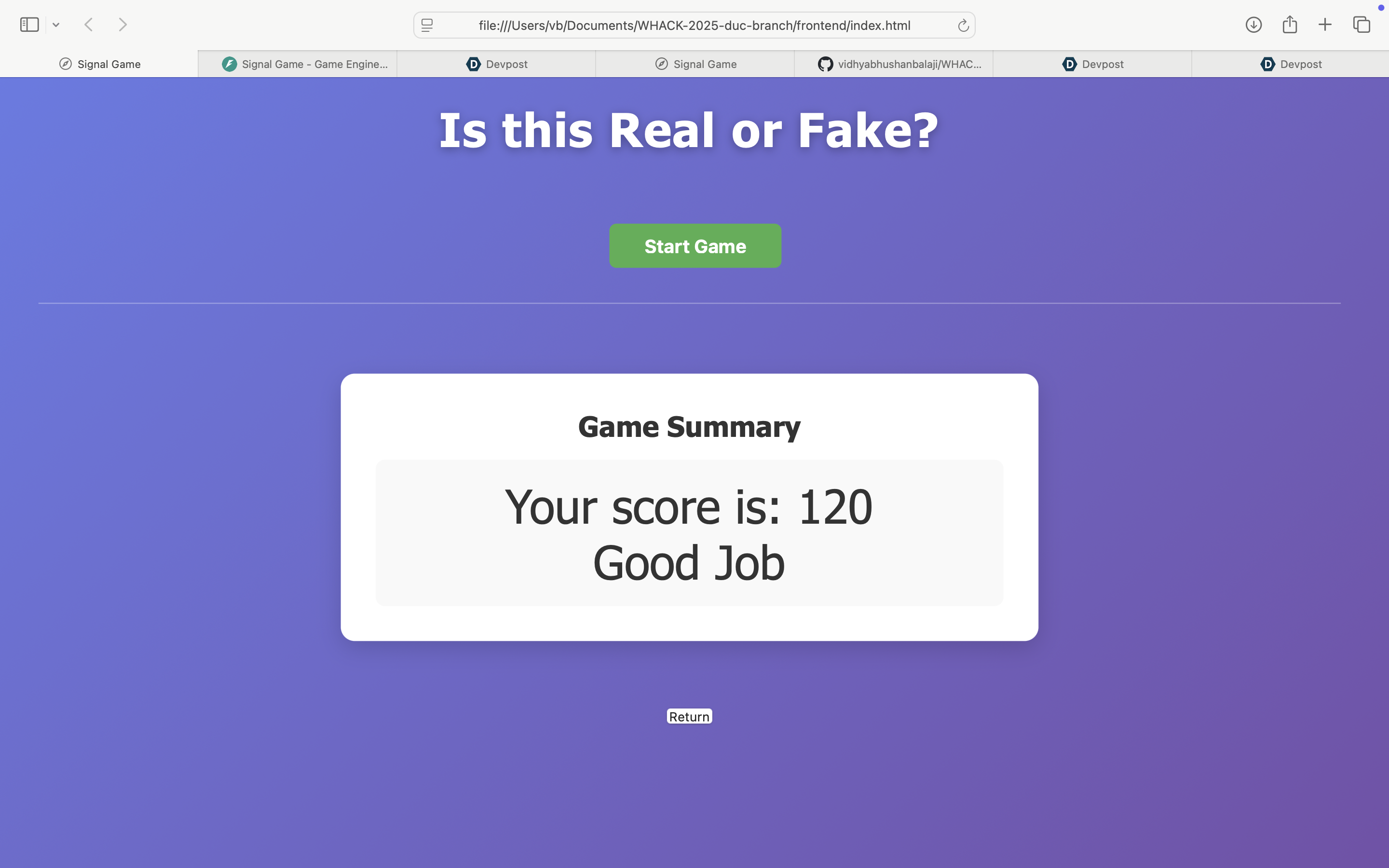
Final Screen
-
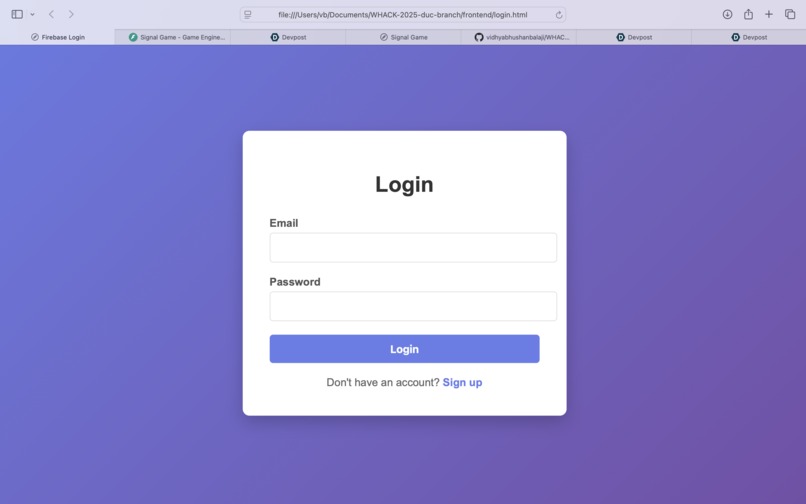
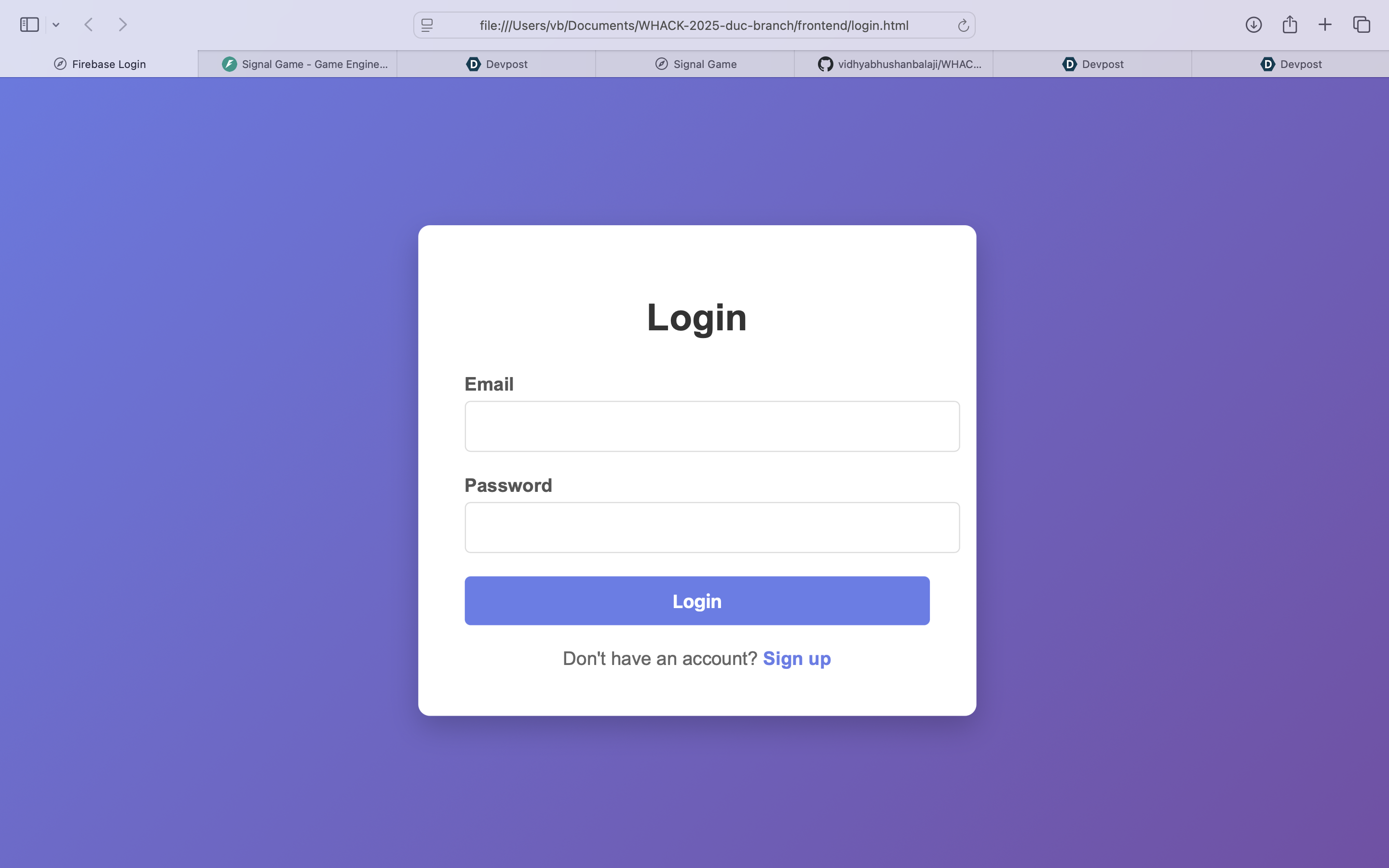
Login
-
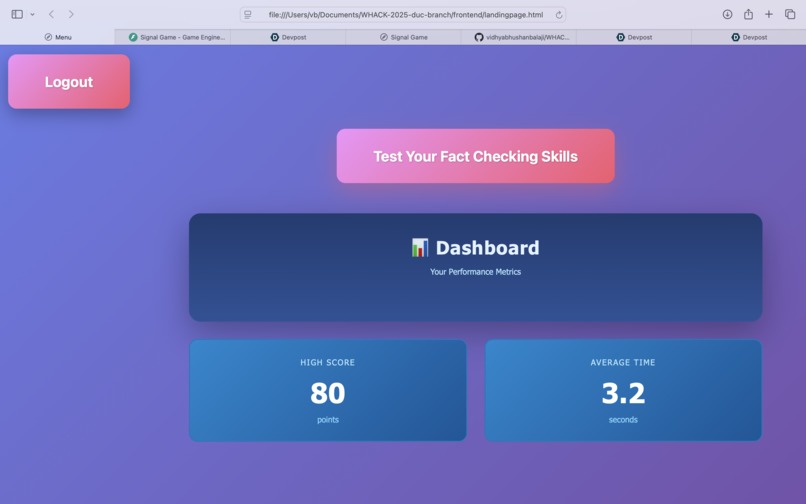
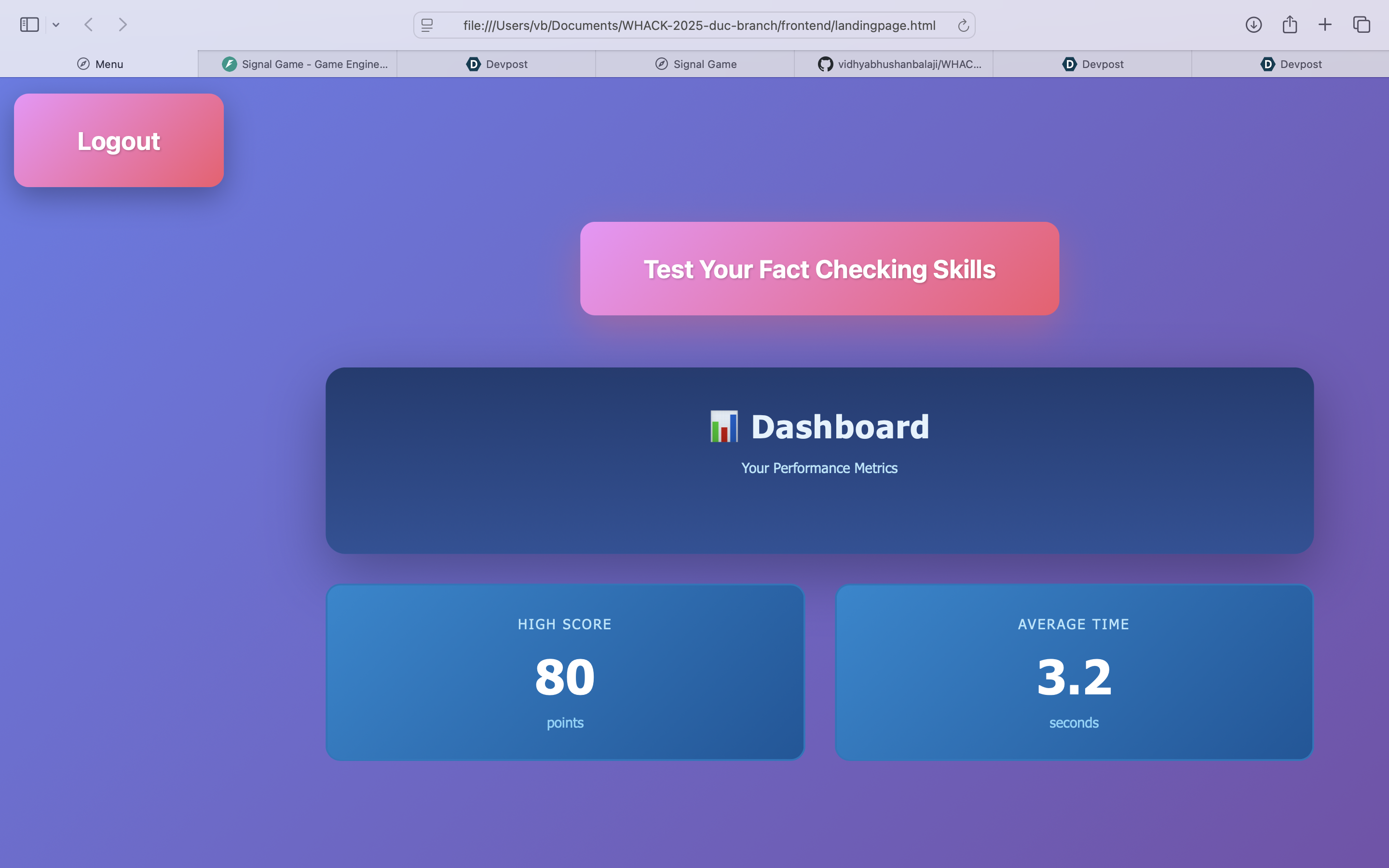
Dashboard
-
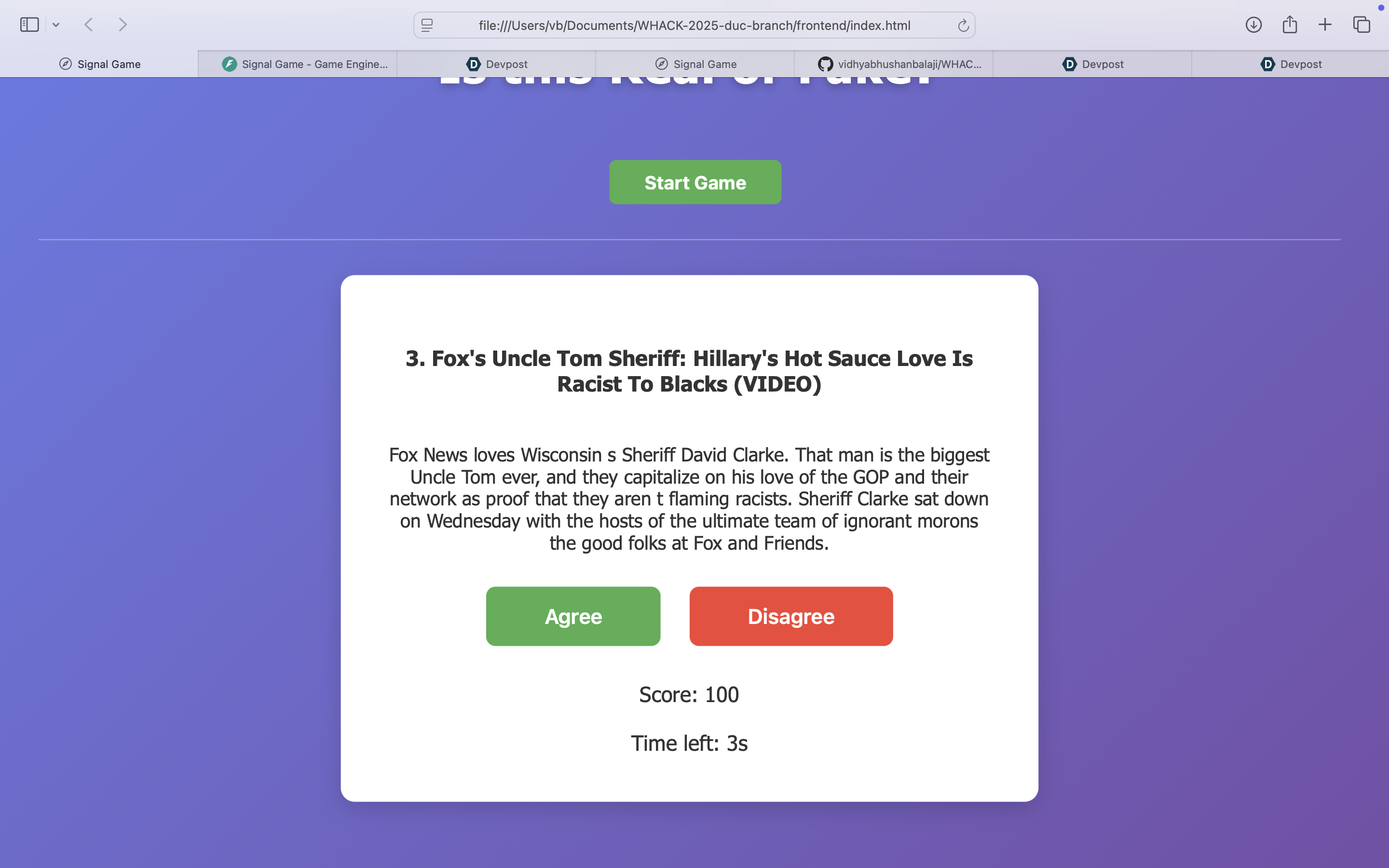
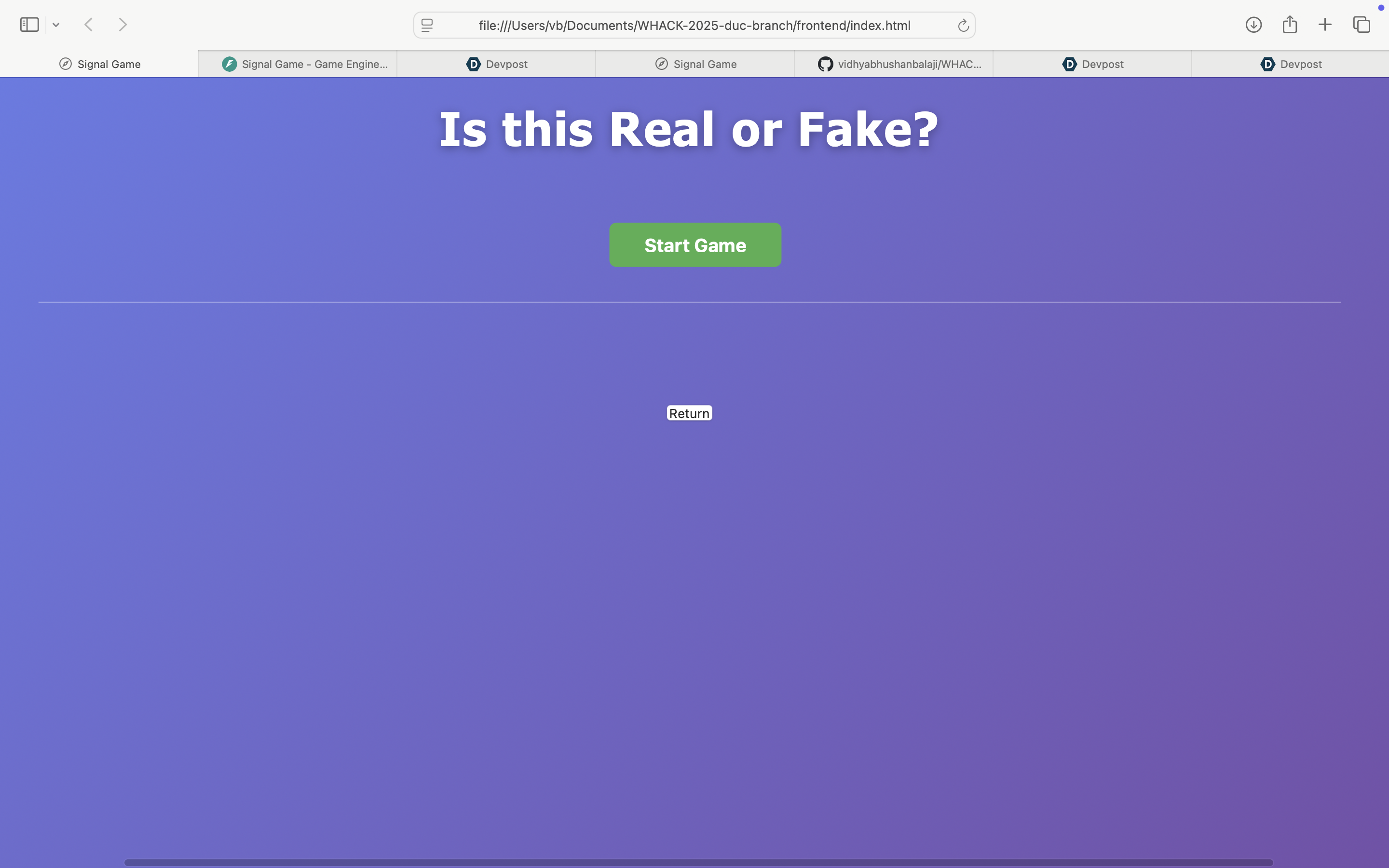
Question Page
Inspiration
In financial markets, milliseconds decide millions. Traders live in a blur of information - headlines, tweets, data drops - each capable of swinging sentiment and price. We were inspired by that reality: how do you train human intuition to detect misinformation under pressure?
What it does
Deceptify is a fast paced game where players judge whether breaking headlines are real or fake, while competing against the clock. Behind the scenes, each headline is scored by a machine learning model trained on thousands of real and fake news articles. The system learns linguistic cues, clickbait patterns, and statistical signals to estimate credibility, while players learn to sharpen their instincts alongside it.
How we built it
Deceptify's data set was built using Python, pandas and scikit-learn to preprocess and classify data from large scale news datasets, allowing the engine to come up with the confidence scores. These are passed via a FastAPI from the game engine into the web stack, composed of HTML, CSS and JavaScript, to display questions and interact with the user.
Challenges we ran into
A large amount of time was lost attempting to use the FastAPI, however there were frequent errors due to a CORS exception error, with enough debugging we were able to have our server running. Nearer to the end of our project we had difficulty merging and joining files from three different team members to create one smooth system, however with strong communication and teamwork we were able to resolve this.
Accomplishments that we're proud of
None of us have strong experience in Machine Learning, APIs or full web development hence we are proud of all the new skills we learnt over the competition.
What we learned
The importance of using version control and handling files in a sensible manner for future competitions.
What's next for Deceptify
While our current model is targeted at trader we see potential to extend this to other target groups, such as celebrities, influencers and academics.
Built With
- css
- fastapi
- html
- javascript
- openai
- pandas
- python
- scikit-learn

Log in or sign up for Devpost to join the conversation.