-
-
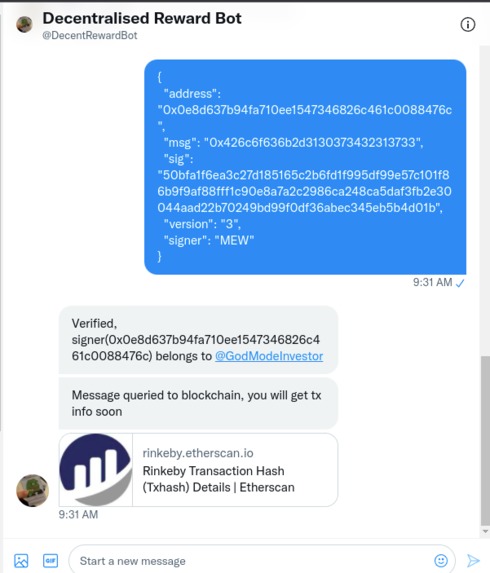
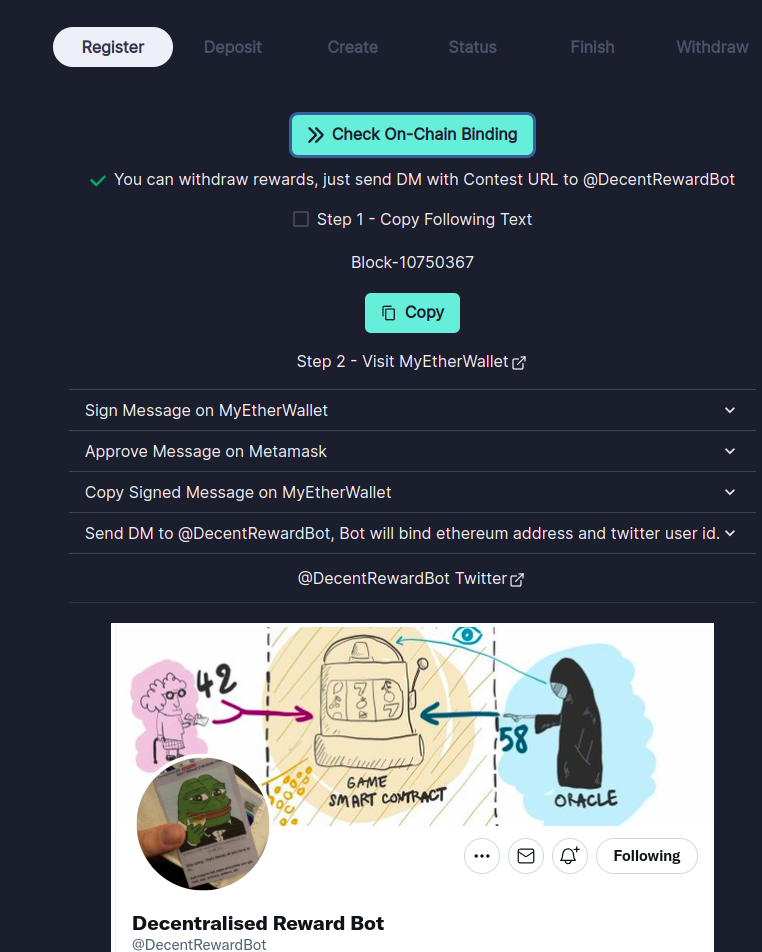
Web2-Web3 binding
-
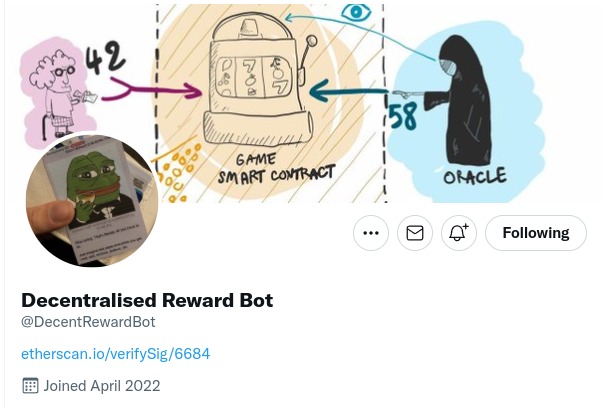
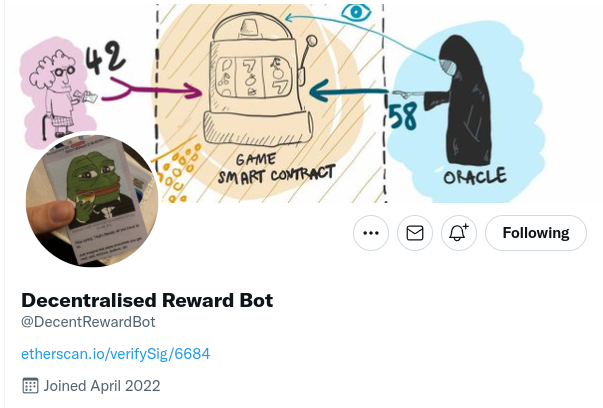
Our bot on Twitter
-
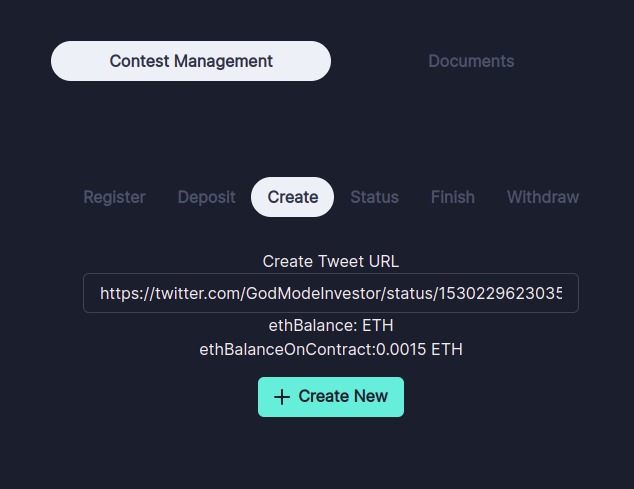
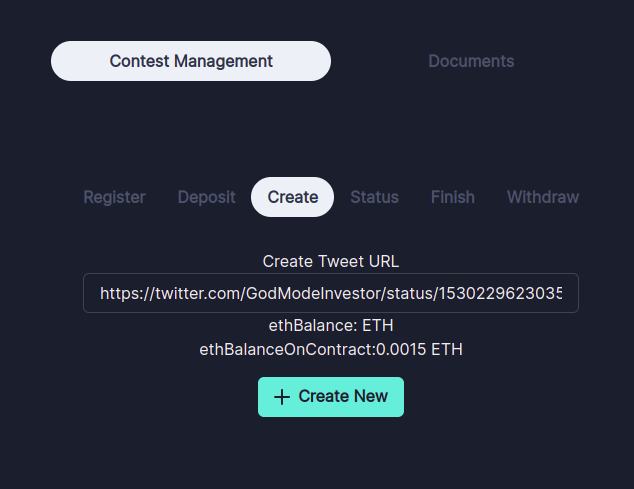
Create Page
-
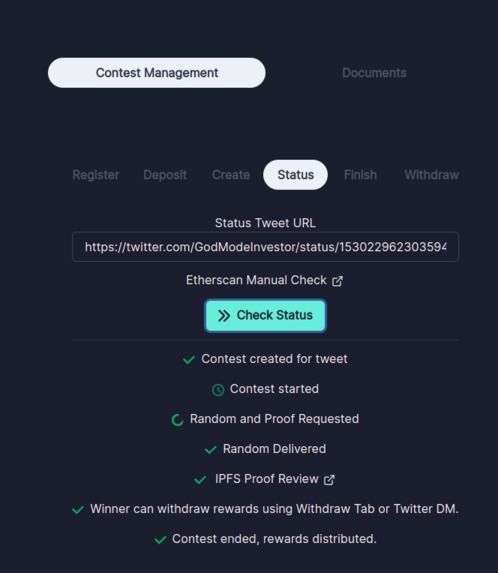
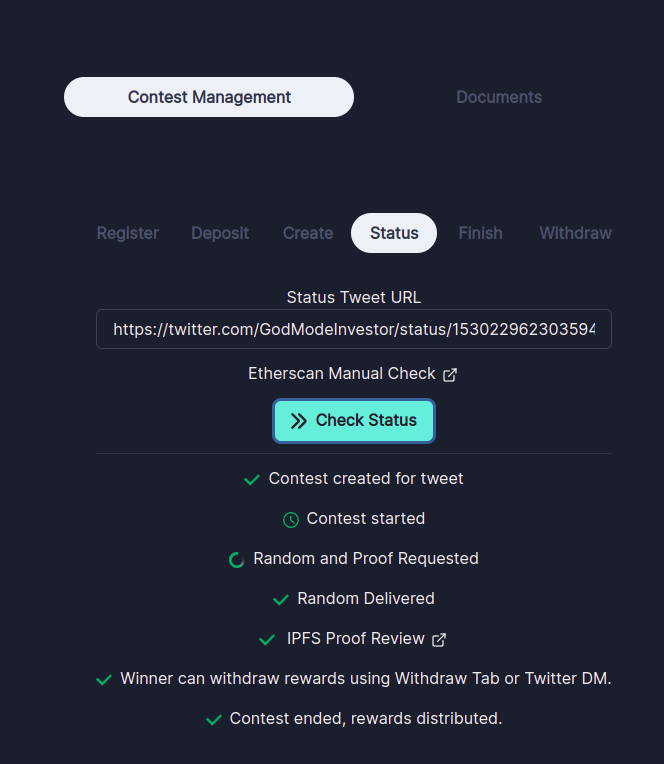
Status page, you can check on-chain giveaway status
-
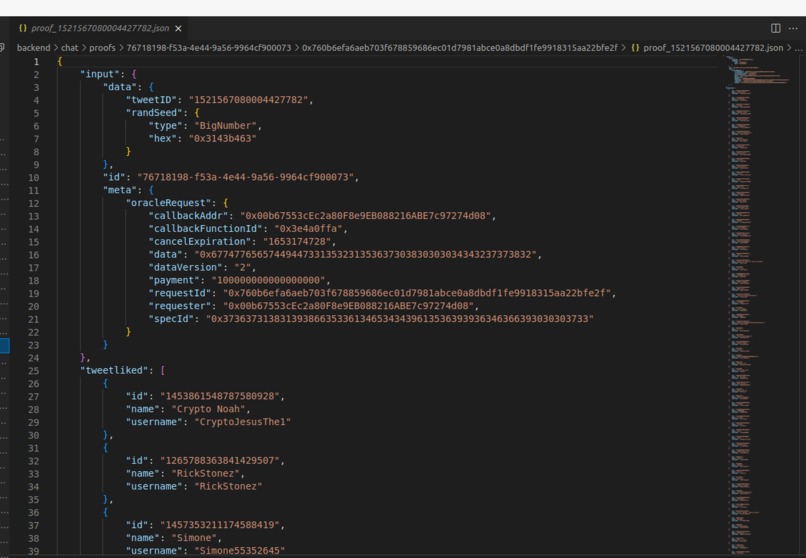
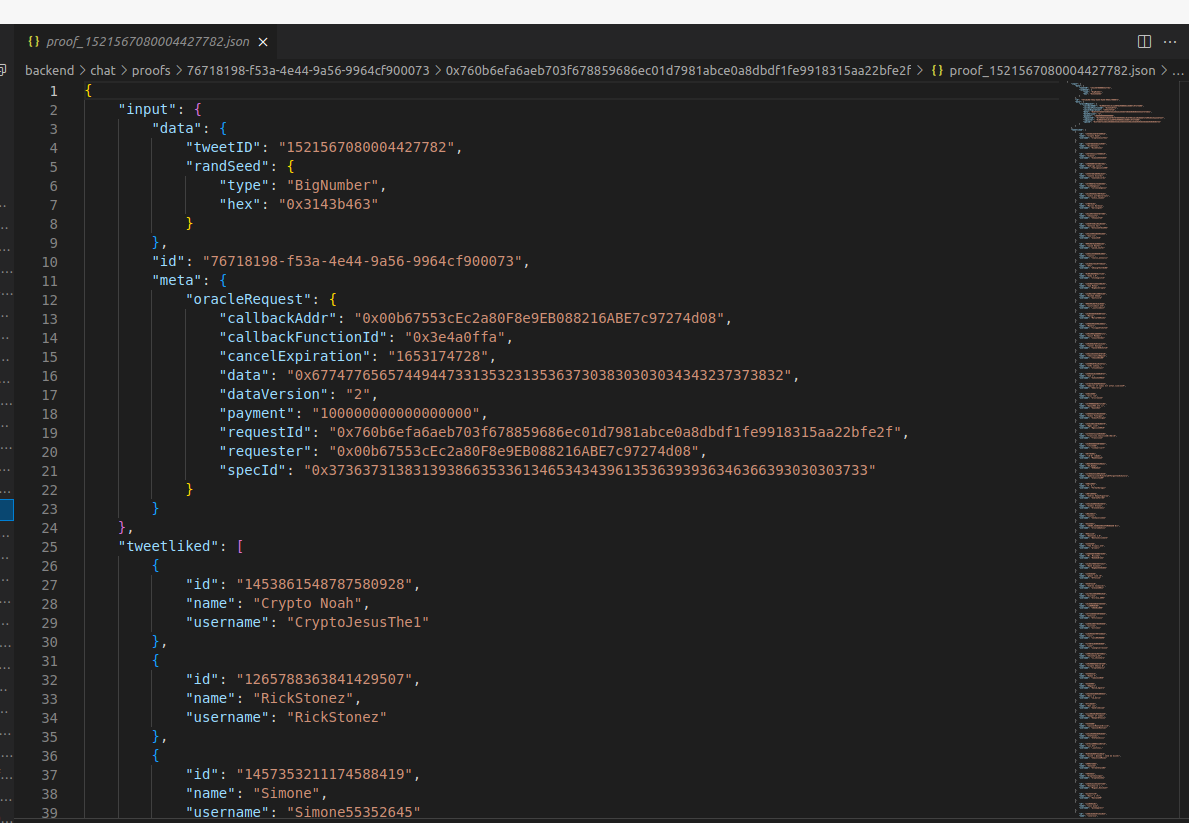
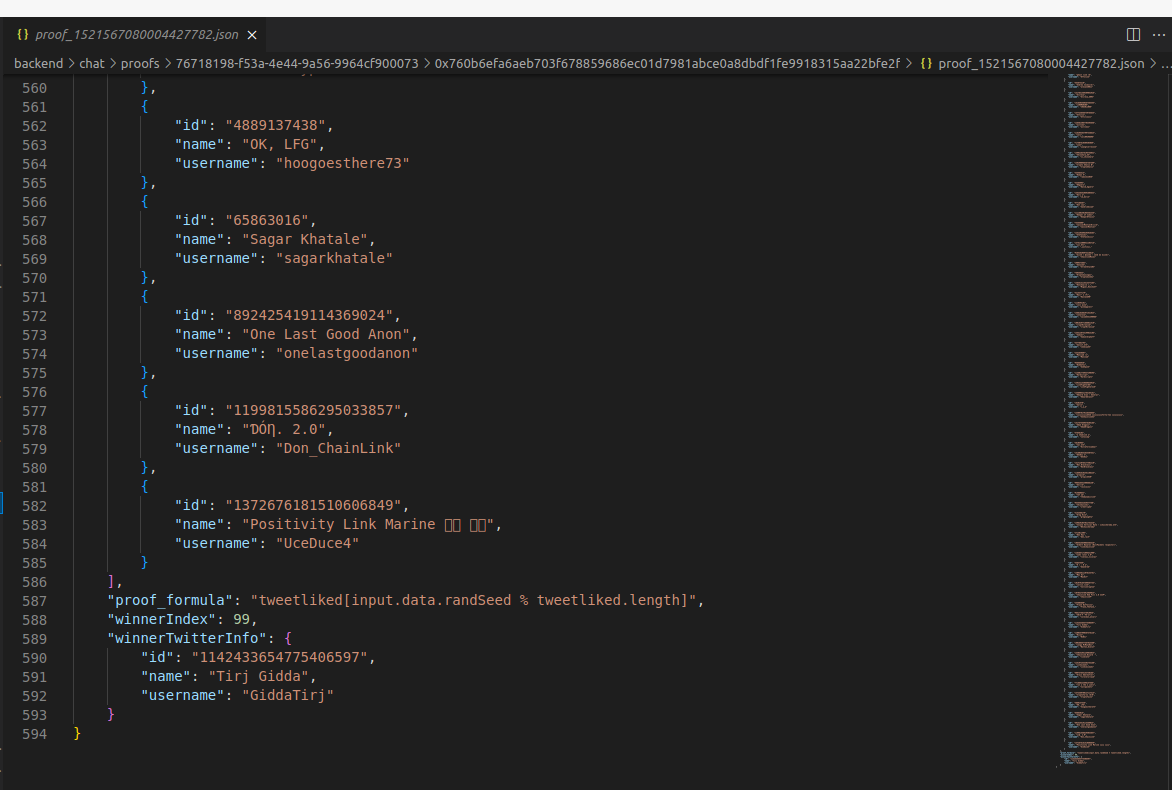
Proof input and candidates
-
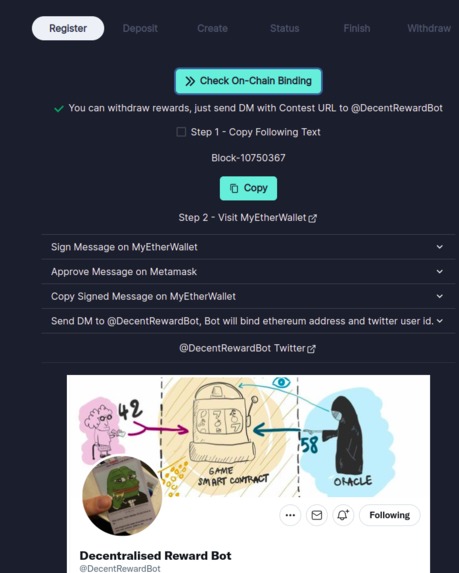
Register page and instructions
-
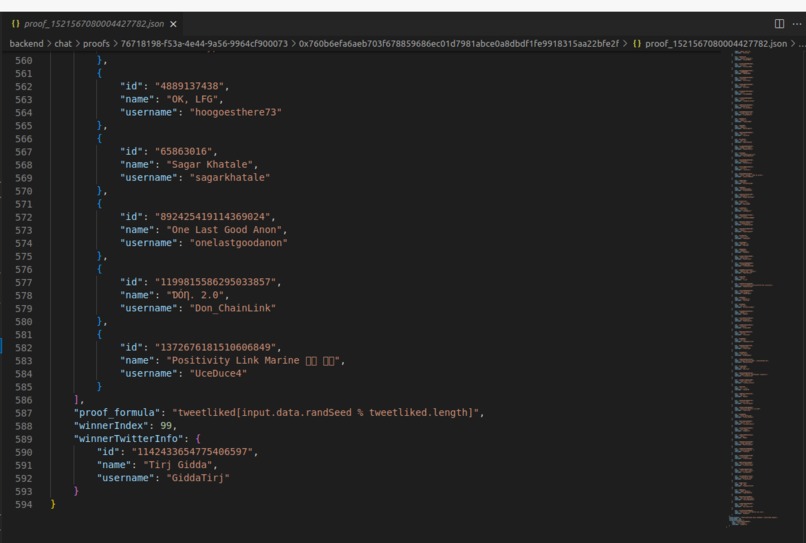
Proof Winner and candidates
Decentralized Rewards Project
Inspiration
People need to trust each other to share anything. This statement is true for investment management, time, debt, employment, renting, or let's say anything valuable. People always need to trust someone or institutions to keep their promises and trust models always improved themselves over time. Nowadays we have agreements, and institutions with reputations to run most of the infrastructure for society to function and it reached its limits. If history proves anything about human nature, it proves human nature is corrupted over and over again, we need a new model to trust each other more and share more things and that model is cryptographic truth.
Cryptography and blockchains provide almost everything for people to share anything valuable with other people and this is what the modern world requires to expand.
Most of the Web3 assets rewards/giveaways are organized on Web2 platforms in old fashion way. Organizers decide who to win(lack of transparency and trust issue), people comment on their Web3 addresses to get prizes(lack of software automation), bots are attending everything(filtering issue), organizers are distributing their assets to bots, and organizer's main targets are giving up because people cannot compete with bots, because lack of transparency, trust issues, economically worst results for both sides. It creates more issues than they solve and giveaways/rewards do not worth to spent time on with the current model.
As a result, Decentralized Rewards Project(DecentRewardBot) trying to solve following issues in Web2 Platforms:
- Lack of transparency and trust issues
- Lack of software automation
- Bots floading everything
- Lack of ROI for both organizers and attendees
What it does
Decentralized Rewards Project creates automation infrastructure for people who organizes giveaways using Web2 platforms for Web3 assets. It provides a truth/trust model for both giveaway organizers and candidates/users.
Decentralized Rewards Project is a solution for web3 rewards/giveaways issues on web2 platforms by utilizing Smart Contracts, Chainlink services, and IPFS storage service. Decentralized Rewards project fetches data from Web2 platforms, deliver proof of distribution data using Chainlink External API over local Chainlink Node to the smart contract platform, randomly chooses winner using Chainlink VRF, and creates and stores all the rewards/giveaways information on IPFS web3.storage, binds Web2 and Web3 identities to each other using Web3 secure signature and distributes rewards to the winner's Web2 identity on-chain.
Also, it provides a Web2 API endpoint to Web3 platforms. Web3 protocols/platforms can reach the Web2 data using Decentralized Rewards Oracle and this will expands and drives our crypto industry adoption to old fashion world.
How we built it
Decentralized Rewards Project smart contracts are running on the Ethereum Rinkeby test network now. Organizers can deposit to our contract on the test network, organize giveaways on Twitter and users can get their rewards.
Decentralized Rewards Project backend implements Twitter V1/V2 Developer API to fetch/post from/to Twitter. Backend also communicates with the local Chainlink node to fetch corresponding data requests from smart contracts. Backend reads generated random numbers from on-chain, fetches corresponding candidates from Twitter, and computes winner selection algorithm. All these requests/fetches/computations are saved as proof on IPFS web3.storage publicly. The project delivers corresponding distribution information(winners) and Computation Proof IPFS location to a smart contract.
Decentralized Rewards Project utilizes Chainlink VRF as a true random generator. Random numbers are used in the winner decision algorithm. So everyone knows assets are fairly distributed.
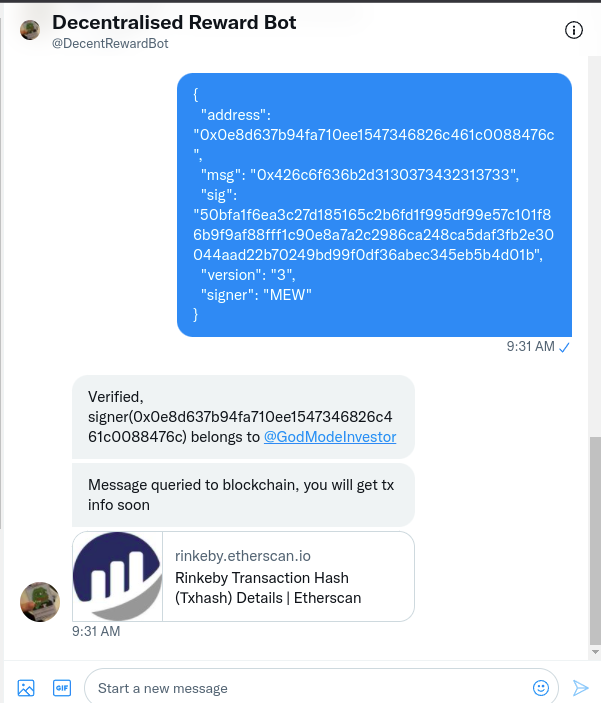
Organizers/users can manage their rewards/giveaways by sending Twitter Direct Message to our Bot account(@DecentRewardBot) or they can manage from Web Interface or Etherscan. Organizers/Users can use Twitter Direct Message for everything except on-chain deposits. The Project web interface is capable of doing everything but I believe managing on-chain assets using Twitter Direct Messages will reduce the attack surface. Project future prospect is using Web Interface as documentation only and managing everything using Twitter Direct Message.
Challenges we ran into
Data trust: If Oracle delivers corrupted data on-chain hurts every participant. In order to make sure computation is secure and fair, data providers need to build a reputation and put their stake as collateral behind the data they provided. Our documentation explains our prospects to secure off-chain computation and API endpoints.
Proof storage: The first iteration was computing the winner selection algorithm on-chain, which requires all the candidates delivered to on-chain. This was not an economically feasible solution so we overcome this by storing proof on IPFS Web3.storage and delivering only proof location to on-chain.
Blockchain limitations, test network issues: Developers can set up a smart contract development environment locally but that does not provide the same timing issues and data delivery services. Also, test networks are less maintained and can be easily congested.
Web2 API limitations: Twitter API V2 offers essential/elevated/academic research packages. Using their API with current request limits creates scalability and API serving issues in the project itself. It can be solved using Chainlink Decentralized Oracle Network technology.
Data trust: What happens if API responds unexpected data ?
These challenges are not completely solved now but changed our perspective about Chainlink's Decentralized Oracle Networks. Our future prospect is enabling Decentralized Oracle Network service to overcome current challenges. DONs can overcome API request limitations by load balancing. Data trust issues can be solved by Chainlink's Explicit Staking model.
Accomplishments that we're proud of
- End to End proof of rewards/giveaways in a modern/automated way with fair true randomness and secure off-chain computation.
- Transparency of data flow.
- Social impact on crypto Twitter.
- Providing Web2 Endpoint to Web3 ecosystem using Chainlink Oracle solution.
- Creating a better and fair asset distribution, building trust across new world and old fashion world.
What we learned
- Chainlink Node operation
- Smart Contract limitations
- Smart Contract API Endpoint development with Chainlink Oracles
- Importance of randomness, trust, proof words, and designing systems to ensure they can be acceptable by everyone.
- Web2 Identity - Web3 identity binding and asset management
What's next for DecentRewardBot
- Enable Decentralized Oracle Network to overcome current limitations
- Enable all types of asset management on-chain(erc20, NFTs, etc.)
- Enable rewards/giveaway distribution on multiple chains using Chainlink Data Delivery Technology
- Enable technology for managing Web3 assets from the Web2 world in the most secure way.
- Enable other Web3 projects to utilize Decent Rewards project as a management interface.
- Build cryptographically secure trust between Web2/Web3 world.
- Future Plans Doc

Log in or sign up for Devpost to join the conversation.