-
-
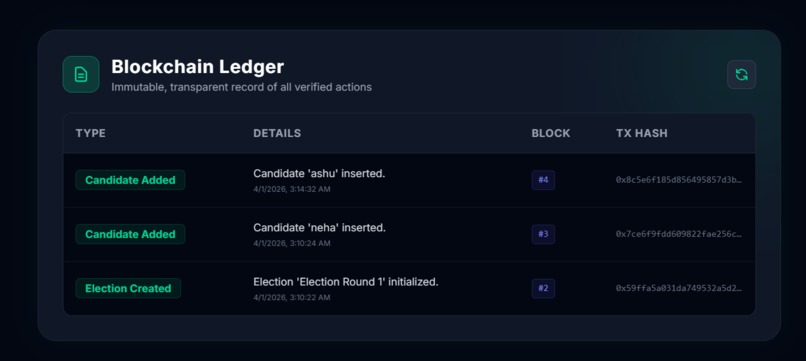
blockchain legder
-
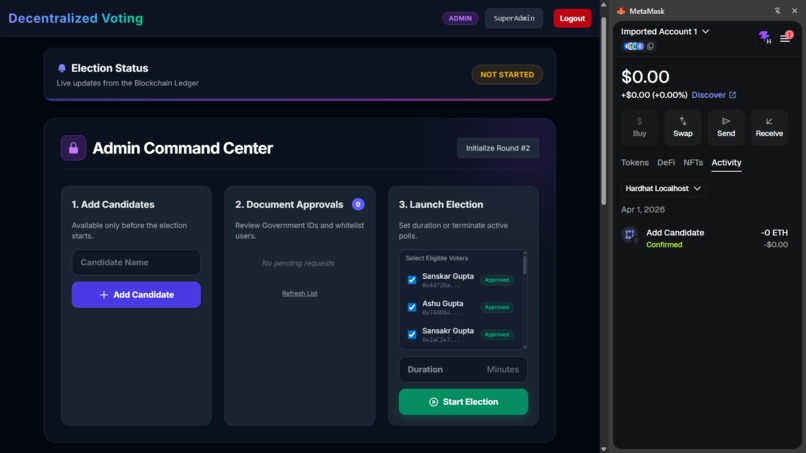
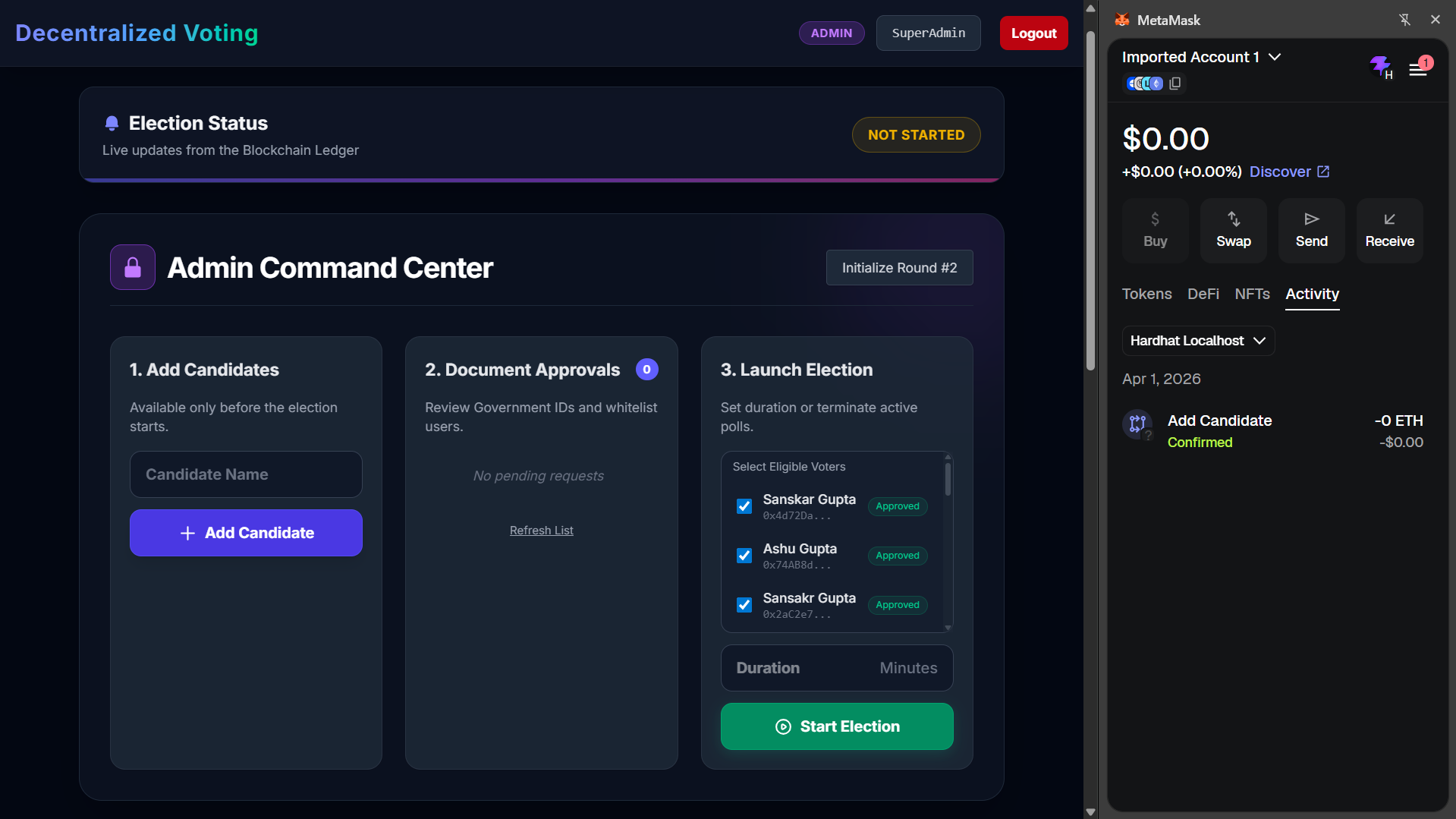
admin pade
-
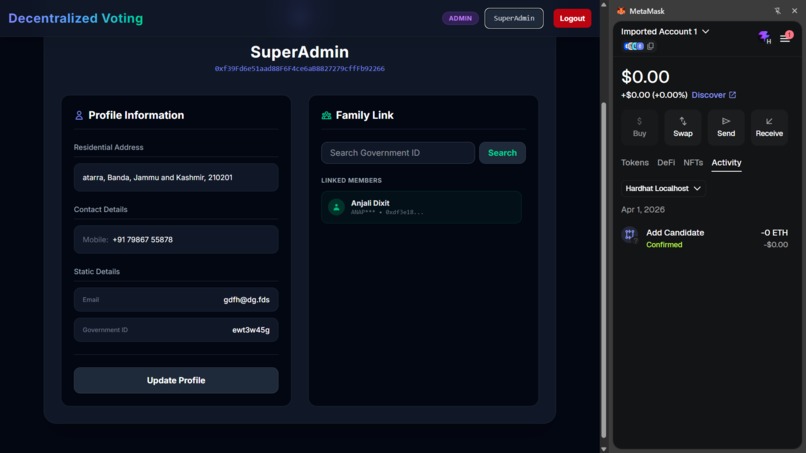
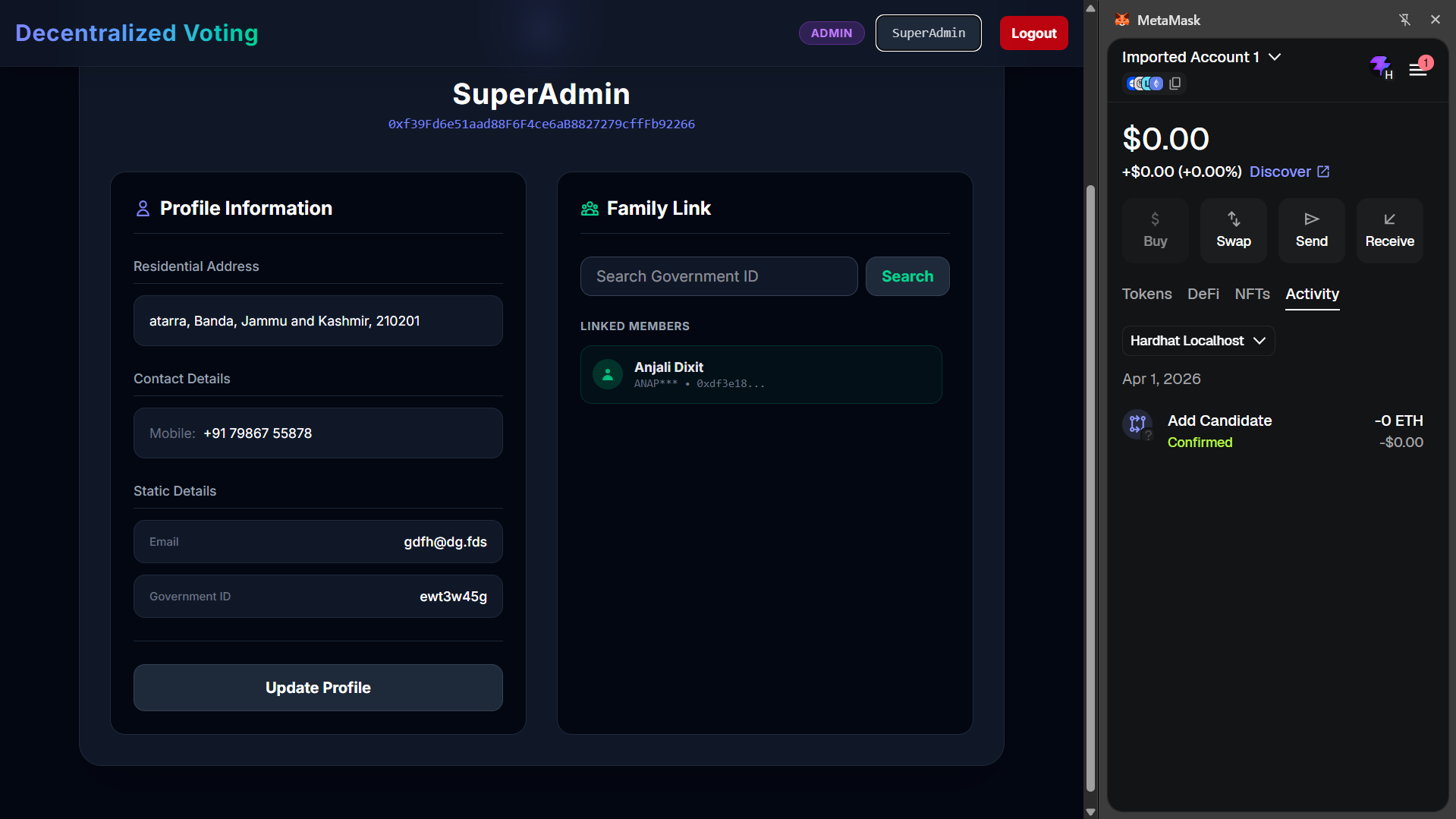
profile view
Inspiration
Honestly, we've all seen how traditional elections can be a mess—there's always a debate about transparency, centralized control, and whether the votes were tampered with. We wanted to build something that actually fixes this trust issue. Since blockchain is basically designed to be decentralized and immutable, we figured it was the perfect tech to make a voting system where once a vote is cast, it's locked in and no one can alter it.
What it does
Simply put, it’s a decentralized app (dApp) where you cast your vote using a digital crypto wallet instead of a standard username/password login. Tamper-proof: Everything runs on smart contracts, so the rules are locked in and can't be changed mid-election. Fully transparent: Every single vote is recorded directly on the blockchain for anyone to verify. Wallet login: We used wallet-based authentication, which is way more secure than traditional databases. No central boss: There’s no single server or authority that can pull the plug or manipulate the results.
How we built it
We mashed up standard web tech with Web3 to get this working: Frontend: Kept it clean with HTML, CSS, and JavaScript (React). The Blockchain part: Wrote the backend smart contracts in Ethereum's Solidity. Authentication: Integrated MetaMask / Web3Auth so users can just connect their wallets to vote. Tools: Used Hardhat and Truffle to test our code and deploy it. The smart contract handles the heavy lifting: registering the candidates, letting people cast their votes, and doing the final count. Every vote just acts as a transaction on the blockchain, which keeps everything secure.
Challenges we ran into
This definitely wasn't a walk in the park. Here is what gave us the most trouble: Private keys: Figuring out how to handle private keys securely without compromising the user was stressful. Gas fees: Ethereum transactions are expensive! We quickly realized that deploying and interacting with contracts costs real money. The UI/UX: Trying to make Web3 feel normal and easy for people who don't know what a crypto wallet is.
Smart contract bugs: In Web3, a bug can ruin the whole contract, so we spent a ton of time testing for vulnerabilities to make sure it was bulletproof. Connecting the dots: Getting our web frontend to smoothly talk to the blockchain was a massive headache at first.
Accomplishments that we're proud of
Actually getting a fully functional decentralized voting app running end-to-end. Successfully ditching traditional logins for secure, Web3 wallet-based auth. Making a system where you can actually verify the final vote count on the chain without trusting a middleman. Surviving the steep learning curve of Web3 and getting real hands-on experience with blockchain dev.
What we learned
How blockchain actually works in practice to build trust and keep data immutable. The ins and outs of writing, testing, and deploying Solidity smart contracts. How to hook up wallets like MetaMask to a standard web app. Just how critical security is when you are building decentralized apps. Real-world dev struggles, like balancing cool tech with user experience and dealing with network scalability.
What's next for Decentralized Voting System using Blockchain
Layer 2 integration: We need to move off the mainnet or use L2 solutions so we don't go broke paying gas fees. Multi-chain: Adding support for other blockchains beyond just Ethereum. Better UX: Making the interface even easier for non-tech folks to navigate. Privacy: Looking into cryptographic techniques to keep the votes completely anonymous while still being verifiable. Real-world testing: We want to actually deploy this for something small, like a college club or society election.


Log in or sign up for Devpost to join the conversation.