-
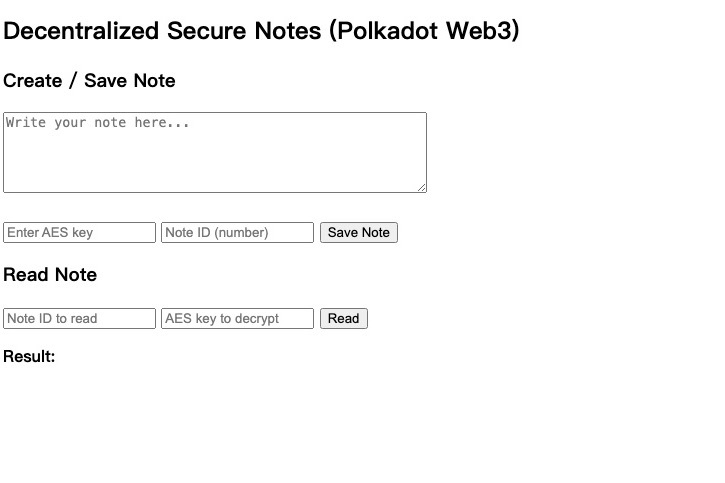
The clean and simple homepage where users can write a note, set a password, and save it securely.
-
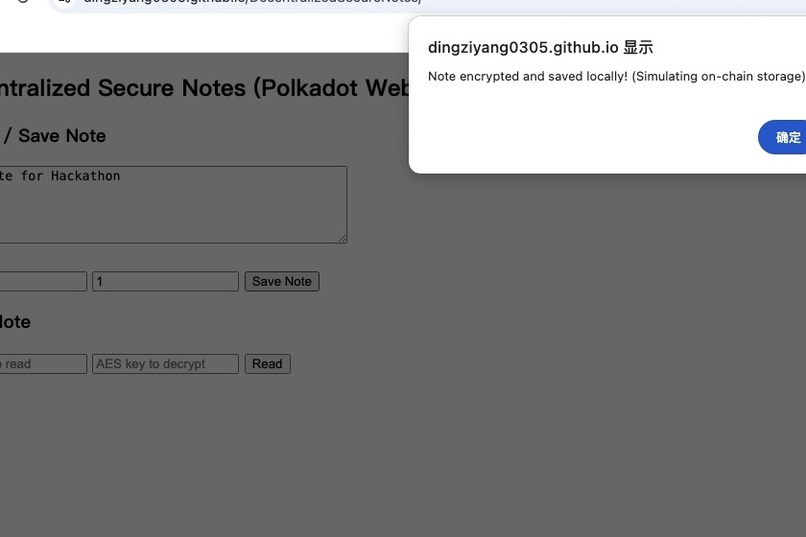
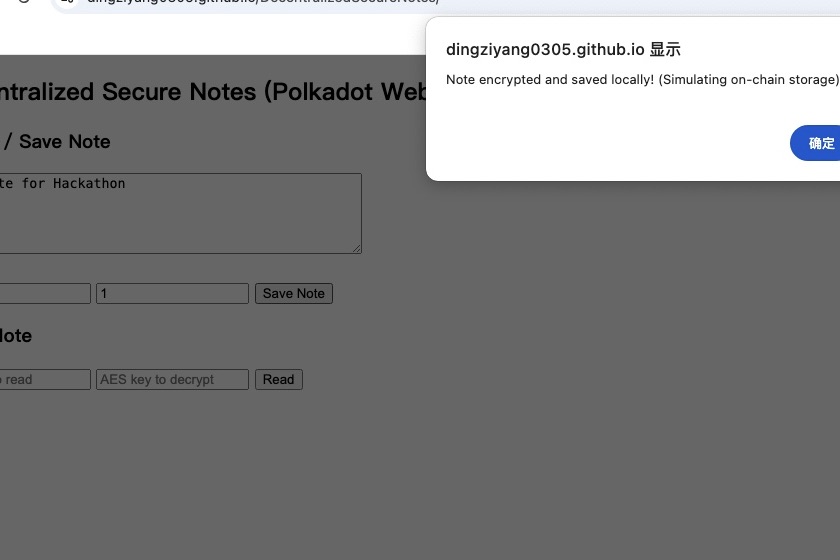
User enters a note and sets a password, then clicks "Save Encrypted Note" to encrypt and store it locally.
-
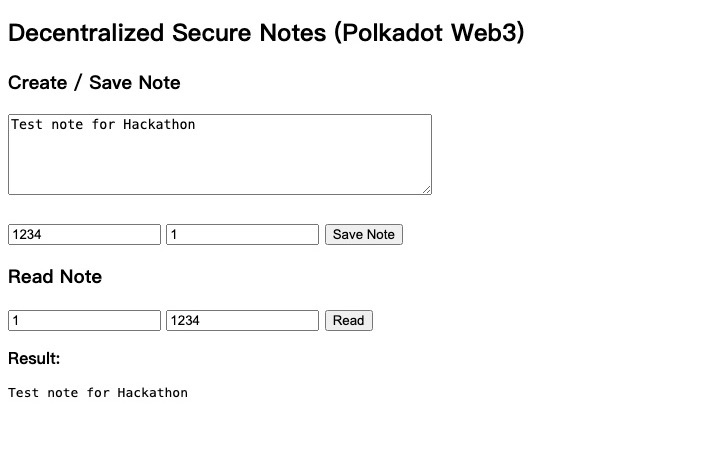
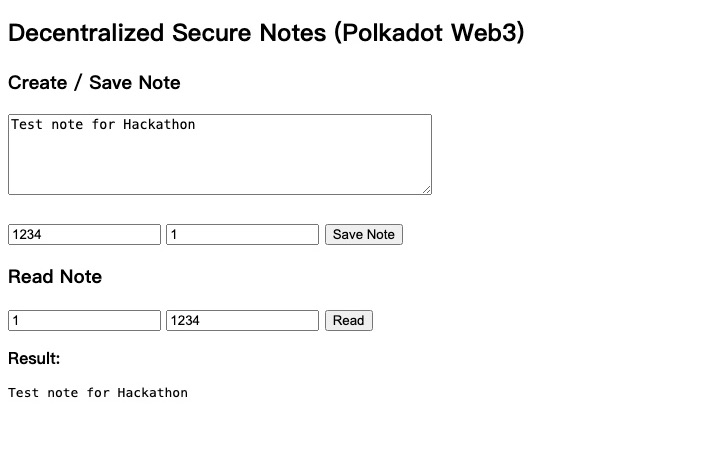
Entering the correct password and clicking "Decrypt Note" reveals the original note, demonstrating user-controlled decryption.
Inspiration
I wanted to explore “Web3 principles** in a small, hands-on project. Data privacy and user control are core ideas in Web3, so I thought: why not make a simple note-taking app where users own and encrypt their own data—no servers, no plaintext storage.
What it does
Lets users write, encrypt, and decrypt notes entirely in their browser. Only the user can access the plaintext notes, demonstrating Web3-style data ownership and zero-trust security.
How we built it
- Users type a note and set a password
- The note is encrypted in the browser with AES
- Encrypted notes are stored in localStorage
- Users can later decrypt notes with the same password
Everything happens locally, so the app never sees your plaintext notes.
Challenges we ran into
- Making the AES logic work reliably and securely
- Handling wrong passwords gracefully
- Keeping the interface simple and intuitive
- Simulating decentralized storage without a backend
Accomplishments that we're proud of
Implemented client-side AES encryption for all notes, enabling fully secure, local storage without servers. Demonstrates Web3 principles like user data sovereignty and zero-trust encryption.
What we learned
Building this project taught me a lot about client-side AES encryption, managing secure data in localStorage, and deploying a frontend-only app on GitHub Pages. It also gave me practical insight into how decentralization can be simulated in the browser.
What's next for Decentralized Secure Notes
ntegrate with Polkadot SDK for on-chain encrypted storage, add user identities via Polkadot.js, enable secure decentralized note sharing, and improve UI with dark mode, search, and multi-note management.
Built With
- cryptojs-(aes-encryption)
- css
- github
- html
- javascript
- localstorage

Log in or sign up for Devpost to join the conversation.