-
-
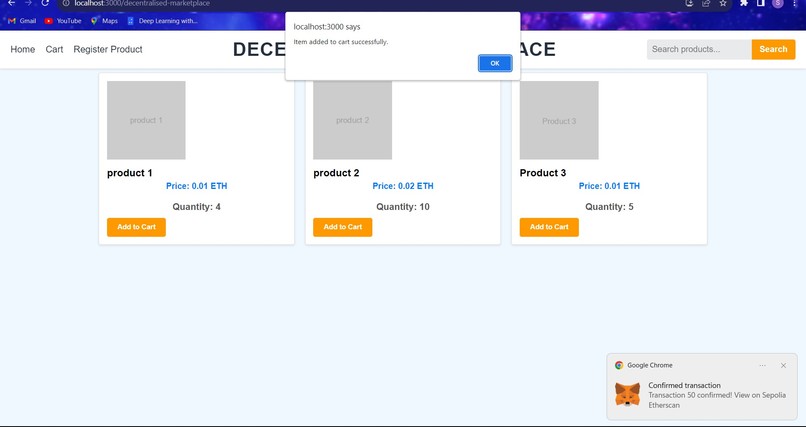
Alert on Successfully adding item to cart
-
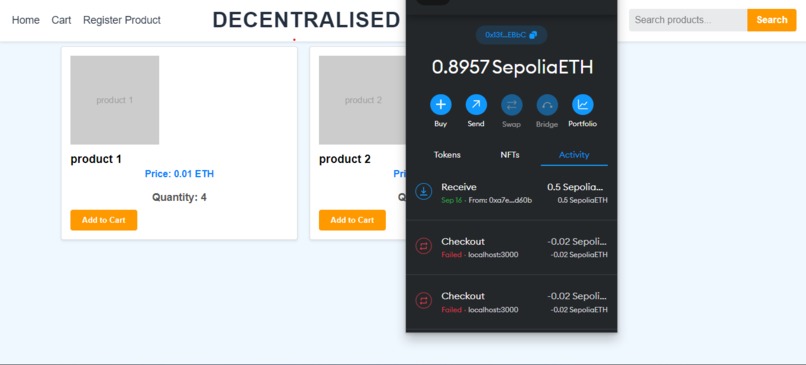
Connecting to the app via metamask
-
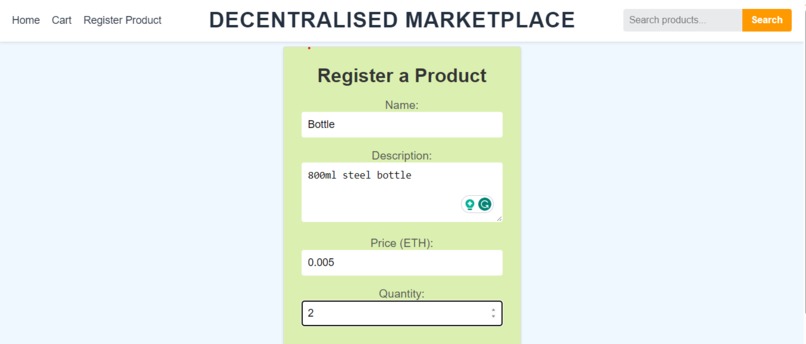
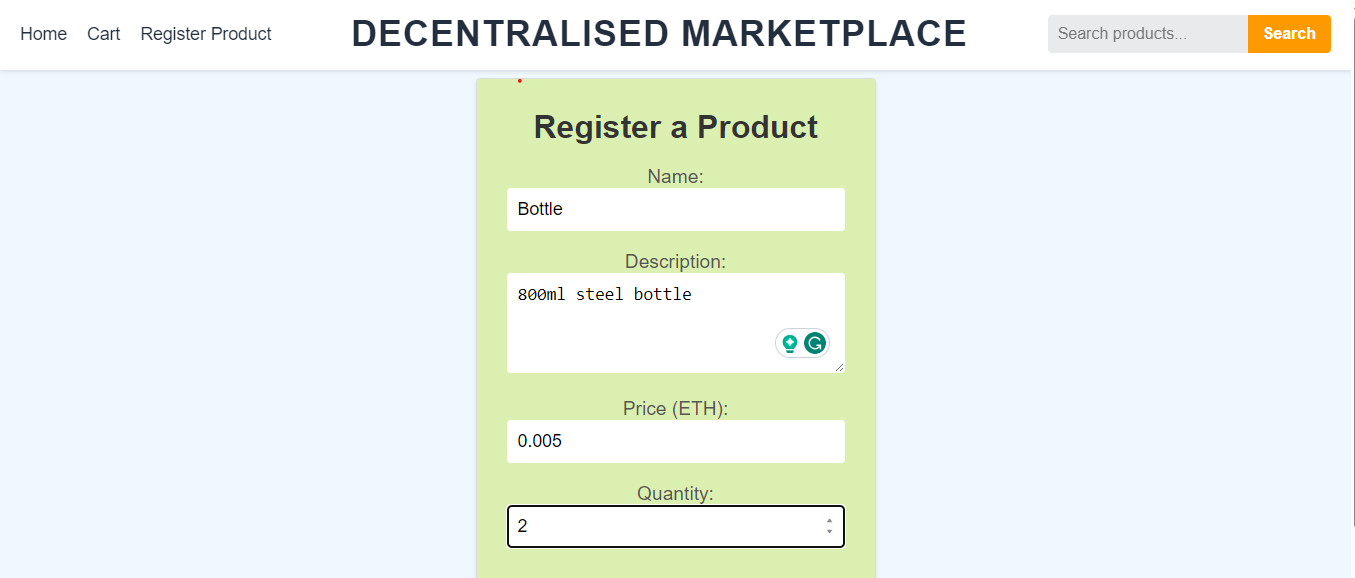
Registering product as a seller
-
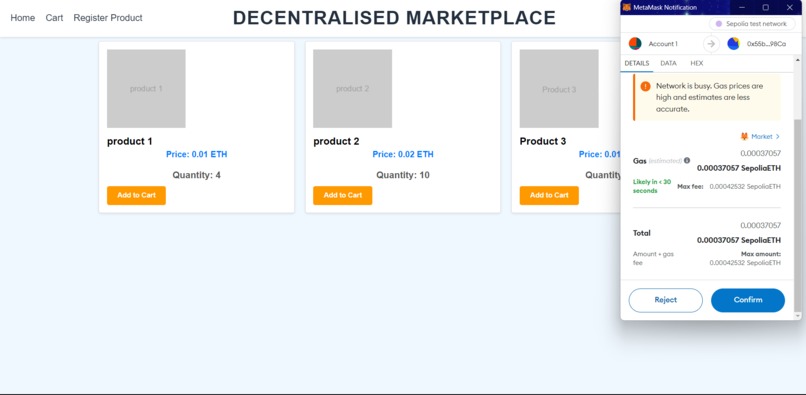
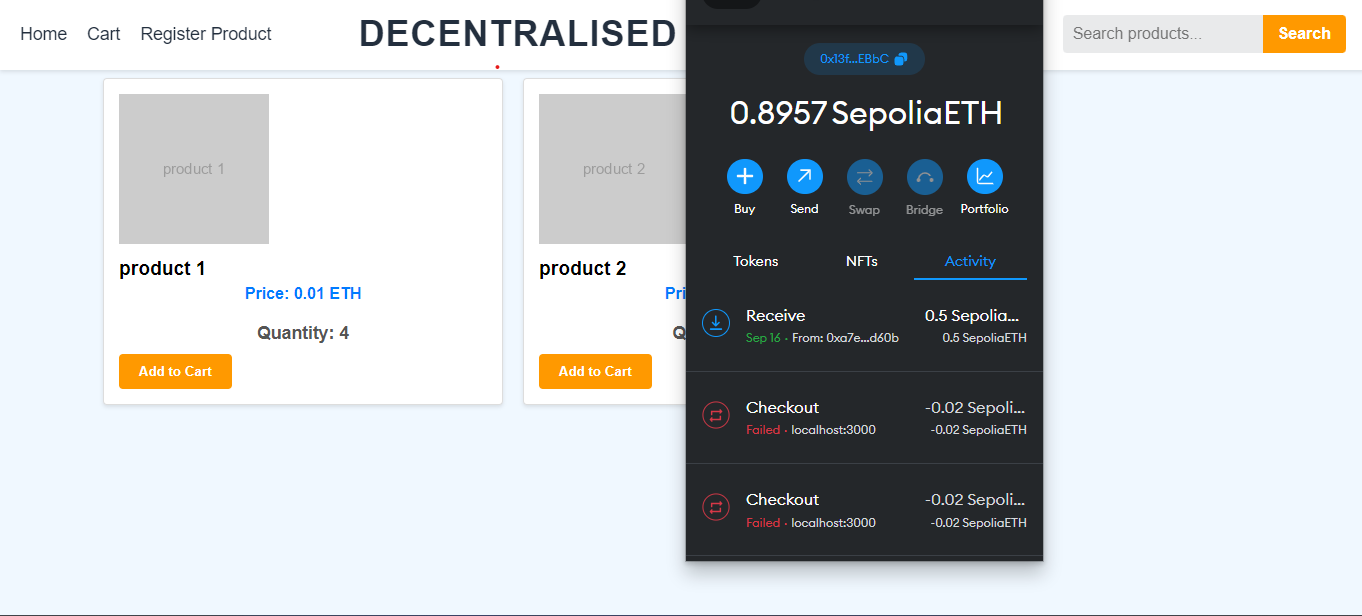
Metamask notification for transaction
-
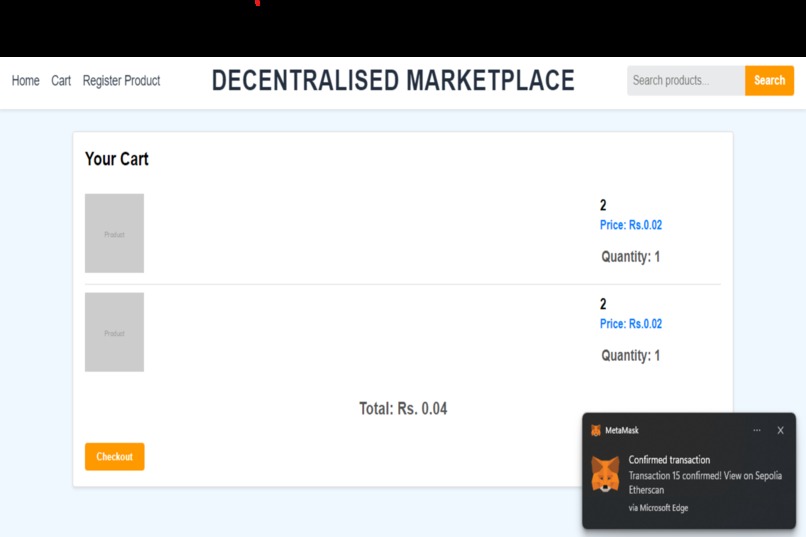
Adding items to cart
-
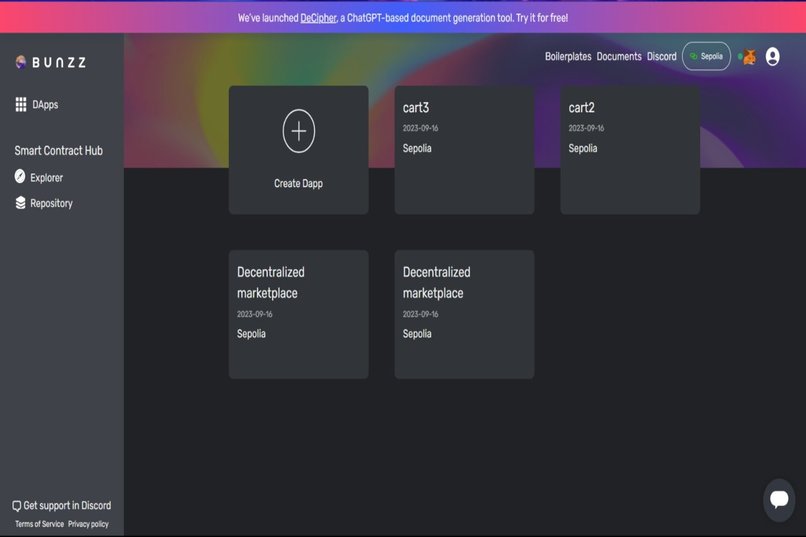
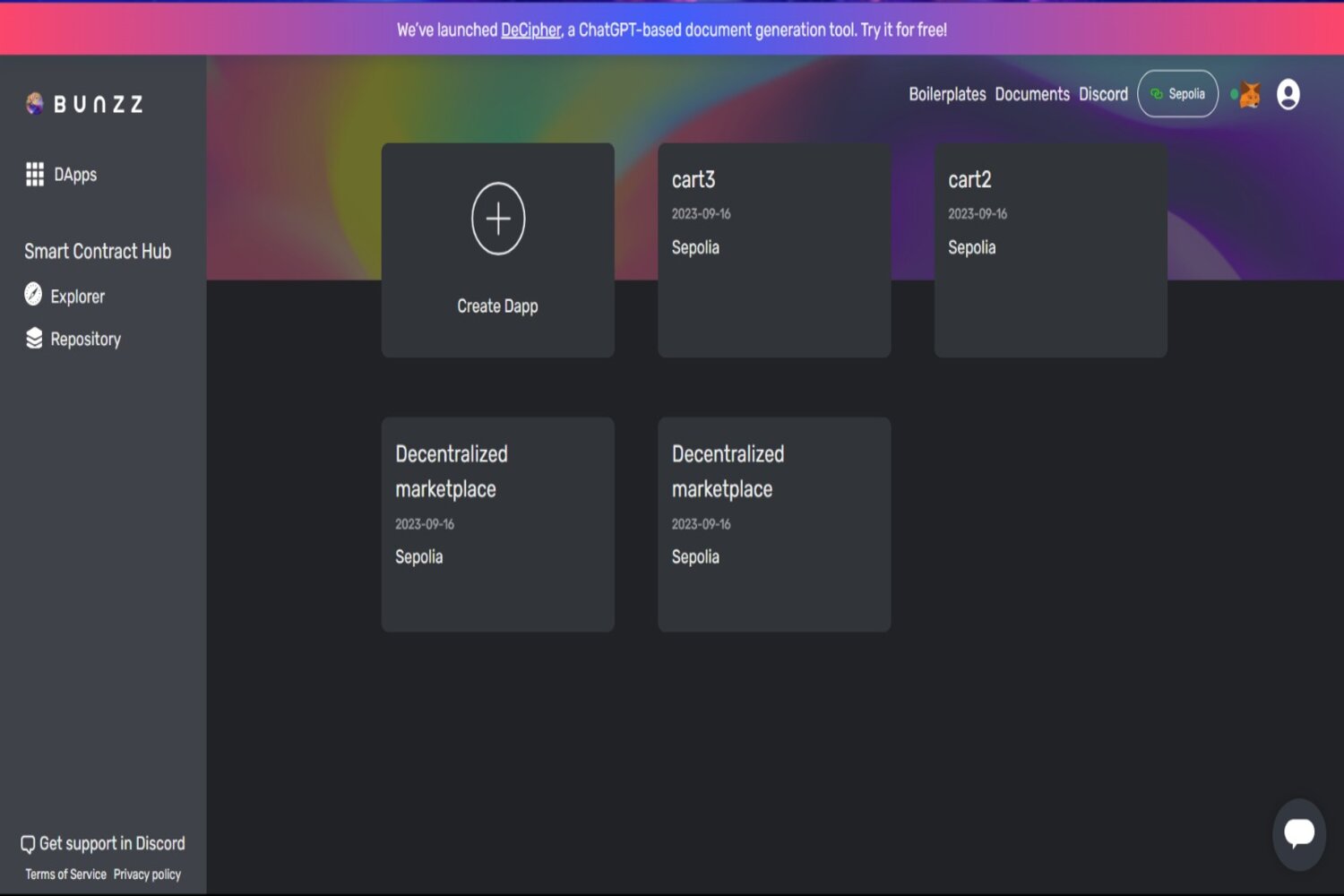
Used Bunzz for deployment of contract
-
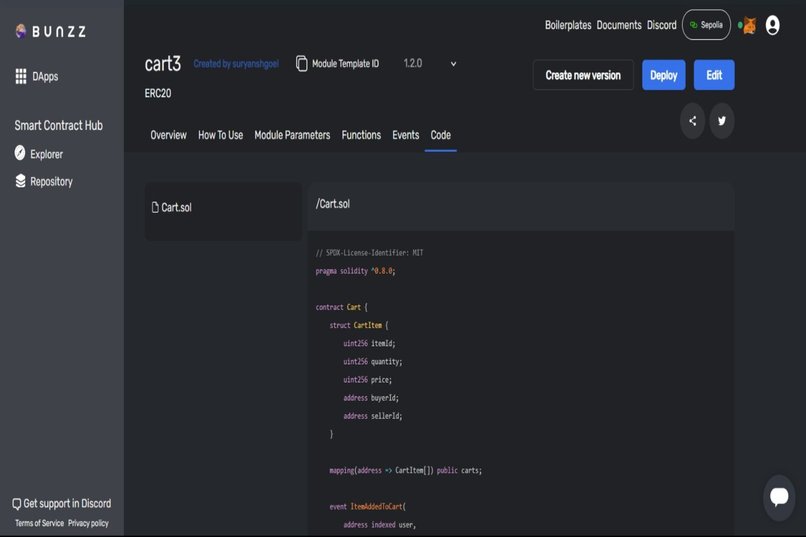
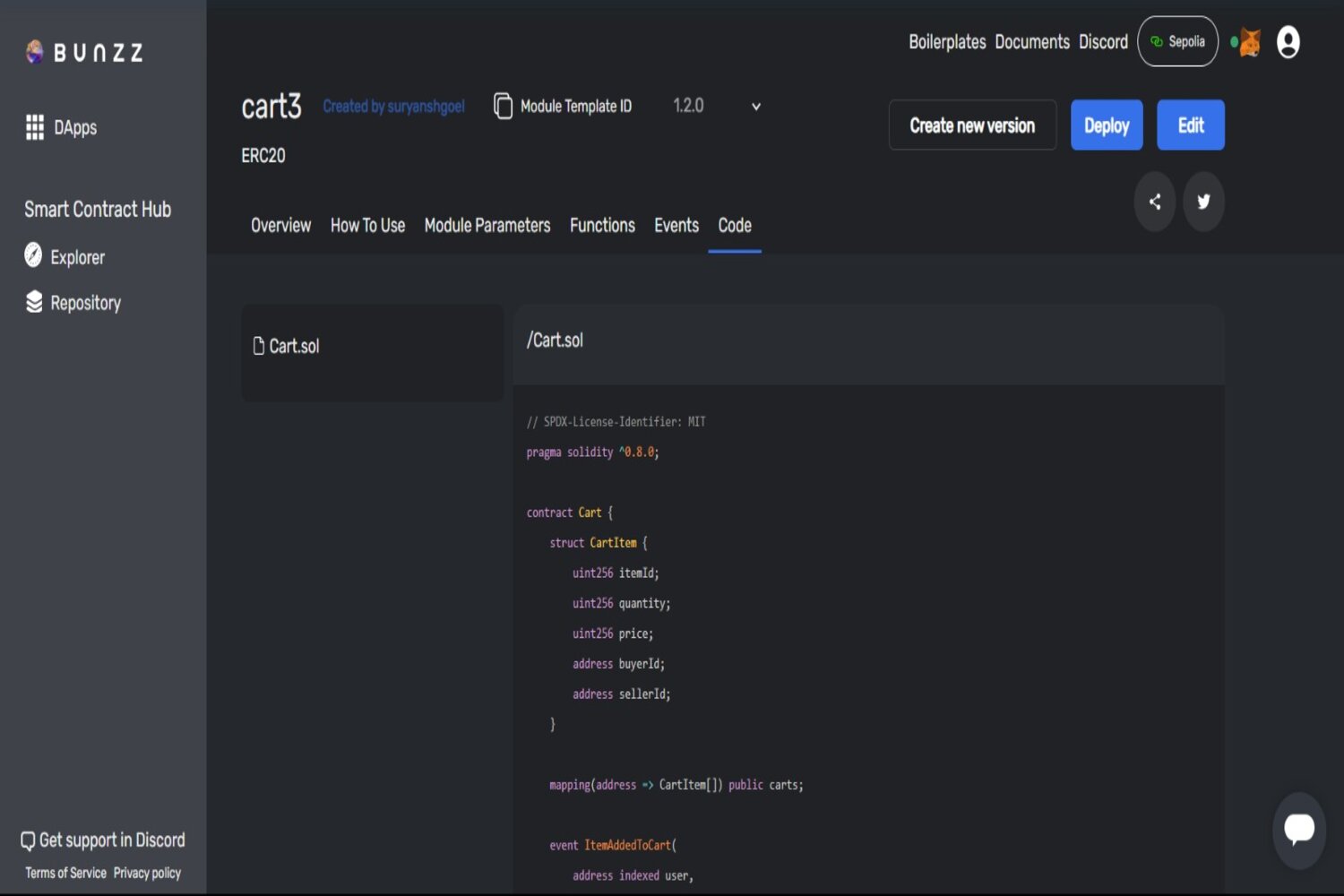
Repository and code on contract deployed on bunzz
-
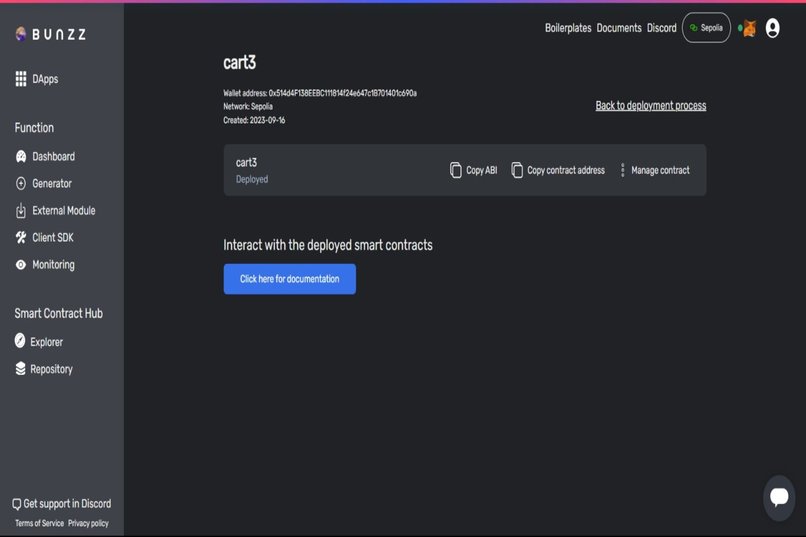
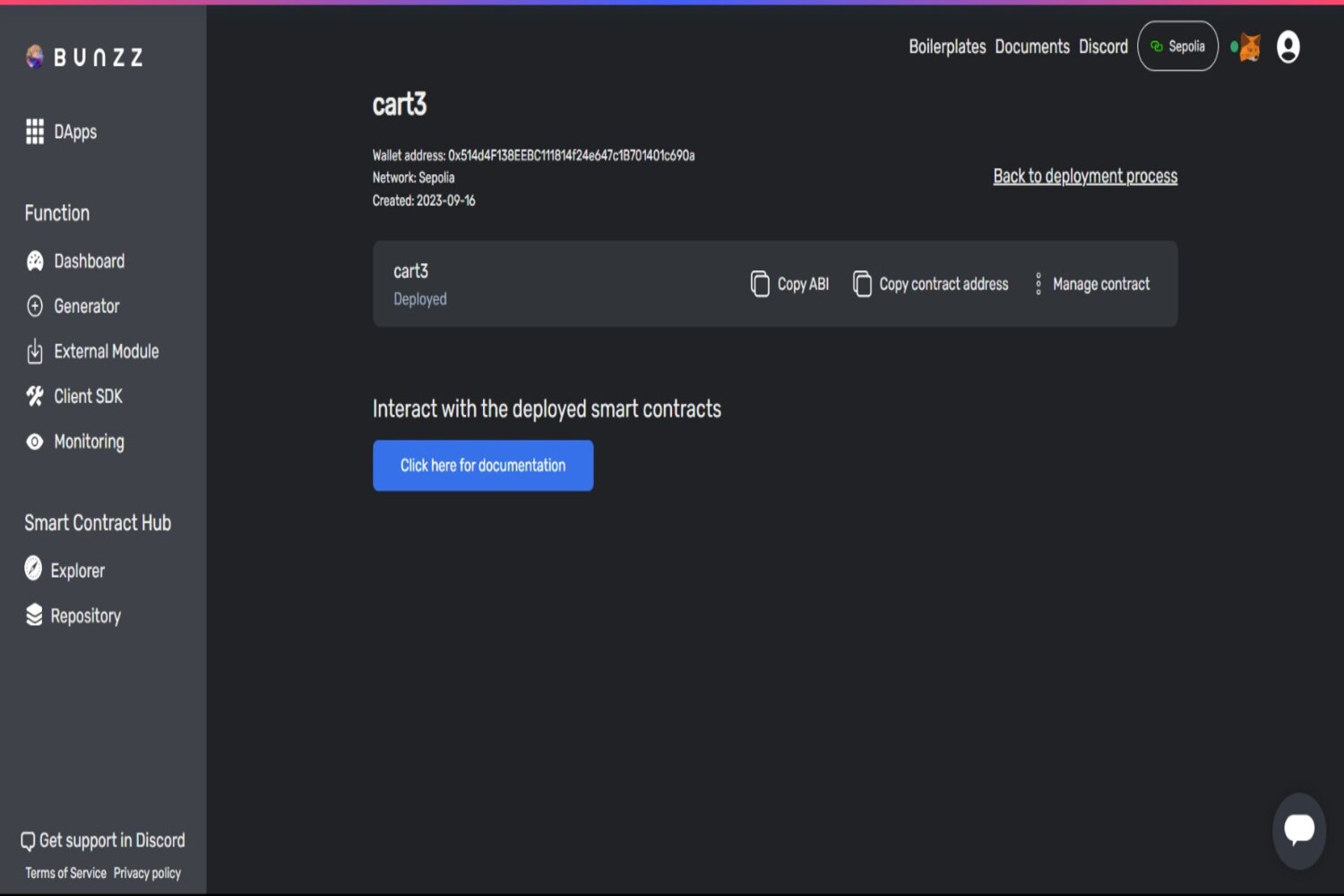
ABI and Contract address for the contract deployed on bunzz



Decentralized Marketplace
Inspiration
Online commerce has become a dominant force in global business transactions, with annual trade worth billions of dollars, and this trend continues to grow. Major players lead the way in centralized marketplaces, providing sellers with diverse avenues to reach their buyers, while offering shoppers a vast array of products and services at their fingertips.
However, facilitating these transactions typically involves significant costs for businesses, including expenses related to employees and servers. To offset these expenditures and generate profits, companies often charge users a set fee.
It's important to note that these fees can vary widely and may be quite substantial, depending on the specific company and product in question. In some cases, these fees can inflate the price of a product by up to 10%. Sellers bear this cost and, in turn, pass it on to buyers by adjusting their prices accordingly.
Furthermore, these platforms delve into consumer behavior, amassing a wealth of data about buyers' purchasing and selling habits. This data is then used to construct detailed user profiles, potentially raising concerns about privacy and manipulation.
Due to their centralized nature, these platforms also wield significant control over trade, compelling buyers and sellers to adhere to the legal regulations of their jurisdiction. In certain instances, they may censor or restrict trade in services or products they deem objectionable, as well as remove any politically sensitive content that poses a potential threat to their business interests.
Benefits of Decentralized Marketplace
Decentralized markets enable direct peer-to-peer trading, bypassing the need for intermediaries. This autonomy from centralized services eliminates associated drawbacks.
Operating on an open market, decentralized platforms serve as self-sustaining business infrastructures. Though currently limited in availability and development, decentralized trade is gaining traction, particularly through blockchain technology.
Utilizing blockchains, sellers can securely list products, providing buyers with a reference point for purchase. Alternatively, networks of bots can facilitate trade without blockchain involvement.
Popular platforms like BitTorrent employ contracting systems, ensuring transparent transaction details. Sellers affix a digital signature to their listings, and buyers reciprocate upon purchase. This process establishes an indisputable transaction record.
Central to decentralized market structures is the removal of middlemen, sparing consumers from additional fees. Transactions occur directly between parties, devoid of any associated charges.
In this liberated market, trade restrictions dissolve, and companies are unable to track spending habits. Freed from onerous terms and conditions, users enjoy a market dependent solely on their choices, their chosen sellers, and a WiFi connection.
Informed individuals leverage their knowledge and information wealth for financial gains, with prediction markets leveraging automated personalized prediction bots.
What is does
It allows users to buy products directly from the buyer by paying them the required eth. One can also register their product provided they are already a registered owner.
It eliminates the need of intermediaries. It is simple to use and effective.
How we built it
contract
The contract marketplace.sol and cart.sol are written using solidity, we have also provided hardhat test cases for them. The contract is deployed using bunzz. I have created a repository for my contract and deployed it on sepolia network using Bunzz's user friendly environment.
frontend
The frontend is made using reactjs. It has a basic html, css and js format and is locally hosted.
Challenges we ran into
- While displaying product images.
- Deploying contract(later resolved thanks to bunzz)
Accomplishments we are proud of
It is a fully functional easy to use application that shows the power of web3
Buying items requires real eth currency and is very secure.
What's next for Decentralized Marketplace
We aim to complete the project by adding more functionalities such as renting of products, more features in cart, wishlist, including purchasing of nfts etc.
Technolgies used:
- React for frontend
- Solidity for writing contracts
- Bunzz for deploying the contract on sepolia testnet
- ethers.js for connecting frontend with deployed contract
Want to Explore our project
Please find below the link of our github repository. The README file contains detailed documentation of our contracts and instructions to run the repo on you local computer. https://github.com/surya2003-real/decentralised-marketplace
Built With
- bunzz
- contractabi
- css
- ethers.js
- html
- javascript
- metamask
- node.js
- react


Log in or sign up for Devpost to join the conversation.