-
-
-
-
-
-
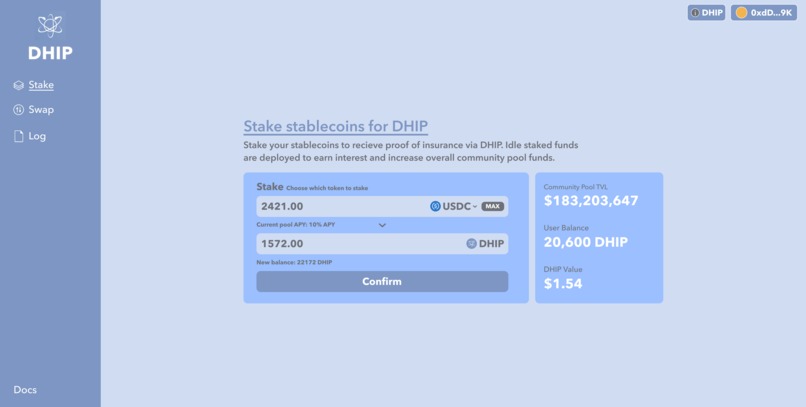
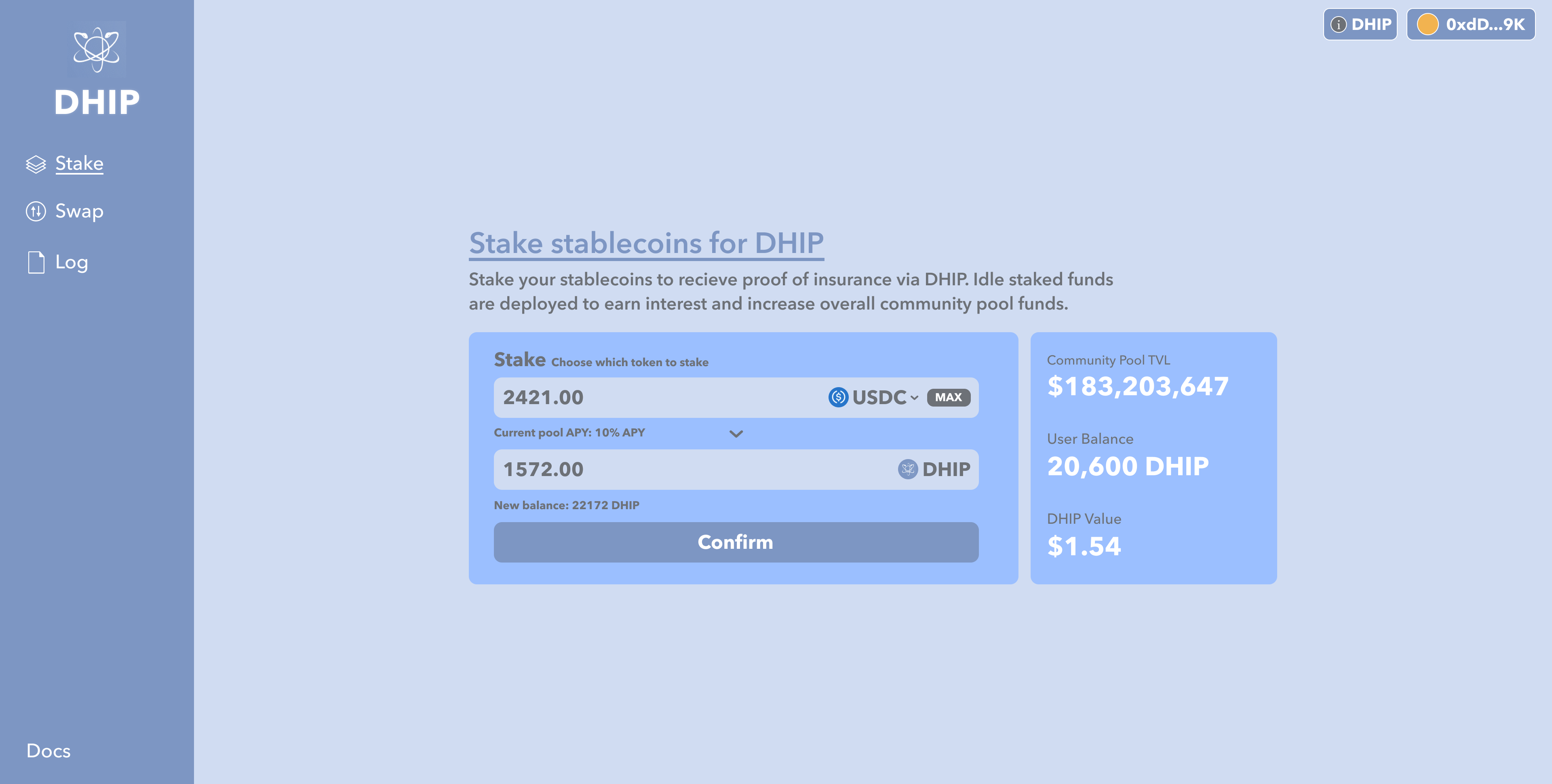
UI sample -- On how to stake
-
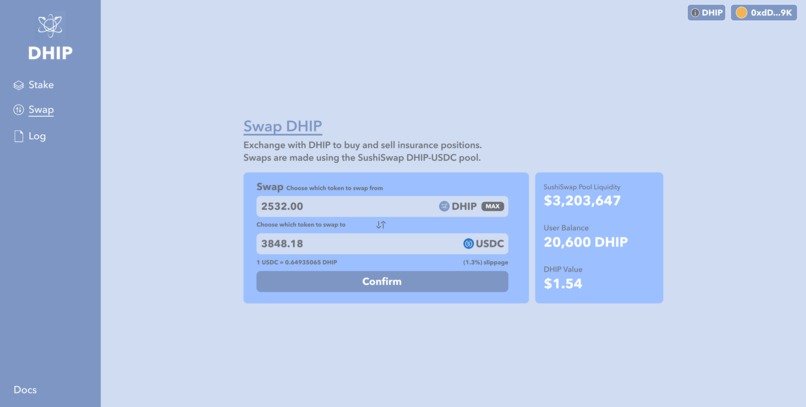
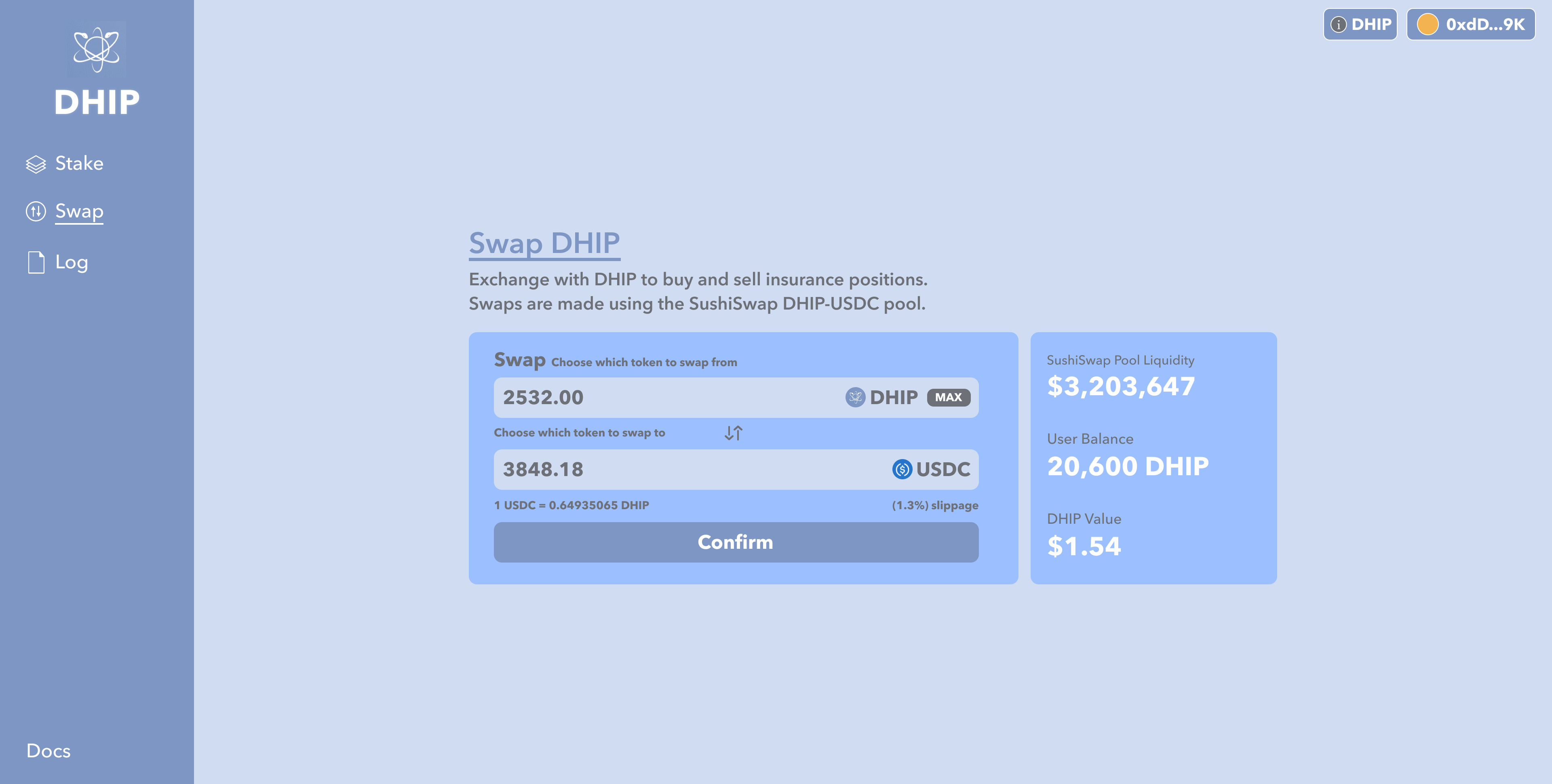
UI sample-- On how to exit (swap on SushiSwap) insured position in novel insurance marketplace
-
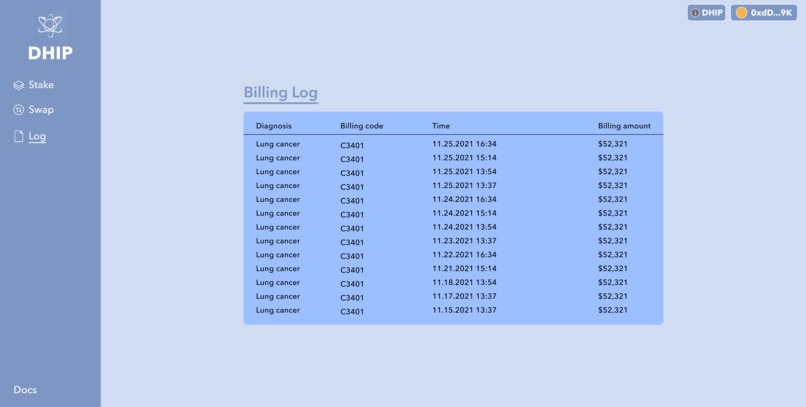
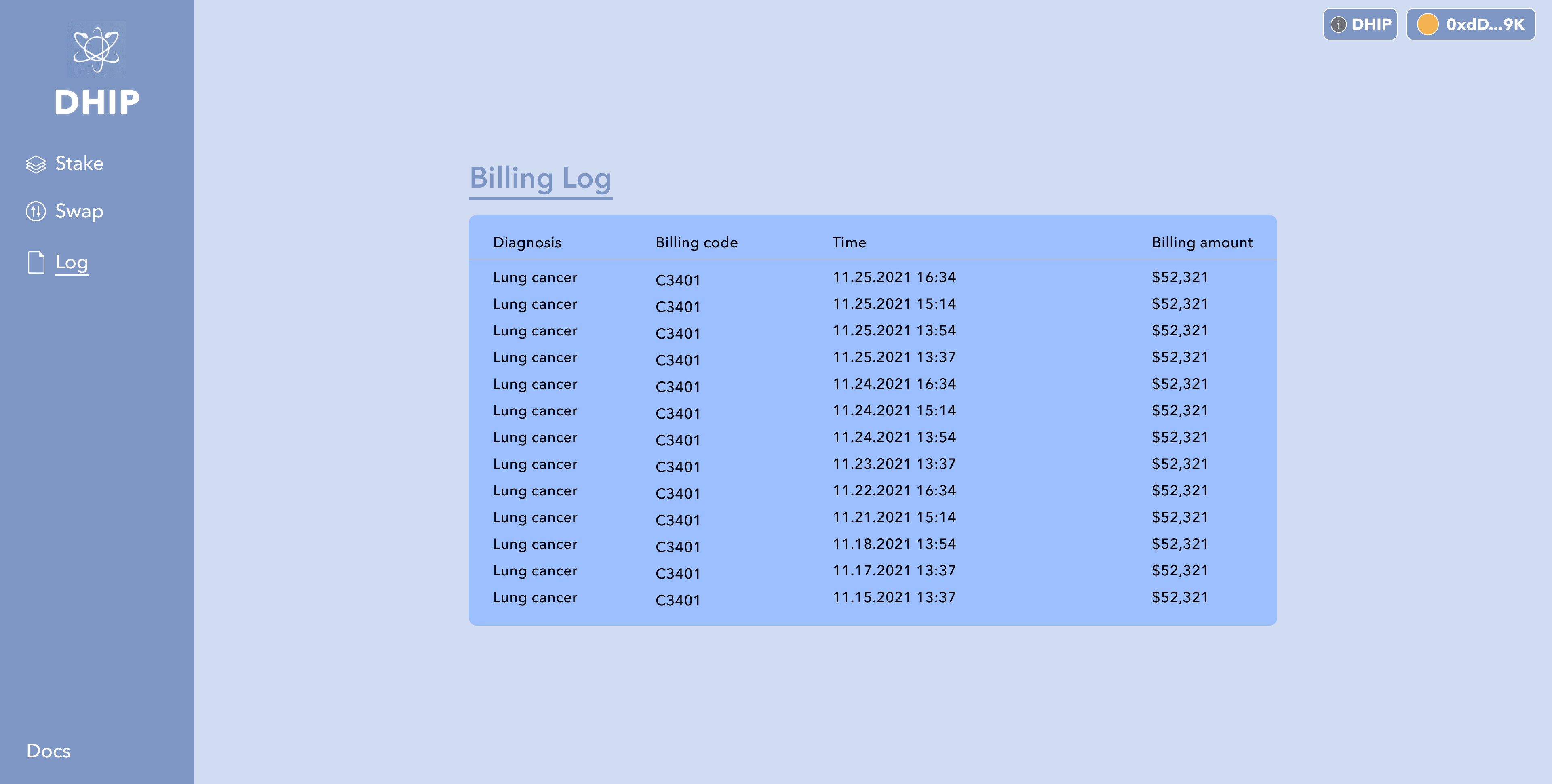
UI sample -- on how to view transactions on a public ledger of all pool related activities
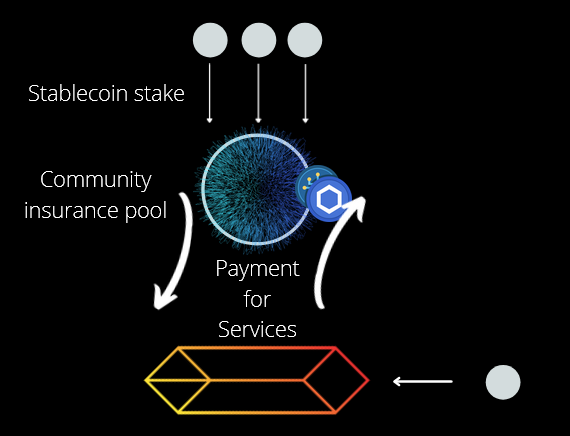
Decentralized Healthcare Insurance Protocol (DHIP)
DHIP White Paper
Technical demonstration/github:
DHIP chainlink node -- technical demo/github
Front-end demo:
Our front-end demo seeks to capture imagined possibilities in the setting of currently existing infrastructure.
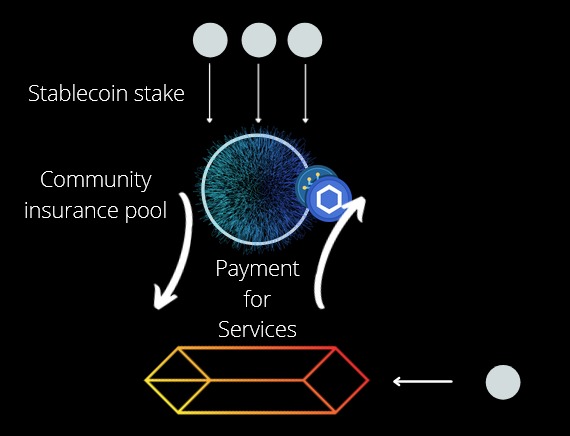
The mock-up front-end demonstrates the user interface with patient staking; demonstrates how existing funds within the patient community pool could be shown in real-time; shows how policy holders could exit their insured position by selling their "DHIP" coin on SushiSwap, thereby creating a marketplace for the healthcare insurance product, adding value for all patients; and further seeks to showcase a public transaction log of all transactions occurring related to the patient community pool. To be clear, at this moment, the front-end is not in a functional state and is not connected to the back-end.
Inspiration:
American private healthcare insurance is not intrinsically in its current design rooted in the basic capitalist model; that is, it does not intend nor does it create an increased distribution of capital goods at a decreased cost in the setting of increased competition. This is necessarily because at its core American private healthcare insurance is a denial-of-care service. The healthcare insurance model propagates purposeful inefficiencies upon both patient and physician that are more profound in the setting of increased competition which engender more inefficiencies while masquerading as a competitive boon.
Given the authors' fund of experience and challenges in the domain of the privatized medical system, a significant re-thinking of the entire apparatus is needed to modernize the American economy. The notion of the viability of the private healthcare insurance system needs to be dismantled. Crypto-economic technology and blockchain, when pondered as a fintech, provides an avenue for massive disruption of this sector.
Research:
In the United States, the healthcare insurance industry constitutes 17.8% of the gross domestic product (GDP). This currently stands at approximately $3.5 trillion. A review of 9 publicly traded American healthcare insurance companies totaling a grand market capitalization value of $704.6 billion revealed that these companies ensconce $135 billion of inefficiency in the form of operating expenses (non-medical) [$117.385 billion], dividend payouts to shareholders [$6.025 billion], and share buyback programs [$11.679 billion].
This purposeful inefficiency constitutes 3.859% of all global American healthcare expenditure ($135 billion/$3,500 billion x 100).
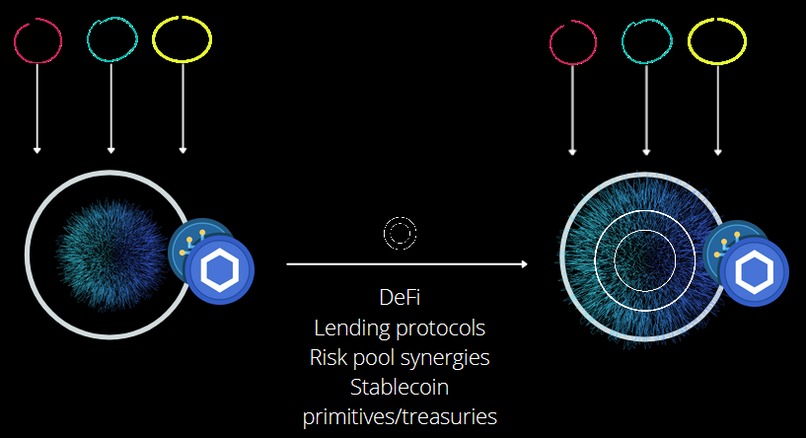
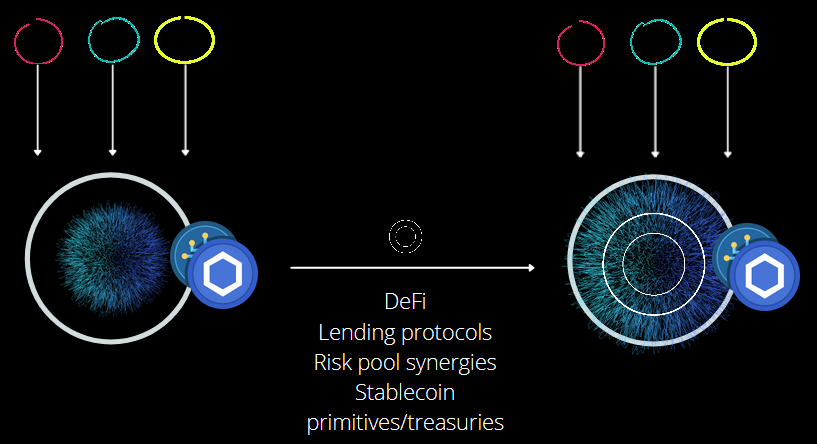
Decentralized Healthcare Insurance Protocol (DHIP) aims to turn a $135 billion dollar problem into an opportunity with a Total Addressable Market of $135 billion dollars (annually) less the cost of operating DHIP--and intends to disintermediate the burdens of the contemporaneous healthcare insurance companies. The following attempts to capture a preliminary design for a decentralized healthcare insurance model.
Proof of Concept:
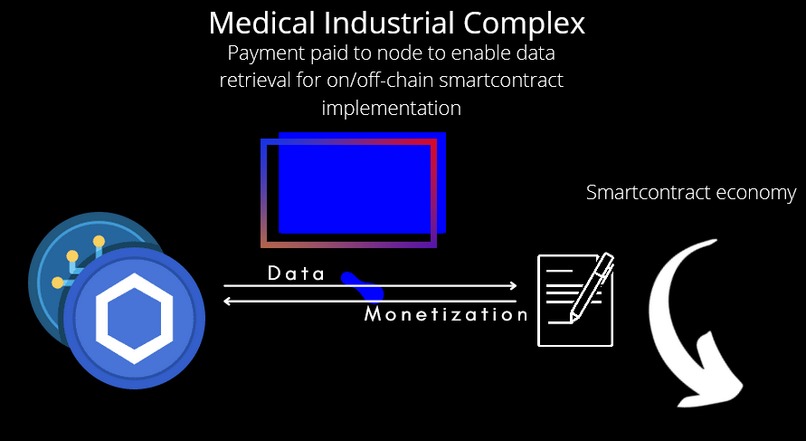
As the emergence of a massive smartcontract economy comes about, numerous use cases become available for instituting decentralized insurance platforms. In the authors' vision, healthcare insurance is ripe for disruption.
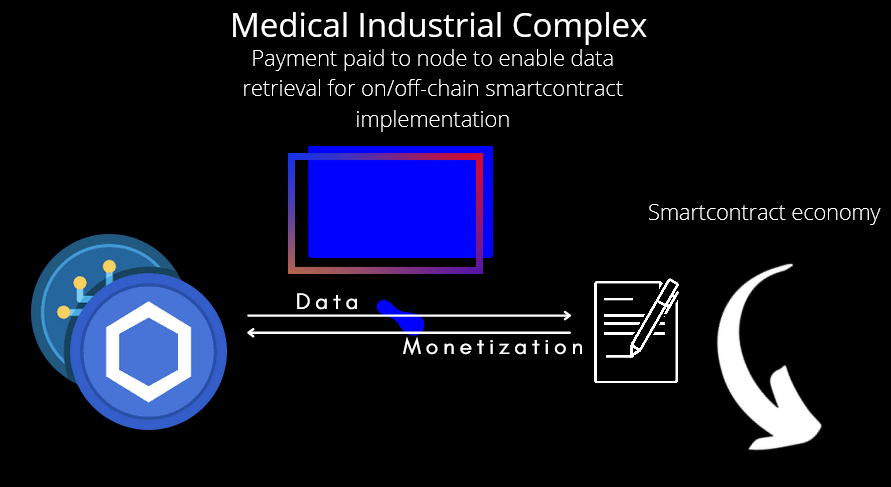
The medical industrial complex includes a wide range of players including: medical suppliers, pharmaceutical companies, and national/international organizations (i.e. World Health Organization, United Nations, Center of Disease Control, National Institute of Health, National Institute of Allergy and Infections Disease, etc.)
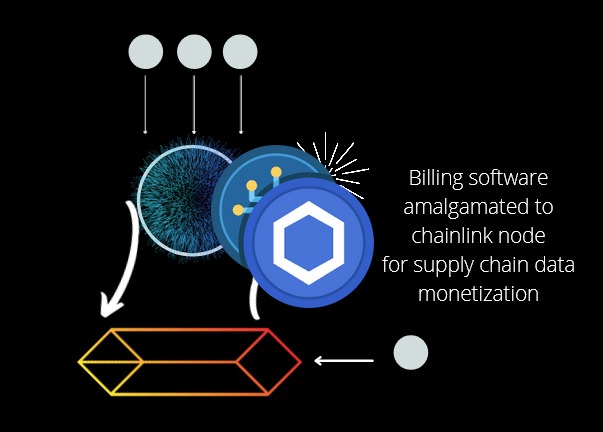
In our technical discussion, we implement a chainlink node tied to an abstraction representing medical supply chain data--in this case, a body of data known as ICD-10 (International Classification of Disease), which likely correlates with the underlying demand state.
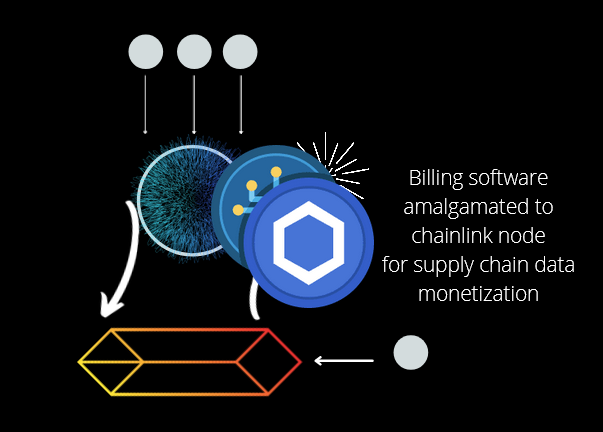
Furthermore, in the same way that public-private partnerships exist; we envision a world where public-DAO partnerships (decentralized autonomous organizations) could exist; and we further elucidate a mechanism whereby a public governmental body could provide funds to a community insurance pool in the instance that the pool verifies a claim for 1 incident of lung cancer. This is merely a proof of concept, and we understand that it concedes partial reliance on government funding; yet, government should incentivize access to healthcare in society; moreover, it also shows the viability of this protocol in countries which have adopted socialized medicine as a model. Another use case envisioned in this protocol involves the possibility of monetizing the data with medical goods suppliers, selling access to medical supply chain data and enabling large conglomerate goods suppliers to augment and ready their own supply chains, and in theory engage in automated commercial activity with hospitals and clinics.
Built With
- chainlinkclient-api
- hippa-api
- linkpool
- naas.link
- remix
- solidity
- toml


Log in or sign up for Devpost to join the conversation.