-
-
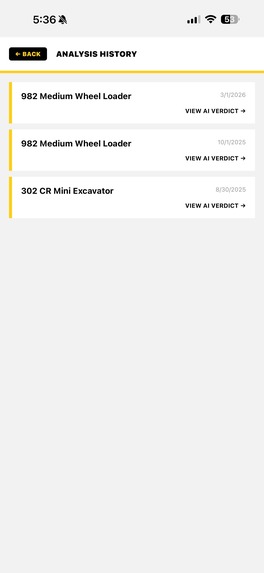
Vehicle Choice
-
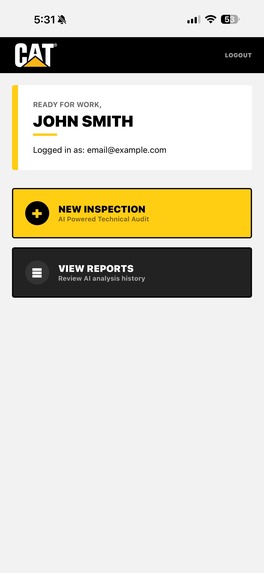
Login Page
-
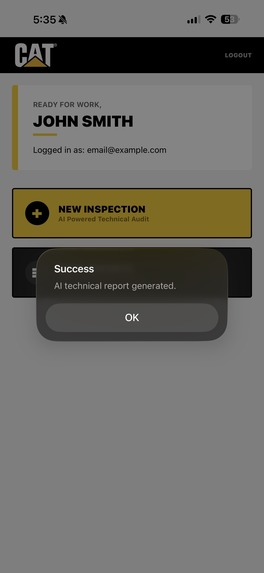
Result Screen
-
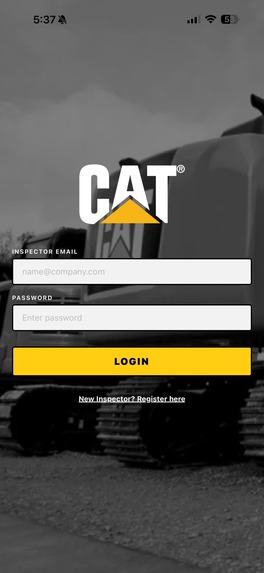
Login Page
-
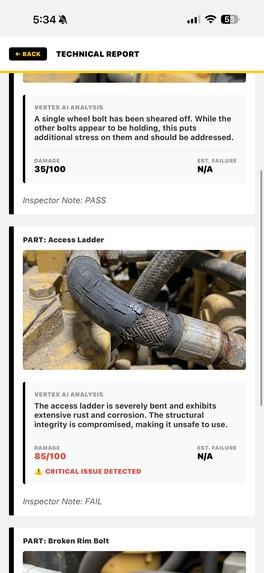
AI
-
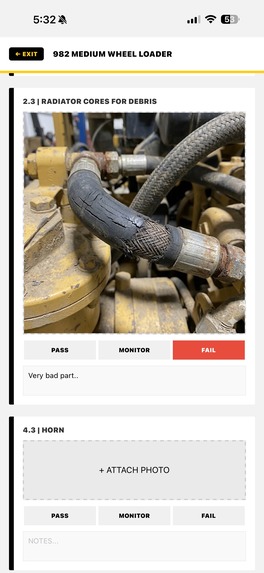
AI
-
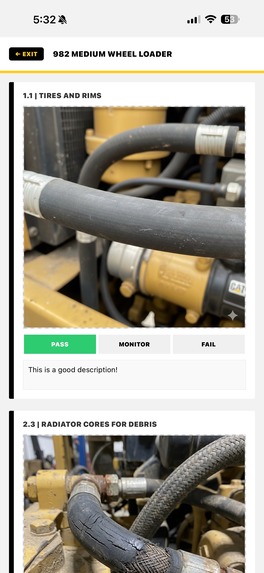
AI
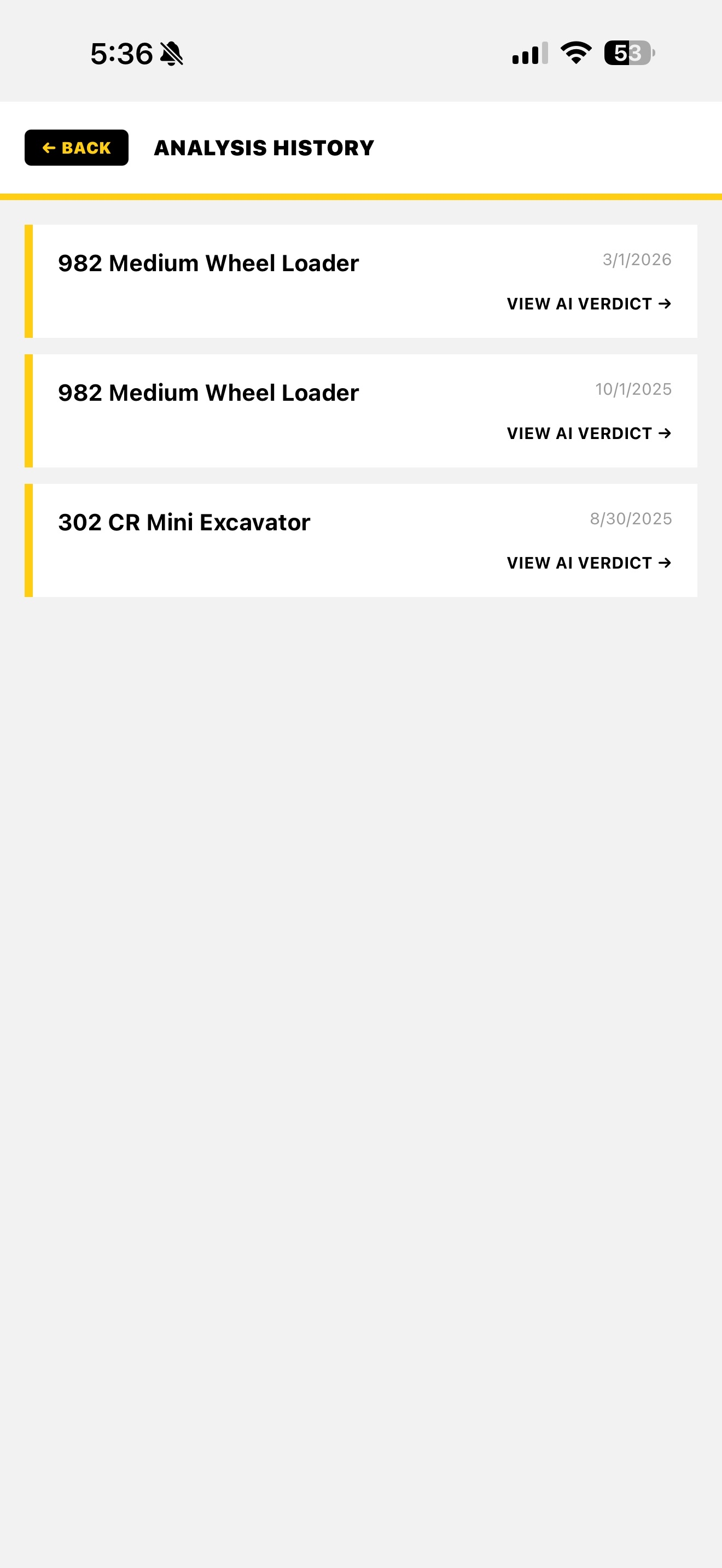
Inspiration
Our goal is to transform subjective inspections into objective and data-driven inspections and replacement schedules. Currently, traditional inspections rely on static snapshots that tell the condition right now while also heavily relying on human intuition that varies day-to-day and inspector-to-inspector. For example, a static view might report that a hydraulic hose is wearing down and its damage condition is at a 5 out of 10. But we wouldn’t know if that wearing down occurred within the span of a year or a week. This leads to premature replacement (wasting money) or unexpected failure in the field (expensive downtime). The technology will also save CATERPILLAR INC. on unnecessary costs to their expenses and brand reputation. By knowing when and which parts need replacing soon, CAT can ensure that those parts are in stock locally before they are even ordered. In addition, a scheduled replacement for a “yellow” part is significantly cheaper than fixing a “red” failure because replacements cost less both in labor and in parts than an emergency breakdown that halts construction operation. CATERPILLAR INC. will also be able to use decay data across all of their machines to analyze which parts are wearing out faster than expected in different climates or workloads, improving future designs. Customers will also view CAT as a more reliable company because they won’t have to worry about having downtime due to their equipment.
What it does
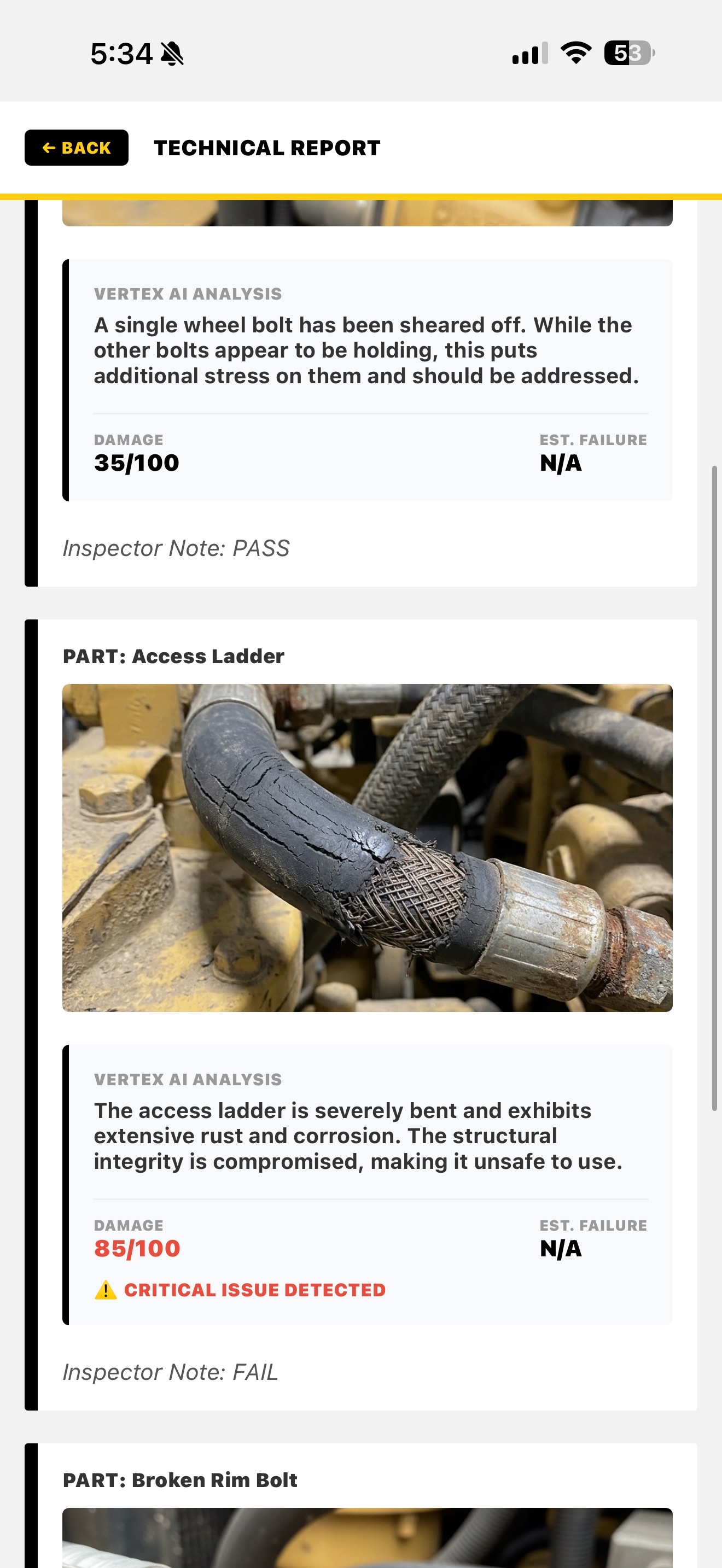
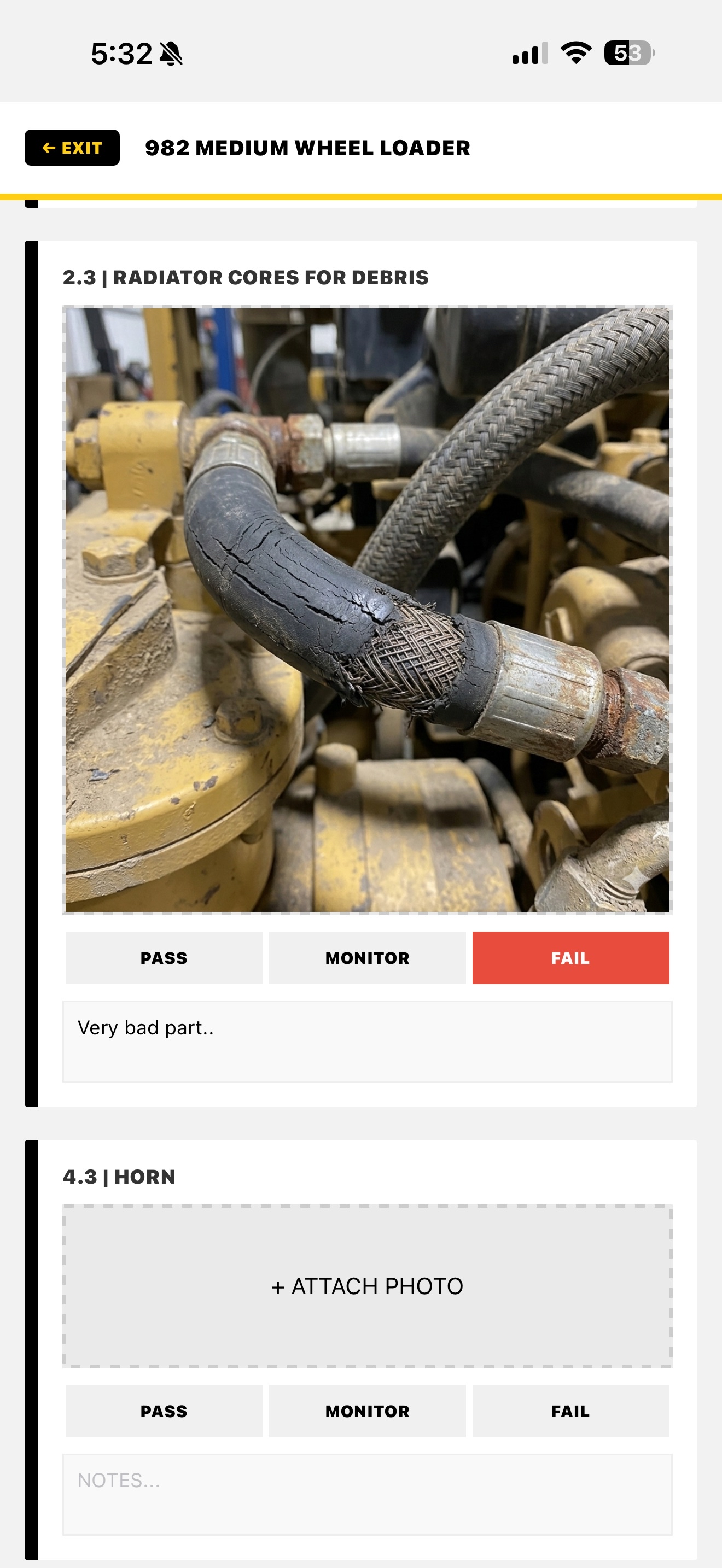
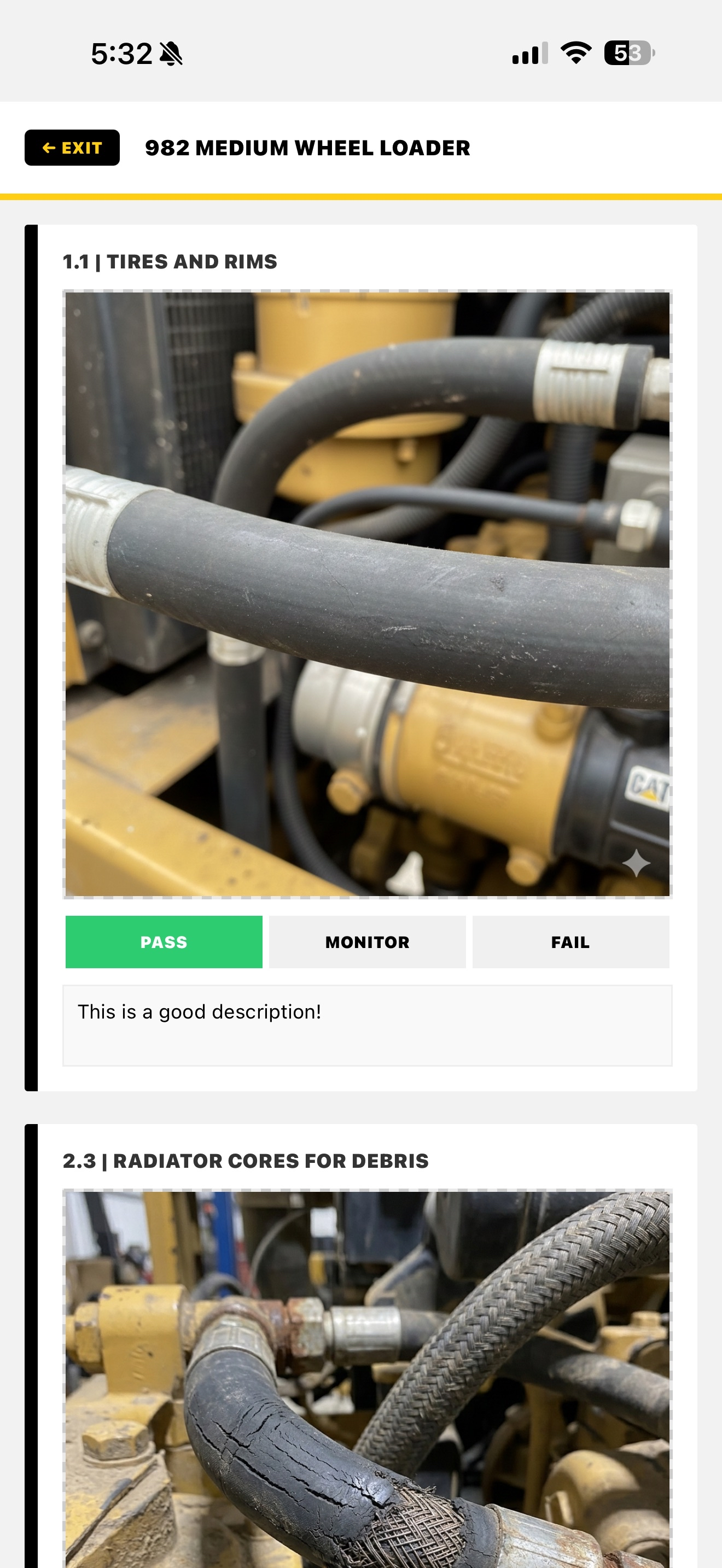
Our solution is to create a decay prediction model that quantifies the physical wear of model parts and compares its condition to past inspection checklists to predict the best window to request a part replacement before it reaches its threshold. This service will benefit technicians because it acts as a data consultant and removes the burden of making instinctive estimations. Instead of manually typing long remarks for each part, the AI will suggest notes based on detected wear damage. The AI will also flag parts with high probability of failure, prioritizing the technician's focus to parts that need prioritizing. By predicting when failures happen, we will also be preventing the likelihood of technicians needing to perform emergency repairs/replacements in unstable work fields.
How we built it
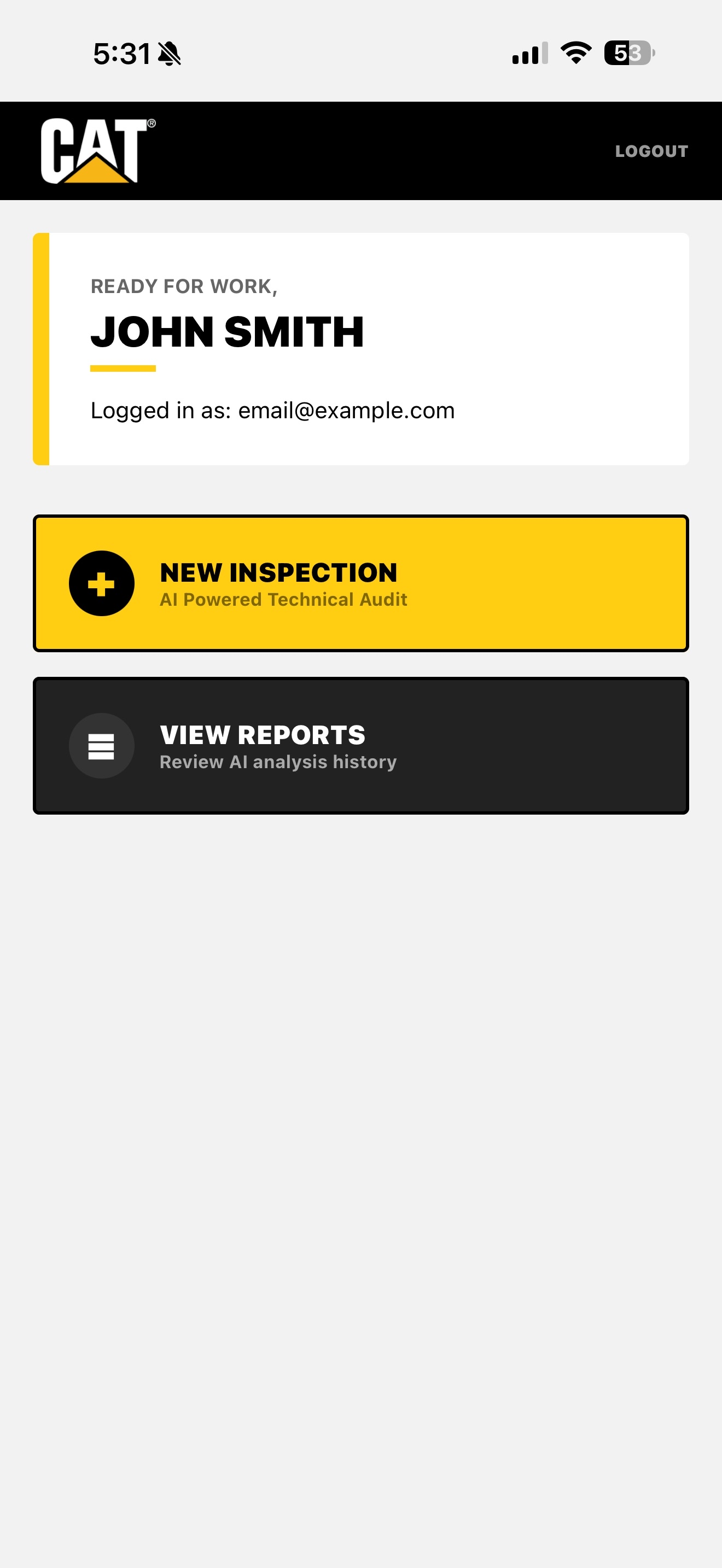
We began with an app in Expo and developed a simple frontend in order to create an interactive UI. We then trained an AI with existing data from Caterpillar and made it so it could determine the decay rates and progress of certain parts of different vehicle models. We then created the Javascript in order to have the inspector upload photos, give a condition code, and extra comments if needed. We used Firebase to make a database bucket to hold every photo, comment, and condition code passed into the app and passed that back to the AI model we were calling and trained. The AI then sent back its response through a public endpoint and we were able to test the API call through the app to see exactly what data was being sent back and fourth.
Challenges we ran into
The biggest challenge we had was setting up a tunnel to connect our AI to our database and have them comminate and have data from our app itself. It was difficult for us because it was something we had to learn on our own. Another thing that was challenging was building an app because the entire team only has experience on building with desktop.
Accomplishments that we're proud of
We are proud of our scoping and our capabilities. We did not let the fact that we did not know how to do something stop us or make us give up about our project. We continued to push through, since this was the entire teams first in person hackathon and we got a product we were proud of. We also learned more on how to work with AI and how to use it as a tool more for development.
What we learned
We learned about the components of a backend and a frontend along with connecting an AI to a backend. We gained the ability to have a full stack project and understand all the components that came with the app we developed. We also learned more about how to approach more company based prompt rather than a more vague prompt.
What's next for Decay Prediction Model
We want to continue to scale it up to a larger dataset from further inspections from CATERPILLAR and develop a model to be more accurate in its predictions so that it can be extremely on the nose with exactly what part to get and when.
Built With
- camera
- expo.io
- firebase
- googlegemini
- javascript
- python
- vertexai
- vscode

Log in or sign up for Devpost to join the conversation.