Inspiration
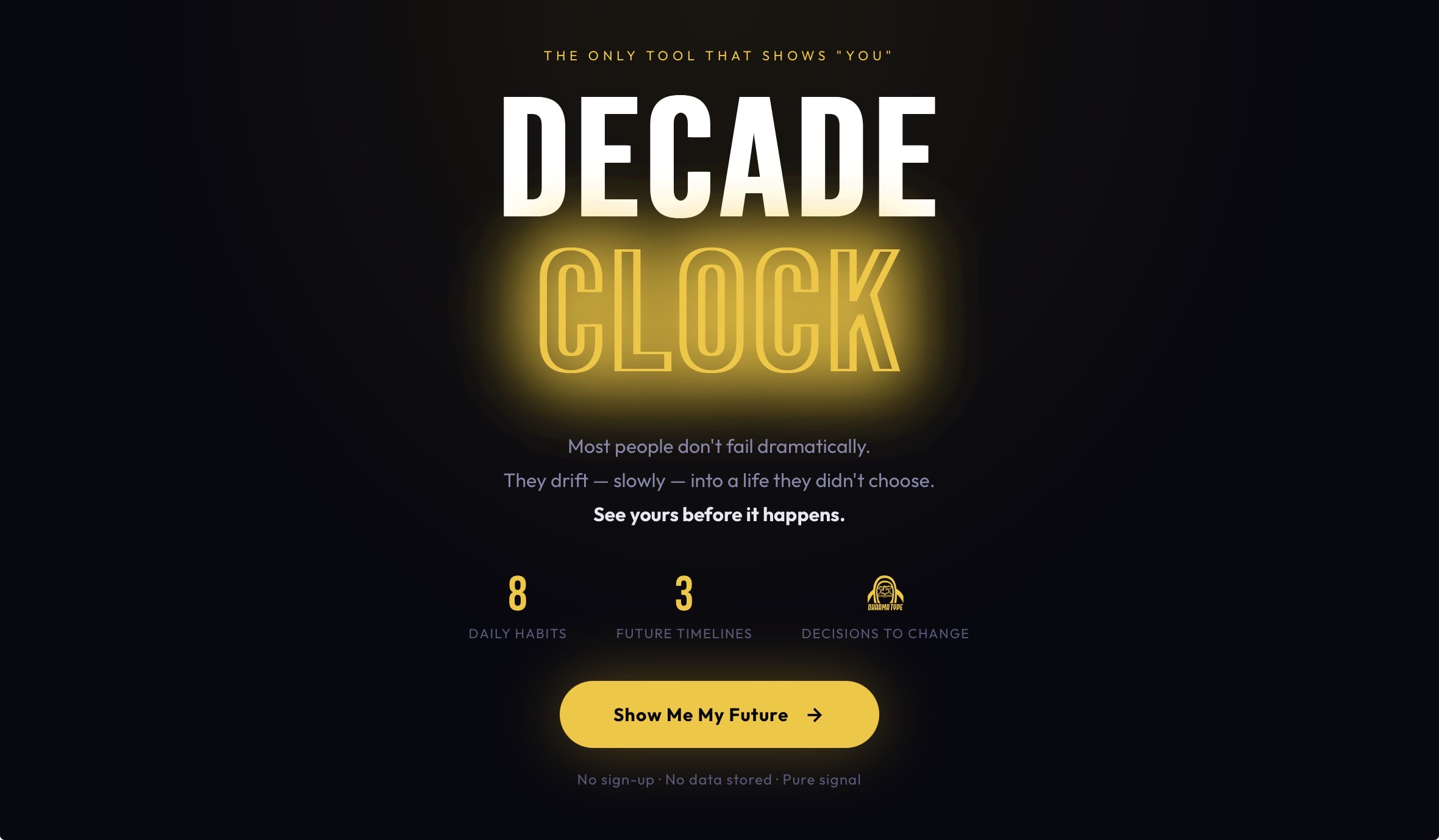
DECADE CLOCK was inspired by the idea that people rarely see the long-term consequences of their daily habits. Most tools focus on short-term tracking, but real life is shaped over years and decades. I wanted to build something that bridges that gap, making the future feel like a direct extension of today’s behavior. The goal was to turn self-improvement into a visible system, where small changes instantly reveal their long-term impact.
What it does
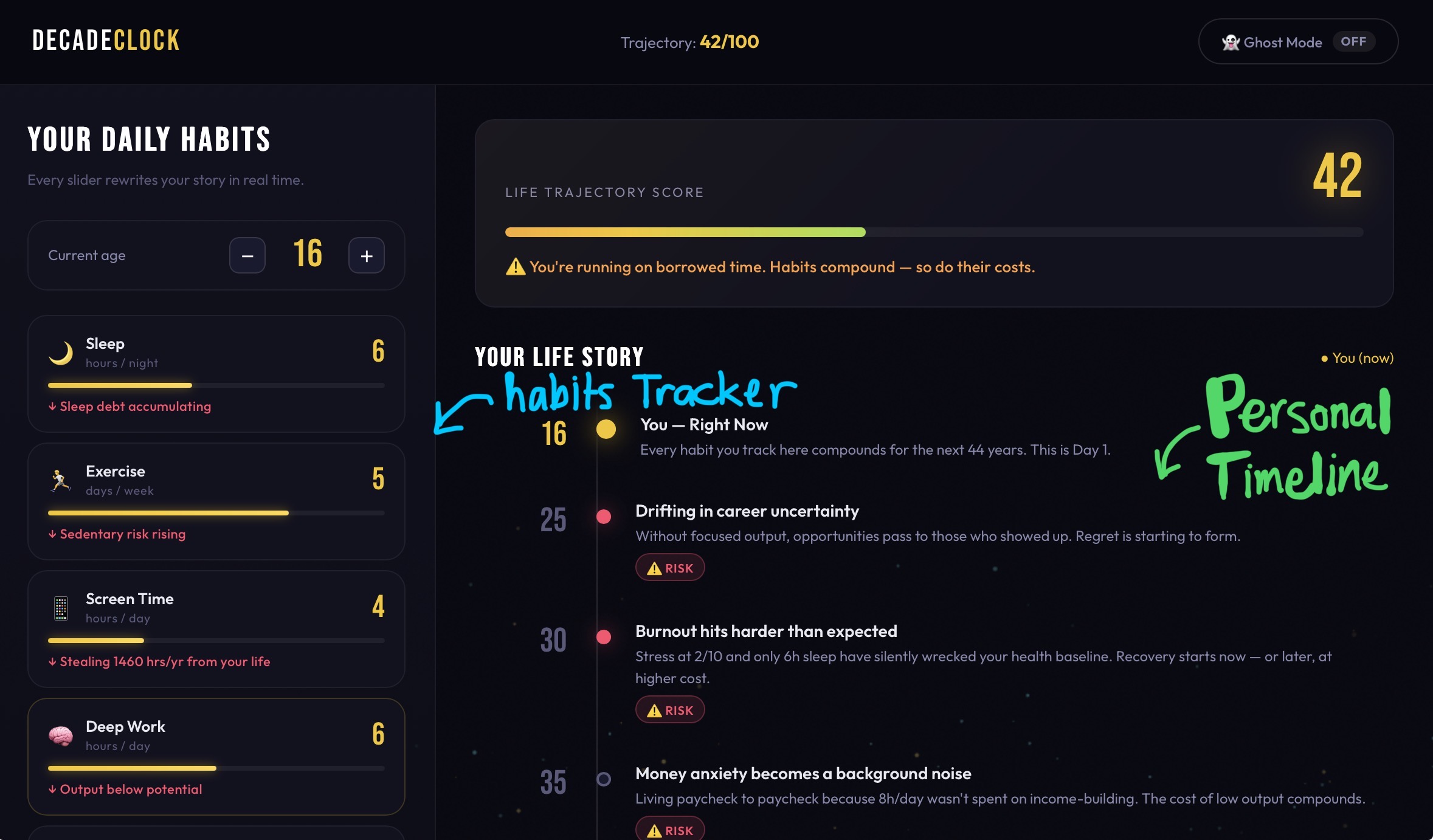
DECADE CLOCK converts user habits into a simulated life trajectory. You can:
- Adjust daily habits (sleep, stress, focus, exercise, etc.)
- Instantly see your future life outcomes update
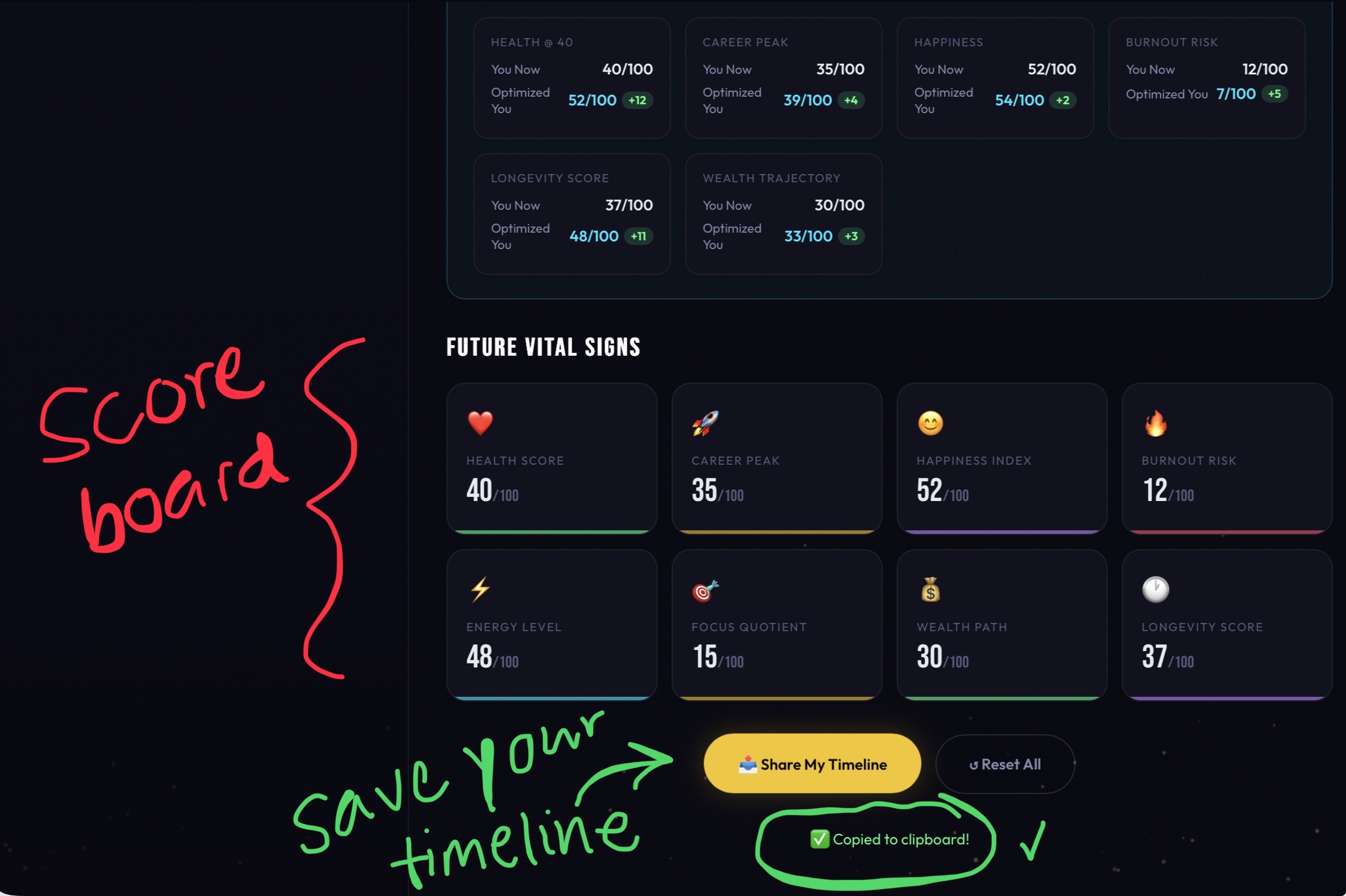
- Track health, career, happiness, energy, and longevity
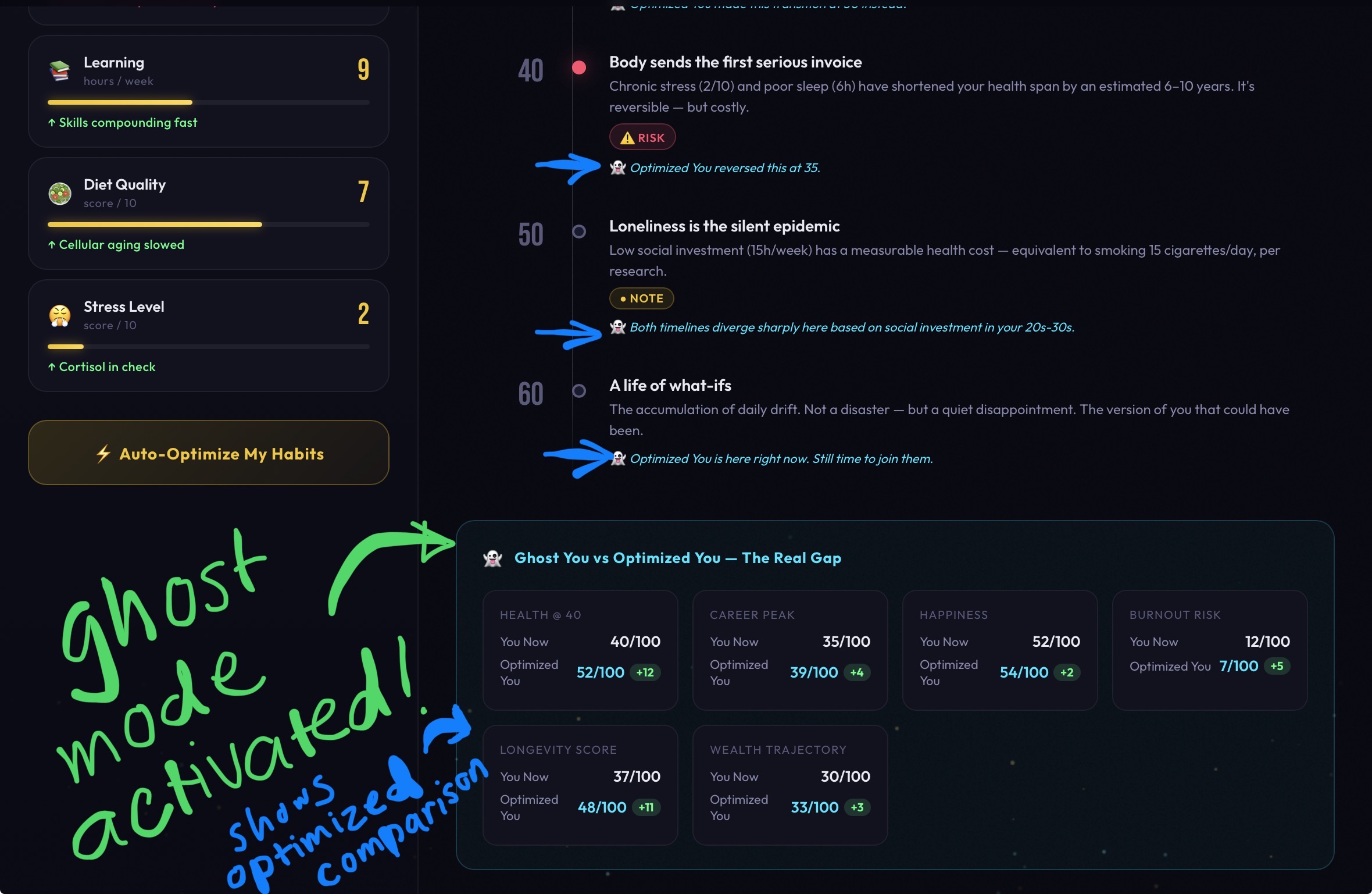
- Compare your current self vs an optimized version of you
- Visualize life milestones across decades
It creates a single unified Life Score that represents overall well-being.
How I built it
I built the project using HTML, CSS, and JavaScript, focusing on a lightweight, dependency-free architecture. Each habit is normalised and assigned a weight based on its long-term impact. These values are continuously recalculated in real time as the user interacts with the system. Core formula:
// Example (simplified)
health = sleep * 0.3 + exercise * 0.25 + diet * 0.2
       - screen * 0.1 - stress * 0.15;

This tool exists to make that drift visible, and reversible.

⭐ If You Like This

Give it a like ❤️ and share it with someone who needs a reality check.
Challenges I ran into
One of the biggest challenges was designing a system that feels realistic without pretending to be scientifically exact. Human life is complex, but our model needed to stay simple enough to be understandable.
I also had to carefully balance:
- Accuracy vs simplicity
- Performance vs real-time updates
- Meaningful feedback vs information overload Another challenge was making the visualization intuitive so users could immediately understand abstract future projections.
Accomplishments that I’m proud of
Built a fully interactive life simulation with no backend Created a real-time habit-to-life transformation system Designed a clear “current vs optimized self” comparison mode Developed a unified Life Score that summarizes multiple life factors Achieved smooth, instant updates with minimal computation overhead
What I learned
This project deepened my understanding of how weighted systems can model real-world behavior in simplified but meaningful ways. I learned how to structure real-time applications that depend heavily on interrelated state updates while keeping performance stable
What's next for DECADE CLOCK
Future improvements include:
- More personalized habit modeling
- Scenario-based future simulations
- Long-term progress tracking over time
- Deeper visualization of decade-scale life changes
- Smarter optimization suggestions based on user behavior


Log in or sign up for Devpost to join the conversation.