Inspiration
As a Computer Engineering student, I believe asking for help should be a step forward—not the moment you accidentally expose something private.
Imagine a student struggling with a connection error. They copy their configuration into a public forum, hoping someone will explain what went wrong. Hidden among those lines is a password they did not realise they were sharing.
DebugShare is inspired by that ordinary moment. I want to help people learn and collaborate without expecting them to recognise every security risk first.
The idea is simple: share the problem, protect the details that do not need to leave your device.
What it does
DebugShare is being designed to help students and developers review debugging text before sharing it with an AI assistant, a class discussion, or a public forum.
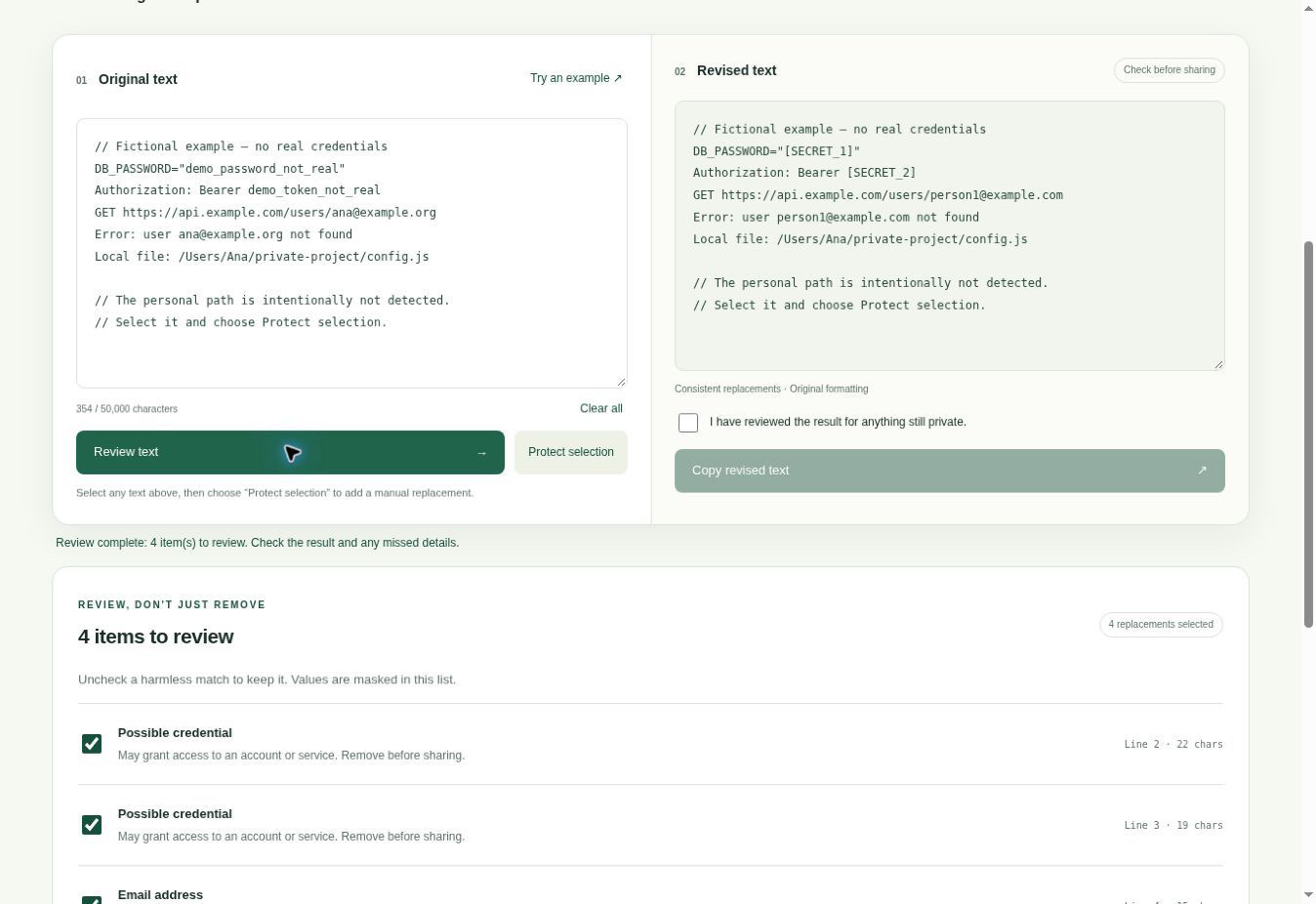
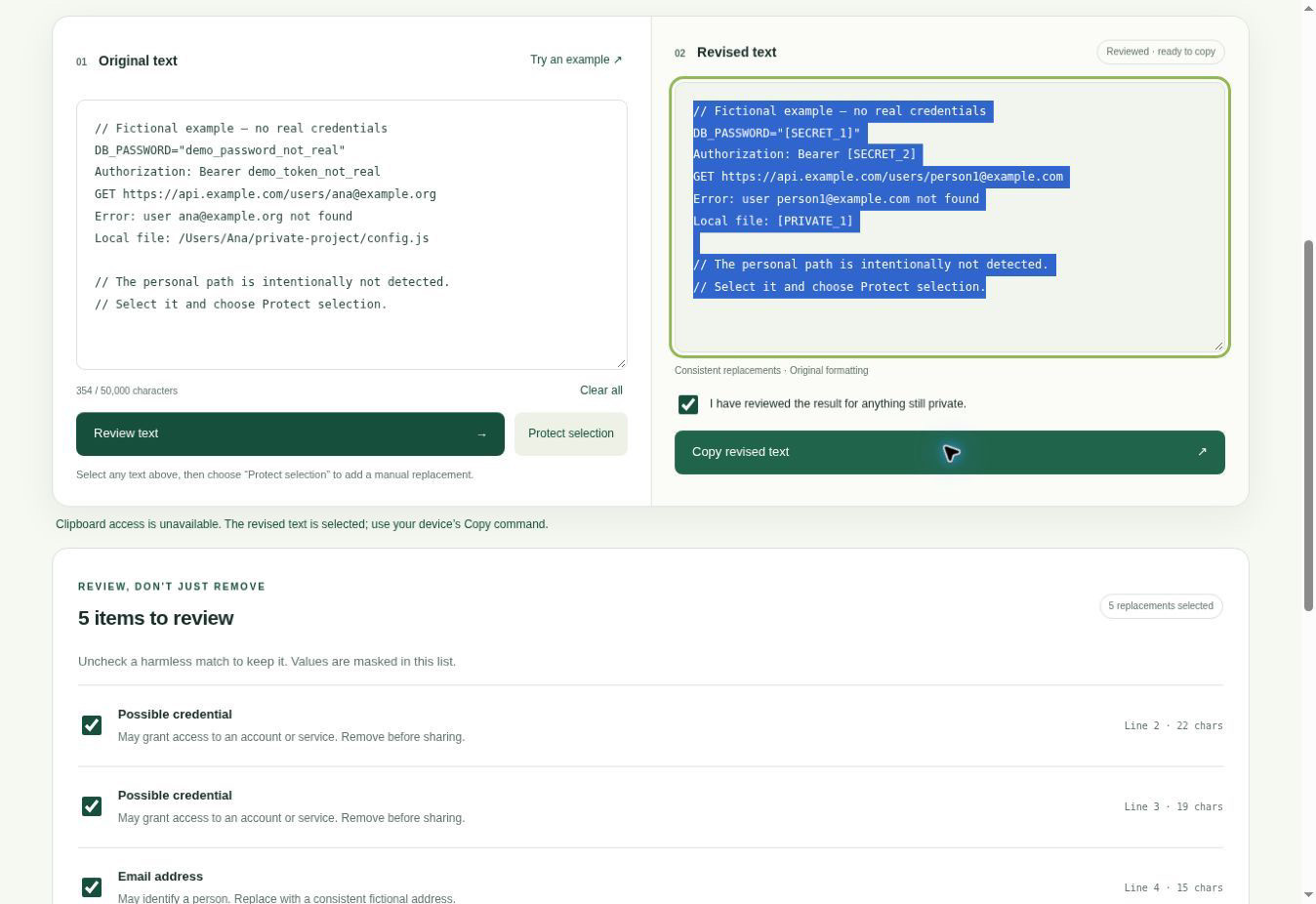
The planned workflow has four steps:
- Paste an error message, configuration snippet, or debugging log.
- Review highlighted credentials and personal information.
- Approve suggested replacements and manually mark anything missed.
- Copy the revised text to share.
The goal is to preserve useful context. Repeated email addresses would receive consistent fictional replacements, while detected passwords and tokens would be replaced with clear placeholders.
Each finding would include a plain-language explanation, helping users understand the risk as well as address it.
How we built it
The project is currently in the design stage.
The planned implementation uses HTML, CSS, and JavaScript, with text processing performed locally in the browser. The initial scope does not require an account, a database, or a remote analysis service.
The first prototype will focus on a limited set of recognisable patterns and a manual review workflow. Implementation details and verification results will be documented once it is built.
Challenges we ran into
The main design challenge identified so far is balancing privacy with usefulness: removing too little can expose information, while removing too much can make an error impossible to understand.
Another challenge is avoiding false confidence. Automatic checks can miss sensitive details or flag harmless examples. The interface therefore needs to make review and correction straightforward.
Development challenges and the solutions actually tested will be added as the prototype progresses.
Accomplishments that we're proud of
The milestone reached so far is a focused project design: a clear audience, a specific moment of risk, and a manageable workflow.
Privacy, understandable explanations, and human review are part of that design from the beginning.
A working prototype and measured results are the next milestones; they are not yet completed.
What we learned
The design process has highlighted that useful debugging information and private information can appear in the same snippet. Protecting one should preserve as much of the other as possible.
It has also clarified an important limit: removing a credential from text does not undo an earlier exposure. DebugShare should help users understand that distinction.
Technical lessons and findings from user testing will be added after implementation.
What's next for DebugShare
The next step is to build and test the core workflow using synthetic examples containing both sensitive-looking values and harmless text.
Testing will check whether replacements are consistent, whether useful context remains understandable, and whether any pasted content leaves the browser.
The prototype will also be reviewed on mobile and desktop, with particular attention to clear warnings and easy manual corrections.
The aim is a small, dependable tool that helps someone pause, review, and share more carefully—just before pressing “send.”


Log in or sign up for Devpost to join the conversation.