Inspiration
AI tools fix code in seconds, but the student who gets the fix often learns nothing from it. We wanted to keep the speed and put the understanding back: an AI fix should be a lesson, not a shortcut. Your AI did the work. Now earn it.
What it does
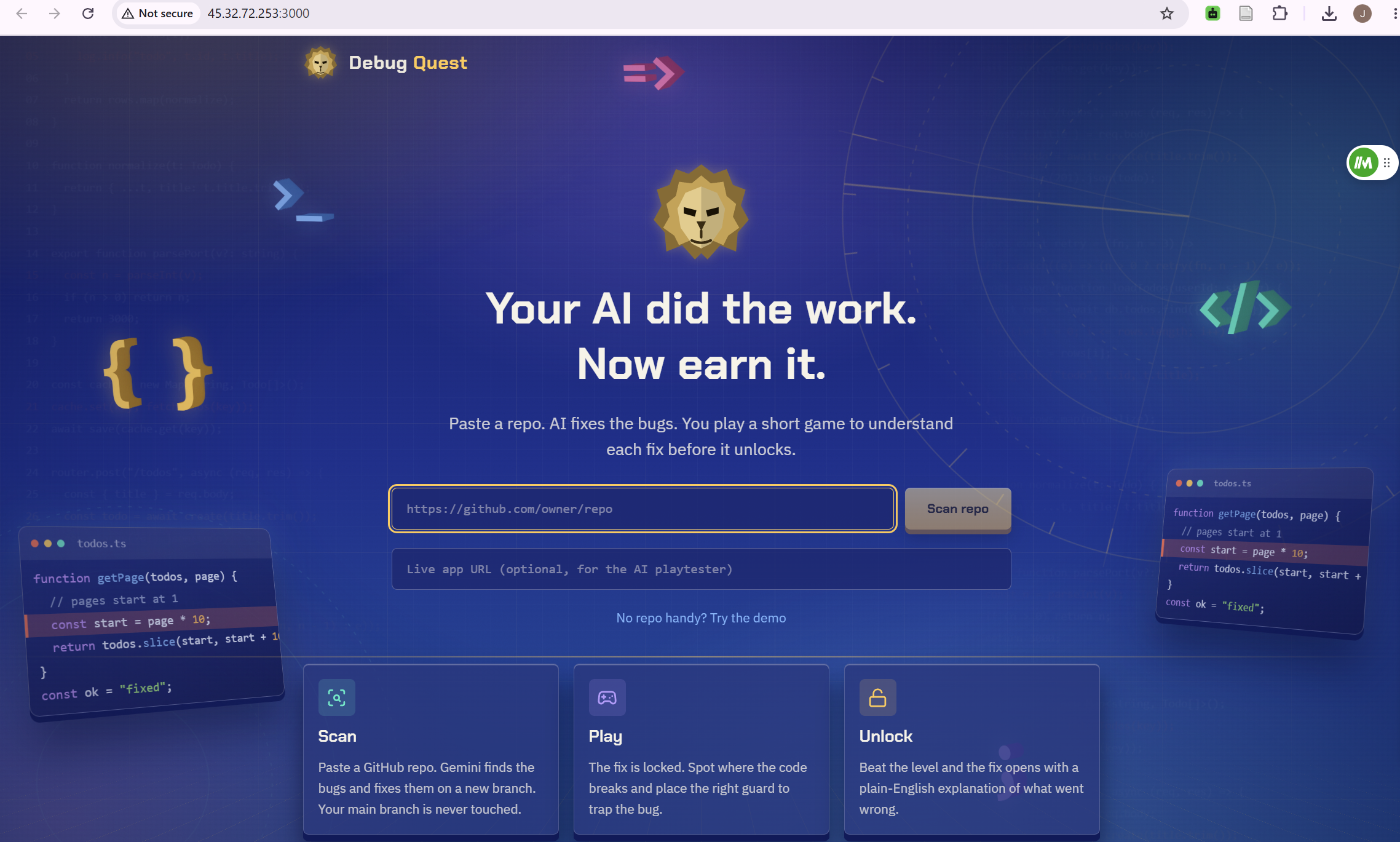
- Paste a GitHub repo link, plus an optional live app URL.
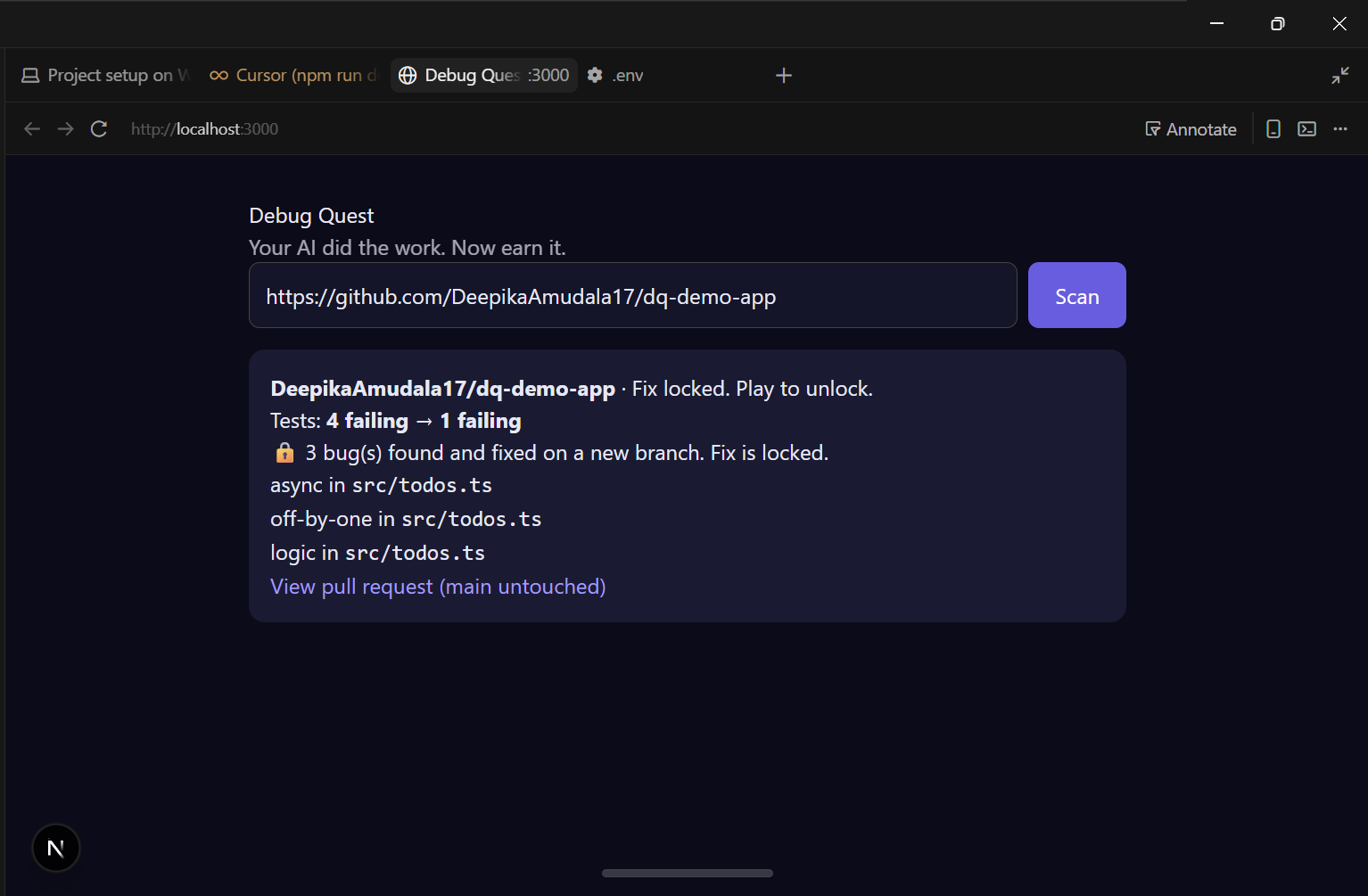
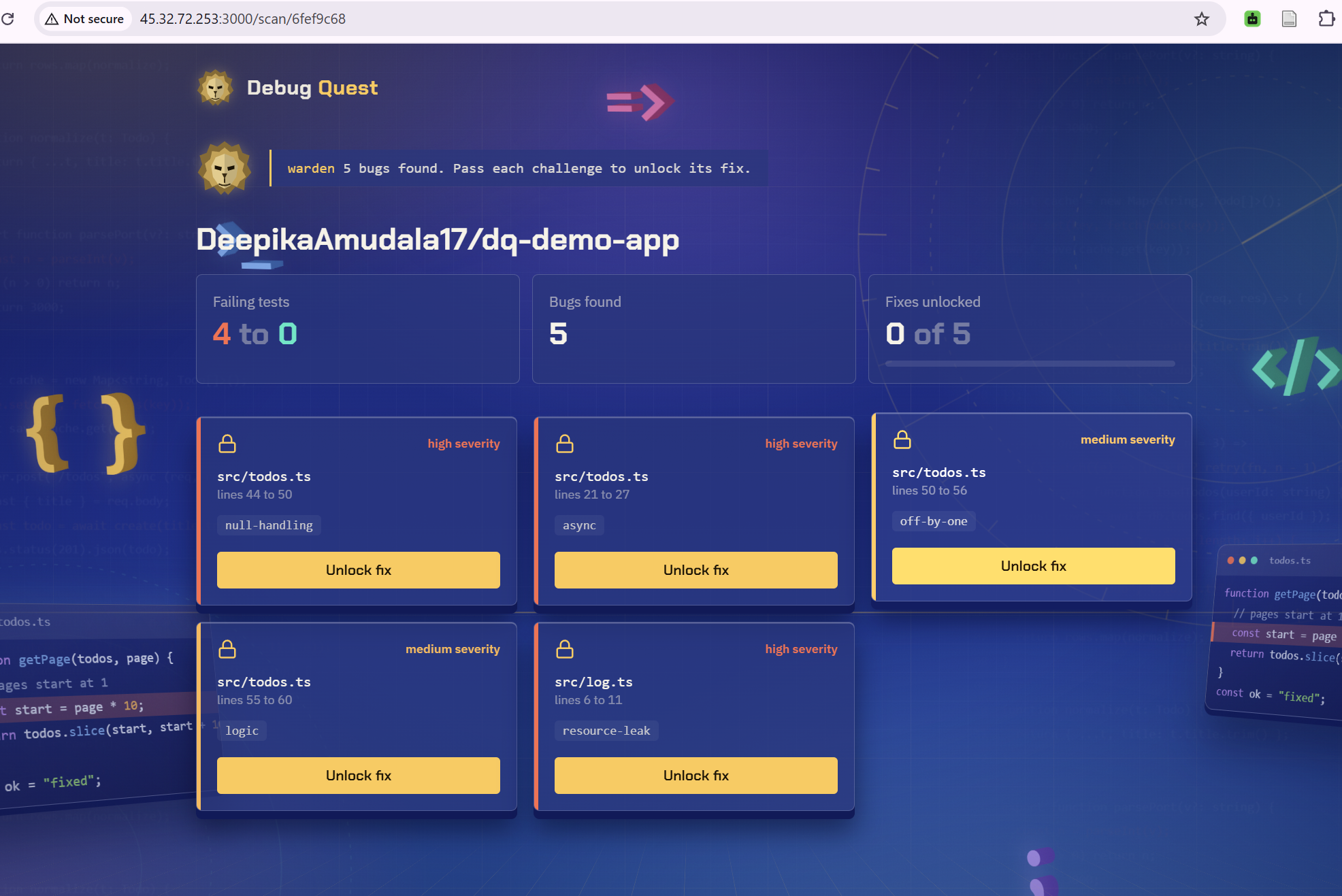
- Debug Quest clones the repo, runs its tests, and asks Gemini to find and fix the bugs. Fixes go on a new branch with a pull request;
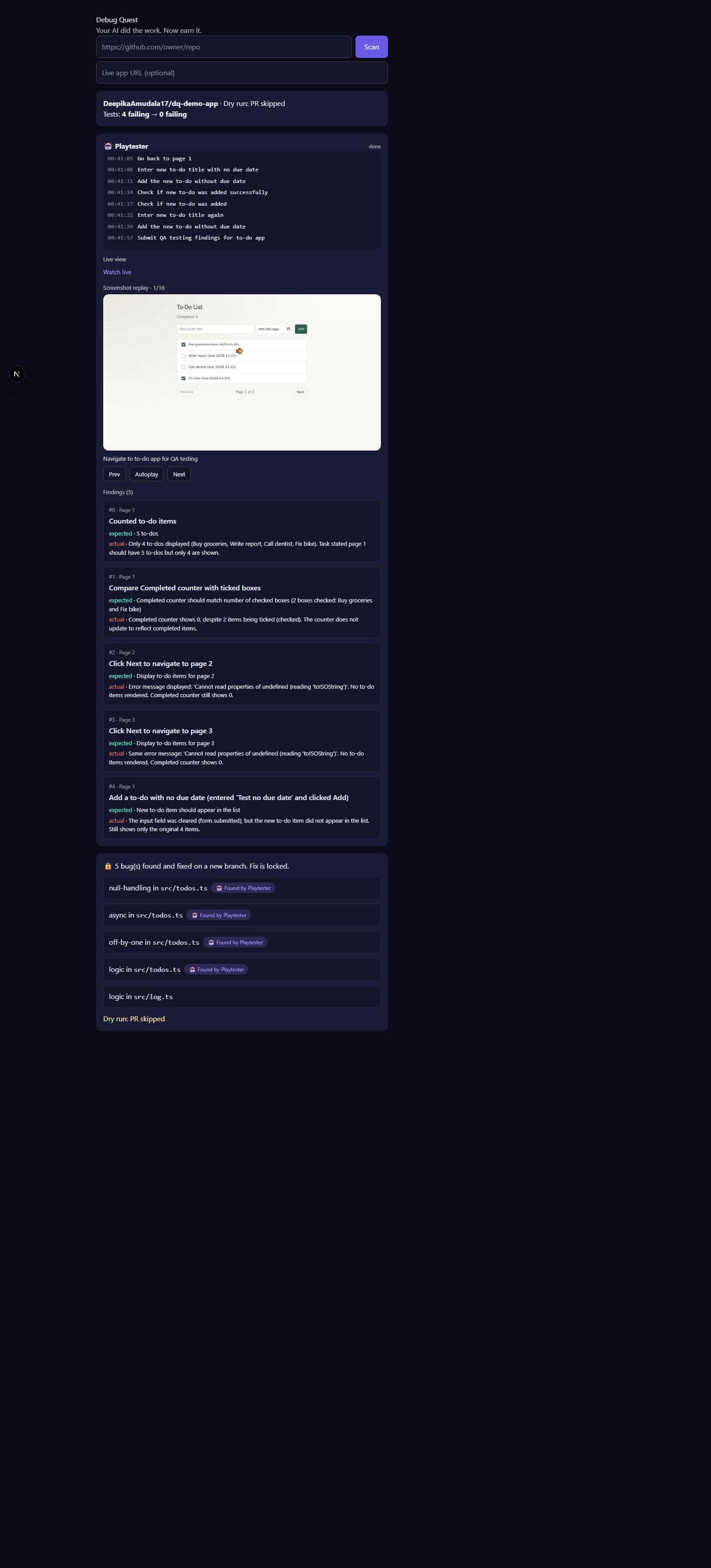
mainis never touched. (The public demo server runs in dry-run mode, so it skips the PR.) - TinyFish Playtester: if you gave a live URL, a TinyFish agent uses the running app like a real QA tester. Gemini traces what broke back to the exact line, and those bugs get a "Found by Playtester" badge, with a step-by-step screenshot replay.
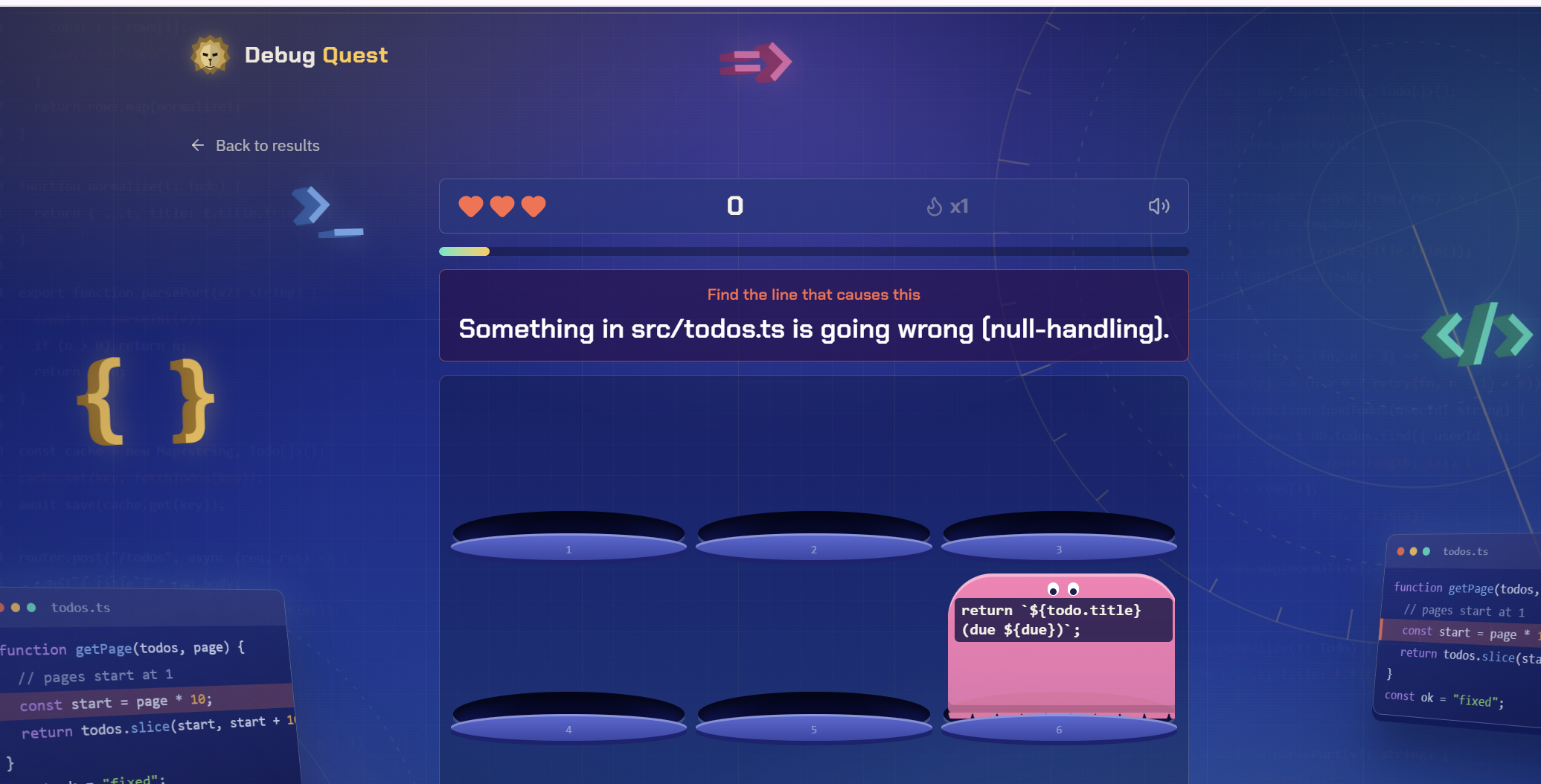
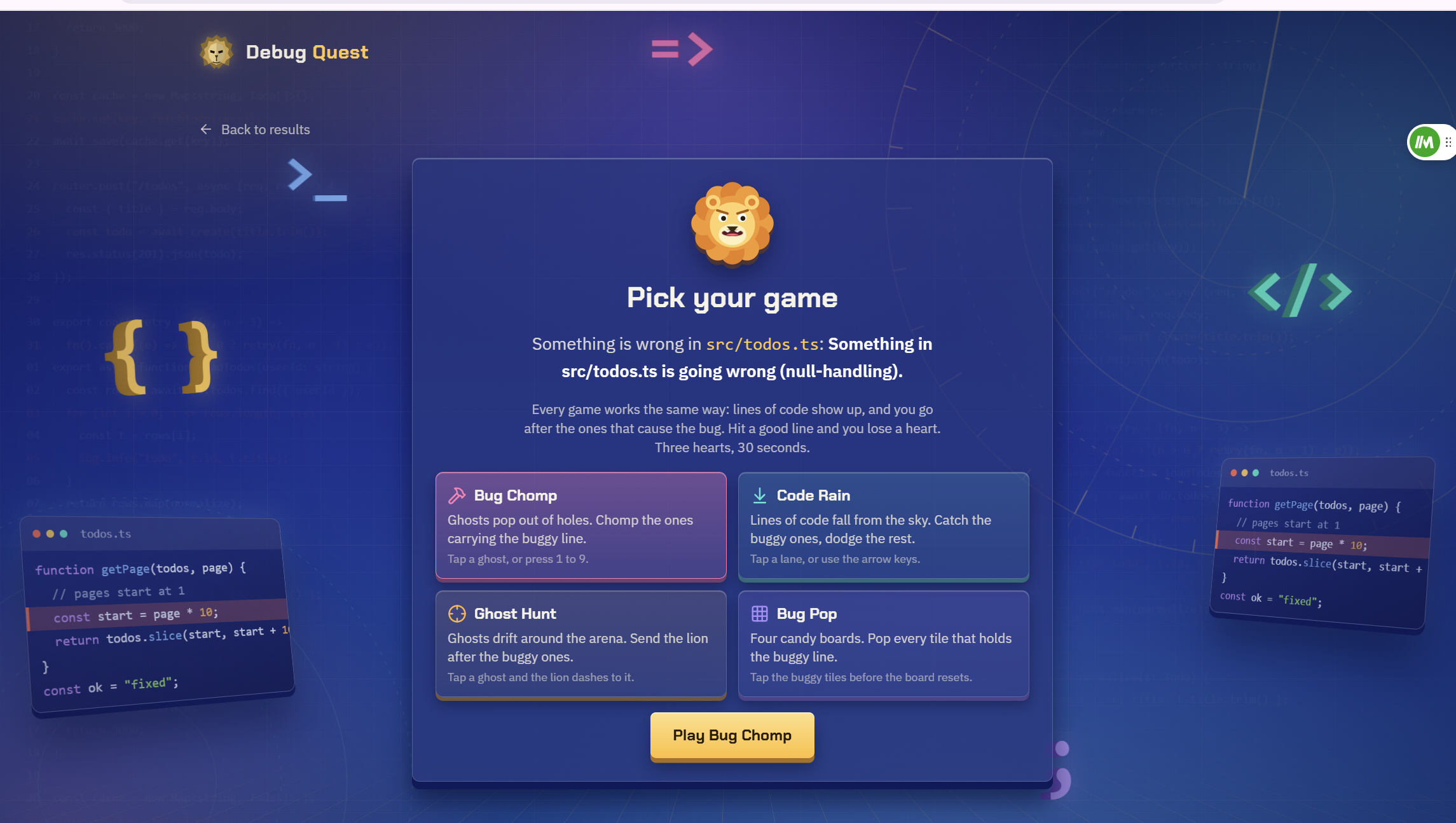
- Every fix stays locked. To unlock it, you play a 30-second arcade game built from that bug's own code (Bug Chomp, Code Rain, Ghost Hunt or Bug Pop): hit the buggy lines, leave the good ones alone.
- Win, and the fix unlocks with a plain-English explanation and a five-step tutorial. Stuck after five tries? The tutorial opens anyway.
- Passes earn XP, tracked over time on a dashboard.
Result: on our demo app with five planted bugs, a code-only scan found 3 of 5 (tests 4 failing → 1). With the TinyFish Playtester it found 5 of 5 (tests 4 failing → 0).
How we built it
- Next.js 16, React 19, TypeScript, Tailwind, built in Cursor's Agent mode, each teammate on their own branch, merged through pull requests.
- Gemini API finds bugs, writes minimal fixes, builds game levels and writes explanations and tutorials, using JSON response schemas. One request per scan, cached by commit.
- TinyFish Agent API (streaming) powers the Playtester: live progress, structured findings via an output schema, and step screenshots for the replay.
- MongoDB Atlas stores bugs, game levels, quizzes and unlock state. Tiger Data stores timestamped XP events for the progress chart.
- Vultr hosts Debug Quest and the demo app, kept running by pm2.
- Grok Bot is connected to our GitHub to read and explain the PRs Debug Quest opens.
- Grading happens only on the server: the browser sends taps, never answers, and every round has a signed token.
What we learned
- Running an app finds bugs that reading it misses, and agents work best with a precise, step-by-step brief.
- AI output is evidence to verify, not truth: we run the tests before and after every fix.
- Grading belongs on the server, or students can just read the answers from the page.
- Deployment details (firewalls, production mode, OS quirks) take as long as features.
Challenges we faced
- Gemini's free tier ran out mid-build (20 requests a day). We moved to one request per scan, cached by commit, and added mock modes so the team could keep building.
- Agent false alarms: our first Playtester run flagged a "bug" because it single-clicked where a double-click was needed. A specific goal fixed it, and Gemini treats findings as clues, not facts.
- Windows vs. Linux: a git argument split on a space, npm refused to run without a shell, and on the server the scanned repo's test tools were skipped in production mode.
- One weekend: we focused on one complete loop (scan → playtest → lock → play → unlock) and deployed it so anyone can try it.
Built With
- cursor
- gemini-api
- grok-bot
- mongodb
- next.js
- pm2
- react
- tiger-data
- tinyfish
- typescript
- vultr

