-
-
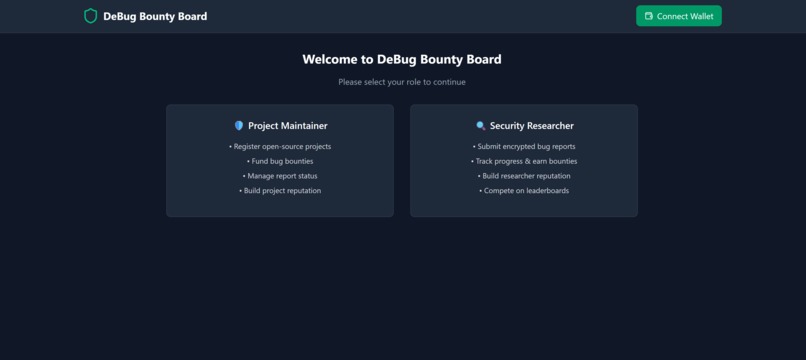
home page
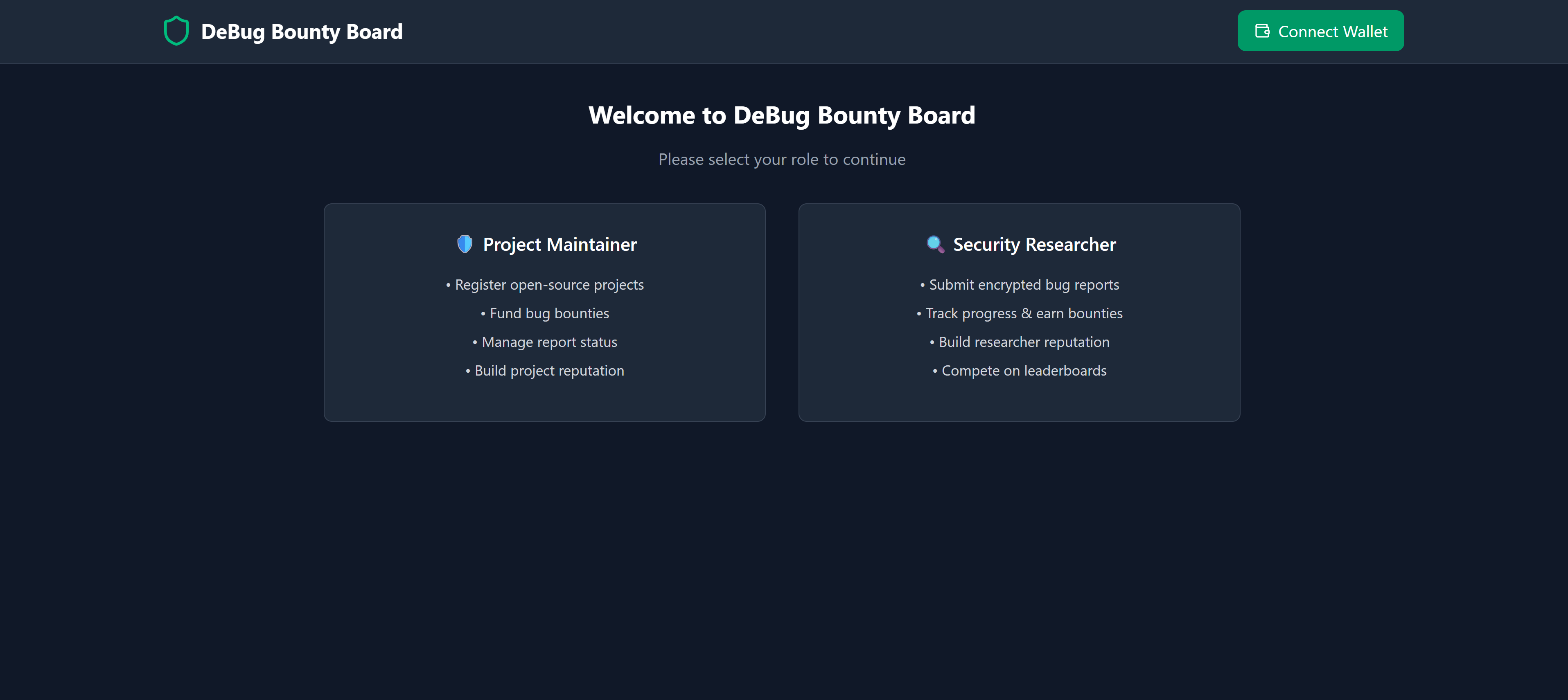
Inspiration Open-source projects often lack robust, secure ways to manage bug reports, especially when dealing with sensitive vulnerabilities. Traditional bounty platforms are centralized, opaque, and offer limited incentive mechanisms. We wanted to fix that — by building a decentralized, transparent, and secure bug bounty board for Solana developers. Our goal: empower project maintainers and security researchers to collaborate with privacy, incentives, and trust — all on-chain.
What it does DeBug Bounty Board is a decentralized application (dApp) built on Solana that connects open-source maintainers and security researchers. It allows: Researchers to submit encrypted bug reports (with PoCs)
Maintainers to fund bounties, verify submissions, and manage their projects
Bounties to be tracked, earned, and released transparently
Reputation & badges for both sides — projects gain trust levels, researchers earn leaderboard points
Built-in vulnerability scanner highlights common Solana coding issues
Visuals like bounty status trackers and engagement graphs
All while maintaining privacy-first reporting and transparent reward flow.
🛠️ How we built it We used:
Frontend: React + Tailwind CSS for a dark, secure-themed UI
Web3 Integration: Phantom wallet adapter for authentication and transactions
On-chain Storage: Solana’s account data to store Project and BugReport objects
Encryption: crypto-js AES for encrypting proof-of-concept (PoC) data before submission
Charts: Chart.js to display project reputations, bounty distribution, and leaderboard stats
Regex Scanner: A simple vulnerability scanner for unsafe Solana patterns (e.g., unchecked signers)
UX Enhancements: Pulsing badges, hover-to-reveal encryption warnings, 🔒 indicators
All flows simulate on-chain mechanics while minimizing gas and contract complexity.
Challenges we ran into Balancing privacy with transparency — encrypting PoC data while still tracking bug states publicly
Storage constraints on Solana — had to carefully design compact data structures
Simulating escrow logic — without real smart contract logic, we had to build trust flows with manual verification
Regex-based scanning — building something useful but lightweight for detecting vulnerabilities
Navigating multiple user roles and flows (maintainer vs. researcher) while keeping UX intuitive
Accomplishments that we're proud of Built an end-to-end dApp with encryption, wallet auth, role-based UI, and persistent state
Designed a secure and user-friendly submission process
Implemented a vulnerability scanner as an educational tool
Created a complete bounty lifecycle, from submission to reward
Added gamification elements like reputation, badges, and leaderboards
Fit all features within AImpact's storage-first design constraints
📚 What we learned How to leverage Solana storage without deploying custom Rust contracts
Best practices for client-side encryption and privacy-preserving dApps
Importance of role-based UI/UX in decentralized apps
How to simulate advanced flows (like escrow and rewards) using simple on-chain structures
The potential of Web3-based security tools in improving open-source collaboration
What's next for DeBug Bounty Board Add NFT badges for top researchers and verified projects
Integrate optional private bug submissions with CVE-style tracking
Connect with IPFS or Arweave for storing full PoC files off-chain
Deploy a real Solana smart contract for bounty escrow & automation
Expand the scanner to cover more Solana-specific vulnerability patterns
Launch a live beta with real projects and real bounties
Add platform monetization: gated features or bounty fee model
Built With
- and-theme-consistent-styling-@solana/wallet-adapter-?-for-seamless-wallet-connection-(e.g.
- bounty-flows
- coingecko
- css
- modern
- phantom)-crypto-js-(aes)-?-for-client-side-encryption-of-bug-reports-and-pocs-chart.js-?-to-visualize-project-stats
- react.js
- rust
- secure-user-interface-tailwind-css-?-for-fast
- typescript

Log in or sign up for Devpost to join the conversation.