-
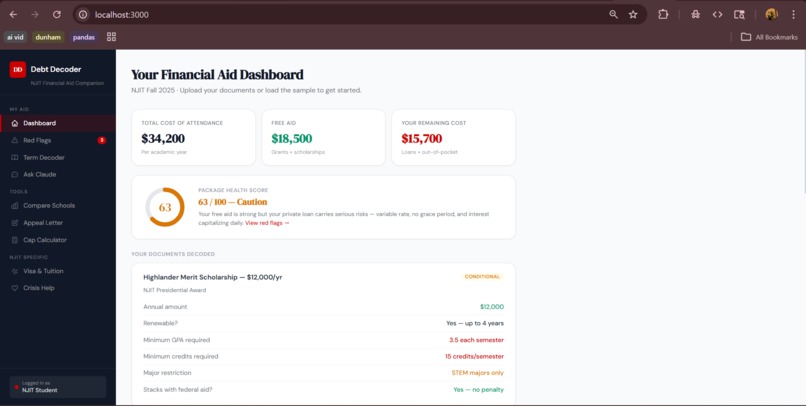
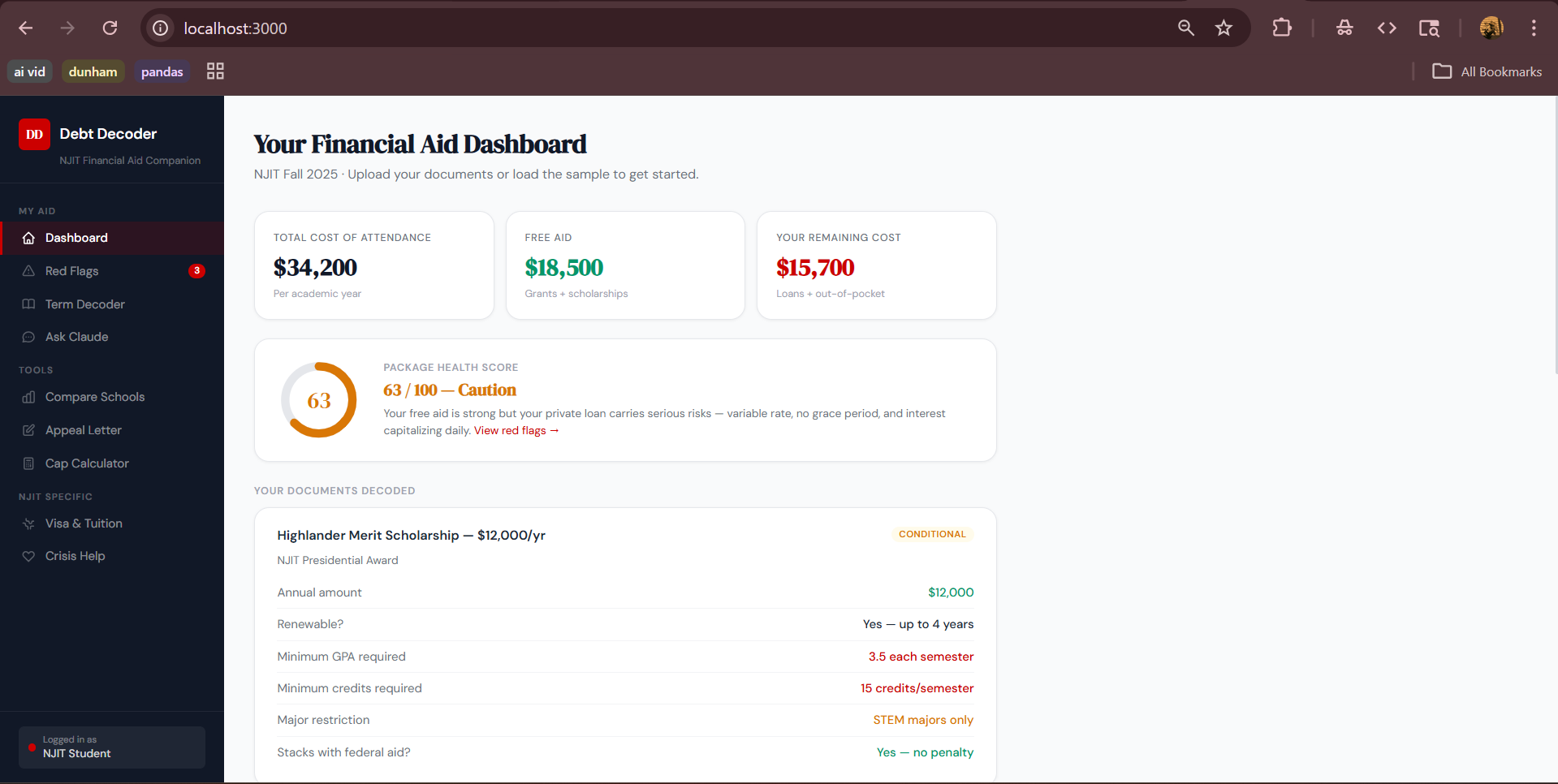
Dashboard
-
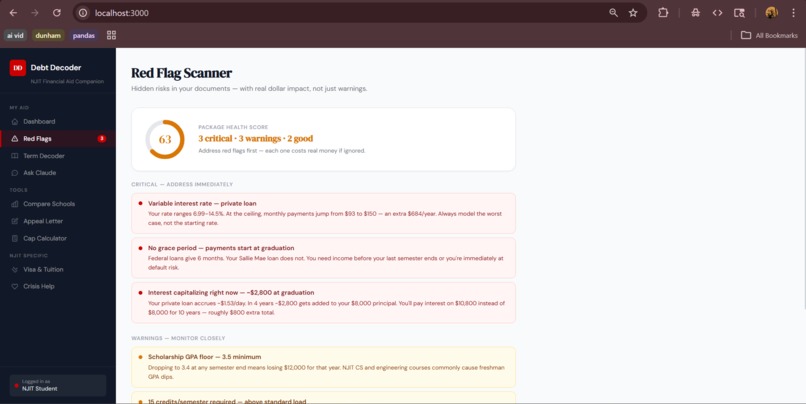
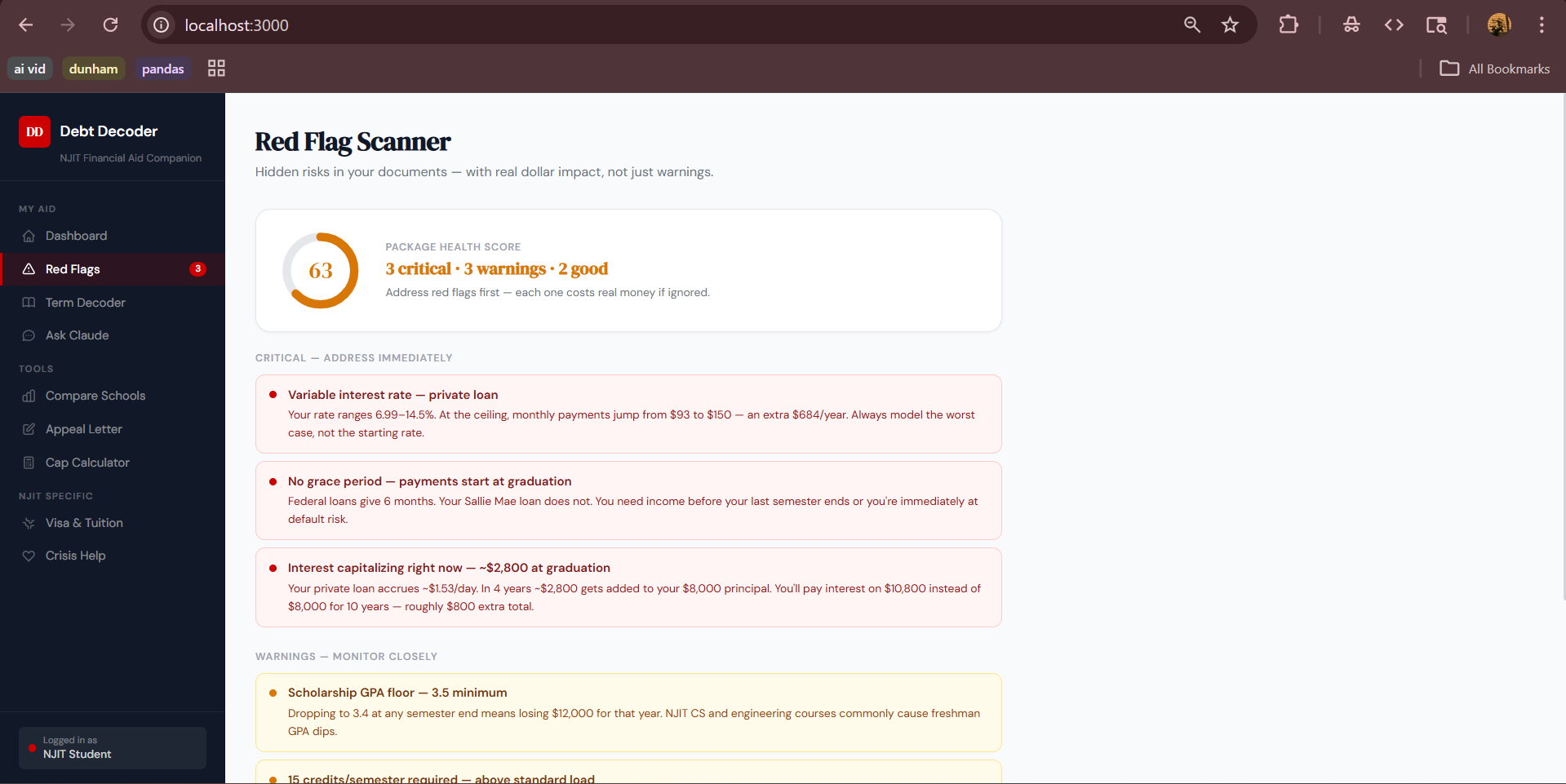
Red Flag Scanner
-
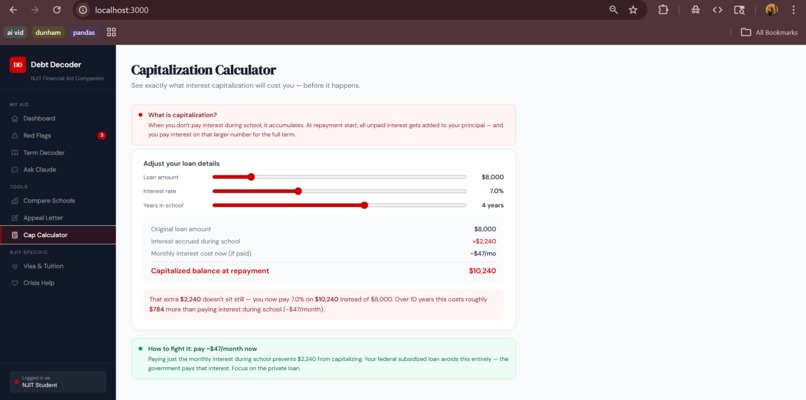
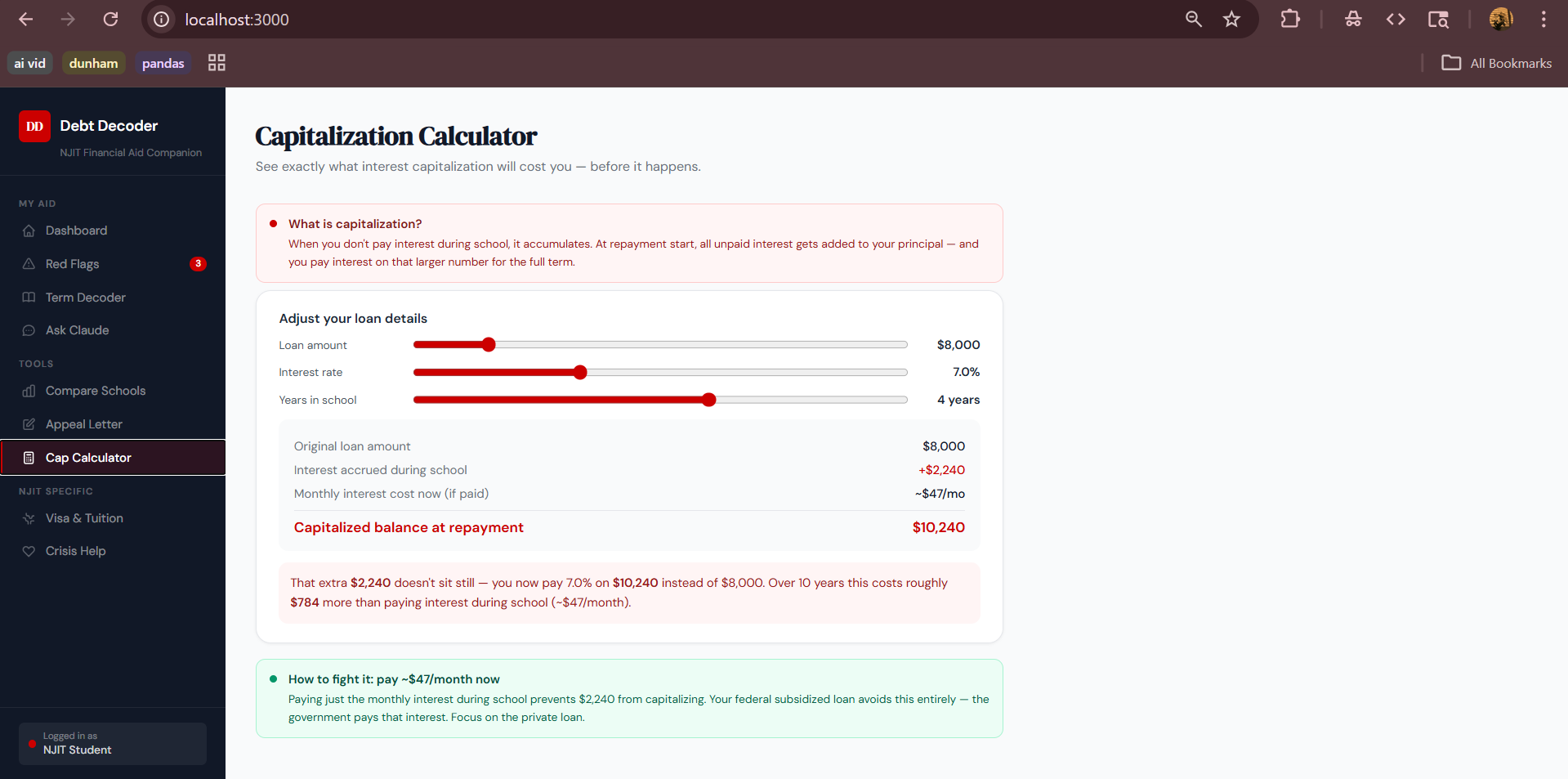
Capitalization Calculator
-
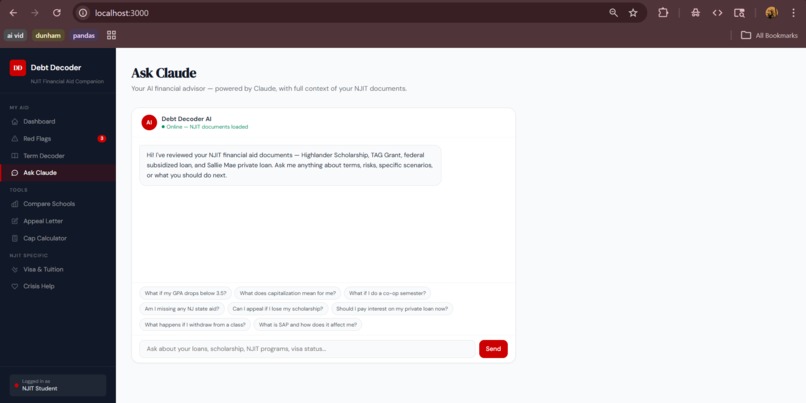
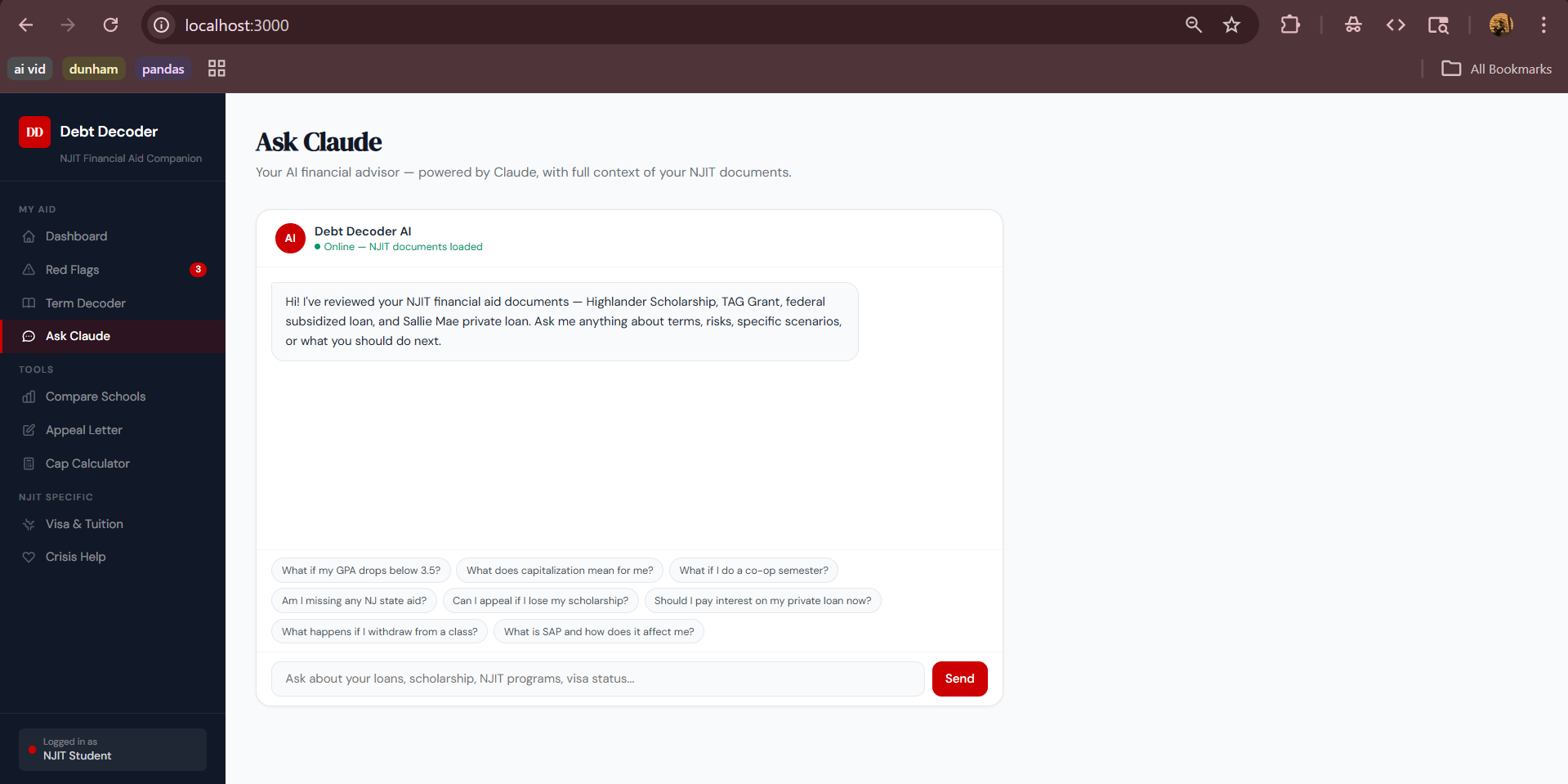
Ask Claude
Inspiration
Most NJIT students get their financial aid letter and have no idea what they're actually looking at. Terms like capitalization, forbearance, variable rates, nobody explains what those mean for your actual money. First-gen students especially have nobody to ask. We wanted to fix that.
What it does
You upload your financial aid documents and it tells you what they actually mean. Plain English, real dollar amounts, no jargon. It flags hidden risks, gives your package a health score, and tells you exactly what to do next. There's also a chatbot for follow-up questions, a school comparison tool, and an appeal letter generator so you can negotiate a better offer.
How we built it
Using HTML, CSS, and JavaScript. Claude AI reads your uploaded PDFs and extracts the financial data to populate the dashboard. Three files, runs in any browser.
Challenges we ran into
Getting the AI to return consistent structured data from real messy financial documents was tough. Prompt engineering to handle edge cases took most of our time.
Accomplishments that we're proud of
It actually works on real documents. Upload a real award letter and it reads it, validates it, and builds your dashboard from your actual numbers. It gives an invalid message if we input fake sample data.
What we learned
A lot about how financial aid actually works. Capitalization alone costs students hundreds of dollars they never see coming. Also learned a ton about browser API security and prompt engineering for structured outputs.
What's next for Debt Decoder
Expanding to other universities, adding multi-document upload, building a co-op impact simulator for NJIT students, and a visa tuition classification guide for international students.
Built With
- claude
- css
- html
- javascript

Log in or sign up for Devpost to join the conversation.