Inspiration
I was inspired by the global yet often overlooked problem of space debris. It poses a real threat to satellites and future space projects. Many people have heard about it, but not everyone understands the scale and seriousness of the situation. I wanted to make this problem visible through a clear and accessible data interface, engaging users as much as possible.
What it does
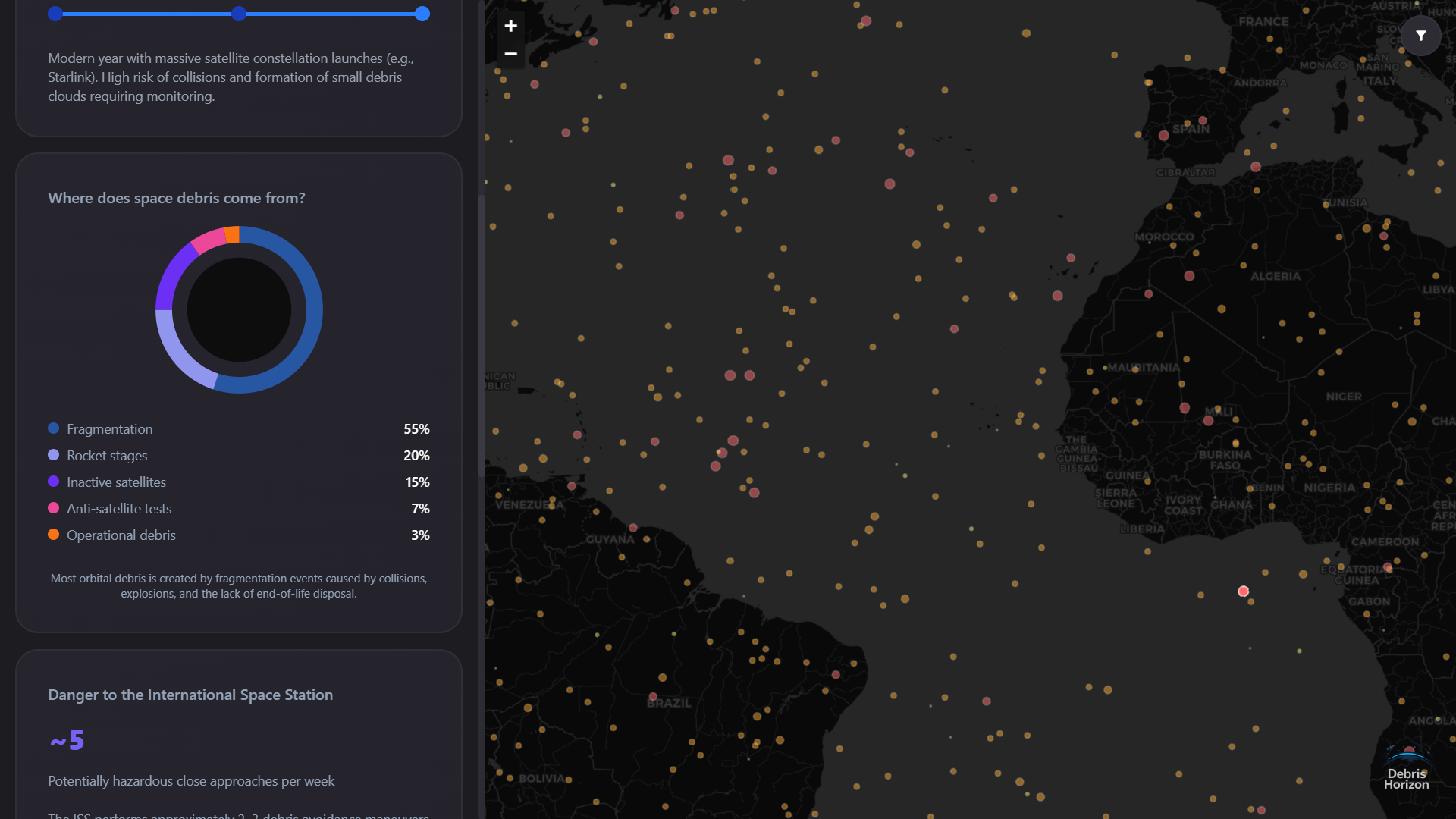
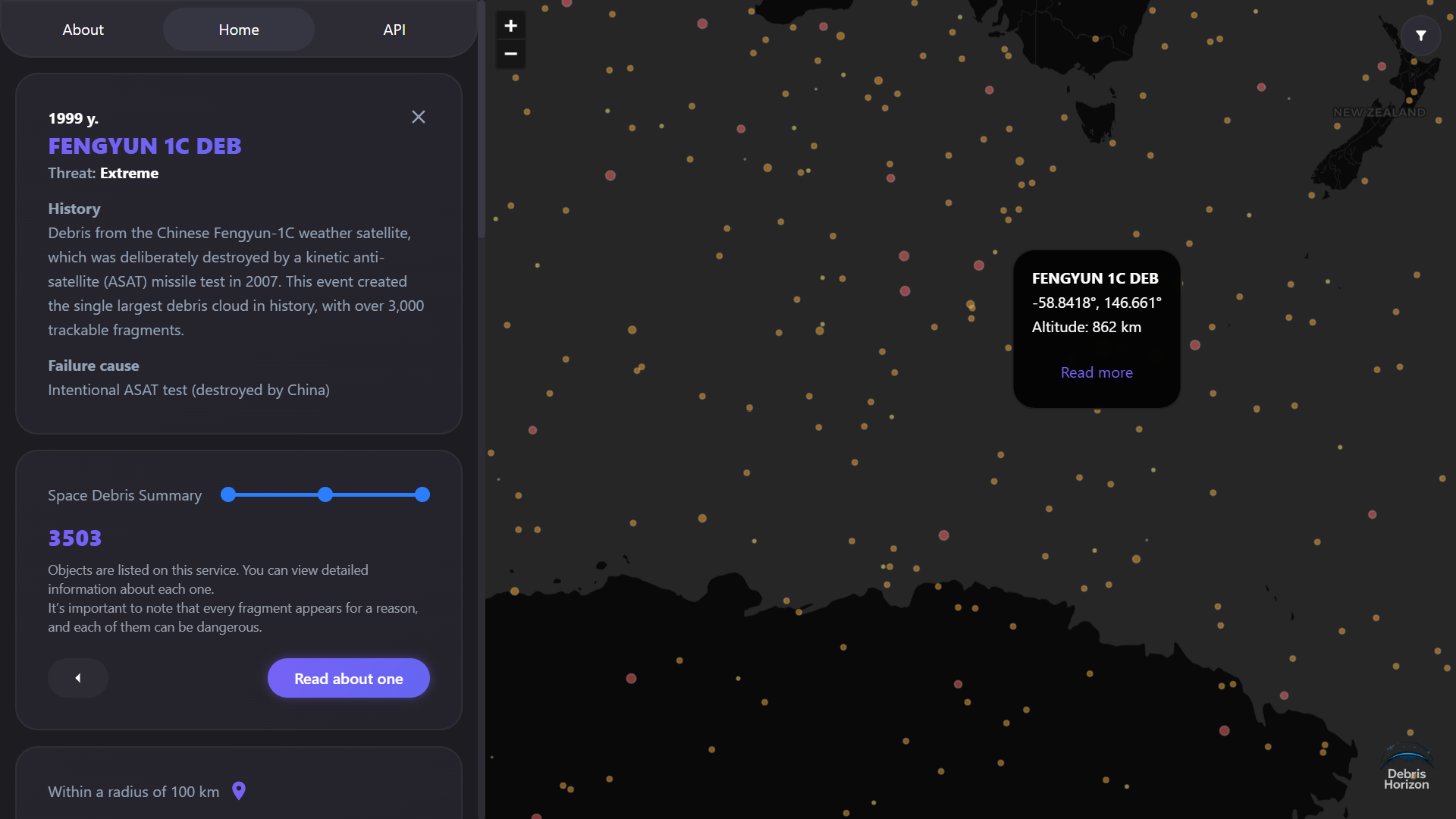
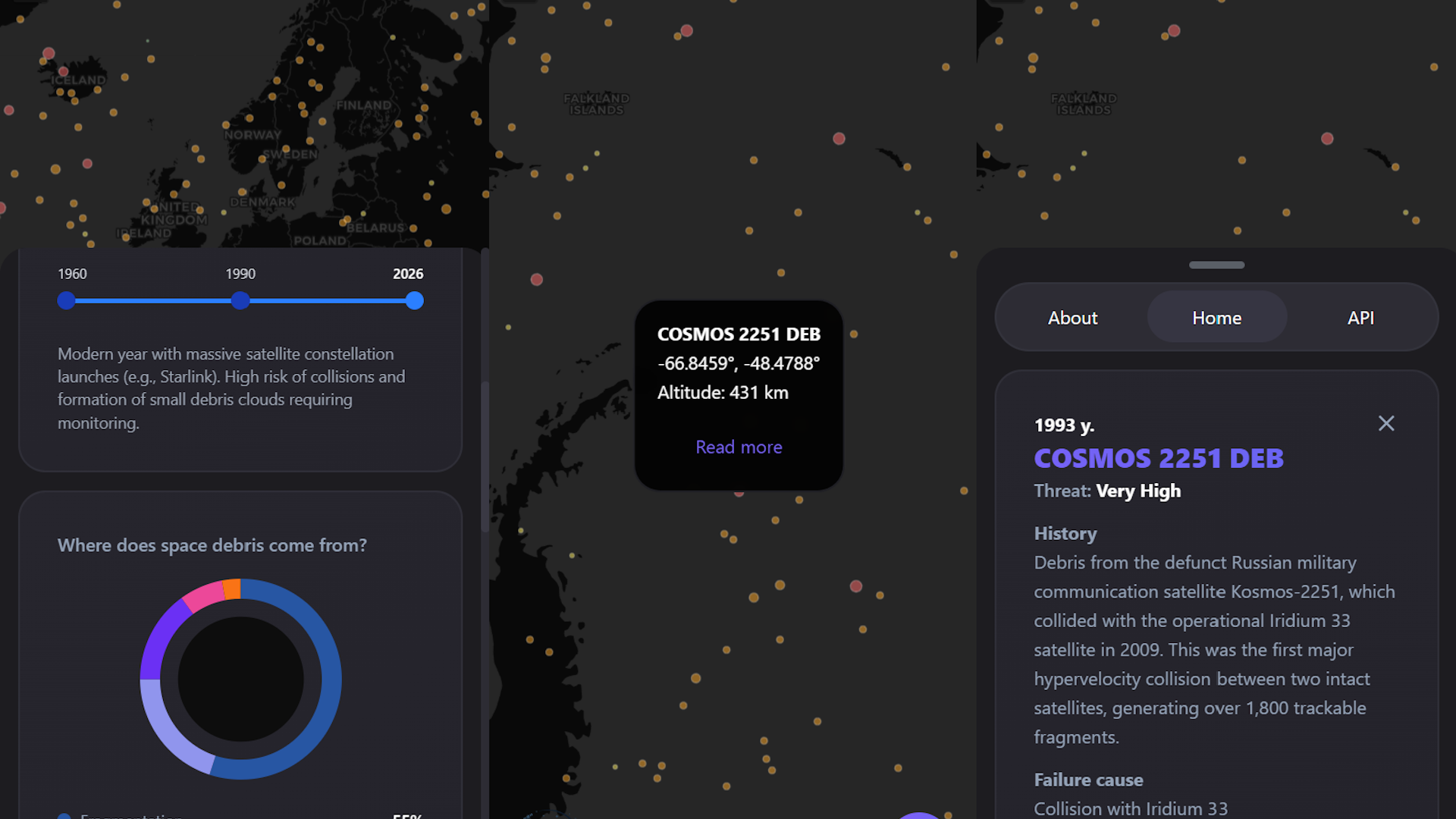
Debris Horizon collects data on over 3,500 pieces of space debris and visualizes them on an interactive world map. Users can:
- observe debris on the map in real time;
- access detailed information about each object;
- filter objects by year and source;
- track the International Space Station (ISS) and debris closest to the user;
- use the open API for educational and research purposes.
The project turns abstract data into a visual and engaging experience.
How we built it
Data was collected from open sources and third-party APIs, processed, and supplemented with coordinates and historical information for each object. An interactive web interface with a map and filters was created, optimized for all devices, including mobile. The API allows direct data access for external projects. The backend is built on MySQL, the API is written in PHP, and the frontend is implemented in Vue.js.
Challenges we ran into
- Integrating diverse data from multiple sources into a single, unified format.
- Designing an intuitive and clear interface that works well on all screen types.
Accomplishments that we're proud of
- An interactive map with over 3,500 pieces of space debris.
- A fully free and open API for research and educational purposes.
- A user-friendly interface fully optimized for mobile and desktop devices.
What we learned
- How to work with large, fragmented datasets and integrate them into a unified format.
- How to make complex scientific data accessible and understandable to a broad audience.
- Practical skills in maps, APIs, and real-time data visualization.
What's next for Debris Horizon
- Add more data sources and expand the database of objects.
- Develop educational interactive scenarios and mini-games for students and schoolchildren.
- Expand the API to enable integration with other educational and research platforms.

Log in or sign up for Devpost to join the conversation.