-
-
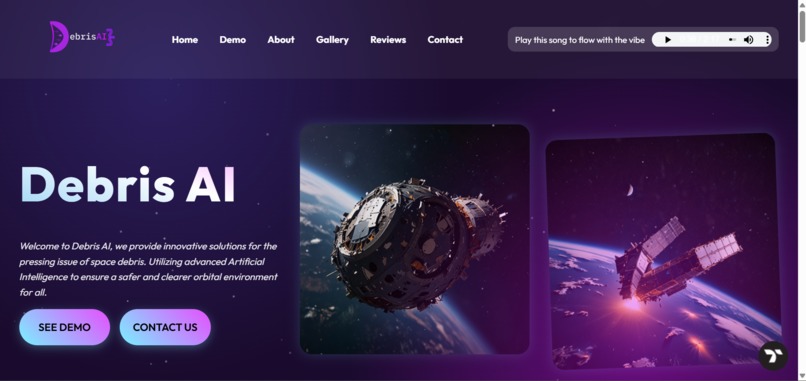
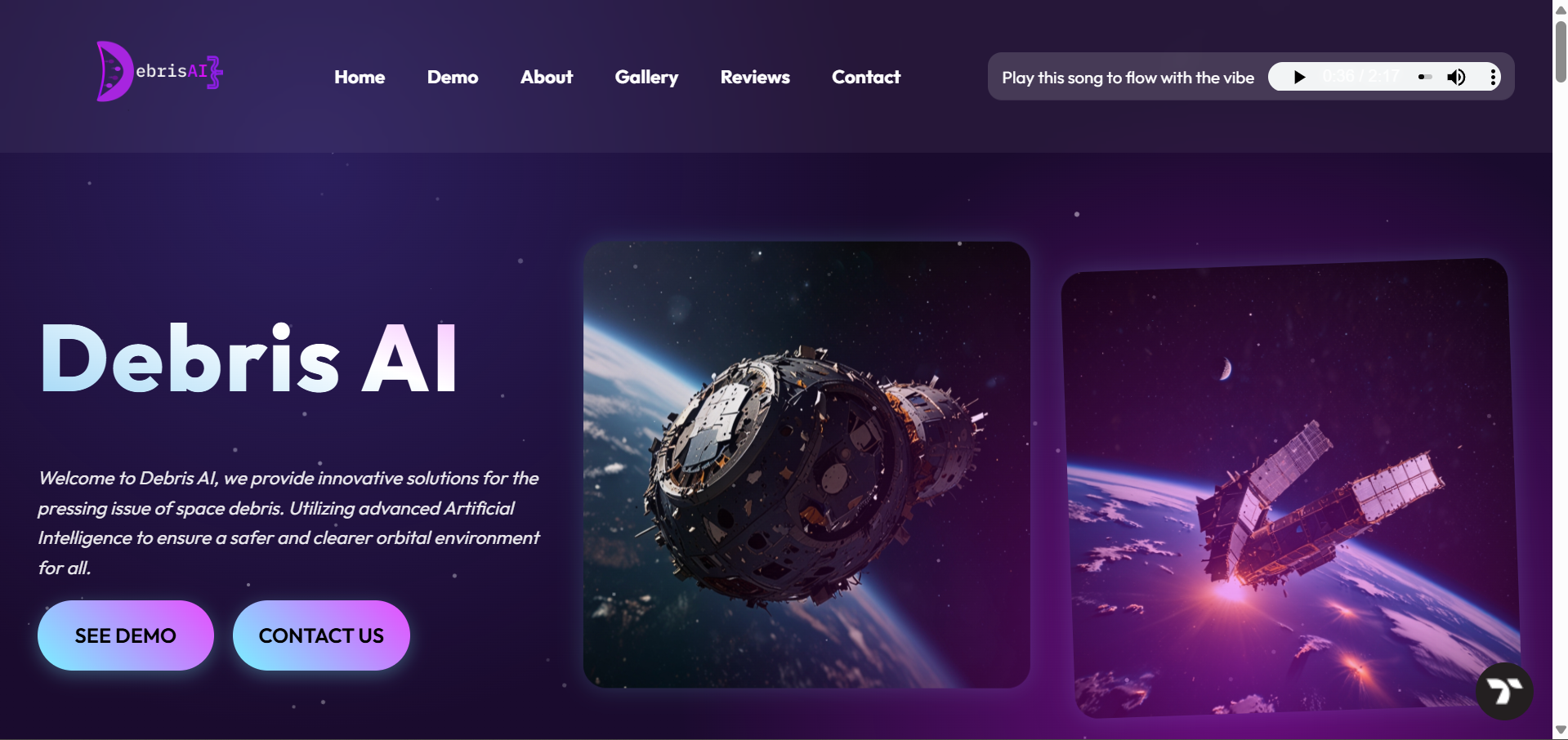
homepage
Inspiration With the rapid rise of satellites, space exploration, and private space companies, the issue of space debris has become critical. Millions of fragments, even as small as a screw, can travel at nearly 28,000 km/h and threaten active satellites or even the ISS. This realization inspired us to create Debris AI ,a tool that leverages deep learning and predictive modeling to make space safer and more sustainable.
What it does Debris AI detects, classifies, and predicts the trajectory of orbital debris in real time. It helps satellite operators, space agencies, and researchers forecast collision risks and visualize debris paths through an intuitive dashboard, enabling better decision-making and asset protection.
How we built it Collected and pre-processed open-source orbital datasets and simulated imagery. Trained CNN-based models for debris detection and classification. Integrated time-series prediction for trajectory forecasting.
Challenges we ran into Limited access to real orbital debris datasets. Training models to detect small, high-velocity objects accurately. Ensuring smooth integration between AI predictions and frontend visualization within limited time.
Accomplishments that we're proud of Successfully built an end-to-end prototype that detects and predicts debris movement. Designed a user-friendly dashboard that simplifies complex orbital data. Learned to apply advanced AI concepts to a real-world, high-impact problem.
What we learned Gained deeper insights into orbital mechanics and AI-driven predictions. Improved teamwork, problem-solving, and project planning under hackathon deadlines. Learned how to translate complex technical concepts into practical solutions for end-users.
What's next for Debris AI Incorporating real satellite and telescope data for higher accuracy.

Log in or sign up for Devpost to join the conversation.