-
-
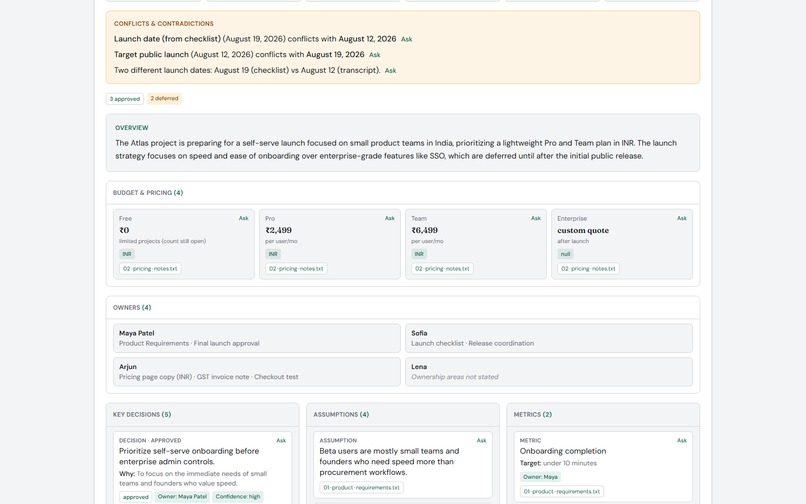
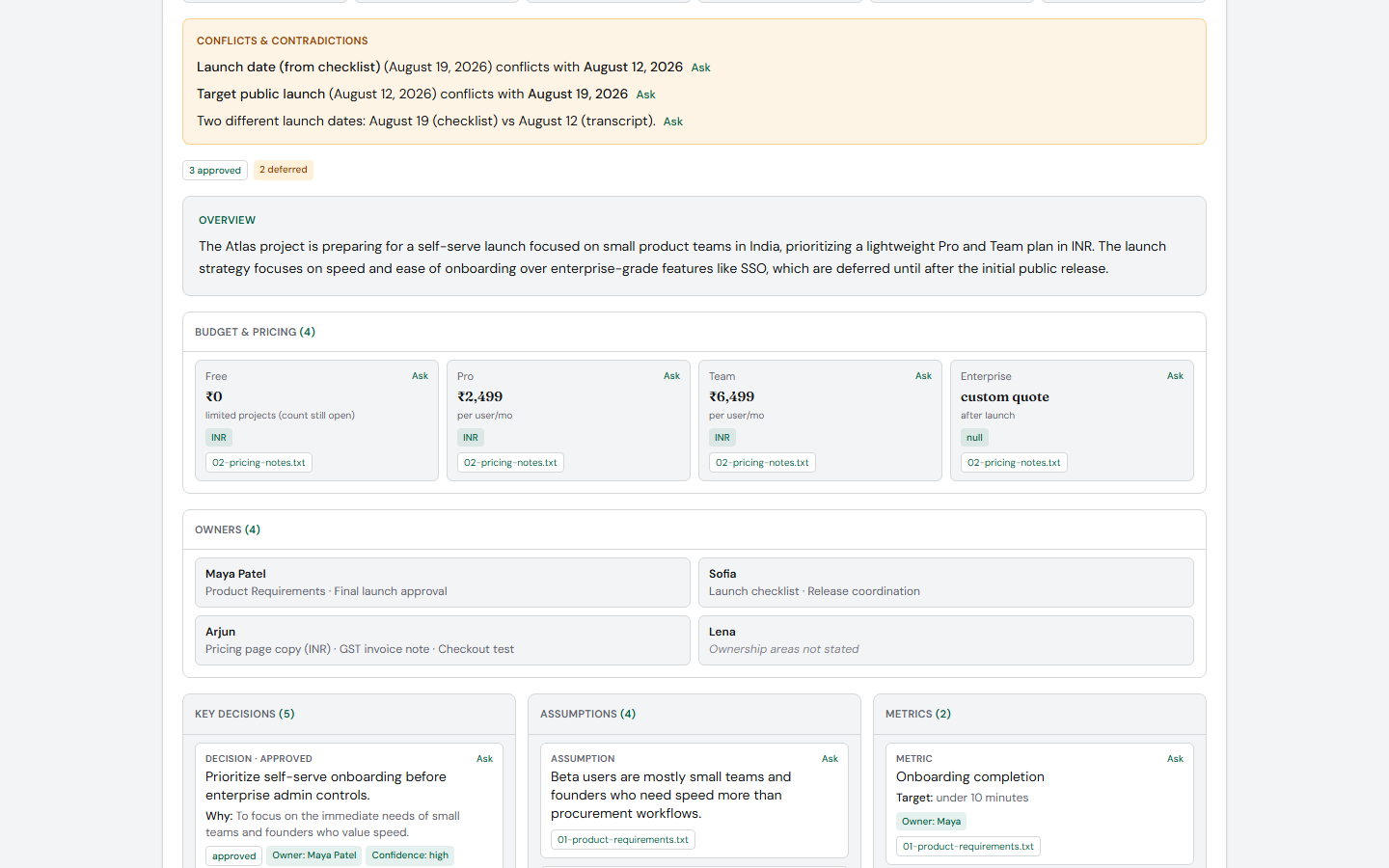
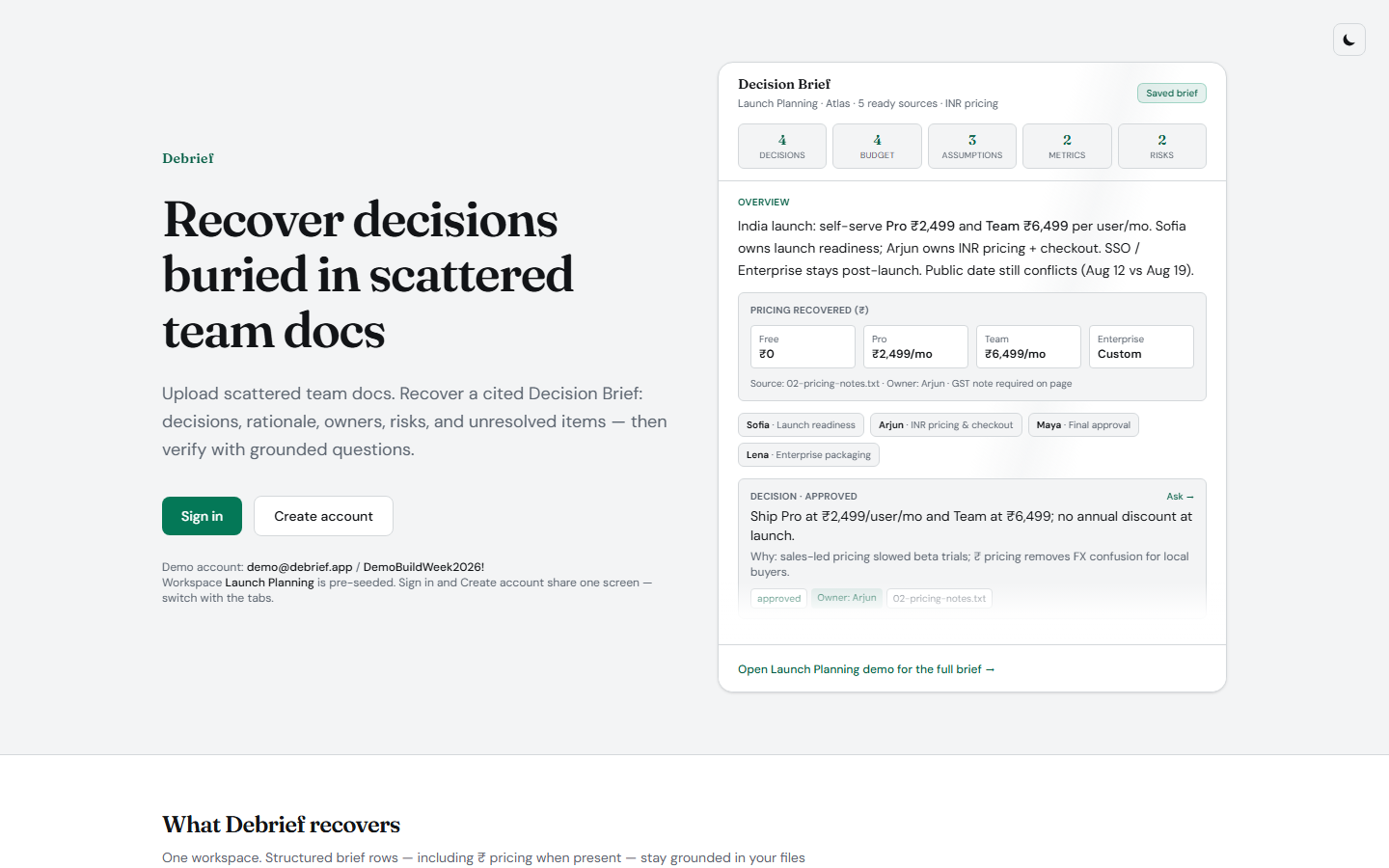
Cited Decision Brief — decisions, owners, risks
-
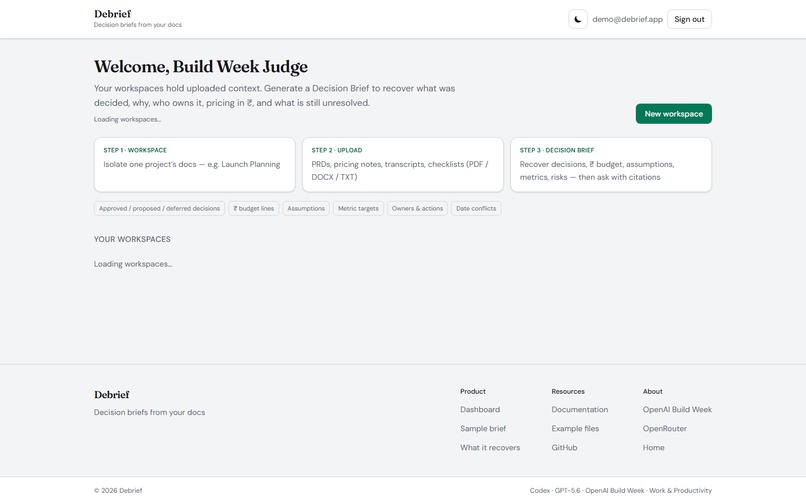
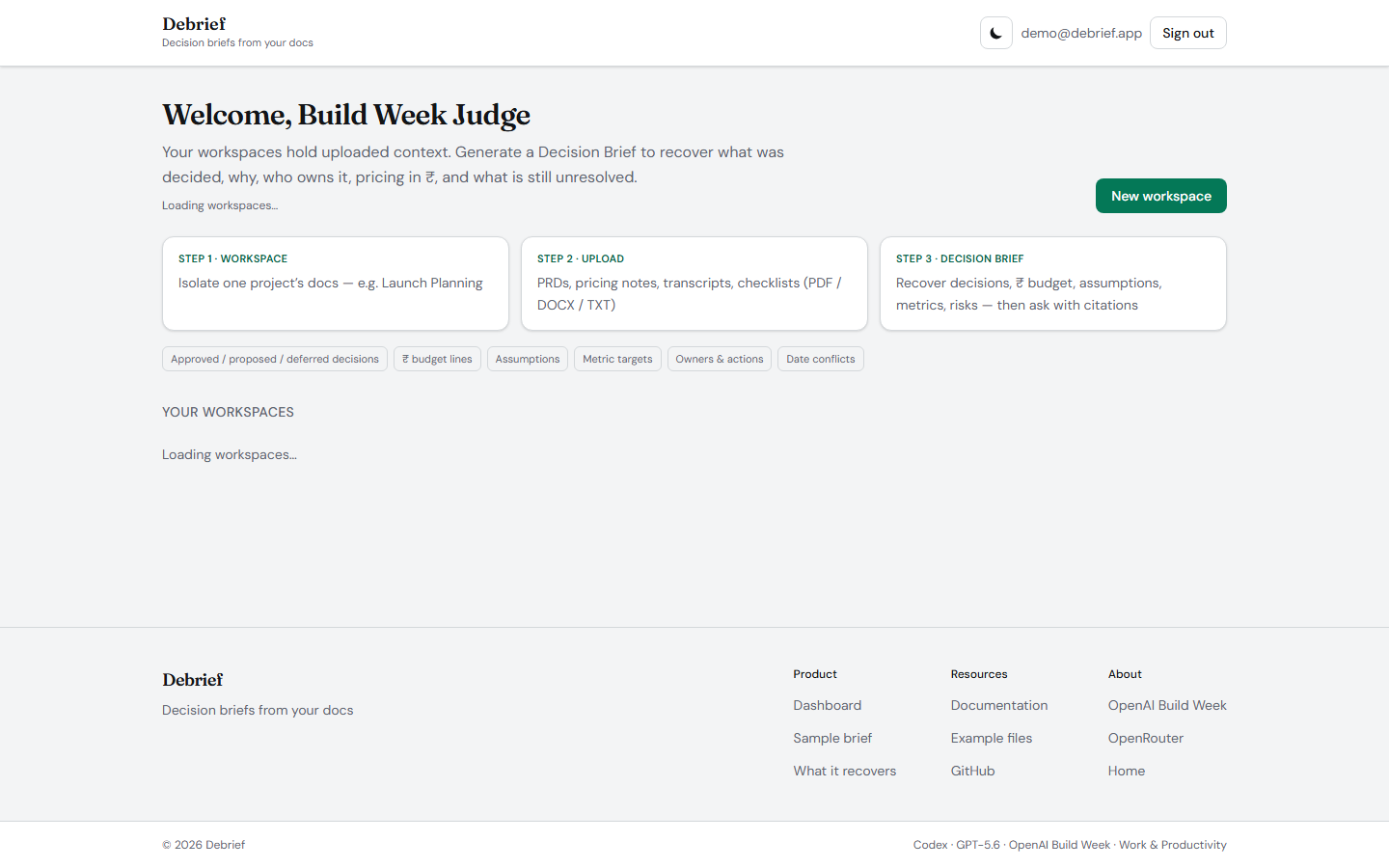
Workspace dashboard with uploaded docs
-
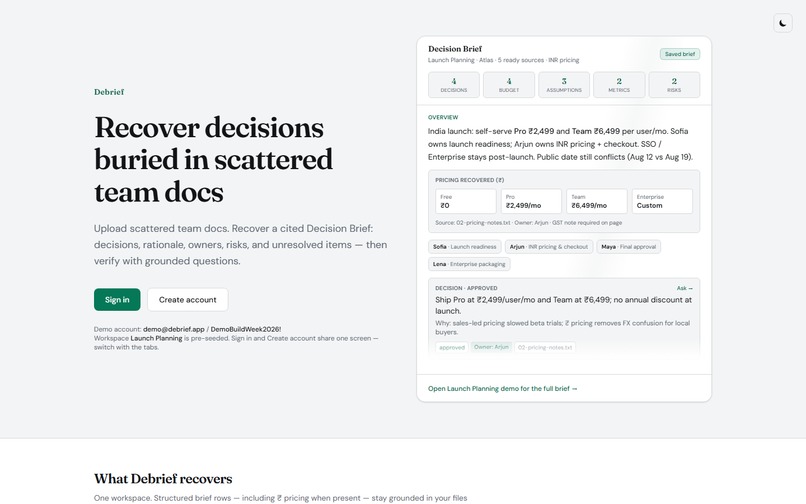
Landing — recover decisions from scattered docs
Inspiration
Teams do not forget because they lack documents. They forget because decisions are buried across docs, meeting notes, launch checklists, and transcripts. Before an important launch or review, people waste time reconstructing what already happened.
What it does
Debrief recovers decisions, rationale, owners, risks, open questions, and dates from scattered project documents. Upload files, generate a cited Decision Brief, then verify with cited follow-ups.
Instead of re-reading every doc, Debrief answers: what was decided, why, who owns it, what is risky or contradictory, and what is still unresolved.
How to test (judges)
- Open https://debrief-psi.vercel.app
- Sign in: [email protected] / DemoBuildWeek2026!
- Open Launch Planning
- Review the Decision Brief, then Ask: What did we decide about pricing and why?
How we built it (Codex + GPT-5.6)
Built during OpenAI Build Week with Codex powered by GPT-5.6. Codex + GPT-5.6 accelerated the FastAPI RAG backend, pgvector retrieval, SSE streaming cited chat, Decision Brief schema/UI, OpenRouter wiring, and Vercel/Railway deployment.
I owned the product decisions: decision recovery (not chat-with-PDF), citation transparency, workspace isolation, and the launch-planning demo story.
Runtime note: live inference uses OpenRouter free models so judges can test at $0. Codex + GPT-5.6 = build workflow; OpenRouter = runtime.
Challenges
Grounding answers in workspace sources with transparent citations, structuring a useful Decision Brief schema, and keeping the live demo free to operate.
What's next
Deeper team workflows around decision recovery before launches and reviews.
Built With
- codex
- fastapi
- gpt-5.6
- neon
- openrouter
- pgvector
- postgresql
- railway
- react
- typescript
- vercel

Log in or sign up for Devpost to join the conversation.