-

Response
-
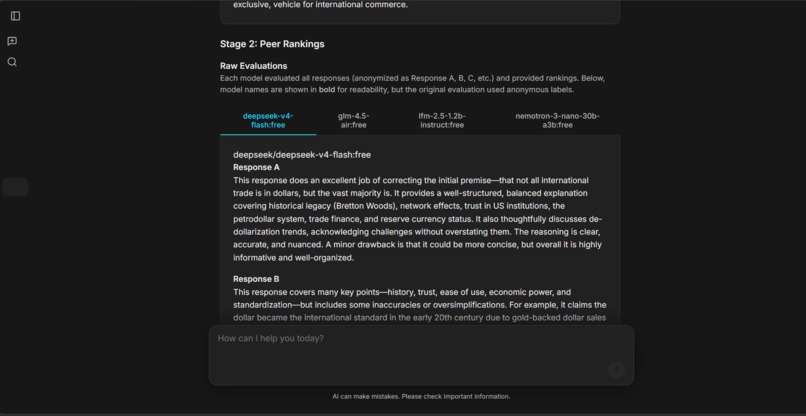
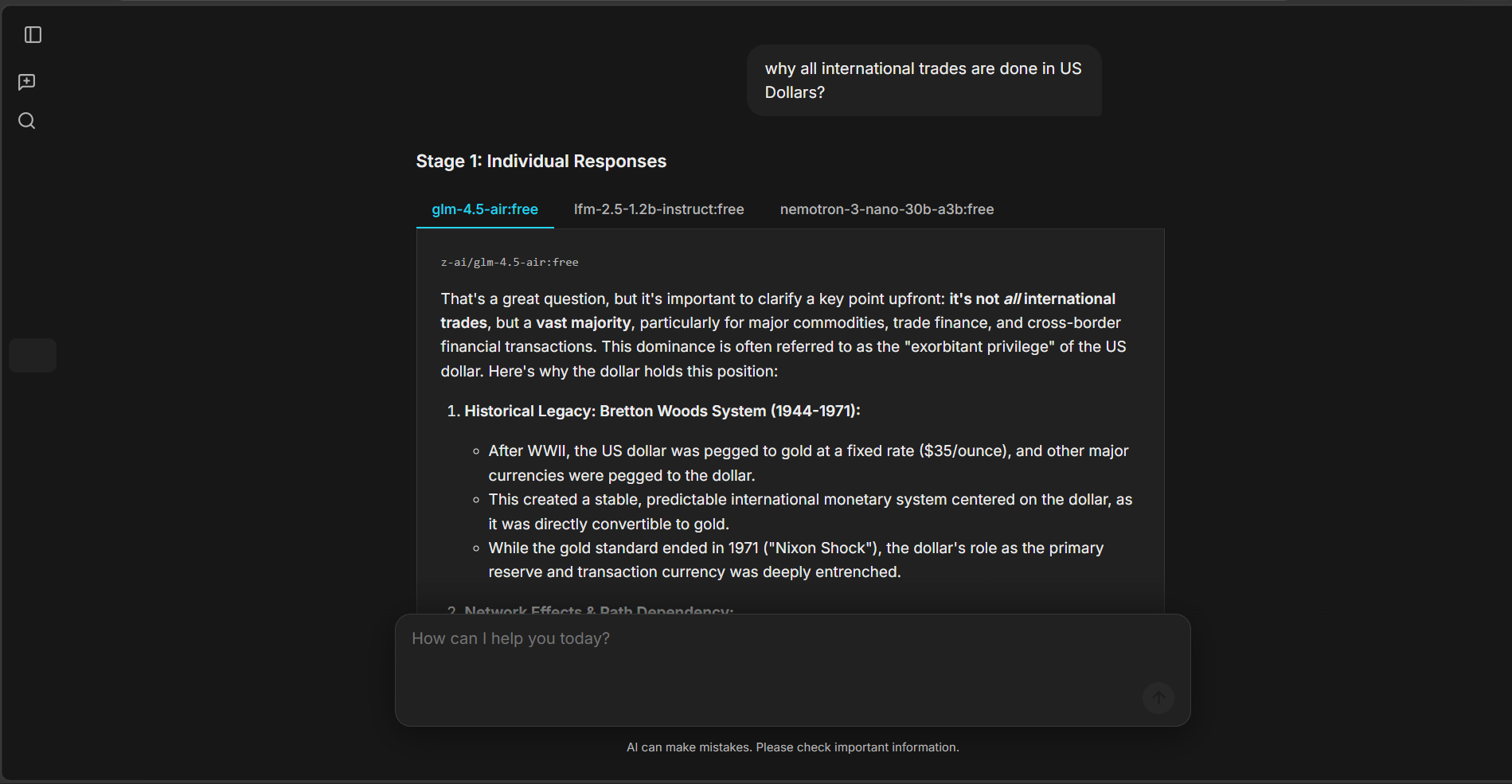
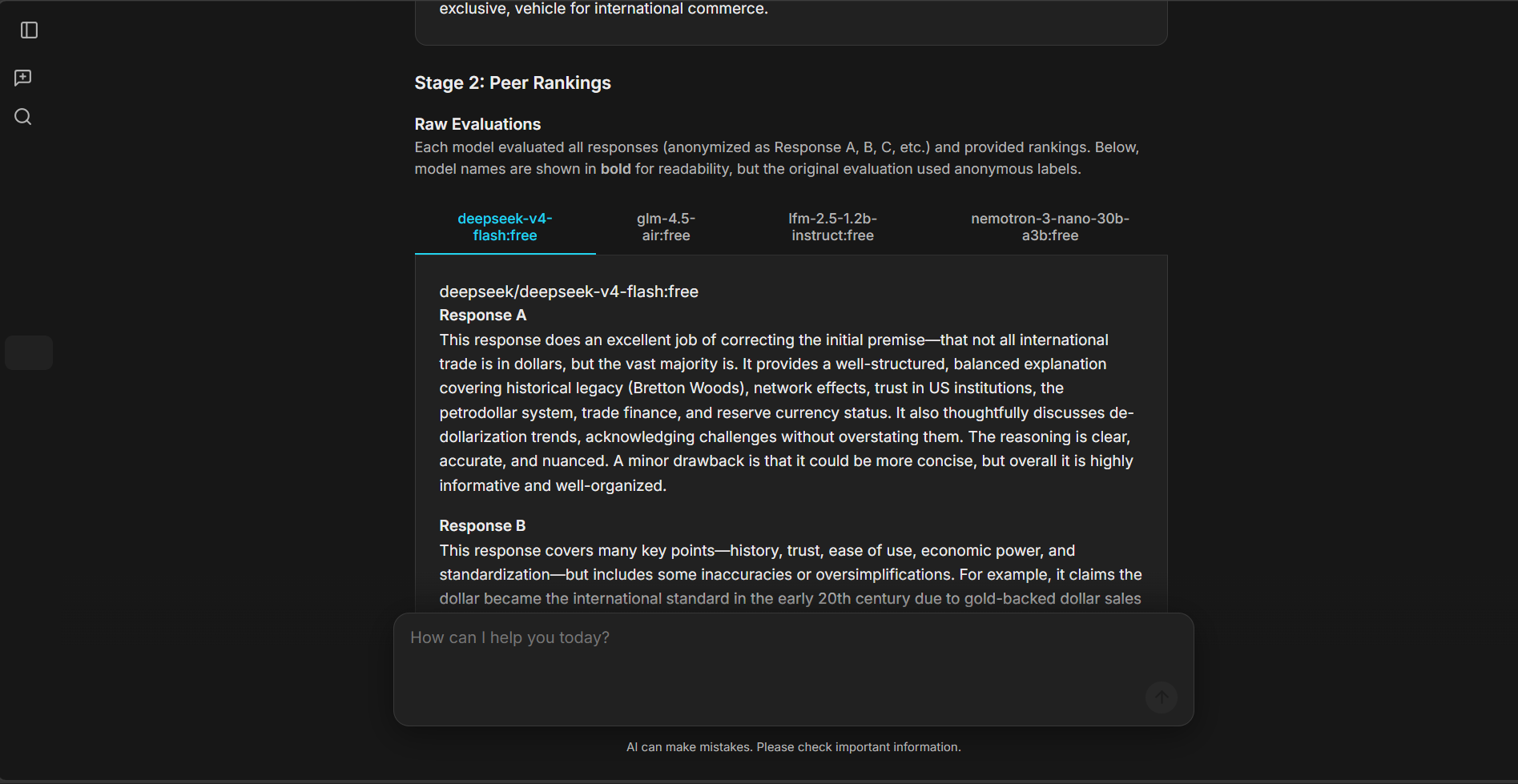
Peer Review & Rank
-

Chairman Synthesis

Inspiration
Most AI applications depend on a single model's opinion. While powerful, every model has different strengths, weaknesses, and biases. We wanted to explore a different approach: what if multiple AI models could challenge each other's reasoning before producing an answer?
This idea led to debateX, a platform that turns AI responses into a structured deliberation process where diverse models debate, critique, and refine ideas before reaching a final consensus.
What it does
debateX is a production-ready multi-LLM deliberation platform that orchestrates structured debates between AI models from different providers.
Instead of receiving an answer from a single model, users create an AI council. Each model independently analyzes the problem, critiques competing viewpoints, participates in multiple debate rounds, and contributes to a final synthesized response.
Key features include:
- Multi-model AI debates
- Anonymous argument exchange
- Multi-round deliberation workflows
- Consensus synthesis engine
- Real-time debate visualization
- Side-by-side reasoning comparison
- Self-hosted deployment support
The result is more transparent, balanced, and reliable AI-generated answers.
How I built it
debateX is built using a modern AI agent architecture.
The frontend was developed with Next.js, React, TypeScript, and Tailwind CSS to provide a fast and interactive user experience.
The backend uses Python and FastAPI, with LangGraph orchestrating multi-agent workflows. Models are accessed through Groq and OpenRouter, allowing diverse LLMs to participate in debates regardless of provider.
The debate engine follows a structured process:
- Models generate independent positions.
- Arguments are anonymized and redistributed.
- Models critique and defend viewpoints across multiple rounds.
- A synthesis agent evaluates all perspectives.
- A final consensus answer is generated and presented to the user.
Docker was used to containerize the platform for easy deployment and scalability.
Challenges I ran into
Building a true multi-agent debate system was significantly harder than simply connecting multiple models.
Some of the major challenges included:
- Coordinating asynchronous interactions between multiple LLMs
- Preventing stronger models from dominating discussions
- Designing anonymous debate rounds to reduce model bias
- Balancing debate depth with response latency
- Creating a reliable consensus mechanism
- Managing costs while supporting multiple AI providers
Ensuring debates remained meaningful rather than repetitive was one of the biggest technical hurdles.
Accomplishments that I'm proud of
- Built a fully functional multi-LLM deliberation platform
- Successfully orchestrated structured debates across different AI providers
- Implemented anonymized cross-model critiques
- Created a consensus engine that synthesizes diverse viewpoints
- Developed a clean interface for observing AI reasoning in real time
- Delivered a self-hosted, production-ready architecture
Most importantly, we demonstrated that collaborative AI reasoning can often produce higher-quality answers than a single model alone.
What I learned
Building debateX taught us that the future of AI may not be a single increasingly powerful model, but systems of specialized models working together.
We gained hands-on experience with:
- Multi-agent AI architectures
- LangGraph orchestration patterns
- LLM evaluation and benchmarking
- Consensus-building algorithms
- Distributed system design
- Production AI infrastructure
We also learned how difficult it is to create systems that encourage meaningful disagreement while still converging toward useful answers.
What's next for debateX
We're planning to expand debateX into a full AI reasoning platform.
Future improvements include:
- Adaptive model selection based on query type
- Human-in-the-loop deliberation workflows
- Long-term memory and context retention
- Support for local and open-source model clusters
- Advanced evaluation and benchmarking dashboards
- Debate analytics and reasoning transparency tools
- Enterprise collaboration features
Our long-term vision is to make AI reasoning transparent, collaborative, and significantly more trustworthy than traditional single-model systems.
Built With
- ai-agent-orchestration
- docker
- evaluation
- fastapi
- github-actions
- groq
- langchain
- langgraph
- llm
- next.js
- node.js
- openrouter-api
- postgresql
- python
- react
- redis
- tailwind-css
- typescript
- vercel

Log in or sign up for Devpost to join the conversation.