-
-
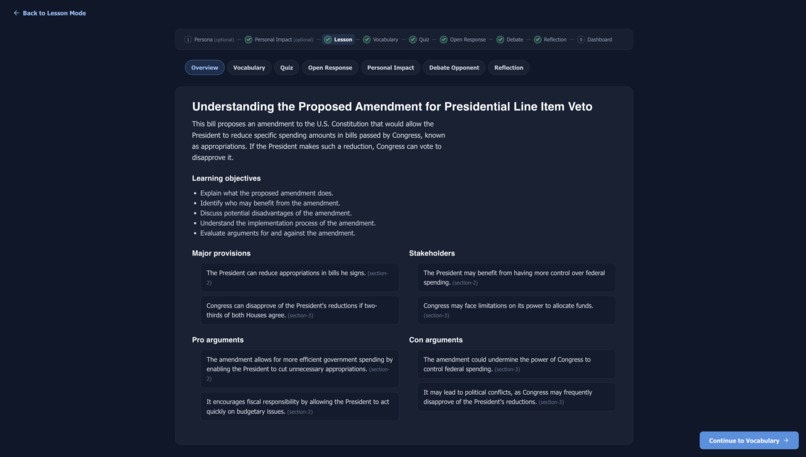
Bill Explanation
-
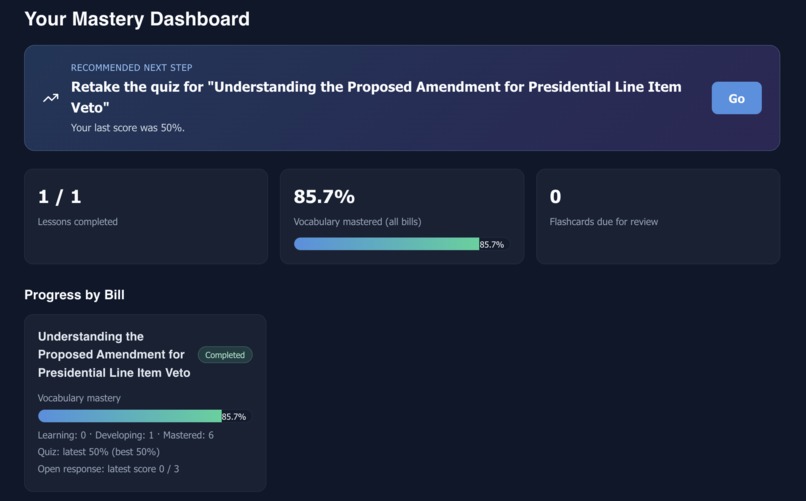
Learning Dashboard
-
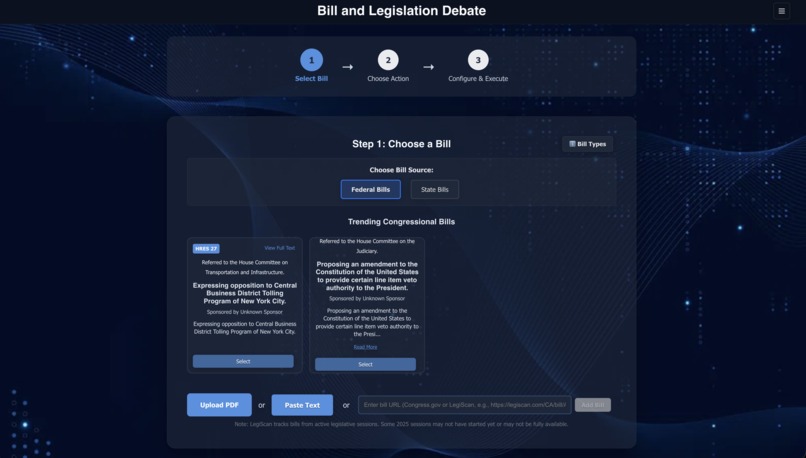
Bill Dashboard
-
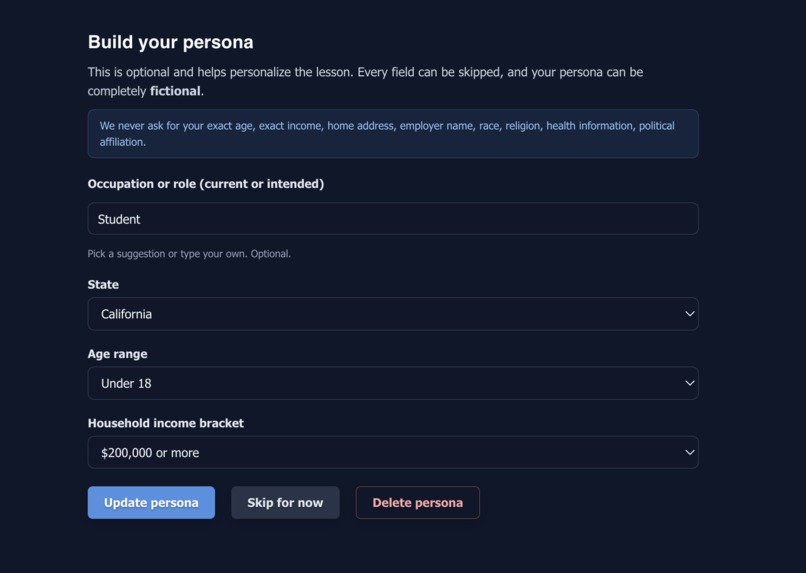
Personalized Lessons
-
Debate Transcript
-
Dashboard
-
Home Page
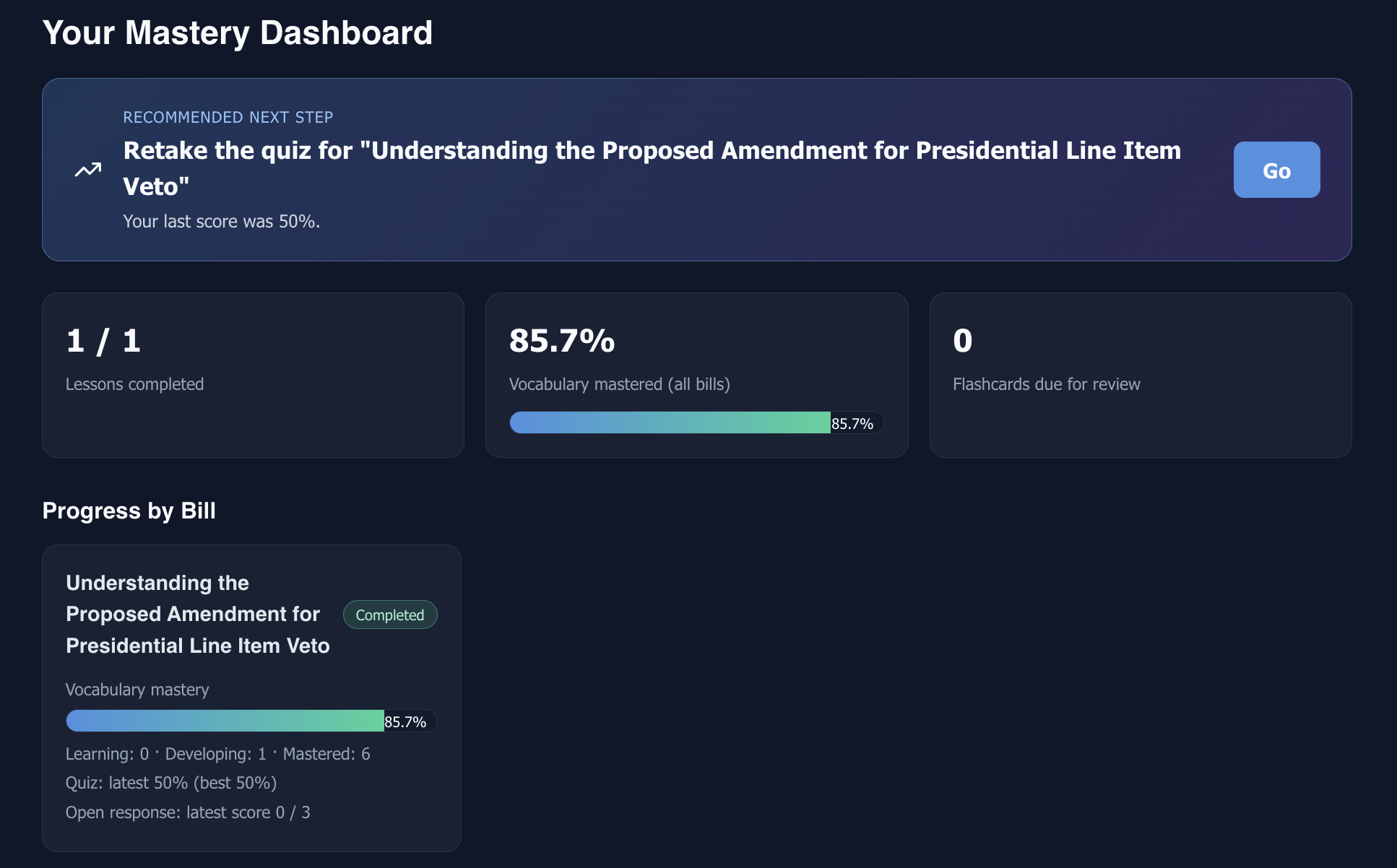
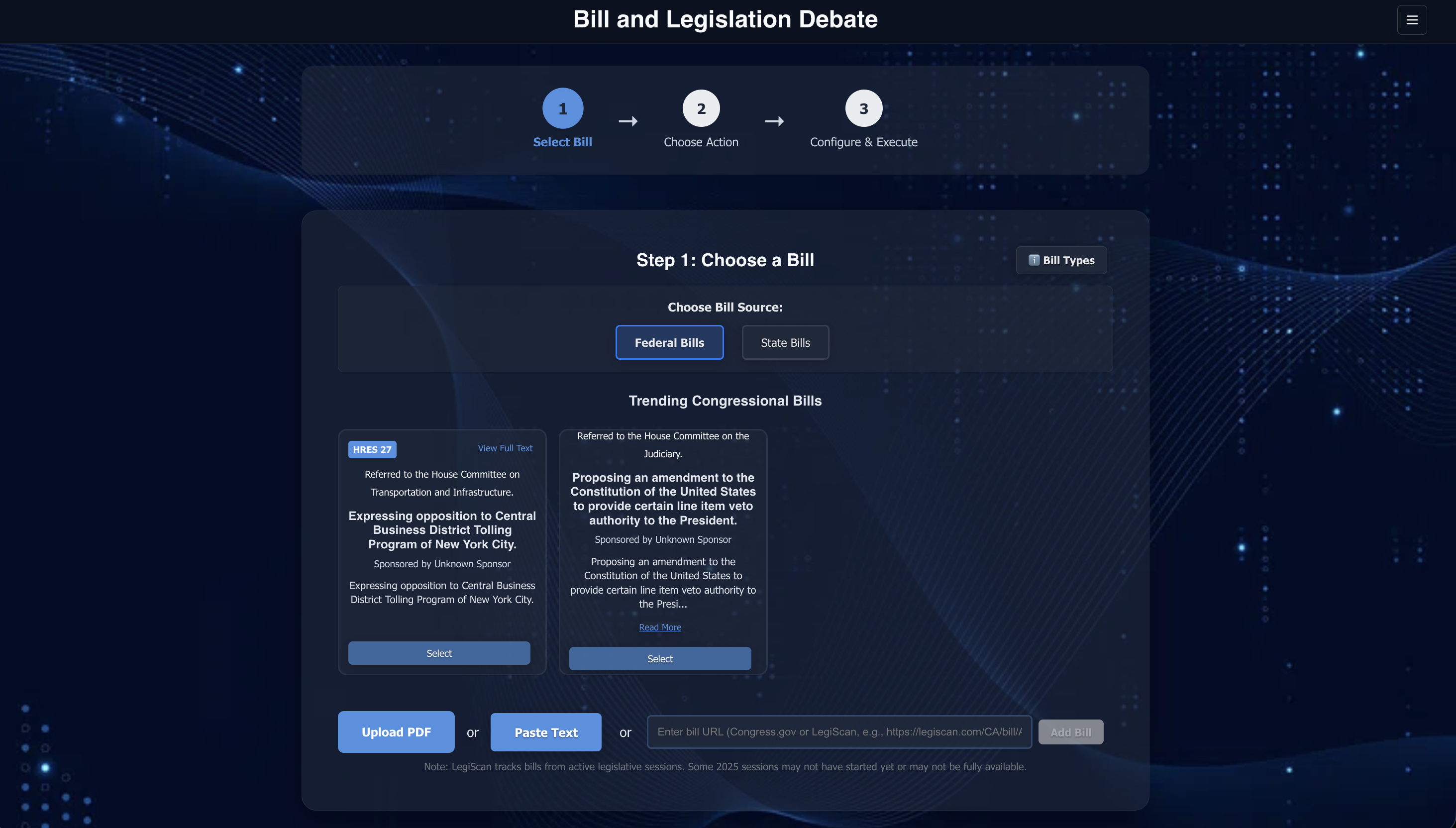
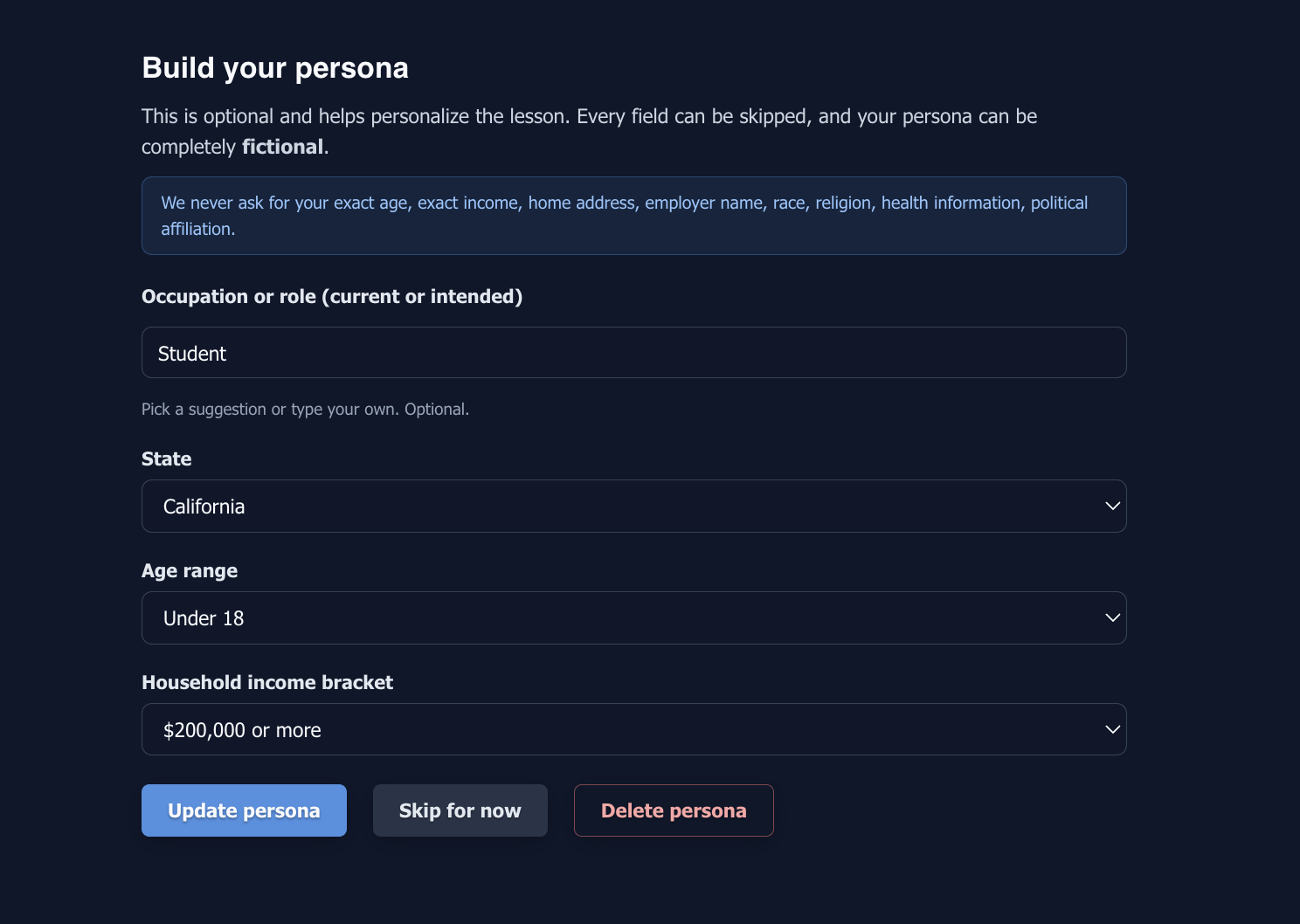
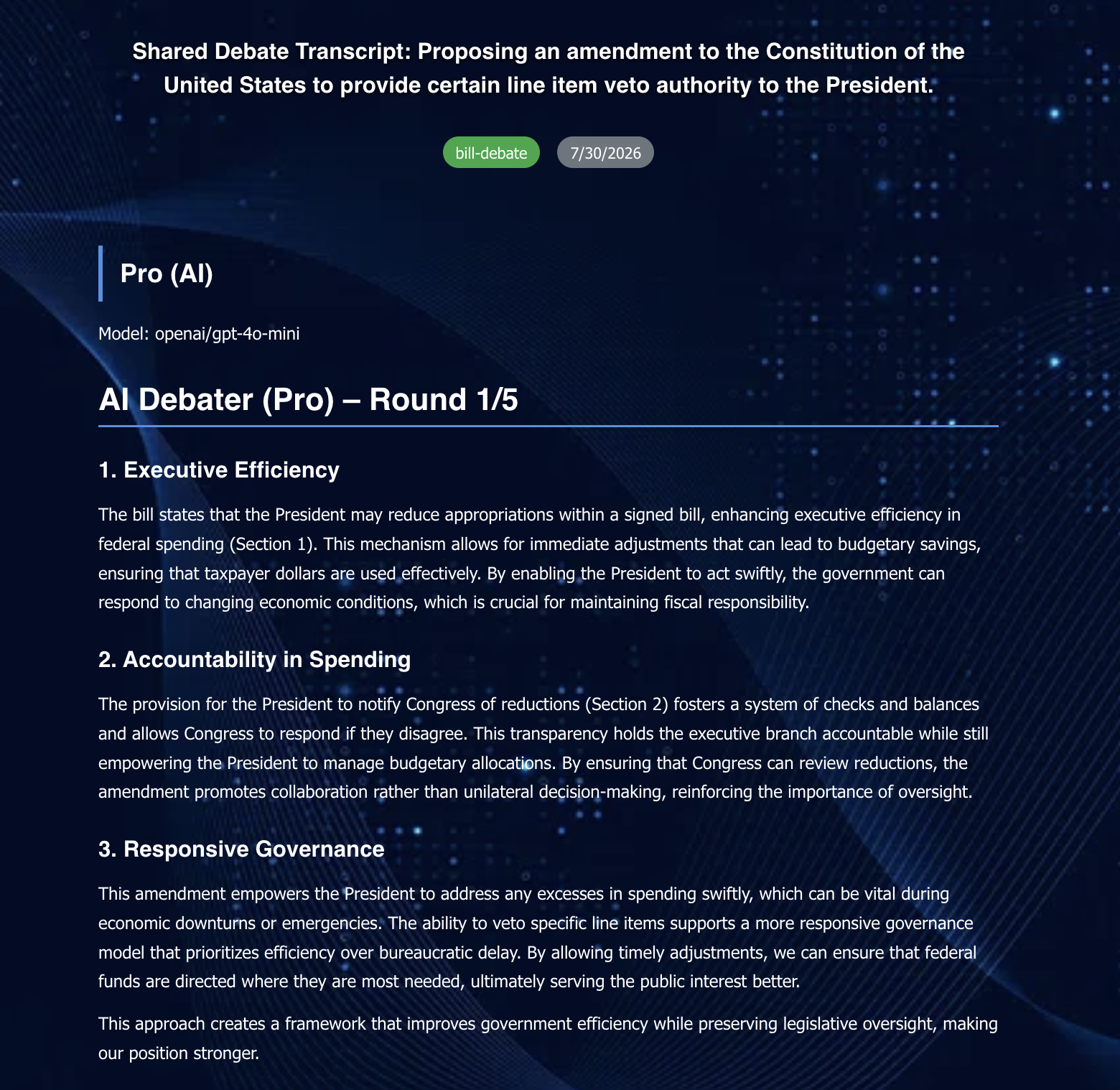
Inspiration
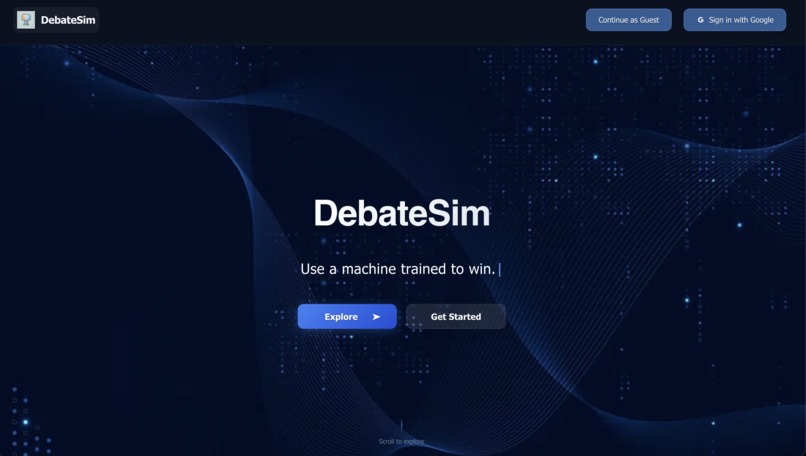
We were inspired by how hard it is for students to practice debate and understand government policies. Debate helps students build critical thinking, communication, and research skills, but not everyone has access to a debate team, coach, judge, or practice partner. Bills are also long and difficult to understand. We wanted to create a tool that gives every student a simple way to learn about real issues, consider both sides, and practice defending their ideas.
What it does
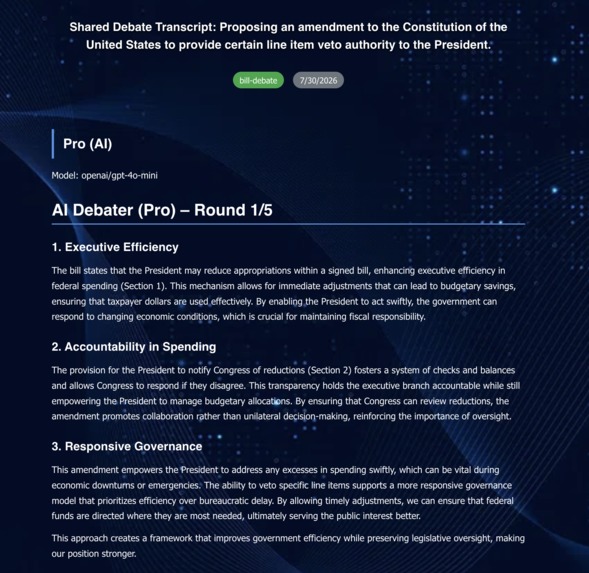
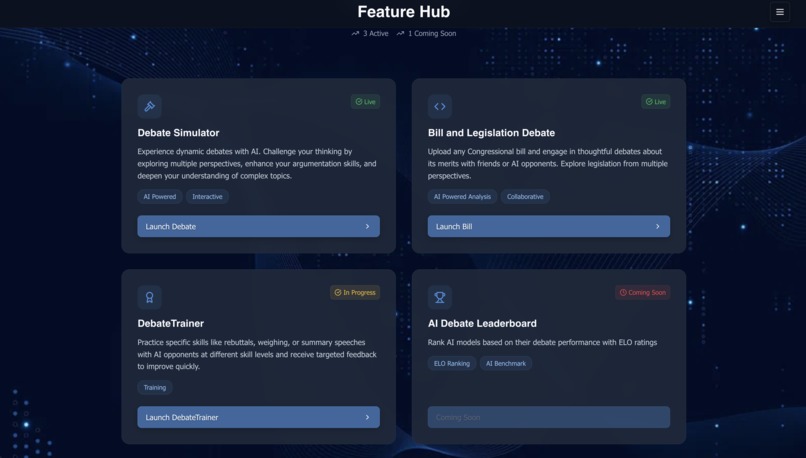
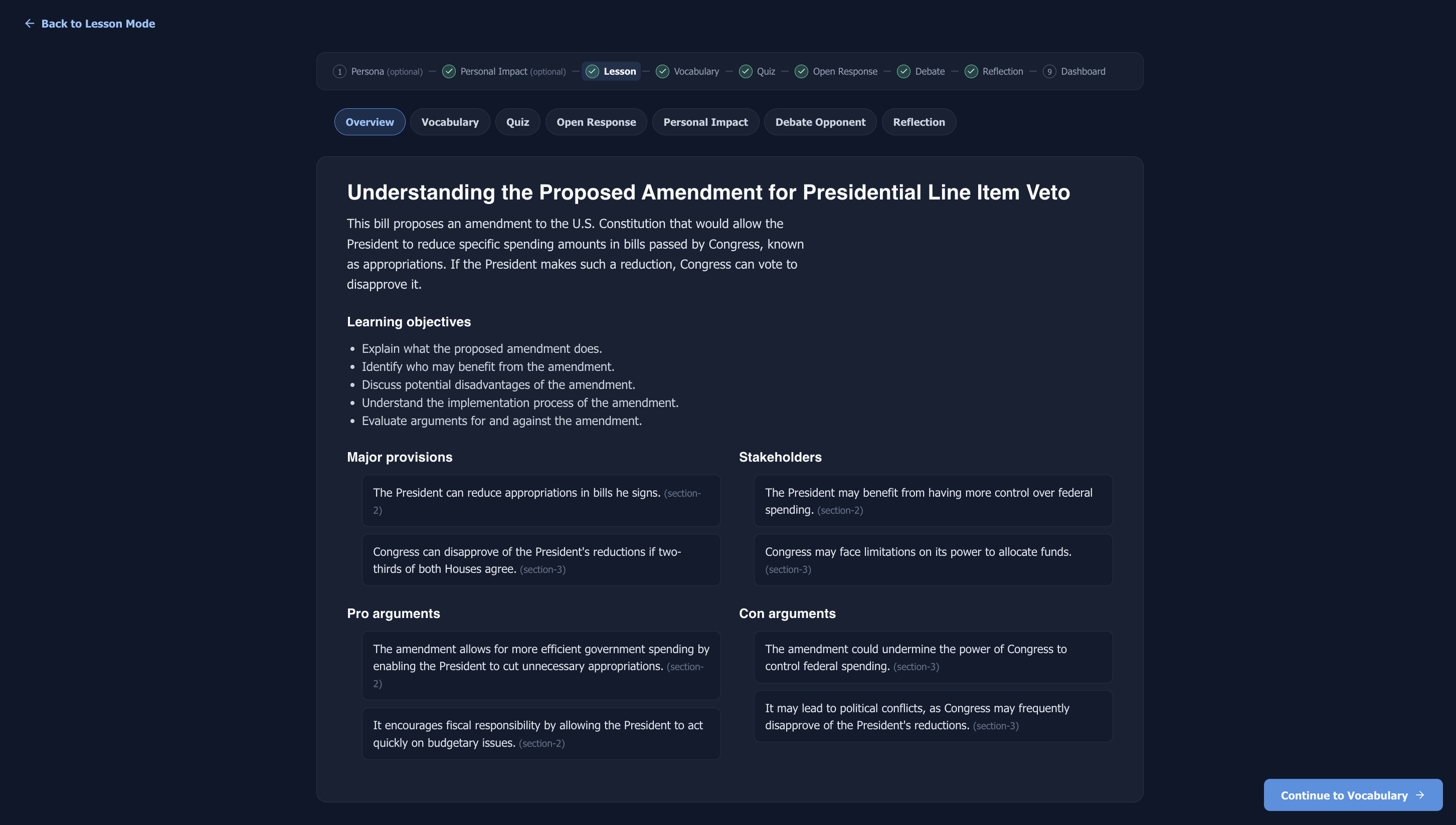
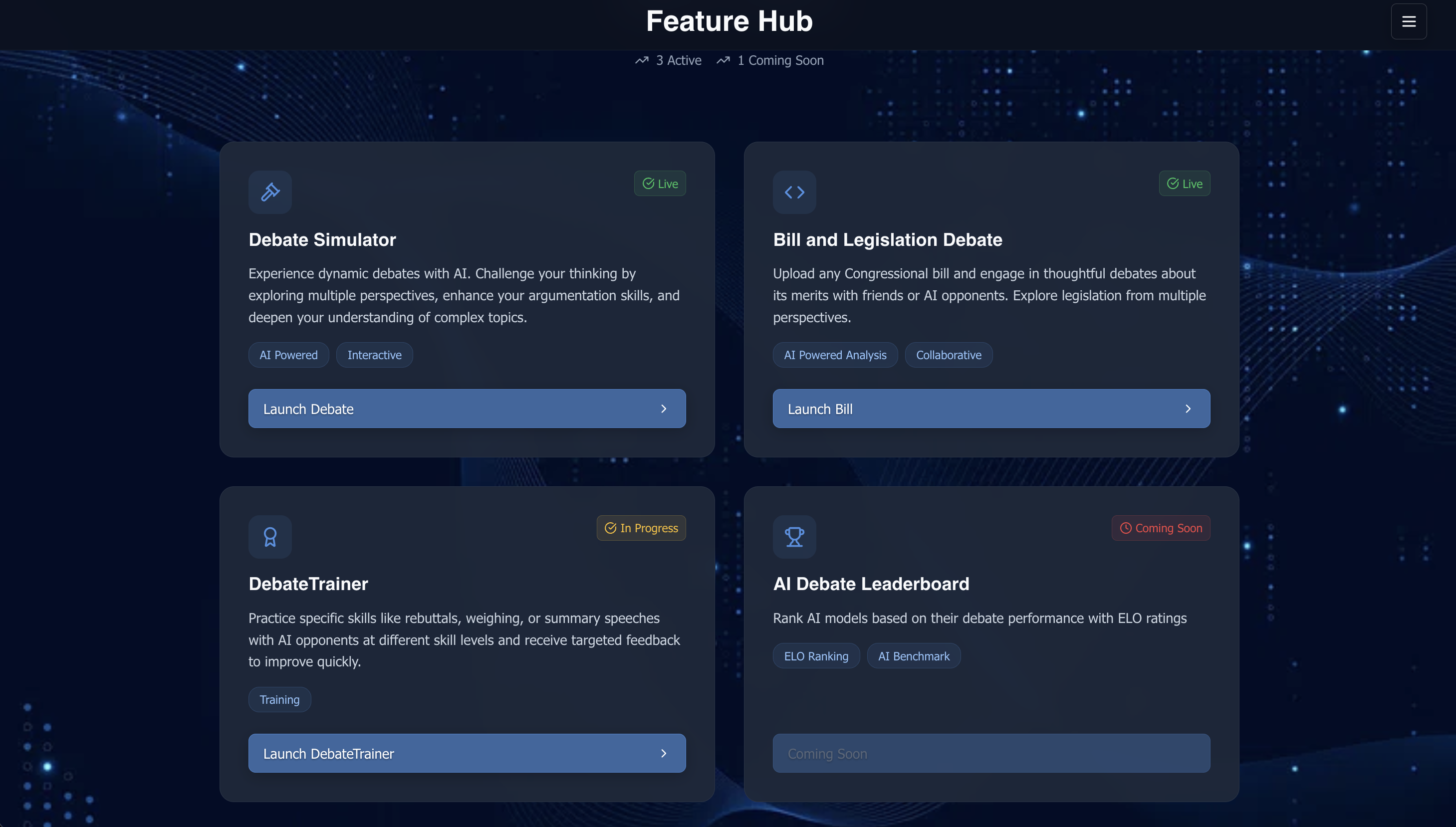
DebateSim turns real bills into interactive lessons. A student chooses a bill, and the app creates a clear summary, key vocabulary, stakeholder explanations, and arguments for and against it. Students can study with adaptive flashcards, take a quiz, and answer an open-response question that is graded by AI. They can also create a basic persona to see how the bill could affect someone like them. The app then creates an opposing AI stakeholder for the student to debate. After the debate, the student explains whether their opinion changed and receives specific feedback on their reasoning, evidence, and response to the other side.
How we built it
We built the frontend with React and Vite and the backend with FastAPI and Python. We used Firebase for accounts and saving student progress. We connected the app to Congress.gov and LegiScan so students can explore real federal and state bills. For the AI system, we split each bill into sections, create embeddings for those sections, and use semantic search to find the most relevant evidence. We require the AI to include section IDs with its claims so students can trace information back to the bill. We also built separate AI services for lessons, quizzes, grading, debate, feedback, and personalized impact. The flashcards use a Leitner system that shows difficult cards more often and moves mastered cards to higher levels.
Challenges we ran into
One major challenge was preventing the AI from making unsupported claims about a bill. Long bills contain many details, and sending the full document to the AI did not always produce focused answers. We solved this by splitting bills into sections and retrieving only the sections that matter for each task. Another challenge was making all the features feel like one lesson instead of separate tools. We created a guided flow that takes students from understanding the bill to studying, answering questions, debating, and reflecting. We also had to handle slow AI responses, external APIs, saved progress, and errors without making the app confusing.
Accomplishments that we're proud of
We are proud that DebateSim uses AI to make students think instead of doing the thinking for them. The app does not stop after summarizing a bill. It asks students to remember information, explain their reasoning, respond to another perspective, and reflect on what they learned. We are also proud that generated claims include source sections from the bill. Our adaptive flashcards remember each student’s progress, and our feedback is based on the student’s actual answers and debate transcript. Together, these features create a complete learning process from understanding to practice and reflection.
What we learned
We learned that AI is most useful in education when it responds to the individual student. A fixed lesson can explain a topic, but it cannot challenge a new argument or identify a gap in one student’s reasoning. We also learned that different tasks need different AI roles. An opponent should challenge the student, while a coach should help them improve and a grader should explain what they missed. Finally, we learned that transparency is important. Students should be able to see where information came from and when an AI-generated conclusion is uncertain.
What’s next for DebateSim
Next, we want to add teacher dashboards so teachers can assign bills and review student progress. We also want to create different reading levels, support more languages, improve accessibility, and add stronger citation checks. In the future, students could participate in classroom tournaments, receive peer feedback, and debate policies from more countries. Our goal is to make DebateSim a place where any student can understand difficult issues, examine different perspectives, and become a more confident thinker and speaker.
Built With
- congress.gov-api
- css
- embeddings
- fastapi
- firebase
- firestore
- github
- google-cloud-text-to-speech
- html
- javascript
- langchain
- large-language-models
- legiscan-api
- machine-learning
- natural-language-processing
- openrouter
- pytest
- python
- react
- rest-apis
- retrieval-augmented-generation
- semantic-search
- vite
- vitest
- web-speech-api

Log in or sign up for Devpost to join the conversation.