-
-
Debate-Coach
Inspiration
About the Project
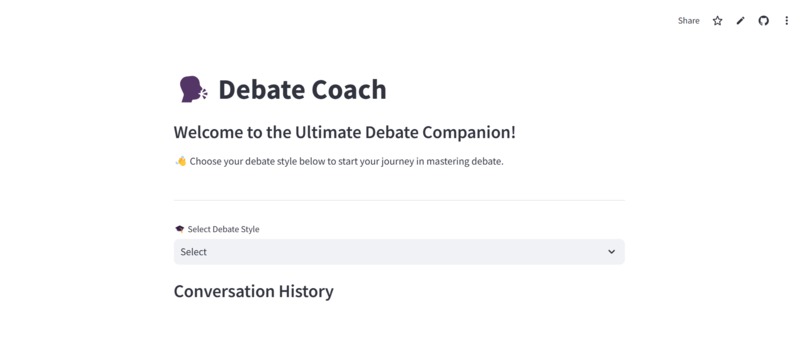
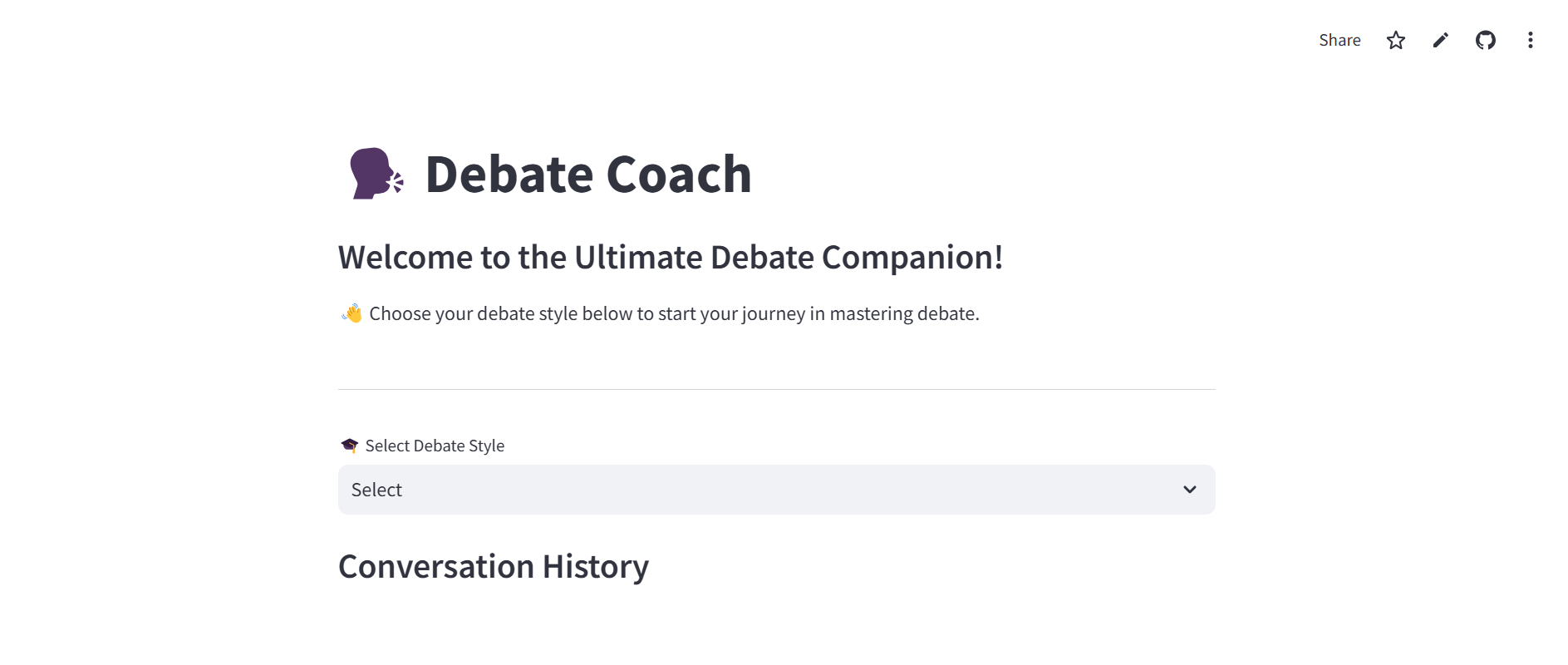
In the world of public speaking and structured debates, honing one’s skills requires practice, guidance, and constructive feedback. This project, "Debate-Coach," was inspired by the idea of making high-quality debate preparation accessible to anyone, anywhere. Whether it’s preparing for a declamation, engaging in parliamentary debate, or taking a stance in Model United Nations, this AI-powered tool acts as a comprehensive coach, providing detailed guidance, sample arguments, and actionable feedback to improve performance.
Inspiration
The inspiration for this project came from observing the challenges that debaters face in finding reliable and relevant resources for practice. Traditional debate coaching can be limited in accessibility, which sparked the idea of using AI to bridge this gap. The vision was to create an interactive, flexible platform where users can select their debate style and instantly get guidance and feedback tailored to their chosen topic or stance.
What I Learned
Building "Debater Coach" was a journey that taught me a lot about integrating AI with user-focused design:
- OpenAI API Utilization: Working with OpenAI's API allowed me to dive deep into natural language generation, understanding how to structure prompts for the best results.
- User Experience Design in Streamlit: Crafting a user-friendly interface using Streamlit helped me balance simplicity and functionality, making sure the interface was intuitive and accessible for all users.
- Conversational State Management: Implementing conversation history in Streamlit taught me about managing application state and ensuring seamless interaction for the user.
How I Built the Project
This project was built using:
- Streamlit for the user interface, making it easy to create a responsive web app for the coaching experience.
- OpenAI API for generating customized responses based on user input, creating declamation content, debate rules, and suggestions for argumentative strategies.
- Python and the dotenv library to securely manage environment variables, specifically the OpenAI API key.
The application’s core functions are organized within classes, enhancing modularity, readability, and maintainability.
Challenges I Faced
- Fine-tuning AI Responses: Designing effective prompts to yield coherent, on-point responses was challenging, as every debate style required nuanced phrasing.
- Streamlit Session Management: Managing the conversation history in a way that felt natural for the user required careful handling of session states, especially when users switched between different debate styles.
- Real-time Response Streaming: Implementing real-time streaming from the OpenAI API to Streamlit in a smooth, responsive way took some trial and error to ensure that each response felt immediate and engaging.
Through these challenges, I learned valuable lessons in prompt engineering, session management, and real-time streaming—skills that will be useful in future AI-driven projects. "Debater Coach" is more than just a project; it’s a stepping stone towards creating interactive AI tools that empower users in meaningful ways.

Log in or sign up for Devpost to join the conversation.