-
-
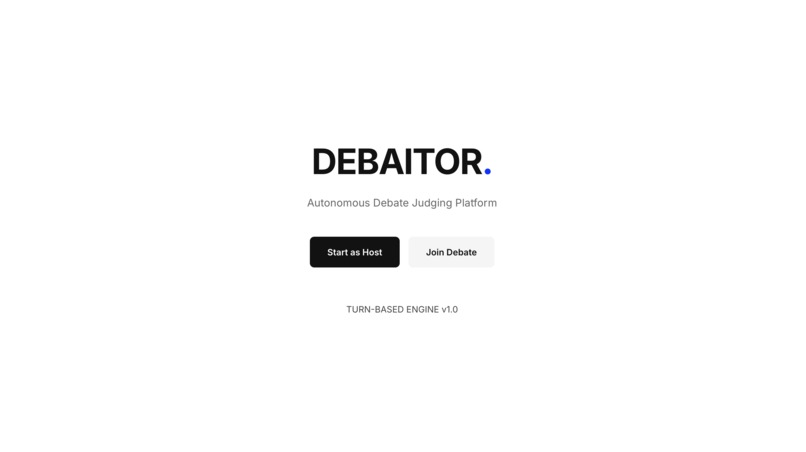
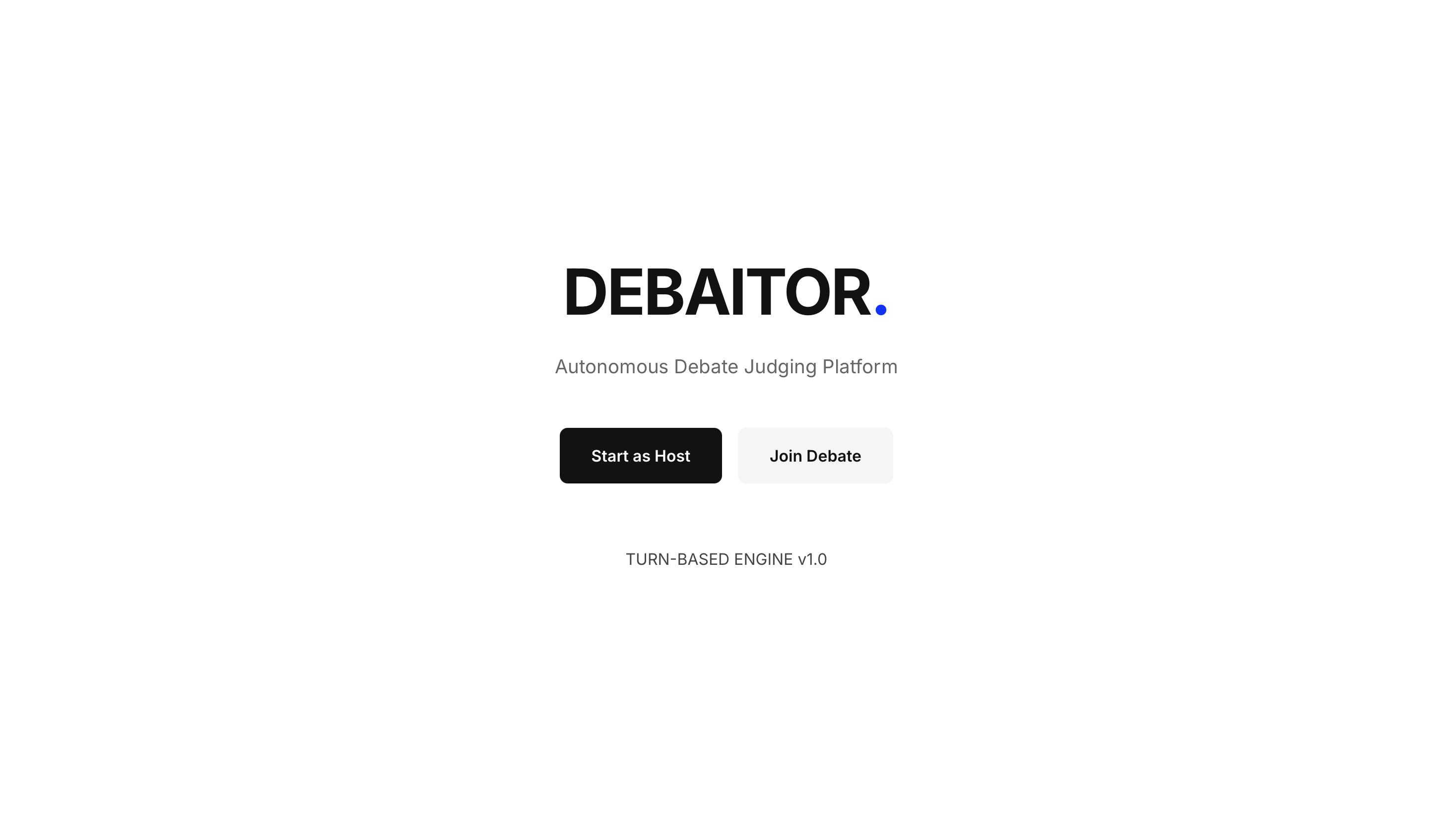
home page , where you have create debate as host and or join debate by manual code
-

creating debate topic
-
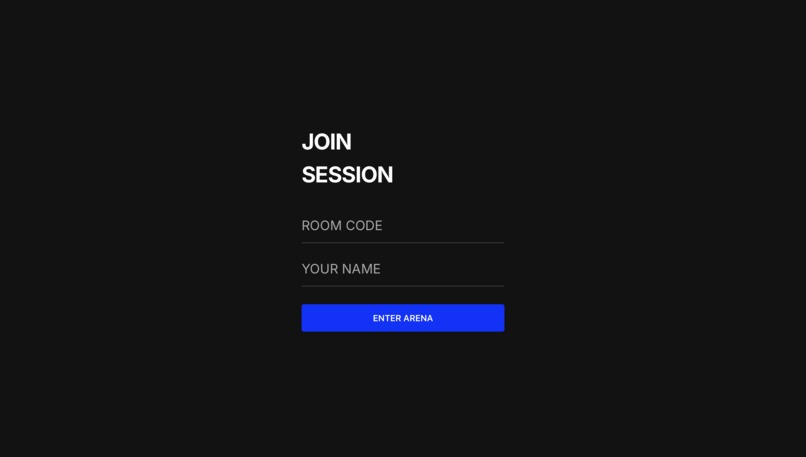
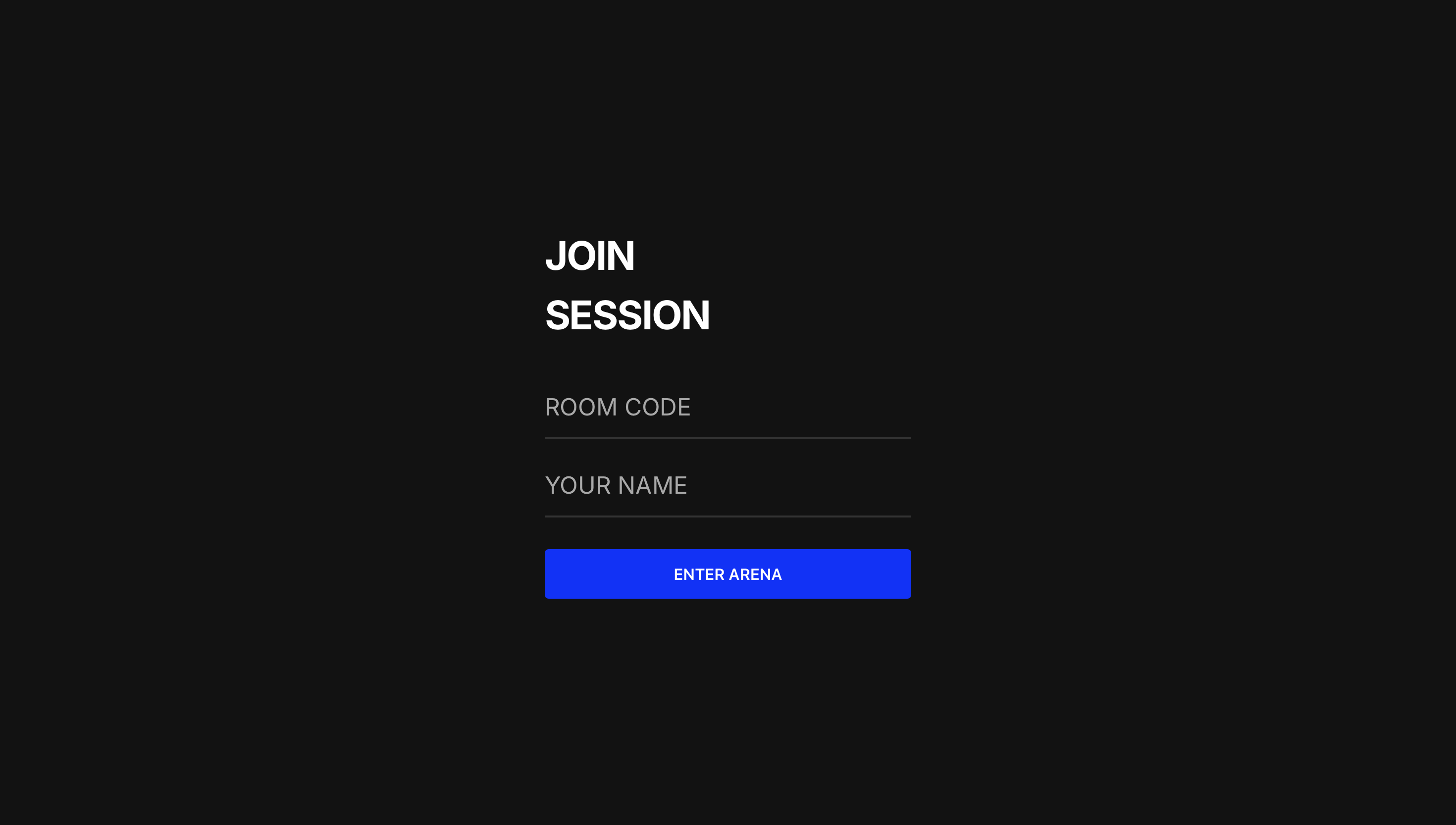
manually joining the debate room by code
-
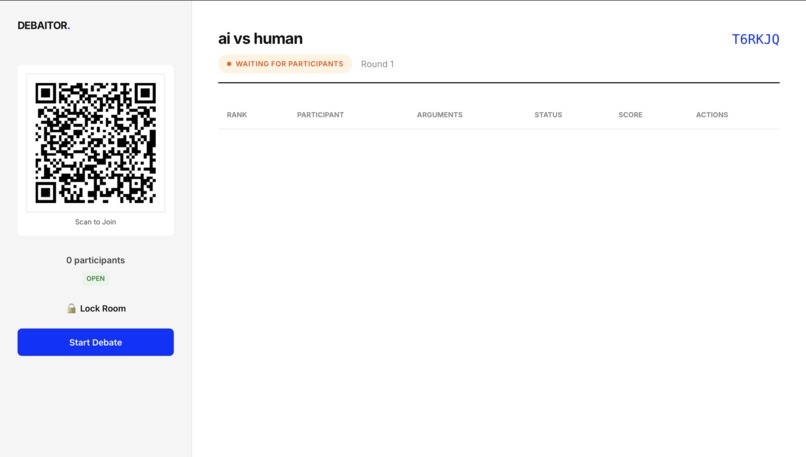
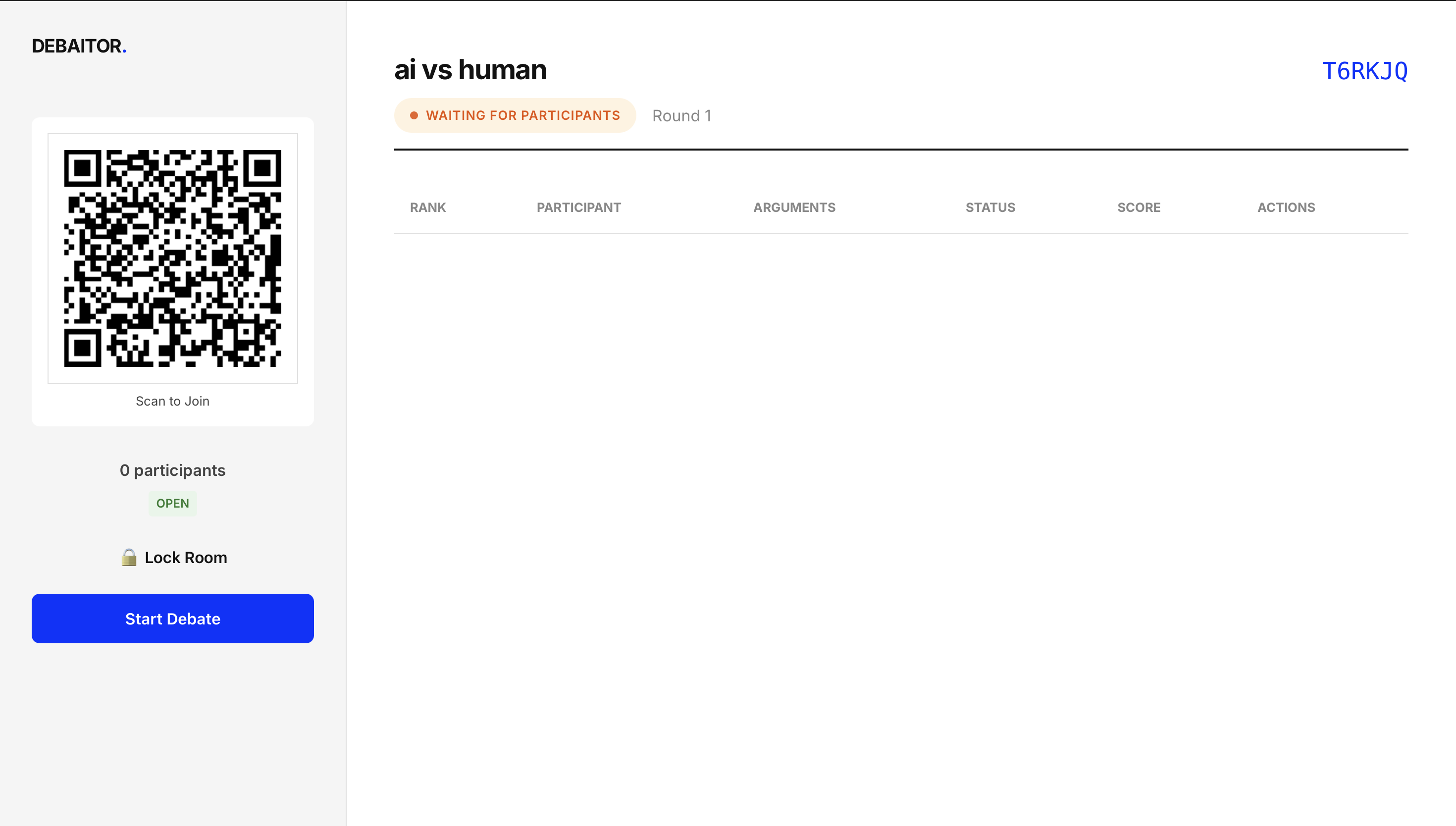
host dashboard where shows a QR code ( to join debate room ) and list of all participants

Inspiration
Competitive debates, classrooms, panel discussions, meetings, and even parliamentary-style forums all face the same issue: evaluation is subjective, inconsistent, and difficult to scale. In high-stakes discussions, strong arguments can be missed, quieter voices can be ignored, and feedback often depends entirely on human moderators. We wanted to build a system that can listen objectively, support fair participation, and provide structured feedback across any discussion environment.
What it does
Debaitor is a discussion evaluation platform designed for competitive debates, classrooms, panel discussions, meetings, and large formal spaces. Participants can join digitally, or in physical settings the system can integrate directly with microphones to automatically capture spoken input.
The platform evaluates contributions using four neutral criteria - clarity, relevance, logical reasoning, and argument strength and generates a detailed, structured report showing participant-wise insights and an overall discussion summary. The system focuses on how ideas are argued, not on opinions, authority, or outcomes..
How we built it
We built Debaitor as a full-stack web application with a persistent backend to support live, multi-participant discussions. Participants can join rooms via QR code on their devices, while the architecture is designed to extend seamlessly to room-level microphone inputs for fully automated environments.
An AI-based evaluation layer processes all arguments in a controlled manner to ensure consistent and reliable analysis. The system stores results and reports persistently and presents them through a clean interface optimized for live moderation and post-discussion review.
Challenges we ran into
Designing a system that works reliably across multiple discussion formats from informal debates to structured, microphone-based environments was a major challenge. Ensuring stable evaluation during live sessions, managing multiple inputs, and maintaining explainability in AI-generated results required careful architectural and design decisions. We also had to balance ambition with reliability within a limited time frame.
Accomplishments that we're proud of
• Building a discussion evaluation system adaptable to debates, classrooms, panels, meetings, and       large forums
• Designing an architecture that supports both device-based input and future microphone integration
• Creating neutral evaluation criteria applicable across domains
• Delivering structured reports that turn discussions into measurable insights
What we learned
We learned that structured evaluation can significantly improve the quality and fairness of discussions. Designing AI systems that support human decision-making rather than replace it leads to greater trust and adoption. We also learned the importance of building systems that scale from small groups to large, real-world environments.
What's next for Debaitor
Next, we plan to integrate direct microphone input for fully automated discussion capture in halls and conference rooms, enable real-time evaluation dashboards, support multi-round competitive debates, and offer customizable evaluation frameworks for institutions such as schools, organizations, and legislative bodies.
Built With
- css3
- firebase
- html
- javascript
- node.js
- qrcodegeneration
- react
- typescript
- webspeechapi
