Inspiration
I’ve always struggled with prioritizing what truly matters – watching time slip by without chasing meaningful experiences. After losing a close friend young, I realized mortality awareness isn’t morbid, but motivating. I wanted a tool that turns abstract "someday" goals into actionable plans, grounded in real life expectancy data to create gentle urgency.
What it does
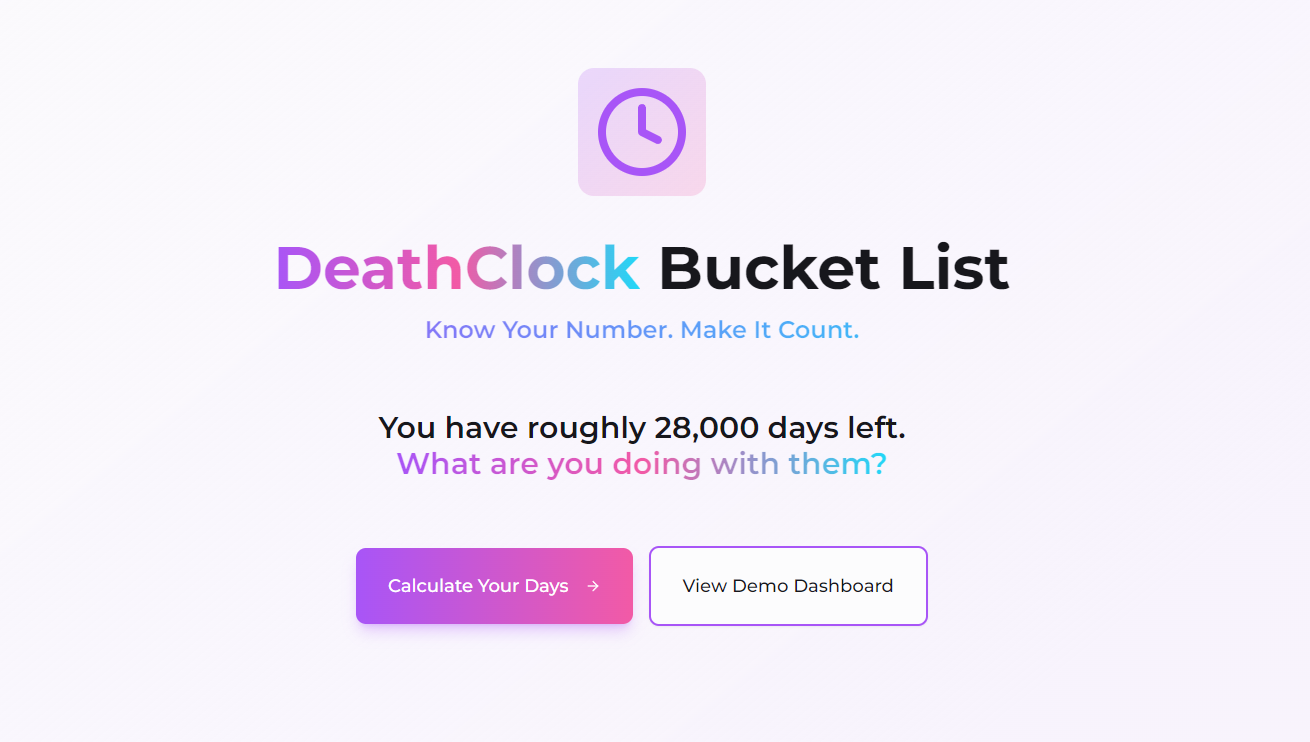
DeathClock Bucket List calculates your estimated remaining days using actuarial science and lifestyle factors, then lets you build, organize, and track a bucket list across life categories (travel, relationships, growth). An AI life coach offers personalized guidance to break down goals, optimize timelines, and keep you accountable.
How we built it
First, I researched actuarial life expectancy tables to build the calculation logic, then designed a user-centric UI with Figma focusing on clarity (no fear-mongering, just purpose). I built the frontend with React/TypeScript, integrated Chart.js for visual timelines, and used Firebase for lightweight data storage. The AI coach layer was built with pre-scripted logic (scalable for real AI integration later) to deliver tailored recommendations.
Challenges we ran into
Balancing honesty about mortality with approachability was tough – I had to avoid making the tool feel grim while keeping the core purpose intact. Calculating accurate life expectancy adjustments for diverse lifestyle inputs also required refining the formula repeatedly to avoid over/underestimating. Additionally, designing intuitive progress tracking for varied goal types (ongoing vs. date-specific) took multiple iterations.
Accomplishments that we're proud of
Creating a tool that’s both data-driven and empathetic – early testers said it motivated them to book long-delayed trips or reconnect with family, not out of fear, but gratitude. The category-based bucket list organization has been praised for making big life goals feel manageable, and the AI coach’s actionable step-by-step guidance has resonated as practical, not generic.
What we learned
I learned how to translate complex actuarial data into accessible, non-alarming user experiences. I also discovered the power of "gentle urgency" – people engage more with goals when they understand time as a finite resource, but only if framed positively. Technically, I honed my skills in React state management for dynamic countdowns and progress tracking.
What's next for this project
First, integrate real AI models for the life coach to deliver hyper-personalized recommendations. Add calendar sync to link bucket list items with daily schedules, and build a mobile-responsive version (currently web-only). I also want to add optional community features (anonymous goal-sharing) and expand the actuarial data to include more regional lifestyle factors for even more accurate calculations.

Log in or sign up for Devpost to join the conversation.