-
Logo
-
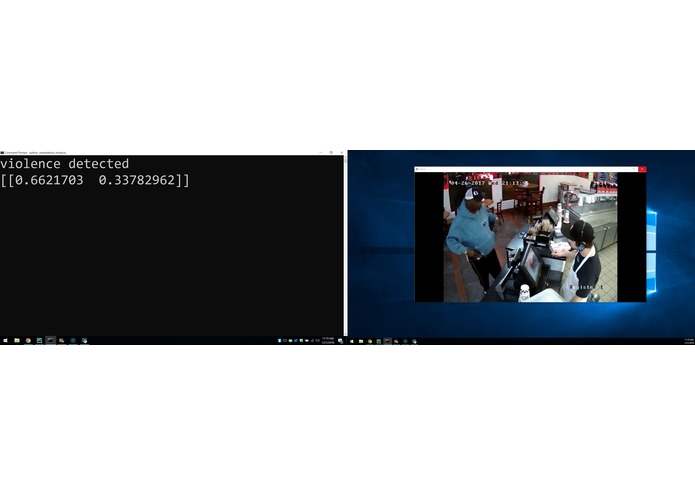
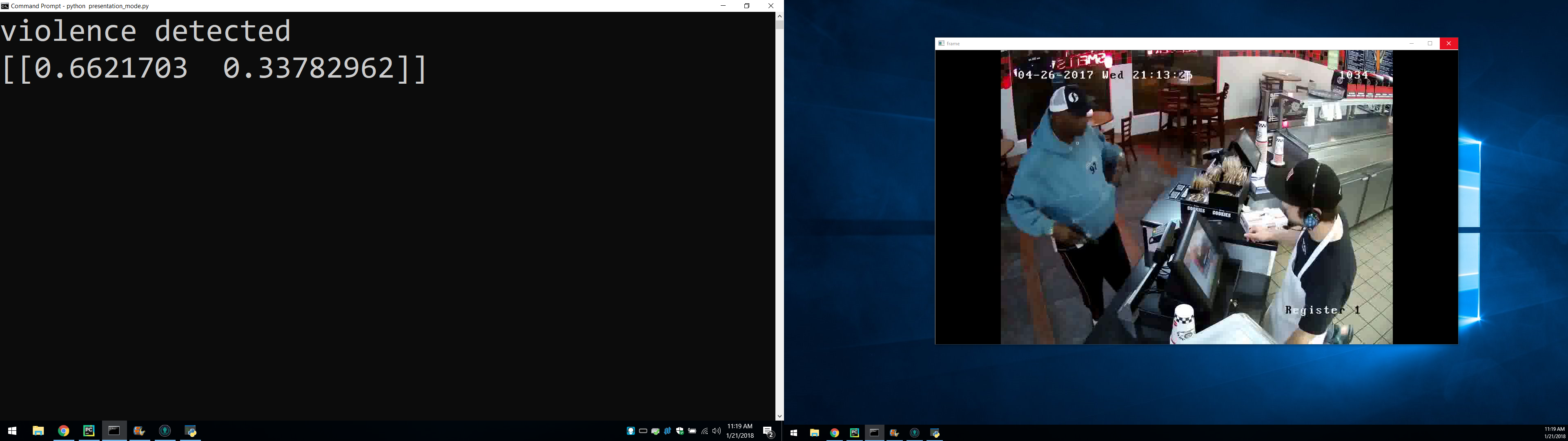
Violent Classification: Man holding gun about to rob Jimmy John's
-
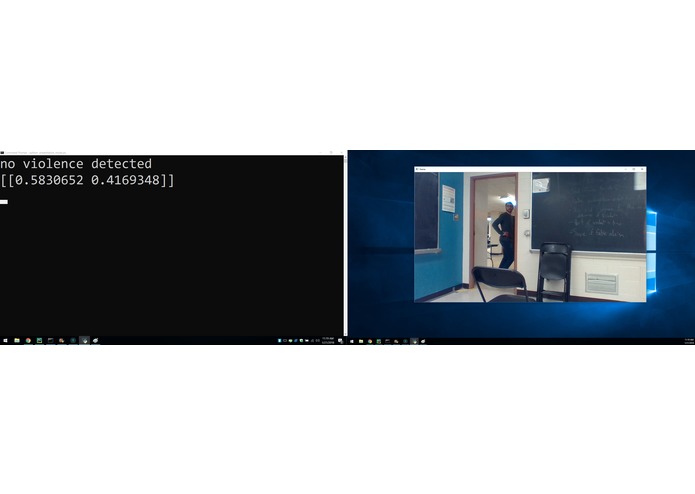
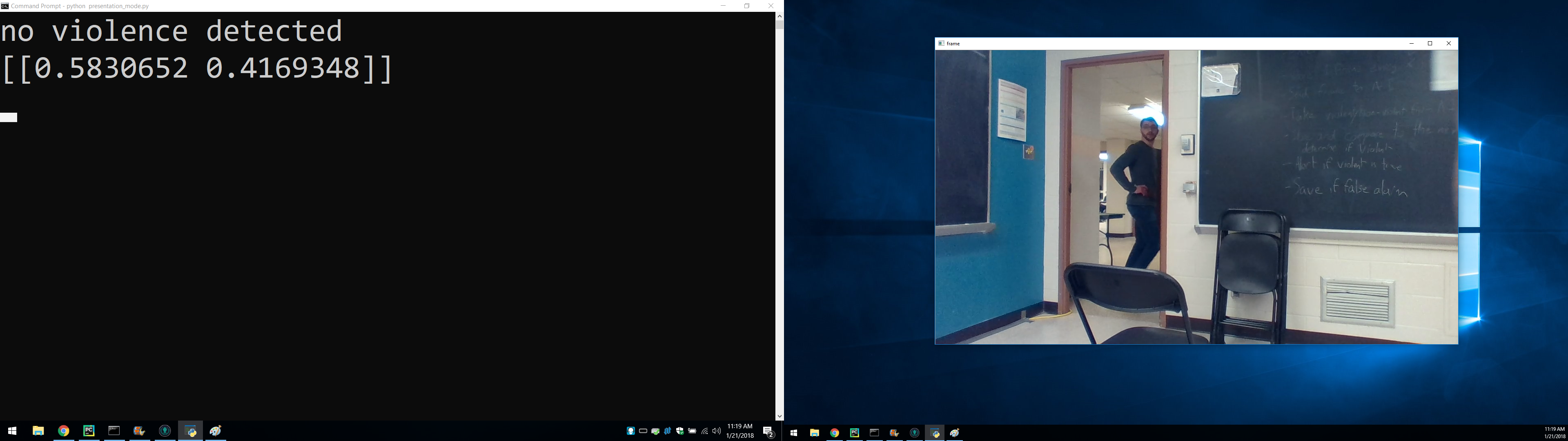
Non-Violent Classification: Classroom

Inspiration
We got inspired to create an AI using Tensorflow. We thought about how an AI image classifier could help people every day. The idea was simple, we wanted to train an AI to recognize violence and crime.
What it does
Death Perception watches a video feed whether its from a street camera or a stores security camera. While it is watching the video feed it is constantly analysing for occurrences of violence and crime. When something achieves a violence rating of 0.XX (that means the AI is XX% sure something violent is taking place), it sends a notification to the authorities and asks if it is violent to confirm. If the person monitoring the AI's predictions decides that it flagged something as violent when it was not violent, then the AI stores a sample of that feed and classifies it as non-violent. When it stores this new non-violent video clip it adds it to the data that trains the AI. That means that with every prediction the AI makes it increases the accuracy of future predictions by learning from its old predictions. When something is flagged correctly as a violent action, the AI saves the video clip where the action took place to use it for evidence in a possible law suit.
How we built it
We built the brain of the AI using Tensorflow. This AI is a deep learning neural network. To access the video feeds we use the OpenCV Python library. The AI analyzes each frame of the video comparing it to the images that it was trained to recognize as violent. If it matches the requirements for violence then it has a higher percent probability of violence and a lower probability of non-violence.
Challenges we ran into
Gathering enough data to train the AI on something this specific was difficult. We started by pulling images of crimes from the internet to train the AI. We soon realized that this was inefficient so we trained the AI to watch *.avi files and analyze each frame in the video file. This resulted in tens of thousands of video frames to teach the AI to more accurately characterize violence.
Accomplishments that we're proud of
Creating the actual neural network was a huge challenge. None of the developers had ever written a deep learning AI before so every step in this process was a learning experience. Implimenting the ability to learn from faild predictions was one function that greatly increased the power of Death Perception.
What we learned
We learned how to write Tensorflow and OpenCV in cooperation so that an AI could analyze a video feed.
What's next for Death Perception
The next step is to continue training the AI with more video and image samples of non-violent and violent situations. The more examples it has to study the more accurate it will get at predicting outcomes.


Log in or sign up for Devpost to join the conversation.