-
-
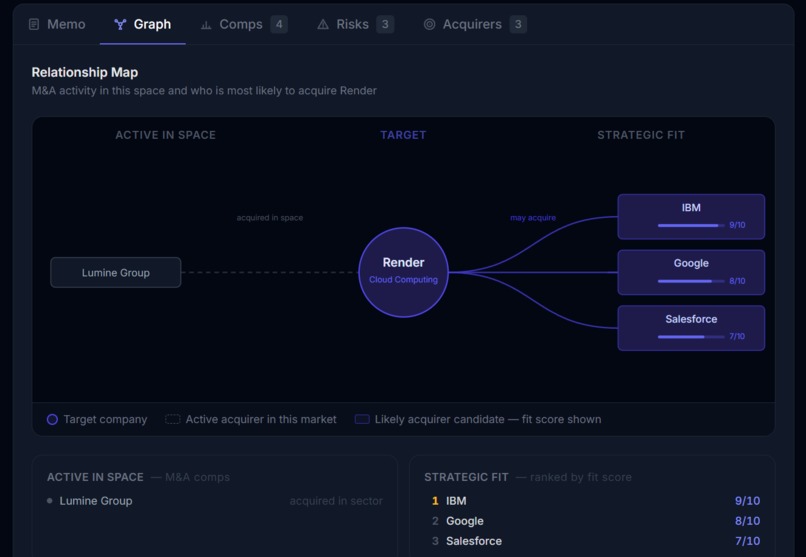
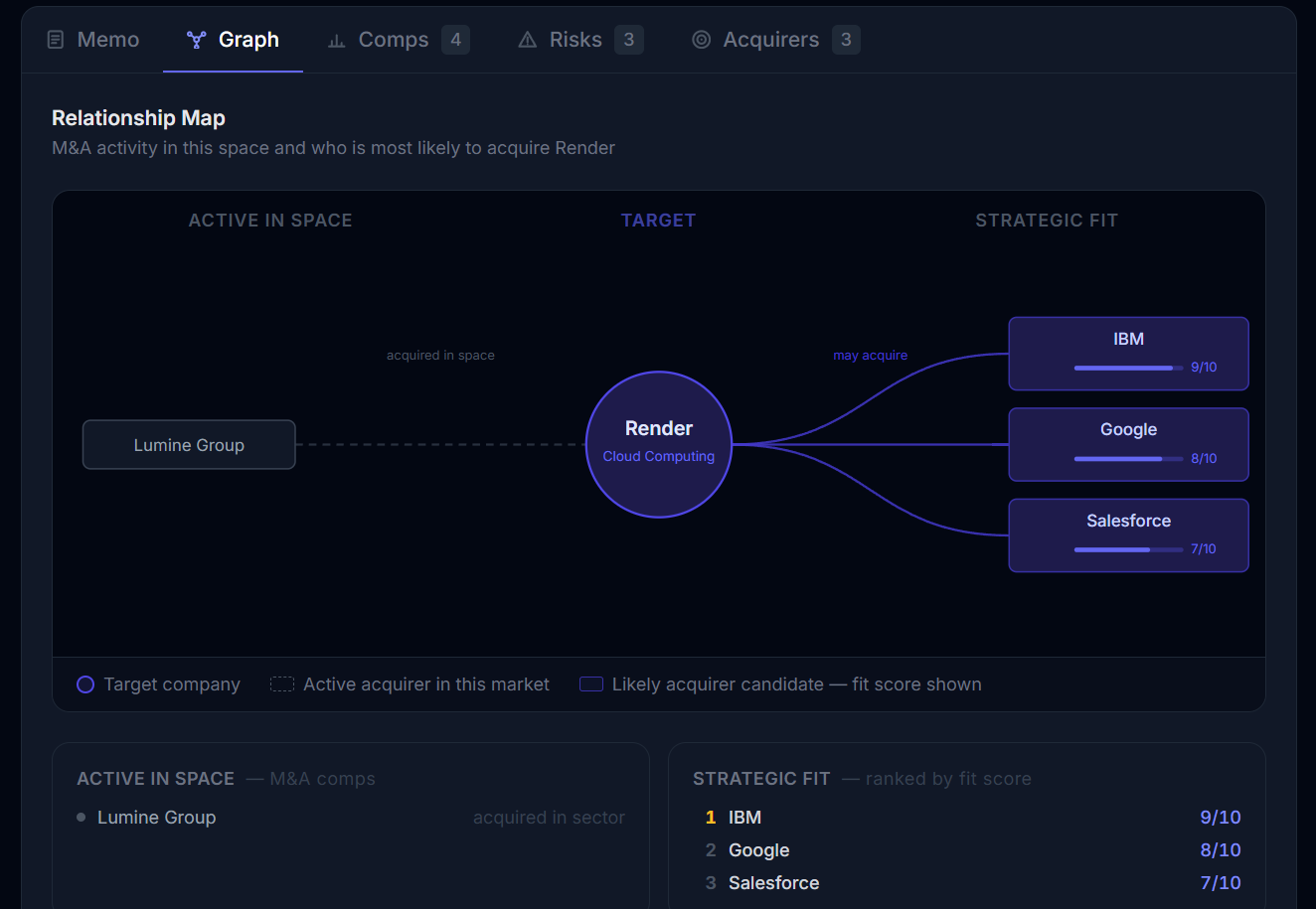
Relationship graph
-
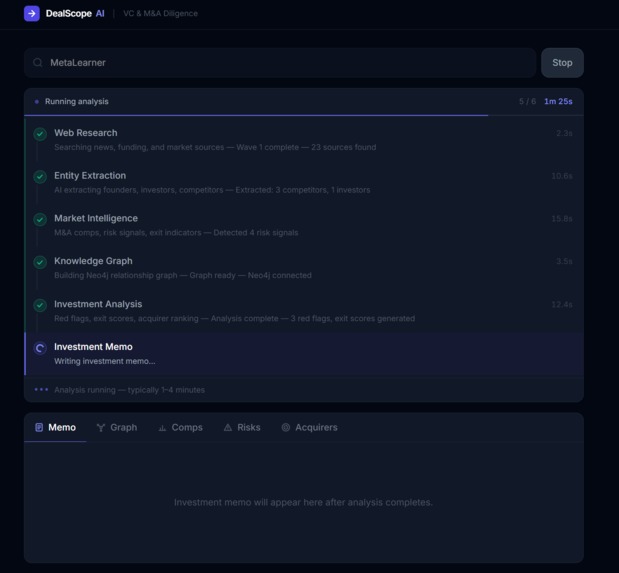
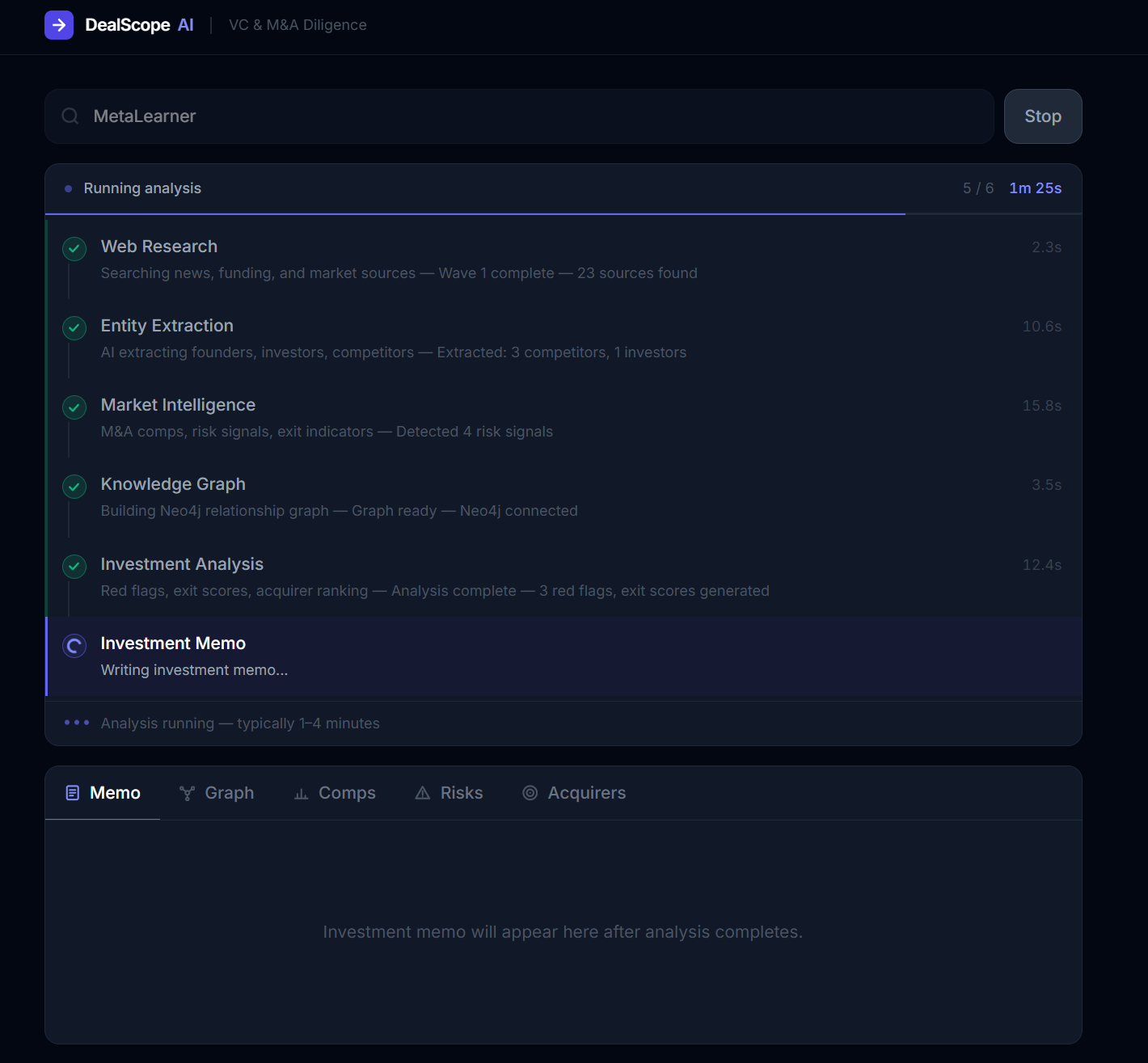
Running analysis
-
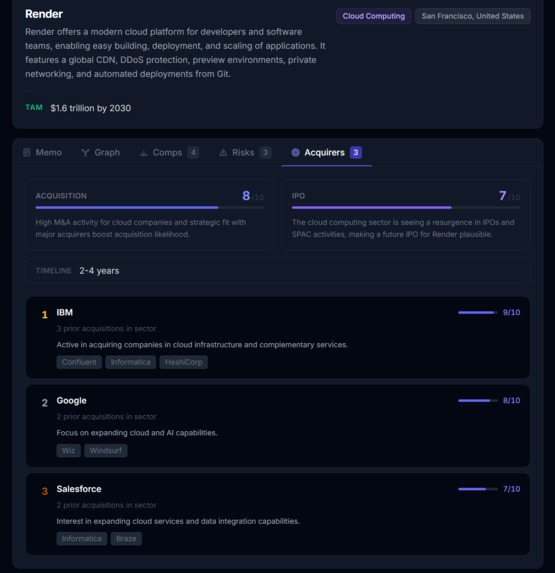
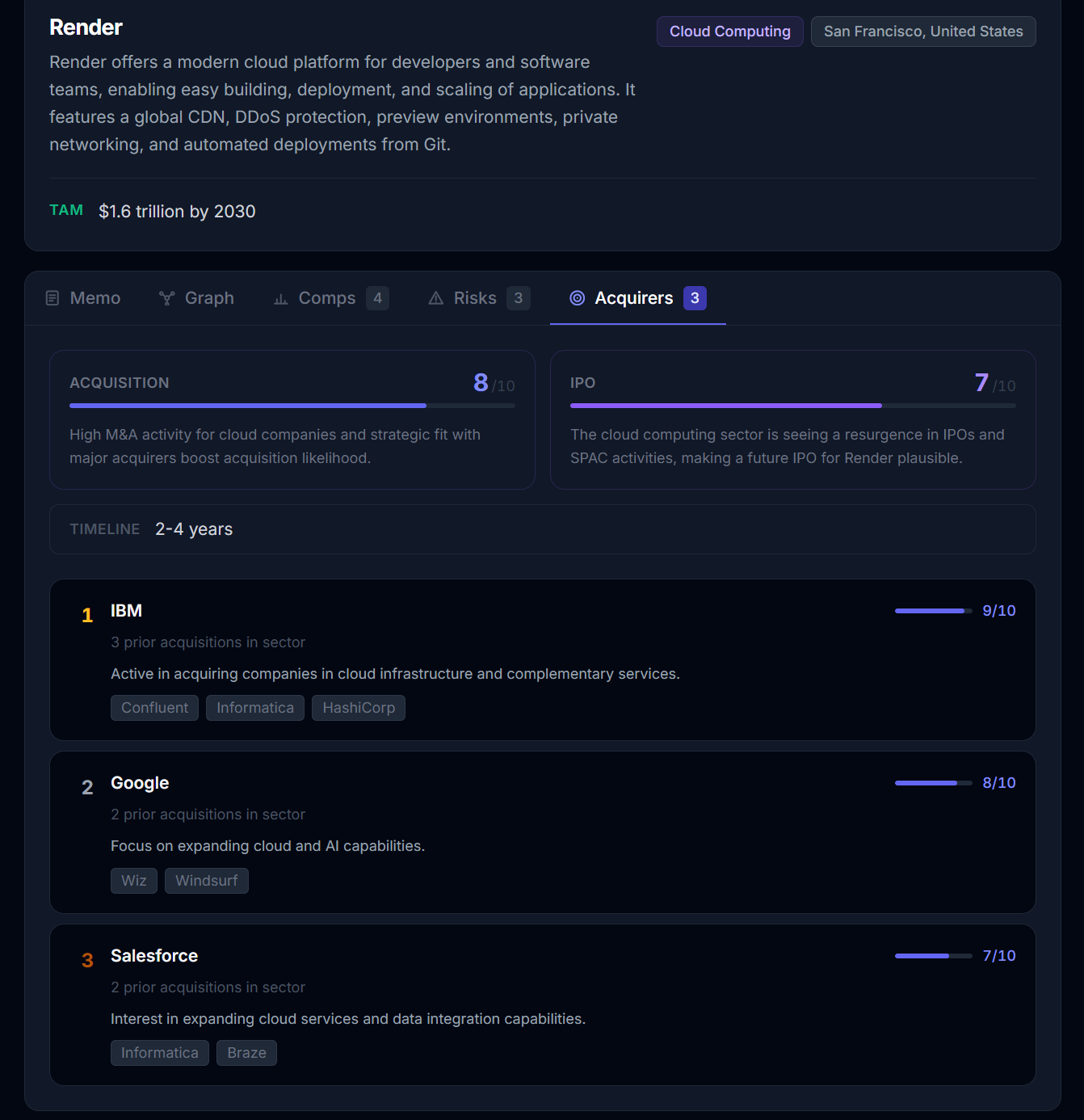
Potential acquirers
-
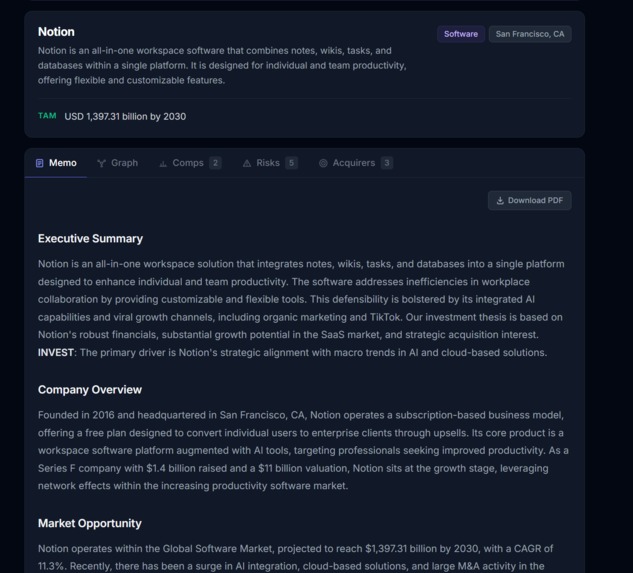
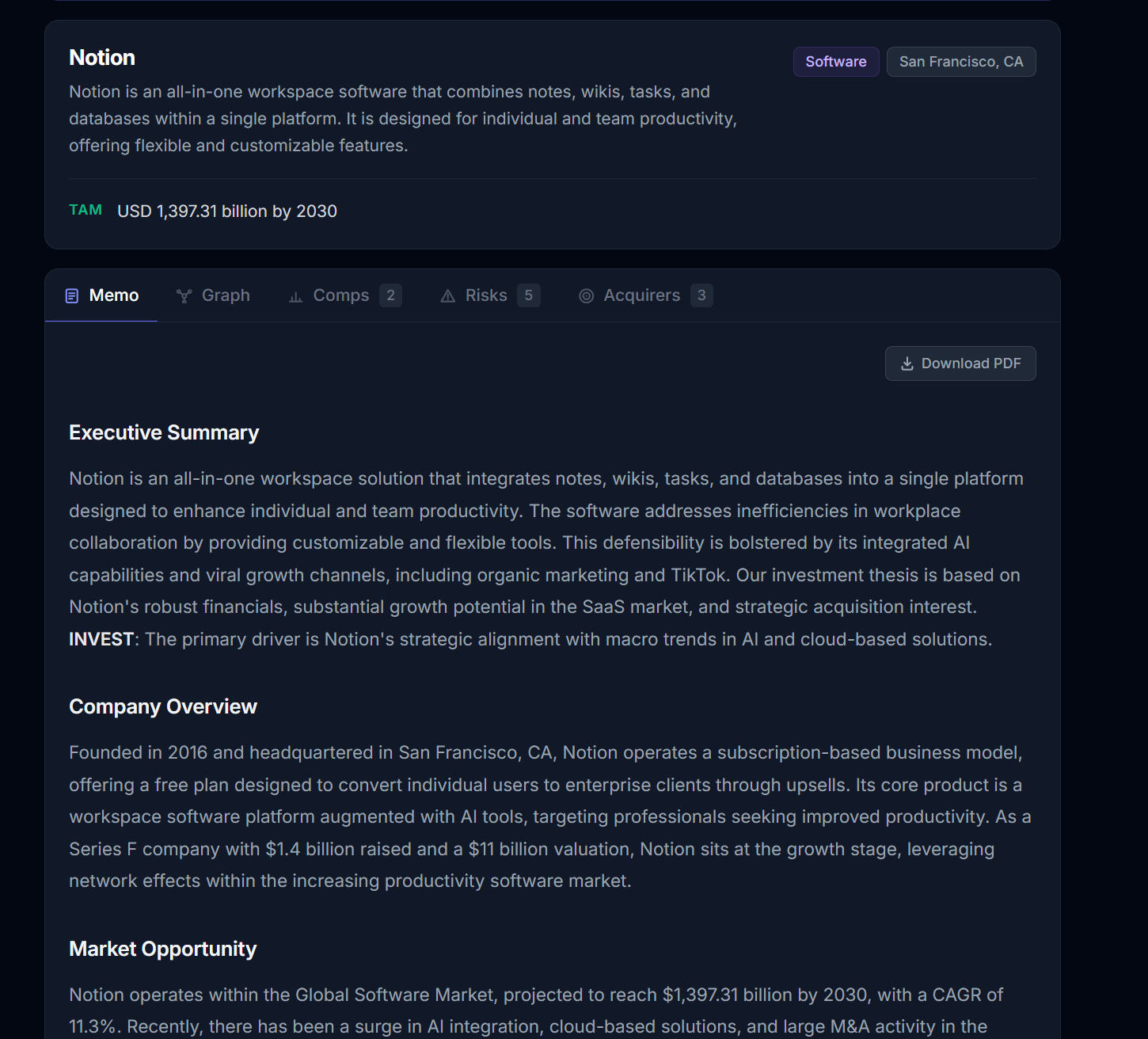
Memo output
-
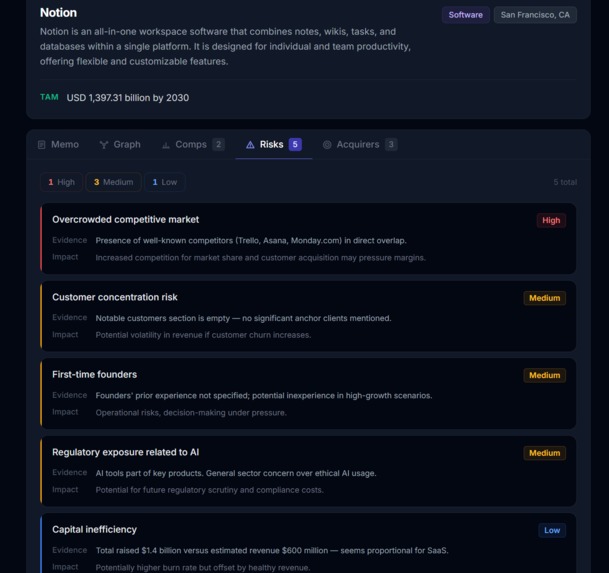
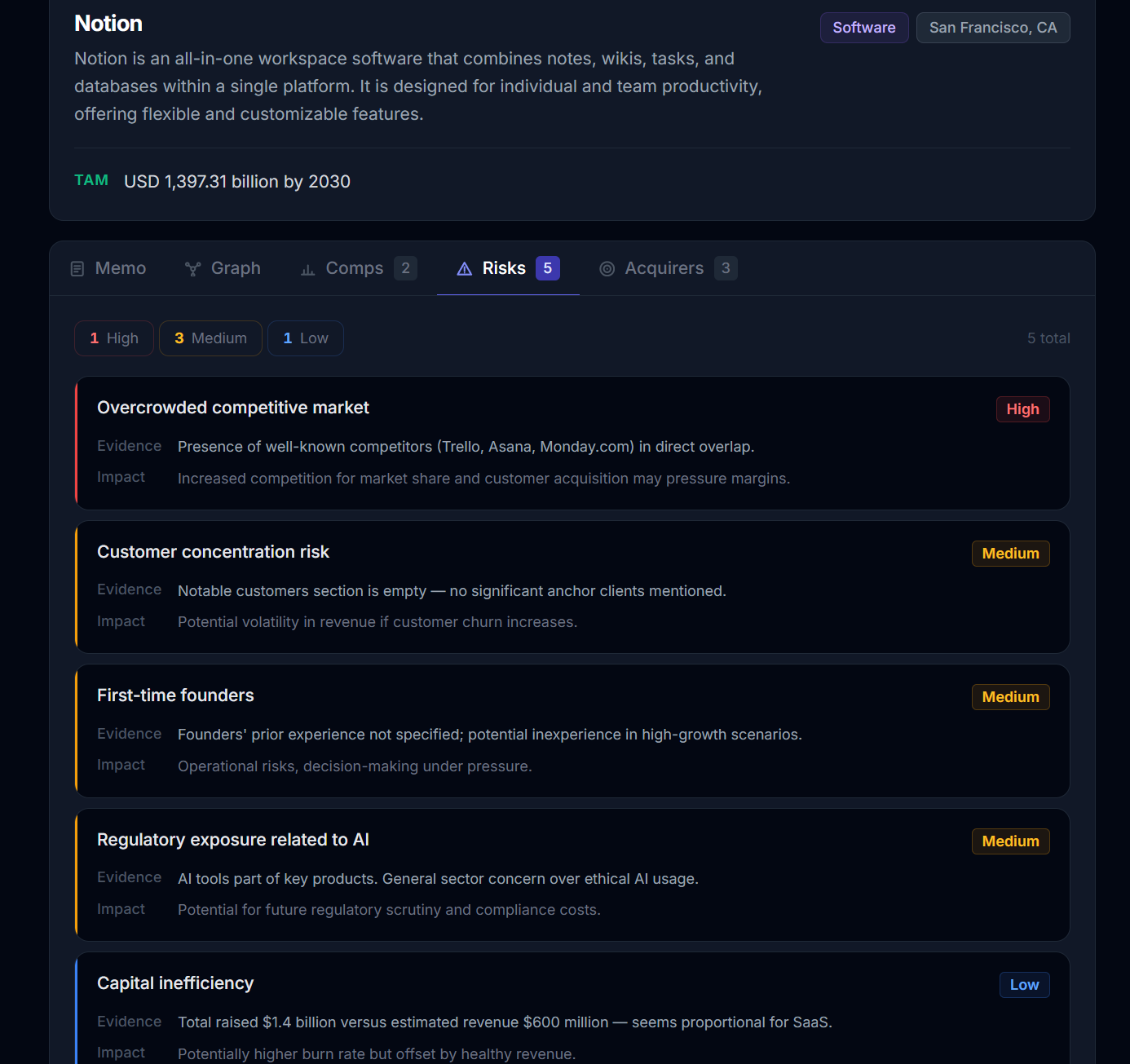
Key risks
DealScope AI
https://dealscope-ai.onrender.com
https://github.com/LiquidAzir/DealScope-AI-Public
TL;DR
M&A and VC deal research is broken. The sharpest people in finance were spending half their day in tabs, manually piecing together a company picture before any real analysis could begin. DealScope AI fixes that. Enter a company name and a full M&A / VC-grade due diligence package comes back in under 60 seconds: investment memo, M&A comps, risk flags, acquirer rankings, and a relationship knowledge graph.
It also learns how you think. Tell it once to lead with the IPO case or always flag regulatory risk first, and every memo it writes from that point forward reflects your judgment. Six AI agents working in sequence, continuously adapting to you.
Background
Working in M&A, I knew firsthand how brutal the research side of deal work really is. Before any real analysis could begin, you were buried in tabs stitching together data from Crunchbase, PitchBook, and Google. The sharpest analytical minds in finance were spending their best hours on data gathering instead of decision-making. I wanted to fix that and build something that gave professionals their time back to focus on what actually moves deals forward: judgment.
What It Does
DealScope AI is an autonomous due diligence agent for VC and M&A teams. Enter a company name, and within 60 seconds a multi-agent pipeline delivers five complete outputs: a full investment memo, an interactive relationship knowledge graph, M&A comparable transactions with deal multiples, a risk assessment with severity ratings, and a ranked list of likely acquirers with fit scores.
The agent also learns your preferences over time. Tell it once how you like memos structured or which risks to prioritize, and it applies that to every future analysis automatically. No manual research. No tab switching. Just answers, written the way you want them.
How I Built It
DealScope runs a 6-phase autonomous pipeline. Tavily executes adaptive web research across 65+ sources in three waves, each building on signals from the last, moving from company profile to funding history to competitive landscape. OpenAI (GPT-5.2 via the Responses API) then extracts structured entities: founders, investors, funding rounds, traction signals, and competitors. A third pass pulls TAM estimates, comparable M&A transactions, and exit signals.
All extracted entities and relationships are written into a Neo4j Aura graph database, mapping connections between companies, investors, and acquisitions. The graph powers a deep investment analysis covering red flag detection, acquirer scoring, and IPO vs. acquisition probability, before a final agent synthesizes everything into a VC-style investment memo. Analyst preferences are persisted to a database and injected into the memo prompt at runtime so the agent continuously adapts to the individual user. The frontend is React 18 + Vite with Tailwind CSS, NeoVis.js for the interactive graph, and Server-Sent Events via FastAPI so users watch every agent step complete in real time.
Challenges I Ran Into
Getting the three research waves to be genuinely adaptive required significant prompt engineering and output structuring. Early runs produced redundant searches rather than progressively deeper ones. Neo4j relationship deduplication was another pain point. When multiple research waves surface overlapping entities, the graph quickly becomes noisy, so I built normalization logic to merge duplicates cleanly before writes. Streaming a multi-phase agentic pipeline over SSE while keeping frontend status updates accurate and in sync also proved trickier than expected, particularly around error states mid-pipeline.
Accomplishments I'm Proud Of
Compressing what a junior analyst spends a full day on into a sub-60-second pipeline is the headline win. Beyond speed, the knowledge graph surfaces non-obvious signals including investor overlap between competitors, founder network connections, and acquisition pattern clustering that flat data sources cannot show. The continuous learning layer means the agent gets measurably more useful over time. We're also proud of the real-time transparency layer: users watch every agent phase complete live, which builds trust in a space where black-box AI is a legitimate concern.
What I Learned
Agentic pipelines are only as good as their structured outputs. Every downstream phase depends on clean entity extraction from the prior step. Investing heavily in Pydantic schemas and extraction prompt design early paid compounding dividends across the entire pipeline. I also learned that graph databases are not just a visualization layer. Neo4j's relationship queries unlocked analytical patterns that would have been impossible with flat JSON or SQL.
What's Next for DealScope AI
The immediate roadmap includes live data integrations with Crunchbase and PitchBook APIs, PDF upload support so users can feed in pitch decks and CIMs alongside web research, and a portfolio monitoring mode that re-runs analysis on tracked companies when new signals emerge. Longer term, I see DealScope evolving into a collaborative platform where deal teams can annotate the graph, flag discrepancies, and build institutional memory across every deal they have ever screened.
Built With
- javascript-frameworks-&-libraries:-fastapi
- languages:-python
- neo4j
- neovis.js
- pydantic-databases:-neo4j-aura-(cloud-graph-database)-apis-&-ai:-openai-api-(gpt-5.2-via-responses-api)
- react-18
- react-markdown
- render
- server-sent-events-(sse)-for-real-time-pipeline-streaming
- tailwind-css
- tavily-search-api-infrastructure-&-tooling:-uvicorn-(asgi-server)
- vite

Log in or sign up for Devpost to join the conversation.